The just-concluded 20th Changchun Film Festival in northeast China's Jilin Province has offered tourists and local residents a cultural feast of classic Chinese art, driving domestic demand in cultural and tourism consumption during the current summer vacation season.
The festival, held from Aug 23 to 28 in Changchun, capital city of Jilin, is hosted by China Media Group and the People's Government of Jilin Province. This year marks the 120th anniversary of the birth of Chinese movies and the 80th anniversary of the establishment of Changchun Film Studio, one of China's largest film producers.
During this event, a total of 260 screening points were set up across Changchun's central business districts, cultural streets, and communities. Films were also brought to other regions including Jilin City and the Yanbian Korean Autonomous Prefecture in the province, where about over 4,000 screenings were expected to reach an audience of more than 200,000 people.
"It feels different and fills us with pride to watch films that tell stories about our own hometown right here where we live," said a moviegoer in Jilin.
Taking advantage of the film festival, three themed tourist routes featuring historical, industrial and ecological culture journey were launched to turn the "traffic" brought about by film screening into the "retention" brought about by tourism, with the routes covering many of Changchun's famous attractions.
As a key stop on the industrial cultural route, the Changchun Film Studio Museum has been virtually turned into a cultural landmark with innovative offerings, once again becoming a popular destination.
"We've created the 'Starlight Galaxy' themed stage play, exploring a new business operation model that integrates film screening, stage performance and immersive interaction," said Yu Chunlei, leader of a performance team of the Changchun Film Studio Museum.
A series of thematic stage productions, inspired by Chinese revolution-themed classic films such as "Heroine Zhao Yiman," "The White-Haired Girl," and "Visitors on the Icy Mountain," deeply incorporate drama performances, dances, and multimedia visual technologies. Through innovative narrative and aesthetic expression, these performances evoke strong emotional resonance among the audience.
"I really enjoy it. It's highly educational for young people today -- we should never forget history," said a tourist from north China's Shanxi province.
Capitalizing on the renewed popularity of classic films, the organizers of the festival also launched new hit experiential activities. Tourists can follow clues to find characters from the film "Five Golden Flowers," engaging in immersive experiences that enhance their understanding of film culture.
The operation of such activities has also brought static museum exhibits to life, attracting large numbers of family visitors.
"It worked out perfectly -- my kid is in the fourth grade, and this semester's extracurricular reading materials cover exactly this type of knowledge. Right when we entered, we saw the exhibit for the film 'Five Golden Flowers.' Having this kind of scene demonstration is extremely meaningful," said a tourist from Ningbo City in east China's Zhejiang Province.
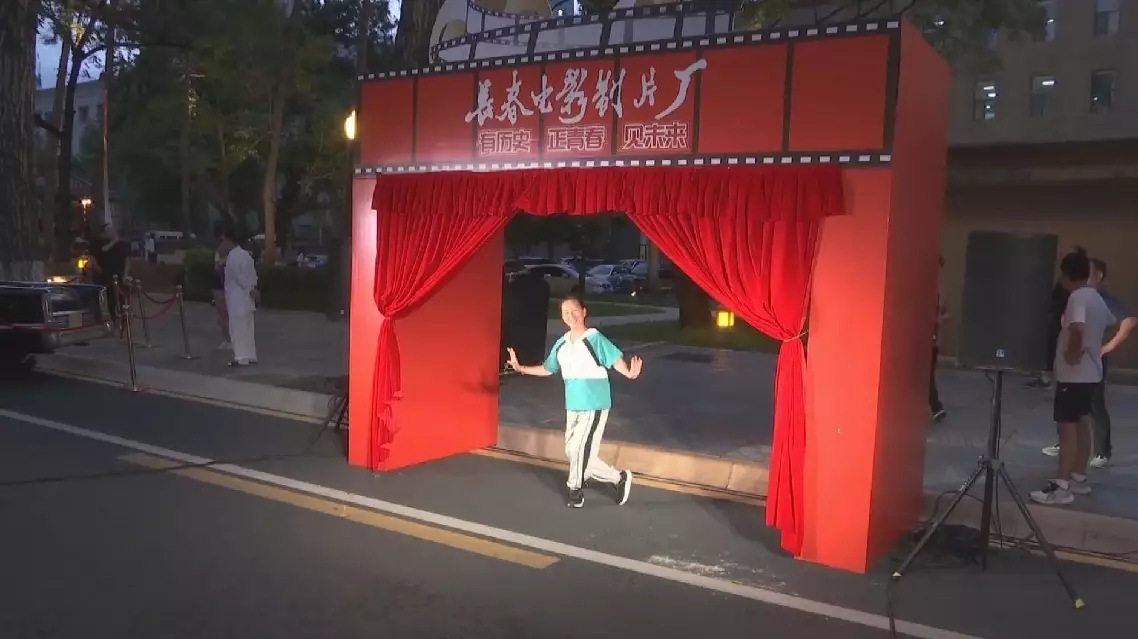
Film festival fuels demand in cultural, tourism consumption in northeast China's Jilin