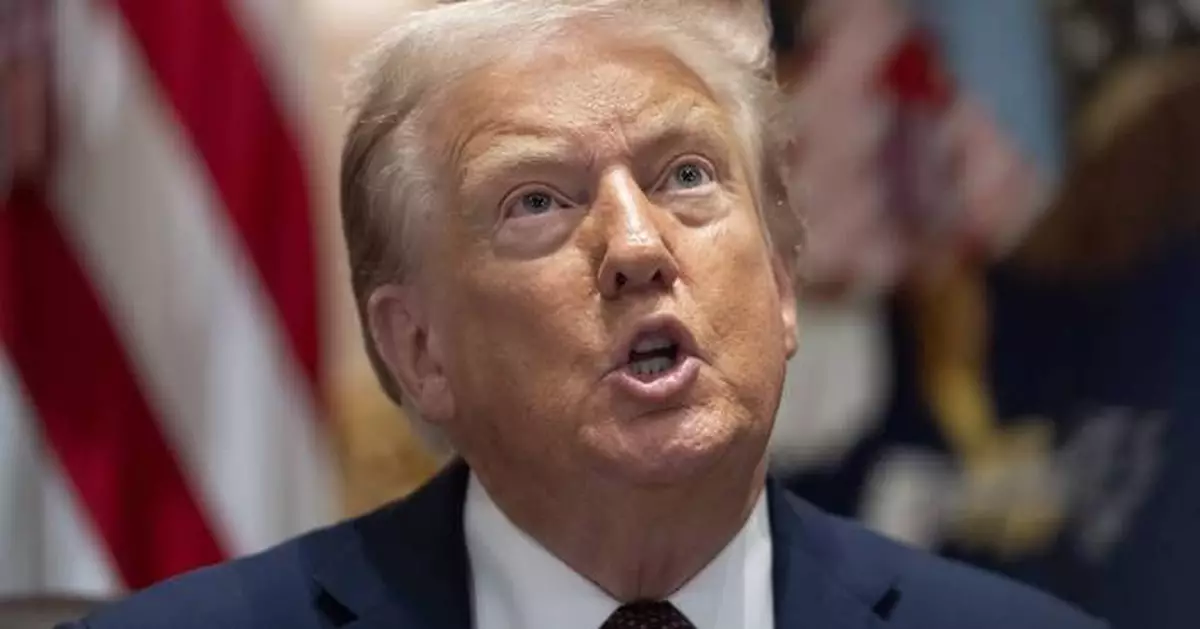
SAN FRANCISCO (AP) — A federal appeals court on Friday blocked President Donald Trump's plans to end protections for 600,000 people from Venezuela who have had permission to live and work in the United States, saying that plaintiffs are likely to win their claim that the Republican administration's actions were unlawful.
A three-judge panel of the 9th U.S. Circuit Court of Appeals unanimously upheld a lower court ruling that maintained temporary protected status for Venezuelans while TPS holders challenge actions by Trump’s administration in court.
The 9th Circuit judges found that plaintiffs were likely to succeed on their claim that Homeland Security Secretary Kristi Noem had no authority to vacate or set aside a prior extension of temporary protected status because the governing statute written by Congress does not permit it. Then-President Joe Biden’s Democratic administration had extended temporary protected status for people from Venezuela.
“In enacting the TPS statute, Congress designed a system of temporary status that was predictable, dependable, and insulated from electoral politics,” Judge Kim Wardlaw, who was nominated by President Bill Clinton, a Democrat, wrote for the panel. The other two judges on the panel were also nominated by Democratic presidents.
In an email, a spokesperson for the Department of Homeland Security blasted the decision as more obstruction from “unelected activist” judges.
“For decades the TPS program has been abused, exploited, and politicized as a de facto amnesty program," the email read. “While this injunction delays justice and undermines the integrity of our immigration system, Secretary Noem will use every legal option at the Department’s disposal to end this chaos and prioritize the safety of Americans.”
Congress authorized temporary protected status, or TPS, as part of the Immigration Act of 1990. It allows the secretary of DHS to grant legal immigration status to people fleeing countries experiencing civil strife, environmental disaster or other “extraordinary and temporary conditions” that prevent a safe return to that home country. The terms are for six, 12 and 18 months.
The appellate judges said the guaranteed time limitations were critical so people could gain employment, find long-term housing and build stability without fear of shifting political winds.
But in ending the protections soon after Trump took office, Noem said conditions in Venezuela had improved and it was not in the U.S. national interest to allow migrants from there to stay on for what is a temporary program. It's part of a broader move by Trump’s administration to reduce the number of immigrants who are in the country either without legal documentation or through legal temporary programs.
U.S. District Judge Edward Chen of San Francisco found in March that plaintiffs were likely to prevail on their claim that the administration had overstepped its authority in terminating the protections. Chen postponed the terminations, but the Supreme Court reversed him without explanation, which is common in emergency appeals.
It is unclear what effect Friday’s ruling will have on the estimated 350,000 Venezuelans in the group of 600,000 whose protections expired in April. Their lawyers say some have already been fired from jobs, detained in immigration jails, separated from their U.S. citizen children and even deported.
Protections for the remaining 250,000 Venezuelans are set to expire Sept. 10.
“What is really significant now is that the second court unanimously recognized that the trial court got it right,” said Emi MacLean, a senior staff attorney with the ACLU Foundation of Northern California representing plaintiffs.
She added that while the decision might not benefit immediately those people who have already lost their status or are about to lose their status, Friday's ruling “should provide a path for the administration’s illegal actions related to Venezuela and TPS to finally be undone.”
A court declaration provided by plaintiffs showed the turmoil caused by the Trump administration and Supreme Court decision.
A Washington woman who worked in restaurants was deported in June along with her daughters, 10 years and 15 months old, after ICE officers told her to bring her children to an immigration check-in. The father of the baby, who is a U.S. citizen, remains in the U.S. while the woman tries to figure out what to do.
Also in June, a FedEx employee appeared in uniform at his required immigration check-in only to be detained, the court declaration states. He slept for about two weeks on a floor, terrified he would be sent to El Salvador's notorious CECOT prison. His wife cannot maintain the household on her earnings.
“I am not a criminal,” he said in the declaration, adding that “immigrants like myself come to the United States to work hard and contribute, and instead our families and lives are being torn apart."
Millions of Venezuelans have fled political unrest, mass unemployment and hunger. Their country is mired in a prolonged crisis brought on by years of hyperinflation, political corruption, economic mismanagement and an ineffectual government.
Attorneys for the U.S. government argued the Homeland Security secretary’s clear and broad authority to make determinations related to the TPS program were not subject to judicial review. They also denied that Noem's actions were motivated by racial animus.
But the appellate judges said courts clearly had jurisdiction in cases where the actions were unlawful. They declined to address whether Noem was motivated by racial animus.
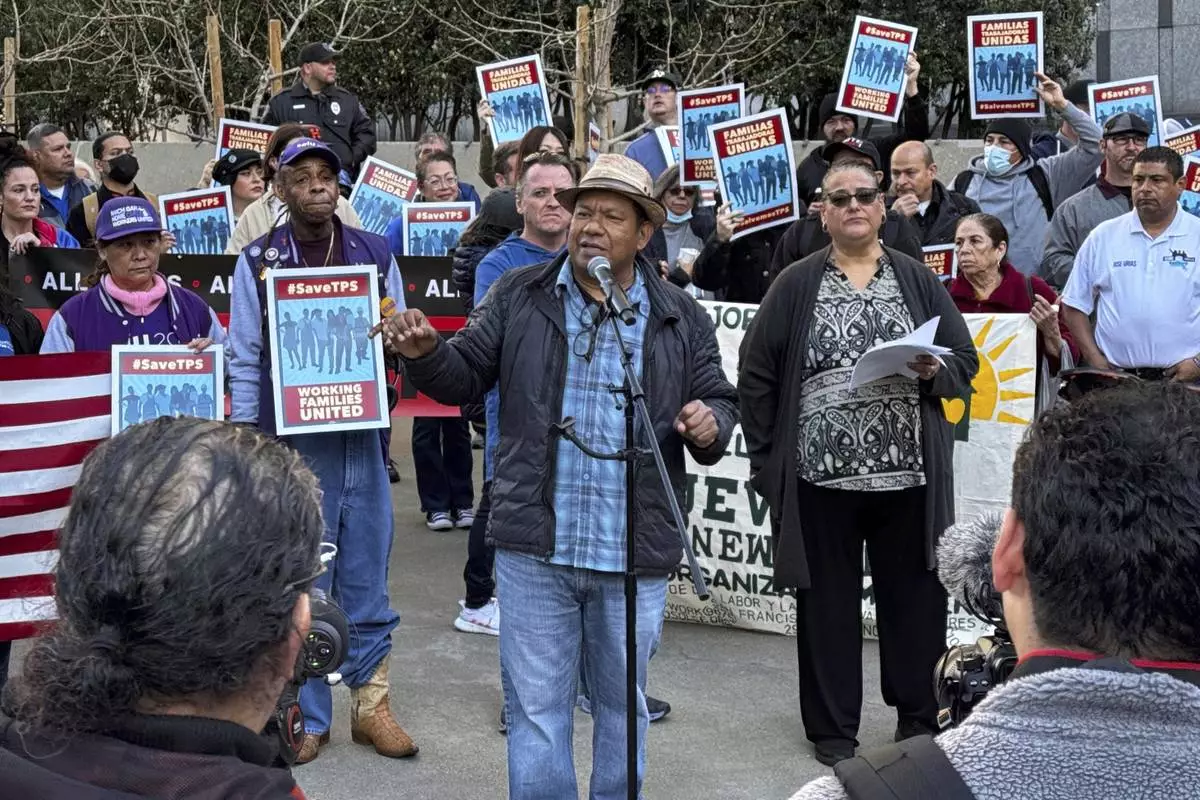
FILE - Immigrant rights supporters hold a rally in front of the federal courthouse in San Francisco, on Monday, March 24, 2025, ahead of a hearing for a lawsuit against the Trump administration. (AP Photo/Terry Chea, File)
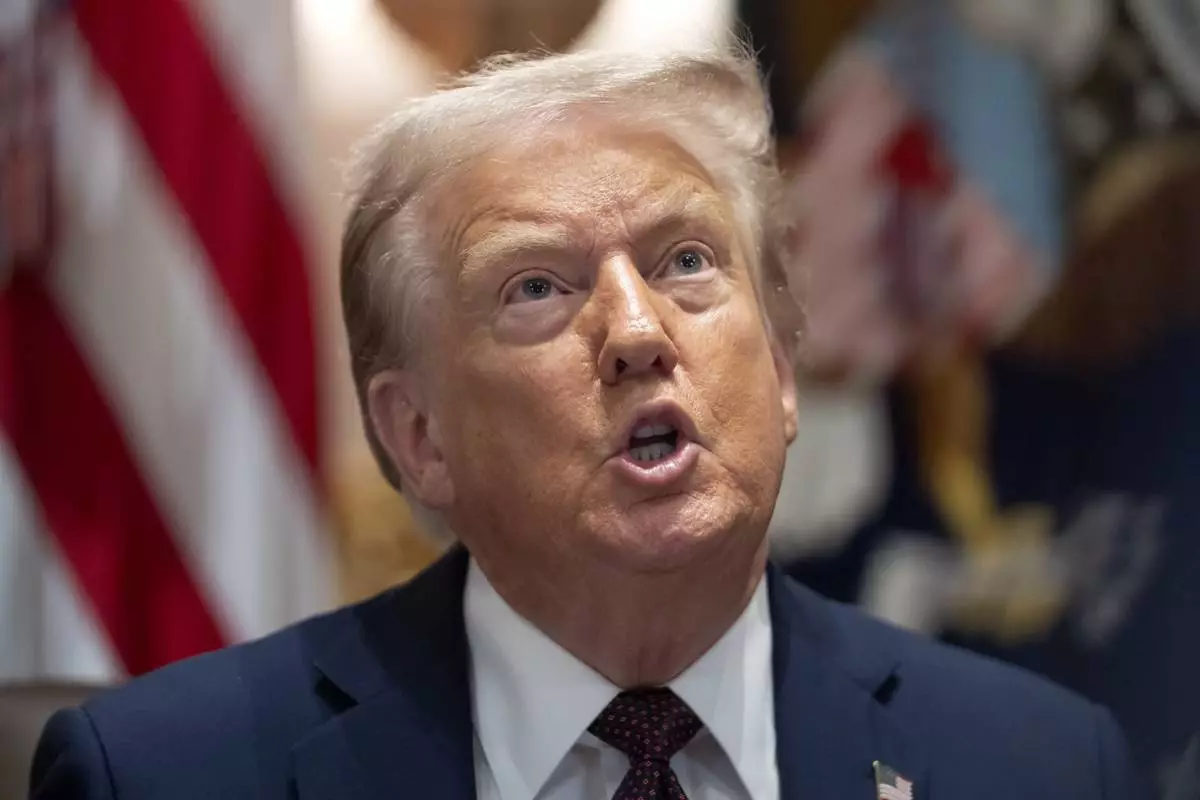
President Donald Trump speaks during a cabinet meeting at the White House, Tuesday, Aug. 26, 2025, in Washington. (AP Photo/Mark Schiefelbein)