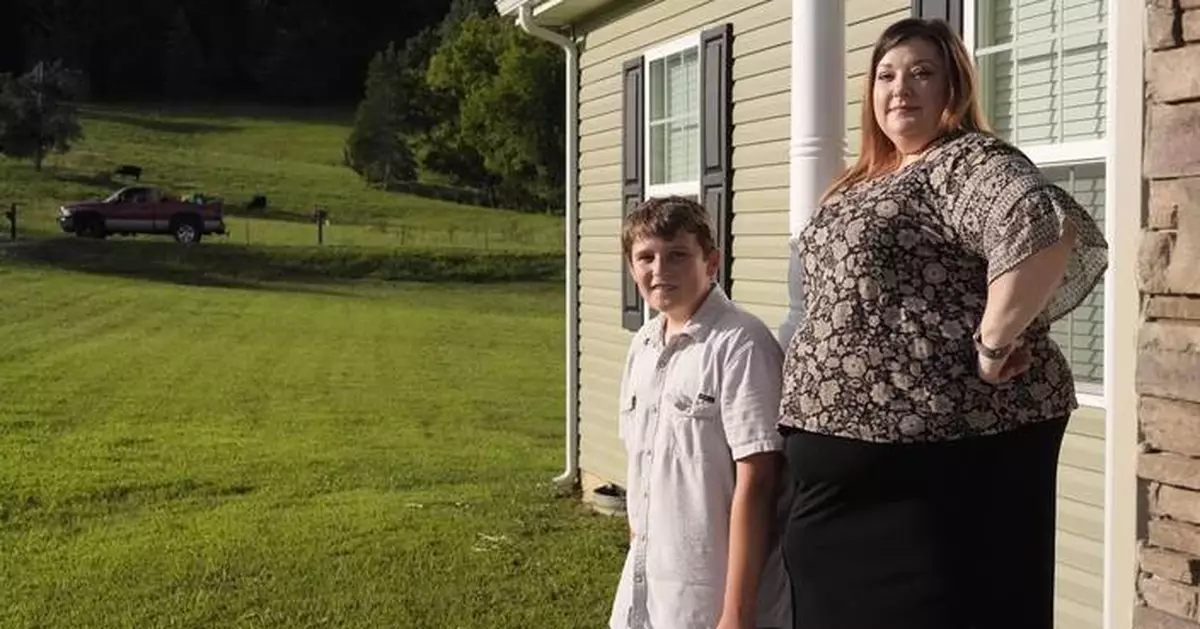
Heather Colley and her two children moved four times over five years as they fled high rents in eastern Tennessee, which, like much of rural America, hasn't been spared from soaring housing costs.
A family gift in 2021 of a small plot of land offered a shot at homeownership, but building a house was beyond reach for the 45-year-old single mother and manicurist making $18.50 an hour.
Click to Gallery

FILE - Nestled in the heart of the coal fields of Appalachia, the small city of Hazard, Ky., is seen on May 26, 2015. (AP Photo/David Stephenson, File)

FILE - President Donald Trump speaks during a cabinet meeting, Tuesday, Aug. 26, 2025, at the White House in Washington. (AP Photo/Mark Schiefelbein, File)
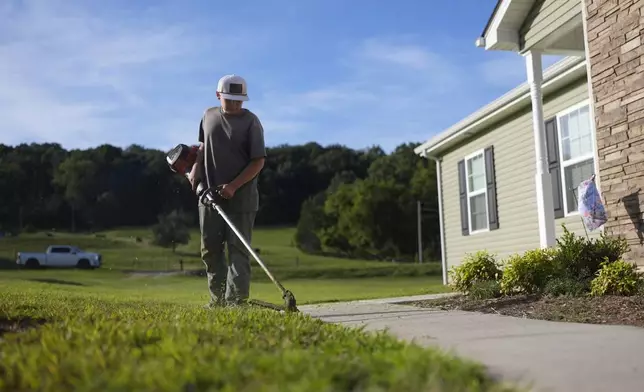
Michah Colley cuts the grass with a trimmer outside his home Wednesday, Aug. 27, 2025, in Talbott, Tenn. (AP Photo/George Walker IV)
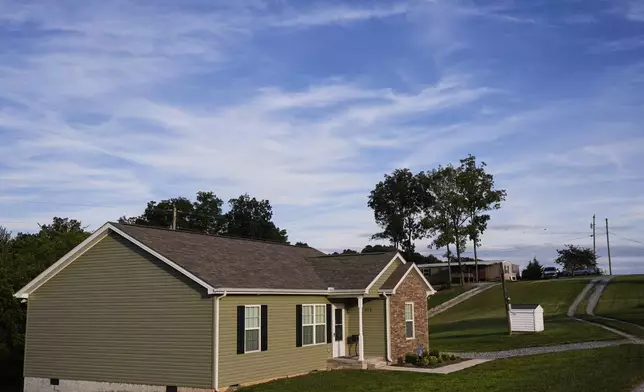
Heather Colley’s home is seen Wednesday, Aug. 27, 2025, in Talbott, Tenn. (AP Photo/George Walker IV)
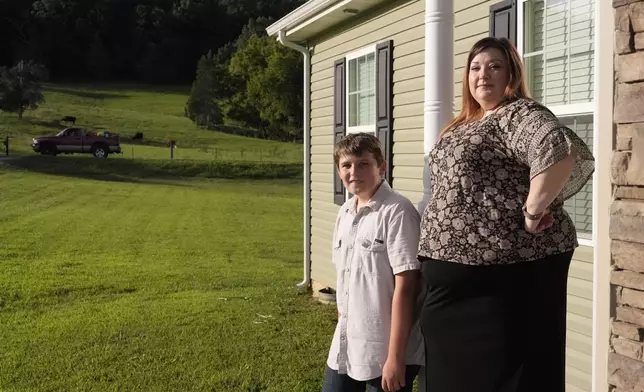
Heather Colley, right, poses with her son, Michah, outside their home Wednesday, Aug. 27, 2025, in Talbott, Tenn. (AP Photo/George Walker IV)
That changed when she qualified for $272,000 from a nonprofit to build a three-bedroom home because of a grant program that has helped make affordable housing possible in rural areas for decades. She moved in last June.
“Every time I pull into my garage, I pinch myself,” Colley said.
Now, President Donald Trump wants to eliminate that grant, the HOME Investment Partnerships Program, and House Republicans overseeing federal budget negotiations did not include funding for it in their budget proposal. Experts and state housing agencies say that would set back tens of thousands of future affordable housing developments nationwide, particularly hurting Appalachian towns and rural counties where government aid is sparse and investors are few.
The program has helped build or repair more than 1.3 million affordable homes in the last three decades, of which at least 540,000 were in congressional districts that are rural or significantly rural, according to an Associated Press analysis of federal data.
“Maybe they don’t realize how far-reaching these programs are,” said Colley, who voted for Trump in 2024. Among those half a million homes that HOME helped build, 84% were in districts that voted for him last year, the AP analysis found.
“I understand we don’t want excessive spending and wasting taxpayer dollars," Colley said, "but these proposed budget cuts across the board make me rethink the next time I go to the polls.”
The HOME program, started under President George H. W. Bush in the 1990s, survived years of budget battles but has been stretched thin by years of rising construction costs and stagnant funding. That's meant fewer units, including in some rural areas where home prices have grown faster than in cities.
The program has spent more than $38 billion nationwide since it began filling in funding gaps and attracting more investment to acquire, build and repair affordable homes, HUD data shows. Additional funding has gone toward projects that have yet to be finished and rental assistance.
To account for the gap left by the proposed cuts, House Republicans want to draw on nearly $5 billion from a related pandemic-era fund that gave states until 2030 to spend on projects supporting people who are unhoused or facing homelessness.
That $5 billion, however, may be far less, since many projects haven’t yet been logged into the U.S. Department of Housing and Urban Development's tracking system, according to state housing agencies and associations representing them.
A spokesperson for HUD, which administers the program, said HOME isn't as effective as other programs where the money would be better spent.
In opposition to Trump, Senate Republicans have still included funding for HOME in their draft budget. In the coming negotiations, both chambers may compromise and reduce but not terminate HOME's funding, or extend last years’ overall budget.
White House spokesperson Davis Ingle didn't respond to specific questions from the AP. Instead, Ingle said that Trump's commitment to cutting red tape is making housing more affordable.
A bipartisan group of House lawmakers is working to reduce HOME’s notorious red tape that even proponents say slows construction.
In Owsley County — one of the nation's poorest, located in the rural Kentucky hills — residents struggle in an economy blighted by coal mine closures and declining tobacco crop revenues.
Affordable homes are needed there, but tough to build in a region that doesn't attract larger-scale rental developments that federal dollars typically go toward.
That’s where HOME comes in, said Cassie Hudson, who runs Partnership Housing in Owsley, which has relied on the program to build the majority of its affordable homes for at least a dozen years.
A lack of additional funding for HOME has already made it hard to keep up with construction costs, Hudson said, and the organization builds a quarter of the single-family homes it used to.
“Particularly for deeply rural places and persistent poverty counties, local housing developers are the only way homes and new rental housing gets built,” said Joshua Stewart of Fahe, a coalition of Appalachian nonprofits.
That's in part because investment is scant and HOME steps in when construction costs exceed what a home can be sold for — a common barrier in poor areas of Appalachia. Some developers use the profits to build more affordable units. Its loss would erode those nonprofits' ability to build affordable homes in years to come, Stewart said.
One of those nonprofits, Housing Development Alliance, helped Tiffany Mullins in Hazard, Kentucky, which was ravaged by floods. Mullins, a single mother of four who makes $14.30 an hour at Walmart, bought a house there thanks to HOME funding and moved in August.
Mullins sees the program as preserving a rural way of life, recalling when folks owned homes and land “with gardens, we had chickens, cows. Now you don’t see much of that."
In congressional budget negotiations, HOME is an easier target than programs such as vouchers because most people would not immediately lose their housing, said Tess Hembree, executive director of the Council of State Community Development Agencies.
The effect of any reduction would instead be felt in a fizzling of new affordable housing supply. When HOME funding was temporarily reduced to $900 million in 2015, “10 to 15 years later, we’re seeing the ramifications," Hembree said.
That includes affordable units built in cities. The biggest program that funds affordable rental housing nationwide, the Low Income Housing Tax Credit, uses HOME grants for 12% of units, totaling 324,000 current individual units, according to soon-to-be-published Urban Institute research.
Trump's spending bill that Republicans passed this summer increased LITHC, but experts say further reducing or cutting HOME would make those credits less usable.
“It's LITHC plus HOME, usually,” said Tim Thrasher, CEO of Community Action Partnership of North Alabama, which builds affordable apartments for some of the nation's poorest.
In the lush mountains of eastern West Virginia, Woodlands Development Group relies on HOME for its smaller rural projects. Because it helps people with a wider range of incomes, HOME is “one of the only programs available to us that allows us to develop true workforce housing,” said executive director Dave Clark.
It’s those workers — nurses, first responders, teachers — that nonprofits like east Tennessee’s Creative Compassion use HOME to build for. With the program in jeopardy, grant administrator Sarah Halcott said she fears for her clients battling rising housing costs.
“This is just another nail in the coffin for rural areas,” Halcott said.
Kramon reported from Atlanta. Bedayn reported from Denver. Herbst contributed from New York City, and Kessler reported from Washington, D.C.
Kramon is a corps member for The Associated Press/Report for America Statehouse News Initiative. Report for America is a nonprofit national service program that places journalists in local newsrooms to report on undercovered issues.

FILE - Nestled in the heart of the coal fields of Appalachia, the small city of Hazard, Ky., is seen on May 26, 2015. (AP Photo/David Stephenson, File)

FILE - President Donald Trump speaks during a cabinet meeting, Tuesday, Aug. 26, 2025, at the White House in Washington. (AP Photo/Mark Schiefelbein, File)
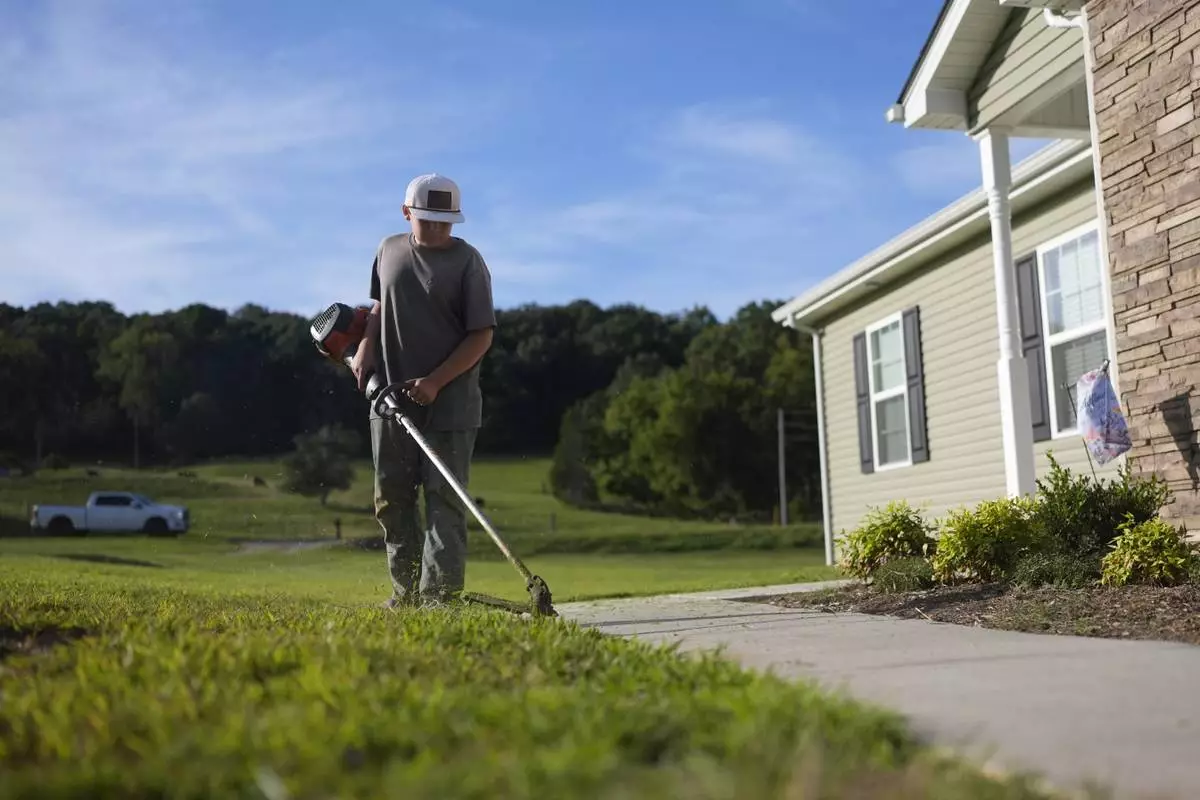
Michah Colley cuts the grass with a trimmer outside his home Wednesday, Aug. 27, 2025, in Talbott, Tenn. (AP Photo/George Walker IV)
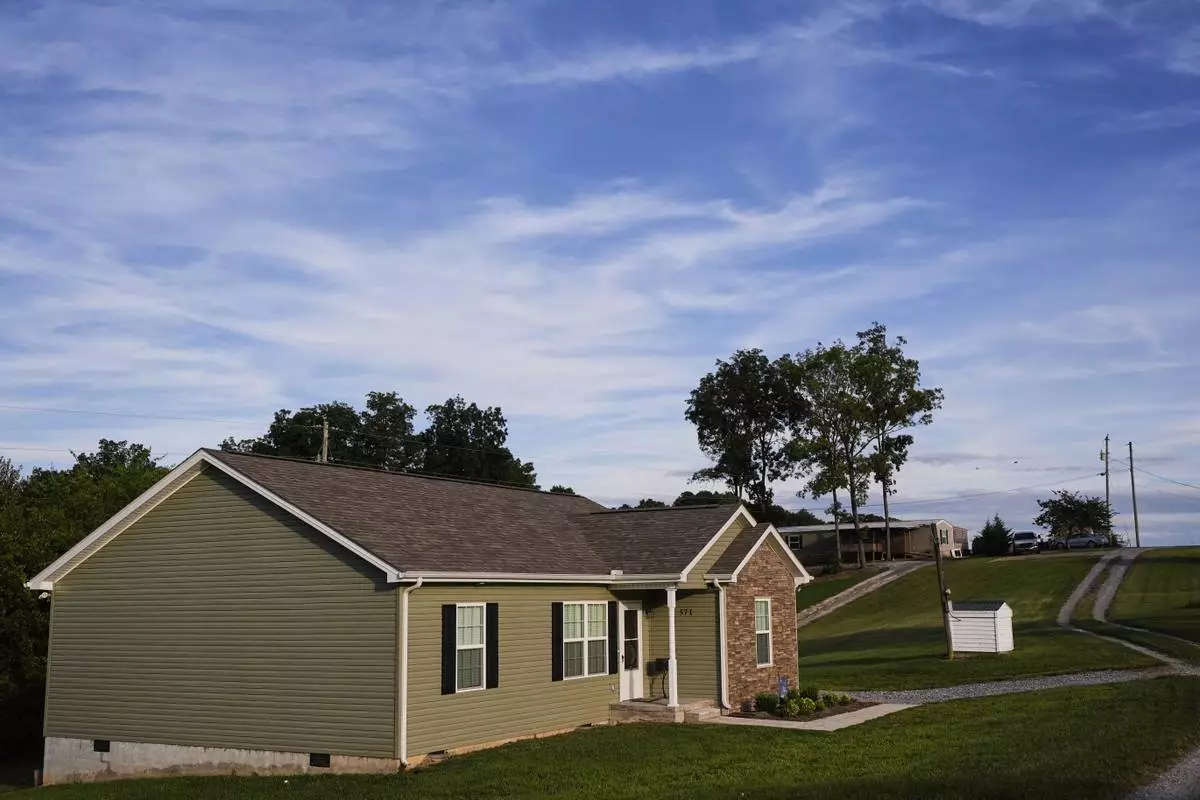
Heather Colley’s home is seen Wednesday, Aug. 27, 2025, in Talbott, Tenn. (AP Photo/George Walker IV)
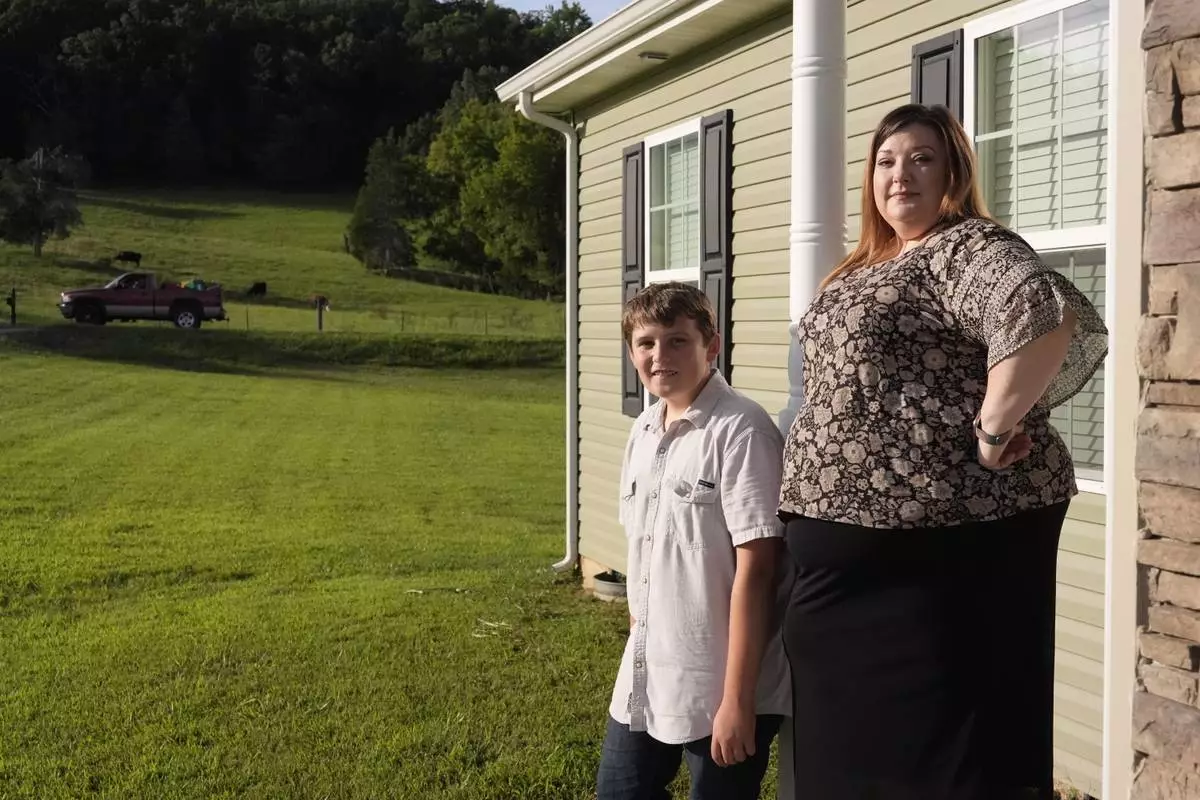
Heather Colley, right, poses with her son, Michah, outside their home Wednesday, Aug. 27, 2025, in Talbott, Tenn. (AP Photo/George Walker IV)