Skip to Content Facebook Feature Image

US decision to revoke Palestinian officials' entry visas violates international law: Palestinian presidency spokesman

China

US decision to revoke Palestinian officials' entry visas violates international law: Palestinian presidency spokesman
China

China

US decision to revoke Palestinian officials' entry visas violates international law: Palestinian presidency spokesman

2025-08-31 13:39 Last Updated At:14:07

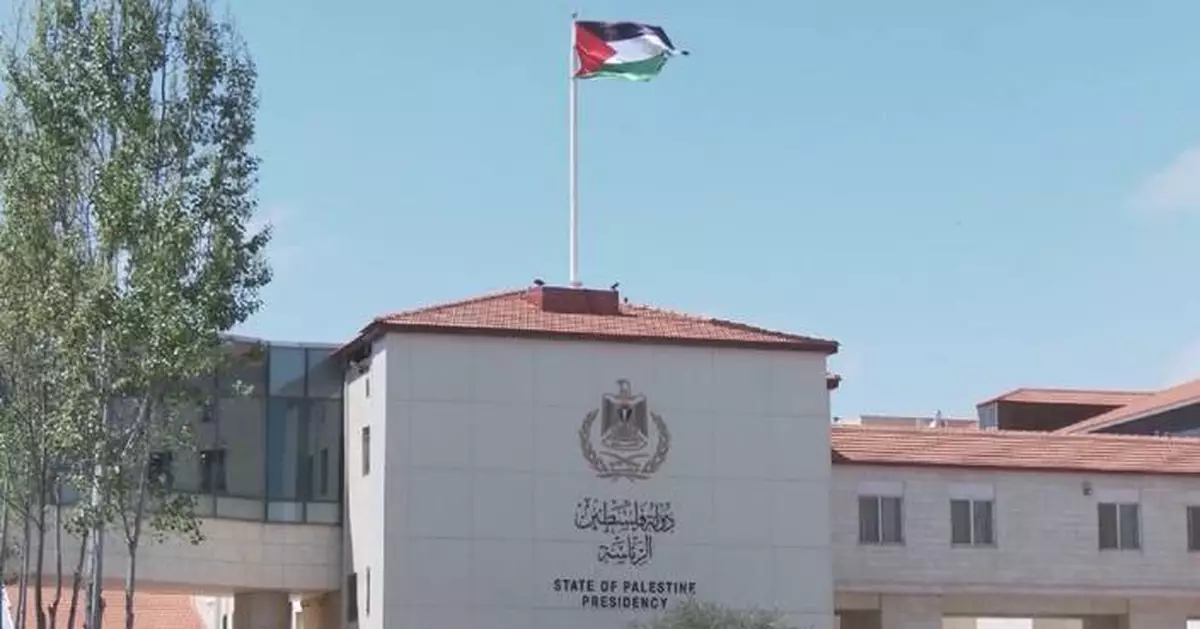
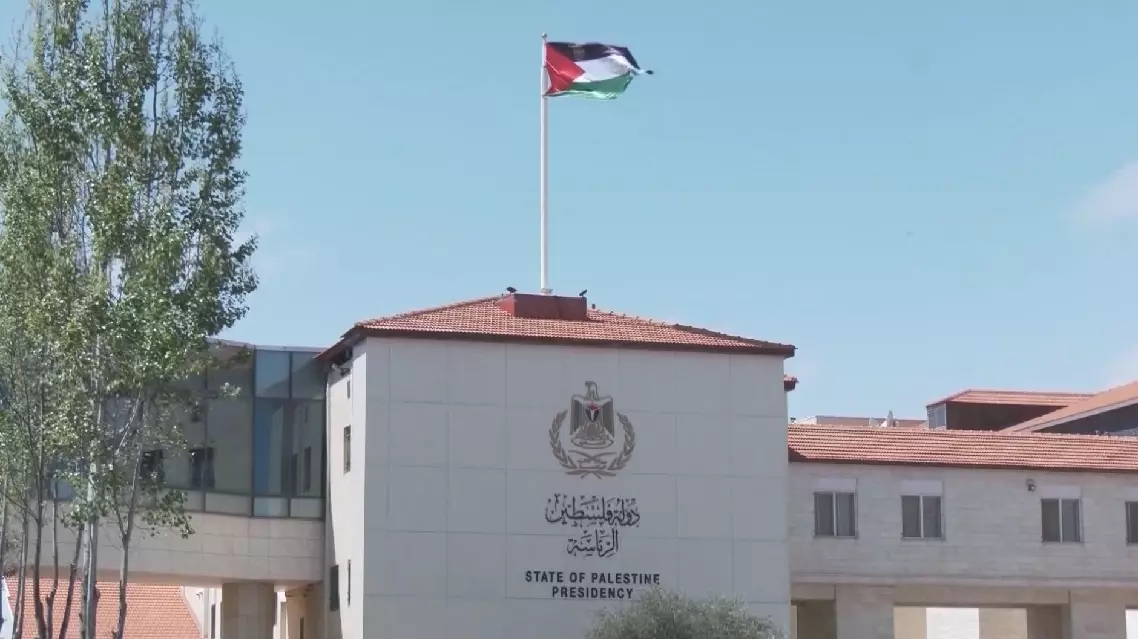
The spokesman for the Palestinian presidency Nabil Abu Rudeineh on Saturday slammed the U.S. decision to revoke the entry visas of Palestinian officials, saying the move violates international law.

The Palestinian side urges the United States to reverse its decision, the spokesman said.

The permanent observer of the State of Palestine to the United Nations Riyad Mansour previously said that Abbas plans to lead a delegation to attend the upcoming session of the United Nations General Assembly in September, and will also participate in a high-level meeting regarding the two-state solution co-hosted by France and Saudi Arabia on September 22.

The U.S. Department of State said on Friday in a statement that it was denying and revoking visas from members of the Palestine Liberation Organization (PLO) and the Palestinian Authority (PA) ahead of the upcoming session of the United Nations General Assembly (UNGA). This means that Palestinian leaders are likely unable to attend the session of the United Nations General Assembly scheduled for September in New York. Abu Rudeineh said that the U.S. revocation of visas for Palestinian President Mahmoud Abbas and other officials violates international law and the United Nations Headquarters Agreement.

The United Nations and the United States signed the United Nations Headquarters Agreement in 1947, which allows foreign diplomats to enter the United States to access the UN headquarters. Palestine was granted in 2012 the observer state status at the United Nations, giving it the right to participate as an observer in the United Nations General Assembly meetings and relevant work.

Abu Rudeineh urged the United States to reverse its decision to avoid further escalating tensions.

He also said that Palestine will continue to work with Arab countries and other friendly nations to advance the international recognition of the State of Palestine.

The International community has criticized the U.S. decision as unacceptable and unjust.

European Union (EU) foreign ministers held an informal meeting in the Danish capital of Copenhagen on Saturday. At a press conference after the meeting, EU foreign policy chief Kaja Kallas said that EU member states unanimously urged the United States to reconsider its decision to deny entry visas to Palestinian officials.

Senior Officials from several European countries have also criticized the U.S. government's refusal to issue visas to Abbas and other Palestinian officials preparing to attend the upcoming session of the United Nations General Assembly in New York, calling it "unacceptable."

French Foreign Minister Jean-Noel Barrot said at the EU meeting in Copenhagen that there should be no restrictions on access to the session of the United Nations General Assembly.

Spanish Foreign Minister Jose Manuel Albares echoed at the meeting that the U.S. action is unacceptable.

Also at the meeting, Irish Foreign Minister Simon Harris said that the EU should protest to the United States "in the strongest possible terms."

Spanish Prime Minister Pedro Sanchez said in a statement that the U.S. decision is "unjust" and that "Palestine has the right to make its voice heard at the United Nations and in all international meetings."

He said he had spoken with Abbas to express Spain's support.
US decision to revoke Palestinian officials' entry visas violates international law: Palestinian presidency spokesman
US decision to revoke Palestinian officials' entry visas violates international law: Palestinian presidency spokesman
China will take further steps to expand high-standard opening-up and create a new landscape of win-win cooperation in 2026, which marks the start of the 15th Five-Year Plan period (2026-2030), Commerce Minister Wang Wentao said in a recent interview with China Media Group.

Wang said opening up and cooperation for mutual benefit are integral to Chinese modernization. This year, China will actively expand voluntary opening up.

The country will steadily open up such areas as value-added telecommunications, biotechnology and wholly foreign-owned hospitals, while accelerating comprehensive pilot and demonstration programs for expanded opening-up in the services sector, he noted.

"We will expand the scope and regions of unilateral opening-up and ensure the implementation of zero-tariff treatment on 100 percent of tariff lines for all African countries that have diplomatic relations with China. We will vigorously promote the effective implementation of policies for special customs operations of the Hainan Free Trade Port, further enhance the level of trade and investment liberalization and facilitation, optimize the regional layout and coverage of pilot free trade zones, and support these zones in carrying out more robust institutional opening-up trials in areas such as market access, environmental standards and government procurement, so as to better leverage their role as comprehensive pilot platforms for reform and opening-up," said Wang.

Wang said China will promote the orderly planning of cross-border industrial and supply chains.

Efforts will be made to deepen economic and trade cooperation under the Belt and Road Initiative, enhance integration and connectivity across production and supply chains, and encourage cooperation in areas including green development, the digital economy, green minerals, new infrastructure and new energy so as to help build global production and supply chain partnerships that are equal, inclusive and constructive, he noted.

"We will give play to the platform role of overseas economic and trade cooperation zones, expand overseas marketing networks and explore international markets through outward investment, achieve mutual promotion between investment and trade, and advance the integrated development of trade and investment. We will also improve the overseas comprehensive service system and the national-level overseas comprehensive service platform," said the minister.

In addition, China will participate constructively in global economic governance, according to the minister.

In 2026, Wang said, China will pursue flexible and pragmatic approaches to negotiate trade and investment agreements with more willing countries and regions, while strengthening economic and trade cooperation under multilateral frameworks such as BRICS, G20 and the Shanghai Cooperation Organization, to further promote mutual benefit and win-win outcomes.

China to expand high-standard opening-up to foster win-win cooperation: minister

China to expand high-standard opening-up to foster win-win cooperation: minister

Recommended Articles