DEIR AL-BALAH, Gaza Strip (AP) — The Israeli military announced Sunday that it killed the longtime spokesperson for Hamas' armed wing, as the country's security cabinet met to discuss the expanding offensive in some of Gaza 's most populated areas.
There were no plans to discuss negotiations for a ceasefire at the meeting, according to an official who spoke on condition of anonymity because they were not authorized to speak with the media.
Click to Gallery
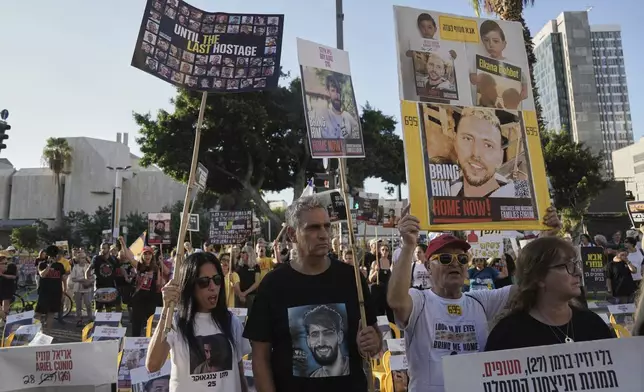
Relatives and supporters of hostages held by Hamas in the Gaza Strip take part in a protest demanding their immediate release and against the Israeli offensive in Gaza City, as they gather in Tel Aviv, Sunday, Aug. 31, 2025. (AP Photo/Mahmoud Illean)
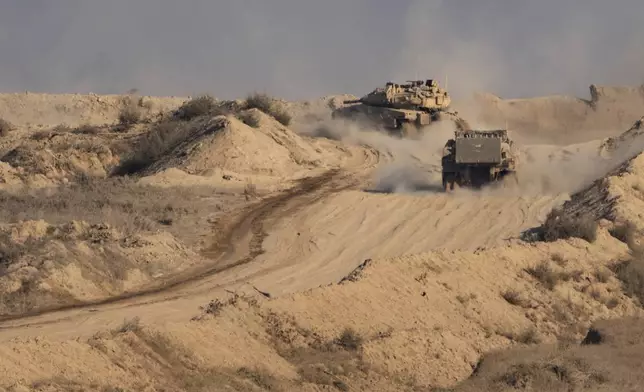
An Israeli tank and an armored personnel carrier (APC) move through an area of the Gaza Strip, as seen from southern Israel, Sunday, Aug. 31, 2025. (AP Photo/Maya Levin)
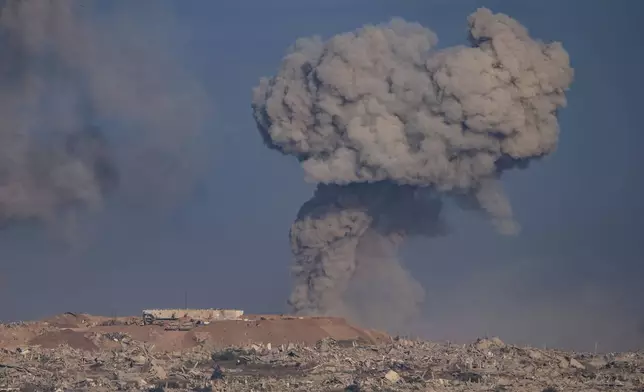
Smoke rises to the sky following an Israeli military strike in the northern Gaza Strip, as seen from southern Israel, Sunday, Aug. 31, 2025. (AP Photo/Maya Levin)
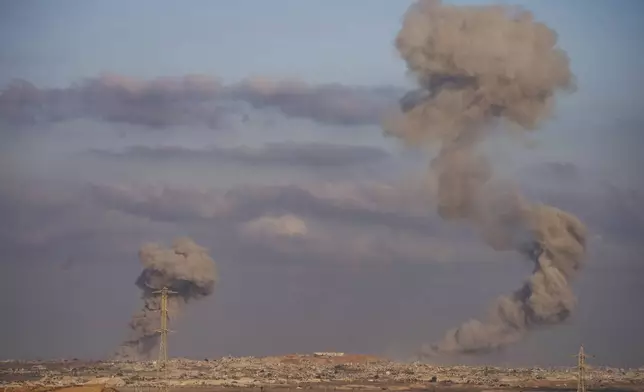
Smokes rise to the sky following Israeli military strikes in the northern Gaza Strip, as seen from southern Israel, Sunday, Aug. 31, 2025. (AP Photo/Maya Levin)
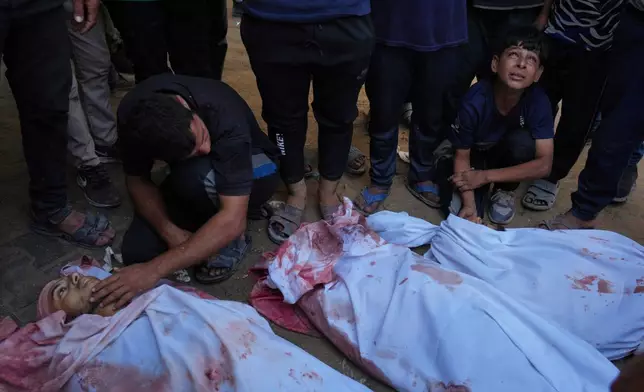
Young Palestinian Tariq Nasser, 12, right, mourns over the body of his brother Ayman Nasser, who was killed in an Israeli military strike, during his funeral outside Shifa Hospital in Gaza City, Sunday, Aug. 31, 2025. (AP Photo/Jehad Alshrafi)

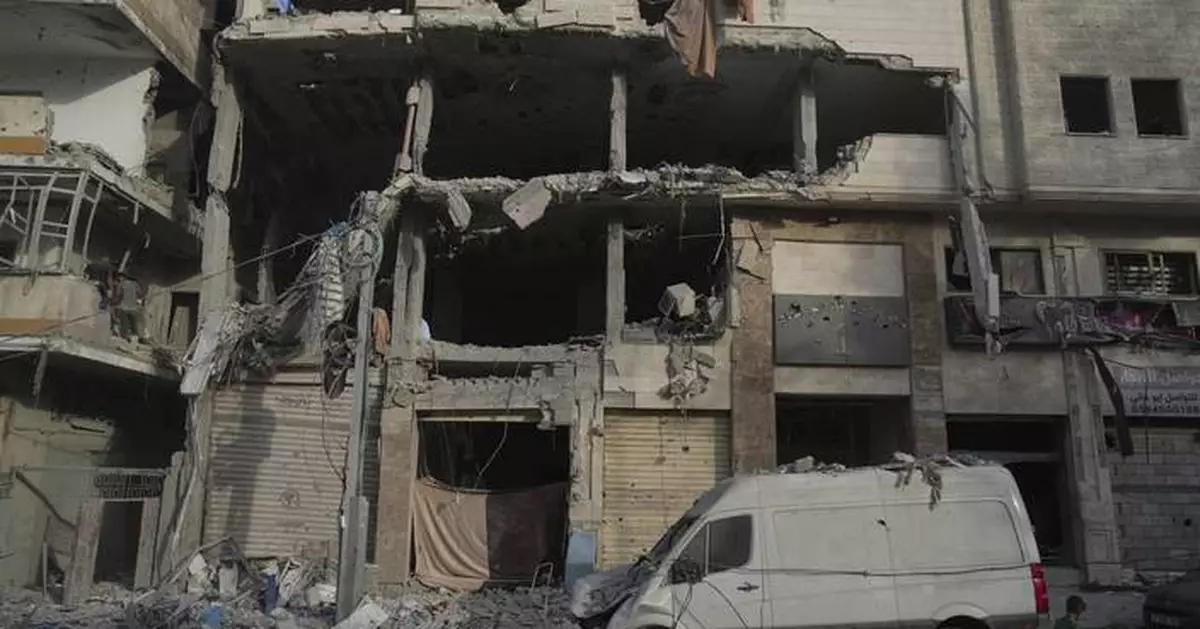
Palestinians stand next to a heavily damaged building in the Rimal neighborhood, in Gaza City, Sunday, Aug. 31, 2025, a day after it was hit by an Israeli military strike that killed several people. (AP Photo/Jehad Alshrafi)

A Palestinian boy walks past a heavily damaged building in the Rimal neighborhood, in Gaza City, Sunday, Aug. 31, 2025, a day after it was hit by an Israeli military strike that killed several people. (AP Photo/Jehad Alshrafi)
Israeli Defense Minister Israel Katz identified the spokesperson as Abu Obeida, the nom de guerre for the person who represented Hamas’ Qassam Brigades. He was killed over the weekend. Hamas has not commented on the claim.
Abu Obeida’s last statement was issued Friday as Israel began the initial stages of the new offensive and declared Gaza City a combat zone. His statement said the militants would do their best to protect living hostages but warned that they would be in areas of fighting. He said the remains of dead hostages would “disappear forever.”
Israel’s military said the spokesperson, whom it identified as Hudahaifa Kahlout, had been behind the release of videos showing hostages as well as footage of the Hamas-led attack that sparked the war. The military also reiterated a threat against remaining Hamas leaders abroad.
Israel has killed many of Hamas’ military and political leaders as it attempts to dismantle the group and prevent an attack like the one on Oct. 7, 2023, when militants abducted 251 people and killed around 1,200, mostly civilians, in southern Israel.
Fewer than 50 hostages remain in Gaza, and Israel believes about 20 are alive. Families protested outside the security cabinet meeting, angry that it was not discussing a ceasefire.
“It is our side that is unwilling to sign a comprehensive deal and is unwilling to end the war and is deciding to sacrifice my child while he is still alive,” said Einav Zangauker, mother of hostage Matan Zangauker.
At least 43 Palestinians were killed since Saturday, most of them in Gaza City, according to local hospitals. Shifa Hospital, the territory’s largest, said 29 bodies were brought to its morgue, including 10 people killed while seeking aid.
“Where are the resistance fighters that (Prime Minister Benjamin) Netanyahu claims he is bombing? Does he consider stones resistance fighters?” said a relative of one of the dead at Shifa Hospital, who did not give her name.
Hospital officials reported 11 other fatalities from strikes and gunfire. Al-Awda Hospital said seven were civilians trying to reach aid.
Witnesses said Israeli troops opened fire on crowds in the Netzarim Corridor, an Israeli military zone that bisects Gaza.
“We were trying to get food, but we were met with the occupation’s bullets,” said Ragheb Abu Lebda, who saw at least three people bleeding from gunshot wounds. “It’s a death trap.”
Civilians have been killed as United Nations humanitarian convoys are overwhelmed by looters and desperate crowds, or shot on their way to sites run by the Gaza Humanitarian Foundation, an Israeli-backed U.S. contractor.
The GHF told The Associated Press that there was “no incident at or near our site today.” Israel's military did not respond to questions about Sunday’s casualties.
Israel for weeks has been operating on the outskirts of Gaza City to prepare for the offensive. The military has intensified air attacks on coastal areas of the city, including Rimal. Smoke rose over the city on Sunday.
In Rimal, quiet Palestinians looked through the rubble after a strike, some venturing into the upper floors of shattered buildings that were still standing. A child tried to pull a shopping cart loaded with plastic jugs over the debris.
The military has urged the hundreds of thousands of Palestinians in Gaza City to flee south, but many say they are exhausted after repeated displacements or unconvinced that any safe place in Gaza remains.
More than 90% of the over 2 million Palestinians in Gaza have been displaced at least once during the war, many of them multiple times, according to the U.N.
Israel has signaled that aid to Gaza City will be reduced, and it has announced new infrastructure projects in southern Gaza — steps that Palestinians say amount to forced displacement.
Seven more Palestinian adults died of malnutrition-related causes over the last 24 hours, Gaza's Health Ministry said.
That brought the adult death toll from malnutrition-related causes to 215 since June, when the ministry started to count them, it said, and 124 children have died of malnutrition-related causes since the war began.
In the largest attempt yet to break the Israeli blockade of the territory by sea, a flotilla of ships departed Sunday from Barcelona for Gaza with humanitarian aid and activists on board. Similar attempts in the past have failed.
At least 63,371 Palestinians have died during the war, said the ministry, which does not say how many were fighters or civilians but that around half have been women and children.
The ministry is part of the Hamas-run government and staffed by medical professionals. The U.N. and independent experts consider it the most reliable source on war casualties. Israel disputes the figures but has not provided its own.
Metz reported from Jerusalem and Magdy from Cairo. Associated Press Writer Melanie Lidman in Tel Aviv, Israel, contributed to this report.
Follow AP coverage at https://apnews.com/hub/israel-hamas-war
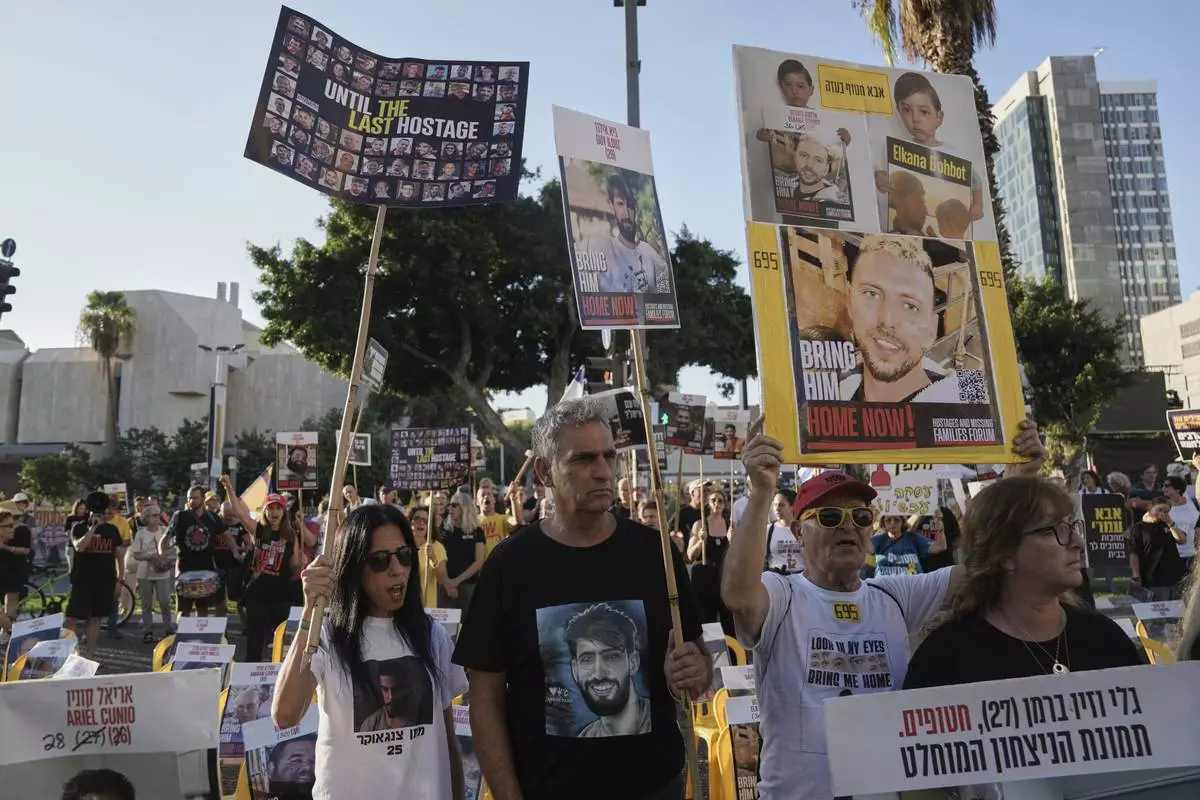
Relatives and supporters of hostages held by Hamas in the Gaza Strip take part in a protest demanding their immediate release and against the Israeli offensive in Gaza City, as they gather in Tel Aviv, Sunday, Aug. 31, 2025. (AP Photo/Mahmoud Illean)

An Israeli tank and an armored personnel carrier (APC) move through an area of the Gaza Strip, as seen from southern Israel, Sunday, Aug. 31, 2025. (AP Photo/Maya Levin)
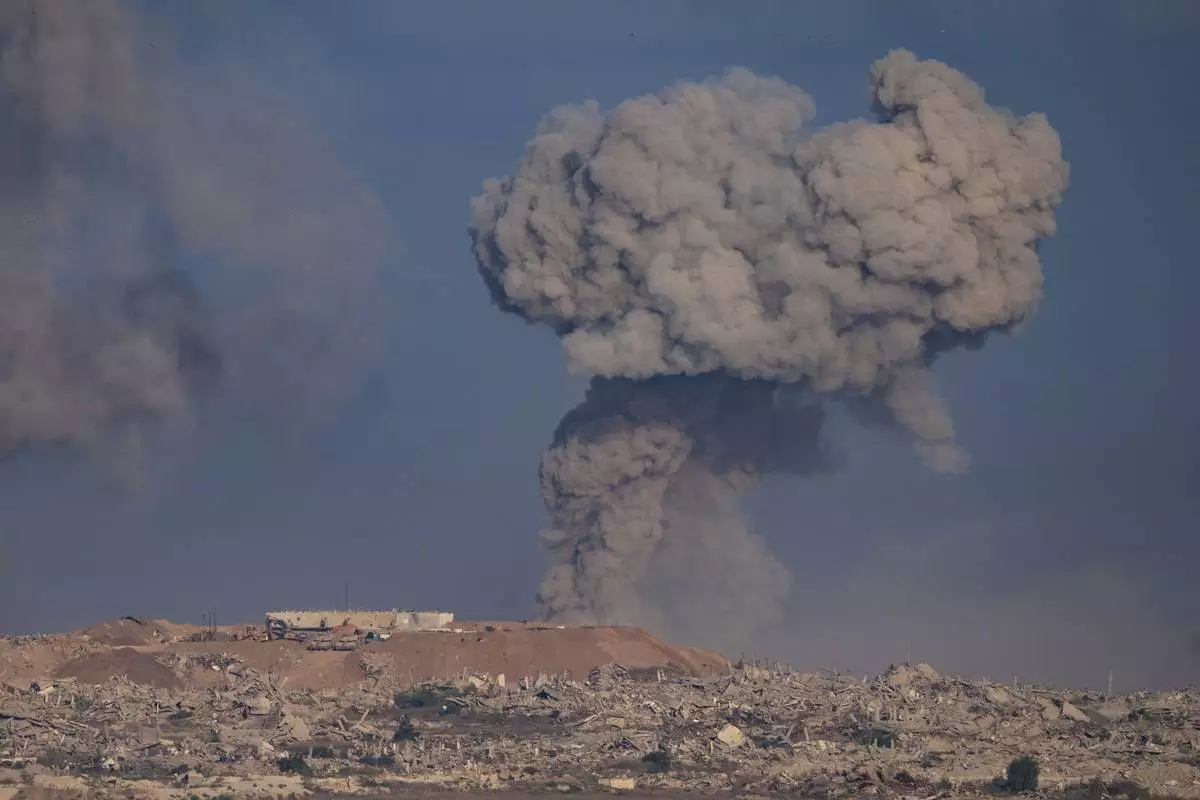
Smoke rises to the sky following an Israeli military strike in the northern Gaza Strip, as seen from southern Israel, Sunday, Aug. 31, 2025. (AP Photo/Maya Levin)
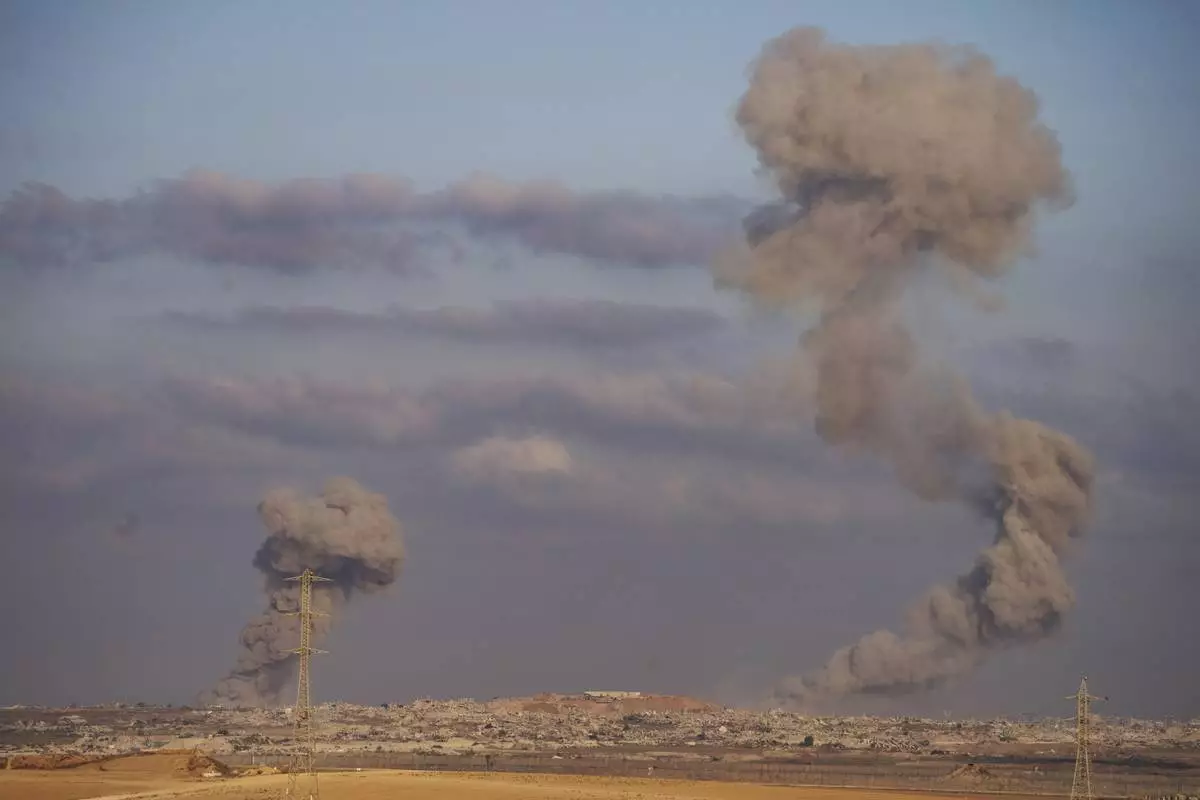
Smokes rise to the sky following Israeli military strikes in the northern Gaza Strip, as seen from southern Israel, Sunday, Aug. 31, 2025. (AP Photo/Maya Levin)
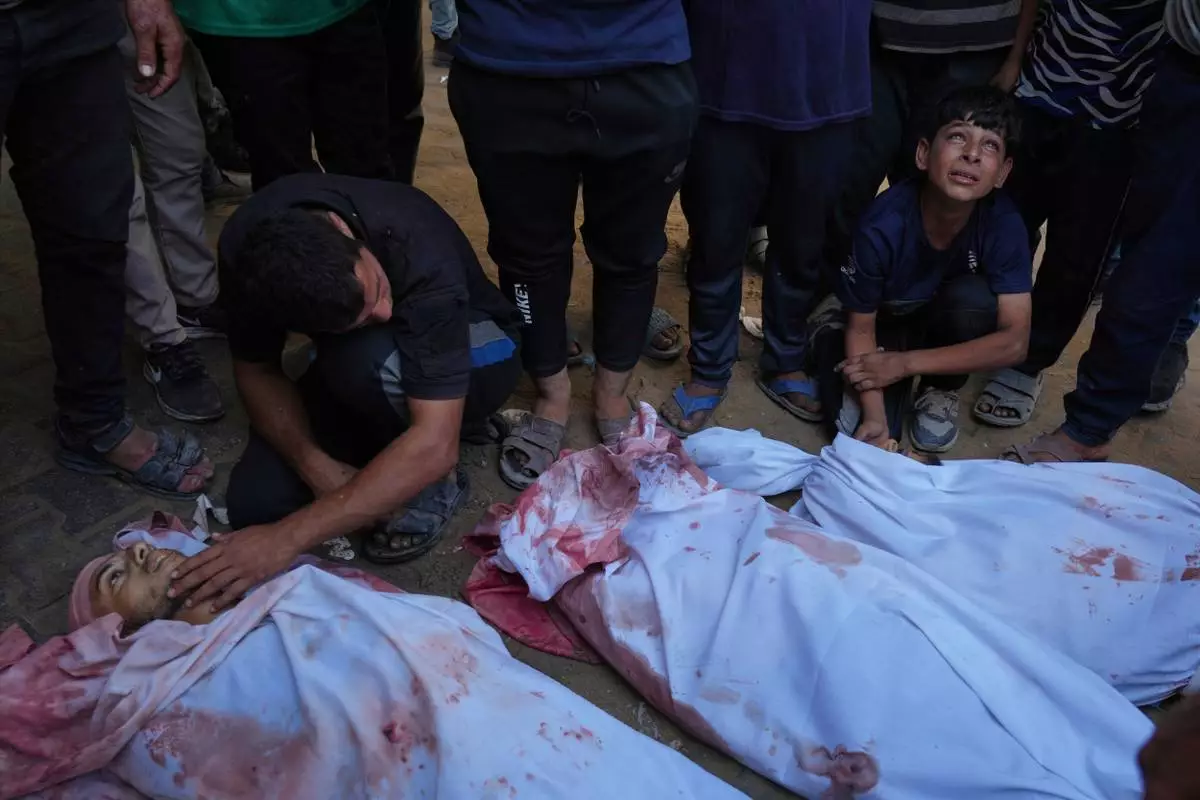
Young Palestinian Tariq Nasser, 12, right, mourns over the body of his brother Ayman Nasser, who was killed in an Israeli military strike, during his funeral outside Shifa Hospital in Gaza City, Sunday, Aug. 31, 2025. (AP Photo/Jehad Alshrafi)
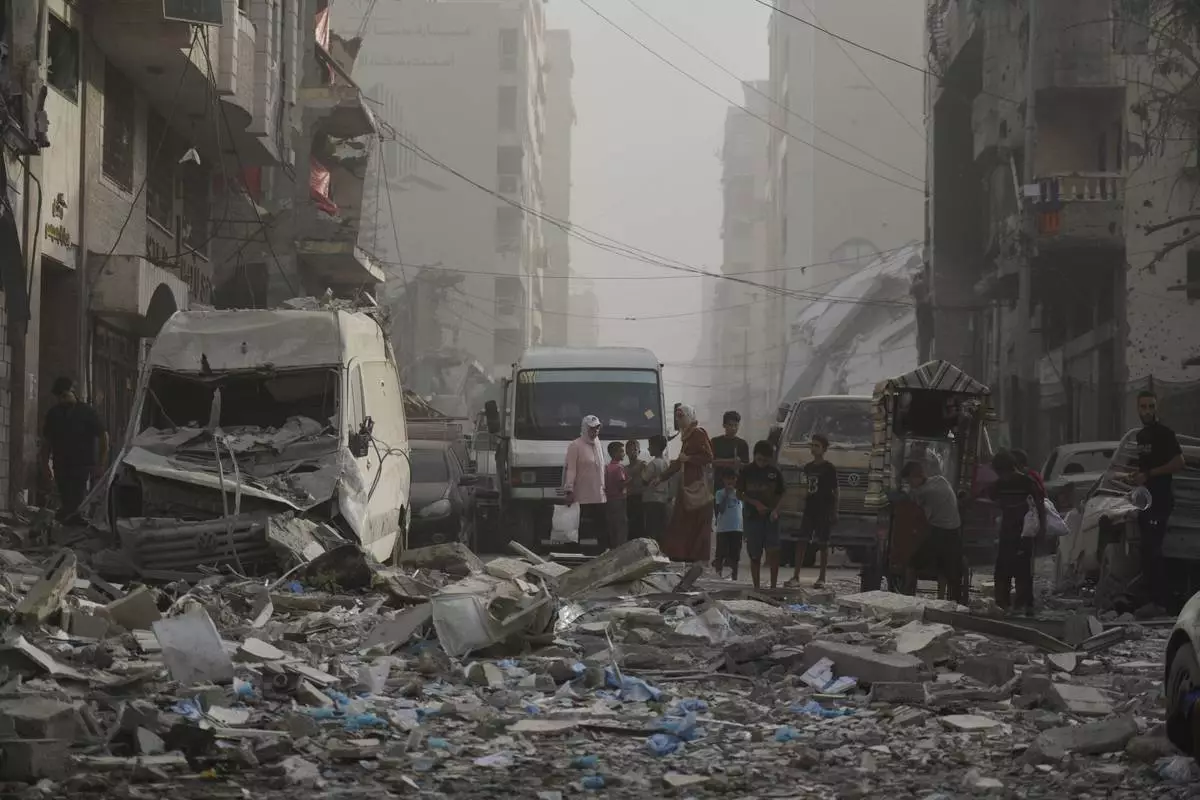
Palestinians stand next to a heavily damaged building in the Rimal neighborhood, in Gaza City, Sunday, Aug. 31, 2025, a day after it was hit by an Israeli military strike that killed several people. (AP Photo/Jehad Alshrafi)
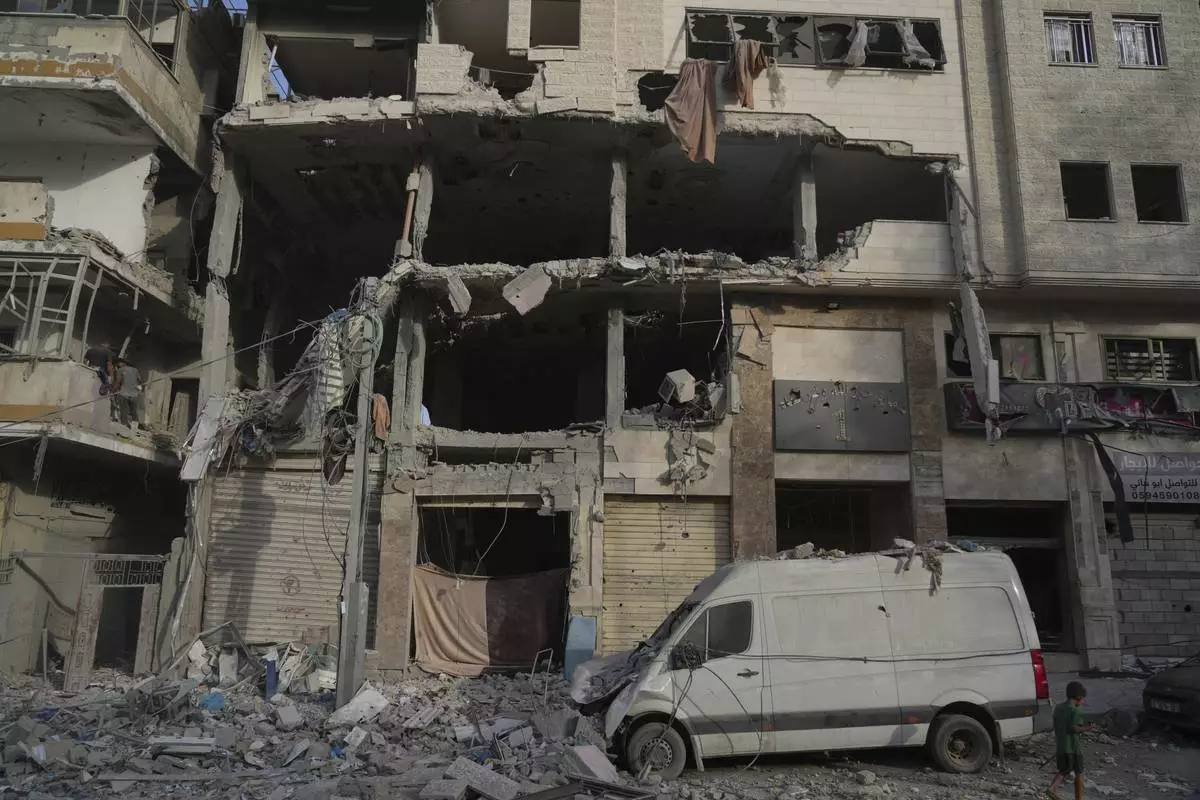
A Palestinian boy walks past a heavily damaged building in the Rimal neighborhood, in Gaza City, Sunday, Aug. 31, 2025, a day after it was hit by an Israeli military strike that killed several people. (AP Photo/Jehad Alshrafi)