Skip to Content Facebook Feature Image

'You get to fly': Why Dutch athletes pole vault over canals

News

'You get to fly': Why Dutch athletes pole vault over canals
News

News

'You get to fly': Why Dutch athletes pole vault over canals

2025-09-01 16:00 Last Updated At:16:10

KOCKENGEN, Netherlands (AP) — A split second of flight, then a landing on the sand — or a splashdown in a canal.

That's the thrill of the Dutch sport of “fierljeppen” — far leaping — which sees athletes hoist themselves up and over canals on slender carbon poles in the Netherlands countryside.

More Images
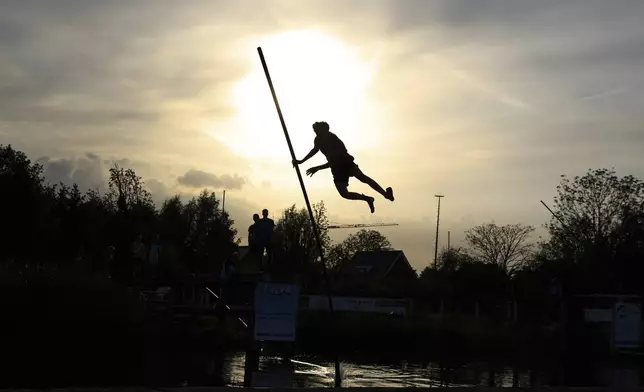
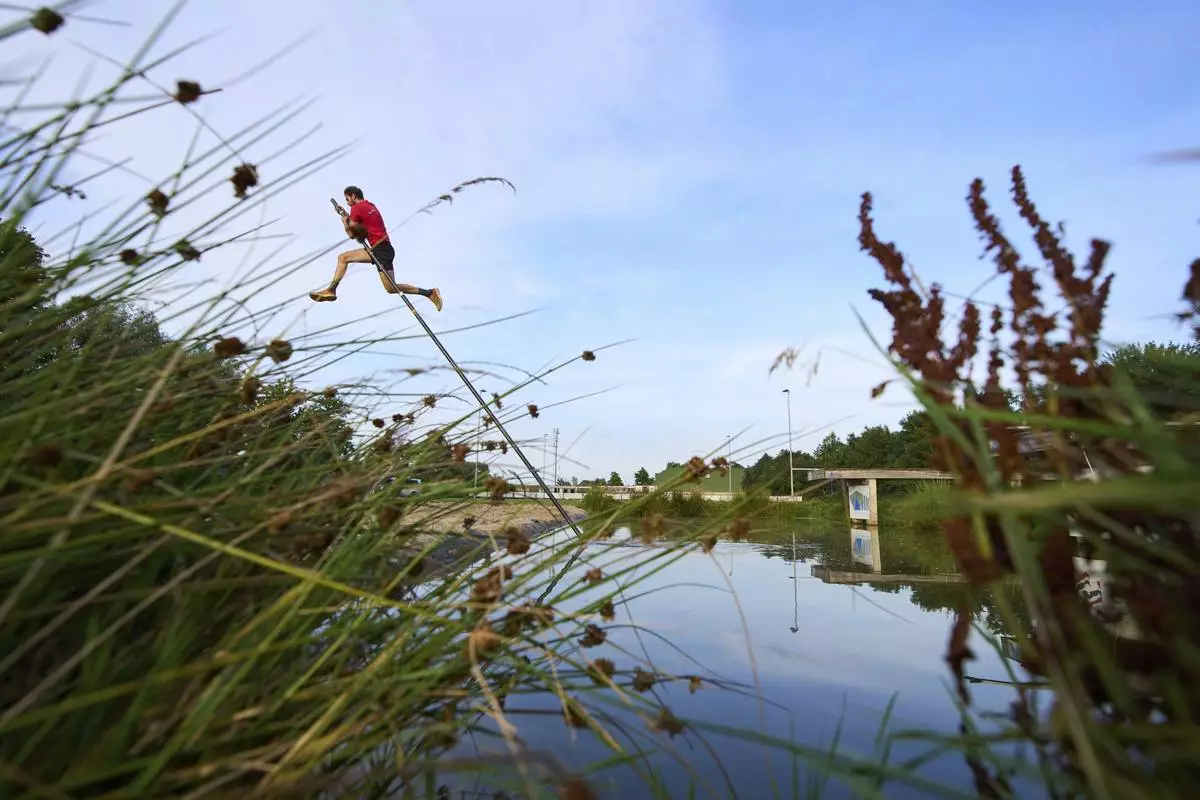
An athlete jumps across a body of water with a long carbon pole during a Fierljeppen competition in Kockengen, Netherlands, Wednesday, Aug. 27, 2025. (AP Photo/Peter Dejong)
An athlete jumps across a body of water with a long carbon pole during a Fierljeppen competition in Kockengen, Netherlands, Wednesday, Aug. 27, 2025. (AP Photo/Peter Dejong)
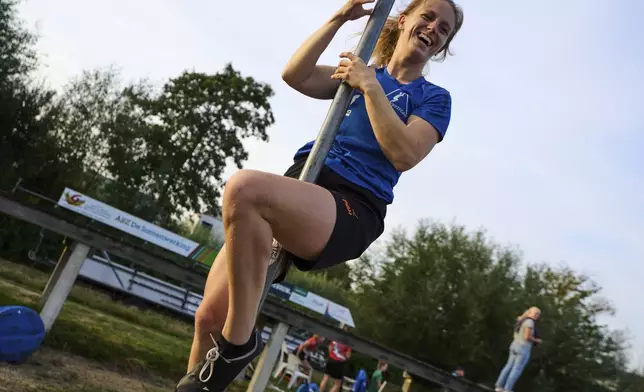
A female jumps towards the carbon pole to cross a body of water during a Fierljeppen competition in Kockengen, Netherlands, Wednesday, Aug. 27, 2025. (AP Photo/Peter Dejong)
A female jumps towards the carbon pole to cross a body of water during a Fierljeppen competition in Kockengen, Netherlands, Wednesday, Aug. 27, 2025. (AP Photo/Peter Dejong)
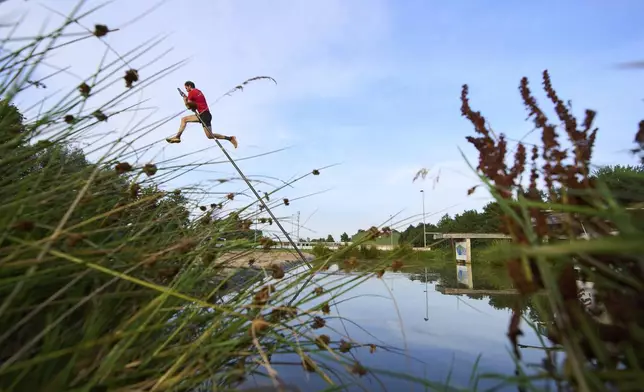
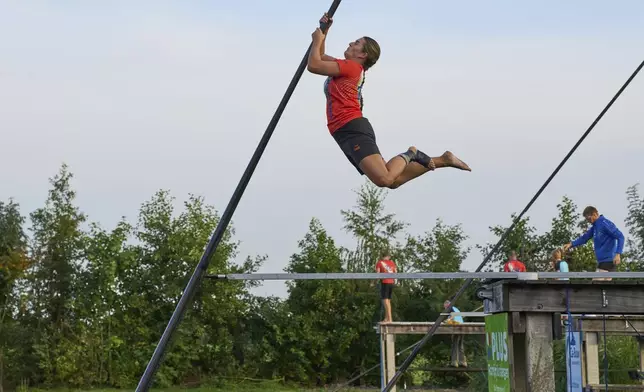
An athlete practices the climbing part of the jump prior to crossing a body of water with a carbon pole during a Fierljeppen competition in Kockengen, Netherlands, Wednesday, Aug. 27, 2025. (AP Photo/Peter Dejong)

An athlete practices the climbing part of the jump prior to crossing a body of water with a carbon pole during a Fierljeppen competition in Kockengen, Netherlands, Wednesday, Aug. 27, 2025. (AP Photo/Peter Dejong)

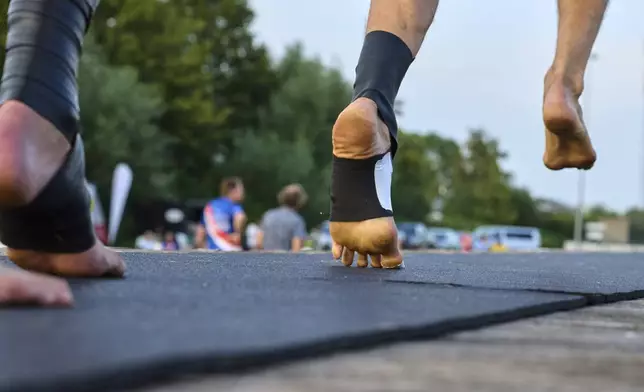
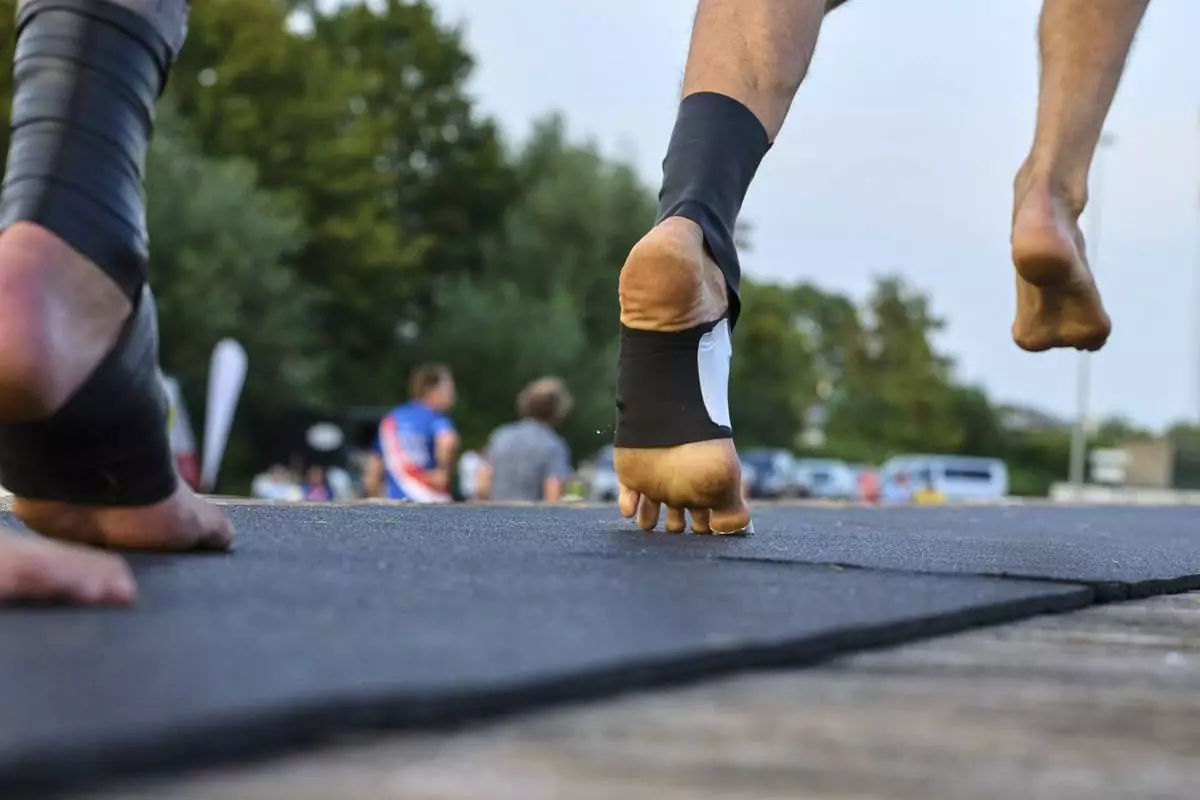
An athlete, wearing a rubber band on his foot to climb the pole, runs towards a long pole to jump across a body of water during a Fierljeppen competition in Kockengen, Netherlands, Wednesday, Aug. 27, 2025. (AP Photo/Peter Dejong)

An athlete, wearing a rubber band on his foot to climb the pole, runs towards a long pole to jump across a body of water during a Fierljeppen competition in Kockengen, Netherlands, Wednesday, Aug. 27, 2025. (AP Photo/Peter Dejong)

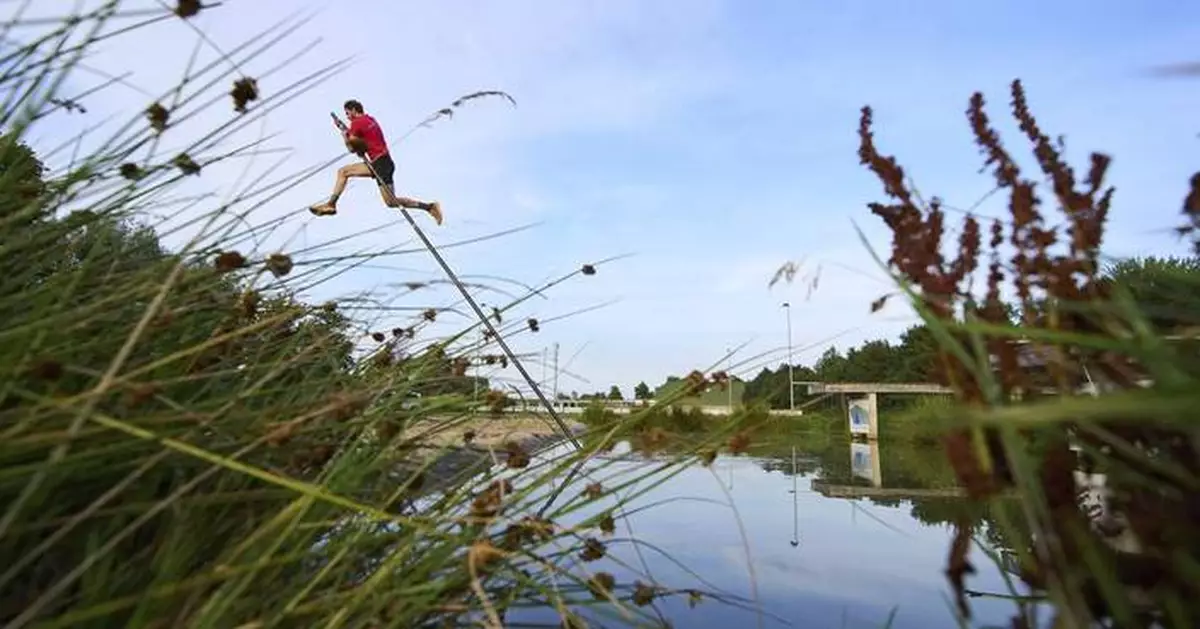
An athlete practices jumping across a body of water during a Fierljeppen competition in Kockengen, Netherlands, Wednesday, Aug. 27, 2025. (AP Photo/Peter Dejong)

An athlete practices jumping across a body of water during a Fierljeppen competition in Kockengen, Netherlands, Wednesday, Aug. 27, 2025. (AP Photo/Peter Dejong)

“The moment you are at the top of the pole and you get to jump (off) of the pole, in that small moment you get to fly and that’s just really nice to experience," 25-year-old athlete Bas van Leeuwen said as jumpers gathered for a competition in a village near Utrecht this week.

Athletes run to a carbon pole positioned with one end in the canal and tilted toward the bank. They run along a jetty to the pole, grab on and try to shin up the pole as fast as possible before leaping to a sandy area on the other bank. Unlike in Olympic pole vaulting, the aim is distance, not height.

Lose momentum, or slip too far to one side, and athletes can end up soaked in the canal. Even a successful landing on the sand means a heavy, even painful, impact.

“The sport is not really that dangerous. I think more people get injured during soccer,” says van Leeuwen, who's recovered from an ankle ligament injury sustained while leaping over a canal. “The most common (injury) is the ankles or the knees because when you land, that is a fragile part of the body. Sometimes it snaps.”

Using a pole to cross the Netherlands' many canals was once a handy way for farmers to get about in remote areas. It took on its modern competitive form in the 1950s and '60s, says Wim Roskam, a historian of “fierljeppen”.

Technology has made bigger and bigger leaps possible, and the record now stands at 22.21 meters (just over 24 yards), Roskam said.

“The pole, first it was wood. Very heavy, can break,” he said. "Then aluminum, less heavy but still a bit heavy, and now it’s carbon.”

Crowds aren't big, but the leapers and their fans are dedicated to a sport which has a loyal following in Dutch villages but is nearly unknown in nearby cities, Roskam said. The community is key.

“We are kind of a family. We know each other, we trust each other,” Roskam said. “I can leave my phone here and it’s all right, no problem. We help each other and when there (are) some sad things, we are there for each other too.”

AP Sports Writer James Ellingworth in Zandvoort, Netherlands, contributed to this report.

AP sports: https://apnews.com/sports
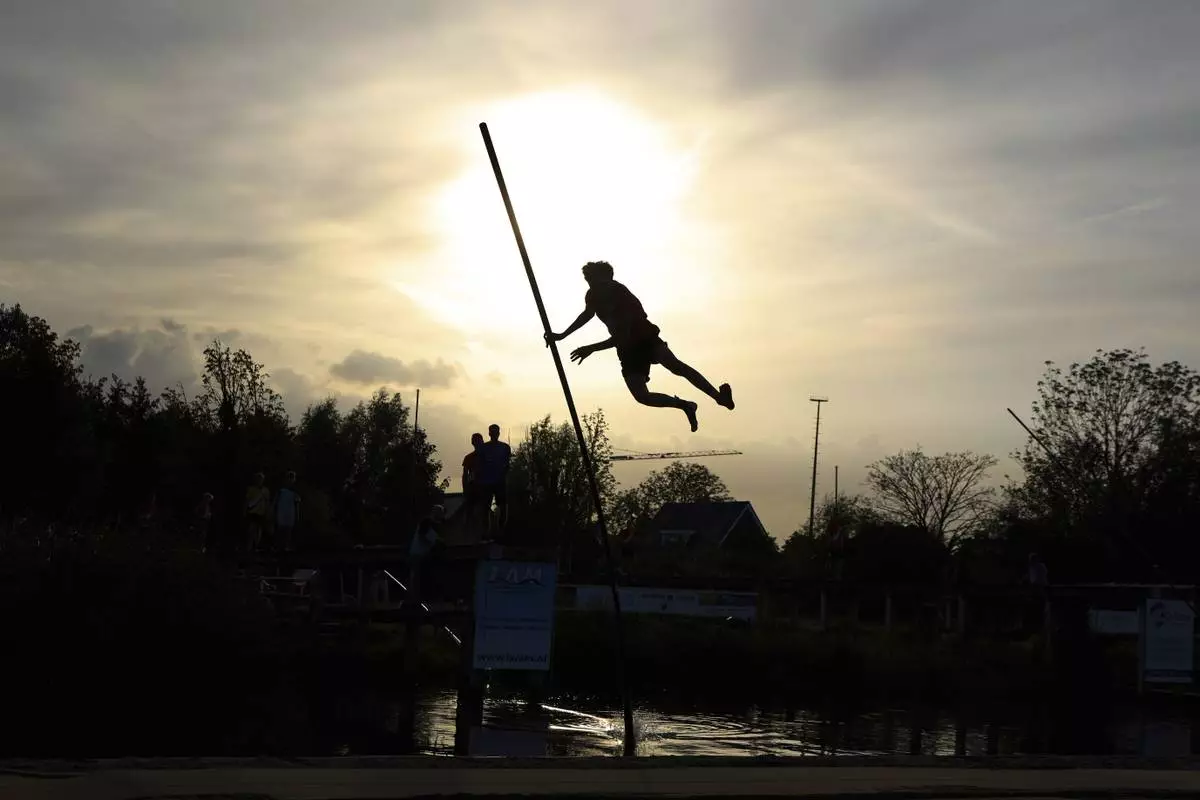
An athlete jumps across a body of water with a long carbon pole during a Fierljeppen competition in Kockengen, Netherlands, Wednesday, Aug. 27, 2025. (AP Photo/Peter Dejong)
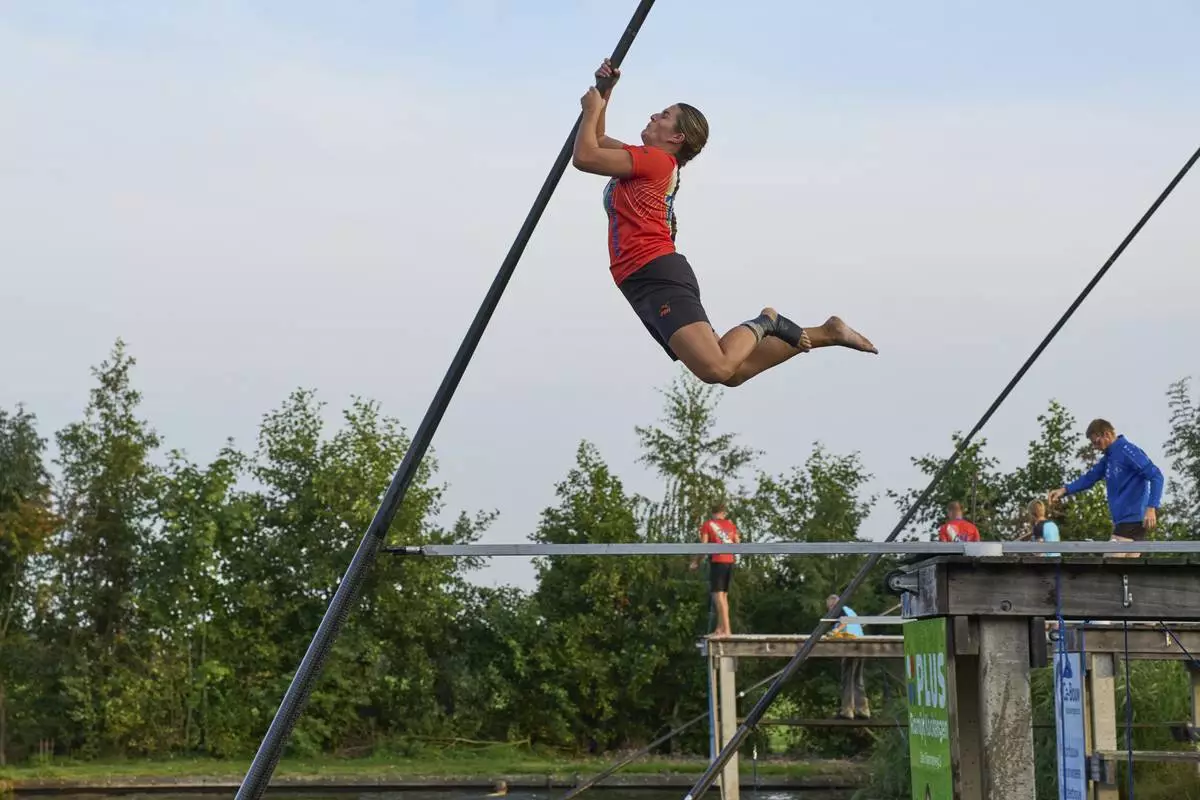
An athlete jumps across a body of water with a long carbon pole during a Fierljeppen competition in Kockengen, Netherlands, Wednesday, Aug. 27, 2025. (AP Photo/Peter Dejong)
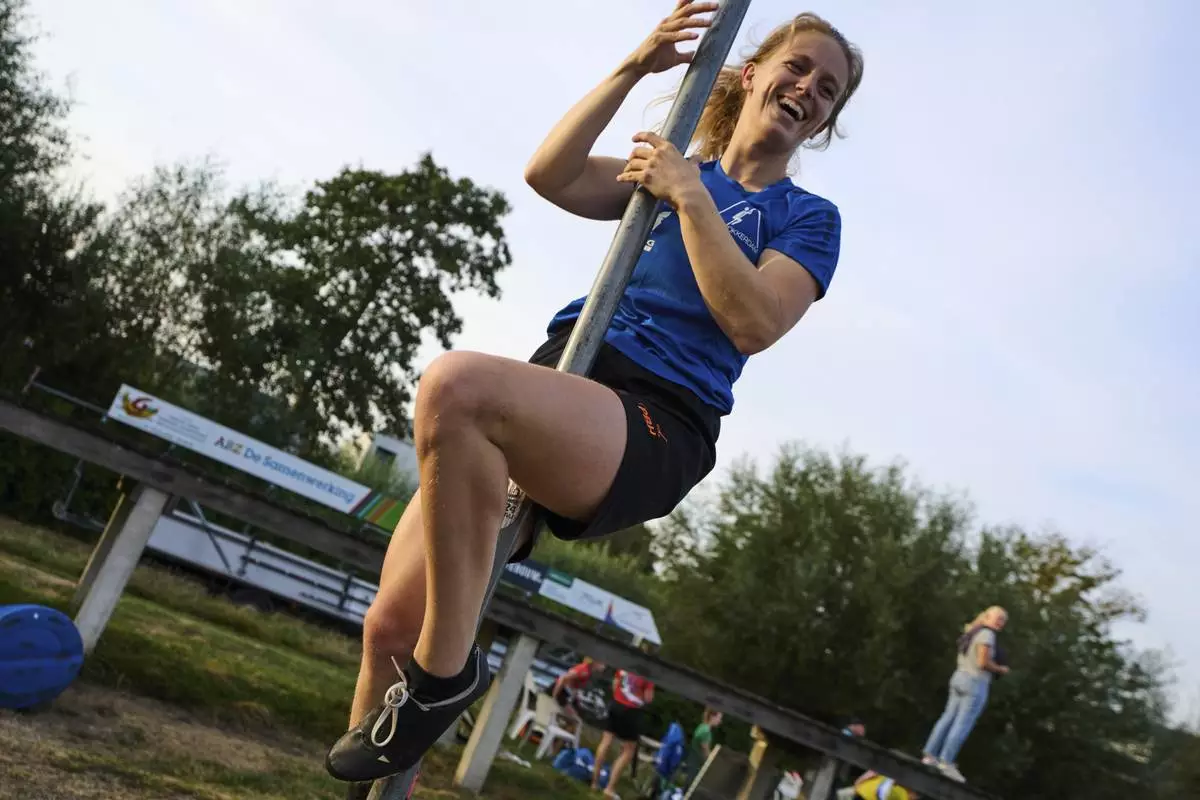
A female jumps towards the carbon pole to cross a body of water during a Fierljeppen competition in Kockengen, Netherlands, Wednesday, Aug. 27, 2025. (AP Photo/Peter Dejong)
A female jumps towards the carbon pole to cross a body of water during a Fierljeppen competition in Kockengen, Netherlands, Wednesday, Aug. 27, 2025. (AP Photo/Peter Dejong)
An athlete practices the climbing part of the jump prior to crossing a body of water with a carbon pole during a Fierljeppen competition in Kockengen, Netherlands, Wednesday, Aug. 27, 2025. (AP Photo/Peter Dejong)


An athlete practices the climbing part of the jump prior to crossing a body of water with a carbon pole during a Fierljeppen competition in Kockengen, Netherlands, Wednesday, Aug. 27, 2025. (AP Photo/Peter Dejong)
An athlete, wearing a rubber band on his foot to climb the pole, runs towards a long pole to jump across a body of water during a Fierljeppen competition in Kockengen, Netherlands, Wednesday, Aug. 27, 2025. (AP Photo/Peter Dejong)
An athlete, wearing a rubber band on his foot to climb the pole, runs towards a long pole to jump across a body of water during a Fierljeppen competition in Kockengen, Netherlands, Wednesday, Aug. 27, 2025. (AP Photo/Peter Dejong)

An athlete practices jumping across a body of water during a Fierljeppen competition in Kockengen, Netherlands, Wednesday, Aug. 27, 2025. (AP Photo/Peter Dejong)

An athlete practices jumping across a body of water during a Fierljeppen competition in Kockengen, Netherlands, Wednesday, Aug. 27, 2025. (AP Photo/Peter Dejong)

WASHINGTON (AP) — U.S. forces in the Caribbean Sea have seized another sanctioned oil tanker that the Trump administration says has ties to Venezuela, part of a broader U.S. effort to take control of the South American country’s oil.

Homeland Security Secretary Kristi Noem wrote on social media that the U.S. Coast Guard had boarded the Motor Tanker Veronica early Thursday. She said the ship had previously passed through Venezuelan waters and was operating in defiance of President Donald Trump’s "established quarantine of sanctioned vessels in the Caribbean.”

U.S. Southern Command said Marines and sailors launched from the aircraft carrier USS Gerald R. Ford to take part in the operation alongside a Coast Guard tactical team, which Noem said conducted the boarding as in previous raids. The military said the ship was seized “without incident.”

Noem posted a brief video that appeared to show part of the ship’s capture. The black-and-white footage showed helicopters hovering over the deck of a merchant vessel while armed troops dropped down on the deck by rope.

The Veronica is the sixth sanctioned tanker seized by U.S. forces as part of the effort by Trump’s administration to control the production, refining and global distribution of Venezuela’s oil products and the fourth since the U.S. ouster of Venezuela President Nicolás Maduro in a surprise nighttime raid almost two weeks ago.

The Veronica last transmitted its location on Jan. 3 as being at anchor off the coast of Aruba, just north of Venezuela’s main oil terminal. According to the data it transmitted at the time, it was partially filled with crude.

The ship is currently listed as flying the flag of Guyana and is considered part of the shadow fleet that moves cargoes of oil in violation of U.S. sanctions.

According to its registration data, the ship also has been known as the Galileo, owned and managed by a company in Russia. In addition, a tanker with the same registration number previously sailed under the name Pegas and was sanctioned by the U.S. Treasury Department for moving cargoes of illicit Russian oil.

As with prior posts about such raids, Noem and the military framed the seizure as part of an effort to enforce the law. Noem argued that the multiple captures show that “there is no outrunning or escaping American justice.”

However, other officials in Trump's Republican administration have made clear that they see the actions as a way to generate cash as they seek to rebuild Venezuela’s battered oil industry and restore its economy.

Trump met with executives from oil companies last week to discuss his goal of investing $100 billion in Venezuela to repair and upgrade its oil production and distribution. His administration has said it expects to sell at least 30 million to 50 million barrels of sanctioned Venezuelan oil.

This story has been corrected to show the Veronica is the fourth, not the third, tanker seized by U.S. forces since Maduro's capture.

U.S. Homeland Security Secretary Kristi Noem speaks during a press conference, Thursday, Jan. 8, 2026, in New York. (AP Photo/Yuki Iwamura)

U.S. Homeland Security Secretary Kristi Noem speaks during a press conference, Thursday, Jan. 8, 2026, in New York. (AP Photo/Yuki Iwamura)

U.S. Homeland Security Secretary Kristi Noem speaks at a news conference at Harry Reid International Airport, Nov. 22, 2025, in Las Vegas. (AP Photo/Ronda Churchill, File)

U.S. Homeland Security Secretary Kristi Noem speaks at a news conference at Harry Reid International Airport, Nov. 22, 2025, in Las Vegas. (AP Photo/Ronda Churchill, File)

Recommended Articles