People across China have joined various activities to commemorate the 80th anniversary of the victory in the Chinese People's War of Resistance Against Japanese Aggression and the World Anti-Fascist War.
Former war sites and memorial facilities nationwide are not only honoring the past, but also serving as centers of history education and field study for the public.
At a former site of the Eighth Route Army's office in Wuhan, the capital city of central China's Hubei Province, a special exhibition is showcasing the city's sacrifice in the resistance war through cultural relics, photographs and multimedia interactions.
People also visited the Museum on History of the Communist Party of China in Changsha, central China's Hunan Province, where around 90 pieces of war relics and weaponry used in the war were on display.
"As our motherland is getting stronger and stronger, our lives are becoming better and better. That was earned through sacrifices of lives of the older generations during the war. To realize the Chinese dream, our younger generation needs to work as hard as the older generations at that time," said a visitor named Yu Zhuohan.
Officials and residents from various walks of life in northeast China's Heilongjiang Province attended a themed lecture and visited exhibitions at martyrs' memorial halls, museums and sites of the resistance war to get a deeper understanding of the particular part of history.
In Jingyu County, Baishan City of northeast China's Jilin Province, more than 1,000 officials and residents held an activity in memory of Yang Jingyu, commander-in-chief of the first route army of the Northeast Anti-Japanese United Army, and others who died in the battles.
"It is a responsibility of us young people to carry forward and promote the great spirit of the war of resistance against Japanese aggression. In my future work and life, I will carry forward the glorious traditions of the revolutionary generations and strive persistently for the great rejuvenation of the Chinese nation," said a local official named Li Fanglin.
Crowds of teachers and students learned about the history of the National Southwest Associated University (NSAU) at its former site in Kunming City, southwest China's Yunnan Province. The NSAU was a coalition between Peking and Tsinghua universities in Beijing and Tianjin's Nankai University during the Chinese People's War of Resistance Against Japanese Aggression.
More than 1,100 NSAU students joined the army during the war.
Teachers and students from 23 colleges and universities in China traveled to the museum of Lizhuang Ancient Town in the city of Yibin, southwest China's Sichuan Province. During the war, residents of Lizhuang received more than 12,000 teachers, students and researchers from more than 10 universities and academic institutions who were forced to evacuate.
Shanghai also held themed activities for the young people to remember the history and war heroes.
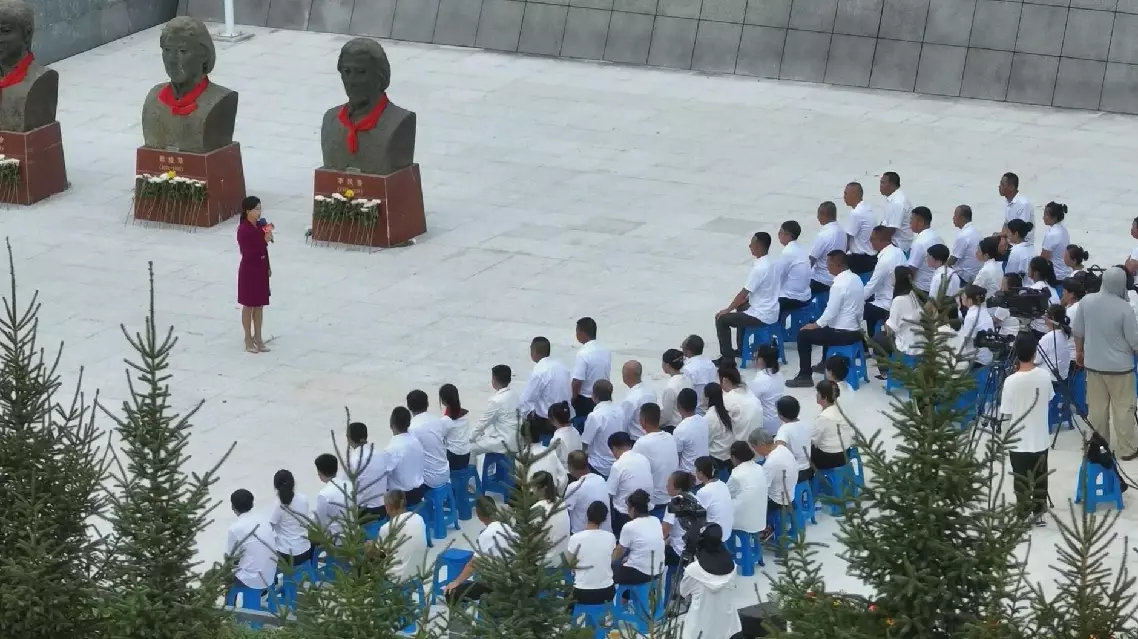
Chinese mark 80th anniversary of victory in war of resistance against Japanese aggression