WASHINGTON (AP) — President Donald Trump has plastered tariffs on products from almost every country on earth. He’s targeted specific imports including autos, steel and aluminum.
But he isn’t done yet.
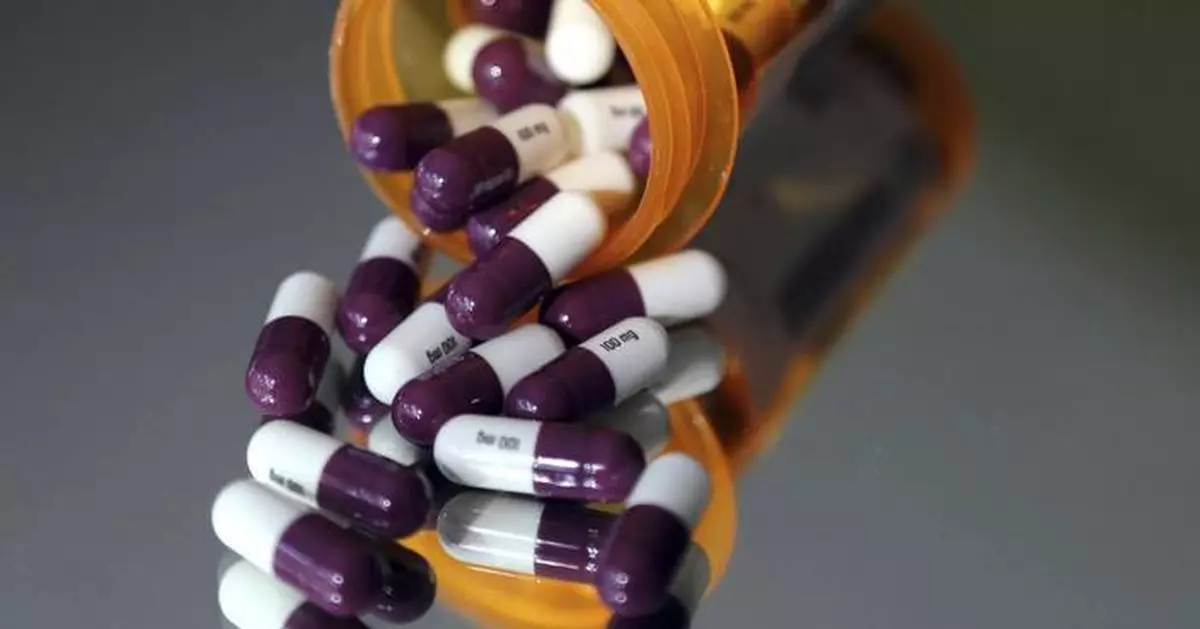
Trump has promised to impose hefty import taxes on pharmaceuticals, a category of products he’s largely spared in his trade war. For decades, in fact, imported medicine has mostly been allowed to enter the United States duty free.
That’s starting to change. U.S. and European leaders recently detailed a trade deal that includes a 15% tariff rate on some European goods brought into the United States, including pharmaceuticals. Trump is threatening duties of 200% more on drugs made elsewhere.
“Shock and awe’’ is how Maytee Pereira of the tax and consulting firm PwC describes Trump’s plans for drugmakers. “This is an industry that’s going from zero (tariffs) to the potentiality of 200%.’’
Trump has promised Americans he’ll lower their drug costs. But imposing stiff pharmaceutical tariffs risks the opposite and could disrupt complex supply chains, drive cheap foreign-made generic drugs out of the U.S. market and create shortages.
“A tariff would hurt consumers most of all, as they would feel the inflationary effect ... directly when paying for prescriptions at the pharmacy and indirectly through higher insurance premiums,’’ Diederik Stadig, a healthcare economist with the financial services firm ING, wrote in a commentary last month, adding that lower-income households and the elderly would feel the greatest impact.
The threat comes as Trump also pressures drugmakers to lower prices in the United States. He recently sent letters to several companies telling them to develop a plan to start offering so-called most-favored nation pricing here.
But Trump has said he’d delay the tariffs for a year or a year and a half, giving companies a chance to stockpile medicine and shift manufacturing to the United States — something some have already begun to do.
Leerink Partners analyst David Risinger said in a July 29 note that most drugmakers have already increased drug product imports and may carry between six and 18 months of inventory in the U.S.
Jefferies analyst David Windley said in a recent research note that tariffs that don’t kick in until the back half of 2026 may not be felt until 2027 or 2028 due to stockpiling.
Moreover, many analysts suspect Trump will settle for a tariff far lower than 200%. They also are waiting to see whether any tariff policy includes an exemption for certain products like low-margin generic drugs.
Still, Stadig says, even a 25% levy would gradually raise U.S. drug prices by 10% to 14% as the stockpiles dwindle.
In recent decades, drugmakers have moved many operations overseas – to take advantage of lower costs in China and India and tax breaks in Ireland and Switzerland. As a result, the U.S. trade deficit in medicinal and pharmaceutical products is big -- nearly $150 billion last year.
The COVID-19 experience – when countries were desperate to hang onto their own medicine and medical supplies — underscored the dangers of relying on foreign countries in a crisis, especially when a key supplier is America’s geopolitical rival China.
In April, the administration started investigating how importing drugs and pharmaceutical ingredients affects national security. Section 232 of the Trade Expansion Act of 1962 permits the president to order tariffs for the sake of national security.
Marta Wosińska, a health policy analyst at the Brookings Institution, says there is a role for tariffs in securing U.S. medical supplies. The Biden administration, she noted, successfully taxed foreign syringes when cheap Chinese imports threatened to drive U.S. producers out of business.
Trump has bigger ideas: He wants to bring pharmaceutical factories back to the United States, noting that U.S.-made drugs won’t face his tariffs.
Drugmakers are already investing in the United States.
The Swiss drugmaker Roche said in April that it will invest $50 billion in expanding its U.S. operations. Johnson & Johnson will spend $55 billion within the United States in the next four years. CEO Joaquin Duato said recently that the company aims to supply drugs for the U.S. market entirely from sites located there.
But building a pharmaceutical factory in the United States from scratch is expensive and can take several years.
And building in the U.S. wouldn’t necessarily protect a drugmaker from Trump’s tariffs, not if the taxes applied to imported ingredients used in the medicine. Jacob Jensen, trade policy analyst at the right-leaning American Action Forum, notes that “97% of antibiotics, 92% of antivirals and 83% of the most popular generic drugs contain at least one active ingredient that is manufactured abroad.’’
“The only way to truly protect yourself from the tariffs would be to build the supply chain end to end in the United States,’’ Pereira said.
Brand-name drug companies have fat profit margins that provide flexibility to make investments and absorb costs as Trump’s tariffs begin. Generic drug manufacturers do not.
Some may decide to leave the U.S. market rather than pay tariffs. That could prove disruptive: Generics account for 92% of U.S. retail and mail-order pharmacy prescriptions.
A production pause at a factory in India a couple years ago led to a chemotherapy shortage that disrupted cancer care. “Those are not very resilient markets,” Brookings’ Wosińska said. “If there’s a shock, it’s hard for them to recover.”
She argues that tariffs alone are unlikely to persuade generic drug manufacturers to build U.S. factories: They'd probably need government financing.
“In an ideal world, we would be making everything that’s important only in the U.S.,’’ Wosińska said. “But it costs a lot of money ... We have offshored so much of our supply chains because we want to have inexpensive drugs. If we want to reverse this, we would really have to redesign our system ... How much are we willing to spend?''
Murphy reported from Indianapolis. AP Health Writer Matthew Perrone contributed to this report.

FILE- Bottles of medicine ride on a belt at a mail-in pharmacy warehouse in Florence, N.J., July 10, 2018. . (AP Photo/Julio Cortez, File)
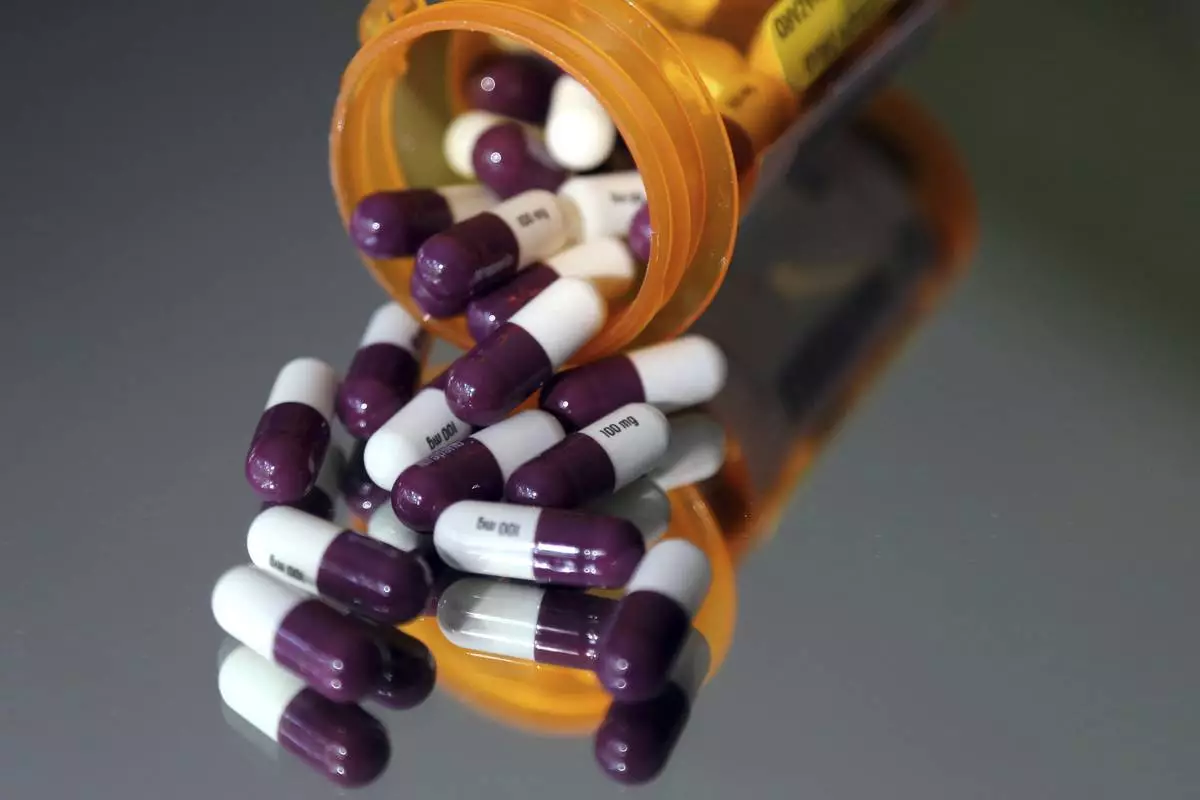
FILE - Pharmaceuticals are seen in North Andover, Mass., on June 15, 2018. AP Photo/Elise Amendola, file)
Several Middle Eastern allies of the United States have urged the Trump administration to hold off on strikes against Iran for the government’s deadly crackdown on protesters, according to an Arab diplomat familiar with the matter.
Top officials from Egypt, Oman, Saudi Arabia and Qatar have raised concerns in the last 48 hours that a U.S. military intervention would shake the global economy and destabilize an already volatile region, said the diplomat who spoke on condition of anonymity to describe the sensitive conversations.
Oil prices fell Thursday as the markets appeared to take note of President Donald Trump’s shifting tone as a sign that he’s leaning away from attacking Iran after days of launching blistering threats at Tehran for its brutal crackdown.
Nevertheless, White House press secretary Karoline Leavitt on Thursday maintained that “all options remain on the table” for Trump as he deals with Iran.
Here's the latest:
Saying it “seems like a miracle to be sitting here in a free country” during her U.S. visit, Machado cast ahead for her home country, which she said she felt was now seeing the “first steps of a true transition to democracy” after Maduro.
Machado said the process ahead is “very complex and difficult” and said she was “absolutely grateful” for Trump.
“It took a lot of courage to do what he did,” she said, in Trump’s move to arrest Maduro and bring him to the U.S. to face charges.
She’s begun her remarks to a crowd at the conservative Washington think tank. A Heritage executive said the group was “honored to host history.”
Machado met Thursday with Trump at the White House, where she later said she had “presented” him with her Nobel Peace Prize. The White House later posted a photo of Machado standing next to Trump in the Oval Office as he holds the medal in a large frame.
Machado also held meetings with senators on Capitol Hill.
Trump interrupted Sen. Dan Sullivan, seemingly pressuring him to bring his fellow Alaskan Lisa Murkowski in line with the president.
Sullivan was bragging on Trump’s health care agenda, especially rural health spending.
“Will you get Lisa Murkowski to vote for it?” Trump broke in.
Sullivan explained that Murkowski did back the “Big Beautiful Bill” that included rural health money. Trump clarified he meant upcoming votes on the GOP’s proposed health savings accounts to replace Affordable Care Act insurance premium subsidies.
“Are you gonna get her to vote for it?” Trump asked several times.
Sullivan finally relented: “We’ll work on it, sir. We’ll work on it.”
Murkowski has voted with Democrats to extend ACA subsidies. Neither Trump nor Sullivan mentioned that Sullivan also voted to extend the subsidies.
Separately, Murkowski resisted Trump’s pressure this week and voted to restrict his war powers in Venezuela. Sullivan stuck with Trump.
Mexican President Claudia Sheinbaum said Friday that efforts to crack down on Mexican cartels and slow migration north were showing “compelling results” in an effort to head off intervention talk by the Trump administration.
The comments come after Trump threatened that U.S. forces “will now start hitting land” in Mexico targeting drug cartels, after the dramatic United States military raid on Venezuela that deposed then-President Nicolás Maduro.
Sheinbaum, a leftist who boasts of taking on chaos with a “cool head,” has sought to placate Trump and, unlike Maduro, has worked to build out a strong relationship between the Mexican and U.S. governments. The early January raid in Venezuela set much of Latin America on edge, fueling concern that Trump could soon turn American forces on other nations, particularly Cuba and Mexico.
▶ Read more about relations between Mexico and the U.S.
A senior embassy official says there’s been “no outreach from Saudi Arabia to the White House regarding potential military strikes against Iran.” The official wasn’t authorized to comment publicly and spoke on condition of anonymity.
The embassy denial comes after several news outlets, including The Associated Press, reported Thursday that the kingdom was among several Middle Eastern allies of the United States that have urged the Trump administration to hold off on strikes against Iran for the government’s deadly crackdown on protesters.
Top officials from Egypt, Oman, Saudi Arabia and Qatar had raised concerns that U.S. military action against Iran would shake the global economy and destabilize an already volatile region, according to an Arab diplomat who spoke on condition of anonymity to describe the sensitive conversations.
White House press secretary Karoline Leavitt and Ambassador Mike Waltz, the chief U.S. envoy to the United Nations, on Thursday said all options remain on the table even as Trump highlighted that Iran has stopped the killing of protesters and backed away from plans to execute hundreds of protesters.
— Aamer Madhani
He’s pushing for bipartisan support for the GOP proposal to replace expanded Affordable Care Act premium subsidies with individual health savings accounts.
Trump said he hopes to get votes from Democrats but said Republicans can own the issue without them.
Recent AP-NORC polls have shown why Trump is concerned. Approval of Trump’s handling of health care was 34% in November. It slipped to 29% in December.
Most of the decrease came from Republicans. In November, 68% of Republicans had a positive view of Trump’s handling of health care. In December, while still a majority, it was down to 59%.
Exiled Crown Prince Reza Pahlavi told reporters Friday in Washington that he still believes Trump’s promise that “help is on the way” for the Iranian people still stands despite lack of action by the U.S.
Asked if he’s lost faith in the U.S. president, Pahlavi said, “I believe the president is a man of his word. As I said before, how many days it may take? Who knows? Hopefully sooner than later. But as I said before, regardless of whether action is taken or not, we as Iranians have no choice to carry on the fight.”
There had been reports that Pahlavi met over the weekend with Trump’s envoy Steve Witkoff, but Pahlavi refused to discuss any meetings with U.S. officials, including whether he’ll directly meet Trump.
“I may put a tariff on countries if they don’t go along with Greenland,” the president said, without providing details. “We need Greenland for national security.”
Trump for months has insisted the U.S. should control Greenland, a self-governing territory that’s part of the kingdom of Denmark.
But he’d not previously mentioned using tariffs to try and force the issue.
European leaders have joined Denmark in saying the U.S. can’t control the world’s largest island.
The department’s Office for Civil Rights has opened fewer than 10 sexual violence investigations nationwide since it was hit by mass layoffs last March, according to internal data obtained by The Associated Press.
Previously, it had been opening dozens of such investigations a year.
The layoffs last year left half as many lawyers to investigate complaints of discrimination based on race, sex or disability in schools.
At the same time, the administration has doubled down on sexual discrimination cases of another kind. Trump officials have used Title IX, a 1972 gender-equality law, against schools that make accommodations for transgender students and athletes. The Office for Civil Rights has opened nearly 50 such investigations since Trump took office.
▶ Read more about Education Department sexual violence investigations
The president quickly turned his health care forum into a grievance session against Democrats and a bragging session on the votes he’s gotten in rural America.
“I’m all about the rural community. … We’re taking care of those great people,” he said, arguing that former President Barack Obama “didn’t care about the rural community, to be totally blunt.”
“The Democrats are so horrible toward the rural community,” Trump added. He asked voters to “remember ... in the midterms” that Democrats did not back his “Big Beautiful Bill” that included $10 billion for rural healthcare this year.
Trump effectively blamed Obama’s “Un-Affordable Care Act” for rural hospital closures and financial struggles. In truth, KFF has found that rural hospitals closed at a higher rate in states that did not expand Medicaid under Democrats’ 2010 health care overhaul than in states that did expand to take in more federal money.
“I actually want to keep you where you are, if you know the truth,” Trump told Kevin Hassett, the director of the National Economic Council.
Trump made the comment at a White House event on rural health, drawing laughter in the room. But it wasn’t clear the president himself was joking.
It comes as Trump is believed to be in final interviews with potential replacements for the Fed’s current chair, Jerome Powell, a frequently target of Trump’s public attacks.
“We don’t want to lose him Susie,” Trump said of Hassett to White House chief of staff Susie Wiles, who also at the health event. “We’ll see how it all works out.”
The White House is touting health care spending across small-town America intended to transform how care is delivered in places that have lost many hospitals and providers.
A look at some numbers:
That makes him the highest ranking U.S. official to visit the country following the U.S. military strike which captured former leader Nicolás Maduro.
Thursday’s meeting, first reported by The New York Times, was confirmed Friday by a U.S. government official who spoke on condition of anonymity because they weren’t authorized to discuss the matter publicly.
The official said the meeting in Caracas came at President Trump’s direction and was intended to demonstrate the U.S. desire for a better relationship with Venezuela. The official said Ratcliffe discussed potential economic collaboration with the U.S. and warned that Venezuela can never again allow the presence of American adversaries, including drug traffickers.
— David Klepper
As Attorney General Pam Bondi approaches her first year on the job, the firings of Justice Department attorneys have defined her turbulent tenure. The terminations and a larger voluntary exodus of lawyers have erased centuries of combined experience and left the department with fewer career employees to act as a bulwark for the rule of law at a time when President Trump, a Republican, is testing the limits of executive power by demanding prosecutions of his political enemies.
Interviews by The Associated Press of more than a half-dozen fired employees offer a snapshot of the toll throughout the department. The departures include lawyers who prosecuted violent attacks on police at the U.S. Capitol on Jan. 6, 2021, environmental, civil rights and ethics enforcers, counterterrorism prosecutors, immigration judges and attorneys who defend administration policies. They continued this week, when several prosecutors in Minnesota moved to resign amid turmoil over an investigation into the shooting of a woman by an Immigration and Customs Enforcement officer.
▶ Read more about firings at the Justice Department
The White House and a bipartisan group of governors are pressuring the operator of the mid-Atlantic power grid to take urgent steps to boost energy supply and curb price hikes, holding a Friday event aimed at addressing a rising concern among voters about the enormous amount of power used for artificial intelligence ahead of elections later this year.
The White House said its National Energy Dominance Council and the governors of several states, including Pennsylvania, Ohio and Virginia, want to try to compel PJM Interconnection to hold a power auction for tech companies to bid on contracts to build new power plants.
The Trump administration and governors will sign a statement of principles toward that end Friday.
▶ Read more about the administration and AI-driven power shortages
The Justice Department’s investigation into Federal Reserve Chair Jerome Powell has brought heightened attention to a key drama that will play out at the central bank in the coming months: Will Powell leave the Fed when his term as chair ends, or will he take the unusual step of remaining a governor?
Powell’s term as Fed chair ends May 15, but because of the central bank’s complex structure, he has a separate term as one of seven members of its governing board that lasts until January 31, 2028. Historically, nearly all Fed chairs have stepped down from the board when they’re no longer chair. But Powell could be the first in nearly 50 years to stay on as a governor.
Many Fed-watchers believe the criminal investigation into Powell’s testimony about cost overruns for Fed building renovations was intended to intimidate him out of taking that step. If Powell stays on the board, it would deny the White House a chance to gain a majority, undercutting the Trump administration’s efforts to seize greater control over what has for decades been an institution largely insulated from day-to-day politics.
▶ Read more about Federal Reserve Chair Jerome Powell
Trump on Thursday announced the outlines of a health care plan he wants Congress to take up as Republicans have faced increasing pressure to address rising health costs after lawmakers let subsidies expire.
The cornerstone is his proposal to send money directly to Americans for health savings accounts so they can handle insurance and health costs as they see fit. Democrats have rejected the idea as a paltry substitute for the tax credits that had helped lower monthly premiums for many people.
Trump’s plan also focuses on lowering drug prices and requiring insurers to be more upfront with the public about costs, revenues, rejected claims and wait times for care.
Trump has long been dogged by his lack of a comprehensive health care plan as he and Republicans have sought to unwind former President Barack Obama’s signature legislation, the Affordable Care Act. Trump was thwarted during his first term in trying to repeal and replace the law.
▶ Read more about Trump’s health care plan
Most American presidents aspire to the kind of greatness that prompts future generations to name important things in their honor.
Donald Trump isn’t leaving it to future generations.
As the first year of his second term wraps up, his Republican administration and allies have put his name on the U.S. Institute of Peace, the Kennedy Center performing arts venue and a new class of battleships.
That’s on top of the “Trump Accounts” for tax-deferred investments, the TrumpRx government website soon to offer direct sales of prescription drugs, the “Trump Gold Card” visa that costs at least $1 million and the Trump Route for International Peace and Prosperity, a transit corridor included in a deal his administration brokered between Armenia and Azerbaijan.
On Friday, he plans to attend a ceremony in Florida where local officials will dedicate a 4-mile (6-kilometer) stretch of road from the airport to his Mar-a-Lago estate in Palm Beach as President Donald J. Trump Boulevard.
▶ Read more about Trump’s renaming efforts
Nearly a year into his second term, Trump’s work on the economy hasn’t lived up to the expectations of many people in his own party, according to a new AP-NORC survey.
The poll from The Associated Press-NORC Center for Public Affairs Research finds a significant gap between the economic leadership Americans remembered from Trump’s first term and what they’ve gotten so far as he creates a stunning level of turmoil at home and abroad.
Just 16% of Republicans say Trump has helped “a lot” in addressing the cost of living, down from 49% in April 2024, when an AP-NORC poll asked Americans the same question about his first term.
At the same time, Republicans are overwhelmingly supportive of the president’s leadership on immigration — even if some don’t like his tactics.
There is little sign overall, though, that the Republican base is abandoning Trump. The vast majority of Republicans, about 8 in 10, approve of his job performance, compared with 4 in 10 for adults overall.
▶ Read more about the poll’s findings
Several Middle Eastern allies of the United States have urged the Trump administration to hold off on strikes against Iran for the government’s deadly crackdown on protesters, according to an Arab diplomat familiar with the matter.
Top officials from Egypt, Oman, Saudi Arabia and Qatar have raised concerns in the last 48 hours that a U.S. military intervention would shake the global economy and destabilize an already volatile region, said the diplomat who spoke on condition of anonymity to describe the sensitive conversations.
Oil prices fell on Thursday as the markets appeared to take note of President Donald Trump’s shifting tone as a sign that he’s leaning away from attacking Iran after days of launching blistering threats at Tehran for its brutal crackdown.
Nevertheless, White House press secretary Karoline Leavitt on Thursday maintained that “all options remain on the table” for Trump as he deals with Iran.
▶ Read more about Trump and Iran
— Matthew Lee, Aamer Madhani and Ben Finley
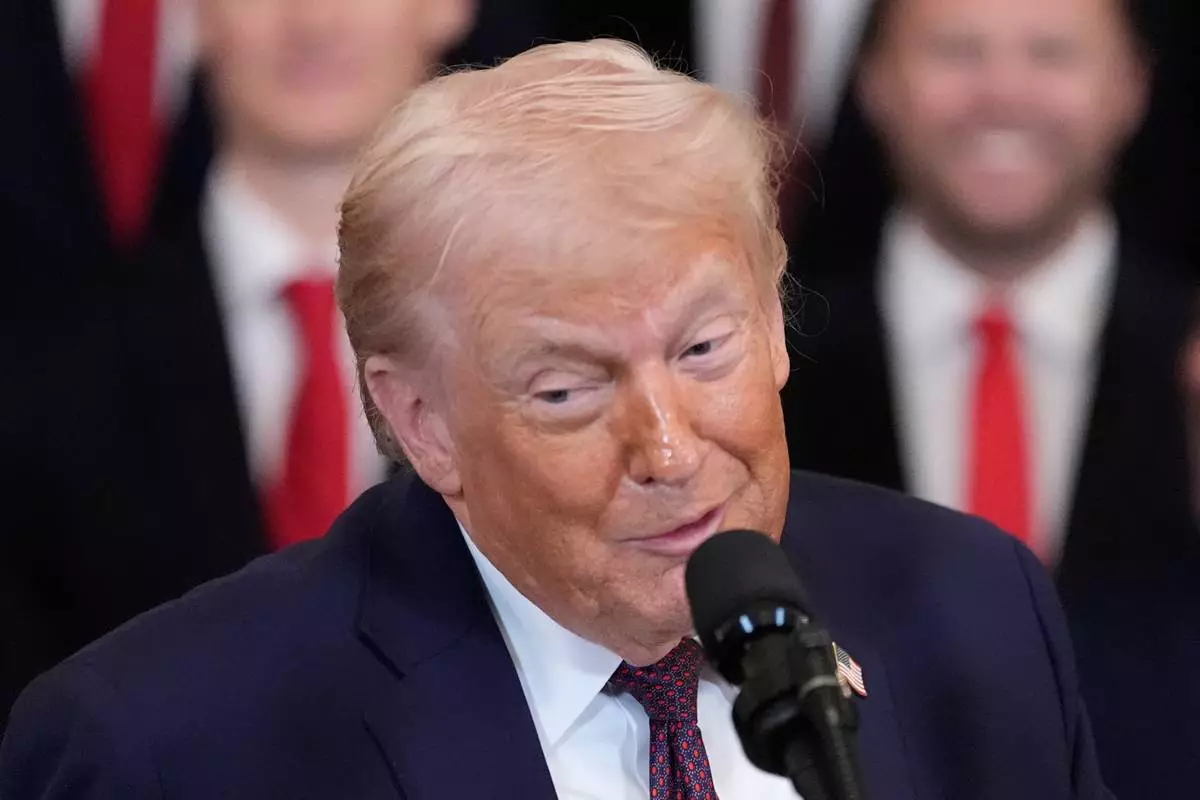
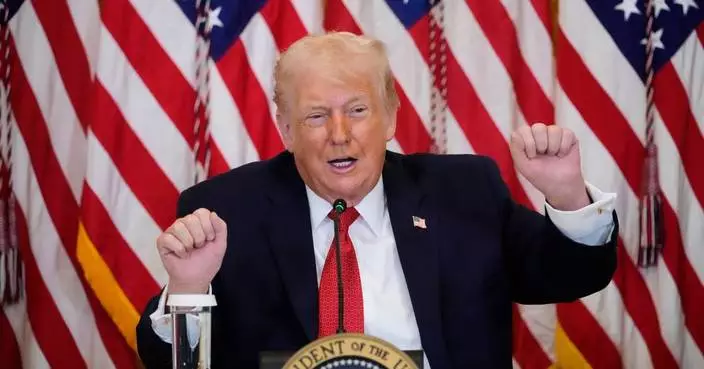
President Donald Trump speaks during an event to honor the 2025 Stanley Cup Champion Florida Panthers in the East Room of the White House, Thursday, Jan. 15, 2026, in Washington. (AP Photo/Alex Brandon)