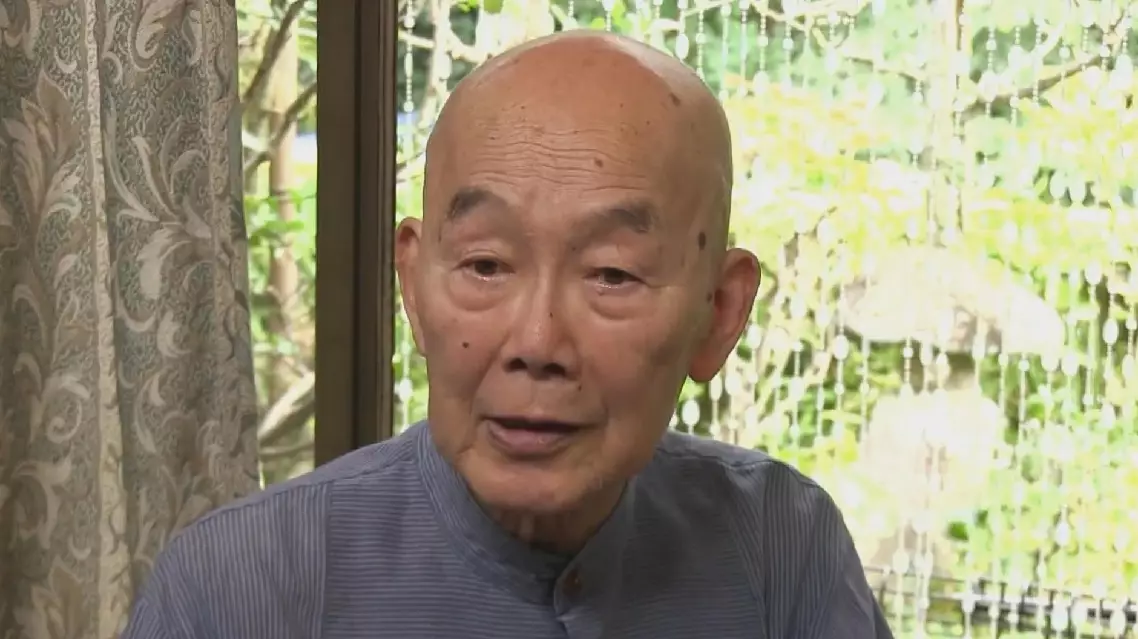
Hisao Naganuma, a former member of Japan's Unit 731 program during WWII, revealed details of the horrific human experimentation Japanese troops conducted in Harbin City of northeast China's Heilongjiang Province over eight decades ago.
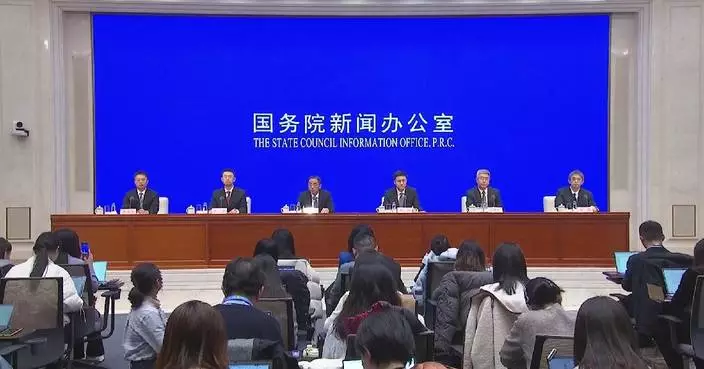
Publicly unveiled at the Exhibition Hall of Evidence of Crime Committed by Unit 731 of the Japanese Imperial Army in Harbin on Monday, Naganuma's oral testimony collected in Japan in 2018 showed how the Unit 731 trained its Youth Corps during the 1940s and how they tried to destroy evidence of crimes after Japan's defeat in the Chinese People's War of Resistance Against Japanese Aggression (1931-1945).
"People forced to undergo the experiments were placed in a fenced area. They were dragged around with ball-shaped shackles on their legs. We had been sent to watch the autopsy of a living person at that time," said Naganuma, a former member of the Youth Corps of the Unit 731.
He recalled that in the specimen room, he saw a variety of dissected human organs soaked in formalin-filled bottles.
"There were specimens made from people who had been vivisected. We had been ordered to carry those specimens immersed in formalin to the hallway of the building," recalled Naganuma who was recruited in the Youth Corps of the Unit 731 when he was 14.
Unit 731 was a top-secret biological and chemical warfare research base established in Harbin as the nerve center for Japanese biological warfare in China and Southeast Asia during World War II.
At least 3,000 people were used in human experiments by Unit 731, while more than 300,000 people in China were killed by Japan's biological weapons.
The notorious germ warfare detachment started to destroy the evidence of the unethical experiments on human beings when Japan announced the surrender in the war in August 1945.
Naganuma said the code of the unit had been switched to 25202. To cover up the facts of the crime, the Japanese Imperial Army ordered all members of the Unit 731 not to reveal their identities to the outside world before they fled China.
"At that time, the unit's code was changed to 25202. They told us to burn our identity document [before we left China], but I didn't. I brought it back with me secretly because it was important. I broke it in half and hid it in my backpack on my way back," said Naganuma.
The Exhibition Hall of Evidence of Crime Committed by Unit 731 of the Japanese Imperial Army in Harbin unveiled new evidence of the germ-warfare unit to the public on Monday. The new exhibits include 3,010 pages of archive documents, 194 minutes of video footage, 312 photographs, 12 postcards and eight letters, exposing Japanese germ-warfare crimes in detail.
Former member of Japan's Unit 731 reveals details of historical atrocities