The 22nd Union Bank of Switzerland (UBS) Securities China A-Share Conference opened in Shenzhen, in south China's Guangdong Province on Monday, drawing institutional investors eying opportunities in China's most innovative companies.
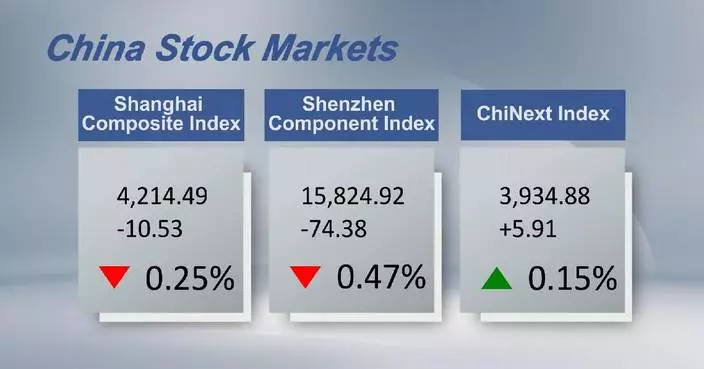
The conference spotlighted China's A-share market and its leading tech firms. With the Shanghai Composite Index reaching its highest levels in a decade and the total market capitalization of trade companies on the index exceeding 100 trillion yuan (about 13.8 trillion U.S. dollars), global investors are closely watching opportunities and risks in high-growth sectors like artificial intelligence (AI) and robotics.
"Technology sector is definitely one of the the leading focus for global investor investing into China, whether it's EV and the supply chain of batteries, renewables, and increasingly, the AI supply chain, which is relatively domestic focus, given the geopolitical backdrop, have also attracted global investors' attention," said Fang Dongming, head of China global markets, UBS.
With China's launch of the "AI Plus" initiative, focus is shifting to how AI can upgrade traditional sectors and create new economic growth drivers.
"I think the biggest opportunity is that humanoid robots actually can resolve a lot of problems, for example, labor shortage and the aging population, and also can help people, humans, to switch to high valued work," said Wang Feili, a China machinery analyst.
Nevertheless, challenges persist. Recent U.S. rules requiring U.S. tech giant Nvidia and U.S. computer chipmaker Advanced Micro Devices (AMD) to give 15 percent of their AI chip sales revenue in China to the U.S. government are expected to raise costs and squeeze profits for many A-share listed tech firms.
Chinese companies are adapting to this trade turmoil, exploring local solutions to local problems.
"The China internet leaders are trying. These companies, they are stockpiling, they are localizing supply chain, and they are driving continued innovation in efficiency gain to deal with the uncertainty," said Xiong Wei, a China internet analyst.
While geopolitical tensions pose real challenges, they are also spurring investment in homegrown innovation, from AI chips to humanoid robots, creating new opportunities in China's A-share tech sector.
"The PBOC (People's Bank of China) can provide or even expand the size of special facilities, like our lending facilities, to support the targeted sectors including AI tech, with a bigger quota and with a lower interest rate. The financial market can offer more support to the tech sector as a whole - for the fundraising, IPO (Initial Public Offerings) market, the bond issuance, and also the PE and VC market," said Zhang Ning, a senior China economist, UBS.
Delegates at the conference said the outlook for China's A-share tech sector remains strong, bolstered by policy support, market momentum, and a dynamic innovation ecosystem.
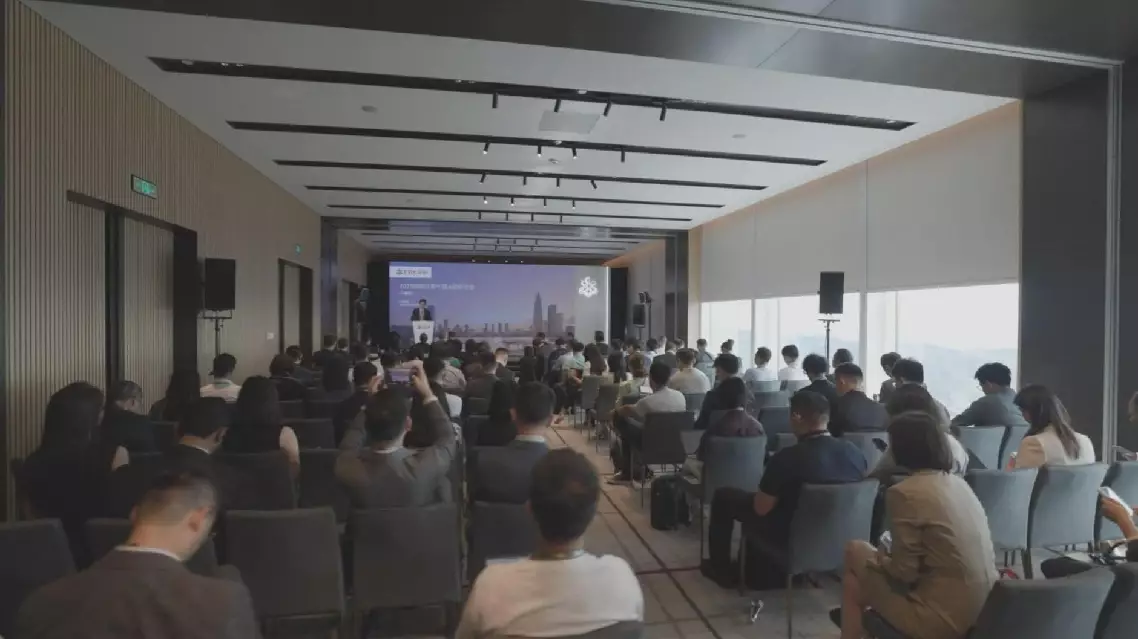
A-Share conference opens in Shenzhen, highlighting tech sector opportunities