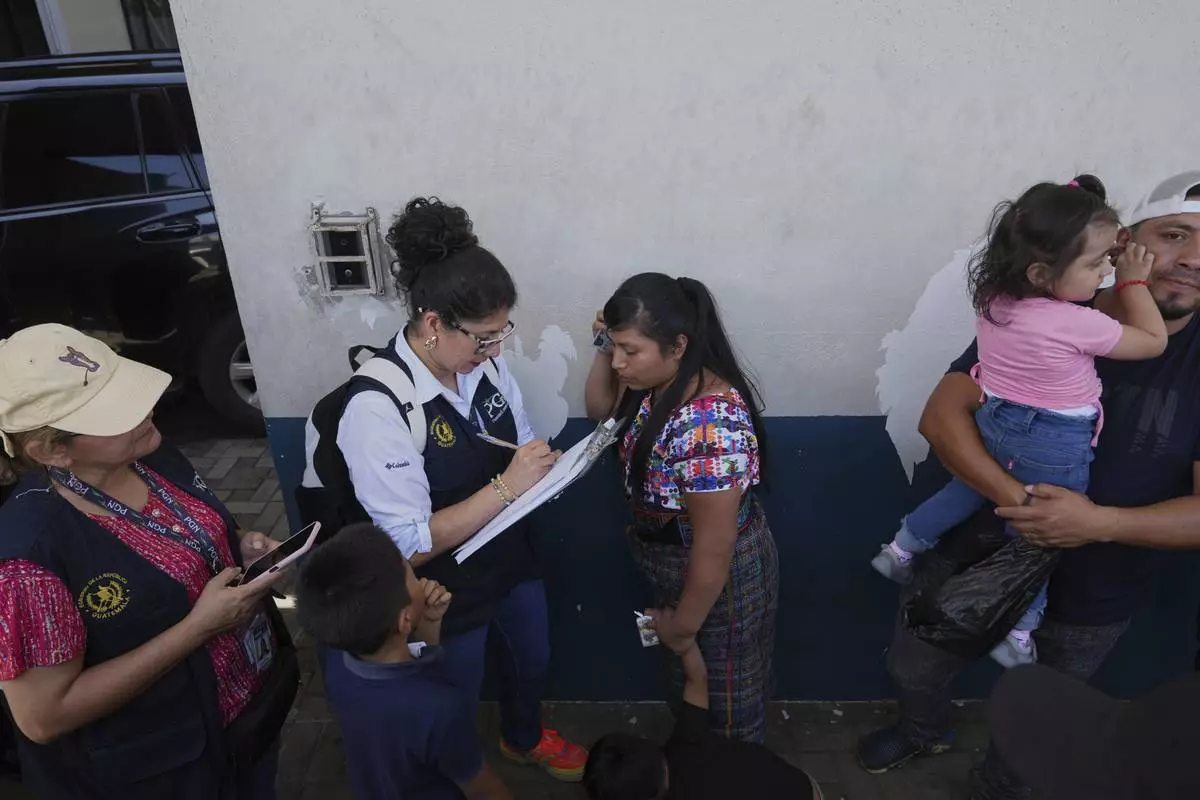
McALLEN, Texas (AP) — President Donald Trump's administration has started requiring parents looking to reunite with their children who crossed into the U.S. alone to show up for interviews where immigration officers may question them, according to a policy memo obtained by The Associated Press.
Legal advocacy groups say the shift has led to the arrest of some parents, while their children remain in U.S. custody. The U.S. Department of Homeland Security did not confirm that or answer questions about the July 9 directive, instead referring in a statement to the Biden administration's struggles to properly vet and monitor homes where children were placed.
Click to Gallery
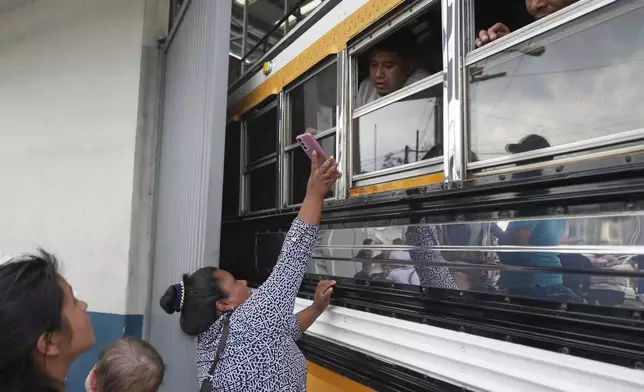
A woman asks a migrant deported from the United States if he is able to identify her relative, a migrant, outside La Aurora International Airport, in Guatemala City, Sunday, Aug. 31, 2025. (AP Photo/Moises Castillo)
Relatives of unaccompanied minors deported from the United States await updates outside La Aurora International Airport, in Guatemala City, Sunday, Aug. 31, 2025. (AP Photo/Moises Castillo)
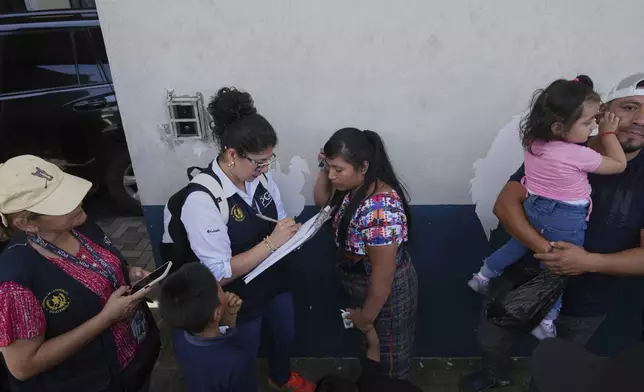
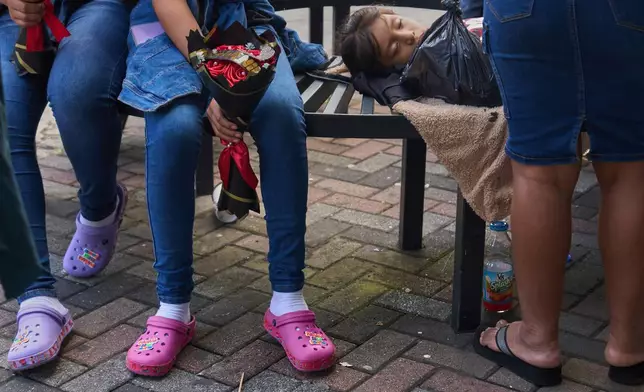
People wait for loved ones from Guatemala deported from the United States outside La Aurora International Airport, in Guatemala City, Sunday, Aug. 31, 2025. (AP Photo/Moises Castillo)
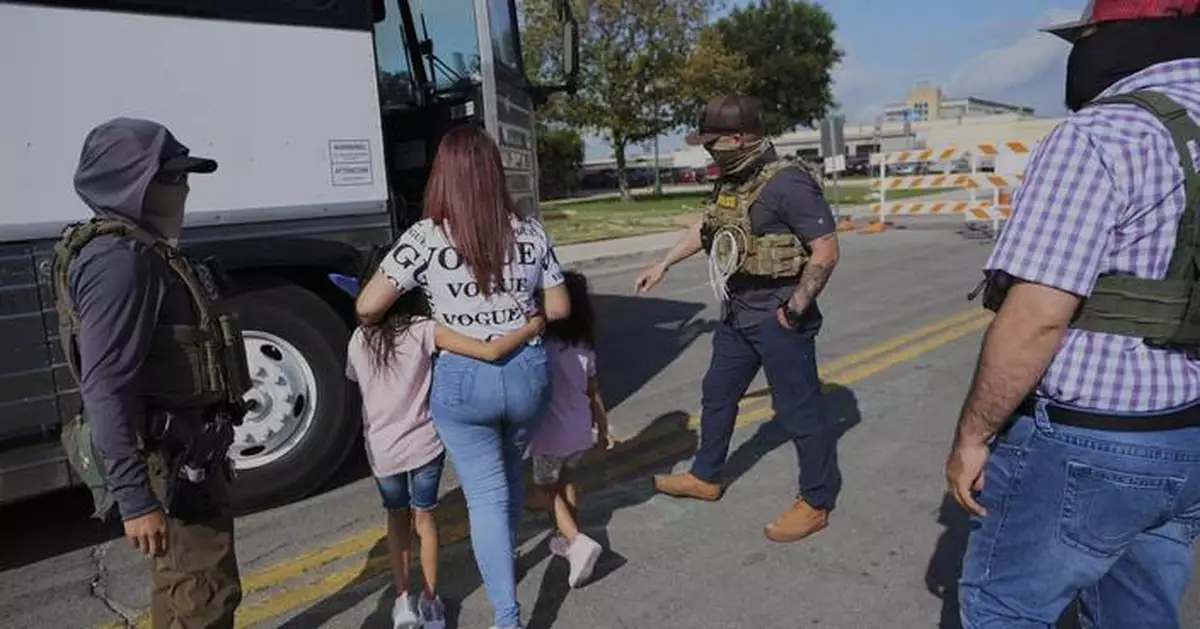
FILE - Federal agents escort a woman and her children after they were detained following an appearance at immigration court, Tuesday, June 10, 2025, in San Antonio. (AP Photo/Eric Gay, file)
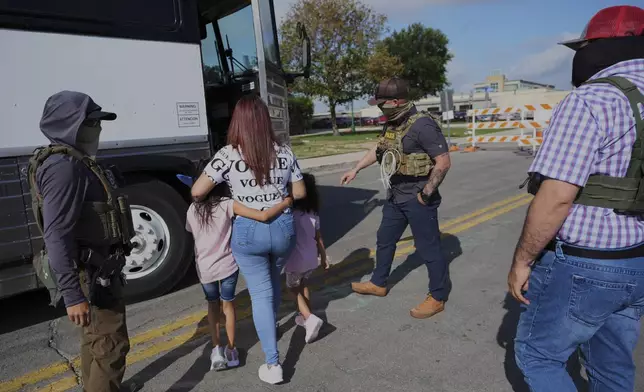
FILE - A woman from Peru and her children are detained and escorted to a bus by federal agents following an appearance at immigration court, Monday, June 23, 2025, in San Antonio. (AP Photo/Eric Gay, file)
The Office of Refugee Resettlement, which is part of the U.S. Health and Human Services Department and which takes custody of children who cross the border without a parent or legal guardian, issued the directive. The agency said the goal is to ensure that sponsors — usually a parent or guardian — are properly vetted.
The memo is among several steps the Trump administration has taken involving children who came to the U.S. alone. Over the Labor Day weekend it attempted to remove Guatemalan children who were living in shelters or with foster care families.
The July 9 memo regarding sponsors, first reported by CNN, said they must now appear in person for identification verification. Previously, sponsors could submit identity documents online. The directive also says “federal law enforcement agencies may be present to meet their own mission objectives, which may include interviewing sponsors.”
Neha Desai, managing director of human rights at the National Center for Youth Law, said the change provides U.S. Immigration and Customs Enforcement a “built-in opportunity” to arrest parents — something she said has already happened.
Mary Miller Flowers, director of policy and legislative affairs for the Young Center for Immigrant Children's Rights, said she knew of a case in which immigration officers arrested the father of a child under the age of 12 who had shown up for an identification check. "As a result, mom is terrified of coming forward. And so, this child is stuck,” Miller Flowers said.
Desai also said the interviews are unlikely to produce information authorities don’t already have. Vetting already included home studies and background checks done by Office of Refugee Resettlement staff, not immigration enforcement.
The Office of Refugee Resettlement said it communicates “clearly and proactively” with parents, telling them they may be interviewed by ICE or other law enforcement officials. It said parents can decline to be interviewed by ICE and that refusal won't influence decisions about whether their children will be released to them.
“The goal is to ensure that every child is released to a stable and safe environment and fully vetted sponsors by ensuring the potential sponsor is the same individual submitting supporting documentation, including valid ID,” it said in a statement.
However, Desai is aware of a situation in which a sponsor was not notified and only able to decline after pushing back.
“We know of sponsors who are deeply, deeply fearful because of this interview, but some are still willing to go forward given their determination to get their children out of custody,” she said.
Tricia McLaughlin, a Homeland Security spokesperson, issued a statement that did not address any arrests or mention the specific changes. Instead, she said the department is looking to protect children who were released under President Joe Biden's administration.
A federal watchdog report released last year addressed the Biden's administration struggles during an increase in migrant children arriving at the U.S.-Mexico border in 2021. The Trump administration has dispatched Homeland Security and FBI agents to visit the children.
Another recent change allows ICE to interview children while they are at government-run shelters. That took effect July 2, according to a separate directive that the Office of Refugee Resettlement sent to shelters, also obtained by the AP.
The agency said it provides legal counsel to children and that its staff does not participate in interviews with law enforcement. Child legal advocates say they get as little as one-hour notice of the interviews, and that the children often don't understand the purpose of the interview or are misled by officers.
“If we don’t understand what the interview is for or where the information is going, are we really consenting to this process?” said Miller Flowers, with the Young Center.
Jennifer Podkul, chief of global policy at Kids in Need of Defense, said some officers lack language skills, trauma-informed interviewing techniques and knowledge of the reunification process.
“It seems like it’s designed just to cast the net wider on immigration enforcement against adults,” she said.
The July changes are among the steps the Trump administration has taken to ramp up vetting of parents seeking to reunite with children.
The administration has required fingerprinting from sponsors and any adults living in the home where children are released. It has also required identification or proof of income that only those legally present in the U.S. could acquire, as well as introducing DNA testing and home visits by immigration officers.
Children have been spending more time in government-run shelters under increased vetting. The average length of stay for those released was 171 days in July, down from a peak of 217 days in April but well above 37 days in January, when Trump took office.
About 2,000 unaccompanied children were in government custody in July.
Shaina Aber, an executive director of the Acacia Center for Justice analyzing child custody data, attributes the longer custody times to the policy changes.
“The agency’s mission has been conflated and entangled,” she added. “It seems ORR’s mission has been somewhat compromised in that they are now doing more on the immigration enforcement side, and they’re not an immigration enforcement entity.”
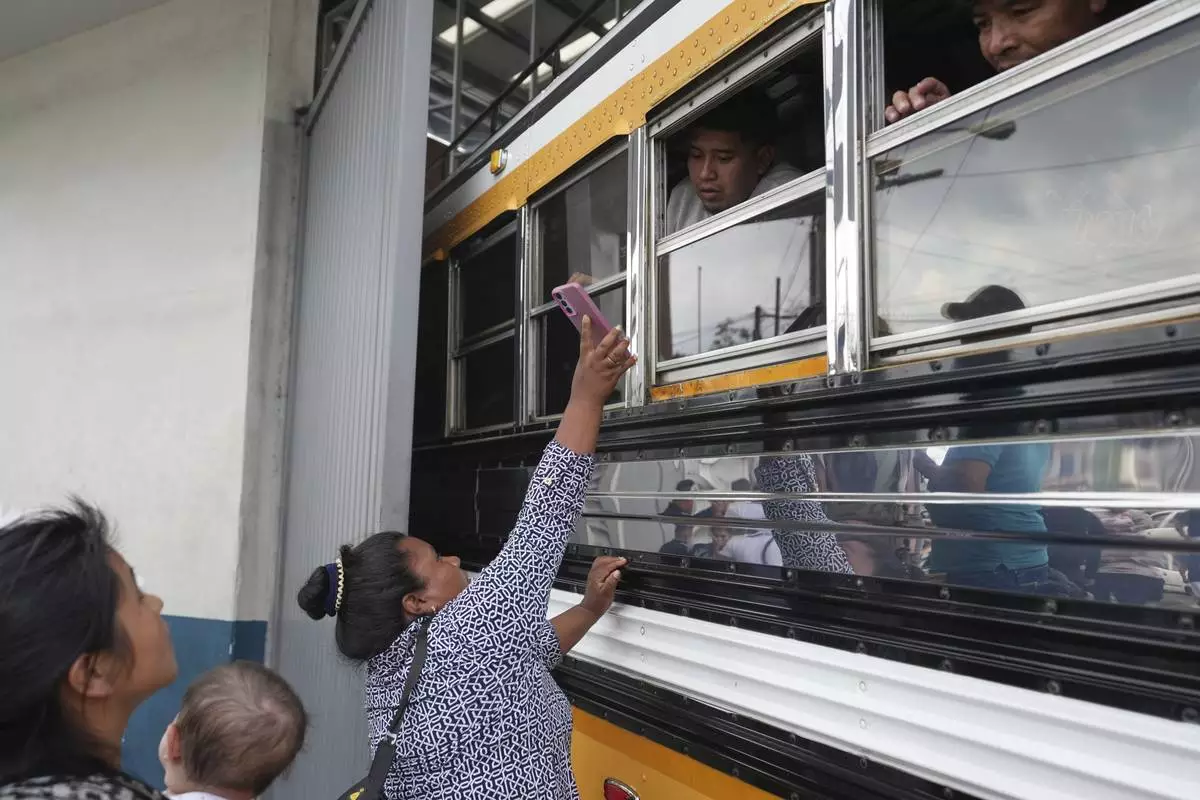
A woman asks a migrant deported from the United States if he is able to identify her relative, a migrant, outside La Aurora International Airport, in Guatemala City, Sunday, Aug. 31, 2025. (AP Photo/Moises Castillo)
Relatives of unaccompanied minors deported from the United States await updates outside La Aurora International Airport, in Guatemala City, Sunday, Aug. 31, 2025. (AP Photo/Moises Castillo)
People wait for loved ones from Guatemala deported from the United States outside La Aurora International Airport, in Guatemala City, Sunday, Aug. 31, 2025. (AP Photo/Moises Castillo)
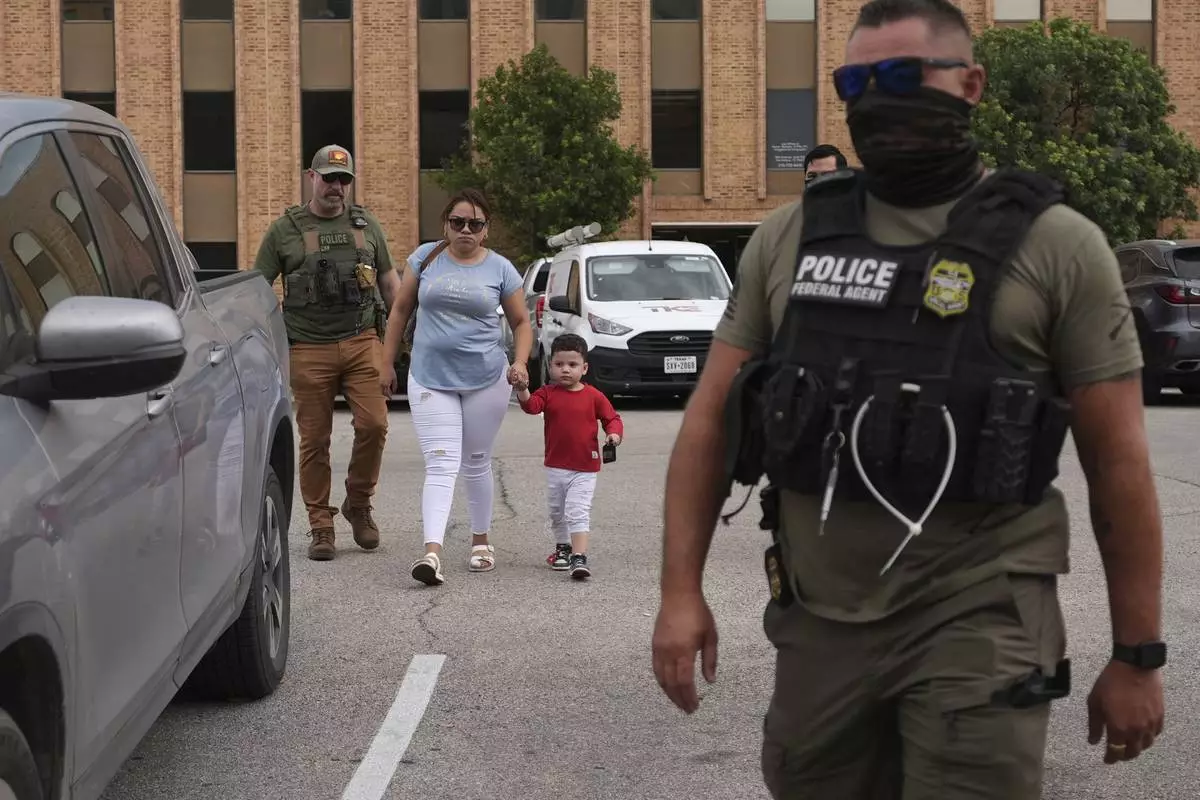
FILE - Federal agents escort a woman and her children after they were detained following an appearance at immigration court, Tuesday, June 10, 2025, in San Antonio. (AP Photo/Eric Gay, file)
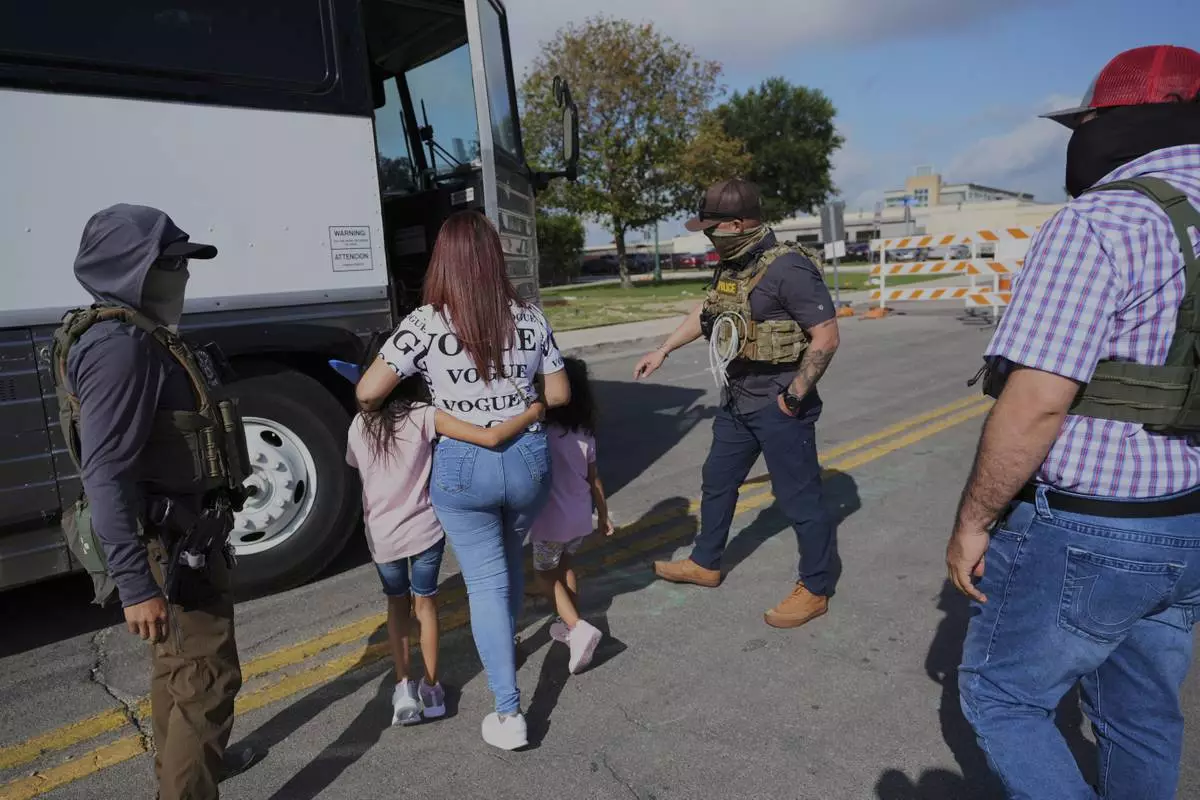
FILE - A woman from Peru and her children are detained and escorted to a bus by federal agents following an appearance at immigration court, Monday, June 23, 2025, in San Antonio. (AP Photo/Eric Gay, file)
President Donald Trump returned to the rescheduled White House Correspondents' Association dinner Friday night, delivering a rambling, hour-long speech that praised some journalists, took potshots at others, made jokes about public figures' weight and intellect, and quipped about a third presidential term.
He assured the crowd of journalists, though, that he'd scrapped the most biting parts of his remarks.
“That was going to be a doozy,” Trump said about the speech he’d been prepared to give in April, before a gunman upended the original dinner and forced its postponement.
“As I said three months ago, the show must go on,” the president said to begin his remarks, hailing the decision to reschedule the dinner. He referred to “the attempted mass murder” that could have happened that night in April, but then moved largely to humor — and insults.
Trump's return to the correspondents' dinner — and his promise to come back next year as well — represented a notable moment in his relationship with the news media, which he has attacked, sued and taken administrative action against since he began his second term early last year. Among the audience members were reporters he had denounced and barred from events.
Trump’s sometimes off-color speech, which lasted just over an hour, was full of vague potshots directed at individuals he doesn’t like — from Jane Fonda to Bruce Springsteen to “Barack Hussein Obama.” The audience, reacting at first with some friendly laughs, slowly quieted to scattered titters as the insults piled up.
Among other targets of Trump’s humor: Late-night hosts Jimmy Fallon and Jimmy Kimmel; Rep. Ilhan Omar, D-Minn.; California Gov. Gavin Newsom; former New Jersey Gov. Chris Christie; and Trump's own speechwriters, whose jokes he sometimes criticized even as he delivered them. Some of the comments flirted with racism.
The president also spent some time expressing pride in the ballroom at the Waldorf Astoria hotel, formerly the Trump International Hotel. “It’s great to be back at a place that I know very well, because I built it,” Trump said.
He also made reference to the journalism awards that had been handed out earlier in the evening, most of them for stories challenging him and his administration. “Do I have a say in those awards?” he asked with a grimace.
He made a brief mention of the Iran war and several remarks about the ballroom he is building at the White House. He also used the occasion to joke about the possibility he would serve a third term — something barred by the U.S. Constitution's 22nd Amendment.
“Just like my presidency, the second time is always better,” the president quipped. “And the third time will be better yet.”
He added: “I’m only kidding.” Then, at the end, he donned a red cap that said “Trump 2028” and delivered the “scoop” that he was running again.
Earlier, Trump had entered the ballroom to polite applause, and was thanked for his support by outgoing White House Correspondents’ Association president Weijia Jiang of CBS News. After dinner, he then sat through more than an hour of awards presentations.
One of the winners, Tyler Pager of the New York Times, was in fact one of the reporters who had been subpoenaed by Trump’s Justice Department over his reporting about Trump’s Qatari-gifted Air Force One jet. Those subpoenas were withdrawn on Thursday in a New York courtroom — just one of the arenas where the president, in his second term, has been seeking to control media coverage that displeases him.
The rescheduled dinner was taking place at a smaller venue this time that held only about 700 people. Security was markedly tighter. Guests entered via a single entrance, through two ID checks and past a detection dog, armed officers and security guards. There was no red carpet and no separate cocktail receptions preceding the dinner.
“Let’s try this again,” Jiang quipped, welcoming the crowd. The White House press corps, she noted, “always have a follow-up.” Turning serious, she referred back to the trauma and confusion of the original dinner in April.
“Tonight our message is this: We are back,” she said. “We will not be intimidated. We refuse to let an act of violence have the final word.”
Early in his speech, Trump signaled that he had decided to tone it down. But he kept some zingers. Like this one, to the media-heavy audience: “This is really the largest group of ‘Trump Derangement Syndrome’ people put together at one time.”
Besides the pared-down approach, there was another change at Friday’s dinner: two additional awards. One was presented to Victor Gonzales, the Secret Service agent who was staffing a security checkpoint in April and was struck in his protective vest.
Gonzales “placed himself directly in harm’s way and engaged the armed suspect,” Jiang said. “He stayed in the fight and the attacker was stopped.”
A second award was presented to the staff of the Washington Hilton hotel, site of the first dinner, hailed for professionalism under pressure.
The dress code this time was a looser “black tie optional,” and dinner included grilled peach and burrata salad, lobster and beef Wellington. The evening, as in April, featured entertainment by mentalist Oz Pearlman — who this time got the chance to do his act..
Jiang and her fellow board members had worked hard to bring about this WHCA dinner 2.0, not wanting to let a violent act — or the image of colleagues hiding under tables — remain the final thought. Announcing the rescheduling, she emphasized the dinner’s stated purpose: “A celebration of a free press and the vital role of journalism in our democracy for over a century.”
But it’s also clear that some people felt the dinner should not be rescheduled at all.
Many never thought it was much of a good look in the first place, with the sight of journalists in formal wear cozying up to their sources, or the objects of their reporting.
“It undermines the public faith in how the press does its work, and it makes it look like we are pals with the people we cover,” Kelly McBride, an ethics expert at the Poynter Institute, a journalism think tank, said when the deliberations were taking place.
The new dinner came at a time of fast-increasing tension between the media and a president who, in his second term, has tried to exert pressure on media outlets he is unhappy with in a variety of ways. That pressure has ranged from sanctions against members of the White House press corps to regulatory actions through the Federal Communications Commission to outright lawsuits. Those tensions have only escalated since April.
Trump, though, ended with an attempt to mend fences 00 to a point. “I have a lot of respect for your profession,” he told the assembled journalists. He also touted his own success, and declared: “When I'm not around, you're all gonna be broke.”
And he concluded about the evening: “I didn't know what to expect. It's far worse than I originally thought.”
Jocelyn Noveck covers the intersection of media and entertainment for The Associated Press.
President Donald Trump talks with White House press secretary Karoline Leavitt at the White House Correspondents' Association dinner at the Waldorf Astoria Washington DC, Friday, July 24, 2026, in Washington. (AP Photo/Rod Lamkey, Jr.)
President Donald Trump greets U.S. Secret Service agent Victor Gonzalez at the White House Correspondents' Association dinner at the Waldorf Astoria Washington DC, Friday, July 24, 2026, in Washington. (AP Photo/Rod Lamkey, Jr.)
Demonstrators protest outside of the White House Correspondents' Association dinner at the Waldorf Astoria Washington DC hotel, in Washington, Friday, July 24, 2026. (AP Photo/Cliff Owen)
President Donald Trump speaks at the White House Correspondents' Association dinner at the Waldorf Astoria Washington DC, Friday, July 24, 2026, in Washington. (AP Photo/Rod Lamkey, Jr.)
A demonstrator holds up a sign outside the Waldorf Astoria Hotel in Washington, site of the White House Correspondents' Dinner, Friday, July 24, 2026. (AP Photo/Cliff Owen)
President Donald Trump arrives at the White House Correspondents' Association Dinner, at the Waldorf Astoria Washington DC, Friday, July 24, 2026, in Washington, with WHCA president Weijia Jiang. (AP Photo/Rod Lamkey, Jr.)
National Guard troops walk across the street from the Waldorf Astoria hotel where President Donald Trump will attend the White House Correspondents' Association Dinner, in Washington, Friday, July 24, 2026. (AP Photo/Cliff Owen)
President Donald Trump attends the White House Correspondents' Association Dinner, at the Waldorf Astoria Washington DC, Friday, July 24, 2026, in Washington, with with WHCA president Weijia Jiang, right and White House press secretary Karoline Leavitt. (AP Photo/Rod Lamkey, Jr.)
FILE - The Waldorf Astoria is pictured in the Old Post Office building, Aug. 18, 2022, in Washington. (AP Photo/Andrew Harnik, File)
FILE - Law enforcement responds to an incident at the Washington Hilton during the White House Correspondents Dinner, April 25, 2026, in Washington. (AP Photo/Allison Robbert, File)
FILE - U.S. Secret Service agents respond near President Donald Trump and first lady Melania Trump during the White House Correspondents Dinner, Saturday, April 25, 2026, in Washington. (AP Photo/Alex Brandon, File)
FILE - Attendees gather during White House Correspondents Association Dinner prior to a security incident, April 25, 2026, in Washington. (AP Photo/Mark Schiefelbein, File)
FILE - President Donald Trump speaks in the James Brady Press Briefing Room at the White House after a shooting incident outside the ballroom at at the annual White House Correspondents' Association dinner in Washington, April 25, 2026, as acting Attorney General Todd Blanche, left, and FBI director Kash Patel listen. (AP Photo/Jose Luis Magana, File)
CBS News correspondent Ed O'Keefe prepares to film a stand-up as President Donald Trump speaks from the East Room of the White House, Thursday, July 16, 2026, in Washington. (AP Photo/Julia Demaree Nikhinson)
President Donald Trump is seen speaking from the East Room on a television in the West Wing of the White House, Thursday, July 16, 2026, in Washington. (AP Photo/Julia Demaree Nikhinson)