The Posse Comitatus Act is a nearly 150-year-old federal law that limits the U.S. military’s role in enforcing domestic laws. At its core, experts say the law reflects America’s long-standing belief that law enforcement should remain in civilian hands, separate from military power.
President Donald Trump has tested the law's limits in the first few months of his second term, as he expands the footprint of the U.S. military on domestic soil.
Here's what to know about the law.
The criminal statute prohibits military enforcement of domestic law. It also prevents the military from investigating local crimes, overriding local law enforcement or compelling certain behavior.
There are key exceptions. Congress can vote to suspend the act, or the president can order it suspended in defense of the Constitution. The Insurrection Act of 1807 allows the president to deploy troops during invasions, rebellions or when local authorities can’t maintain order.
National Guard members are under state authority and commanded by governors, so they're generally exempt. However, the Posse Comitatus Act applies to National Guard forces when they're “federalized,” meaning the president puts them under his control. That's what Trump did in California over the governor's objections.
The military is allowed to share intelligence and certain resources if there's an overlap with civilian law enforcement jurisdiction, according to the Library of Congress. There’s also an exception for the U.S. Coast Guard, which has some law enforcement responsibilities.
The law was enacted in 1878 following the post-Civil War era known as Reconstruction. At that time, segregationist lawmakers didn't want the U.S. military from blocking Jim Crow laws that imposed racial segregation.
But the spirit of the law has roots going all the way back to the Revolutionary War, when the nation's founders were scarred by the British monarchy’s absolute military control, said William C. Banks, a professor at the Syracuse University College of Law.
“We have a tradition in the United States — which is more a norm than a law — that we want law enforcement to be conducted by civilians, not the military,” Banks said.
Courts have rarely interpreted the Posse Comitatus Act, leaving much of its scope shaped by executive branch policy and military regulations rather than judicial precedent.
Steve Vladeck, a law professor at Georgetown University, notes that this lack of legal rulings makes the law unusual.
“There is no authoritative precedent on exactly where these lines are, and so that’s why over the years the military’s own interpretation has been so important,” Vladeck said.
A federal judge has ruled that the Trump administration violated federal law by sending troops to accompany federal agents on immigration raids in Los Angeles this summer. The ruling does not require the remaining troops to withdraw.
Trump administration attorneys argued the law doesn’t apply because the troops were protecting federal officers, not enforcing laws.
Trump also sent 800 troops to Washington D.C., saying without substantiation that they were needed to reduce crime in the “lawless” city.
In Washington, a federal district, the president is already in charge of the National Guard and can legally deploy troops for 30 days without congressional approval.
Trump has since discussed sending the National Guard to other Democratic-led cities like Chicago, Baltimore and New York.
Riddle is a corps member for The Associated Press/Report for America Statehouse News Initiative. Report for America is a nonprofit national service program that places journalists in local newsrooms to report on undercovered issues.
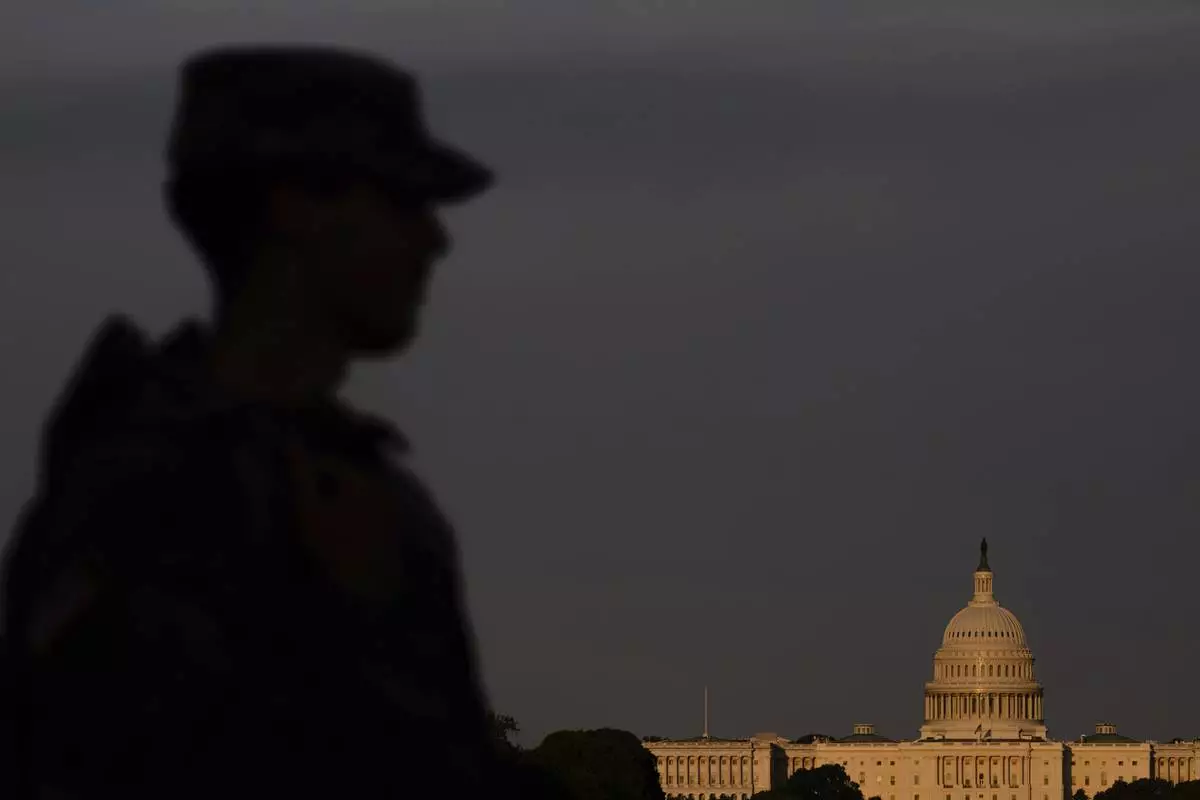
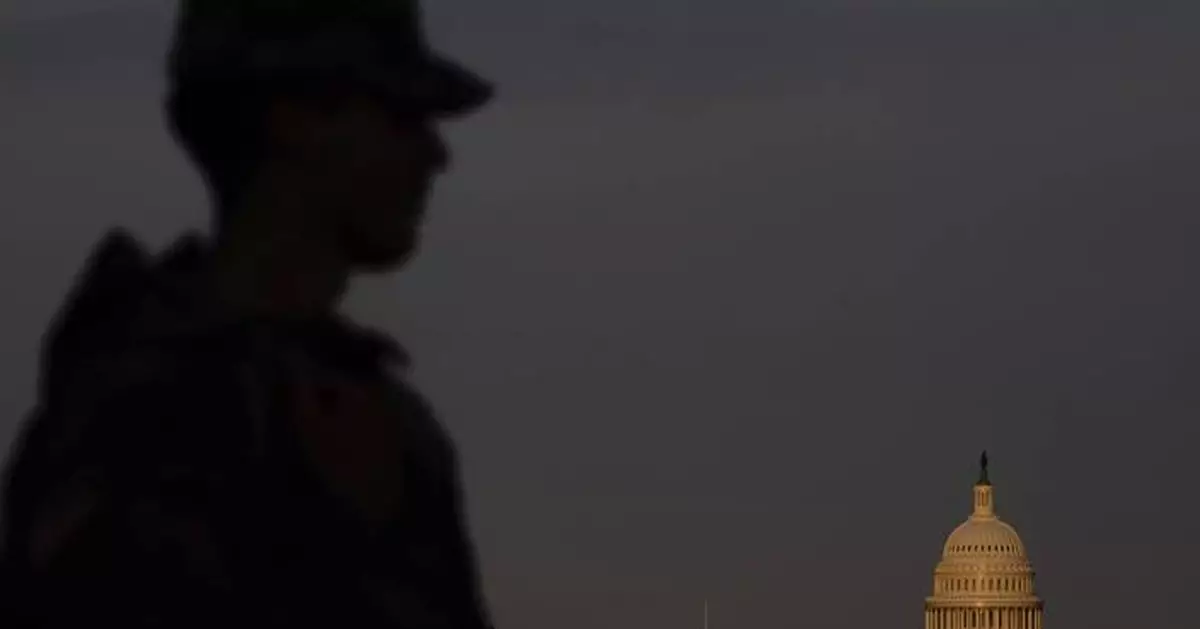
The US Capitol is seen past a member of the South Carolina National Guard standing at the Washington Monument, Sunday, Aug. 31, 2025, in Washington. (AP Photo/Jon Cherry)
SEOUL, South Korea (AP) — A South Korean court sentenced former President Yoon Suk Yeol to five years in prison Friday in the first verdict from eight criminal trials over the martial law debacle that forced him out of office and other allegations.
Yoon was impeached, arrested and dismissed as president after his short-lived imposition of martial law in December 2024 triggered huge public protests calling for his ouster.
The most significant criminal charge against him alleges that his martial law enforcement amounted to a rebellion, and the independent counsel has requested the death sentence in the case that is to be decided in a ruling next month.
In Friday's case, the Seoul Central District Court sentenced Yoon for defying attempts to detain him, fabricating the martial law proclamation and sidestepping a legally mandated full Cabinet meeting.
Yoon has maintained he didn’t intend to place the country under military rule for an extended period, saying his decree was only meant to inform the people about the danger of the liberal-controlled parliament obstructing his agenda. But investigators have viewed Yoon’s decree as an attempt to bolster and prolong his rule, charging him with rebellion, abuse of power and other criminal offenses.
Judge Baek Dae-hyun said in the televised ruling that imposing “a grave punishment” was necessary because Yoon hasn’t shown remorse and has only repeated “hard-to-comprehend excuses.” The judge also restoring legal systems damaged by Yoon’s action was necessary.
Yoon, who can appeal the ruling, hasn’t immediately publicly responded to the ruling. But when the independent counsel demanded a 10-year prison term in the case, Yoon’s defense team accused them of being politically driven and lacking legal grounds to demand such “an excessive” sentence.
Prison sentences in the multiple, smaller trials Yoon faces would matter if he is spared the death penalty or life imprisonment at the rebellion trial.
Park SungBae, a lawyer who specializes in criminal law, said there is little chance the court would decide Yoon should face the death penalty in the rebellion case. He said the court will likely issue a life sentence or a sentence of 30 years or more in prison.
South Korea has maintained a de facto moratorium on executions since 1997 and courts rarely hand down death sentences. Park said the court would take into account that Yoon’s decree didn’t cause casualties and didn’t last long, although Yoon hasn’t shown genuine remorse for his action.

A supporter of former South Korean President Yoon Suk Yeol shouts slogans outside Seoul Central District Court, in Seoul, South Korea, Friday, Jan. 16, 2026. (AP Photo/Lee Jin-man)

Supporters of former South Korean President Yoon Suk Yeol hold signs and flags outside Seoul Central District Court, in Seoul, South Korea, Friday, Jan. 16, 2026. (AP Photo/Lee Jin-man)
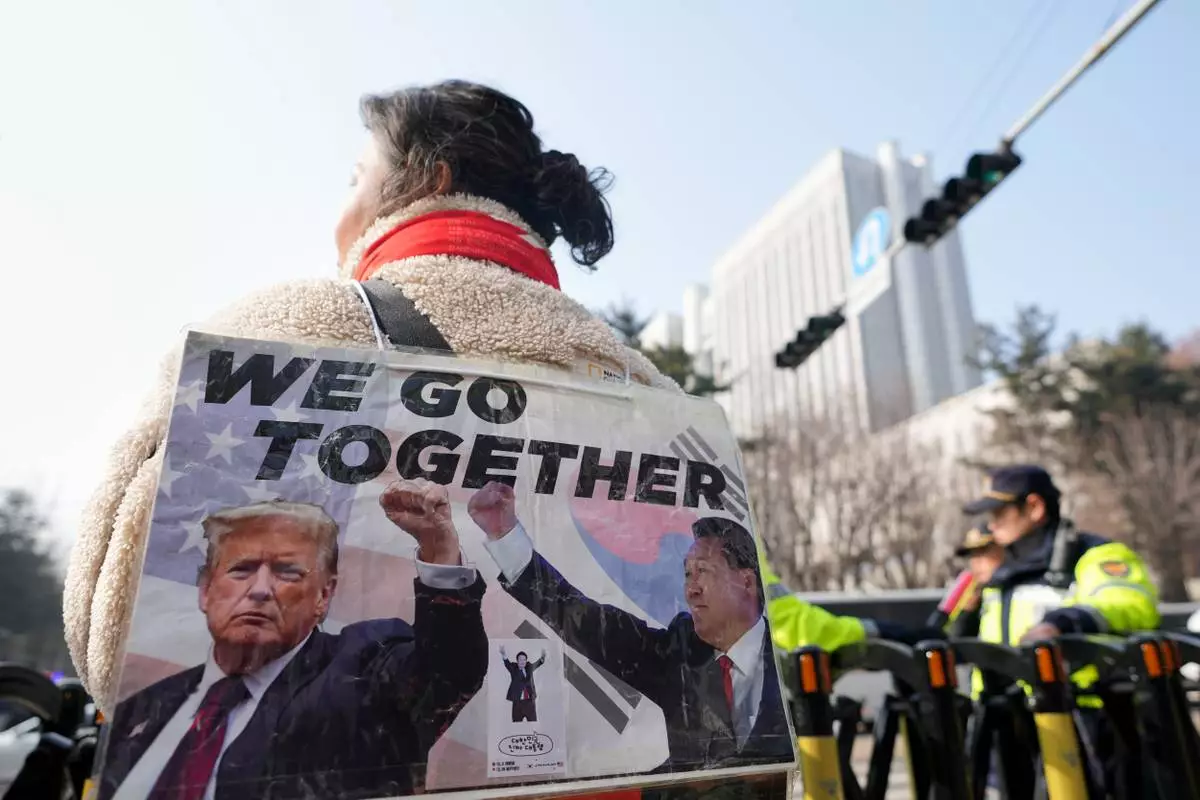
A supporter of former South Korean President Yoon Suk Yeol waits for a bus carrying former South Korean President Yoon Suk Yeol outside Seoul Central District Court, in Seoul, South Korea, Friday, Jan. 16, 2026. (AP Photo/Lee Jin-man)
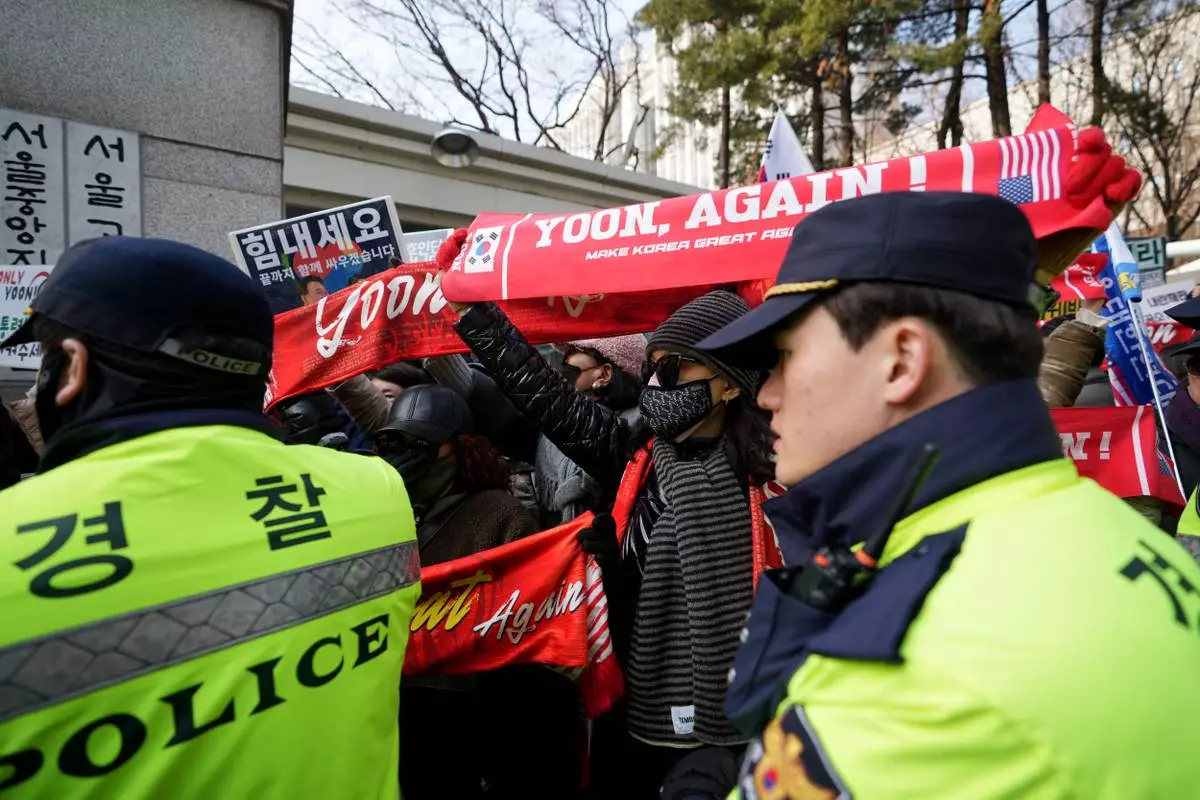
Supporters of former South Korean President Yoon Suk Yeol hold signs as police officers stand guard outside Seoul Central District Court, in Seoul, South Korea, Friday, Jan. 16, 2026. (AP Photo/Lee Jin-man)
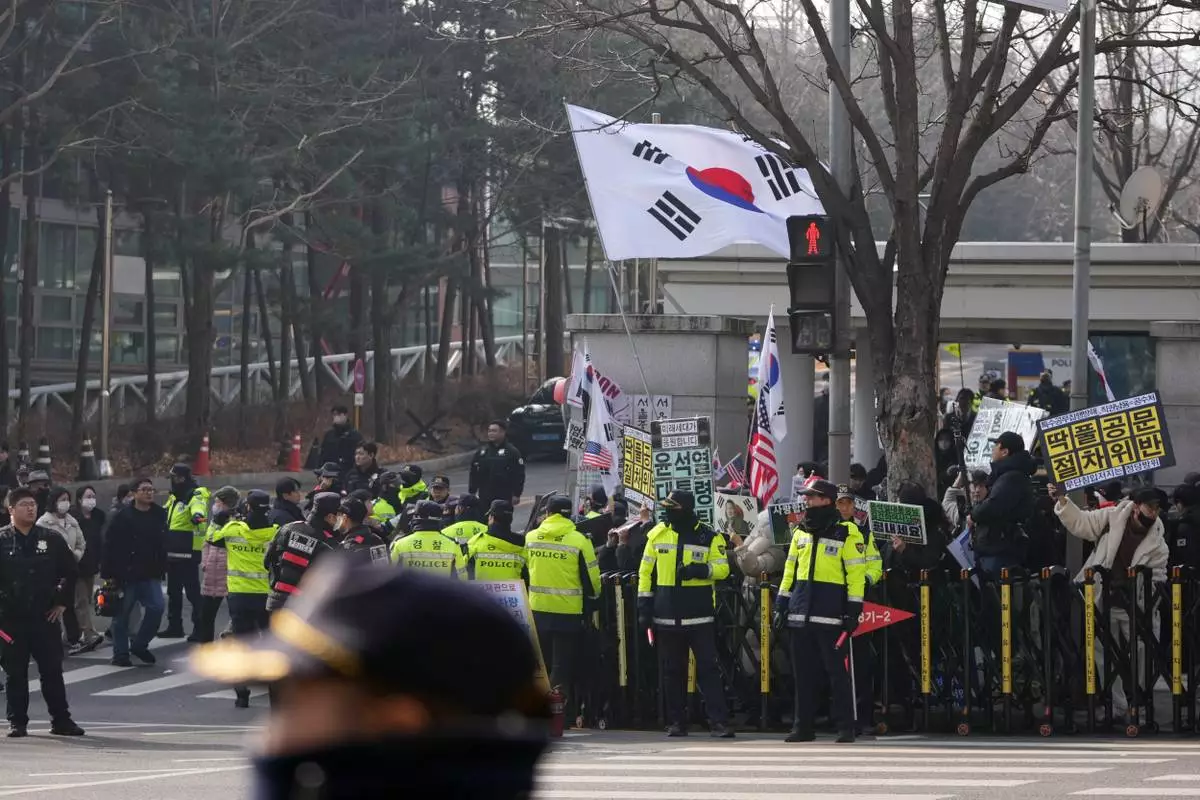
Supporters of former South Korean President Yoon Suk Yeol hold signs and flags outside Seoul Central District Court, in Seoul, South Korea, Friday, Jan. 16, 2026. (AP Photo/Lee Jin-man)
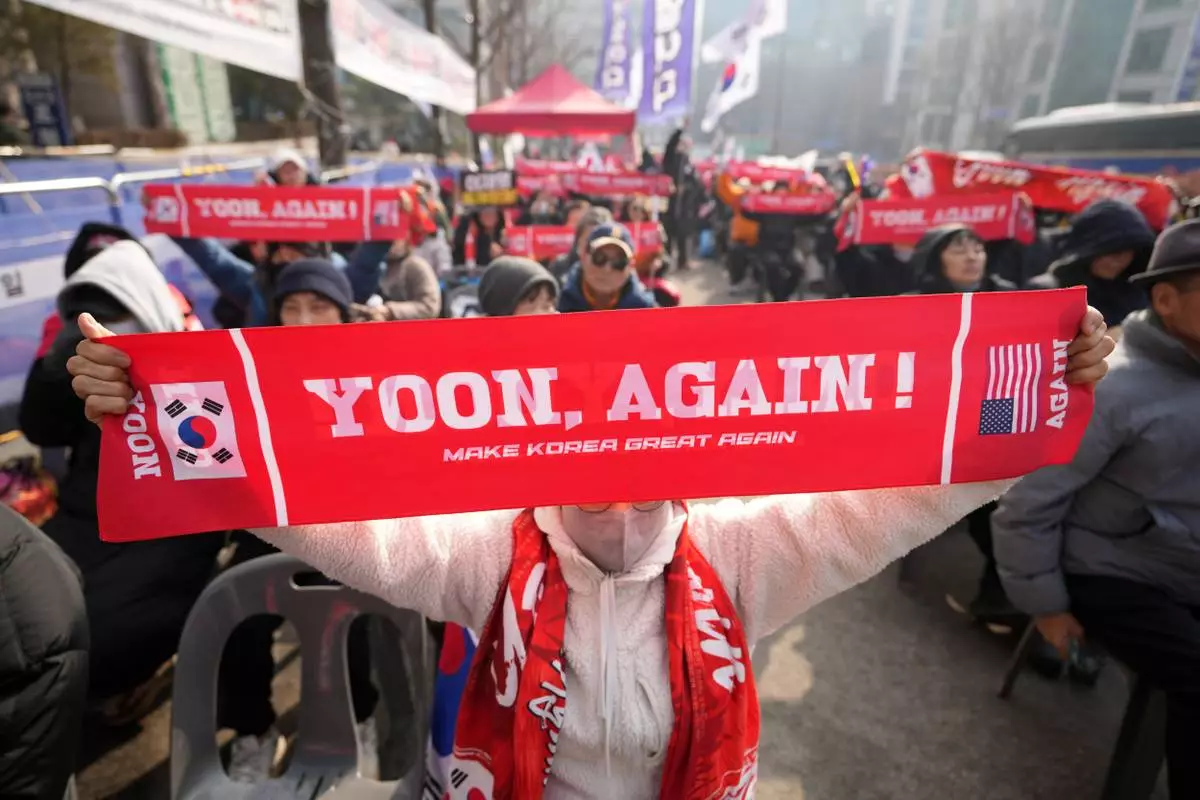
Supporters of former South Korean President Yoon Suk Yeol hold signs outside Seoul Central District Court, in Seoul, South Korea, Friday, Jan. 16, 2026. (AP Photo/Lee Jin-man)
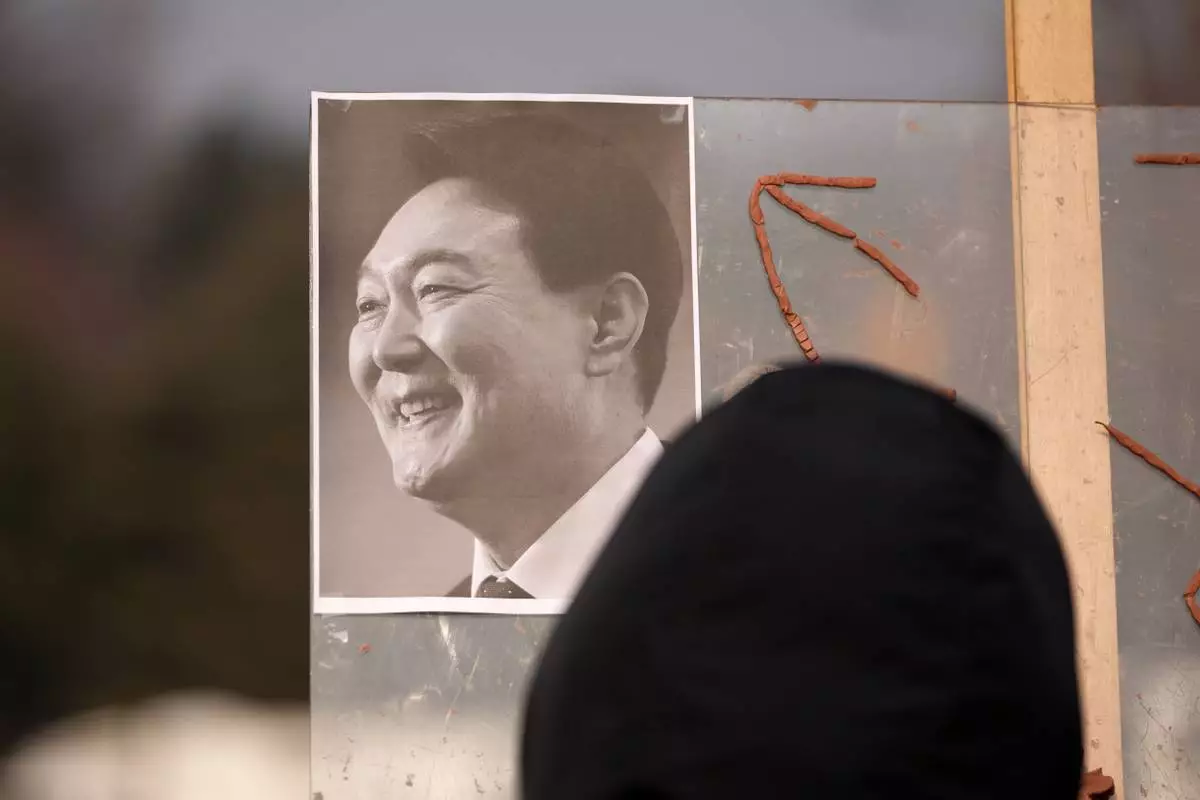
A picture of former South Korean President Yoon Suk Yeol is placed on a board as supporters gather outside Seoul Central District Court, in Seoul, South Korea, Friday, Jan. 16, 2026. (AP Photo/Lee Jin-man)