Skip to Content Facebook Feature Image

Russia launches over 500 drones and missiles at Ukraine as Zelenskyy seeks more support

News

Russia launches over 500 drones and missiles at Ukraine as Zelenskyy seeks more support
News

News

Russia launches over 500 drones and missiles at Ukraine as Zelenskyy seeks more support

2025-09-04 10:04 Last Updated At:10:10

KYIV, Ukraine (AP) — Russia fired more than 500 drones and two dozen missiles at Ukraine overnight, authorities said Wednesday, as Ukraine’s president and European leaders pressed on with talks on how to strengthen Ukrainian defenses and boost as-yet unsuccessful U.S.-led peace efforts.

The main Russian nighttime targets were civilian infrastructure, especially energy facilities, Ukrainian President Volodymyr Zelenskyy said, as another winter approaches three years after Russia’s all-out invasion of its neighbor. The attacks targeted mainly western and central Ukraine and wounded at least five people, the Ukrainian air force said.

More Images
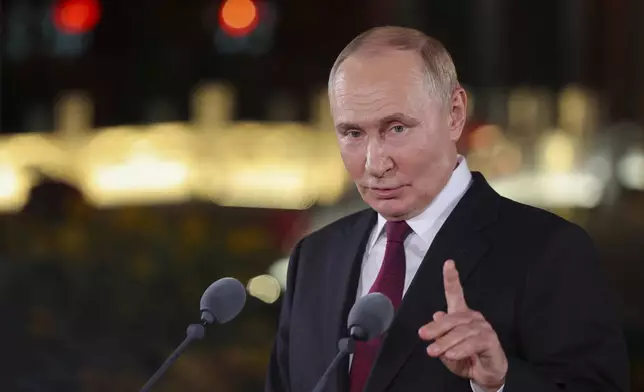
Russian President Vladimir Putin speaks during a press conference, at the end of his visit to China for the Tianjin SCO Summit and the military parade to mark the 80th anniversary of the end of World War Two, in Beijing, China, Wednesday, Sept. 3, 2025. (Maxim Shemetov, Pool Photo via AP)
Russian President Vladimir Putin speaks during a press conference, at the end of his visit to China for the Tianjin SCO Summit and the military parade to mark the 80th anniversary of the end of World War Two, in Beijing, China, Wednesday, Sept. 3, 2025. (Maxim Shemetov, Pool Photo via AP)

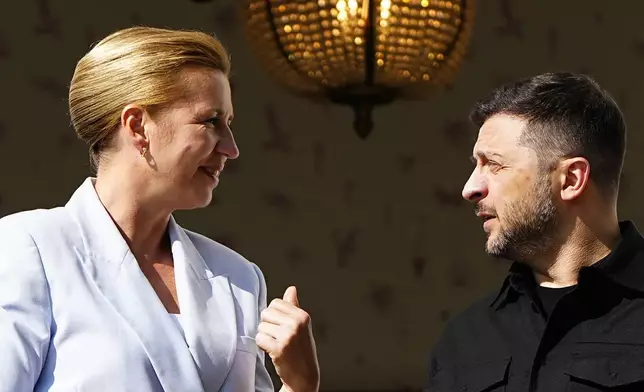
Danish Prime Minister Mette Frederiksen, left, welcomes Ukraine's President Volodymyr Zelenskyy, on the lawn in front of Marienborg, in Copenhagen, Wednesday, Sept. 3, 2025. (Mads Claus Rasmussen/Ritzau Scanpix via AP)
Danish Prime Minister Mette Frederiksen, left, welcomes Ukraine's President Volodymyr Zelenskyy, on the lawn in front of Marienborg, in Copenhagen, Wednesday, Sept. 3, 2025. (Mads Claus Rasmussen/Ritzau Scanpix via AP)

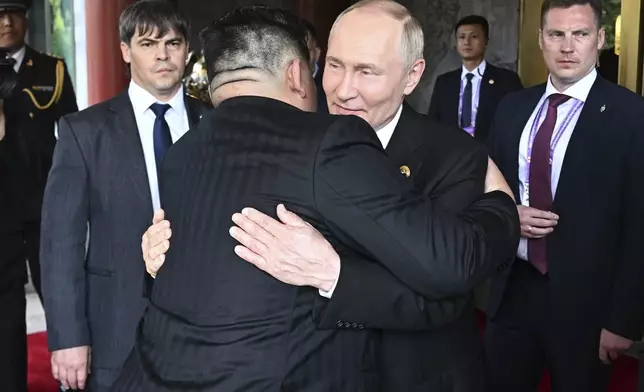
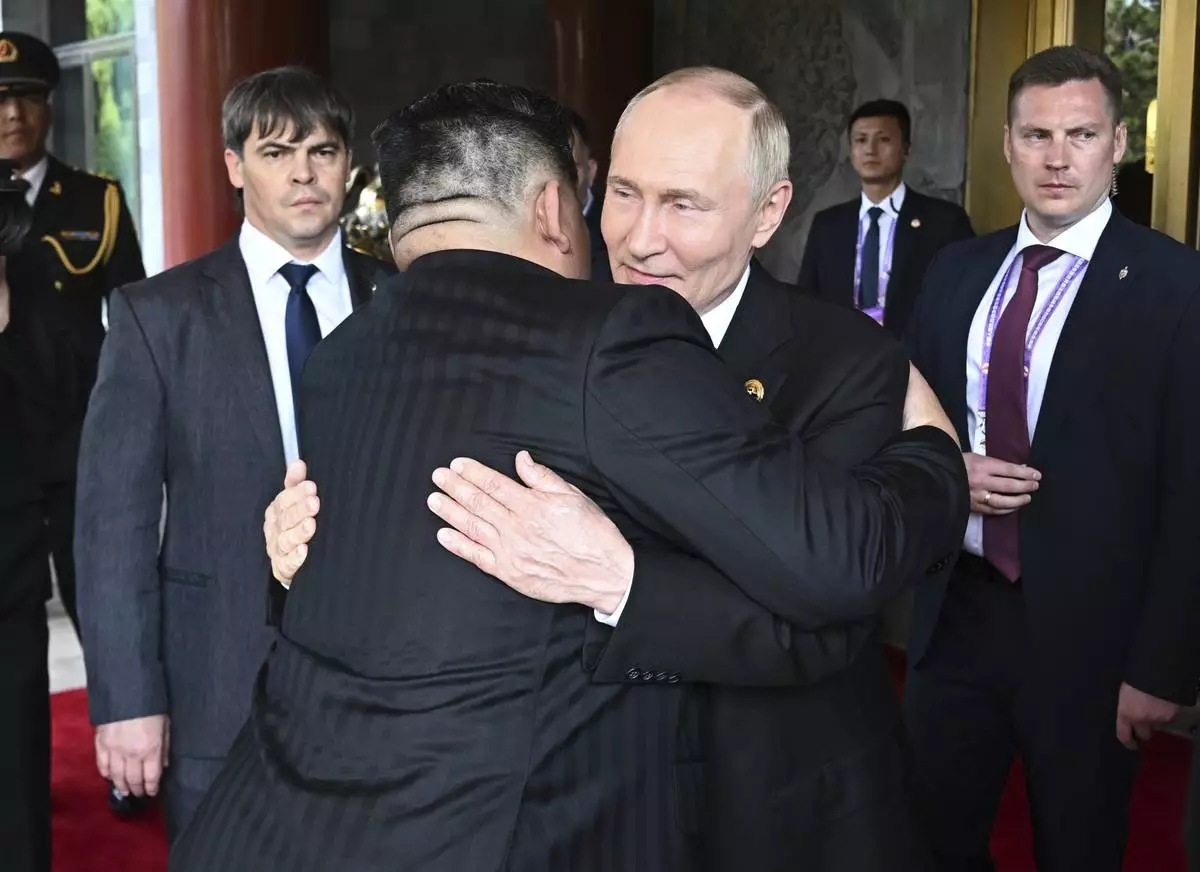
Russian President Vladimir Putin, center right, and North Korean leader Kim Jong Un hug each other after their meeting at Diaoyutai State Guesthouse in Beijing, China, Wednesday, Sept. 3, 2025. (Sergei Bobylev, Sputnik, Kremlin Pool Photo via AP)
Russian President Vladimir Putin, center right, and North Korean leader Kim Jong Un hug each other after their meeting at Diaoyutai State Guesthouse in Beijing, China, Wednesday, Sept. 3, 2025. (Sergei Bobylev, Sputnik, Kremlin Pool Photo via AP)

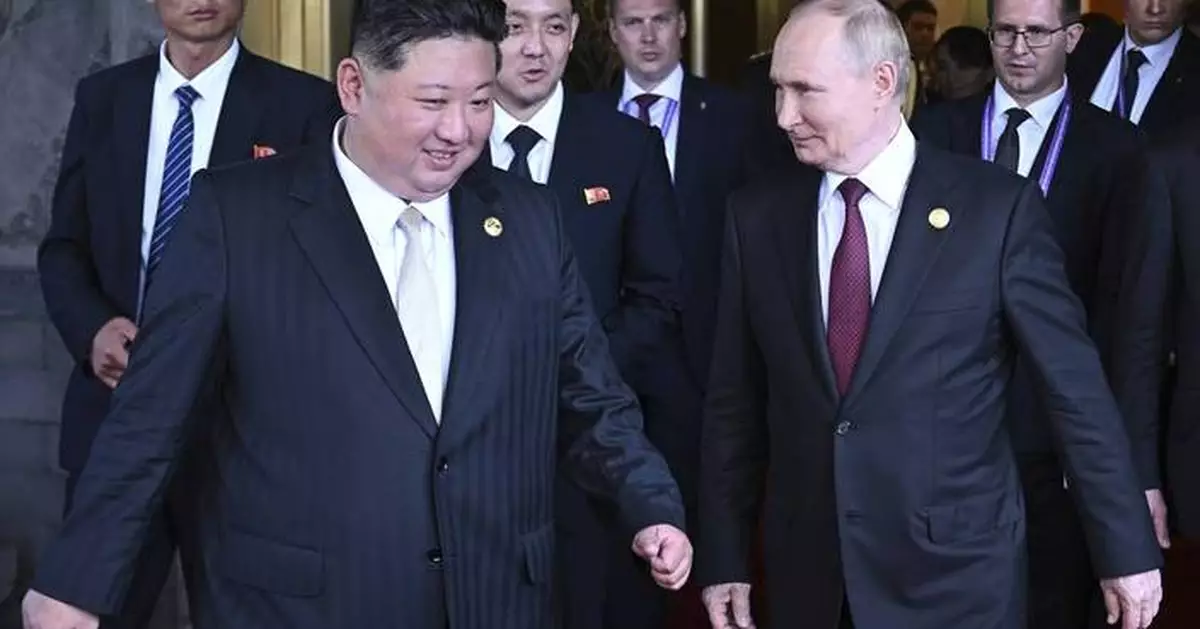
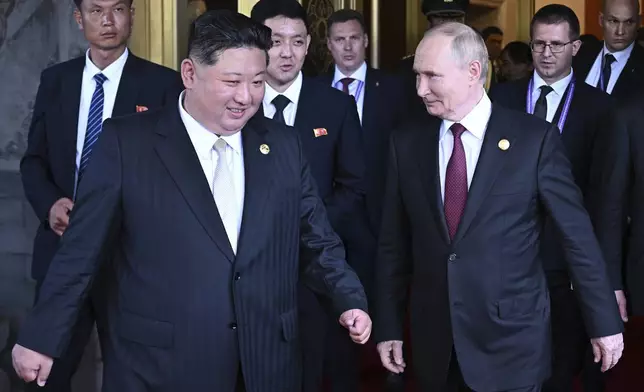
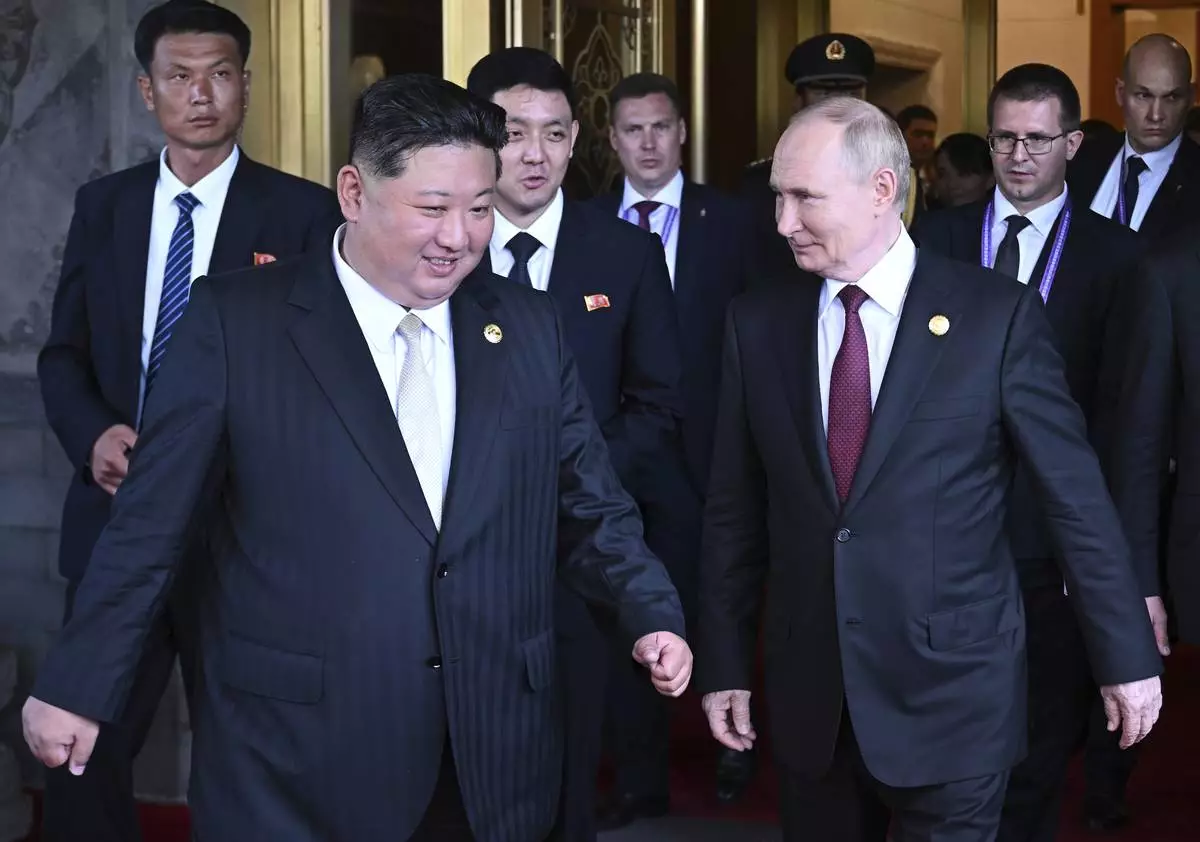
Russian President Vladimir Putin, right, and North Korean leader Kim Jong Un walk after their meeting at Diaoyutai State Guesthouse in Beijing, China, Wednesday, Sept. 3, 2025. (Sergei Bobylev, Sputnik, Kremlin Pool Photo via AP)

Russian President Vladimir Putin, right, and North Korean leader Kim Jong Un walk after their meeting at Diaoyutai State Guesthouse in Beijing, China, Wednesday, Sept. 3, 2025. (Sergei Bobylev, Sputnik, Kremlin Pool Photo via AP)

Russia’s aerial assaults that hit civilian areas and its army’s drive to crush Ukrainian defenses along the 1,000-kilometer (620-mile) front line have not abated in recent months, despite U.S. President Donald Trump’s attempts to stop the fighting. While Zelenskyy has accepted Trump’s proposals for a ceasefire and face-to-face peace talks with Russian President Vladimir Putin, the Kremlin has voiced reservations.

Putin said Wednesday he believed “that if common sense prevails, it is possible to agree on an acceptable option for ending the conflict,” adding that Trump has “a sincere desire” to find a settlement.

“It seems to me that there is a certain light at the end of the tunnel,” Putin said at a news conference in Beijing, wrapping up a four-day visit to China. “Let’s see how the situation develops. If not, then we will have to achieve our goal by military means.”

He said he was ready to receive Zelenskyy for talks in Moscow, but only if the meeting is “well prepared.” Kremlin officials have previously said a summit could happen only after a broad agreement has been hammered out first by lower-ranking delegations.

Meanwhile, the Ukrainian leader described the overnight strikes as “demonstrative.”

“Putin is demonstrating his impunity,” Zelenskyy wrote on Telegram Wednesday, urging tougher sanctions on Russia. “Only due to the lack of sufficient pressure, primarily on the war economy, does Russia continue this aggression.”

Trump and Zelenskyy are scheduled to speak Thursday, according to a White House official who requested anonymity to discuss the call that is yet to be formally announced.

As part of diplomatic maneuvering, Putin was in China meeting with Chinese leader Xi Jinping and North Korean leader Kim Jong Un, as well as Indian Prime Minister Narendra Modi. The three countries support Russia’s war effort, Washington says. Pyongyang has sent troops and ammunition to Russia, while China and India have bought Russian oil, indirectly helping its war economy.

The European Union’s foreign policy chief said that China’s alliance with Russia is supplying vital support for its invasion, including with products that can be used for both civilian and military purposes.

“Russia is not acting alone. China provides Russia with up to 80% of dual use imports,” Kaja Kallas said in a speech Wednesday at the annual European Union Institute for Security Studies conference in Brussels. “This allows the killing to continue in Ukraine.”

In his daily video address on Tuesday evening, Zelenskyy said the number of Russian drone attacks is growing, including in broad daylight, and reported “another buildup of Russian forces in some sectors of the front.”

He said it revealed “an open disregard by Russia for everything the world is doing to stop this war.”

Zelenskyy arrived in Denmark on Tuesday for talks with Northern European and Baltic countries about new military aid and further diplomatic support for Ukraine. He said in Copenhagen that a program for weapons sourced from the United States and paid for by Europe for delivery to Ukraine already has commitments of more than $2 billion. The goal, he said, is to add around $1 billion to the fund each month.

British Defense Secretary John Healey, meanwhile, was in the Ukrainian capital Kyiv for meetings on how to strengthen Ukraine’s military.

French President Emmanuel Macron greeted Zelenskyy in Paris on Wednesday evening, ahead of a Thursday meeting of European countries assessing what kind of postwar security guarantees they might be able to provide with the United States.

Macron said defense ministers of these countries confirmed and documented contributions from 35 coalition members at a meeting earlier in the day. He didn’t elaborate on what he said was a confidential agreement, but said it was the result of ″intense work in recent weeks″ and ″allows me to say that this preparatory work has been completed.″

″We are ready, we Europeans, to bring security guarantees to Ukraine and Ukrainians the day a peace deal is signed,″ Macron said. ″The question now is about the sincerity of Russia and its successive commitments since it proposed peace to the United States.’

Zelenskyy said that “unfortunately, so far we have not seen any signals from Russia that they want to end” the war. “But I am sure that our union, the union with Europe which has been with us since the beginning of the war, and the union of Europe with America will help us increase the pressure on Russia to move towards a diplomatic solution,” he said.

NATO Secretary-General Mark Rutte said earlier Wednesday he expected clarity after the Paris talks about what each country can provide.

Rutte said he is “discreetly part of all the conversations” alongside NATO’s Supreme Allied Commander, Gen. Alexus Grynkewich, because the plans would draw resources from alliance countries and officials need to “prevent spreading our resources too thinly.”

Associated Press writers Sam McNeil in Brussels, Katie Marie Davies in Manchester, England, Jamey Keaten in Geneva, Angela Charlton in Paris and Aamer Madhani in Washington, D.C. contributed to this report.

Follow AP’s coverage of the war in Ukraine at https://apnews.com/hub/russia-ukraine
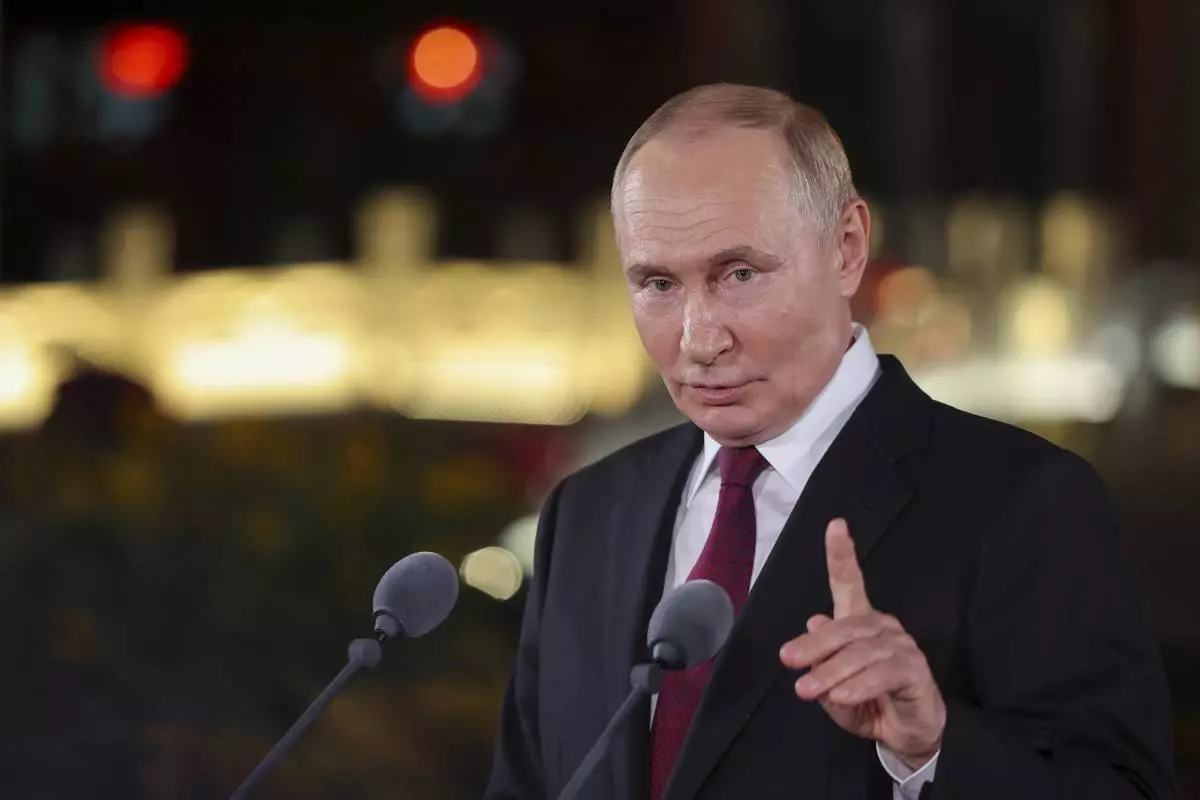
Russian President Vladimir Putin speaks during a press conference, at the end of his visit to China for the Tianjin SCO Summit and the military parade to mark the 80th anniversary of the end of World War Two, in Beijing, China, Wednesday, Sept. 3, 2025. (Maxim Shemetov, Pool Photo via AP)

Russian President Vladimir Putin speaks during a press conference, at the end of his visit to China for the Tianjin SCO Summit and the military parade to mark the 80th anniversary of the end of World War Two, in Beijing, China, Wednesday, Sept. 3, 2025. (Maxim Shemetov, Pool Photo via AP)

Danish Prime Minister Mette Frederiksen, left, welcomes Ukraine's President Volodymyr Zelenskyy, on the lawn in front of Marienborg, in Copenhagen, Wednesday, Sept. 3, 2025. (Mads Claus Rasmussen/Ritzau Scanpix via AP)
Danish Prime Minister Mette Frederiksen, left, welcomes Ukraine's President Volodymyr Zelenskyy, on the lawn in front of Marienborg, in Copenhagen, Wednesday, Sept. 3, 2025. (Mads Claus Rasmussen/Ritzau Scanpix via AP)

Russian President Vladimir Putin, center right, and North Korean leader Kim Jong Un hug each other after their meeting at Diaoyutai State Guesthouse in Beijing, China, Wednesday, Sept. 3, 2025. (Sergei Bobylev, Sputnik, Kremlin Pool Photo via AP)
Russian President Vladimir Putin, center right, and North Korean leader Kim Jong Un hug each other after their meeting at Diaoyutai State Guesthouse in Beijing, China, Wednesday, Sept. 3, 2025. (Sergei Bobylev, Sputnik, Kremlin Pool Photo via AP)


Russian President Vladimir Putin, right, and North Korean leader Kim Jong Un walk after their meeting at Diaoyutai State Guesthouse in Beijing, China, Wednesday, Sept. 3, 2025. (Sergei Bobylev, Sputnik, Kremlin Pool Photo via AP)

Russian President Vladimir Putin, right, and North Korean leader Kim Jong Un walk after their meeting at Diaoyutai State Guesthouse in Beijing, China, Wednesday, Sept. 3, 2025. (Sergei Bobylev, Sputnik, Kremlin Pool Photo via AP)

Iran's top judge hinted at fast trials and executions for those who were detained in nationwide protests against the country's theocracy, even as activists said Wednesday that the death toll rose to levels unseen in decades with at least 2,572 people killed so far.

Iran’s judiciary chief Gholamhossein Mohseni-Ejei made the comments about trials and executions in a video Tuesday, despite a warning from U.S. President Donald Trump that he would “take very strong action” if executions take place.

The U.S.-based Human Rights Activists News Agency said the number of dead climbed to at least 2,571 early Wednesday. The figure dwarfs the death toll from any other round of protest or unrest in Iran in decades and recalls the chaos surrounding the country’s 1979 Islamic Revolution.

After Trump was informed on the number of deaths, he warned Iran's leaders that he was terminating any negotiations and would “act accordingly.”

Details of the crackdown began emerging Tuesday as Iranians made phone calls abroad for the first time in days after authorities severed communications countrywide when the protests broke out.

Here is the latest:

Major Middle East governments were discouraging the Trump administration from waging a war with Iran, fearing “unprecedented consequences” in the volatile region, an Arab Gulf diplomat said Wednesday.

The Cairo-based diplomat, who was given anonymity because he wasn't authorized to speak to the media, said major governments in the region including Turkey, Egypt, Saudi Arabai and Pakistan have been “in constant contact” with the U.S. administration over a potential American strike on Iran that could explode into a “full-blown war.”

Such a war will “certainly” have dire repercussions “not only on the Middle East but also on the global economy," he said.

Samy Magdy contributed from Cairo.

Iranian state television said Wednesday’s mass funeral in Tehran would include 300 bodies of security force members and civilians. The funeral is expected to take place at Tehran University under heavy security.

The Human Rights Activists News Agency, which is tracking the death toll, said more than 2,550 people have been killed, 2,403 protesters and 147 government-affiliated.

Twelve children were killed, along with nine civilians it said were not taking part in protests. More than 18,100 people have been detained, the group said.

Gauging the demonstrations and the death toll from abroad has grown more difficult and The Associated Press has been unable to independently assess the toll given the communications being disrupted in the country.

Melanie Lidman contributed from Jerusalem.

Trump’s decision to impose a 25% tariff on countries that trade with Iran could impact India, an expert said, as New Delhi already faces existing 50% U.S. trade levies due its purchases of Russian oil.

Abhijit Mukhopadhyay, a senior economist at the Chintan Research Foundation in New Delhi, said the bigger risk is not India-Iran trade, but India’s access to the U.S. market as its exports to Iran are modest.

India mainly exports rice, tea, sugar, pharmaceuticals and electrical machinery to Iran, while importing dry fruits and chemical products. Textiles and garments, gems and jewelry and engineering goods are likely to be the most vulnerable sectors, he said.

Trump’s latest move also could affect India’s investments in Iran including the strategically important Chabahar port, which gives India a trade route to Afghanistan, Central Asia and Europe while bypassing Pakistan, Mukhopadhyay said.

Iran’s judiciary chief signals fast trials and executions for those detained in nationwide protests.

Gholamhossein Mohseni-Ejei made the comment in a video shared by Iranian state television on Wednesday.

He emphasized the need for swift action, saying delays would lessen the impact.

His remarks challenge Trump, who warned Iran about executions in an interview aired Tuesday.

Trump stated the U.S. would take strong action if Iran proceeded with executions. The situation highlights escalating tensions between the two countries over the handling of the protests.

Dozens of Pakistani students studying in Iran have returned home through a remote southwestern border crossing, a Pakistani immigration official said Wednesday.

Federal Investigation Agency spokesperson in Quetta city, Samina Raisani, said about 60 students crossed into Pakistan on Tuesday through Gabd border in Balochistan province with valid travel documents.

More students were expected to return through the same crossing later Wednesday, she said.

Mudassir Tipu, Pakistan’s ambassador to Iran, said Tuesday that Iranian universities had rescheduled exams and permitted international students to leave the country.

The satellite internet provider Starlink now offers free service in to people Iran who have access to the company's receivers, activists said Wednesday.

Mehdi Yahyanejad, a Los Angeles-based activist who helped get the units into Iran, told The Associated Press that the free service had started. Other activists also confirmed in messages online that the service was free.

Starlink has been the only way for Iranians to communicate with the outside world since authorities shut down the internet Thursday night as nationwide protests swelled and they began a bloody crackdown against demonstrators.

Starlink did not immediately acknowledge the decision.

This frame grab from videos taken between Jan. 9 and Jan. 11, 2026, and circulating on social media purportedly shows images from a morgue with dozens of bodies and mourners after crackdown on the outskirts of Iran's capital, in Kahrizak, Tehran Province. (UGC via AP)

This frame grab from videos taken between Jan. 9 and Jan. 11, 2026, and circulating on social media purportedly shows images from a morgue with dozens of bodies and mourners after crackdown on the outskirts of Iran's capital, in Kahrizak, Tehran Province. (UGC via AP)

Recommended Articles