KIRKLAND, Wash.--(BUSINESS WIRE)--Sep 3, 2025--
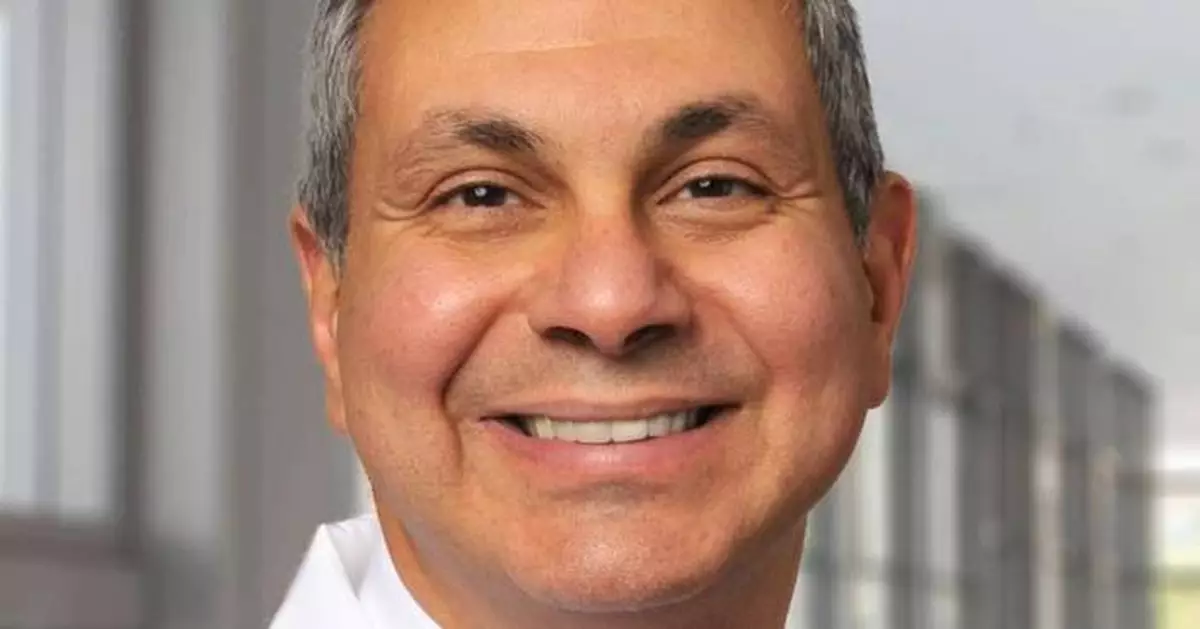
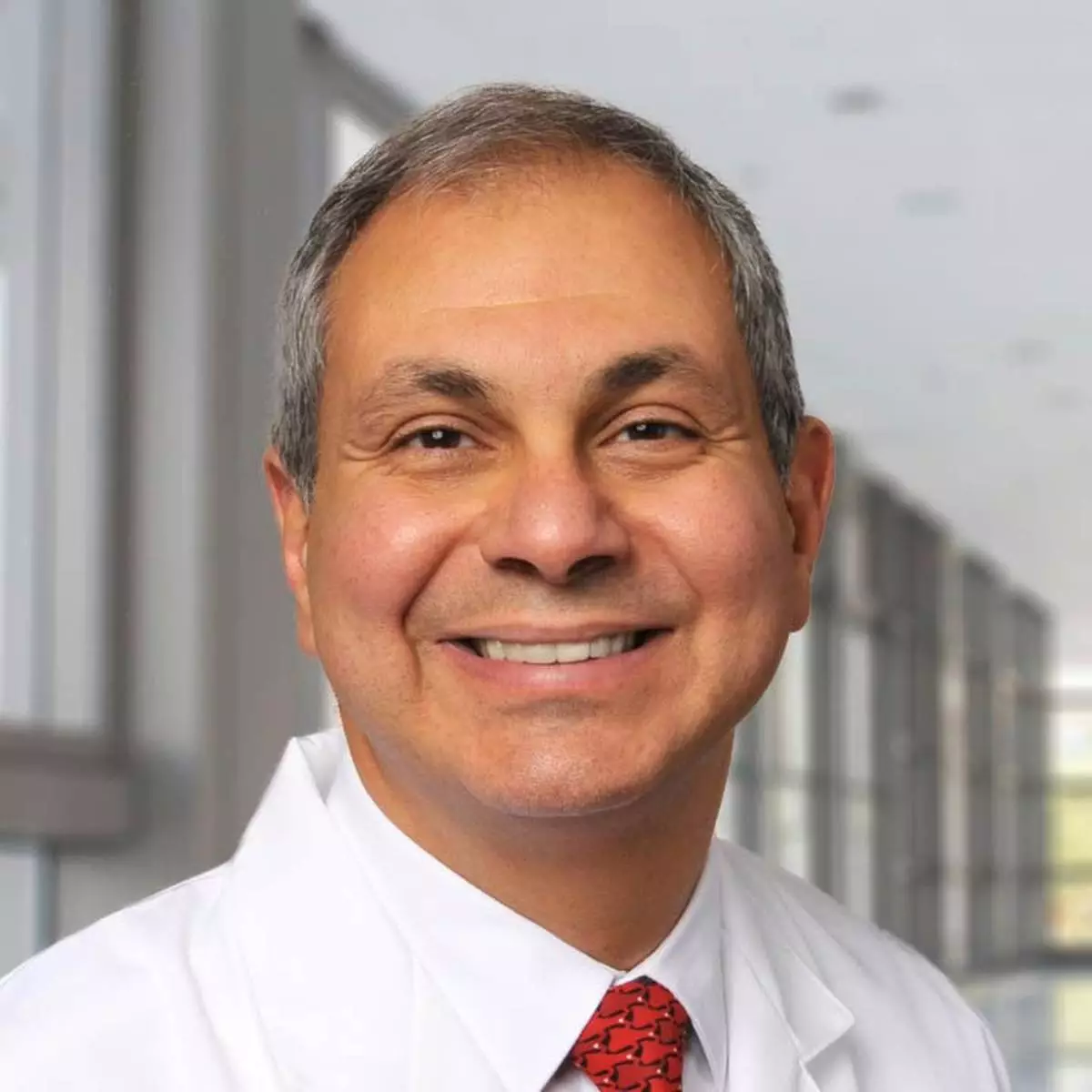
Cardiac Dimensions®, a leader in transcatheter therapies for heart failure, announced today the appointment of William T. Abraham, MD, as Chief Medical Officer. A globally recognized expert in heart failure and device-based therapies, Dr. Abraham will help lead the company’s clinical and regulatory strategies as it advances toward U.S. regulatory approval and continues to expand European commercial sales of the Carillon Mitral Contour System®.
This press release features multimedia. View the full release here: https://www.businesswire.com/news/home/20250903095354/en/
Dr. Abraham most recently served as the Chief Medical Officer at V-Wave Ltd., where he led the U.S. pivotal trial and played a key role in advancing the company’s transcatheter interatrial shunt therapy, culminating in a significant heart failure-focused acquisition by Johnson & Johnson. Dr. Abraham is a College of Medicine Distinguished Professor at The Ohio State University, where he was the Director of the Division of Cardiovascular Medicine for more than 15 years, and has published over 650 peer-reviewed papers. He is internationally known for his leadership in advancing heart failure treatments, including cardiac resynchronization therapy, remote hemodynamic monitoring, and transcatheter valve repair. Dr. Abraham has also served as national or global principal investigator on more than 50 multicenter trials, including important trials within the mitral valve space.
“We are delighted to welcome Dr. Abraham to the Cardiac Dimensions leadership team,” said Rick Wypych, President and CEO of Cardiac Dimensions. “Bill’s impact on the heart failure field is unmatched. His input and influence on the Carillon therapy will help drive the success and adoption of this much-needed therapy. In addition, his experience with large-scale clinical trials and regulatory pathways will be instrumental to the completion of our pivotal U.S. landmark study – The EMPOWER Trial.”
“I’ve spent my career working to bring novel and impactful therapies to people living with heart failure,” said Dr. Abraham. “What drew me to Cardiac Dimensions is the Carillon therapy’s unique position in the heart failure treatment paradigm. It offers a physiologically elegant approach to reducing mitral regurgitation, preserving future treatment options, and modifying the disease process itself. I’m particularly encouraged by the consistent data showing favorable atrial and ventricular remodeling, symptom improvement, and a excellent safety profile – even in patients with proportionate MR who are often excluded from other therapies.”
The Carillon Mitral Contour System has received CE Mark and is available for sale in Europe and other countries that recognize CE Mark.
About the CarillonMitral Contour System ®
The Carillon Mitral Contour System is a minimally invasive device designed to treat heart failure patients with functional mitral regurgitation by reshaping the mitral valve apparatus via the coronary sinus. It is commercially available in Europe, as well as other countries, and is currently being studied in the U.S. pivotal EMPOWER Trial.
About the EMPOWER Trial
The EMPOWER Trial is a prospective, randomized, sham-controlled pivotal study evaluating the safety and effectiveness of the Carillon Mitral Contour System® in heart failure patients with mild to severe functional mitral regurgitation. Designed to enroll up to 300 patients across leading U.S. and international centers, the trial aims to support FDA approval by demonstrating the Carillon therapy’s potential to improve symptoms, cardiac structure, and long-term outcomes in a broad heart failure population.
About Cardiac Dimensions ®
Cardiac Dimensions is committed to addressing the rapidly growing patient population suffering from heart failure with functional mitral regurgitation. With decades of clinical experience and thousands of patients treated worldwide, the company’s Carillon device is uniquely positioned as a durable therapy designed to treat early and late-stage patients, improve symptoms and reverse disease progression. Learn more at www.cardiacdimensions.com.
CAUTION: In the United States, the Carillon System is an investigational device, limited by federal law to investigational use.
Cardiac Dimensions, Carillon, and Carillon Mitral Contour System are registered trademarks of Cardiac Dimensions.
© 2025 Cardiac Dimensions. All rights reserved.
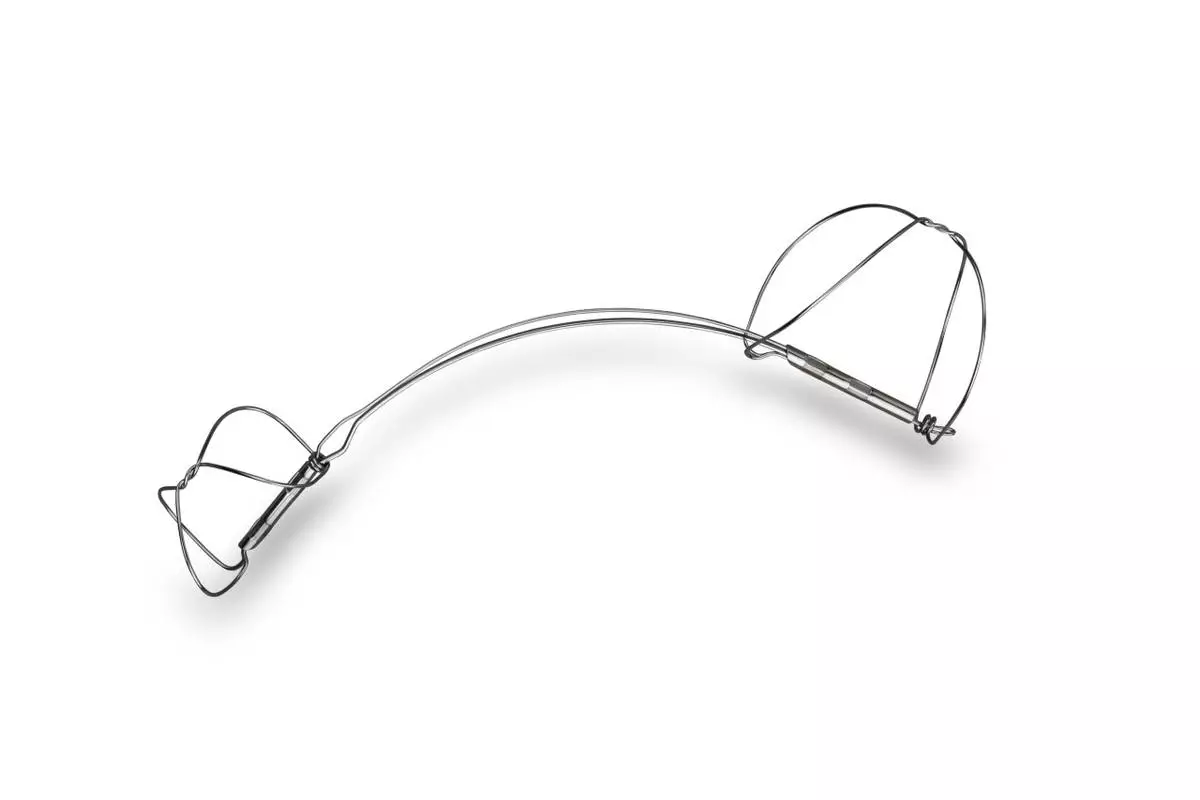
Carillon Mitral Contour System®
Dr. William T. Abraham, Chief Medical Officer at Cardiac Dimensions
By Wednesday afternoon, the Baltimore Ravens had a deal with Trey Hendrickson, their two first-round picks back — and some explaining to do.
Hendrickson agreed on a four-year, $112 million contract with the Ravens, a person with knowledge of the deal told The Associated Press. The person spoke on condition of anonymity because the contract wasn't finalized. Baltimore landed the four-time Pro Bowl edge rusher a day after backing out of a blockbuster trade for star pass rusher Maxx Crosby of the Raiders.
A person with knowledge of Baltimore’s decision told the AP that Crosby failed his physical. The person spoke on condition of anonymity because those results are private.
When the Ravens were able to pivot quickly to Hendrickson, that opened them up to even more suspicion over how they'd handled the previous few days.
"We live in that age of skepticism, and people question — especially people that don’t really know me or know the Ravens’ culture and the Ravens organization. So I understand it," Baltimore general manager Eric DeCosta said Wednesday. "I’ve got a responsibility to the Ravens, to this community, to our fans and to (owner) Stephen Bisciotti, to do what we think is best for the club.”
Baltimore was going to send two first-round draft picks to Las Vegas for Crosby before the deal fell through.
“You bring the player in, you try to get as much information as you can," DeCosta said. "We did that, and we were not able to complete the process of acquiring the player, based on our assessment of the situation."
DeCosta called Crosby one of his favorite players in the NFL and said he was probably going to be the team's most important acquisition this year. He also said the Ravens talked with Hendrickson after losing free agent center Tyler Linderbaum — to the Raiders, ironically.
“We came to a point, probably after we lost Tyler, where as we're trying to find the best way for us to get better as a football team, Trey kind of made a lot of sense as a possible guy to look at," DeCosta said. "So we started some discussions with he and his agent, thinking that potentially we'd have two pass rushers on the defensive line.”
Instead, Crosby remains with the Raiders for the time being and the Ravens are bringing in Hendrickson, an All-Pro for the Bengals in 2024 when he led the NFL with 17 1/2 sacks. He played in only seven games because of injuries last season and had four sacks.
The 31-year-old Hendrickson has 81 sacks in nine seasons with New Orleans and Cincinnati. He reached double digits four times, including 17 1/2 in consecutive seasons in 2023-24.
Hendrickson requested a trade from Cincinnati last March and skipped organized team activities and a mandatory minicamp. He also missed the start of training camp before getting a $14 million raise for last season. The Bengals did not use the franchise tag on him this month, freeing him to hit the open market.
The last few days have been a whirlwind for Ravens fans. After initially agreeing to acquire Crosby, Baltimore lost several players at the start of the free agent negotiating period. Then the Ravens nixed the trade for Crosby, and even after moving on to Hendrickson, they have issues to resolve, particularly in the middle of the offensive line after Linderbaum agreed to the deal with the Raiders.
Baltimore was also hoping to sign two-time MVP quarterback Lamar Jackson to an extension before the start of the new league year Wednesday. But that didn't happen. Instead the Ravens restructured Jackson’s deal to create cap space.
“We kind of ran out of time," DeCosta said. "Were able to free up, I think, just under $40 million this year. Added a void year to 2030 I believe. Certainly hopeful that we’ll get an extension done. I think it’s important to both parties.”
Jackson has two years remaining on the five-year, $260 million contract the Ravens gave him in 2023.
In addition to Linderbaum, outgoing Baltimore free agents Isaiah Likely, Ar’Darius Washington, Dre’Mont Jones, Jordan Stout and Alohi Gilman were among those who reached deals with other teams. All had been important players for the Ravens. Baltimore did re-sign cornerback Chidobe Awuzie.
So DeCosta has a lot on his plate after moving on from Crosby.
“I've got a lot of respect for (Las Vegas owner) Mark Davis, the Raiders, (general manager) John Spytek. Shoot, Al Davis was born in Brockton, Mass. I've always admired that. I'm from Massachusetts right down the street," DeCosta said. "So I love the Raiders. They've been one of my favorite teams. It's tough. It's challenging. It was devastating for me to have that conversation, I'm sure challenging for them to hear as well. It's also very, very, very, very hard for the player.”
AP Pro Football Writer Rob Maaddi contributed to this report.
AP NFL: https://apnews.com/hub/nfl
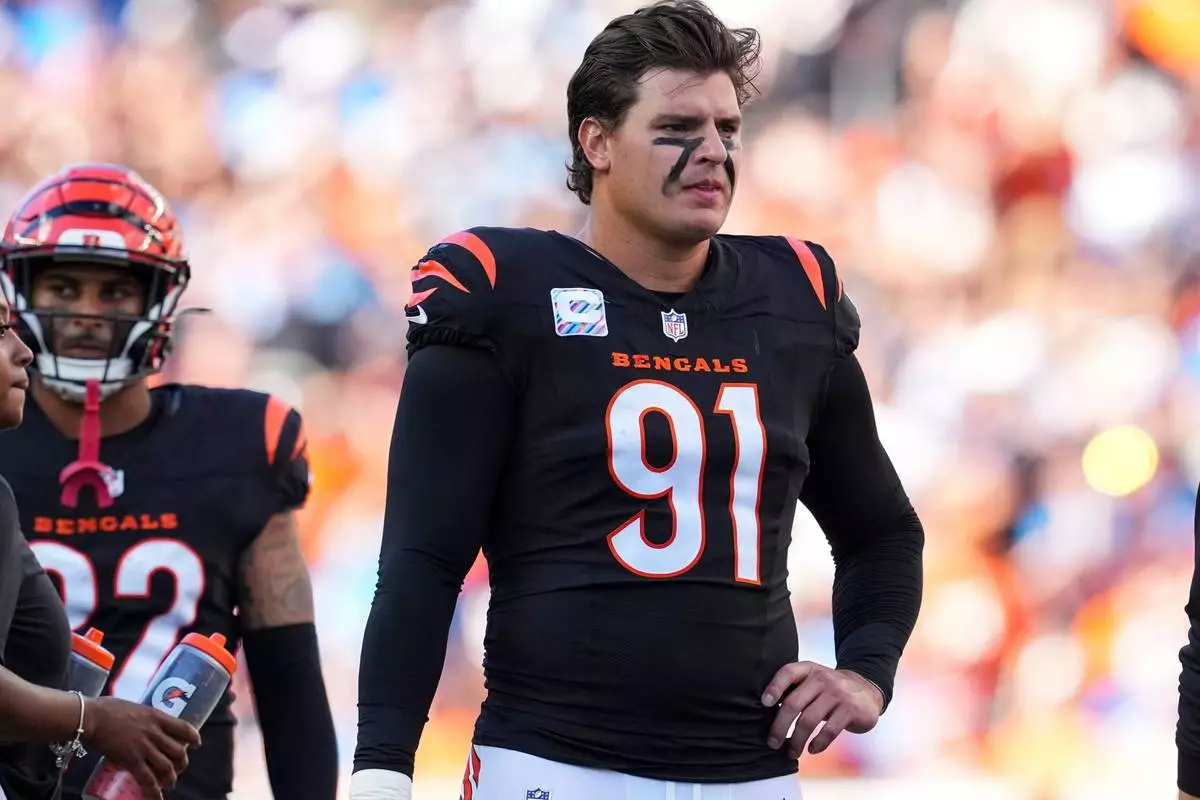
FILE - Cincinnati Bengals defensive end Trey Hendrickson (91) looks on during an NFL football game against the Detroit Lions Sunday, Oct. 5, 2025, in Cincinnati. (AP Photo/Jeff Dean, File)