Skip to Content Facebook Feature Image

No new chikungunya fever cases reported in Hong Kong; preventative measures urged amid global outbreaks.

HK

No new chikungunya fever cases reported in Hong Kong; preventative measures urged amid global outbreaks.
HK

HK

No new chikungunya fever cases reported in Hong Kong; preventative measures urged amid global outbreaks.

2025-09-03 18:20 Last Updated At:18:28

Update on chikungunya fever

The Centre for Health Protection (CHP) of the Department of Health (DH) announced that as of 5pm today (September 3), nonew cases of chikungunya fever (CF) had been recorded.

"According to information from the Guangdong Provincial Disease Control and Prevention Administration, there were 225 new CF cases in Guangdong during the past week (August 24 to 30), showing a further decrease compared to the previous two weeks, which reported 830 cases (August 10 to 16) and 336 cases (August 17 to 23) respectively. All cases were mild, with no severe or fatal cases reported. Although the number of new CF cases in Guangdong Province has continued to decline over the past month, many countries worldwide are experiencing CF outbreaks. Members of the public should check the situation of the destinations before travelling abroad. The CHP also urged schools to follow the Food and Environmental Hygiene Department (FEHD)'s anti-mosquito guidelines to strengthen efforts to clear stagnant water on school premises and eliminate mosquito breeding sites. They should also remind staff members and students to enact mosquito prevention and personal protective measures to prevent the spread of mosquito-borne diseases on campus," the Controller of the CHP, Dr Edwin Tsui, said.

So far this year, Hong Kong has recorded a total of 13 confirmed CF cases. All are imported cases. From 2016 to 2019, Hong Kong recorded between one and 11 imported cases annually.

Continuously strengthening prevention and control

The FEHD continues to conduct vector investigations and targeted mosquito control operations, and intensify mosquito prevention and control measures at the residences of recently confirmed patients, as well as at locations visited after the onset of symptoms. These measures include:
  • carrying out intensive fogging inscrubby areas within a 250-metre radius of the relevant locations to kill adult mosquitoes;
  • carrying out inspections of the locations, removing stagnant water, applying insecticides and disposing of abandoned water containers every week with a view to preventing mosquito breeding; and
  • enhancing public education efforts through organising health talks, setting up mobile education stations, and distributing publicity leaflets.
  • ​Additionally, the CHP's Port Health Division continues to step up inspections at boundary control points and to remind cross-boundary public transport operators and other relevant parties to ensure good environmental hygiene and effective implementation of anti-mosquito measures. Furthermore, staff members of the Port Health Division distribute leaflets to travellers, conduct temperature screenings for inbound travellers, conduct health assessments for travellers with fever or related symptoms and refer them to hospitals for follow-ups when necessary.

    To raise awareness among the elderly about preventing mosquito-borne diseases, the Visiting Health Teams under the Elderly Health Service of the DH have been advising them on mosquito-borne disease prevention and tips on travel health at health talks conducted at District Elderly Community Centres and Neighbourhood Elderly Centres. Moreover, the Visiting Health Teams have also reminded all residential care homes for the elderly in Hong Kong to enhance mosquito control measures. The DH's Maternal and Child Health Centres, Student Health Service Centres and Special Assessment Centres also advise pregnant women, infant carers and students on symptoms and preventive measures of mosquito-borne diseases.

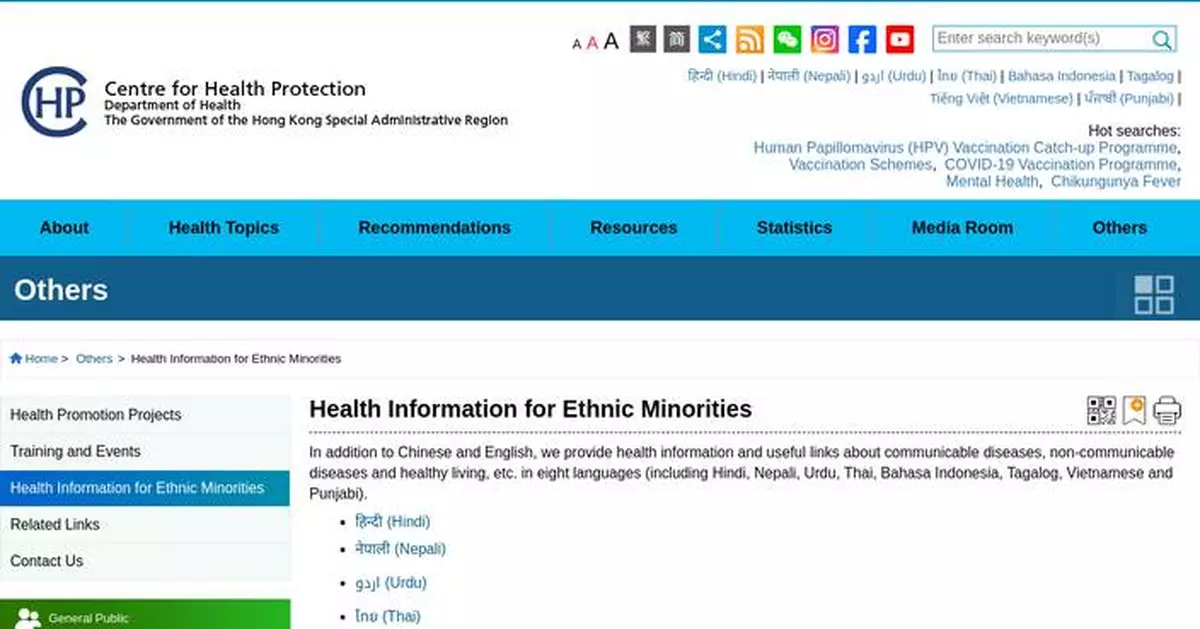
    To strengthen support for ethnic minority communities, essential information on CF has also been translated into 10 ethnic minority languages (namely Hindi, Nepali, Urdu, Thai, Bahasa Indonesia, Tagalog, Vietnamese, Punjabi, Sinhala and Bengali) and uploaded to the CHPwebsite (www.chp.gov.hk/en/static/104022.html).

    Dr Tsui reminded members of the public that they must take proper mosquito control and personal protective measures both locally and during travel. Individuals experiencing relevant symptoms should seek medical advice promptly and inform their doctors if they have a travel history. Proper use of DEET-containing insect repellents or other effective active ingredients can prevent mosquito bites, but the following precautions should be taken when using them:

  • read the label instructions carefully first;
  • apply right before entering an area with a risk of mosquito bites;
  • apply on exposed skin and clothing;
  • use DEET of up to 30 per cent for pregnant women and up to 10 per cent for children (For children who travel to countries or areas where mosquito-borne diseases are endemic or epidemic and where exposure is likely, those aged 2 months or above can use DEET-containing insect repellents with a DEET concentration of up to 30 per cent);
  • apply sunscreen first, then insect repellent;
  • reapply only when needed and follow the instructions; and
  • in addition to DEET, there are other insect repellents available on the market containing different active ingredients, such as IR3535 and picaridin. When using any insect repellent, the public should follow the usage instructions and precautions on the product label.
  • ​The FEHD also appeals to members of the public to continue to stay alert and work together to carry out mosquito prevention and control measures early, including inspecting their homes and surroundings to remove potential breeding grounds, changing water in vases and scrubbing their inner surfaces, removing water in saucers under potted plants at least once a week, and properly disposing of containers such as soft drink cans and lunch boxes. The FEHD also advises members of the public and estate management bodies to keep drains free of blockage and level all defective ground surfaces to prevent the accumulation of water. They should also scrub all drains and surface sewers with an alkaline detergent at least once a week to remove any mosquito eggs.

    The public should call 1823 in case of mosquito problems, and may visit the following pages for more information: the CF page of theCHPand theTravel Health Service, the latestTravel Health News,tips for using insect repellents, and the CHPFacebook Page,Instagram AccountandYouTube Channel, and also theMosquito Prevention and Control dedicated pageof the FEHD.

    Source: AI-found images
    Source: AI-found images

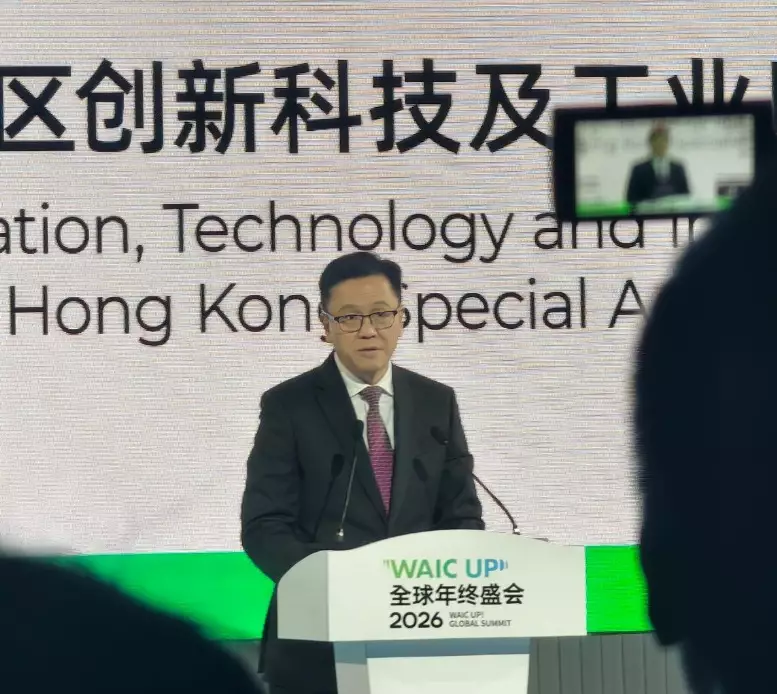
    Speech by SITI at 2026 WAIC UP! Global Summit

    Following is the speech by the Secretary for Innovation, Technology and Industry, Professor Sun Dong, at the 2026 WAIC UP! Global Summit today (January 16):

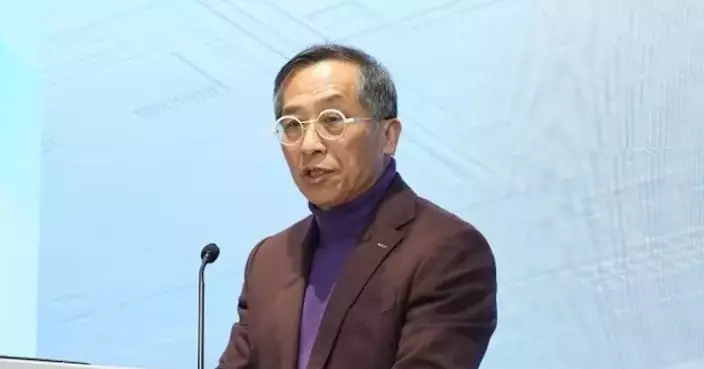
    Professor Sun Dong, Photo by Bastille Post

    Professor Sun Dong, Photo by Bastille Post

    Ms Qiu (Vice President of DLG Exhibitions & Events Co Ltd, Ms Qiu Haoming), Hendrick (Hong Kong Special Administrative Region's Deputy to the 14th National People's Congress, Mr Hendrick Sin), Terry (Chief Executive Officer of Hong Kong Science and Technology Parks Corporation, Mr Terry Wong), Duncan (Member of the Legislative Council, Mr Duncan Chiu), Alex (President of the Hong Kong Information Technology Federation, Dr Alex Chung), distinguished guests, ladies and gentlemen,

    Good morning. I am delighted to join you at the 2026 WAIC UP! Global Summit.Today's theme, "Wake Up More!", is a call not only for any single company, city, or country but also a timely reminder for all of us to embrace a new era of intelligence, possibility, and shared responsibility.

    A big thank you to the organiser for choosing Hong Kong as a destination for this remarkable Summit. This is another testament to Hong Kong's unique position as a "super connector" and a "super value-adder" that thrives on global connection and creativity. We are delighted to see that world-class academics, industry experts and leading entrepreneurs from around the world gather here today to explore the future of AI and the opportunities it brings to us.

    AI has become a core engine driving global technological and economic progress, and all economies recognise its strategic importance.Under the unique advantages of "one country, two systems", Hong Kong is also seizing this AI moment.With a focus on "strengthening infrastructure and promoting the application-oriented approach", Hong Kong is steadily advancing a series of AI initiatives.

    In terms of R&D (research and development), the Hong Kong Special Administrative Region (SAR) Government is working to establish the Hong Kong AI Research and Development Institute within this year, which is a new engine for discovery, translation, and real-world impact.Through our AIR@InnoHK research cluster, we have funded the establishment of 16 R&D laboratories focusing on AI and robotics technologies.Notably, the "HKChat" AI chatbot developed by the Hong Kong Generative AI Research and Development Center has already launched its public version.

    Hong Kong's total computing power has now reached 5 000 PFLOPS, with the Cyberport AI Supercomputing Centre contributing 3 000 PFLOPS. This centre is a critical hub that supports Hong Kong's AI development, and its capacity will continue to expand to meet growing demand. The upcoming data facility cluster at Sandy Ridge in North District will further provide advanced computing power facilities, promoting the development of data and AI-related industries in Hong Kong.

    And at the heart of all progress is talent. We recognise that people, not algorithms, will shape the future of AI. Our strategy is simple yet powerful: "Promote technology with talent, lead industries with technology, and attract talent with industries". To this end, we have included in the Talent List a number of professions in the I&T (innovation and technology) segment, including experienced AI Specialists, to facilitate global experts, like all of you here, in developing your careers in Hong Kong.

    Looking ahead, the Hong Kong SAR Government will continue to foster strong collaboration among the Government and the industry, academia, research and investment sectors. The future of AI cannot be built by anyone or any place alone. It requires a global community that is awake, aware, and aligned.I am confident that this Summit will spark new ideas and inspire us to wake up more for high-quality AI development.

    I wish the Summit great success. Thank you.

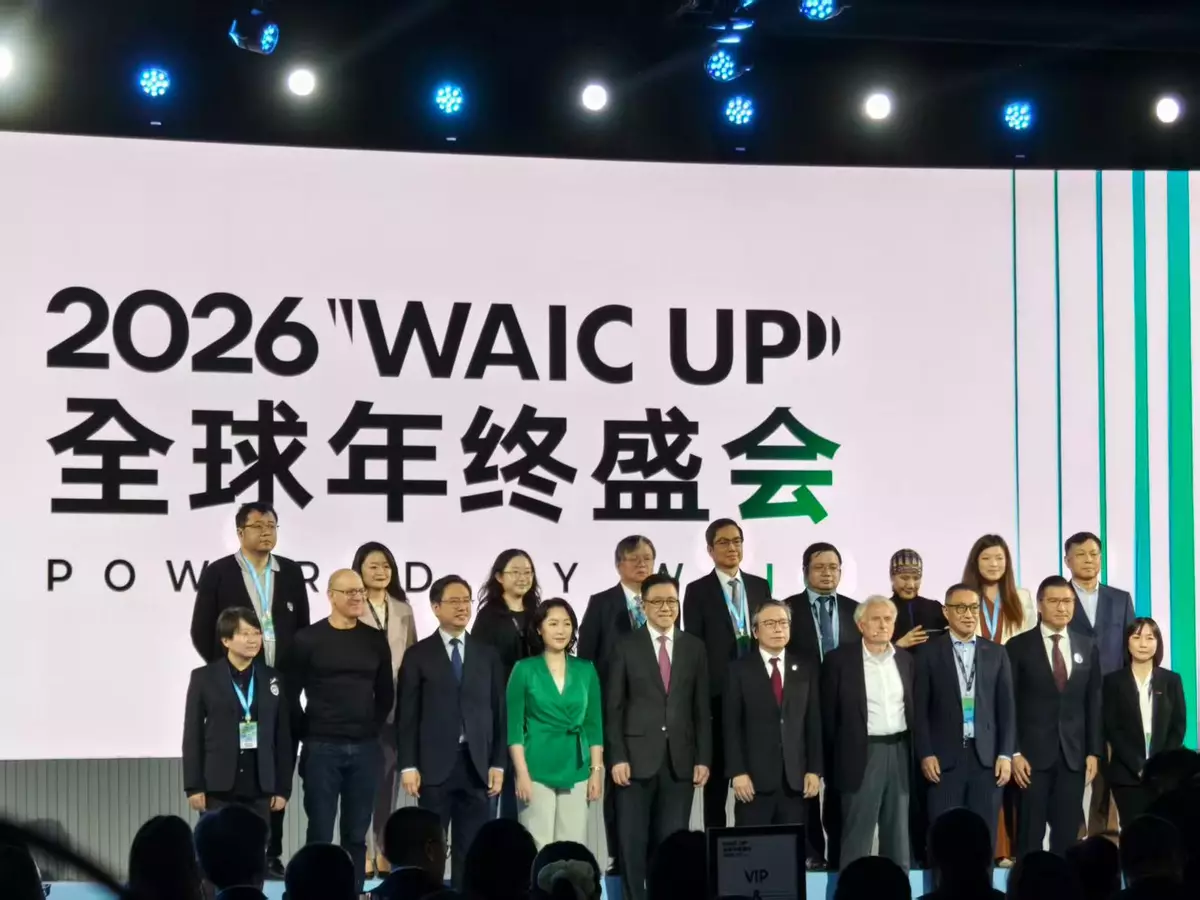
    The 2026 WAIC UP! Global Summit, Photo by Bastille Post

    The 2026 WAIC UP! Global Summit, Photo by Bastille Post

    Recommended Articles