MEXICO CITY (AP) — The deadly U.S. military attack on a boat accused of carrying drugs in the Caribbean this week is the latest in a series of extraordinary measures that President Donald Trump has taken to combat the threat he sees from the Tren de Aragua gang.
The White House has offered few details on Tuesday’s attack and insists the 11 people aboard were members of the gang. The criminal organization, which traces its roots to a Venezuelan prison, is not known for having a big role in global drug trafficking but for its involvement in contract killings, extortions and human smuggling.
U.S. officials have yet to explain how the military determined that those aboard the vessel were Tren de Aragua members. The strike represents a paradigm shift in how the U.S. is willing to combat drug trafficking in the Western Hemisphere and sends a clear message to governments in the region as well as transnational drug cartels.
Here’s a look at Tren de Aragua:
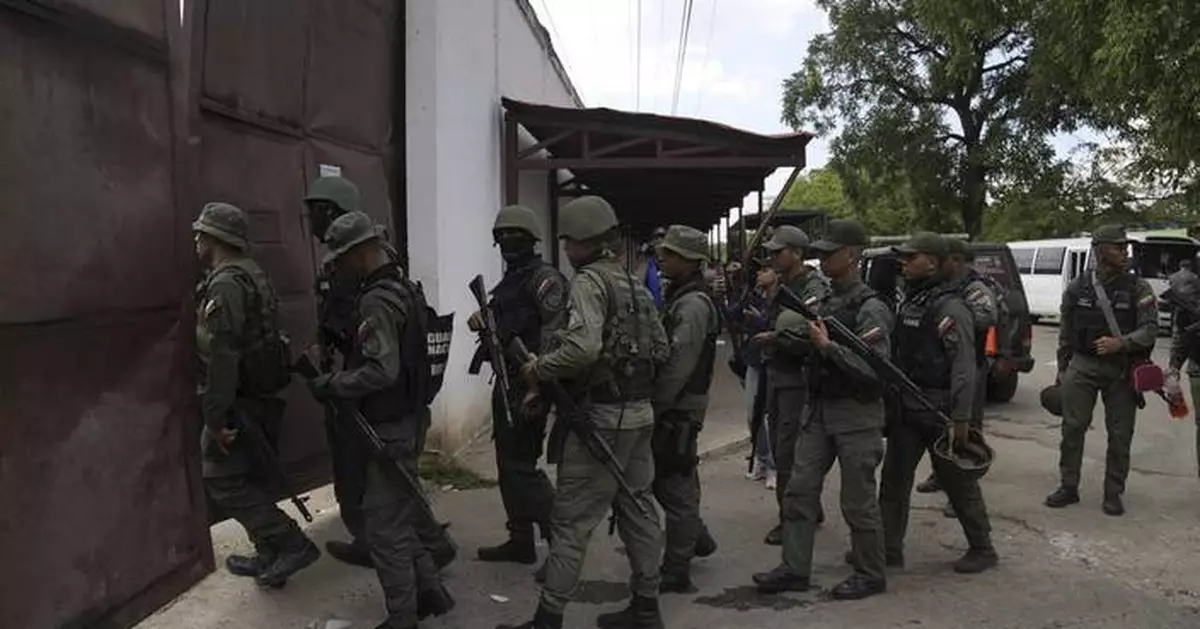
Tren de Aragua originated more than a decade ago at an infamously lawless prison with hardened criminals in Venezuela’s central state of Aragua. The gang has expanded in recent years as more than 7.7 million Venezuelans fled economic turmoil and migrated to other Latin American countries or the U.S.
Trump and administration officials have consistently blamed the gang for being at the root of the violence and illicit drug dealing that plague some U.S. cities. Trump has repeated his claim — contradicted by a declassified U.S. intelligence assessment — that Tren de Aragua is operating under Venezuelan President Nicolás Maduro’s control.
The size of the gang is unclear. Countries with large populations of Venezuelan migrants, including Peru and Colombia, have accused the group of being behind a spree of violence in the region.
Authorities in Chile first identified the gang’s operations in 2022. Prosecutors and investigators have said the group initially engaged primarily in human trafficking, controlling unauthorized border crossings and sexual exploitation, but over time, members have expanded their activities to more violent crimes, such as kidnapping, torture, extortion and control of drug trafficking routes.
Still, unlike other criminal organizations from Colombia, Central America and Brazil, Tren de Aragua has no large-scale involvement in smuggling cocaine across international borders, according to InSight Crime, a think tank that last month published a 64-page report on the gang based on two years of research.
“We’ve found no direct participation of TdA in the transnational drug trade, although there are cases of them acting as subcontractors for other drug trafficking organizations,” said Jeremy McDermott, a Colombia-based co-founder of InSight Crime.
McDermott added that with affiliated cells spread across Latin America, it would not be a huge leap for the gang to one day delve into the drug trade.
Landlocked Bolivia and Colombia, with access to the Pacific Ocean and Caribbean Sea and a border with Venezuela, are the world’s top cocaine producers.
On his first day in office, Trump took steps to designate the gang a foreign terrorist organization alongside several Mexican drug cartels. The Biden administration had sanctioned the gang and offered $12 million in rewards for the arrest of three of its leaders.
Trump’s executive order accused the gang of working closely with top Maduro officials — most notably the former vice president and one-time governor of Aragua state, Tareck El Aissami — to infiltrate migration flows, flood the U.S. with cocaine and plot against the country.
In March, Trump also declared the group an invading force, invoking an 18th century wartime law that allows the U.S. to deport noncitizens without any legal recourse. Under the Alien Enemies Act, the administration sent more than 250 Venezuelan men to a maximum-security prison in El Salvador, where they remained incommunicado and without access to an attorney until their July deportation to Venezuela.
A U.S. appeals court panel this week ruled that Trump cannot use that law to speed deportations of people his administration accuses of being Tren de Aragua members. The decision is destined for a showdown at the Supreme Court.
The U.S. has not released the names and nationalities of the 11 people killed Tuesday. It also has not offered an estimate of the amount of drugs it says the boat was carrying.
Secretary of State Marco Rubio on Wednesday told reporters the U.S. military will continue lethal strikes on suspected drug trafficking vessels, but he dodged questions on details of the strike, including if the people in the boat were warned before the attack.
But, he said, Trump "has a right, under exigent circumstances, to eliminate imminent threats to the United States.”
"If you’re on a boat full of cocaine or fentanyl or whatever, headed to the United States, you’re an immediate threat to the United States,” he told reporters in Mexico City during a visit to Latin America.
Venezuela's government, which has long minimized the presence of Tren de Aragua in the South American country, limited its reaction to the strike to questioning the veracity of a video showing the attack. Communications Minister Freddy Ñáñez suggested it was created using artificial intelligence and described it as an “almost cartoonish animation, rather than a realistic depiction of an explosion.”
U.S. Defense Secretary Pete Hegseth responded that the strike “was definitely not artificial intelligence,” adding he watched live footage from Washington as the strike was carried out.
The strike shows that the U.S. government is “quite literally deadly serious” in its targeting of drug traffickers, said Ryan Berg, director of the Americas program at the Center for Strategic and International Studies, a Washington-based think tank.
But he questioned whether the link to Tren de Aragua has more to do with the “familiarity” that Americans now have with the gang.
“I certainly hope that the U.S. government has the intelligence and we are not shooting first and asking questions later,” Berg said.
Associated Press writers Joshua Goodman in Miami and Nayara Batschke in Santiago, Chile, contributed to this report.

FILE - Soldiers raid the Tocorón Penitentiary Center, where the Tren de Aragua gang originated, in Tocorón, Venezuela, Sept. 20, 2023. (AP Photo/Ariana Cubillos, File)