|
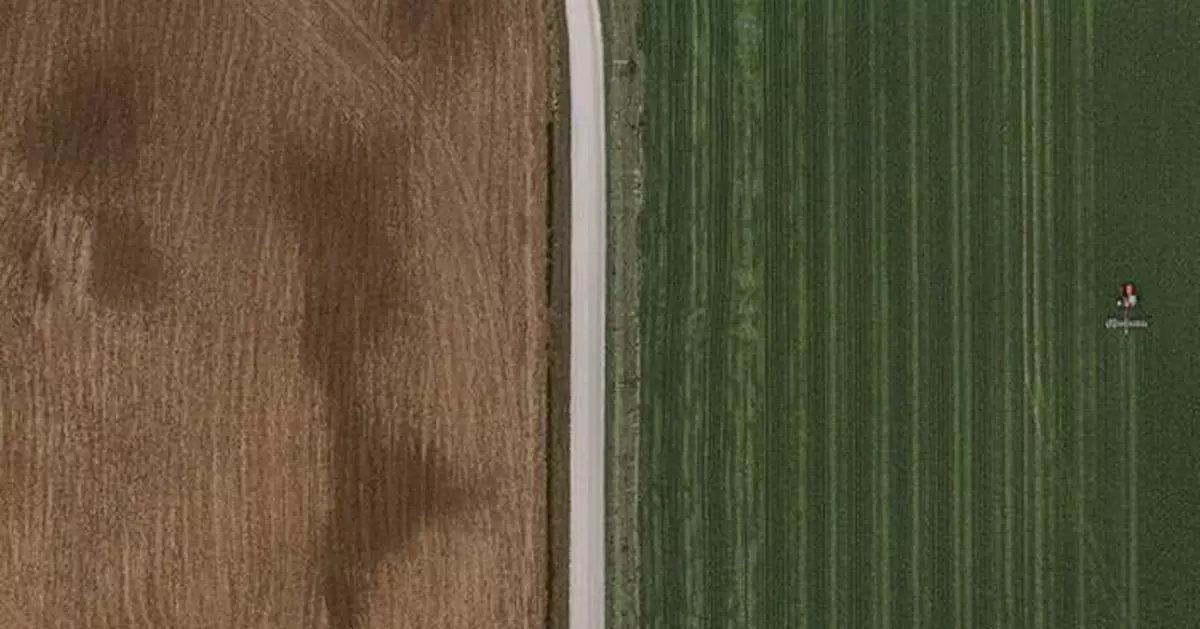
WASHINGTON, Sept. 4, 2025 /PRNewswire/ -- Today, the National Geographic Society and PepsiCo announced their collaboration to harness the power of science, storytelling, and education to inspire positive change throughout the global food system, with a focus on regenerative agriculture. The Food for Tomorrow program will support National Geographic Explorer-driven stories and scientists diving into the future of food through breathtaking imagery, moving narratives, applied science-based projects and data visualization maps.
The world's population is expected to reach 10 billion by 2050, and according to UNESCO reports, if current trends continue, close to 90% of the planet's soil could be degraded by that date. To feed this growing population and mitigate environmental threats such as soil degradation and habitat loss, a change is needed in the way food is grown. Regenerative agriculture — farming practices that restore, rather than deplete, soil health and natural resources — can provide us with the food we eat by working in harmony with nature, rather than against it. Food for Tomorrow will raise awareness around how regenerative agriculture can positively impact farmers, strengthen our food system, and protect our planet, while empowering everyone to make more sustainable food choices.
"Our future will be shaped by how we grow our food today—and we're reimagining what's possible when that system nourishes both people and the planet," said Jill Tiefenthaler, CEO of the National Geographic Society. "In collaboration with PepsiCo, we're investing in bold solutions and the farmers, scientists, and storytellers leading this essential work. We're proud to fuel a global movement, rooted in science and hope, to help build a thriving future for generations to come."
The global food industry's engagement, in partnership with farmers, will be essential to identify how scientific research, innovation and groundbreaking technology can work alongside traditional agricultural knowledge to expand regenerative agriculture and deliver a positive impact for the planet and people. Food and drink company, PepsiCo, has already set a global goal to spread the adoption of regenerative, restorative or protective practices across 10 million acres by 2030.
"Climate change is putting unprecedented pressure on the global food system, and farmers feel it every day. As a company rooted in agriculture, we know just how fragile — and vital — that system is," said PepsiCo Chairman and CEO Ramon Laguarta. "But there are solutions that can help make businesses and farmers more resilient. Food for Tomorrow combines PepsiCo's deep food system expertise with National Geographic's power to advance science and inspire action. Together, we're aiming to support farmers, protect the planet, and help build a stronger, more resilient future for all."
To further bring this challenge and opportunity to life, PepsiCo collaborated with National Geographic CreativeWorks on the development of three short films to capture firsthand how farmers are embracing regenerative agriculture—stories of innovation and partnership, as this video spotlights.
The program will initially support five National Geographic Explorers, who will feature stories about real people, real farmers and real communities to spotlight sustainable and regenerative practices in food production. It will also fund "Building Resilience in Agriculture", where up to five scientific grants will be awarded that seek innovative, nature-positive proposals that apply science in real-world contexts and aims to find solutions that scale regenerative agricultural practices around the world. The deadline for applications is September 30, 2025.
Finally, the program will develop a dynamic data visualization mapping tool that showcases how regenerative agriculture boosts food and farming resilience. This resource for farmers, scientists and the general public is planned for publication on the National Geographic Society website in 2026.
To learn more about regenerative agriculture, the work led by Explorers and scientists around the globe and to see more emerging stories this fall, visit us here.
Notes to editors:
The selected National Geographic Explorers include:
- Pablo Albarenga
- A documentary photographer and visual storyteller, Albarenga will document five compelling stories of small farmers and Indigenous communities leading a silent regenerative revolution using a multi-media approach to create photo-led stories, a short-form doc video series, a web storytelling platform and AR photo book.
- Caitlin Ochs
- A visual storyteller focused on documenting the impacts of climate change through the lens of water and agriculture, Ochs' will document the regenerative agriculture movement in the U.S. and Costa Rica using the power of photography, video and audio. Across four chapters, it will showcase innovative and scalable progress through farmers' intimate perspectives, aiming to connect the public with their stories, influence policy and cultivate global support for regenerative practices.
- Miora Rajaonary
- A photographic artist, Rajaonary will travel to Senegal with her team to document the strengths and challenges of the Great Green Wall project, a living structure that will extend over 5,000 miles and work to combat desertification, improve livelihoods and foster climate resilience.
- John Stanmeyer
- A photographer, artist, filmmaker and educator, Stanmeyer's project will address the significance of Earth's healthy topsoil turning into desert, specifically in India, where soil has become toxic due to the excessive use of pesticides and chemical fertilizers.
- Brent Stirton
- A photographer known for his work focusing on the intersection of people and the environment, Stirton will visualize the stories of farmers adapting to and mitigating climate change using regenerative agricultural techniques naturally tuned to the farmland while increasing profits and producing healthier food.
WASHINGTON, Sept. 4, 2025 /PRNewswire/ -- Today, the National Geographic Society and PepsiCo announced their collaboration to harness the power of science, storytelling, and education to inspire positive change throughout the global food system, with a focus on regenerative agriculture. The Food for Tomorrow program will support National Geographic Explorer-driven stories and scientists diving into the future of food through breathtaking imagery, moving narratives, applied science-based projects and data visualization maps.
The world's population is expected to reach 10 billion by 2050, and according to UNESCO reports, if current trends continue, close to 90% of the planet's soil could be degraded by that date. To feed this growing population and mitigate environmental threats such as soil degradation and habitat loss, a change is needed in the way food is grown. Regenerative agriculture — farming practices that restore, rather than deplete, soil health and natural resources — can provide us with the food we eat by working in harmony with nature, rather than against it. Food for Tomorrow will raise awareness around how regenerative agriculture can positively impact farmers, strengthen our food system, and protect our planet, while empowering everyone to make more sustainable food choices.
"Our future will be shaped by how we grow our food today—and we're reimagining what's possible when that system nourishes both people and the planet," said Jill Tiefenthaler, CEO of the National Geographic Society. "In collaboration with PepsiCo, we're investing in bold solutions and the farmers, scientists, and storytellers leading this essential work. We're proud to fuel a global movement, rooted in science and hope, to help build a thriving future for generations to come."
The global food industry's engagement, in partnership with farmers, will be essential to identify how scientific research, innovation and groundbreaking technology can work alongside traditional agricultural knowledge to expand regenerative agriculture and deliver a positive impact for the planet and people. Food and drink company, PepsiCo, has already set a global goal to spread the adoption of regenerative, restorative or protective practices across 10 million acres by 2030.
"Climate change is putting unprecedented pressure on the global food system, and farmers feel it every day. As a company rooted in agriculture, we know just how fragile — and vital — that system is," said PepsiCo Chairman and CEO Ramon Laguarta. "But there are solutions that can help make businesses and farmers more resilient. Food for Tomorrow combines PepsiCo's deep food system expertise with National Geographic's power to advance science and inspire action. Together, we're aiming to support farmers, protect the planet, and help build a stronger, more resilient future for all."
To further bring this challenge and opportunity to life, PepsiCo collaborated with National Geographic CreativeWorks on the development of three short films to capture firsthand how farmers are embracing regenerative agriculture—stories of innovation and partnership, as this video spotlights.
The program will initially support five National Geographic Explorers, who will feature stories about real people, real farmers and real communities to spotlight sustainable and regenerative practices in food production. It will also fund "Building Resilience in Agriculture", where up to five scientific grants will be awarded that seek innovative, nature-positive proposals that apply science in real-world contexts and aims to find solutions that scale regenerative agricultural practices around the world. The deadline for applications is September 30, 2025.
Finally, the program will develop a dynamic data visualization mapping tool that showcases how regenerative agriculture boosts food and farming resilience. This resource for farmers, scientists and the general public is planned for publication on the National Geographic Society website in 2026.
To learn more about regenerative agriculture, the work led by Explorers and scientists around the globe and to see more emerging stories this fall, visit us here.
Notes to editors:
The selected National Geographic Explorers include:
- Pablo Albarenga
- A documentary photographer and visual storyteller, Albarenga will document five compelling stories of small farmers and Indigenous communities leading a silent regenerative revolution using a multi-media approach to create photo-led stories, a short-form doc video series, a web storytelling platform and AR photo book.
- Caitlin Ochs
- A visual storyteller focused on documenting the impacts of climate change through the lens of water and agriculture, Ochs' will document the regenerative agriculture movement in the U.S. and Costa Rica using the power of photography, video and audio. Across four chapters, it will showcase innovative and scalable progress through farmers' intimate perspectives, aiming to connect the public with their stories, influence policy and cultivate global support for regenerative practices.
- Miora Rajaonary
- A photographic artist, Rajaonary will travel to Senegal with her team to document the strengths and challenges of the Great Green Wall project, a living structure that will extend over 5,000 miles and work to combat desertification, improve livelihoods and foster climate resilience.
- John Stanmeyer
- A photographer, artist, filmmaker and educator, Stanmeyer's project will address the significance of Earth's healthy topsoil turning into desert, specifically in India, where soil has become toxic due to the excessive use of pesticides and chemical fertilizers.
- Brent Stirton
- A photographer known for his work focusing on the intersection of people and the environment, Stirton will visualize the stories of farmers adapting to and mitigating climate change using regenerative agricultural techniques naturally tuned to the farmland while increasing profits and producing healthier food.
- A visual storyteller focused on documenting the impacts of climate change through the lens of water and agriculture, Ochs' will document the regenerative agriculture movement in the U.S. and Costa Rica using the power of photography, video and audio. Across four chapters, it will showcase innovative and scalable progress through farmers' intimate perspectives, aiming to connect the public with their stories, influence policy and cultivate global support for regenerative practices.
- A photographic artist, Rajaonary will travel to Senegal with her team to document the strengths and challenges of the Great Green Wall project, a living structure that will extend over 5,000 miles and work to combat desertification, improve livelihoods and foster climate resilience.
- A photographer, artist, filmmaker and educator, Stanmeyer's project will address the significance of Earth's healthy topsoil turning into desert, specifically in India, where soil has become toxic due to the excessive use of pesticides and chemical fertilizers.
- A photographer known for his work focusing on the intersection of people and the environment, Stirton will visualize the stories of farmers adapting to and mitigating climate change using regenerative agricultural techniques naturally tuned to the farmland while increasing profits and producing healthier food.
** The press release content is from PR Newswire. Bastille Post is not involved in its creation. **
The National Geographic Society and PepsiCo Launch New Food for Tomorrow Program Focused on Regenerative Agriculture
ALULA, Saudi Arabia, Jan. 16, 2026 /PRNewswire/ -- Today marks the official opening of Desert X AlUla 2026, the landmark fourth edition of the international, open-air biennial exhibition. Arts AlUla, in collaboration with Desert X, welcomes visitors to experience a stellar line-up of Saudi and international multi-generational artists whose site-responsive earthworks, sculptures, and installations will engage in a powerful dialogue with the awe-inspiring landscapes and layered heritage of AlUla.
As a premier destination rich in ancient history and breathtaking nature, AlUla, located in Northwest Saudi Arabia, solidifies its position on the global stage as a dynamic, emerging land art destination with Desert X AlUla, the region's first public art biennale, and a key highlight of the AlUla Arts Festival.
The 2026 edition of Desert X AlUla brings together 11 acclaimed artists whose diverse works reflect a wide spectrum of ideas, materials, and traditions. From monumental kinetic sculpture to sound-based explorations above and below ground, each commission is deeply rooted in relationships to AlUla's distinctive environment, further cementing Desert X AlUla's reputation as a globally significant platform for site-responsive land art.
Desert X AlUla runs until February 28, 2026, as a cornerstone of the annual AlUla Arts Festival. Curated by Wejdan Reda, Zoé Whitley, with artistic direction by Neville Wakefield, and Raneem Farsi, its fourth edition explores 'Space Without Measure.' Inspired by Kahlil Gibran, the theme fosters contemplation of imagination within AlUla's natural settings. The exhibition, set in the desert canyons of AlUla, serves as a pre-opening programme for Wadi AlFann, offering a pivotal glimpse into AlUla's plans to create a permanent land art 'Valley of the Arts.'
Hamad Alhomiedan, Director of Arts & Creative Industries at the Royal Commission for AlUla (RCU), said: "At Desert X AlUla 2026, audiences will engage with art that deeply converses with AlUla's unique landscapes and rich heritage. These compelling commissions highlight AlUla's dynamic transformation into a major global destination, where ancient and contemporary expressions converge. This exhibition is part of our broader revitalisation of AlUla as a culturally rich destination to live, work and visit and integral to positioning AlUla in the global dialogue of contemporary art and as a precursor to monumental projects like Wadi AlFann."
Participating artist/artworks are:
- Sara Abdu, A Kingdom Where No One Dies: Contours of Resonance
- Mohammad Alfaraj, What was the Question Again?
- Mohammed AlSaleem, The Thorn, AlShuruf Unit, The Triangles, Flower Bud, and Al Ahilla (courtesy of Royal Commission for Riyadh City)
- Tarek Atoui, The Water Song
- Bahraini-Danish, Bloom
- Maria Magdalena Campos-Pons, Imole Red
- Agnes Denes, The Living Pyramid
- Ibrahim El-Salahi, Haraza Tree
- Basmah Felemban, Murmur of Pebbles
- Vibha Galhotra, Future Fables
- Héctor Zamora, Tar HyPar
For further information, please contact:
Sabrine.Shaw@bursonglobal.com
AlUlaArtsFestival@bursonglobal.com
Multimedia gallery:
High-resolution photos of all 11 artists and their artworks can be found here.
About AlUla and Arts AlUla
Located 1,100 km from Riyadh, in North-West Saudi Arabia, AlUla is a place of extraordinary natural and human heritage. The vast area, covering 22,561km², includes a lush oasis valley, towering sandstone mountains and ancient cultural heritage sites dating back thousands of years to when the Lihyan and Nabataean kingdoms reigned.
The most well-known and recognised site in AlUla is Hegra, the principal southern city of the Nabataean Kingdom and Saudi Arabia's first UNESCO World Heritage Site. AlUla is also home to ancient Dadan, the capital of the Dadan and Lihyan Kingdoms and considered to be one of the most developed 1st millennium BCE cities of the Arabian Peninsula, and Jabal Ikmah, an open air library of hundreds of inscriptions and writings in many different languages. AlUla Old Town Village, a labyrinth of more than 900 mudbrick homes was developed from at least the 12th century and has been revitalised as the vibrant hub for visitors and residents.
The creation of Arts AlUla within The Royal Commission for AlUla (RCU) is a commitment to crafting the next chapters in a millennia of artistic creation – celebrating cultural inheritance and shaping a future inspired by artists built be artists. The work of Arts AlUla seeks to preserve this legacy: fuse the old with the new; the local with the international, keeping the arts central to the spirit of AlUla as a place of extraordinary natural and human heritage.
Wadi AlFann, meaning 'Valley of the Arts,' will be a global cultural destination for land art, unveiling from 2028 onwards, where era-defining works by artists from around the world will be permanently sited in the monumental landscape of AlUla, the extraordinary desert region of north-west Saudi Arabia.
** The press release content is from PR Newswire. Bastille Post is not involved in its creation. **

Desert X AlUla 2026: monumental land art exhibition opens in the ancient oasis of AlUla