People whose brains function differently have long felt the need to hide the traits associated with their conditions such as autism, dyslexia or ADHD.
As The Neurodiversity Alliance empowers high school and college students to make themselves known and build more inclusive educational spaces, the nonprofit is enlisting celebrity ambassadors to tell more robust narratives about their community. Hear from them in their own words:
Hackel, a 29-year-old X Games medalist from the greater Boston area, credits his dyslexia with helping him think outside the box to develop his own street skiing video style. After a partially torn ACL sidelined his competitive skiing career, he realized he could combine his passion for the sport with his interest in filmmaking.
“The more that you're able to connect with people, and the more you're able to see the different strengths that you're able to have from being neurodivergent and thinking a little bit differently, the better," he says. “When you grow up with dyslexia, you realize that the book doesn't necessarily apply to you and that you're living in a school system that's optimized for other people. And you have to develop a relationship with failure, and you have to be willing to try and try and try again.”
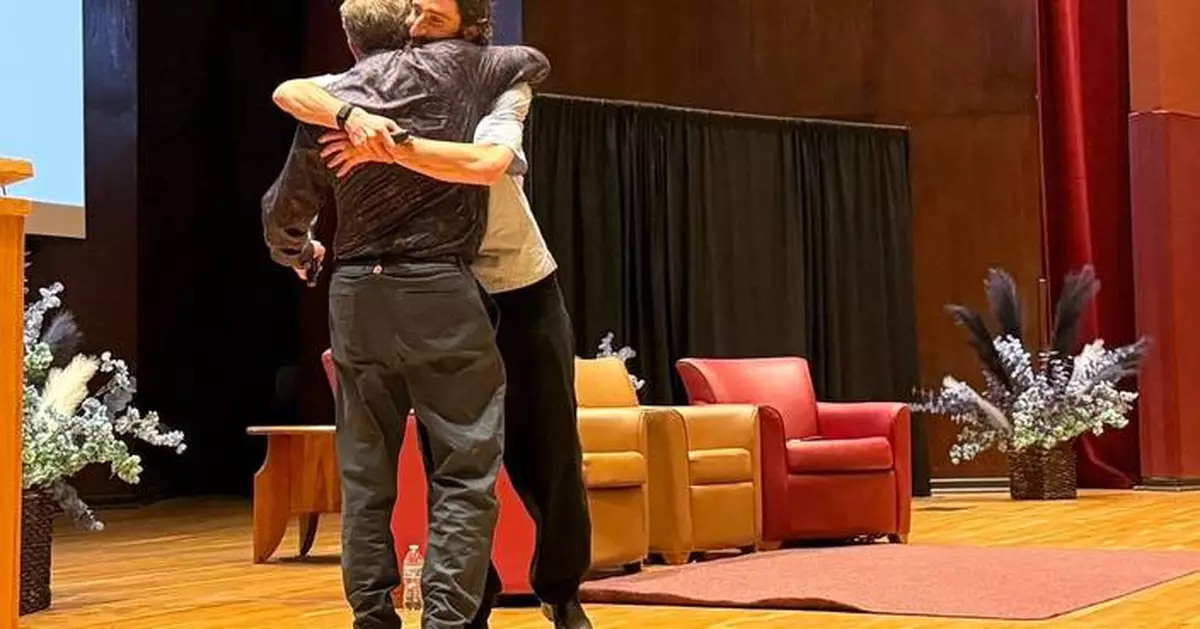
Growing up, Hackel had a positive neurodiverse role model in his dyslexic father. But he acknowledged that not everyone has that — which is why he wants to support students building community under The Neurodiversity Alliance umbrella.
“Having somebody to look up to and know that, ‘OK, my dad has created a great life for himself and has been successful in his career and has gotten a college education, has a master’s degree’ — it sort of gave perspective that I was able to achieve a lot of things.”
“What they’re doing is so impactful because they’re creating this ripple effect. If they can change one person’s relationship and flip that script for one person, then that person flips it for another.”
Erickson, a 25-year-old PhD candidate in engineering and fluid and thermal science at Brown University, recalls getting looks in high school when overstimulation would spiral into what she calls “episodes.”
They weren’t unlike the moment on the most recent “Survivor” season when she couldn’t stop crying after a difficult challenge. But this time, she had confided in another contestant that hand squeezes were calming when her autism made it difficult to manage such emotional distress.
“It is really important to bring awareness to these kinds of situations — that people go through this stuff and it’s not something wrong with them,” she says. “It’s just a challenge that’s a little different, but that you can get through it and it doesn’t mean that you’re lesser because you face those challenges.”
“Survivor” has brought more community for Erickson. A Massachusetts Institute of Technology professor reached out after the season aired. Erickson said it's cool that she can discuss topics like balancing fixations and research with another woman in STEM who has autism.
But not everyone can appear on reality television, she acknowledged. And she wishes she'd found that support earlier.
“If I had had friends, who I could’ve turned to when I was getting overstimulated, when I was overwhelmed, I think that would’ve made a huge difference. Because I just kind of put this on myself," she said. "And it wouldn’t be received very well because people didn’t know what to do. They didn't know what was going on. And I wasn’t comfortable sharing at that time. Now I am super comfortable and I'm happy to do that. But I think I would've been a lot more comfortable sooner if I’d had my peers to turn to who were also going through situations that were similar to the ones I face.”

Skier and filmmaker Alex Hackel hugs his father at The Neurodiversity Alliance's leadership summit in Denver, August 9, 2025. (AP Photo/James Pollard)