Germany lost an away World Cup qualifying game for the first time in a 2-0 upset against Slovakia on Thursday which threw its campaign to reach the 2026 tournament into immediate jeopardy.
David Hancko and David Strelec each exploited mistakes in Germany's defense to give Slovakia — which last qualified for the World Cup in 2010 — a surprise lead. Germany couldn't find a way through the Slovakian defense to get back into the game.
Click to Gallery
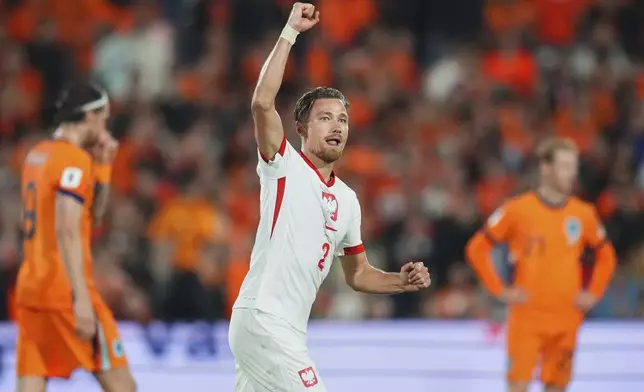
Poland's Matty Cash celebrates after scoring during a World Cup qualifying soccer match between the Netherlands and Poland in Rotterdam, Netherlands, Thursday, Sept. 4, 2025. (AP Photo/Peter Dejong)
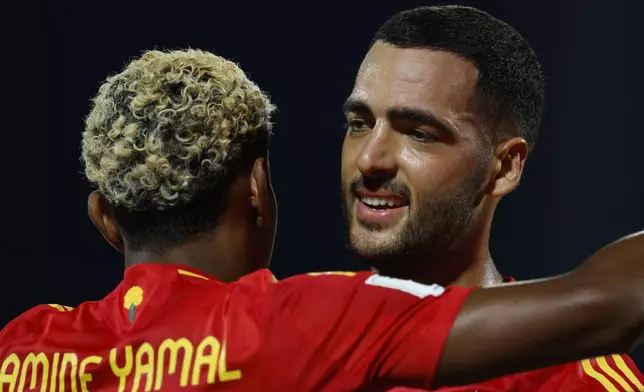
Spain's Mikel Merino, right, celebrates after scoring his side's third goal with Lamine Yamal during the World Cup Group E qualifying soccer match between Bulgaria and Spain in Sofia, Bulgaria, Thursday, Sept. 4, 2025. (AP Photo/ Tony Uzunov)
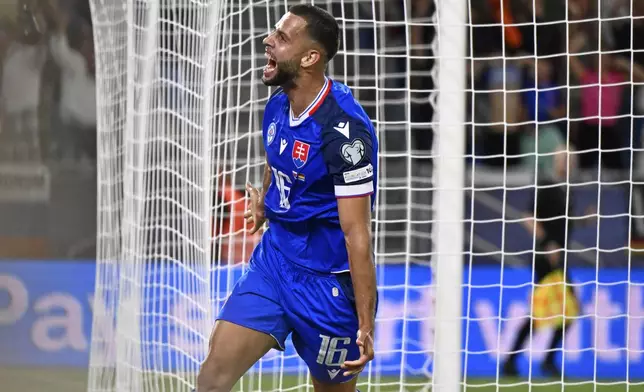
Slovakia's David Hancko celebrates after scoring the opening goal during the World Cup Group A qualifying soccer match between Slovakia and Germany in Bratislava, Slovakia, Thursday, Sept. 4, 2025. (AP Photo/Denes Erdos)
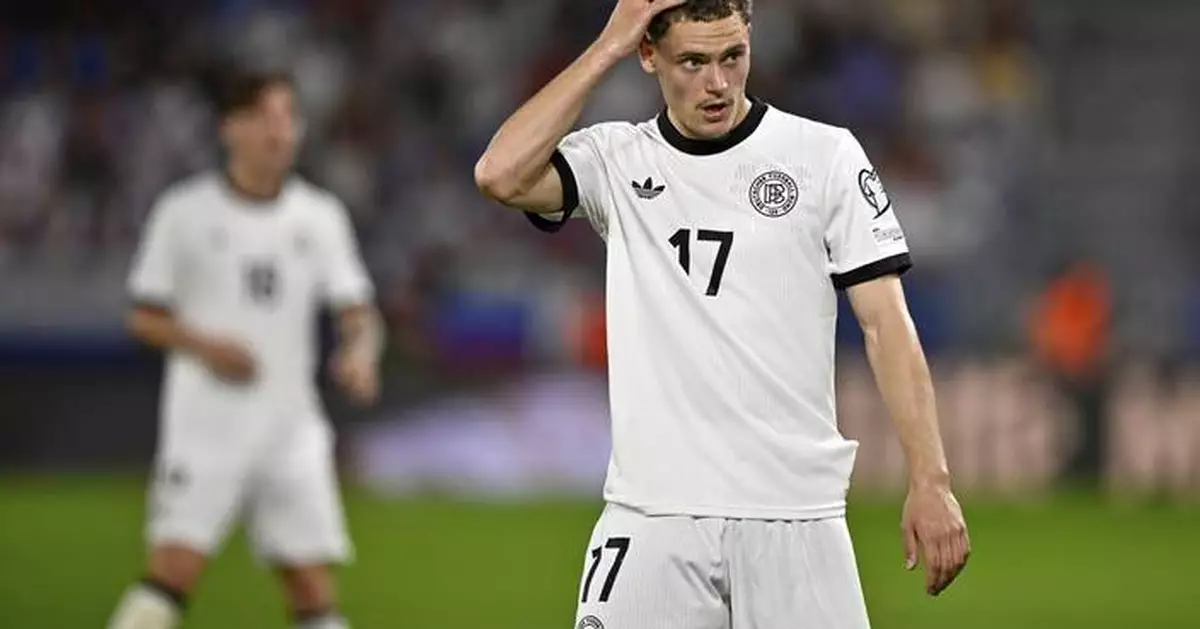
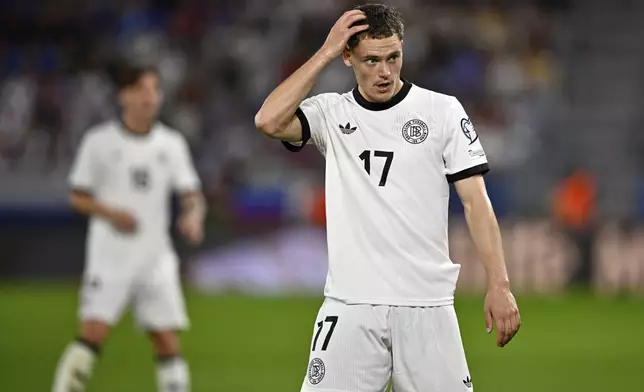
Germany's Florian Wirtz scratches his head during the World Cup Group A qualifying soccer match between Slovakia and Germany in Bratislava, Slovakia, Thursday, Sept. 4, 2025. (AP Photo/Denes Erdos)
It was a blow to coach Julian Nagelsmann and his new-look lineup, including Newcastle's new striker Nick Woltemade in his third Germany game and 21-year-old Nnamdi Collins making his debut at right back.
Nagelsmann was scathing about his team, which he said lacked “emotionality” on the field and the will to win against motivated underdog opposition. He even questioned whether he should pick less skilled but more dedicated players instead.
“Maybe we really do need to rely less on quality and instead on players who just give everything, because that would have led to better results today than if the best players played,” he told broadcaster ARD.
Germany now needs to win all of its remaining five games to avoid the playoffs, Nagelsmann added.
Germany, including West Germany's record during the Cold War, has played at every World Cup since 1954. Until Thursday it had only ever lost three World Cup qualifiers, all at home.
The loss in Slovakia was also only the second time Germany lost a World Cup qualifier by more than one goal. The other was a 5-1 home loss to England in 2001.
Germany seemed so confident of qualifying from a straightforward group with Slovakia, Northern Ireland and Luxembourg that it already booked a friendly on the assumption it wins the group.
Germany on Thursday announced a friendly with Ivory Coast for March 2026 “in the event of successful direct World Cup qualification." The date clashes with the playoffs for second-place teams.
It was Germany's opening game in Group A, which also saw Northern Ireland beat Luxembourg 3-1 on Thursday.
European champion Spain took an early lead with Mikel Oyarzabal's fifth-minute goal and eased to a 3-0 win over Bulgaria in both teams' opening qualifying game. Marc Cucurella and Mikel Merino scored to extend Spain's lead.
Ugurcan Cakir's leaping save in the 11th minute of added time meant Turkey held on to beat Georgia 3-2 in their opening qualifier despite having forward Baris Alper Yilmaz sent off just four minutes after he'd come on from the bench.
Matty Cash scored to salvage a 1-1 draw for Poland which ended the Netherlands' perfect start to qualifying.
Denzel Dumfries' header at a corner had put the Netherlands on course for a third win from three games without conceding a goal, but Cash leveled the score for Poland with a fierce shot from the edge of the penalty area in the 80th minute.
Not all teams have started their World Cup qualifying at the same time because of Nations League commitments earlier this year.
Barcelona striker Robert Lewandowski returned to action as Poland's captain after briefly leaving the national team during a dispute with ex-coach Michal Probierz in June.
Lithuania and Malta drew 1-1 in Thursday's other Group G game.
Belgium started slowly against tiny Liechtenstein and only led 1-0 at halftime but turned it into a 6-0 rout including two goals from Aston Villa's Youri Tielemans and one from Napoli's Kevin de Bruyne.
Wales went top of Group J with a 1-0 win over Kazakhstan but has played two games more than third-place Belgium. Wales nearly dropped points when Kazakhstan's Serikzhan Muzhikov hit a free kick against the crossbar with the last act of the game.
AP soccer: https://apnews.com/hub/soccer
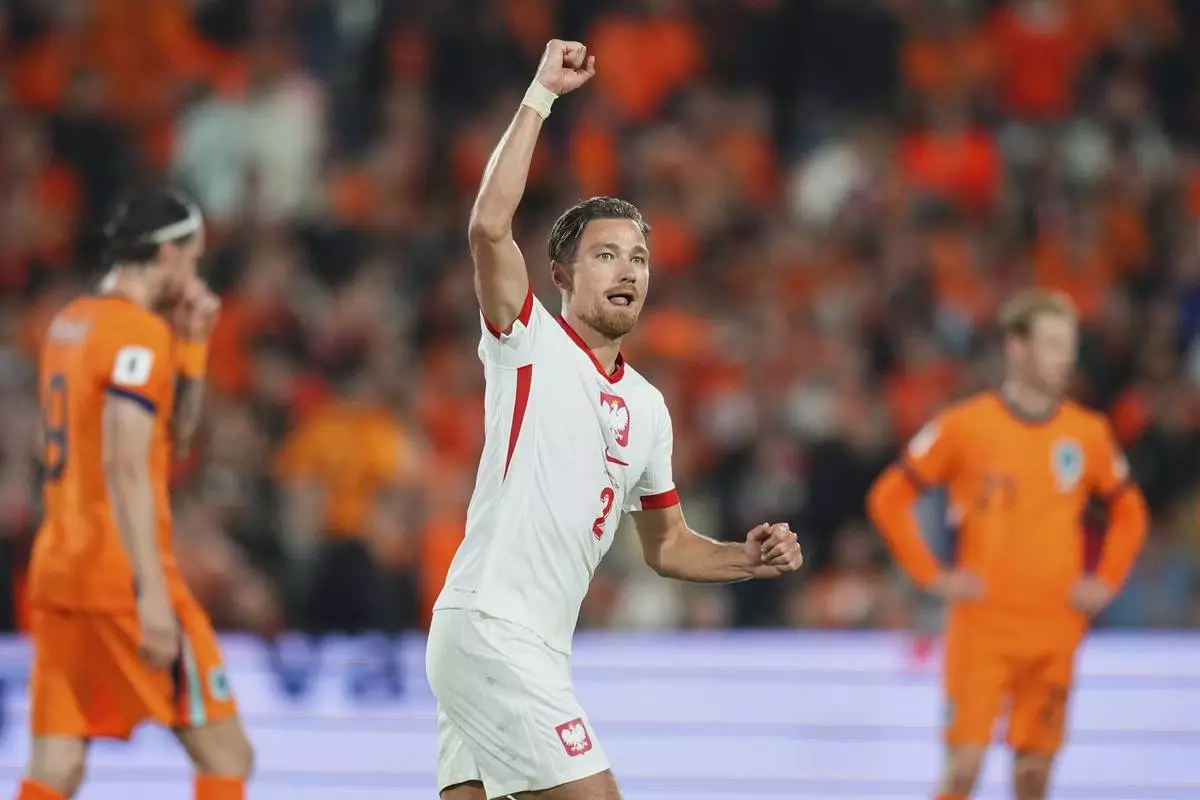
Poland's Matty Cash celebrates after scoring during a World Cup qualifying soccer match between the Netherlands and Poland in Rotterdam, Netherlands, Thursday, Sept. 4, 2025. (AP Photo/Peter Dejong)
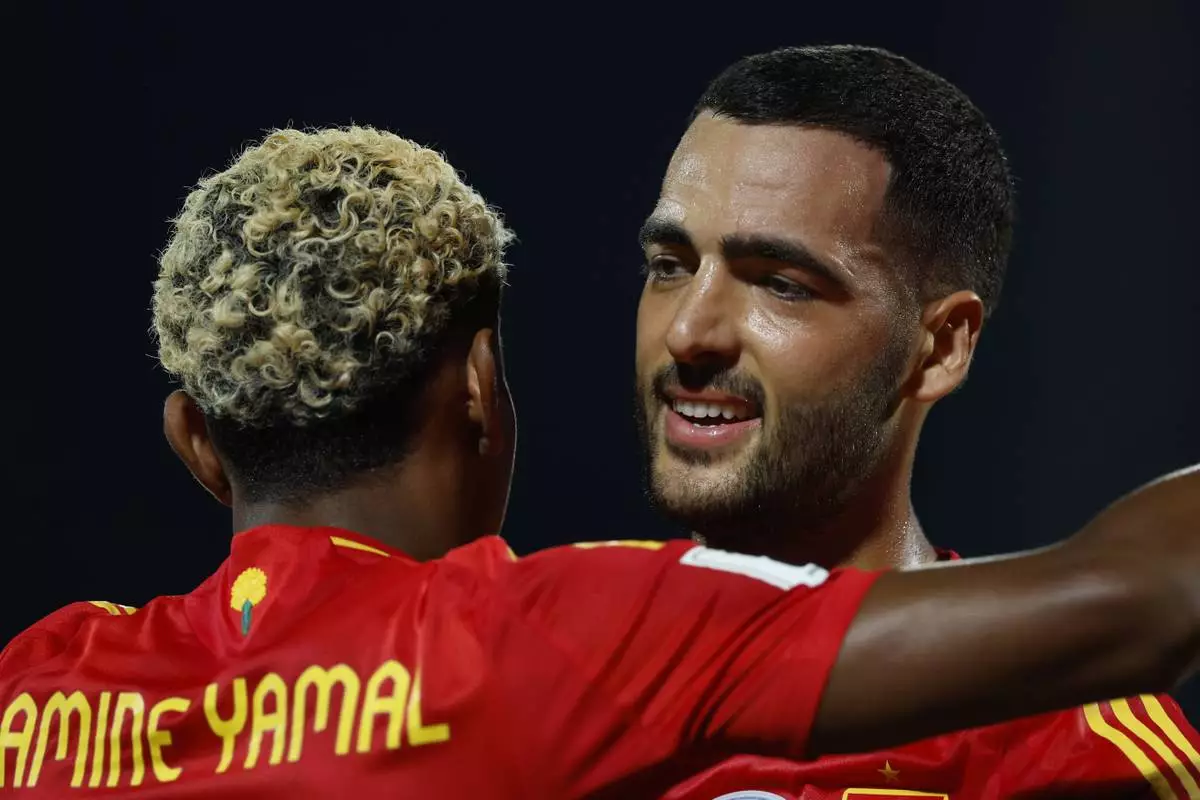
Spain's Mikel Merino, right, celebrates after scoring his side's third goal with Lamine Yamal during the World Cup Group E qualifying soccer match between Bulgaria and Spain in Sofia, Bulgaria, Thursday, Sept. 4, 2025. (AP Photo/ Tony Uzunov)
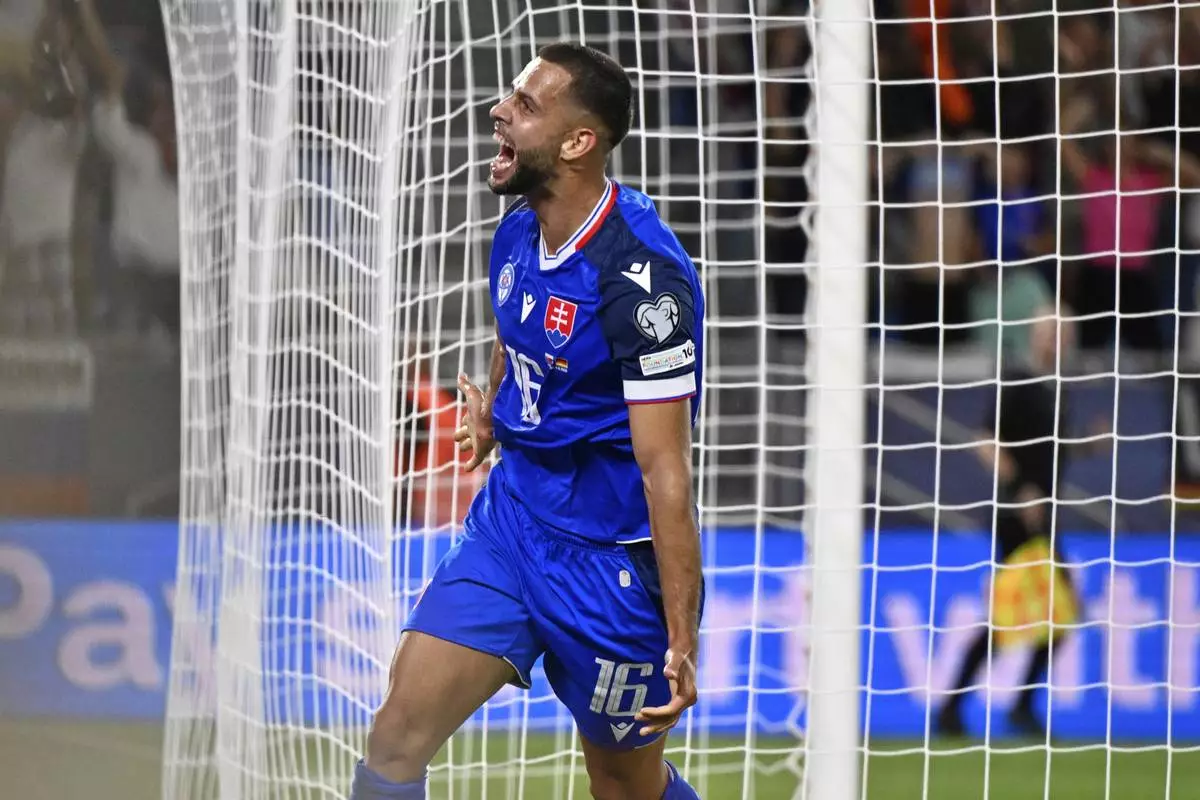
Slovakia's David Hancko celebrates after scoring the opening goal during the World Cup Group A qualifying soccer match between Slovakia and Germany in Bratislava, Slovakia, Thursday, Sept. 4, 2025. (AP Photo/Denes Erdos)

Germany's Florian Wirtz scratches his head during the World Cup Group A qualifying soccer match between Slovakia and Germany in Bratislava, Slovakia, Thursday, Sept. 4, 2025. (AP Photo/Denes Erdos)
LONDON (AP) — With one puff of a cigarette, a woman in Canada became a global symbol of defiance against Iran's bloody crackdown on dissent — and the world saw the flame.
A video that has gone viral in recent days shows the woman — who described herself as an Iranian refugee — snapping open a lighter and setting the flame to a photo she holds. It ignites, illuminating the visage of Ayatollah Ali Khamenei, Iran's highest cleric. Then the woman dips a cigarette into the glow, takes a quick drag — and lets what remains of the image fall to the pavement.
Whether staged or a spontaneous act of defiance — and there’s plenty of debate — the video has become one of the defining images of the protests in Iran against the Islamic Republic’s ailing economy, as U.S. President Donald Trump considers military action in the country again.
The gesture has jumped from the virtual world to the real one, with opponents of the regime lighting cigarettes on photos of the ayatollah from Israel to Germany and Switzerland to the United States.
In the 34 seconds of footage, many across platforms like X, Instagram and Reddit saw one person defy a series of the theocracy’s laws and norms in a riveting act of autonomy. She wears no hijab, three years after the “Women, Life, Freedom” protests against the regime’s required headscarves.
She burns an image of Iran’s supreme leader, a crime in the Islamic republic punishable by death. Her curly hair cascades — yet another transgression in the Iranian government’s eyes. She lights a cigarette from the flame — a gesture considered immodest in Iran.
And in those few seconds, circulated and amplified a million times over, she steps into history.
In 2026, social media is a central battleground for narrative control over conflicts. Protesters in Iran say the unrest is a demonstration against the regime’s strictures and competence. Iran has long cast it as a plot by outsiders like United States and Israel to destabilize the Islamic Republic.
And both sides are racing to tell the story of it that will endure.
Iranian state media announces wave after wave of arrests by authorities, targeting those it calls “terrorists” and also apparently looking for Starlink satellite internet dishes, the only way to get videos and images out to the internet. There was evidence on Thursday that the regime’s bloody crackdown had somewhat smothered the dissent after activists said it had killed at least 2,615 people. That figure dwarfs the death toll from any other round of protest or unrest in Iran in decades and recalls the mayhem of the country’s 1979 Islamic Revolution.
Social media has bloomed with photos of people lighting cigarettes from photos of Iran’s leader. “Smoke ’em if you got ’em. #Iran,” posted Republican U.S. Sen. Tim Sheehy of Montana.
In the age of AI, misinformation and disinformation, there’s abundant reason to question emotionally and politically charged images. So when “the cigarette girl” appeared online this month, plenty of users did just that.
It wasn’t immediately clear, for example, whether she was lighting up inside Iran or somewhere with free-speech protections as a sign of solidarity. Some spotted a background that seemed to be in Canada. She confirmed that in interviews. But did her collar line up correctly? Was the flame realistic? Would a real woman let her hair get so close to the fire?
Many wondered: Is the “cigarette girl” an example of “psyops?” That, too, is unclear. That’s a feature of warfare and statecraft as old as human conflict, in which an image or sound is deliberately disseminated by someone with a stake in the outcome. From the allies’ fake radio broadcasts during World War II to the Cold War’s nuclear missile parades, history is rich with examples.
The U.S. Army doesn’t even hide it. The 4th Psychological Operations Group out of Ft. Bragg in North Carolina last year released a recruitment video called, “Ghost in the Machine 2 that’s peppered with references to “PSYWAR.”And the Gaza war featured a ferocious battle of optics: Hamas forced Israeli hostages to publicly smile and pose before being released, and Israel broadcast their jubilant reunions with family and friends.
Whatever the answer, the symbolism of the Iranian woman's act was powerful enough to rocket around the world on social media — and inspire people at real-life protests to copy it.
The woman did not respond to multiple efforts by The Associated Press to confirm her identity. But she has spoken to other outlets, and AP confirmed the authenticity of those interviews.
On X, she calls herself a “radical feminist” and uses the handle Morticia Addams —- after the exuberantly creepy matriarch of “The Addams Family” — sheerly out of her interest in “spooky things,” the woman said in an interview with the nonprofit outlet The Objective.
She doesn’t allow her real name to be published for safety reasons after what she describes as a harrowing journey from being a dissident in Iran — where she says she was arrested and abused — to safety in Turkey. There, she told The Objective, she obtained a student visa for Canada. Now, in her mid-20s, she said she has refugee status in and lives in Toronto.
It was there, on Jan. 7, that she filmed what’s become known as “the cigarette girl” video a day before the Iranian regime imposed a near-total internet blackout.
“I just wanted to tell my friends that my heart, my soul was with them,” she said in an interview on CNN-News18, a network affiliate in India.
In the interviews, the woman said she was arrested for the first time at 17 during the “bloody November” protests of 2019, demonstrations that erupted after Trump pulled the U.S. out of the nuclear deal that Iran had struck with world powers that imposed crushing sanctions.
“I was strongly opposed to the Islamic regime,” she told The Objective. Security forces “arrested me with tasers and batons. I spent a night in a detention center without my family knowing where I was or what had happened to me.” Her family eventually secured her release by offering a pay slip for bail. “I was under surveillance from that moment on.”
In 2022 during the protests after the death of Mahsa Amini in custody, she said she participated in a YouTube program opposing the mandatory hijab and began receiving calls from blocked numbers threatening her. In 2024, after Iranian President Ebrahim Raisi died in a helicopter crash, she shared her story about it — and was arrested in her home in Isfahan.
The woman said she was questioned and “subjected to severe humiliation and physical abuse.” Then without explanation, she was released on a high bail. She fled to Turkey and began her journey to Canada and, eventually, global notoriety.
“All my family members are still in Iran, and I haven’t heard from them in a few days,” she said in the interview, published Tuesday. “I’m truly worried that the Islamic regime might attack them.”
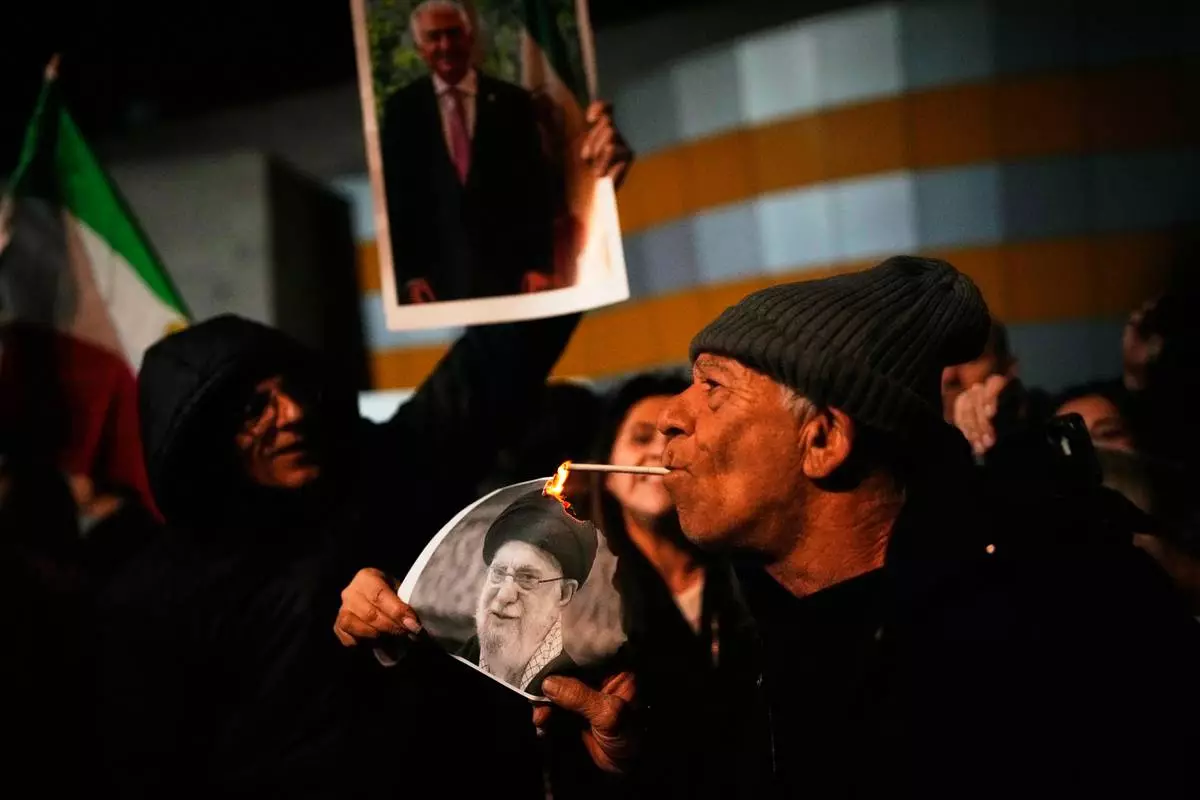
A demonstrator lights a cigarette with a burning poster depicting Supreme Leader Ayatollah Ali Khamenei during a rally in support of Iran's anti-government protests, in Holon, Israel Wednesday, Jan. 14, 2026. (AP Photo/Ohad Zwigenberg)
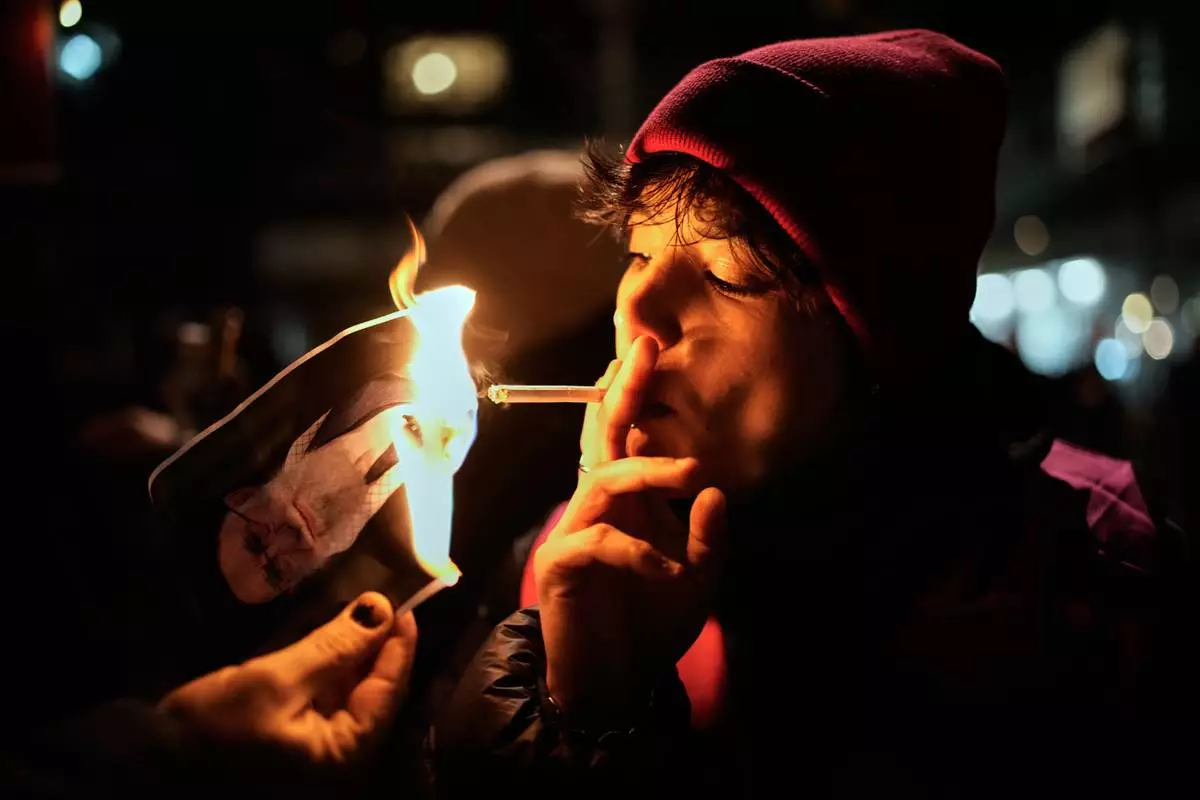
CORRECTS MONTH - A protester lights a cigarette off a burning poster of Iran's Supreme Leader Ayatollah Ali Khamenei during a demonstration in Berlin, Germany, in support of the nationwide mass protests in Iran against the government, Wednesday, Jan. 14, 2026. (AP Photo/Ebrahim Noroozi)
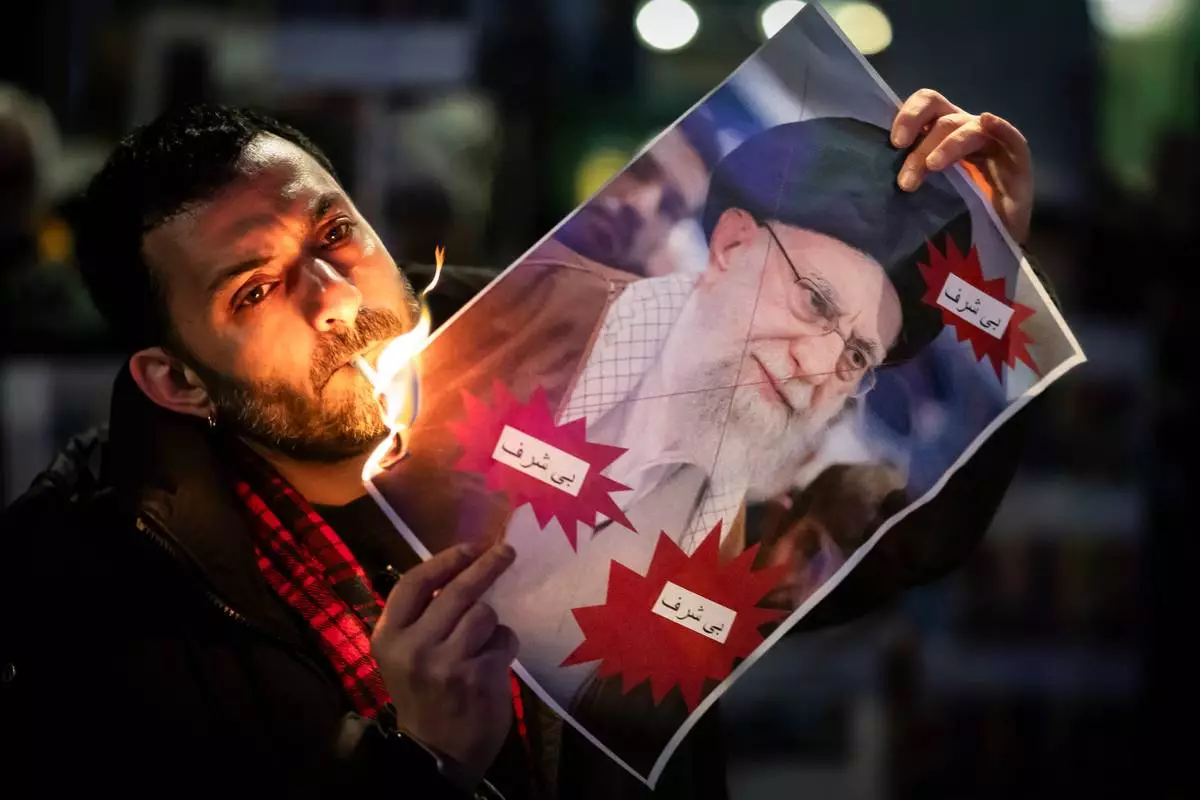
A protester burns an image of the Ayatollah Ali Khamenei with a cigarette during rally in support of the nationwide mass demonstrations in Iran against the government, Tuesday, Jan. 13, 2026 in Zuerich, Switzerland.(Michael Buholzer /Keystone via AP)