MASAFI, United Arab Emirates (AP) — Outside of a mountain village in the northern outskirts of the United Arab Emirates, clouds on a recent weekend suddenly crowded out the white-hot sun that bakes this desert nation in the summer months. Fierce winds blew over planters and pushed a dumpster down the street. And then came the most infrequent visitor of all: rain.
Rainfall long has fascinated the people of the Emirates. That includes both its white-thobed locals crowding into the deserts for any downpour and its vast population of foreign workers, many coming from homes in the Indian subcontinent who grew up with monsoon deluges.
Click to Gallery
A man plays with a child in the rain in Fujairah, United Arab Emirates, Saturday, Aug. 30, 2025. (AP Photo/Fatima Shbair)
People stand in the rain as they chase rain showers in Fujairah, United Arab Emirates, Saturday, Aug. 30, 2025. (AP Photo/Fatima Shbair)
People stand in the rain as they chase rain showers in Fujairah, United Arab Emirates, Saturday, Aug. 30, 2025. (AP Photo/Fatima Shbair)
People stand in the rain as they chase rain showers at Fujairah, United Arab Emirates, Saturday, Aug. 30, 2025. (AP Photo/Fatima Shbair)
But rain also carries with it promise and peril to the nation of seven sheikhdoms on the Arabian Peninsula.
With some 4 million people now estimated to be living in Dubai alone compared to around 255,000 in 1980, pressure on water consumption continues. Meanwhile, as weather patterns change with global warming, the country saw the heaviest recorded rainfall ever last year that disrupted worldwide travel and now has its leaders reconsidering how to build as residents nervously look to the skies.
“Out here, rain is almost like a firework event,” said Howard Townsend, an unofficial weather forecaster in Dubai with a Facebook following. “It’s too hot to go outside. When you get a rain event, it’s like a blessing, a release.”
The UAE, home to an estimated 10 million people in total, sits along both the Persian Gulf to its north and west and the Gulf of Oman to the east. The stone Hajar Mountains separate it from neighboring Oman. Along the southern borders of the peninsula, monsoon rains can hit seaside areas of Oman and Yemen. But the vast desert stretch of the peninsula, known as the Empty Quarter, has a weather pattern that keeps the clouds out.
That means little to no rain, sometimes for years at a time in some areas. For the Emirates, that has meant relying heavily on some 70 water desalination plants to supply drinking water, as well as drip irrigation for plants that can rely on recycled wastewater. Dams have also been built in recent years to catch and store water runoff.
Even then, the UAE ranks seventh worldwide for being at risk for water scarcity, according to the World Resources Institute. Groundwater reservoirs have been known to be under pressure for years. The UAE also has been “cloud seeding” for years, flying aircraft to release chemicals into clouds to try to induce rains.
“Water is more important than oil,” Sheikh Mohammed bin Zayed Al Nahyan, the leader of the UAE and ruler of Abu Dhabi, reportedly said back in 2011.
That's particularly true in Dubai, where its booming population strains its roadways. The government-owned utility, the Dubai Electricity and Water Authority, reported producing 683.7 billion liters (180.6 billion gallons) of water last year alone through desalination, with water demand continuing to grow alongside the city-state.
Yet Emirati government statistics suggest residents use around 550 liters (145 gallons) of water per day, which is among some of the highest usage around the world.
But for all the fascination with rain, there's fear now as well for many after the April 2024 floods that swept across Dubai. In one day, more rain fell than ever recorded since 1949, when the officials in what became the UAE first began taking statistics.
More than 142 millimeters (5.59 inches) of rainfall had soaked Dubai over 24 hours. An average year sees 94.7 millimeters (3.73 inches) of rain at Dubai International Airport, the world's busiest for international travel.
And while that might not seem like much to a major city elsewhere, Dubai's deserts could only take so much water. Meanwhile, its urban core had nowhere for the water to go.
An analysis later conducted by scientists associated with World Weather Attribution, which studies weather and its relationship to climate change, found 85% of the population and 90% of the city-state's infrastructure was “vulnerable to rising sea levels and extreme weather events.”
“It’s not a question of has the rain increased; it’s where has the rain to go?” Townsend said, something he called an increasingly pressing concern as Dubai builds further out into its desert outskirts.
In the time since, government utility vehicles and ambulances increasingly sport snorkels to avoid water getting into their engines, something residents also have installed on their own vehicles. Insurance losses have been estimated to be as high as $4 billion.
Dubai's ruler Sheikh Mohammed bin Rashid Al Maktoum also announced an $8 billion plan to build a massive rainwater drainage system for the city using underground tunneling equipment.
The project represents “the largest rainwater collection project in a single system in the region,” Sheikh Mohammed said in a statement in June. “The initiative will increase the capacity of the drainage network in the emirate by 700%, ensuring the emirate’s readiness to face future climate-related challenges.”
But the rains also can bring joy to this desert.
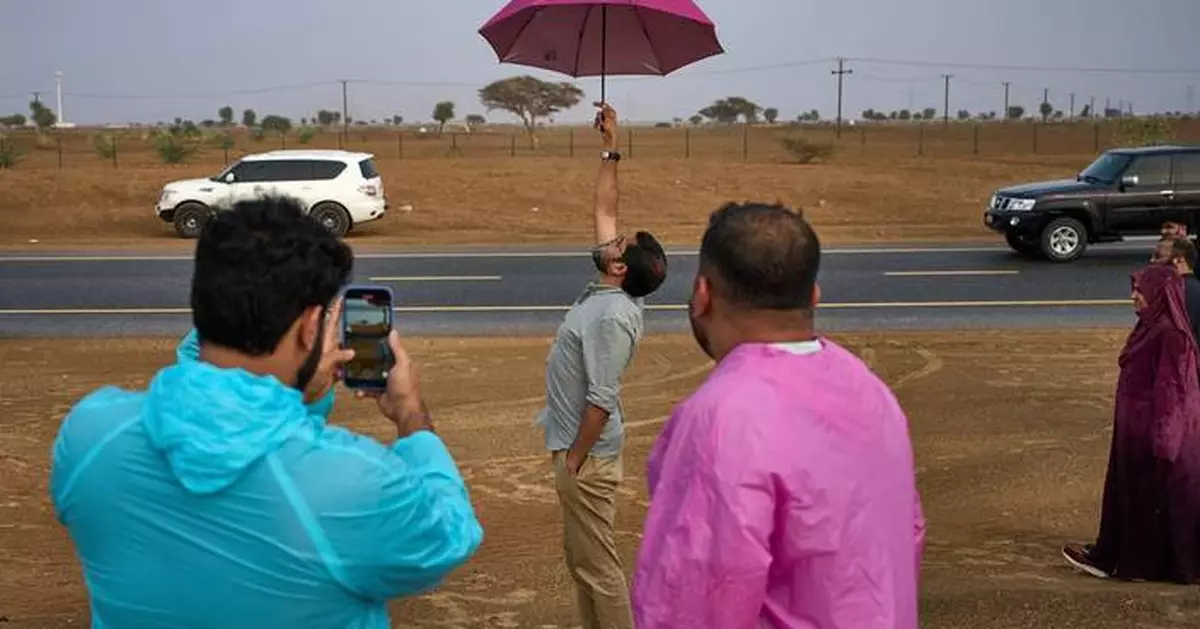
On a recent Saturday, Muhammed Sajjad Kalliyadan Poil looked to the skies in the eastern deserts of the UAE. Directly above him was a cumulonimbus cloud, looking rain heavy and ready to drop. That was the one, he said.
Leading others, Kalliyadan Poil drove to the outskirts of Masafi, a village in the Hajar Mountains nestled between Fujairah and Ras al-Khaimah, two the Emirates' seven sheikhdoms. He has grown famous over time as the “UAE Weatherman" on Instagram.
Kalliyadan Poil, like other Indians from Kerala on the trip, make up a large number of the foreign workers here in the Emirates. And their memories of home have them gather together to chase the weather on days like this.
As Kalliyadan Poil and his colleagues pulled up to an area against a mountain road under construction, the first drops fell on their windshield. He got out, standing in the sudden shower as others with him did the same.
“We come from an area where the rain is happening every day,” Kalliyadan Poil said. “When the drop hits us, I return back to my childhood.”
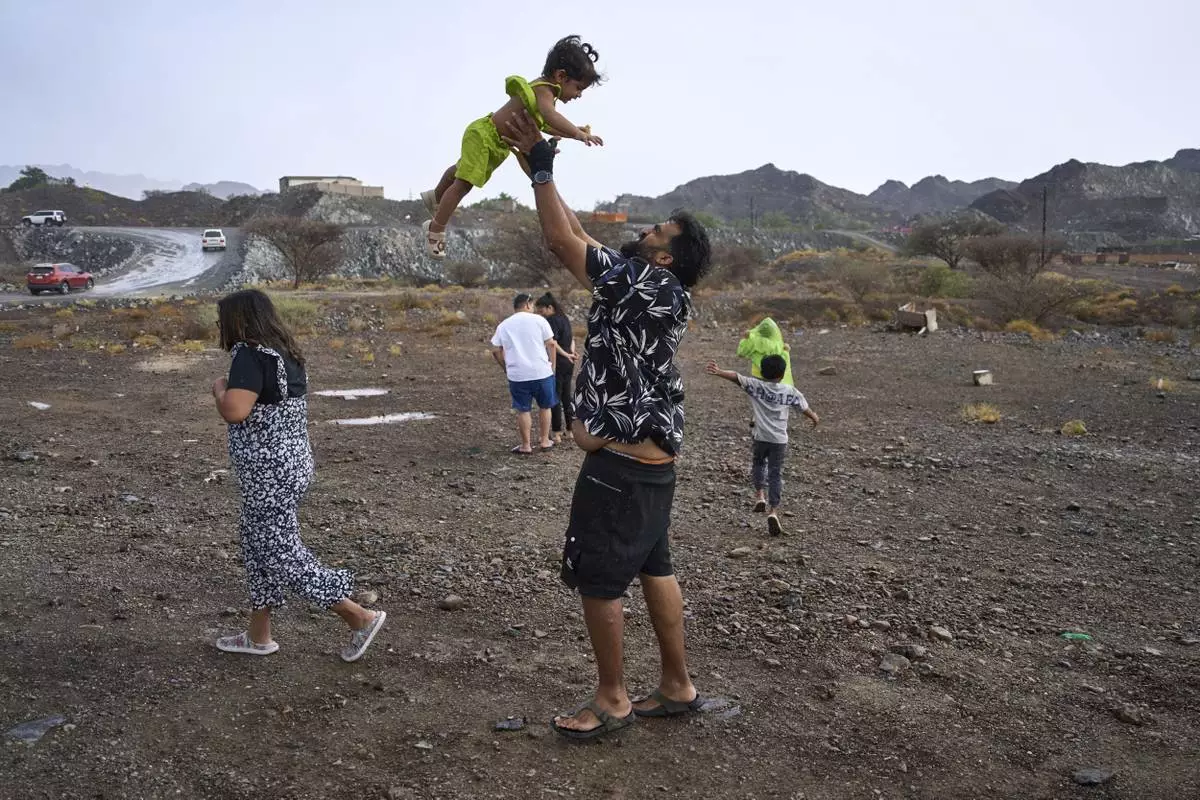
A man plays with a child in the rain in Fujairah, United Arab Emirates, Saturday, Aug. 30, 2025. (AP Photo/Fatima Shbair)
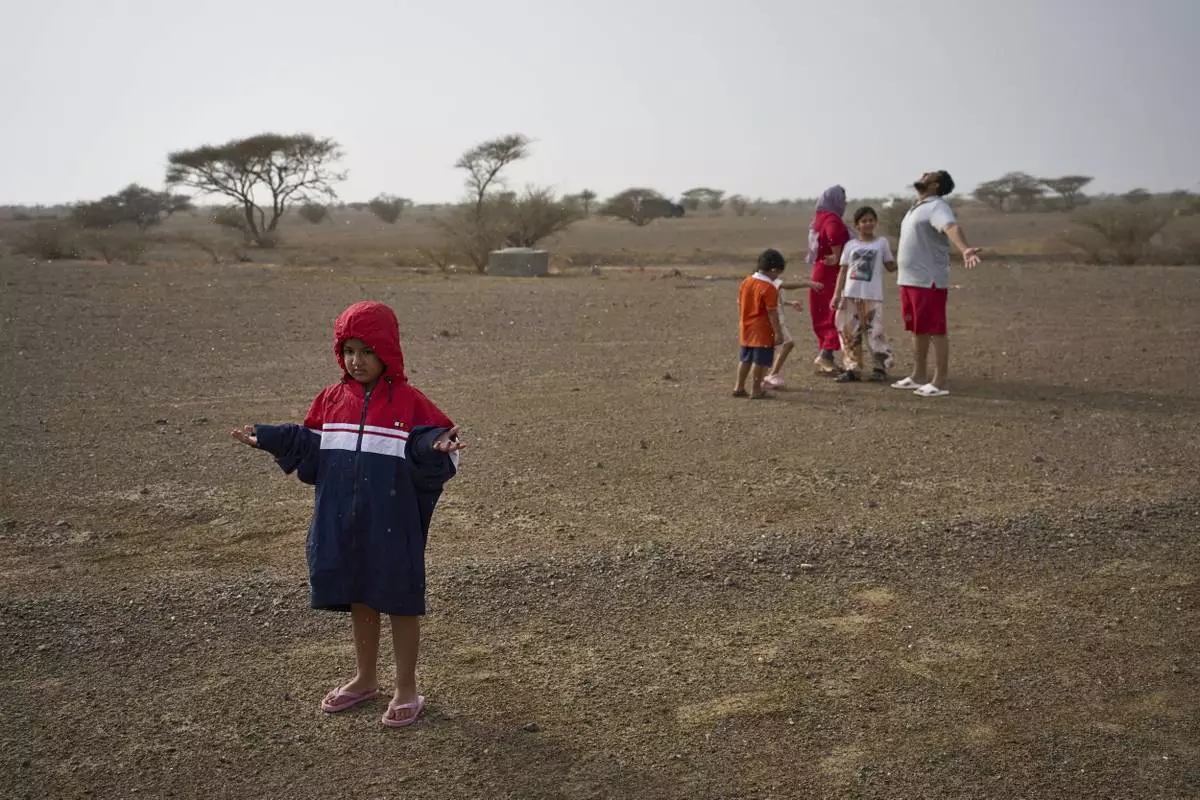
People stand in the rain as they chase rain showers in Fujairah, United Arab Emirates, Saturday, Aug. 30, 2025. (AP Photo/Fatima Shbair)
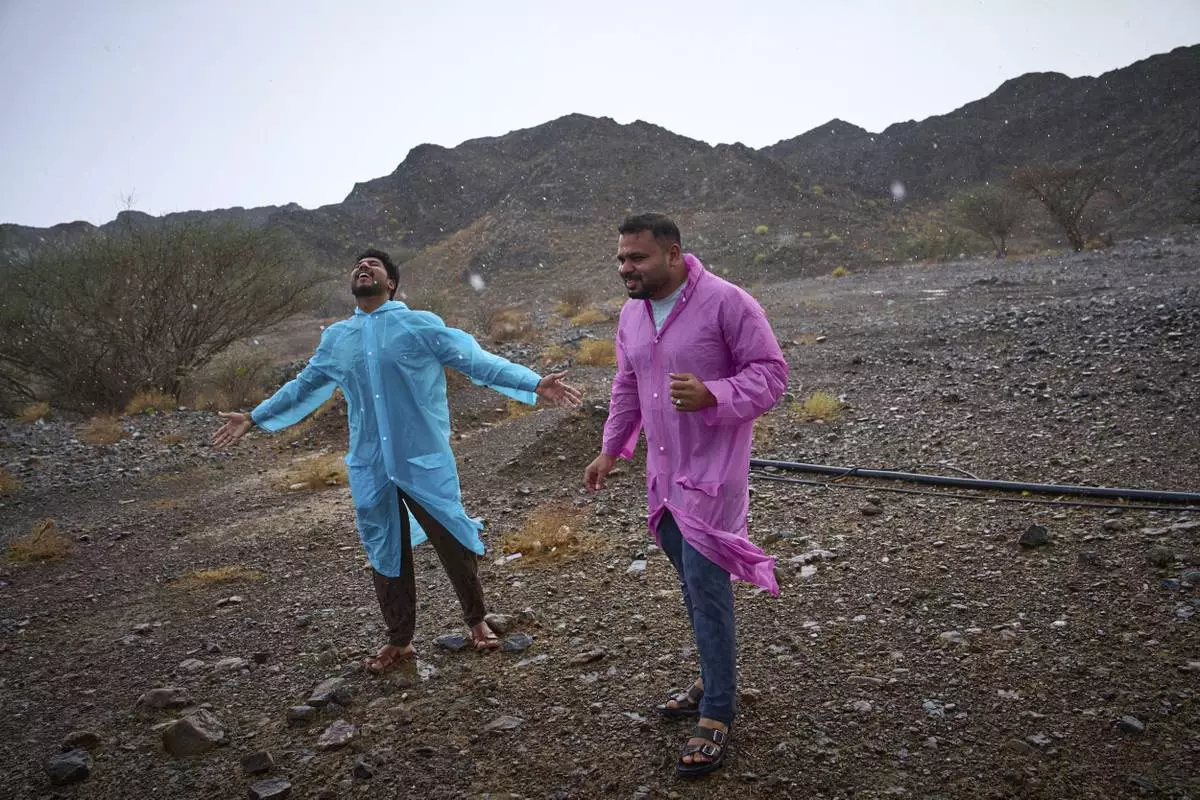
People stand in the rain as they chase rain showers in Fujairah, United Arab Emirates, Saturday, Aug. 30, 2025. (AP Photo/Fatima Shbair)
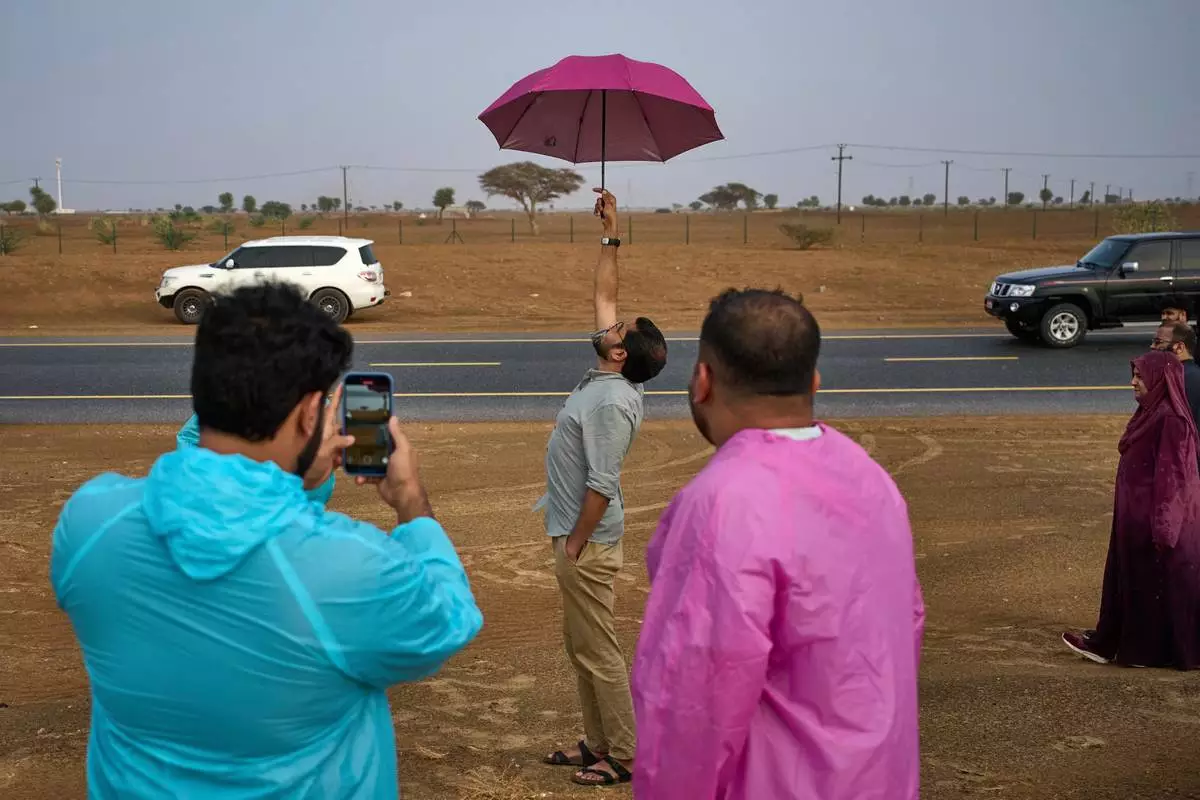
People stand in the rain as they chase rain showers at Fujairah, United Arab Emirates, Saturday, Aug. 30, 2025. (AP Photo/Fatima Shbair)
WASHINGTON (AP) — Most American presidents aspire to the kind of greatness that prompts future generations to name important things in their honor.
Donald Trump isn't leaving it to future generations.
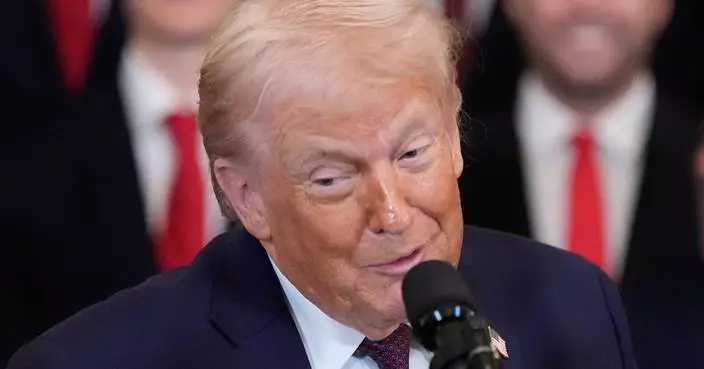
As the first year of his second term wraps up, his Republican administration and allies have put his name on the U.S. Institute of Peace, the Kennedy Center performing arts venue and a new class of battleships that's yet to be built.
That’s on top of the “Trump Accounts” for tax-deferred investments, the TrumpRx government website soon to offer direct sales of prescription drugs, the “Trump Gold Card” visa that costs at least $1 million and the Trump Route for International Peace and Prosperity, a transit corridor included in a deal his administration brokered between Armenia and Azerbaijan.
On Friday, he attended a ceremony at his Florida home to mark the renaming of a 4-mile (6-kilometer) stretch of road from the airport to his Mar-a-Lago estate in Palm Beach as President Donald J. Trump Boulevard.
“That’s a very important stretch," Trump said as he thanked local officials for the dedication.
“When people see that the beautiful sign is all lit up nice at night and it says ‘Donald J. Trump Boulevard,’ they’ll be filled with pride. Just pride," Trump said. “Not in me. Pride in our country.”
It’s unprecedented for a sitting president to embrace tributes of that number and scale, especially those proffered by members of his administration. And while past sitting presidents have typically been honored by local officials naming schools and roads after them, it's exceedingly rare for airports, federal buildings, warships or other government assets to be named for someone still in power.
“At no previous time in history have we consistently named things after a president who was still in office,” said Jeffrey Engel, the David Gergen Director of the Center for Presidential History at Southern Methodist University in Dallas. “One might even extend that to say a president who is still alive. Those kind of memorializations are supposed to be just that — memorials to the passing hero.”
White House spokeswoman Liz Huston said the TrumpRx website linked to the president's deals to lower the price of some prescription drugs, along with “overdue upgrades of national landmarks, lasting peace deals, and wealth-creation accounts for children are historic initiatives that would not have been possible without President Trump’s bold leadership.”
"The Administration’s focus isn’t on smart branding, but delivering on President Trump’s goal of Making America Great Again," Huston said.
The White House pointed out that the nation's capital was named after President George Washington and the Hoover Dam was named after President Herbert Hoover while each was serving as president.
For Trump, it’s a continuation of the way he first etched his place onto the American consciousness, becoming famous as a real estate developer who affixed his name in big gold letters on luxury buildings and hotels, a casino and assorted products like neckties, wine and steaks.
As he ran for president in 2024, the candidate rolled out Trump-branded business ventures for watches, fragrances, Bibles and sneakers — including golden high tops priced at $799. After taking office again last year, Trump's businesses launched a Trump Mobile phone company, with plans to unveil a gold-colored smartphone and a cryptocurrency memecoin named $TRUMP.
That’s not to be confused with plans for a physical, government-issued Trump coin that U.S. Treasurer Brandon Beach said the U.S. Mint is planning.
Trump has also reportedly told the owners of Washington’s NFL team that he would like his name on the Commanders’ new stadium. The team’s ownership group, which has the naming rights, has not commented on the idea. But a White House spokeswoman in November called the proposed name “beautiful” and said Trump made the rebuilding of the stadium possible.
The addition of Trump’s name to the Kennedy Center in December so outraged independent Sen. Bernie Sanders of Vermont that he introduced legislation this week to ban the naming or renaming of any federal building or land after a sitting president — a ban that would retroactively apply to the Kennedy Center and Institute of Peace.
“I think he is a narcissist who likes to see his name up there. If he owns a hotel, that’s his business,” Sanders said in an interview. “But he doesn’t own federal buildings.”
Sanders likened Trump's penchant for putting his name on government buildings and more to the actions of authoritarian leaders throughout history.
“If the American people want to name buildings after a president who is deceased, that’s fine. That’s what we do,” Sanders said. “But to use federal buildings to enhance your own position very much sounds like the ‘Great Leader’ mentality of North Korea, and that is not something that I think the American people want.”
Although some of the naming has been suggested by others, the president has made clear he’s pleased with the tributes.
Three months after the announcement of the Trump Route for International Peace and Prosperity, a name the White House says was proposed by Armenian officials, the president gushed about it at a White House dinner.
“It’s such a beautiful thing, they named it after me. I really appreciate it. It’s actually a big deal,” he told a group of Central Asian leaders.
Engel, the presidential historian, said the practice can send a signal to people "that the easiest way to get access and favor from the president is to play to his ego and give him something or name something after him.”
Some of the proposals for honoring Trump include legislation in Congress from New York Republican Rep. Claudia Tenney that would designate June 14 as “Trump’s Birthday and Flag Day," placing the president with the likes of Martin Luther King Jr., George Washington and Jesus Christ, whose birthdays are recognized as national holidays.
Florida Republican Rep. Greg Steube has introduced legislation that calls for the Washington-area rapid transit system, known as the Metro, to be renamed the “Trump Train.” North Carolina Republican Rep. Addison McDowell has introduced legislation to rename Washington Dulles International Airport as Donald J. Trump International Airport.
McDowell said it makes sense to give Dulles a new name since Trump has already announced plans to revamp the airport, which currently is a tribute to former Secretary of State John Foster Dulles.
The congressman said he wanted to honor Trump because he feels the president has been a champion for combating the scourge of fentanyl, a personal issue for McDowell after his brother’s overdose death. But he also cited Trump’s efforts to strike peace deals all over the world and called him “one of the most consequential presidents ever.”
“I think that’s somebody that deserves to be honored, whether they’re still the president or whether they’re not," he said.
More efforts are underway in Florida, Trump’s adopted home.
Republican state lawmaker Meg Weinberger said she is working on an effort to rename Palm Beach International Airport as Donald J. Trump International Airport, a potential point of confusion with the Dulles effort.
The boulevard dedicated to Trump on Friday is not the first Florida asphalt to herald Trump upon his return to the White House.
In the south Florida city of Hialeah, officials in December 2024 renamed a street there as President Donald J. Trump Avenue.
Trump, speaking at a Miami business conference the next month, called it a “great honor” and said he loved the mayor for it.
“Anybody that names a boulevard after me, I like,” he said.
He added a few moments later: “A lot of people come back from Hialeah, they say, ‘They just named a road after you.' I say, ‘That’s OK.’ It’s a beginning, right? It’s a start.”
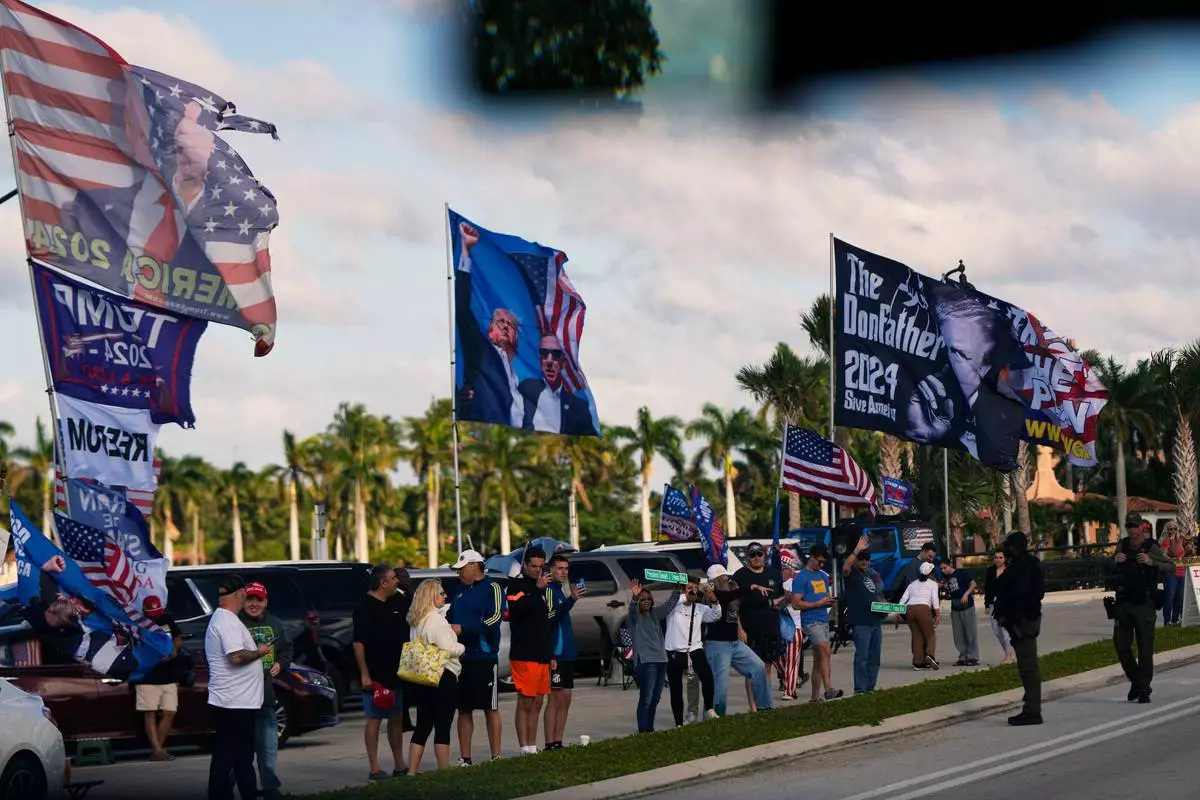
Supporters wave flags as President Donald Trump motorcades through West Palm Beach, Fla., along Southern Boulevard, the stretch of road being dedicated to him, Friday, Jan. 16, 2026. (AP Photo/Julia Demaree Nikhinson)
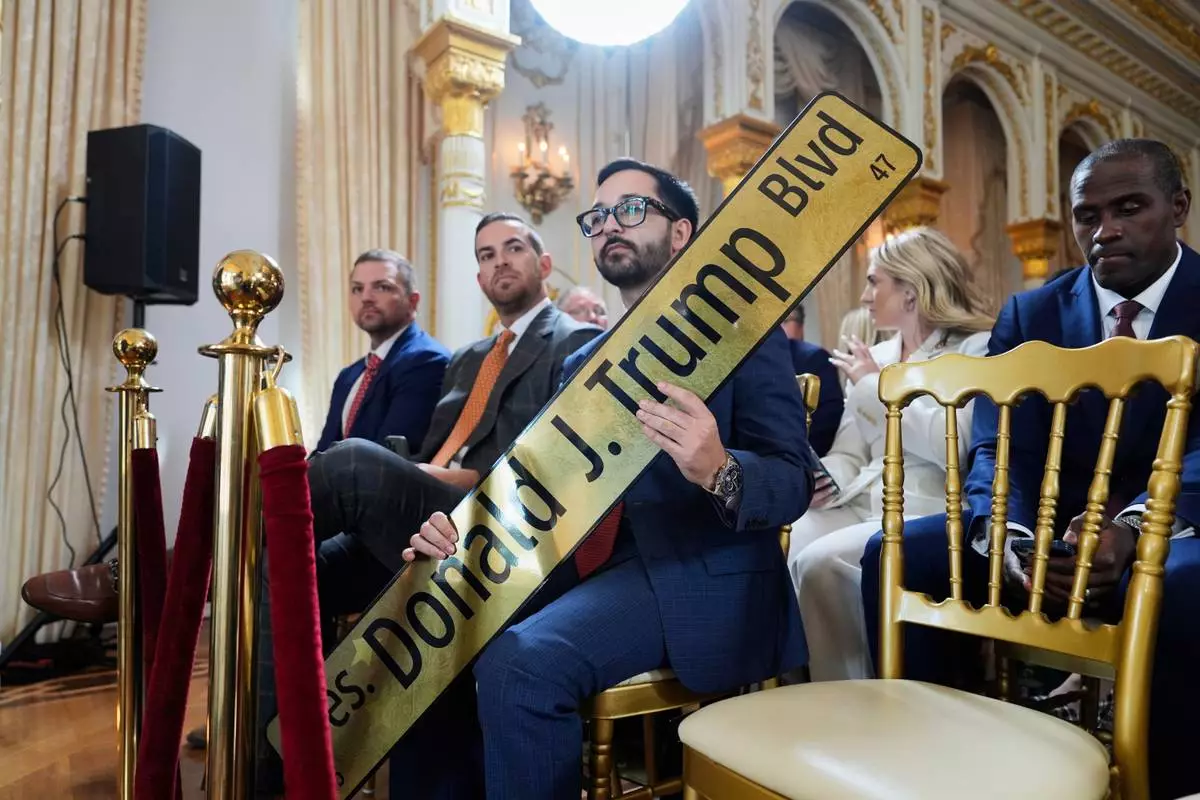
Attendees wait for President Donald Trump to arrive at a dedication ceremony for a portion of Southern Boulevard, which the Town of Palm Beach Council recently voted to rename,"President Donald J. Trump Boulevard," Friday, Jan. 16, 2026, at his Mar-a-Lago Club in Palm Beach, Fla. (AP Photo/Julia Demaree Nikhinson)
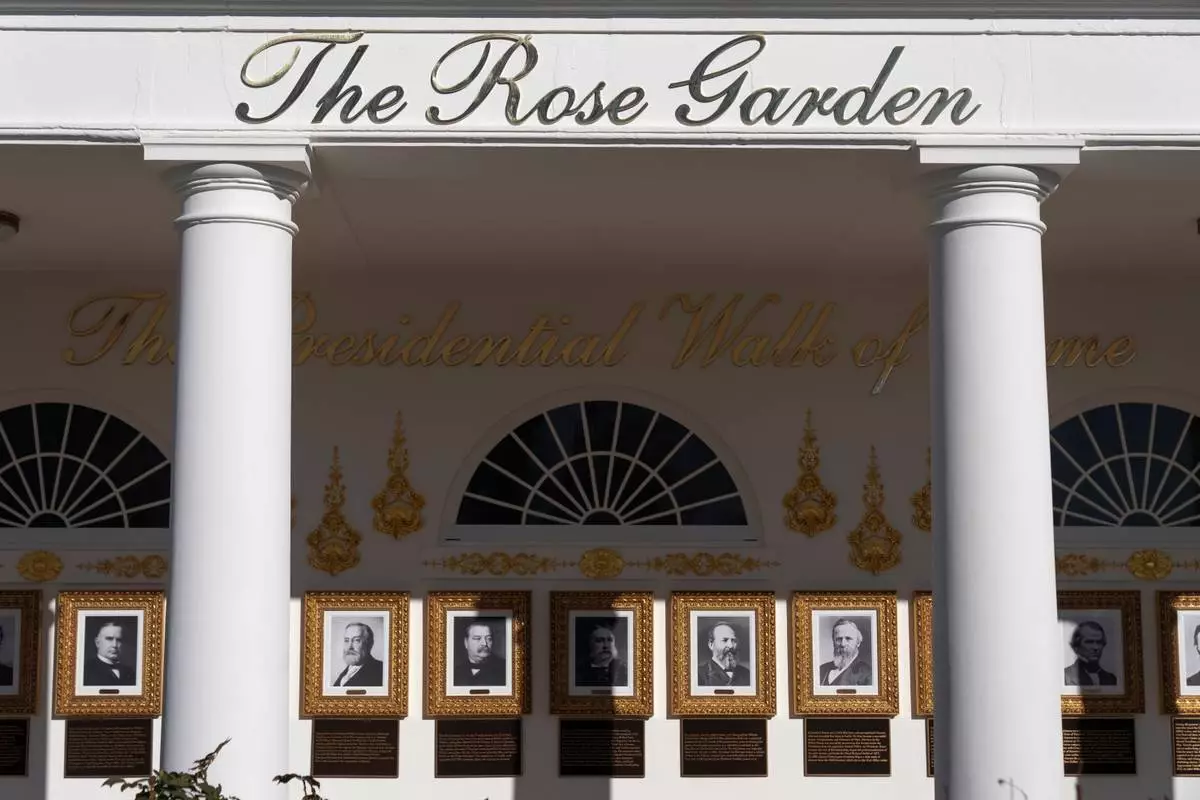
FILE - A sign for the Rose Garden is seen near the Presidential Walk of Fame on the Colonnade at the White House, Jan. 13, 2026, in Washington. (AP Photo/Mark Schiefelbein, File)
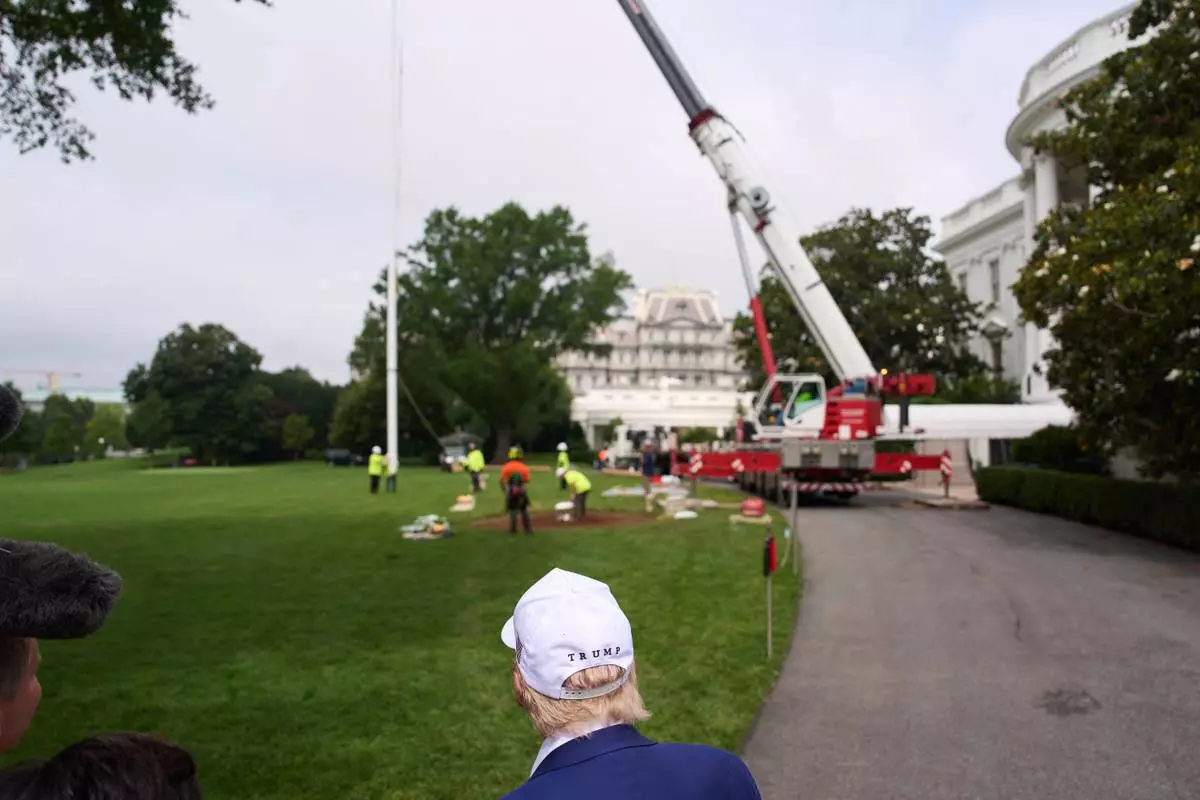
FILE - President Donald Trump speaks with reporters as a flag pole is installed on the South Lawn of the White House, June 18, 2025, in Washington. (AP Photo/Evan Vucci, File)
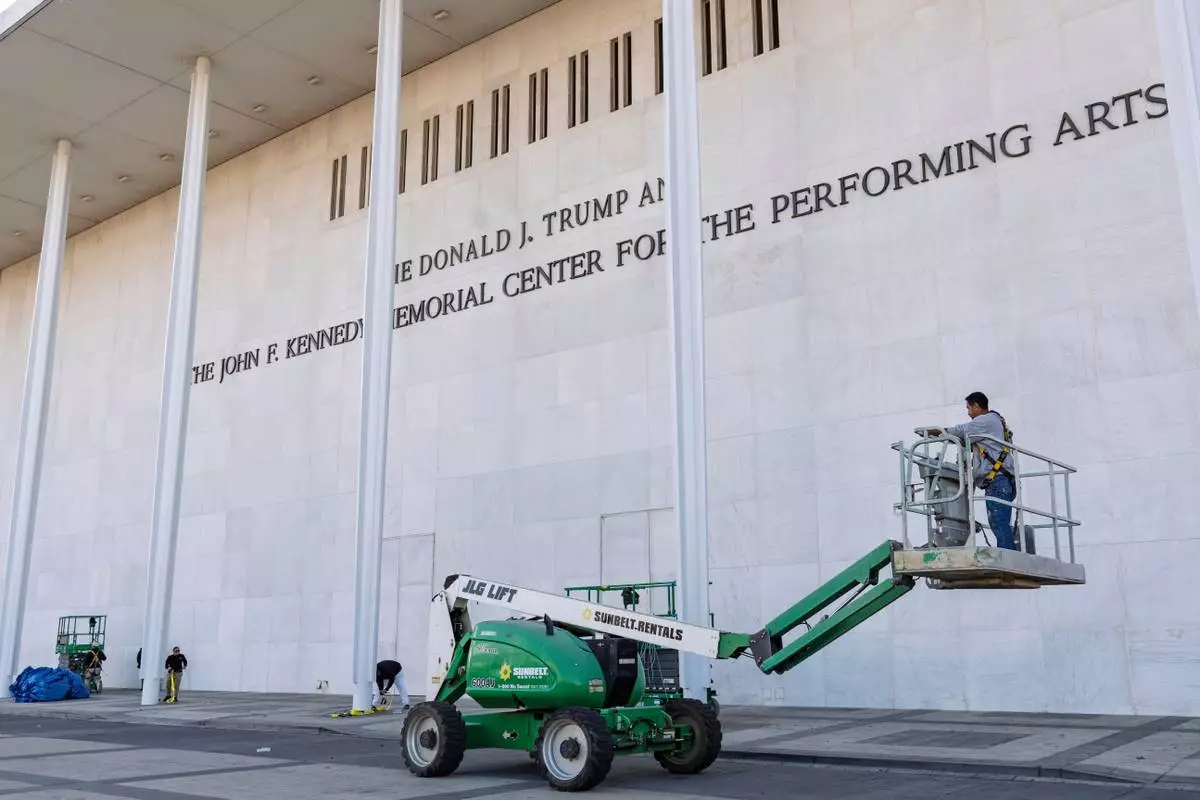
FILE - Workers add President Donald Trump's name to the John F. Kennedy Memorial Center for the Performing Arts, after a Trump-appointed board voted to rename the institution, in Washington, Dec. 19, 2025. (AP Photo/J. Scott Applewhite, File)
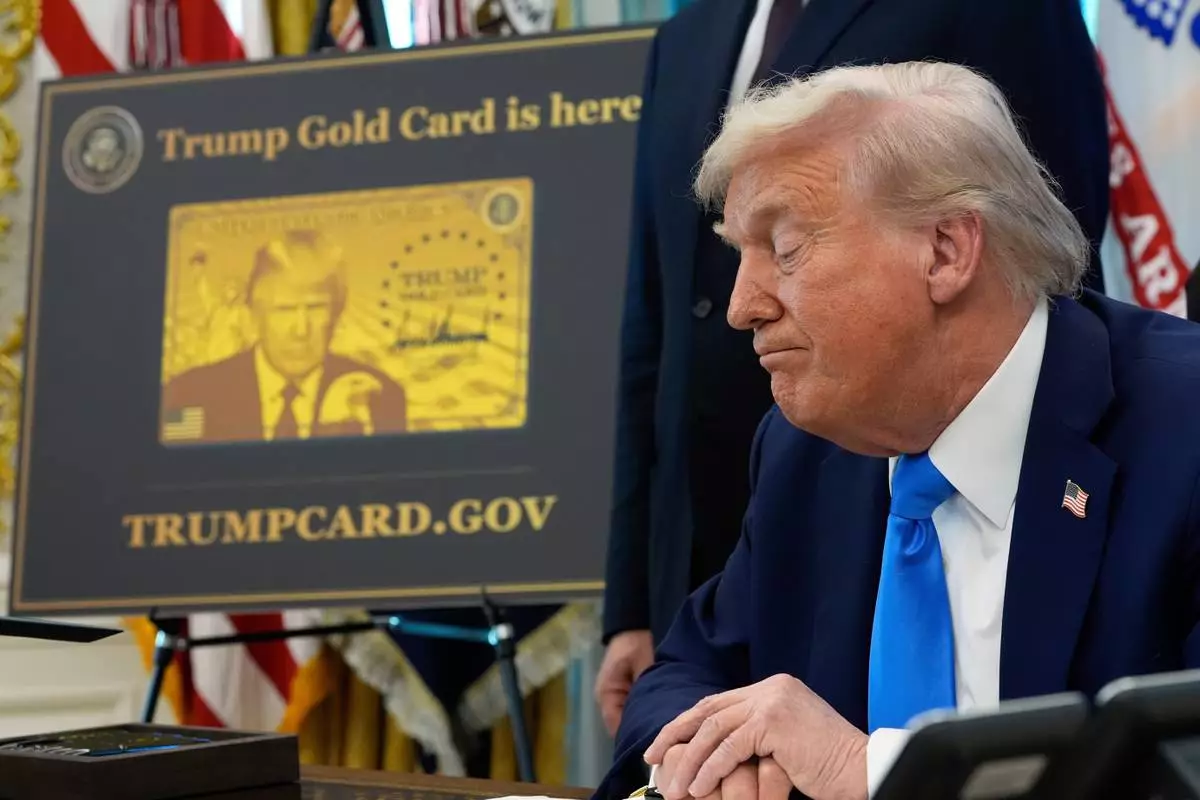
FILE - A poster showing the Trump Gold Card is seen as President Donald Trump signs executive orders in the Oval Office of the White House, Sept. 19, 2025, in Washington. (AP Photo/Alex Brandon, file)