The Communist Party of China (CPC) effectively mobilized both the military and civilians to bravely confront the enemy during the Chinese People's War of Resistance against Japanese Aggression from 1931 to 1945, which was crucial to the country's victory, said experts and officials from Czech Republic and Germany.
As this year marks the 80th anniversary of the victory in the Chinese People's War of Resistance against Japanese Aggression and the World Anti-Fascist War, China on Wednesday held a grand event commemorating the victory, which featured a grand military parade.
The arduous and great war marks China's first complete victory against foreign aggression in modern times.
"China's role in the war [of resistance] was very significant. Chinese demonstrated resilience and strength and ability and will to fight the enemy, even though it was much more developed in economy, in military terms. So it demonstrated, in combination with the leadership or with the program of the Communist Party by that time, the ability to fight and win the war, which is the main point," said Ladislav Zemanek, a Czech geopolitical and policy advisor.
"I believe that the victory over Japanese fascism and aggression was achieved through the unity of the Chinese military and civilians under the leadership of the Communist Party of China. It was the concerted efforts of the entire nation that led to victory in this war," said Guntram Kaiser, a German public and international relations expert.
"It was precisely the Communist Party of China's mobilization of its military and civilians that enabled a tenacious resistance, ultimately leading to the defeat of Japanese militarism and imperialism during World War II. Therefore, I hold the utmost respect for the heroes who made enormous sacrifices. The world should also recognize the Communist Party of China for its crucial contributions to the fight against Japanese militarism and the fascist Axis powers. I believe this also reminds us that we must resolutely oppose the distortion and whitewashing of history. History must be valued so that future can be created," said Sevim Dagdelen, a former member of the national parliament of the Federal Republic of Germany.
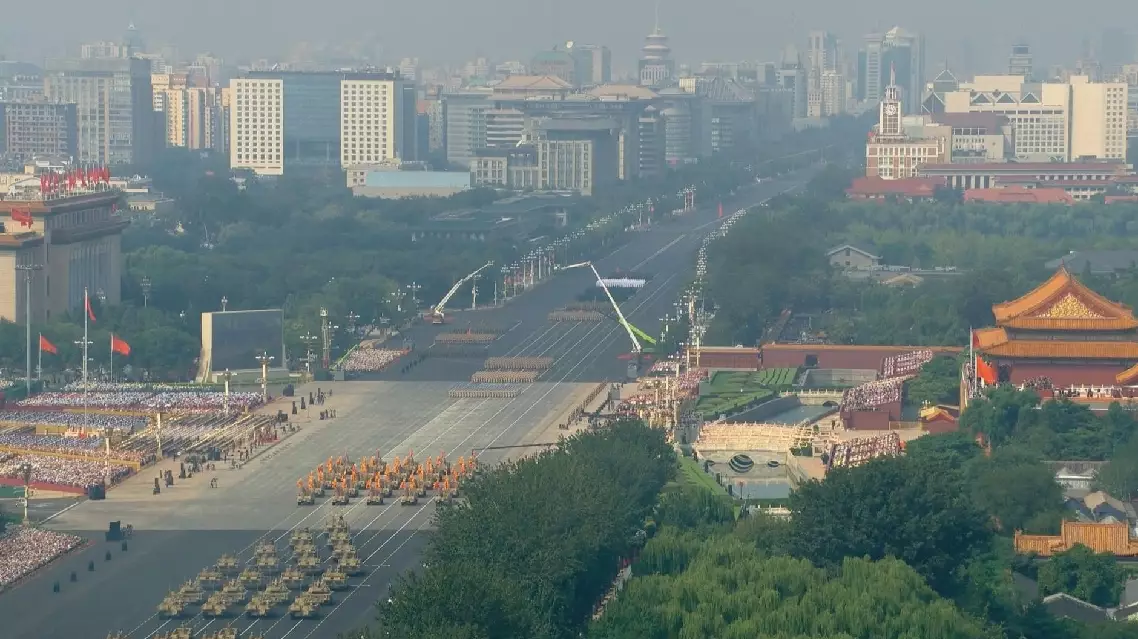
CPC plays vital role in China's victory against Japanese aggression: foreign experts
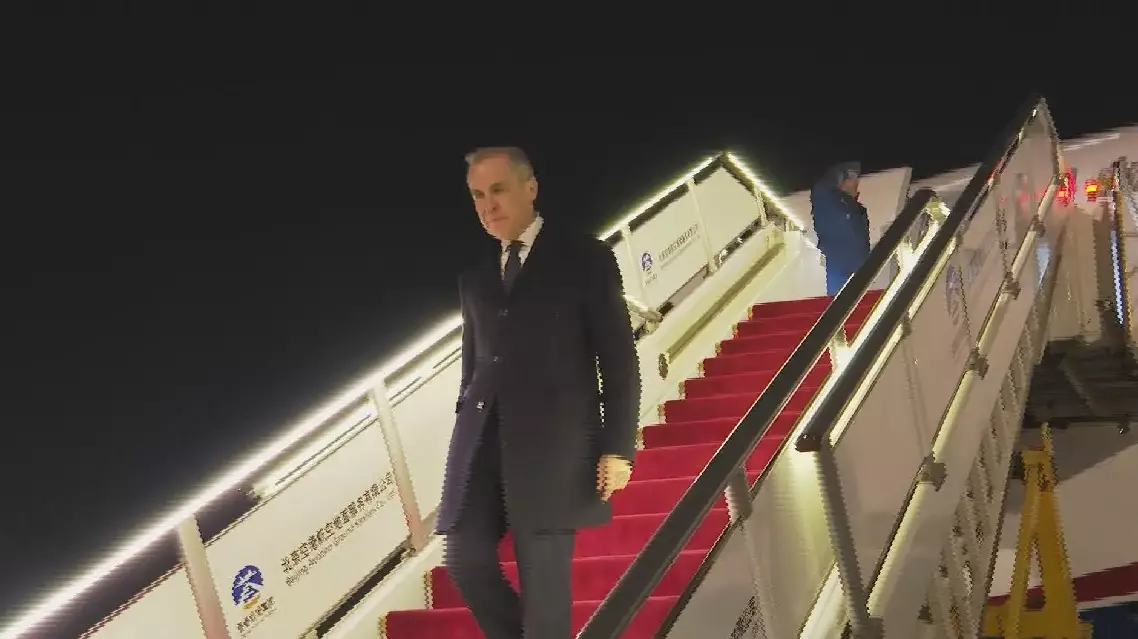
Ghanaian President John Dramani Mahama has underscored the need for the international community to properly recognize the historical injustices committed against Africa and support efforts to advance reparations for Africans and people of African descent.
Mahama made the remarks in an interview with the China Media Group (CMG) which was aired Friday and recorded during the Ghanaian President's trip to Beijing in October.
Earlier this year, Mahama had issued a call for collective action in securing justice for Africans and individuals of African descent through reparations at the 38th Ordinary Session of the African Union.
Located in West Africa along the northern shore of the Gulf of Guinea and bordered by the Atlantic Ocean to the south, Ghana boasts a more than 500-km coastline and abundant agricultural, fishery, forestry and mineral resources. Yet its history, like much of the African continent, has been deeply scarred by centuries of foreign aggression.
From the 15th century onward, Western colonial powers invaded coastal areas of what is now Ghana, plundering resources and conducting the slave trade, casting a long colonial shadow over the African continent which hung for centuries.
In 1955, the successful convening of the Bandung Conference -- which gathered representatives of Asian and African states in Indonesia -- ignited a new wave of national liberation movements these continents, accelerating the collapse of the global colonial system.
Ghana's independence in 1957 lit the first torch of freedom in sub-Saharan Africa and was hailed as the dawn of Africa's awakening.
Africa's first tragedy, the transatlantic slave trade, constituted an extremely grave atrocity, Mahama said.
During that period, an estimated 12 to 15 million Africans were forcibly taken from the continent and sent to the Caribbean, the Americas and Europe. They contributed to the building of modern Western civilization, yet received no compensation for their labor, whether working on sugar plantations or constructing railways, roads and bridges, he noted.
Mahama outlined his wish that the United Nations takes action to recognize the slave trade as "the greatest crime against humanity" and takes steps to ensure reparations are paid back to the descendants of those who suffered.
"We believe that first and foremost, it should be recognized as the greatest crime against humanity. We must condemn the activity of slavery of the people who were shipped to what I call the 'New World', that's the Western world. It's estimated that as many as 2 million did not arrive at the destination because they were either too sick or they died on board, and they were just tossed over into the ocean. That was genocide. And so it's an issue that the first step is for us to accept. And so Ghana wants to move a motion in the UN next year asking the world to recognize the slave trade as the greatest crime against humanity. And so we'll continue to push on the African [Union] Champion on Reparations when I spoke even at the UN, I raised the issue of reparations and so I do think that that is to do with slavery," he said.
Mahama also stressed the impact of colonialism, which further entrenched injustice and led to global inequality as African nations were ruthlessly exploited.
"With regards to colonialism, the Berlin Conference (1884–1885) partitioned Africa and the European nations took colonies in Africa, ran those colonies, exploited their natural resources and transferred those natural resources, oil palm, gold, minerals, cocoa and other products, to develop their countries. And it's only from the late 1950s that countries like Ghana got independent. And so that was an injustice. Colonialism was an injustice against African countries," he said.
Ghanaian president urges reparative justice for Africa, citing slavery, colonial exploitation