Hong Kong's stock market ended higher Friday with the benchmark Hang Seng Index up 1.43 percent to close at 25,417.98 points.
The Hang Seng China Enterprises Index gained 1.34 percent to finish at 9,057.22 points, while the Hang Seng Tech Index advanced 1.95 percent to 5,687.45 points.
In Japan, the benchmark Nikkei 225 rose 438.48 points, or 1.03 percent, to close at 43,018.75 points.
Timothy Pope, a market analyst, recapped stock markets' performance of Hong Kong and Japan on Friday.
"The Hang Seng was up 1.4 percent. Gains there were in pretty much every sector. We saw top performers were Chinese solar stocks and the semiconductor giant SMIC was gaining very strongly on the Hang Seng and Chinese biopharma stocks as well. The trajectory in Hong Kong this week has been quite similar to the Chinese Mainland, and today the vast bulk of Hang Seng stocks gained ground. Only a handful of those were falling and that enabled the index to claw back most of the week's losses. It ends Friday, only fractionally lower for the week," he said.
Turning to the Japanese market, he noted: "A lot of the buoyancy we saw on the Japanese market today came from Donald Trump's latest executive order. The US president has lowered tariffs on some Japanese exports, including autos. And while 'Trump changes his mind on tariffs' is a headline that's going to shock nobody. This is a big change for the Japanese economy. It is a meaningful change, definitely one that's going to be welcomed by investors. We saw some solid gains for the likes of Toyota and Honda today. In fact, Toyota was up about 2 percent. The Nikkei's heavyweight chip stocks were also rising. And there are predictions now floating around that the Nikkei will crack 44 thousand points next week."
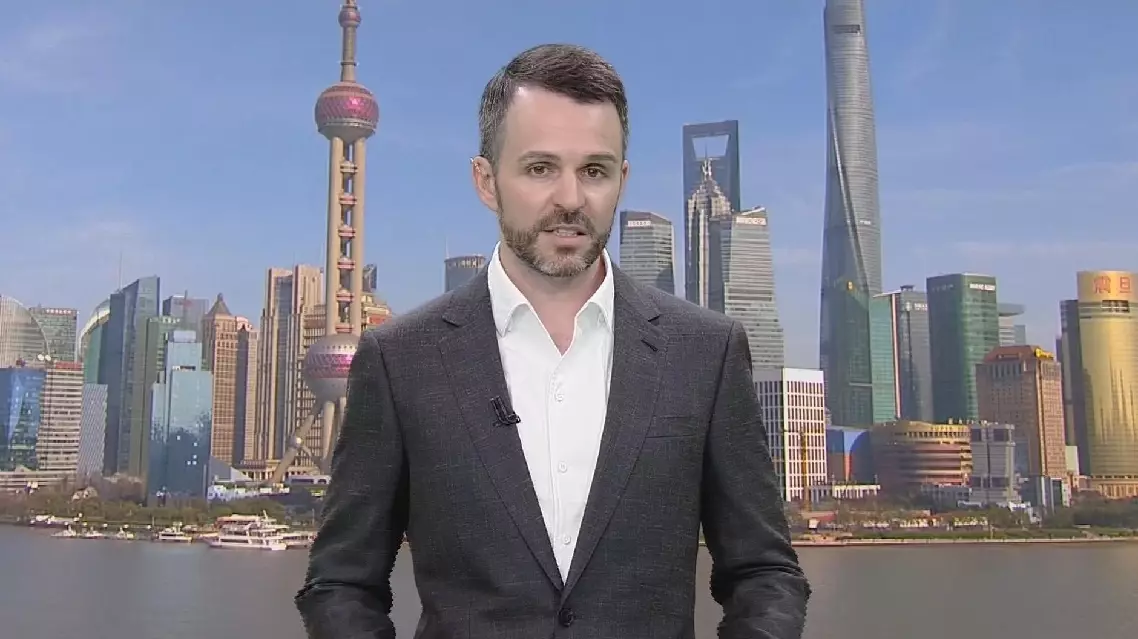
Analyst recaps Asian stock markets' performance on Friday
Iran's UN ambassador Amir Saeid Iravani on Tuesday urged the UN secretary-general and the Security Council to condemn the United States for inciting violence and threatening to use force against his country.
In a letter addressed to UN Secretary-General Antonio Guterres and Somali UN ambassador Abukar Dahir Osman, who serves as the rotating president of the Security Council for January, Iravani accused U.S. President Donald Trump of openly inciting violence in Iran, citing Trump's post on social media platform Truth Social.
"This reckless statement explicitly encourages political destabilization, incites and invites violence, and threatens the sovereignty, territorial integrity, and national security of the Islamic Republic of Iran," Iravani said in the letter.
He also called on the UN secretary-general and the Security Council "to fulfill their Charter-based responsibilities by unequivocally condemning all forms of incitement to violence, threats to use force, and interference" in Iran's internal affairs by the United States.
Iran is also urging all UN member states to refrain from provocative and irresponsible statements or actions that violate the UN Charter, including the principles of sovereignty, territorial integrity and political independence of Iran, the letter said.
In a social media post on Tuesday, Iran's mission to the UN accused the U.S. of trying to stage "regime change" in the country, using sanctions, threats, engineered unrest and chaos to manufacture a pretext for military intervention.
With U.S. officials repeatedly threatening to intervene, Chief Commander of the Iranian Army Amir Hatami has stressed that the Iranian armed forces are in a state of full readiness, warning that any miscalculation by "enemies" would trigger a decisive response.
Iran's Defense Minister Aziz Nasirzadeh has also said that the country will respond forcefully to any attack and "defend the country with full force and until the last drop of blood."
The United States virtual embassy in Iran on Tuesday urged U.S. citizens to leave the country.
According to media reports on Wednesday, the U.S. is withdrawing some of its personnel from its military bases in the Middle East as a precaution amid heightened regional tensions.
Qatar has also confirmed that personnel are departing U.S. bases there over "regional tensions."
Meanwhile, media reports quoted anonymous sources saying that Iran has warned neighboring countries hosting U.S. forces that U.S. military bases could be targeted if the U.S. intervenes in the ongoing unrests.
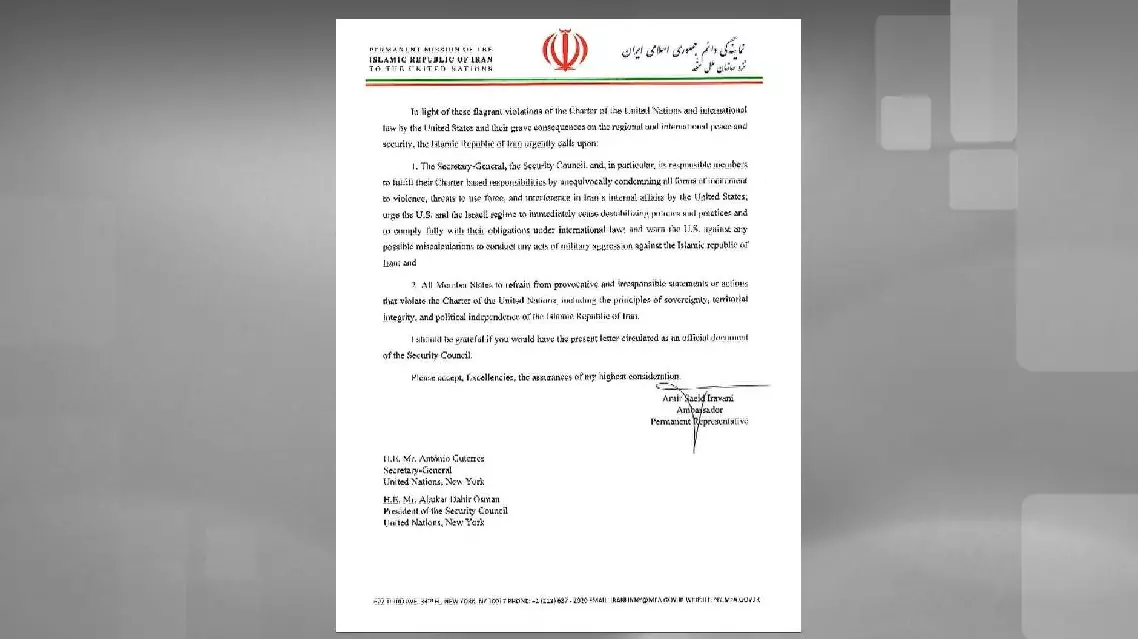
Iran calls on UN chief, Security Council to condemn U.S. for inciting violence