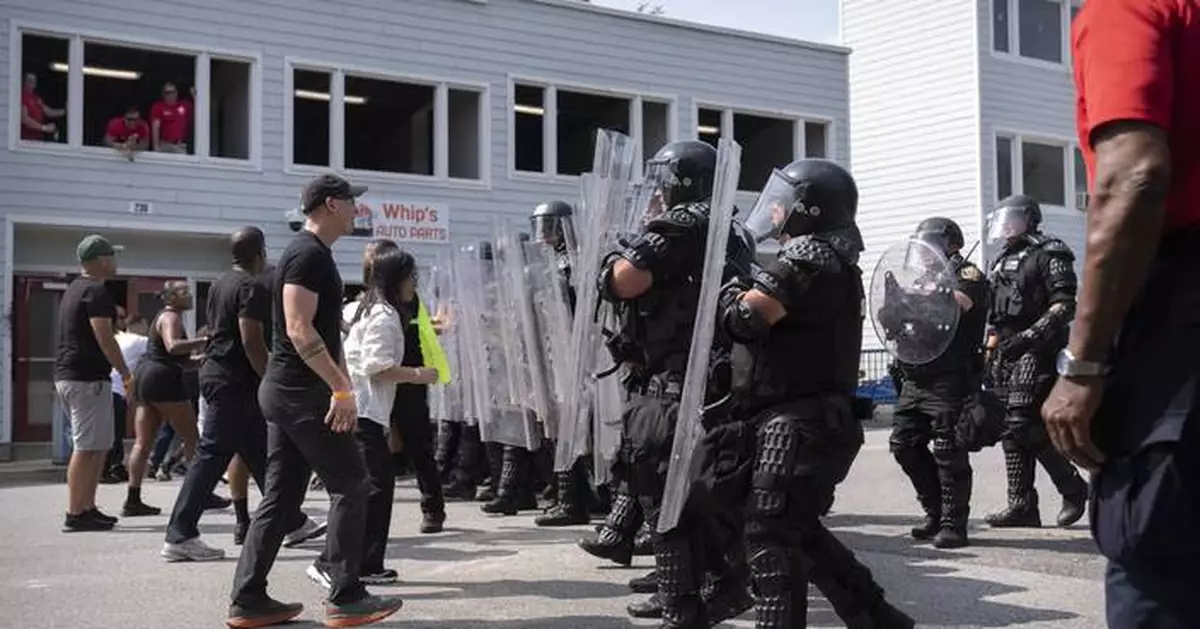
LAUREL, Md. (AP) — The car jolted as protesters pounded on its windows, boxing in the lawmaker trapped inside. Within seconds, officers in full riot gear surged forward in formation, yanking open the doors and pulling the passenger to safety. A few hundred yards away, another team of police moved just as quickly, surrounding, isolating and arresting a man spotted in the crowd with a gun.
The clashes were staged, unfolding Friday at a Secret Service training complex in Maryland. The U.S. Capitol Police led the operation, joined by 600 officers representing nearly 20 agencies — including the Secret Service and local police and sheriff’s departments — in one of the largest law enforcement training drills in the country. The goal was to sharpen coordination among the many agencies that must work side by side in Washington, a push shaped by the glaring security breakdowns of the Jan. 6, 2021, attack on the Capitol.
Click to Gallery
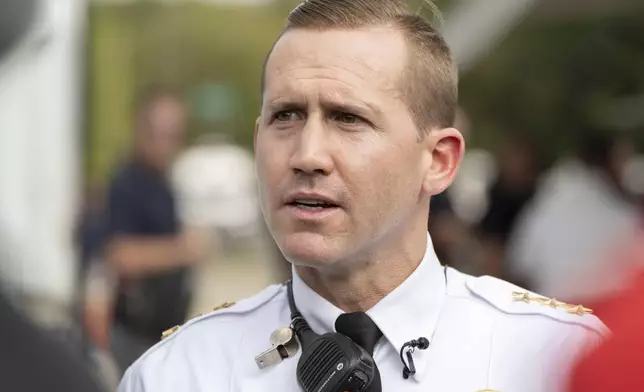
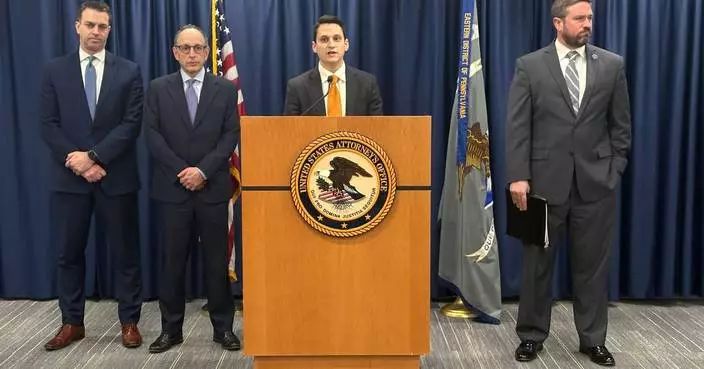
U.S. Secret Service Uniformed Division Assistant Chief Andrew Ackley speaks to reporters during a training exercise with local and federal law enforcement, organized by the U.S. Capitol Police, at the U.S. Secret Service James J. Rowley Training Center Friday, Sept. 5, 2025, in Laurel, Md. (AP Photo/Mark Schiefelbein)
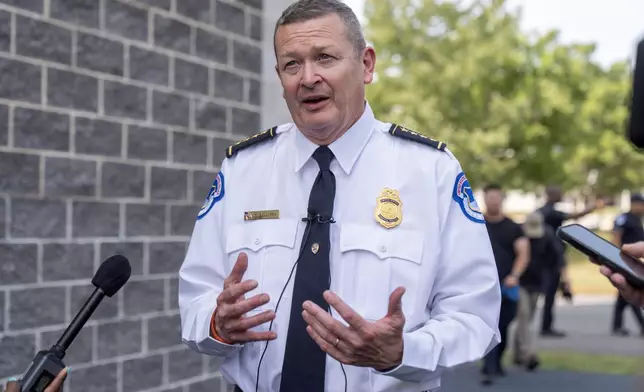
U.S. Capitol Police Chief Michael Sullivan speaks to reporters during a training exercise involving local and federal law enforcement, organized by the U.S. Capitol Police, at the U.S. Secret Service James J. Rowley Training Center Friday, Sept. 5, 2025, in Laurel, Md. (AP Photo/Mark Schiefelbein)
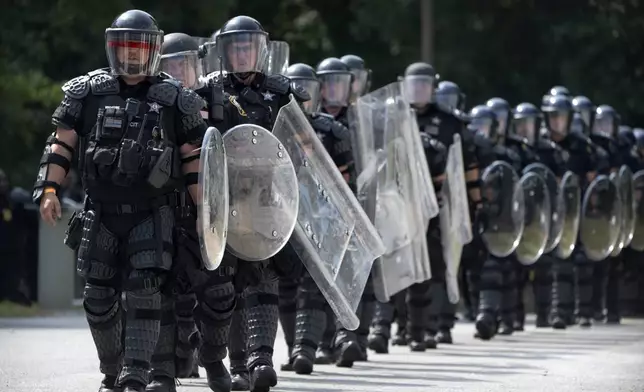
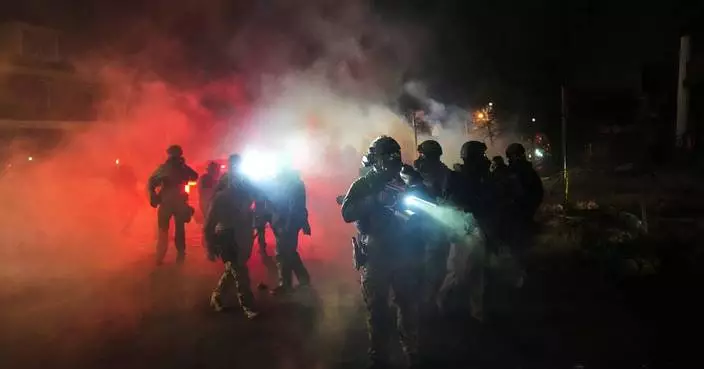
During a training exercise involving local and federal law enforcement organized by the U.S. Capitol Police, police officers wearing protective equipment march at the U.S. Secret Service James J. Rowley Training Center Friday, Sept. 5, 2025, in Laurel, Md. (AP Photo/Mark Schiefelbein)
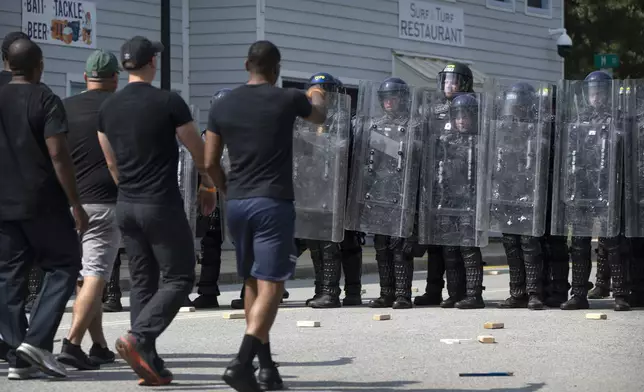
During a training exercise involving local and federal law enforcement organized by the U.S. Capitol Police, people confront police officers wearing protective equipment at the U.S. Secret Service James J. Rowley Training Center Friday, Sept. 5, 2025, in Laurel, Md. (AP Photo/Mark Schiefelbein)

During a training exercise involving local and federal law enforcement organized by the U.S. Capitol Police, people portraying protesters confront police officers wearing protective equipment at the U.S. Secret Service James J. Rowley Training Center Friday, Sept. 5, 2025, in Laurel, Md. (AP Photo/Mark Schiefelbein)
With 2025 on track to bring more threats against members of Congress than any year in history, law enforcement agencies are bracing for a volatile era defined by surging political violence, swelling protest movements and a more muscular federal role in local communities. The training highlighted how quickly multiple dangers can erupt at once, and how determined authorities are to prepare for the next flashpoint.
The exercise comes at a moment when threats and attacks against public officials are mounting, and federal authorities have stepped more aggressively into cities to confront unrest. From the storming of the Capitol to more recent attacks targeting lawmakers and judges, the scenarios practiced in Friday’s drill carried an unmistakable resonance: In today’s America, the line between routine dissent and potential disaster feels increasingly thin.
Commanders emphasized that the drills are not just about riot shields and tactical maneuvers. They also showcased new tools meant to prevent the kinds of communication breakdowns that hobbled the Jan. 6 response. Drones provided real-time aerial views of the mock protests, while mobile command posts allowed leaders from different agencies to track the action simultaneously and direct units on the ground.
Officials said the biggest shift since Jan. 6 has been the rhythm of coordination itself. Agencies that once trained largely in isolation now drill together, building muscle memory for rapid deployments and cross-agency communication that can determine whether a protest remains peaceful or spirals into violence.
“Training like this is incredibly important,” said Michael Sullivan, chief of the U.S. Capitol Police. “Making sure that we understand how the different teams work is critically important if we ever have to make that call for them to come in and help.”
The push reflects how deeply Jan. 6 still looms over the force. Sean Gallagher, an assistant chief who has overseen the department’s response to scathing inspector general and congressional reports, said the agency is not ignoring those failures. Instead, he cast the drill as a deliberate attempt to turn lessons into action.
Reflecting on the mistakes of the past, Gallagher said the agency wouldn’t shy away from them, but that “this is our attempt at fixing those issues.” He added: “We’re facing a lot of different threats. It’s a heightened political environment that we continuously operate in on Capitol Hill. We’ve taken the lessons of the past, we’ve incorporated them into these scenarios and the goal with this is to be proactive and not reactive.”
That urgency is felt not just in the command ranks but also on the front lines. Aaron Davis, a Capitol Police officer who has worked on the civil disturbance unit for nearly eight years and responded to the Jan. 6 attack, said the drills are essential because no scenario feels implausible anymore.
“We use our imagination like crazy in training, just because you don’t want that to be the first time you encounter something of that nature,” he said, recalling the storming of the Capitol that left hundreds of his fellow officers injured.
In other scenarios, demonstrators shouted “Free D.C.” as they hurled wooden blocks meant to simulate bricks — a nod to the rising anger over the surge of federal agents and National Guard troops into the nation’s capital. “Keep moving, back up!” officers yelled as they marched the crowd down the street behind riot shields, while an unmarked police van pulled in to carry away those taken off in handcuffs. The realism of the drills, officials said, was intentional: Each scenario was designed to mirror the volatile mix of protest and confrontation that has become increasingly common in American cities.
For the Secret Service, the lessons stretch back to the mass demonstrations that filled Washington in 2020 during the first Trump administration. Andrew Ackley, assistant chief of the agency’s Uniform Division, said those experiences underscored how much tactics must change as threats evolve.
“The training has evolved significantly because we’re constantly learning. None of these situations are identical, right? None of these situations can be copycat from another one. So we’re constantly evolving. We’re constantly training,” Ackley said.

U.S. Secret Service Uniformed Division Assistant Chief Andrew Ackley speaks to reporters during a training exercise with local and federal law enforcement, organized by the U.S. Capitol Police, at the U.S. Secret Service James J. Rowley Training Center Friday, Sept. 5, 2025, in Laurel, Md. (AP Photo/Mark Schiefelbein)
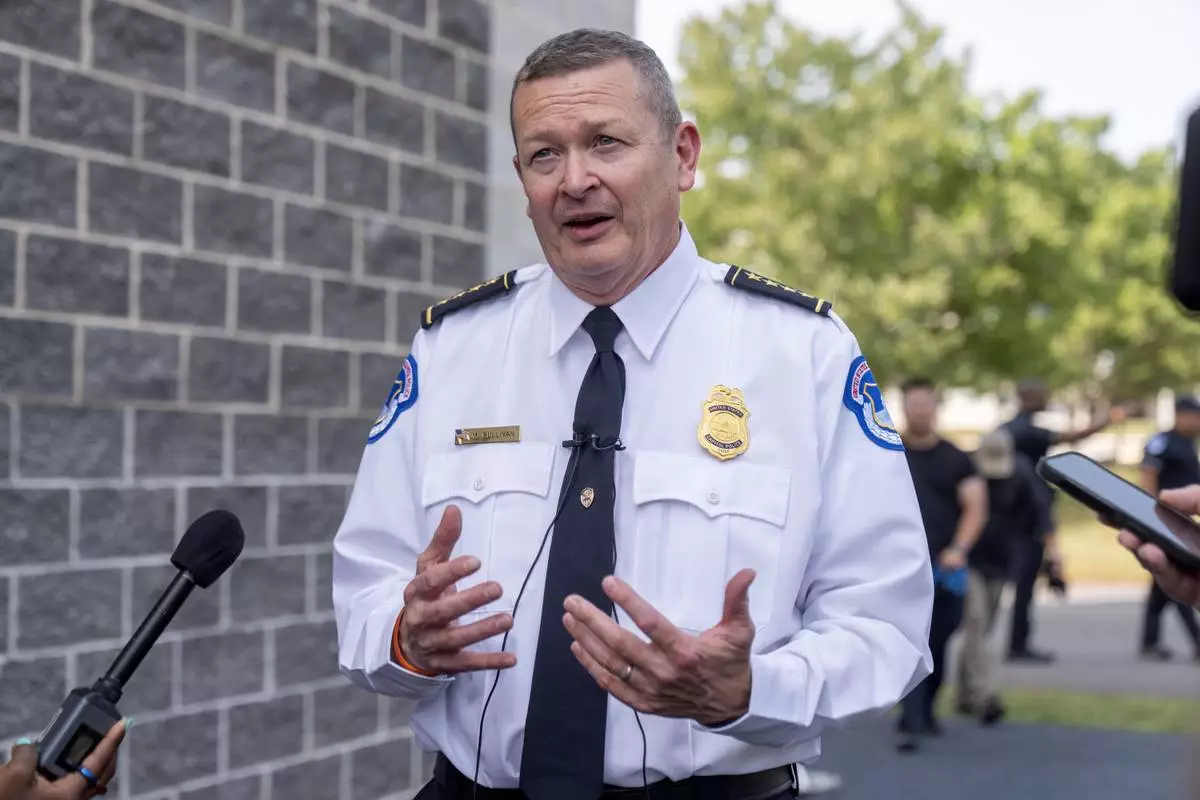
U.S. Capitol Police Chief Michael Sullivan speaks to reporters during a training exercise involving local and federal law enforcement, organized by the U.S. Capitol Police, at the U.S. Secret Service James J. Rowley Training Center Friday, Sept. 5, 2025, in Laurel, Md. (AP Photo/Mark Schiefelbein)
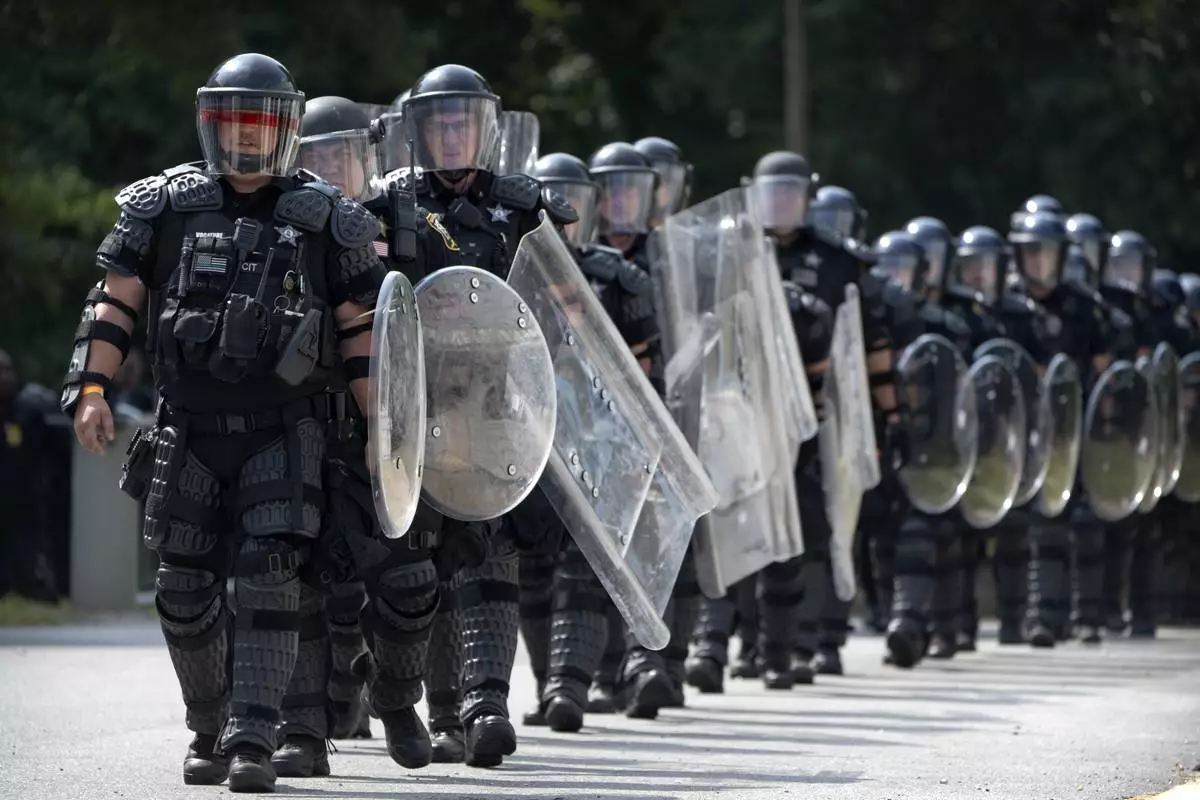
During a training exercise involving local and federal law enforcement organized by the U.S. Capitol Police, police officers wearing protective equipment march at the U.S. Secret Service James J. Rowley Training Center Friday, Sept. 5, 2025, in Laurel, Md. (AP Photo/Mark Schiefelbein)
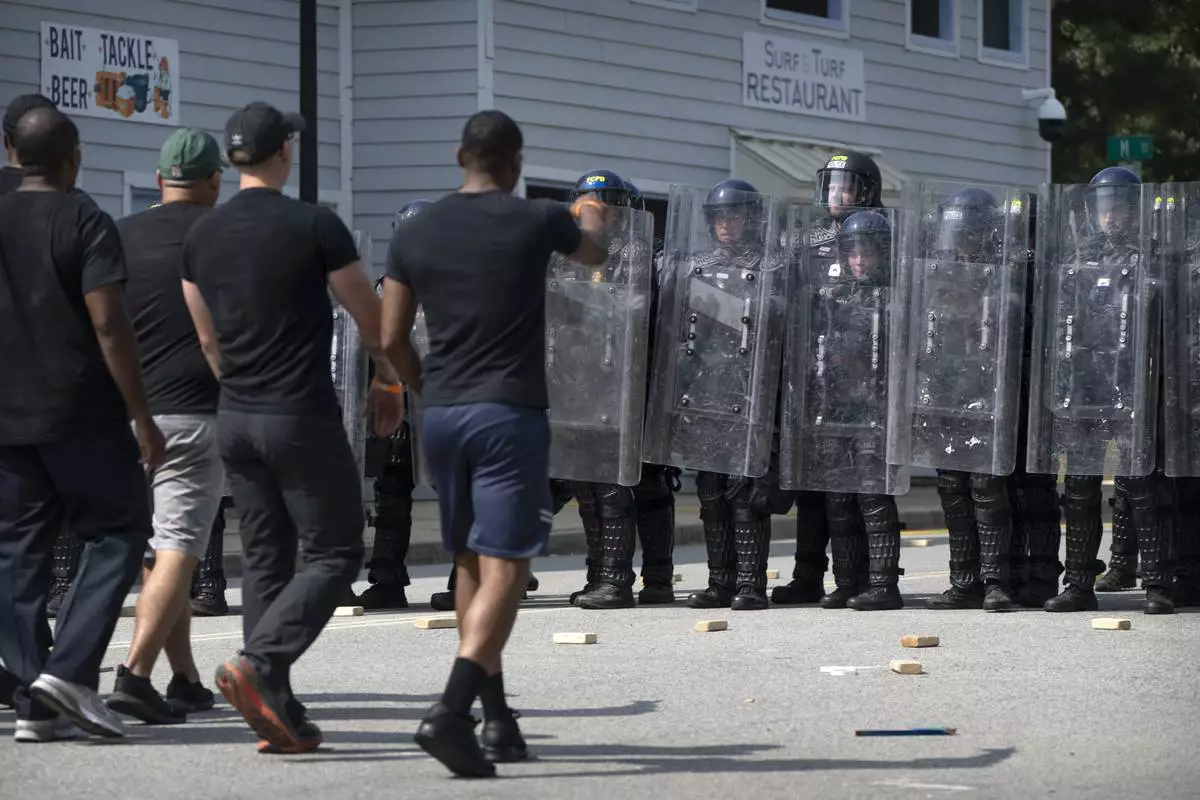
During a training exercise involving local and federal law enforcement organized by the U.S. Capitol Police, people confront police officers wearing protective equipment at the U.S. Secret Service James J. Rowley Training Center Friday, Sept. 5, 2025, in Laurel, Md. (AP Photo/Mark Schiefelbein)
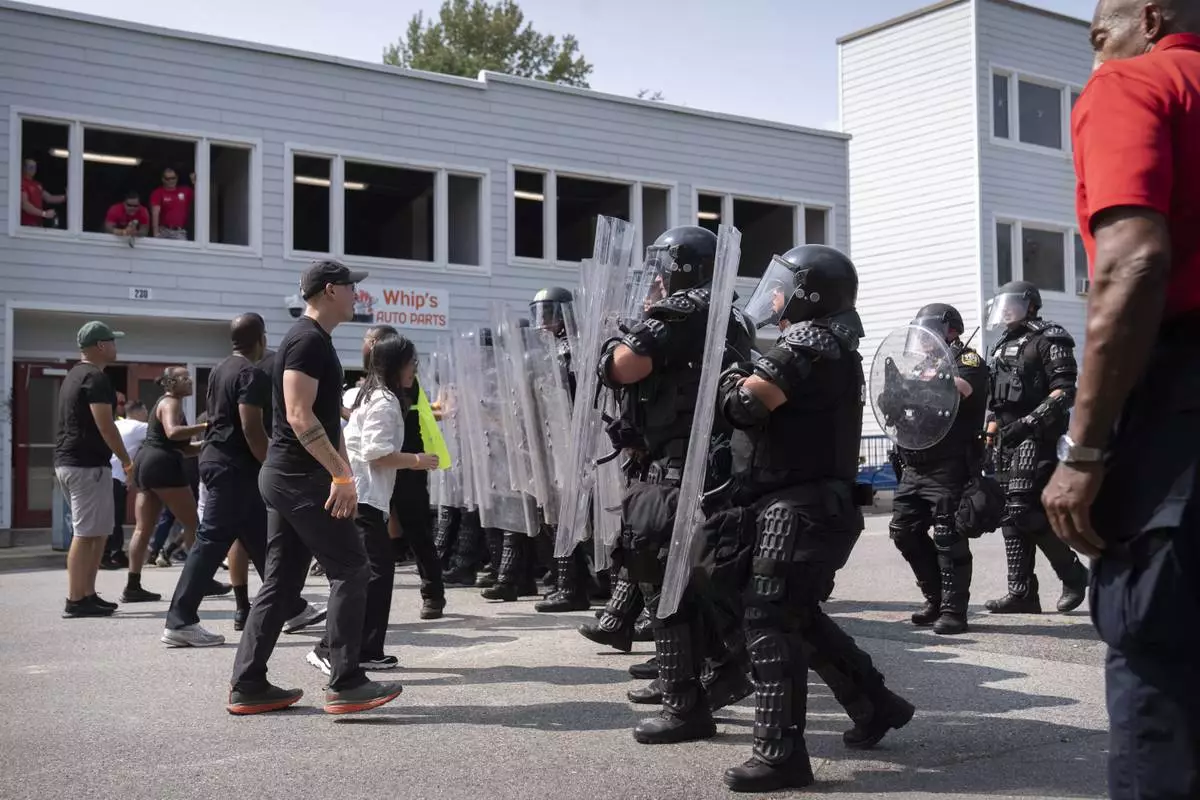
During a training exercise involving local and federal law enforcement organized by the U.S. Capitol Police, people portraying protesters confront police officers wearing protective equipment at the U.S. Secret Service James J. Rowley Training Center Friday, Sept. 5, 2025, in Laurel, Md. (AP Photo/Mark Schiefelbein)