Skip to Content Facebook Feature Image

Israeli attack on Hamas leaders in quiet Qatar shocks Gulf allies and tests US ties

News

Israeli attack on Hamas leaders in quiet Qatar shocks Gulf allies and tests US ties
News

News

Israeli attack on Hamas leaders in quiet Qatar shocks Gulf allies and tests US ties

2025-09-10 19:56 Last Updated At:20:00

The tiny, gas-rich Gulf Arab state of Qatar hosts the biggest U.S. military base in the Middle East. It has evacuated tens of thousands of American citizens from Afghanistan. It has been designated a U.S. “major non-NATO ally.” It has even lavished a $400 million jumbo jet on President Donald Trump for use as Air Force One.

None of that protected this quiet peninsula in the Persian Gulf from coming under an Israeli aerial attack on Tuesday as it mediated U.S.-backed negotiations to end the Israel-Hamas war.

Israel struck a meeting of Hamas’ exiled political leadership in Qatar’s capital of Doha, sending plumes of smoke and debris rising over a city of air-conditioned World Cup stadiums and luxury malls typically shielded by U.S. interceptor batteries.

Since Hamas’ Oct. 7, 2023, attack on southern Israel ignited its war in Gaza, the Israeli military has targeted Hamas leaders far afield.

But while Israel considers Tehran and Beirut fair game, it had refrained from striking Hamas’ political office in Qatar, the key mediator and U.S. ally that Israeli leadership relied on as a back channel to the Palestinian militant group.

On Tuesday, Israel made a dangerous gamble, analysts say, poisoning Israel-Hamas ceasefire talks, sending political shock waves through the region and raising doubts about historical U.S. security guarantees for its Gulf Arab allies.

It didn’t immediately pay off for Israel: Hamas claims its senior leadership survived the strike.

“This is a broader shock for the international order, raising questions about sovereignty and the free rein being given to Israel,” said Sanam Vakil, the director of the Middle East and North Africa Program at Chatham House. “The reliability of the United States in the Middle East will be questioned."

Qatar has long come under fire for hosting Hamas and faced rising pressure to evict its top leadership.

But it was a U.S.-supported arrangement that allowed Hamas to open its political office in Doha in 2012 as Washington sought to establish indirect lines of communication with the Palestinian militant group it designates as a terrorist organization.

Hosting Hamas and other armed groups, such as the Taliban, has helped Qatar carve out an influential position in global conflict mediation. Qatari officials believed that the emirate's designation as a major U.S. non-NATO ally and its Al Udeid Air Base, regional headquarters of the U.S. Central Command, lent it security cover that would restrain Israel.

Israeli strikes shattered that illusion on Tuesday, crashing into central Doha despite all the U.S. missile batteries and radar systems tracking aerial threats from Al Udeid.

The U.S. said Israel alerted it before striking. Whatever warning the White House said it passed to Qatar was too little, too late: Qatari Foreign Ministry spokesman Majed al-Ansari said his country was only notified as the bombs were falling.

The apparent U.S. disregard for Qatari security and sovereignty rattled nerves across the sheikdoms of the Persian Gulf, which, despite past ideological disputes over Qatar's Islamist sympathies, marshaled a strong show of unity.

“The security of the Arab Gulf states is indivisible, and we stand heart and soul with the sisterly Qatar, condemning the treacherous Israeli attack,” said Anwar Gargash, a diplomatic adviser to the rulers of the United Arab Emirates.

Although the U.S. remains the only country willing to station thousands of troops across the Persian Gulf, the perception of Washington as an unreliable ally to Gulf Arab nations has grown in recent years, analysts say. The UAE and Saudi Arabia in particular have sought to diversify their relationships, growing closer to China and Russia.

“They don't want to rely solely on the U.S. for security, they want ties with a range of global actors,” said Will Todman, a senior fellow with the Middle East program at the Washington-based Center for Strategic and International Studies. “(Israel's) strikes will accelerate that trend.”

Gulf Arab countries — with small militaries and oil-dependent economies uniquely vulnerable to shocks of any kind — now see Israel’s belligerence as a source of growing concern, even more so than Iran’s.

While Emiratis and Saudis view political Islam as a threat and loathe Hamas, experts say they’d prefer a detente with their weakened rivals to the continuation of an ever-widening war that could trigger strikes on their soil.

“The Gulf states are not secretly happy about the strikes on Hamas,” said Vakil. “They see Israel’s continued military activities as destabilizing for the region. Traditionally, Iran was the most serious threat, but now — with Iran weakened but not defeated — it’s Israel they are worried about."

That doesn’t bode well for Israel’s ambitions to expand the so-called “Abraham Accords,” which established ties between Israel and four Arab countries, first among them the UAE and Bahrain in 2020.

Before the Israel-Hamas war, there were signs that regional powerhouse Saudi Arabia might join as well, regarding such an alliance as a bulwark against Iran and its unruly regional proxies.

But Israel has since pummeled Iran and its allies. Its devastating campaign in Gaza has ignited anger across the Arab world, prompting Saudi Arabia to revive its insistence on Palestinian statehood as a condition for normalizing ties with Israel.

Tuesday's strike now dashes any lingering hopes that Israel might have of cozying up to other Arab countries, analysts say.

“For all intents and purposes, normalization is dead for Gulf Arab states today," said Dina Esfandiary, the lead Middle East analyst at Bloomberg Economics, a research group. “How do you normalize with the country that’s attacking one of your brothers?”

Doha has been a focal point since the war started for delicate negotiations with Israel to end the fighting and free dozens of Israeli hostages still held captive in Gaza.

The Hamas leaders targeted in Israel’s attack had been meeting to discuss the Trump administration’s latest ceasefire proposal, which called for Hamas to immediately release the 48 Israeli hostages still in Gaza — 20 of whom are believed to be alive.

Israeli Prime Minister Benjamin Netanyahu, beholden to his far-right political allies, has resisted calls to end the war and planned a new ground offensive to seize Gaza City — an escalation that many fear will doom remaining Israeli hostages and exacerbate a humanitarian crisis for Palestinians.

Qatari Prime Minister Shaikh Mohammed bin Abdulrahman Al Thani said he thought it wasn't worth continuing the ceasefire negotiations in light of the attack. Even without killing top Hamas leaders or altering the course of the war, the strike confirmed the worst fears of risk-averse Gulf Arab states, experts said.

“The attack was a message not just to Hamas but to the region,” Vakil said. “Military pressure will continue, with Washington seeing Israeli dominance as effective.”
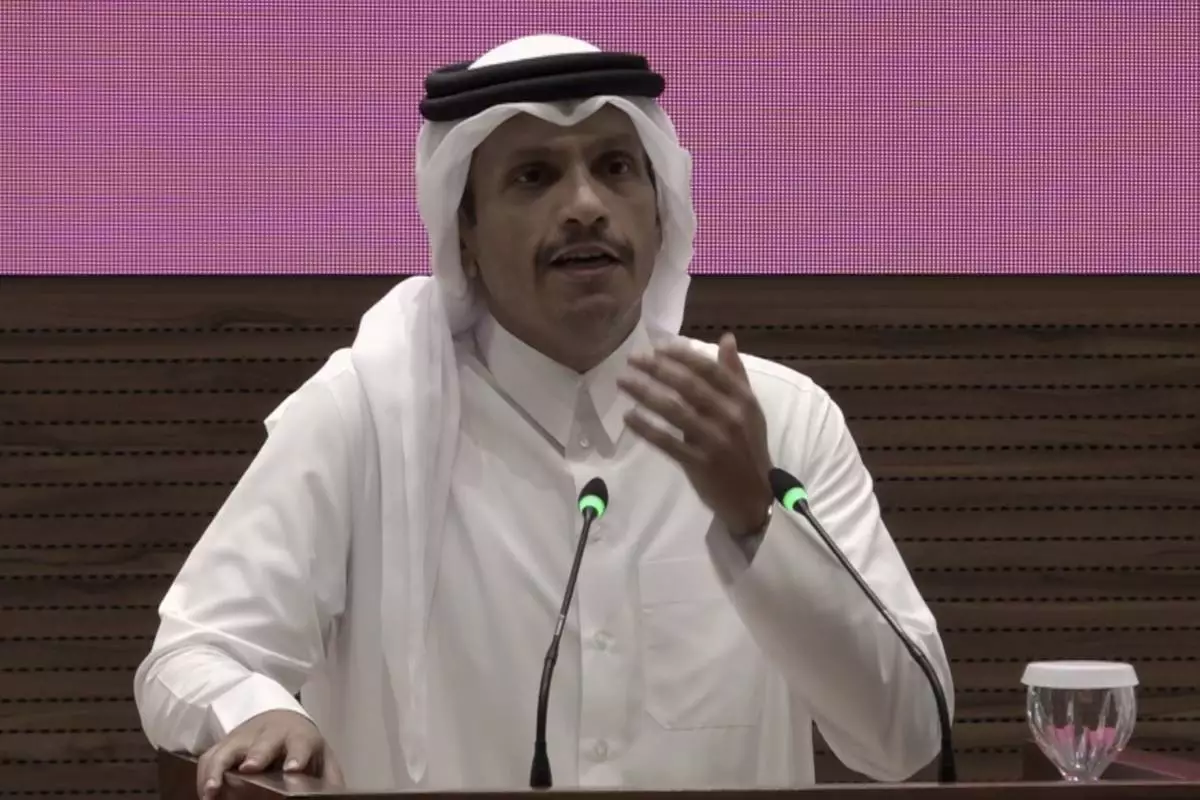
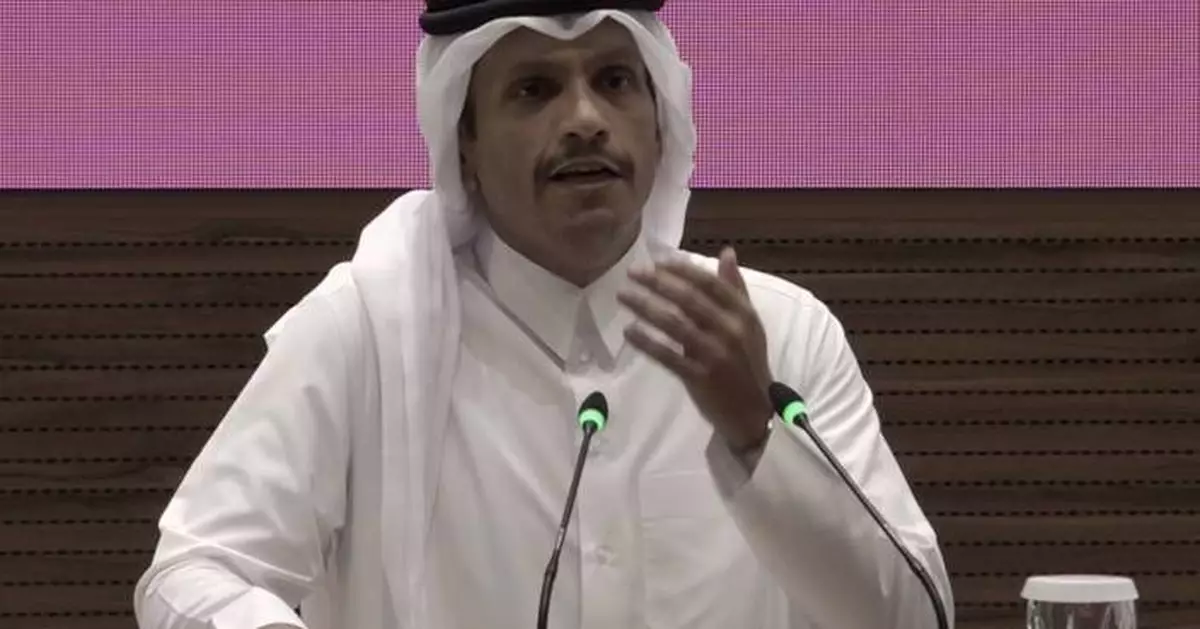
In this framegrab taken from video Qatar Prime Minister and Foreign Minister Sheikh Mohammed bin Abdulrahman bin Jassim Al Thani addresses the press in Doha, Qatar, Tuesday Sept. 9, 2025,(AP Photo)
In this framegrab taken from video Qatar Prime Minister and Foreign Minister Sheikh Mohammed bin Abdulrahman bin Jassim Al Thani addresses the press in Doha, Qatar, Tuesday Sept. 9, 2025,(AP Photo)
PHOENIX (AP) — UConn's Geno Auriemma was not a happy man.

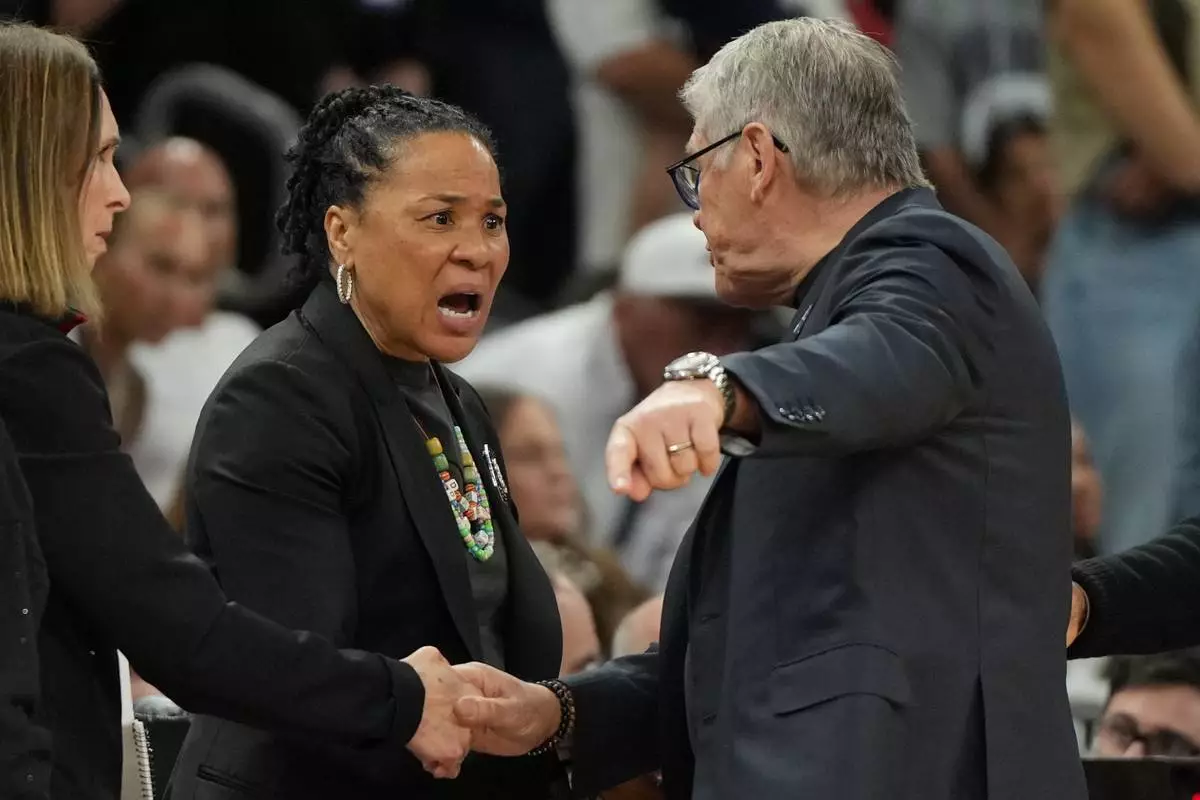
With the officiating. With his team's performance. With South Carolina coach Dawn Staley.

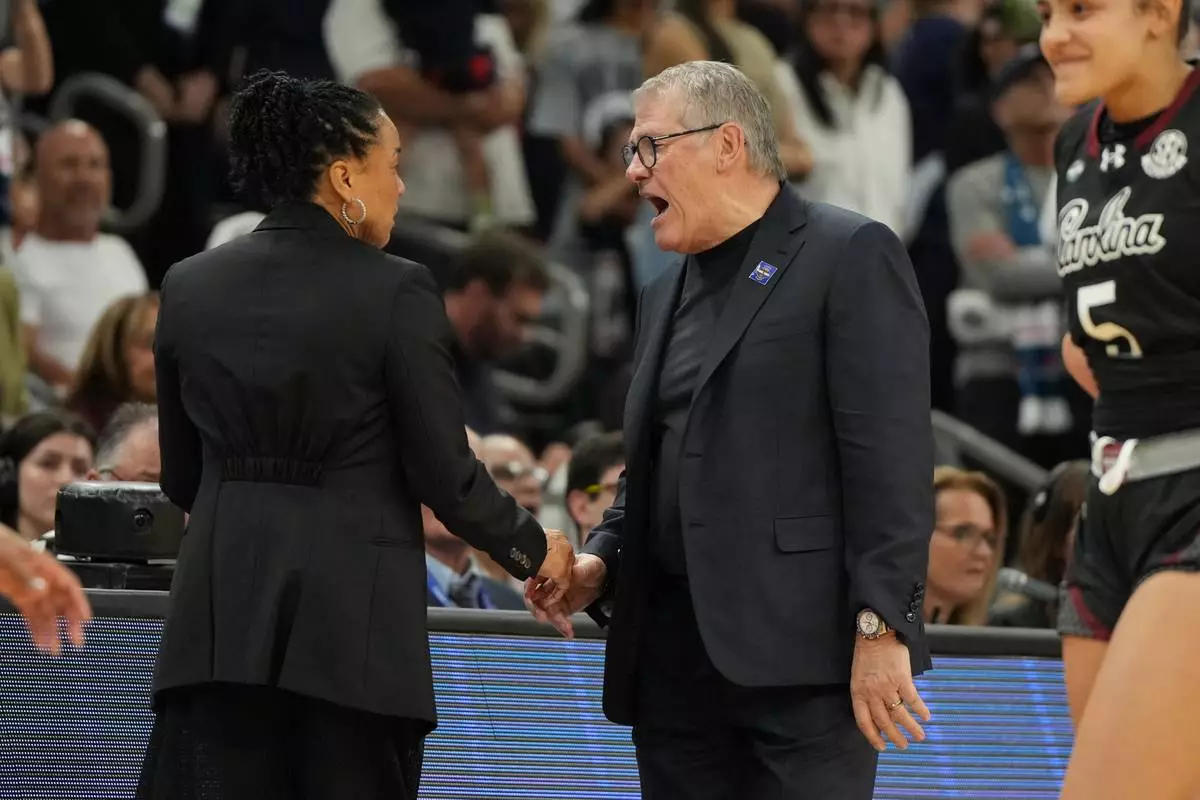
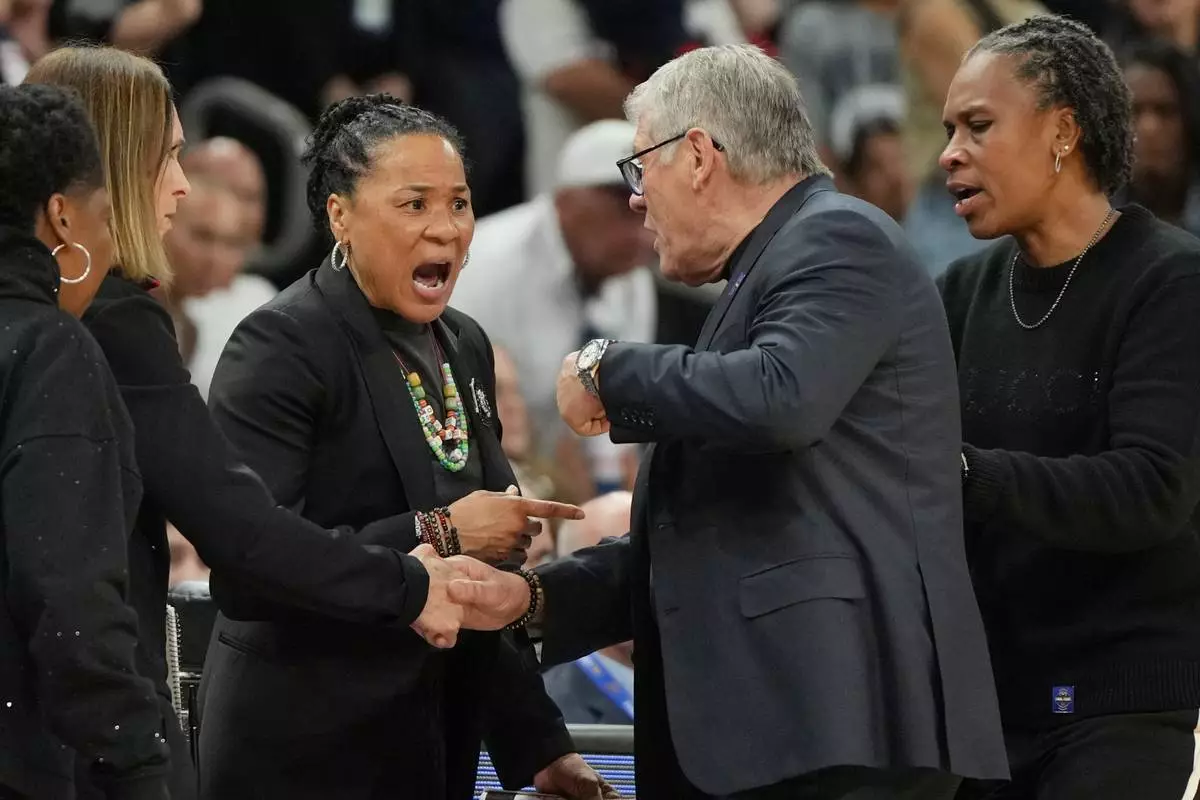
The Huskies coach ripped into the officiating during a live TV interview and then had a heated argument with Staley in the final seconds of their 62-48 loss to the Gamecocks. But a rough night for UConn stars Sarah Strong and Azzi Fudd was the main cause of the Huskies' poor showing in the national semifinals of the women's Final Four on Friday night.

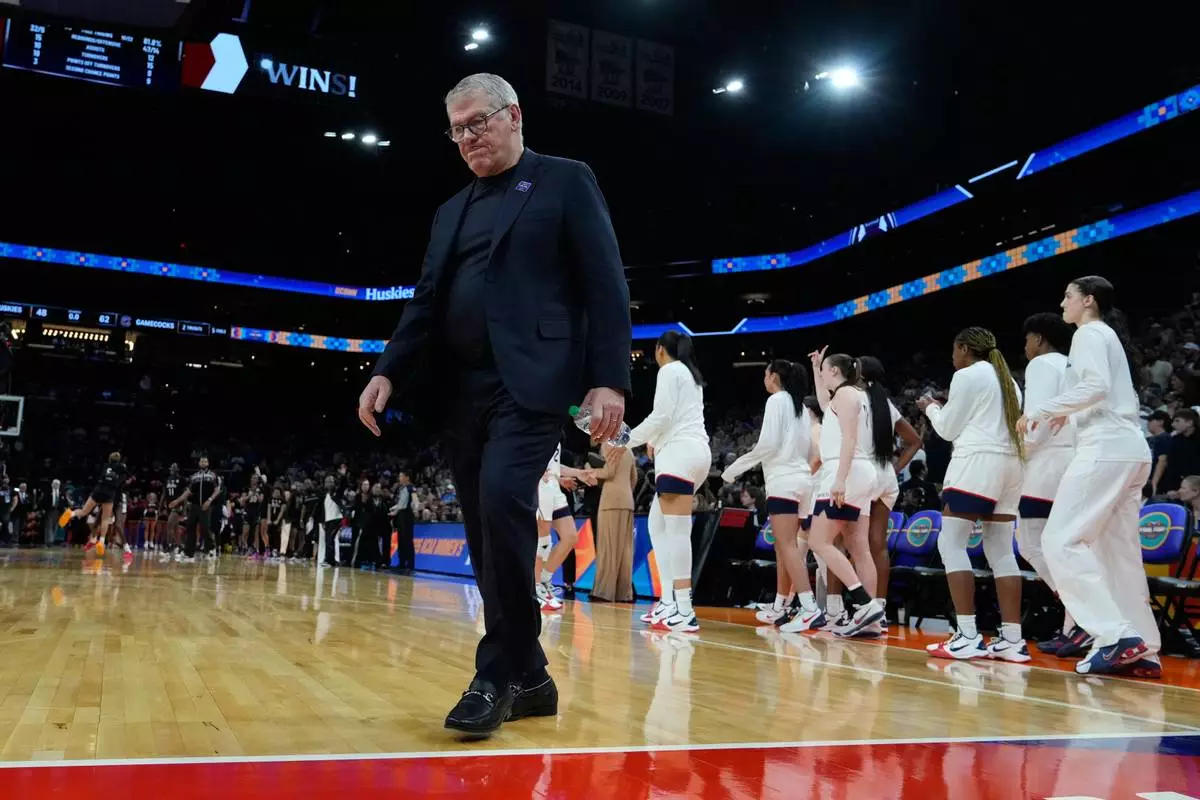
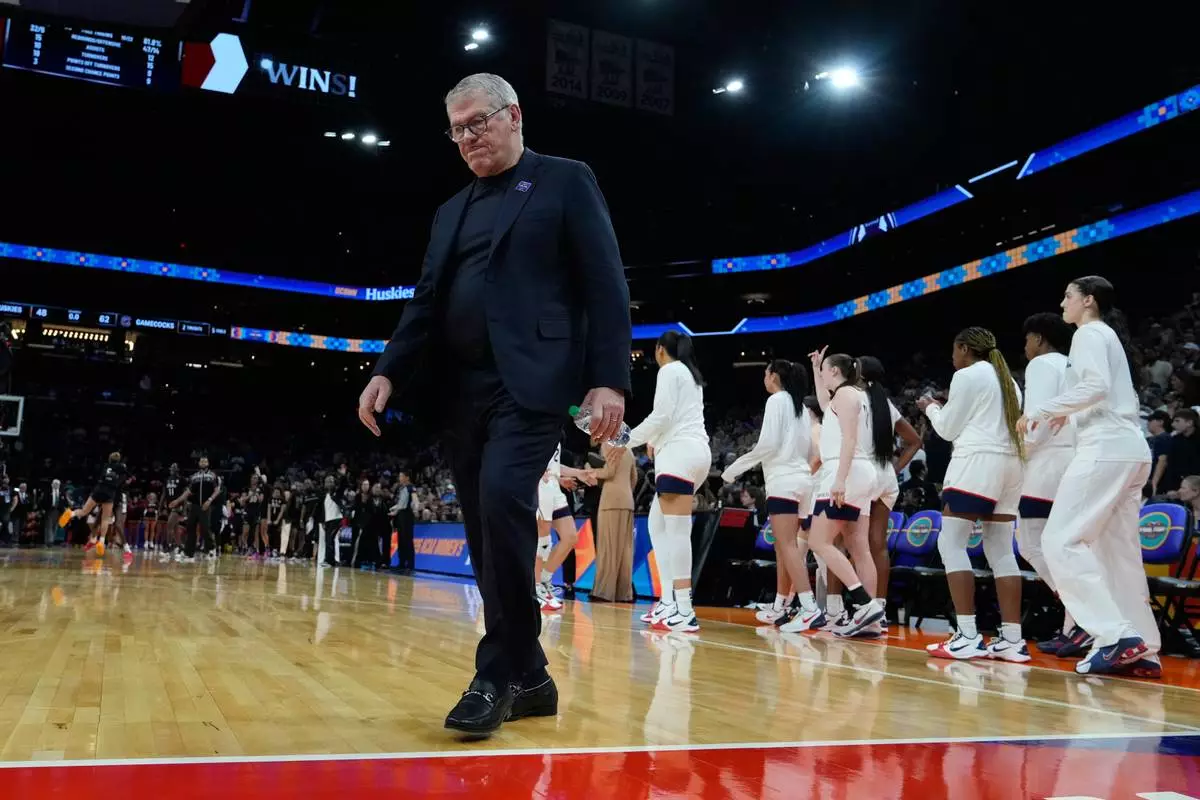
A minute after his sideline blowup, Auriemma stalked off the floor alone, stewing over the nightmare performance.

Fudd — a senior — shouldered the blame, saying she felt she let the team down.

“I thought some of our shots were a little rushed, some of our offense was a little rushed, out of pace,” Fudd said. “But when we got a lot of good looks, a lot of shots in our offense, shots that we are used to taking, we just didn’t hit very many.”

The Huskies hadn't faced much on-court adversity this season, winning almost all of their previous 38 games by a lopsided margin. Once it hit on Friday, UConn wasn't able to respond.

Auriemma said the officiating didn't help.

“There were six fouls called that quarter — all of them against us," Auriemma said on the broadcast at the end of the third quarter. "And they’ve been beating the (expletive) out of our guys down there the entire game. I’m not making excuses, ’cause we haven’t been able to make a shot. But this is ridiculous.

“Their coach rants and raves on the sideline and calls the referee some names you don’t want to hear. And now we get 6 to 0, and I got a kid with a ripped jersey, and they go, ‘I didn’t see it.’ Come on, man. It’s for a national championship.”

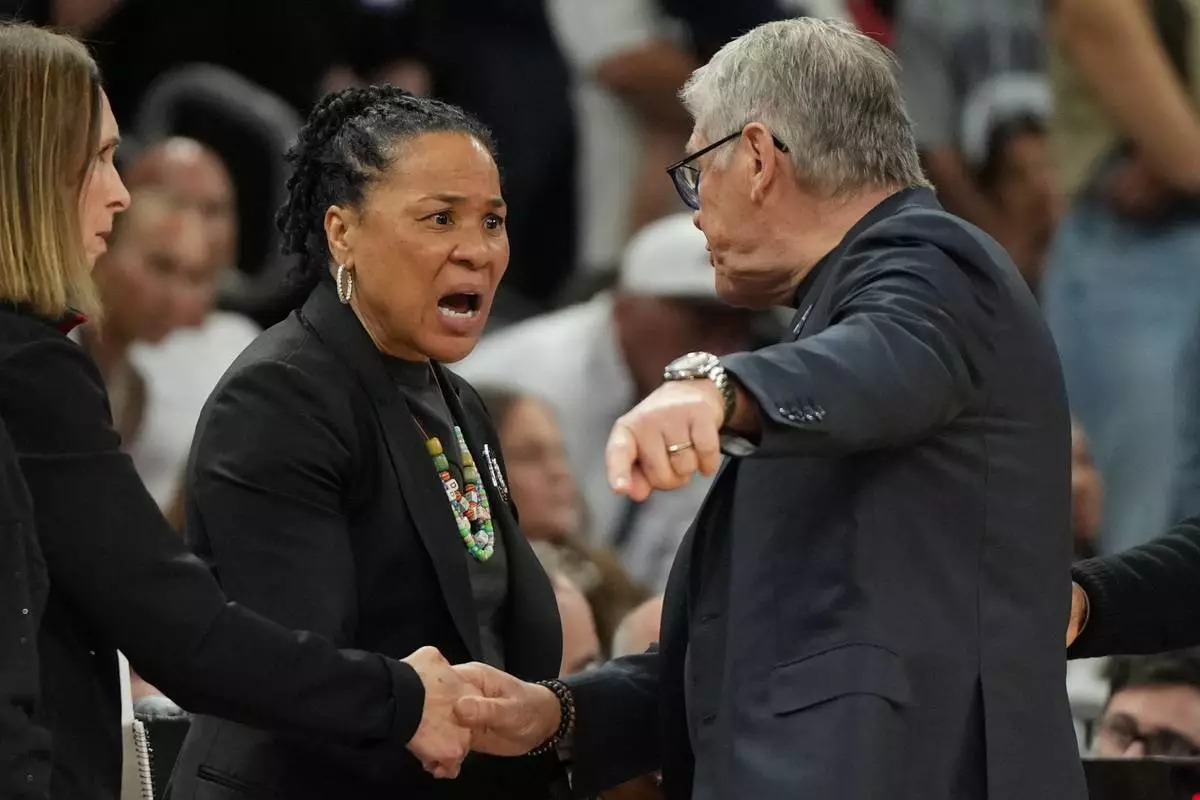
Auriemma wasn't finished showing his displeasure. The 72-year-old coach walked toward Staley in the final seconds of the game before the two had an angry exchange, with assistants having to get in between them. Auriemma blamed the dustup on Staley not following the proper protocol for a pregame handshake.

Once the game finally ended, Auriemma slowly walked off the court and down the tunnel without a postgame handshake with the Gamecocks. The teams did shake hands and Auriemma apologized for his behavior on Saturday.

UConn has relied all season on Strong and Fudd, a pair of All-America selections who were steady throughout the season. Against South Carolina, Strong finished with just 12 points on 4-of-16 shooting. Fudd scored eight on 3-of-15 shooting, including 2 of 9 from long range.

The Huskies' lone offensive bright spot came midway through the third quarter. Kayleigh Heckel, Blanca Quiñonez and Fudd each hit a 3-pointer in a 90-second span to cut the deficit to 40-39, but UConn was never able to take the lead. South Carolina took a 44-39 advantage into the fourth quarter and slowly pulled away.

UConn scored just nine points in the fourth, shooting 2 of 14 from the field. The 48 points were easily a season low. The Huskies were also dominated on the glass, with South Carolina holding a 47-32 advantage.

It's true that it was a physical game. Bodies were flying under the basket for the majority of the night for both teams. UConn was whistled for 17 fouls, while South Carolina was called for just eight.

The problem for Strong and Fudd was they couldn't hit shots even when they had a little space to operate. The 6-foot-2 Strong — AP's Player of the Year — was bothered by South Carolina's interior size, with several of her inside shots rattling in and out.

“Well, sometimes we do forget she’s a sophomore,” Auriemma said. “She’s carried a huge load for this team. An awful lot falls on her. Tonight she’ll be the first to tell you that she is not proud of how her game went today.”

Strong's teammates couldn't pick up the slack. Ashlynn Shade finished with 10 points and Quiñonez added seven. Heckel missed a layup late in the game and the broadcast showed her starting to cry walking back down the court.

Teammates encouraged her and one even lifted her chin, but the damage was done.

UConn’s 54-game winning streak is over.

AP March Madness bracket: https://apnews.com/hub/ncaa-womens-bracket and coverage: https://apnews.com/hub/march-madness

South Carolina head coach Dawn Staley, center, and UConn head coach Geno Auriemma argue after a woman's NCAA college basketball tournament semifinal game at the Final Four, Friday, April 3, 2026, in Phoenix. (AP Photo/Rick Scuteri)

South Carolina head coach Dawn Staley, center, and UConn head coach Geno Auriemma argue after a woman's NCAA college basketball tournament semifinal game at the Final Four, Friday, April 3, 2026, in Phoenix. (AP Photo/Rick Scuteri)

UConn head coach Geno Auriemma reacts after during the second half of a woman's NCAA college basketball tournament semifinal game between UConn and South Carolina at the Final Four, Friday, April 3, 2026, in Phoenix. (AP Photo/Ross D. Franklin)

UConn head coach Geno Auriemma reacts after during the second half of a woman's NCAA college basketball tournament semifinal game between UConn and South Carolina at the Final Four, Friday, April 3, 2026, in Phoenix. (AP Photo/Ross D. Franklin)

South Carolina head coach Dawn Staley, left, and UConn head coach Geno Auriemma argue after a woman's NCAA college basketball tournament semifinal game at the Final Four, Friday, April 3, 2026, in Phoenix. (AP Photo/Rick Scuteri)

South Carolina head coach Dawn Staley, left, and UConn head coach Geno Auriemma argue after a woman's NCAA college basketball tournament semifinal game at the Final Four, Friday, April 3, 2026, in Phoenix. (AP Photo/Rick Scuteri)

South Carolina head coach Dawn Staley, left, and UConn head coach Geno Auriemma argue after a woman's NCAA college basketball tournament semifinal game at the Final Four, Friday, April 3, 2026, in Phoenix. (AP Photo/Rick Scuteri)

South Carolina head coach Dawn Staley, left, and UConn head coach Geno Auriemma argue after a woman's NCAA college basketball tournament semifinal game at the Final Four, Friday, April 3, 2026, in Phoenix. (AP Photo/Rick Scuteri)

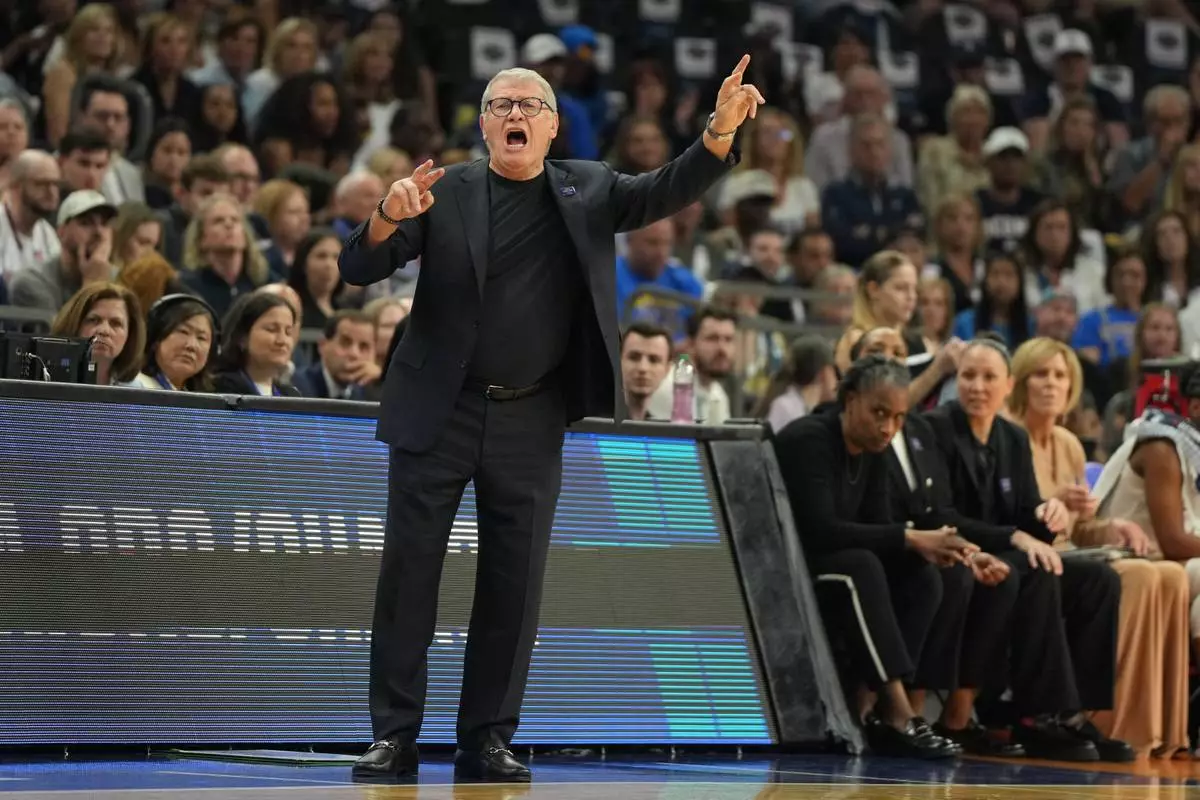
UConn head coach Geno Auriemma motions towards the court during the first half of a woman's NCAA college basketball tournament semifinal game between UConn and South Carolina at the Final Four, Friday, April 3, 2026, in Phoenix. (AP Photo/Rick Scuteri)

UConn head coach Geno Auriemma motions towards the court during the first half of a woman's NCAA college basketball tournament semifinal game between UConn and South Carolina at the Final Four, Friday, April 3, 2026, in Phoenix. (AP Photo/Rick Scuteri)

UConn head coach Geno Auriemma reacts after during the second half of a woman's NCAA college basketball tournament semifinal game between UConn and South Carolina at the Final Four, Friday, April 3, 2026, in Phoenix. (AP Photo/Ross D. Franklin)

UConn head coach Geno Auriemma reacts after during the second half of a woman's NCAA college basketball tournament semifinal game between UConn and South Carolina at the Final Four, Friday, April 3, 2026, in Phoenix. (AP Photo/Ross D. Franklin)

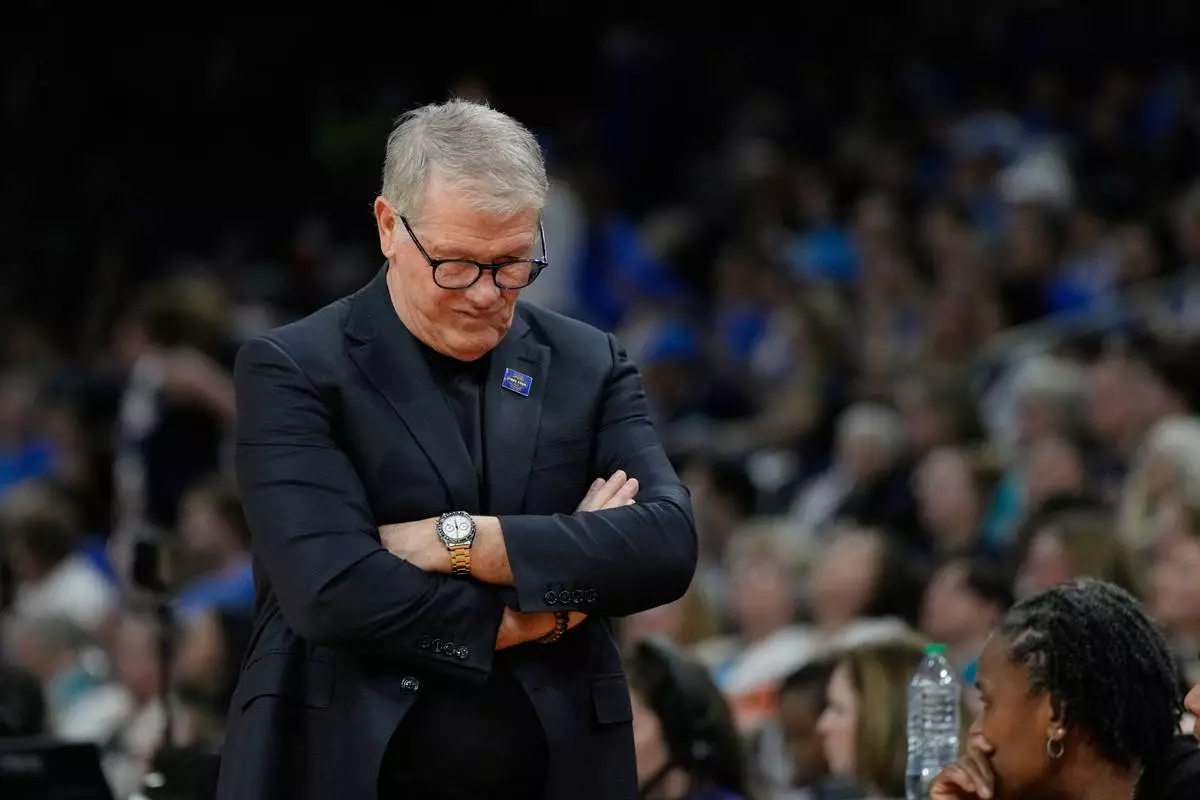
UConn head coach Geno Auriemma reacts during the second half of a woman's NCAA college basketball tournament semifinal game between UConn and South Carolina at the Final Four, Friday, April 3, 2026, in Phoenix. (AP Photo/Ross D. Franklin)

UConn head coach Geno Auriemma reacts during the second half of a woman's NCAA college basketball tournament semifinal game between UConn and South Carolina at the Final Four, Friday, April 3, 2026, in Phoenix. (AP Photo/Ross D. Franklin)

South Carolina head coach Dawn Staley, left, and UConn head coach Geno Auriemma argue after a woman's NCAA college basketball tournament semifinal game at the Final Four, Friday, April 3, 2026, in Phoenix. (AP Photo/Rick Scuteri)

South Carolina head coach Dawn Staley, left, and UConn head coach Geno Auriemma argue after a woman's NCAA college basketball tournament semifinal game at the Final Four, Friday, April 3, 2026, in Phoenix. (AP Photo/Rick Scuteri)

Recommended Articles