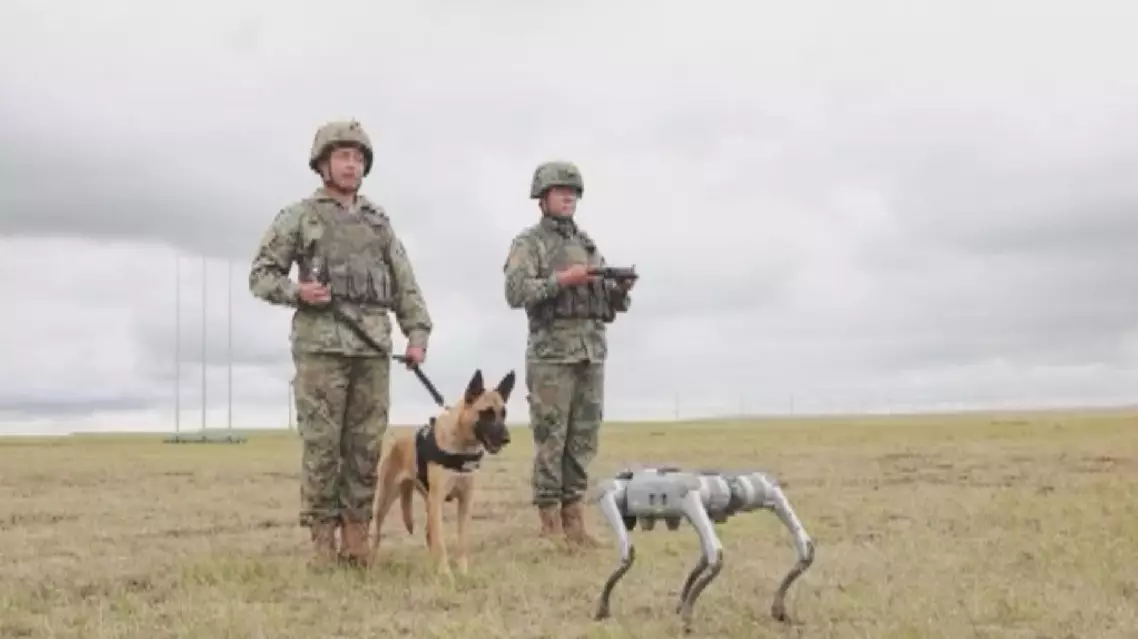
The training of robotic dogs and military dogs was featured in the China-Russia-Mongolia joint border defense exercise which concluded on Tuesday.
Code-named "Border Defense Cooperation 2025," the two-day exercise took place in a frontier area where the three countries meet.
The dog training session was hosted on Russian territory, focusing on six key areas of obstacle navigation, drug search, explosives detection, item identification, pursuit and apprehension, and concealed target search.
Robotic dogs were integrated into the exercise, working alongside military dogs to perform search, detection, and identification tasks.
This joint exercise aimed to strengthen friendship between the border defense forces of the three nations and enhance collective capability to address security threats.
"This joint exercise not only tested our trilateral capacity to respond to emergencies but also is an important step in solidifying the traditional friendship, deepening strategic mutual trust, and enhancing security cooperation among China, Russia, and Mongolia," said Chen Jiang, a participating Chinese soldier.
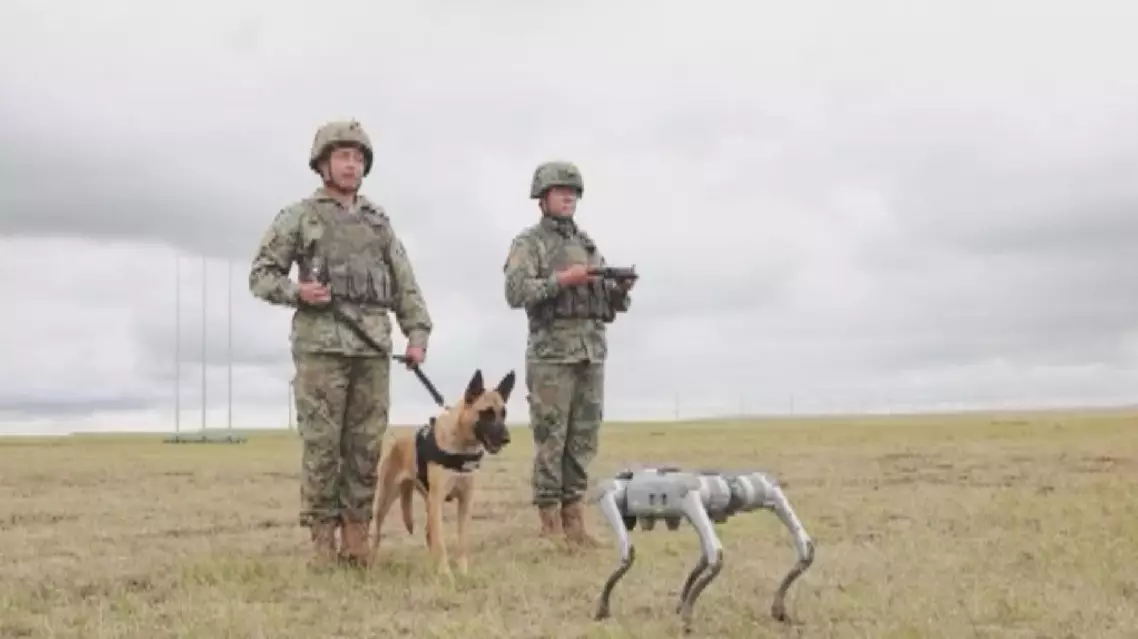
Robotic, military dog training featured in China-Russia-Mongolia border defense exercise

The European Commission's autumn 2025 economic forecast shows that driven by a surge in exports in anticipation of U.S. tariff increases, the European Union's (EU) economy maintained growth in the third quarter of this year, and it is expected to continue expanding at a moderate pace over the forecast horizon.
In the report released on Monday, the Commission said the gross domestic product (GDP) of the EU is expected to grow 1.4 percent in 2025, with the eurozone expanding 1.3 percent. Growth in 2026 is forecast at 1.4 percent for the EU and 1.2 percent for the eurozone, both slightly lower than projections made in May.
Eurozone headline inflation is projected to ease to 2.1 percent this year from 2.4 percent in 2024. Inflation across the EU is seen declining from 2.6 percent in 2024 to 2.2 percent in 2027, remaining slightly above the eurozone rate.
Due to the increase in defence spending, the EU's fiscal deficit is expected to rise to 3.4 percent of GDP in 2027 from 3.1 percent in 2024. The EU debt-to-GDP ratio is projected to rise from 84.5 percent in 2024 to 85 percent in 2027, with the eurozone ratio set to rise from around 88 percent to 90.4 percent.
The forecast noted that globally, trade barriers have reached historic highs, and the EU now faces higher average tariffs on exports to the U.S. compared with the spring forecast. Persistent trade policy uncertainty continues to weigh on economic activity, with tariffs and non-tariff restrictions potentially constraining EU growth more than expected. Any escalation in geopolitical tensions could intensify supply shocks, it noted.
EU expects economy to expand moderately