France's finances and politics are in turmoil. President Emmanuel Macron has just appointed his fourth prime minister in 12 months, the deficit is out of control, borrowing costs are rising and parliament can’t muster a majority to tackle spending.
It's a serious comedown for a major industrial power that has the second-largest economy in Europe.
Here's how France found itself in this state of affairs:
France last balanced its budget in 1973, and maintained a generous welfare state with strong worker protections. That worked for years so long as solid economic growth swept tax revenue into government coffers and kept deficits from getting out of hand. First as economy minister and then from 2017 as president, Macron took steps to improve growth and state finances, cutting taxes and spending and raising the retirement age from 62 to 64.
Accumulated debt was high — over 90% of annual gross domestic product from 2008 on — but manageable due to steady growth, near-zero interest rates for much of the past decade, and France’s solid credit rating that let it borrow on favorable terms.
Then came the pandemic, followed by an energy crisis after Russia cut off most natural gas supplies over its 2022 invasion of Ukraine. The government spent heavily on subsidies to keep businesses afloat and shield consumers from higher gas and electric bills. At the same time, a global shift occurred in interest rates, sending them suddenly higher.
Almost overnight, the pile of accumulated debt jumped: from 98% of GDP in pre-pandemic year 2019 to 114% in 2020, where it has stayed. The annual deficit last year ballooned beyond forecasts to 5.8%, well above the 3% limit under European Union rules.
France is hardly alone in loading up on debt in recent years. Its debt pile is smaller than Greece's, which is 152% of GDP, and Italy's, which is 138%. It's also lower than the U.S.'s 119%. France, however, lacks the U.S. advantage of having the world's dominant reserve currency which supports Washington's ability to borrow, while Greece has been running budget surpluses after being bailed out and Italy reduced its deficit last year. Greek 10-year bonds now yield 3.3%, indicating the market views them as less risky than France's.
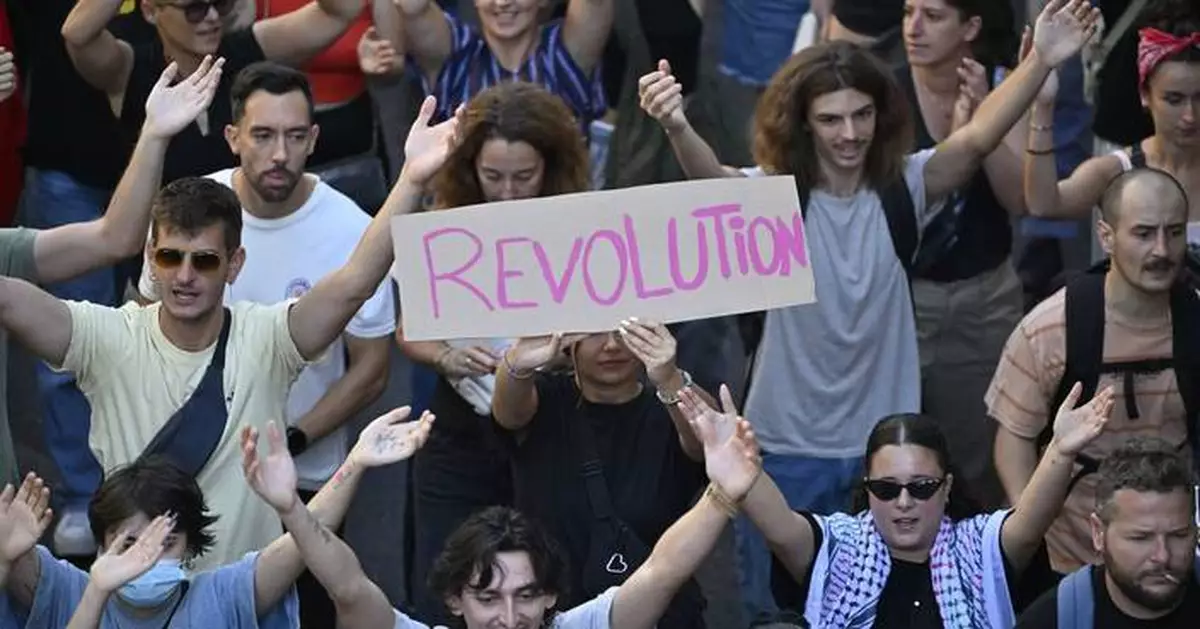
Macron called new elections last year after his pro-European party took a beating in elections for the European parliament from Marine Le Pen's anti-immigration, nationalist party. The new French parliament wound up sharply divided, with a leftist coalition facing off against Le Pen's party and with centrists in between. There’s been no functioning majority — except to say “no” to austerity and topple Prime Ministers Gabriel Attal, Michel Barnier and Francois Bayrou in quick succession.
Taxes in France are 43.8% of GDP, the highest in the EU. Spending is also high. The money goes for pensions, civil servant salaries, and recently increased defense spending due to the perceived threat from an increasingly aggressive Russia.
With interest rates much higher these days, interest costs have reached 67 billion euros a year, money that is not available for spending on schools, pensions or heath care. And high taxes leave less room for increases without hurting growth.
With a deficit that big, France will have to enact some mix of tax increases and spending cuts equal to around 5% of gross domestic product over the next several years, according to economist Zsolt Darvas, senior fellow at the Bruegel think tank in Brussels. That’s doable — Greece did even more after its debt crisis in 2010-2015 — but a heavy lift for any government.
And it's not happening yet. The National Assembly balked at Bayrou’s plan to start putting finances on a sustainable path by eliminating two public holidays and cutting 44 billion euros ($55.4 billion) in spending, toppling him in a confidence vote and leaving investors wondering when exactly legislators would confront the deficit. Macron named Sebastien Lecornu as Bayrou's successor on Tuesday.
When governments spend more than they take in in taxes, they fill the gap, or annual deficit, by selling bonds to investors. When the debts come due, governments pay them off by selling new bonds, which usually works fine — so long as bond investors are confident that the government is managing its finances well.
That confidence has been eroded by the deadlock in parliament. As a result, markets are demanding higher interest rates on French borrowing to compensate them for the additional risk that the political logjam will continue, the deficit will remain high, and the bonds will fall in value or — still very unlikely — that France might not pay at all.
The outside scenario France must avoid is a death spiral in which investor doubts push borrowing costs higher, and high borrowing costs increase the deficit and fuel more investor doubts in a self-reinforcing doom loop, like the one that sank Greece and threatened Italy in the early 2010s.
“A genuine financial crisis with a self-reinforcing doom loop ... remains quite unlikely for the time being,” said Holger Schmieding, chief economist at Berenberg bank. “Of course, we cannot rule it out completely.”
If legislators “continue to reject common sense and insist on unfinanceable demands, the risk could rise,” he said.
His base case is: France “continues to muddle through” with mediocre growth, somewhat higher borrowing costs and a small deficit reduction.
In a case of extreme and unwarranted market panic that threatens France's ability to borrow, the European Central Bank could intervene by buying French bonds and driving down the government’s borrowing costs to sustainable levels. But the ECB reserves such aid for countries pursuing “sound and sustainable” policies, meaning the central bank won’t bail out politicians who refuse to act.
The same applies to the eurozone bailout fund, the European Stability Mechanism, and the International Monetary Fund. Help from them imposes even stricter conditions on spending and policy, and France would still have to make the fiscal adjustment anyway.
Economist Darvas said there’s no rescue program that would spare France having to bite the bullet. “It’s very hard to imagine that France, such a big and proud country, would go cap in hand to the ESM and possibly the IMF,” Darvas said. “So again we come back to the same position... that in whatever world, France will have to do the fiscal adjustment."
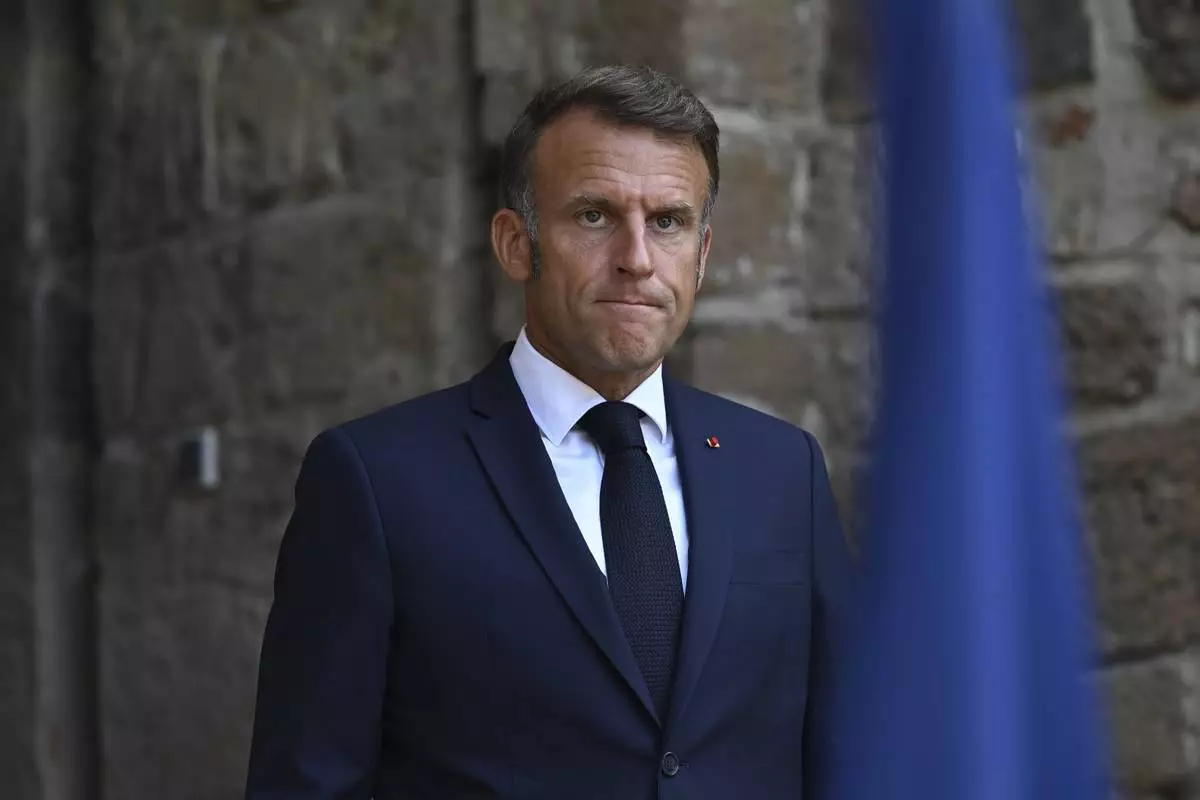
FILE - French President Emmanuel Macron arrives to speak after attending a video conference with members of the so-called "coalition of the willing", Sunday, Aug. 17, 2025 at the Fort de Bregancon in Bormes-les-Mimosas, southern France. (AP Photo/Philippe Magoni, Pool, File)
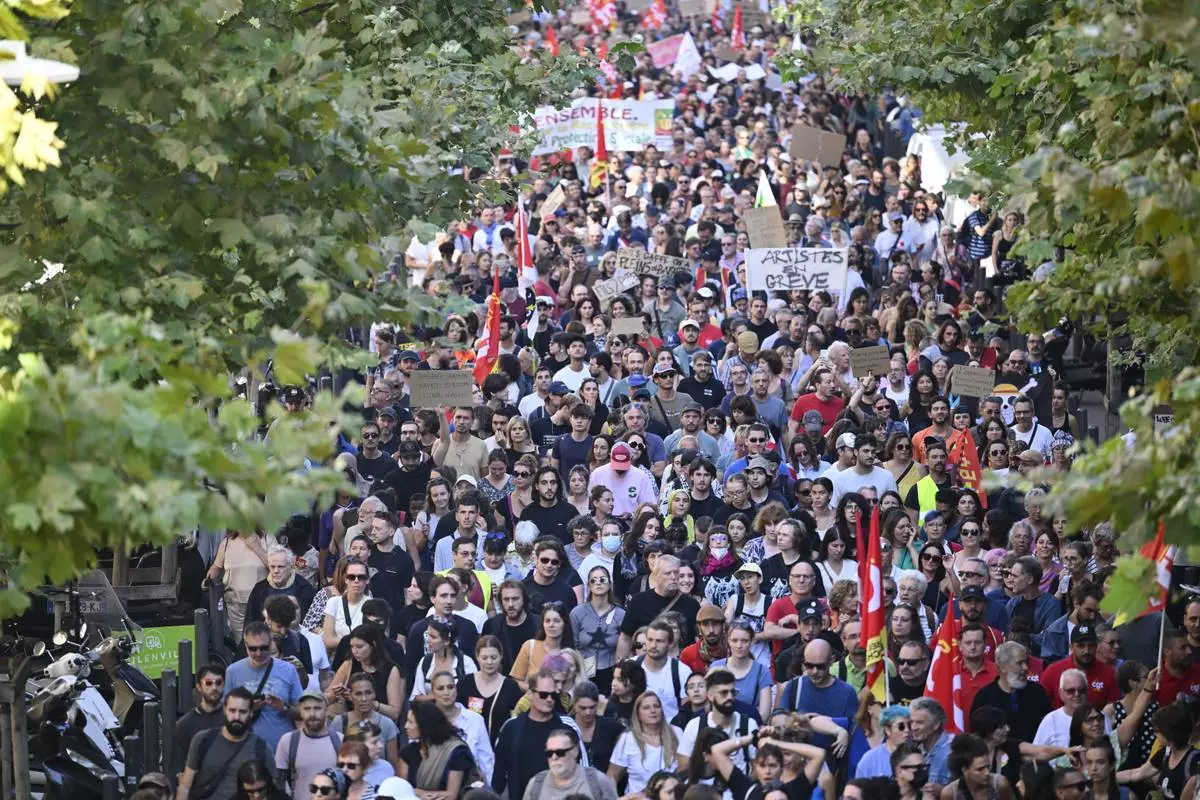
Protesters march during a rally of the "Block Everything" movement in Marseille, south of France, Wednesday, Sept. 10, 2025. (AP Photo/Philippe Magoni)
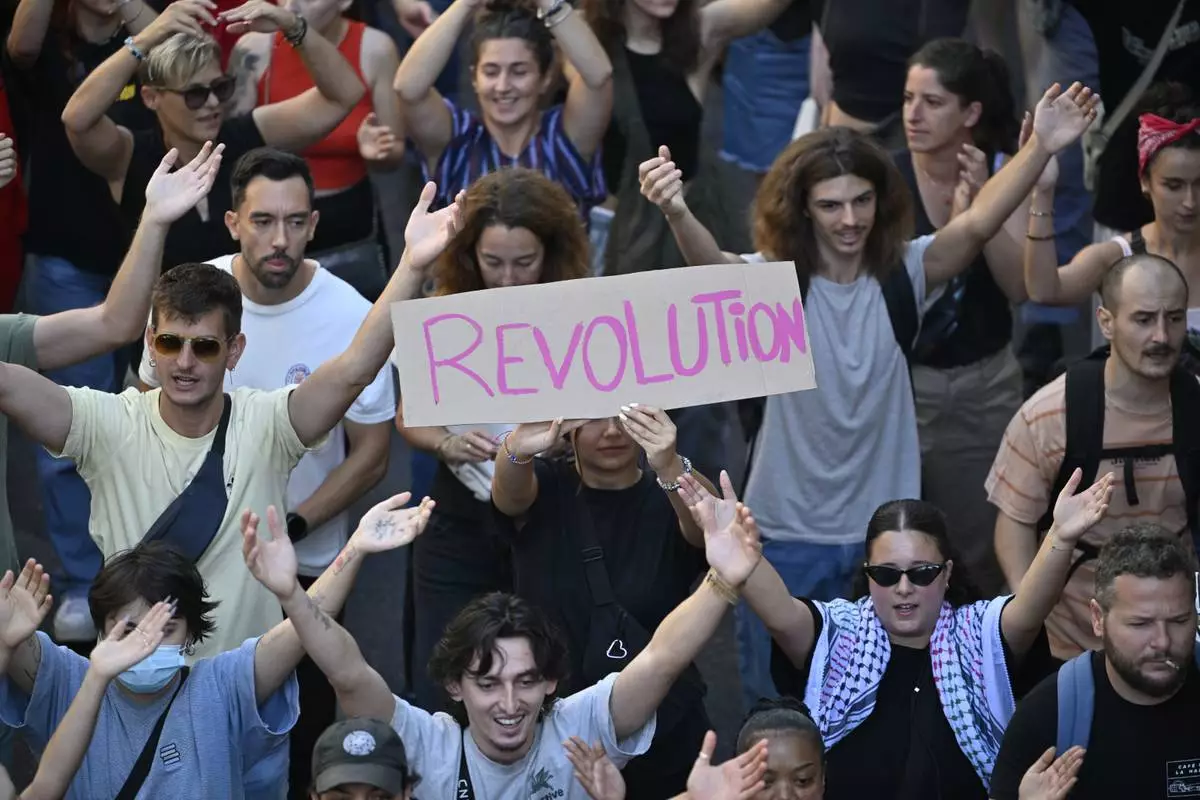
Protesters march during a rally of the "Block Everything" movement in Marseille, south of France, Wednesday, Sept. 10, 2025. (AP Photo/Philippe Magoni)
YANGON, Myanmar (AP) — Myanmar began a second round of voting Sunday in its first general election since the military takeover five years ago.
Voting expanded to additional townships including some areas affected by the civil war between the military government and its armed opponents.
Critics say the polls organized by the military government are neither free nor fair and are an effort by the military to legitimize its rule after seizing power from the elected government of Aung San Suu Kyi in February 2021.
Tom Andrews, a special rapporteur working with the U.N. human rights office, urged the international community Thursday to reject what he called a “sham election,” saying the first round exposed coercion, violence and political exclusion.
“You cannot have a free, fair or credible election when thousands of political prisoners are behind bars, credible opposition parties have been dissolved, journalists are muzzled, and fundamental freedoms are crushed,” Andrews said.
According to the Assistance Association for Political Prisoners, which keeps detailed tallies of arrests and casualties linked to the conflict, more than 22,000 people are detained for political offenses, and more than 7,600 civilians have been killed by security forces since 2021.
The army’s takeover triggered widespread peaceful protests that soon erupted into armed resistance, and the country slipped into a civil war.
A new Election Protection Law imposes harsh penalties and restrictions for virtually all public criticism of the polls. The authorities have charged more than 330 people under new electoral law for leafleting or online activity over the past few months.
Opposition organizations and ethnic armed groups had previously vowed to disrupt the electoral process.
On Sunday, attacks targeting polling stations and government buildings were reported in at least four of the 100 townships holding polls, with two administrative officials killed, independent online media, including Myanmar Now, reported.
Polling stations opened at 6 a.m. in 100 townships across the country, including parts of Sagaing, Magway, Mandalay, Bago and Tanintharyi regions, as well as Mon, Shan, Kachin, Kayah and Kayin states. Many of those areas have recently seen clashes or remain under heightened security, underscoring the risks surrounding the vote.
The election is being held in three phases due to armed conflicts. The first round took place Dec. 28 in 102 of the country’s total 330 townships. A final round is scheduled for Jan. 25, though 65 townships will not take part because of fighting.
Myanmar has a two-house national legislature, totaling 664 seats. The party with a combined parliamentary majority can select the new president, who can name a Cabinet and form a new government. The military automatically receives 25% of seats in each house under the constitution.
Maj. Gen. Zaw Min Tun, the military government's spokesperson, told journalists on Sunday that the two houses of parliament will be convened in March, and the new government will take up its duties in April.
On Sunday, people in Yangon and Mandalay, the two largest cities, cast their ballots in high schools, government buildings and religious buildings.
At more than 10 polling stations visited by Associated Press journalists, voter numbers ranged from about 150 at the busiest site to just a few at others, appearing lower than during the 2020 election when long lines were common.
The military government said there were more than 24 million eligible voters, about 35% fewer than in 2020. The government called the turnout a success, claiming ballots were cast by more than 6 million people, about 52% of the more than 11 million eligible voters in the election's first phase.
Myo Aung, a chief minister of the Mandalay region, said more people turned out Sunday than in the first phase.
Maung Maung Naing, who voted in Mandalay’s Mahar Aung Myay township, said he wanted a government that will benefit the people.
“I only like a government that can make everything better for livelihoods and social welfare,” he said.
Sandar Min, an independent candidate from Yangon’s Latha township, said she decided to contest the election despite criticism because she wants to work with the government for the good of the country. She hopes the vote will bring change that reduces suffering.
“We want the country to be nonviolent. We do not accept violence as part of the change of the country,” Sandar Min said after casting a vote. “We care deeply about the people of this country.”
While more than 4,800 candidates from 57 parties are competing for seats in national and regional legislatures, only six parties are competing nationwide.
The first phase left the military-backed Union Solidarity and Development Party, or USDP, in a dominant position, winning nearly 90% of the contested seats in the first phase in the lower house. It also won a majority of seats in regional legislatures.
Suu Kyi, Myanmar’s 80-year-old former leader, and her party aren’t participating in the polls. She is serving a 27-year prison term on charges widely viewed as spurious and politically motivated. Her party, the National League for Democracy, was dissolved in 2023, after refusing to register under new military rules.
Other parties also refused to register or declined to run under conditions they deem unfair, while opposition groups have called for a voter boycott.
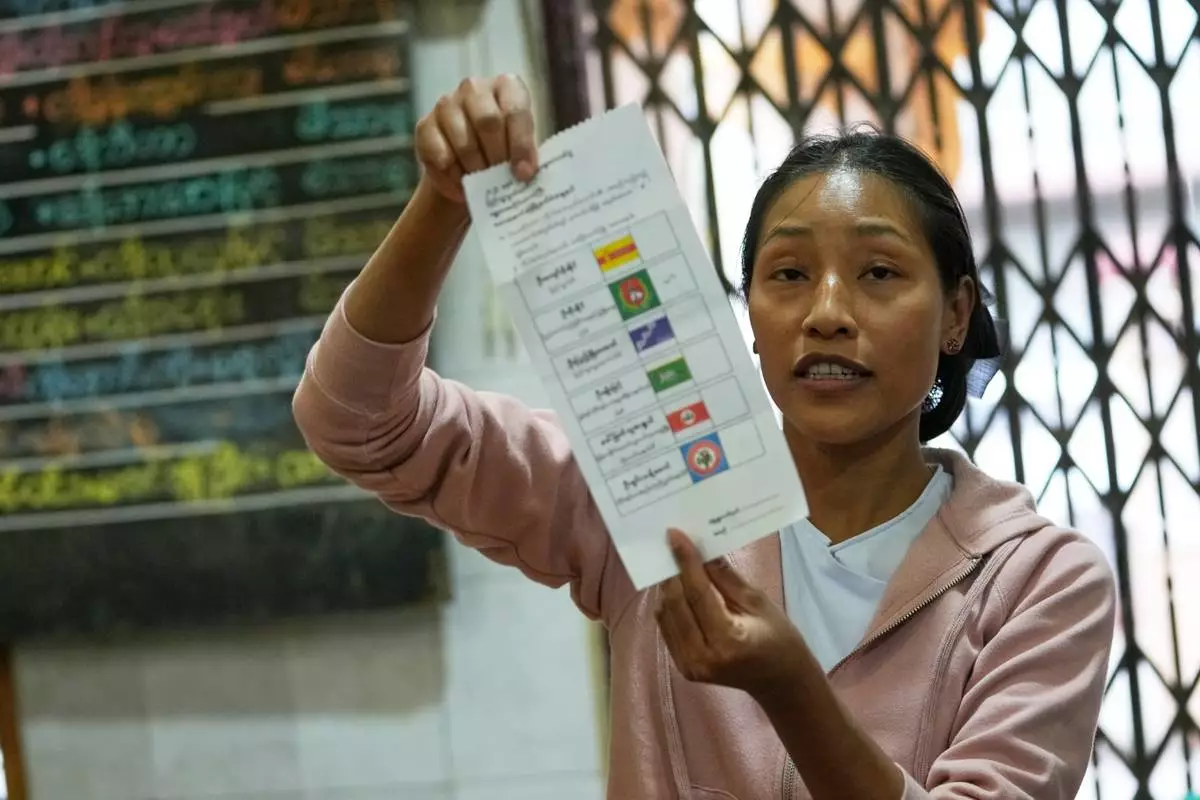
An official of the Union Election Commission counts ballots at a polling station during the second phase of general election in Mandalay, central Myanmar, Sunday, Jan. 11, 2026. (AP Photo/Aung Shine Oo)
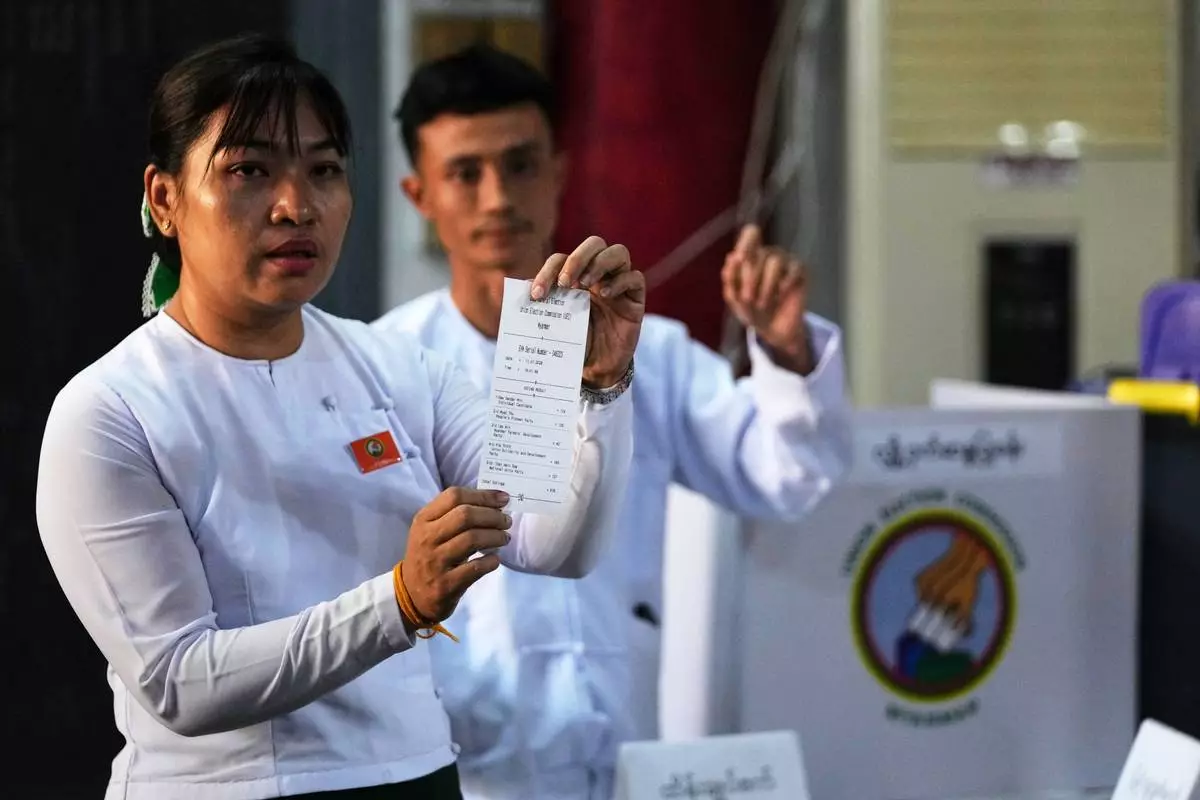
An official of the Union Election Commission shows a slip as they count ballots at a polling station during the second phase of general election in Yangon, Myanmar, Sunday, Jan. 11, 2026. (AP Photo/Thein Zaw)
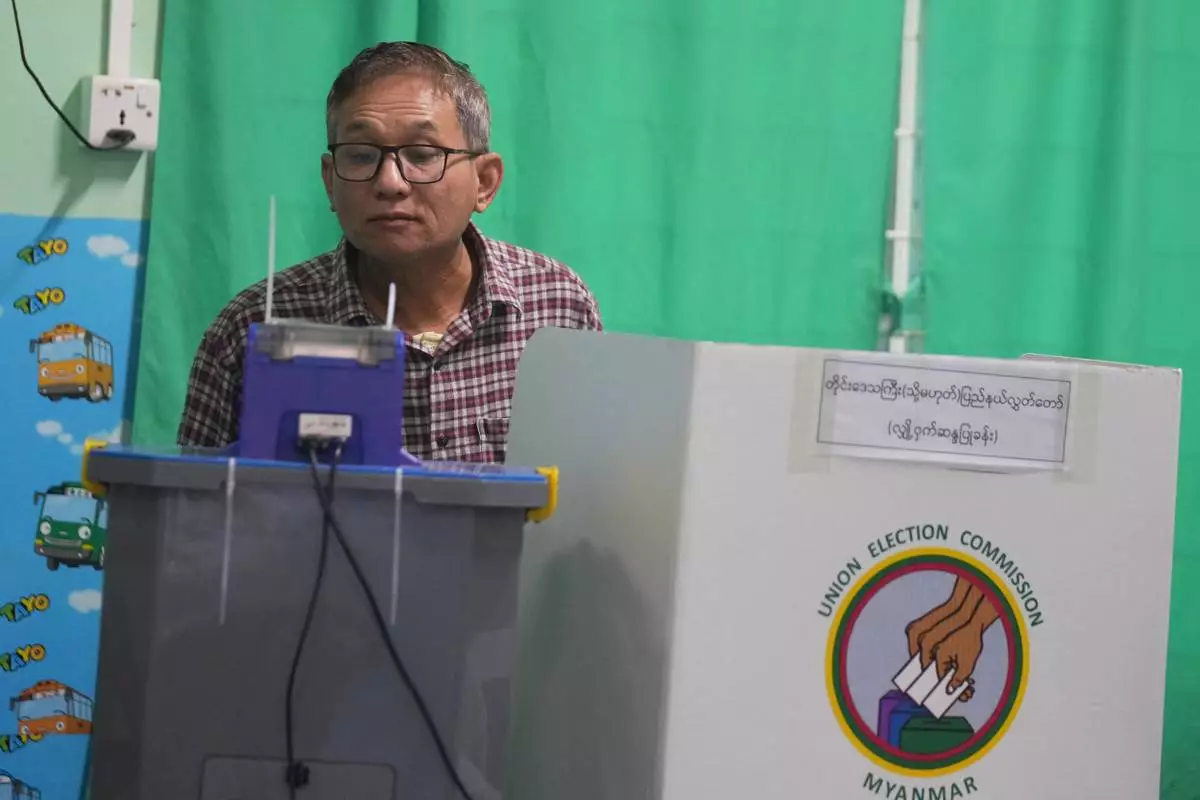
A voter casts ballot at a polling station during the second phase of general election Sunday, Jan. 11, 2026, in Yangon, Myanmar. (AP Photo/Thein Zaw)
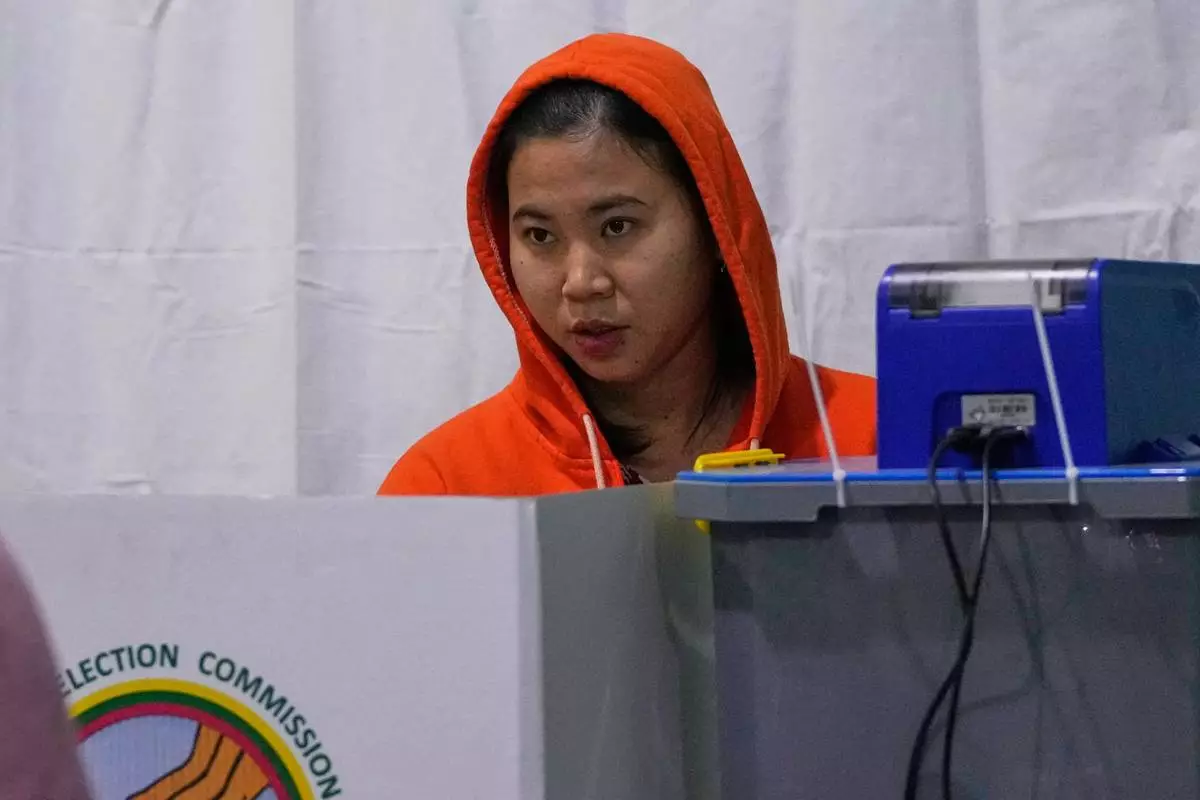
A voter casts ballot at a polling station during the second phase of general election in Mandalay, central Myanmar, Sunday, Jan. 11, 2026. (AP Photo/Aung Shine Oo)
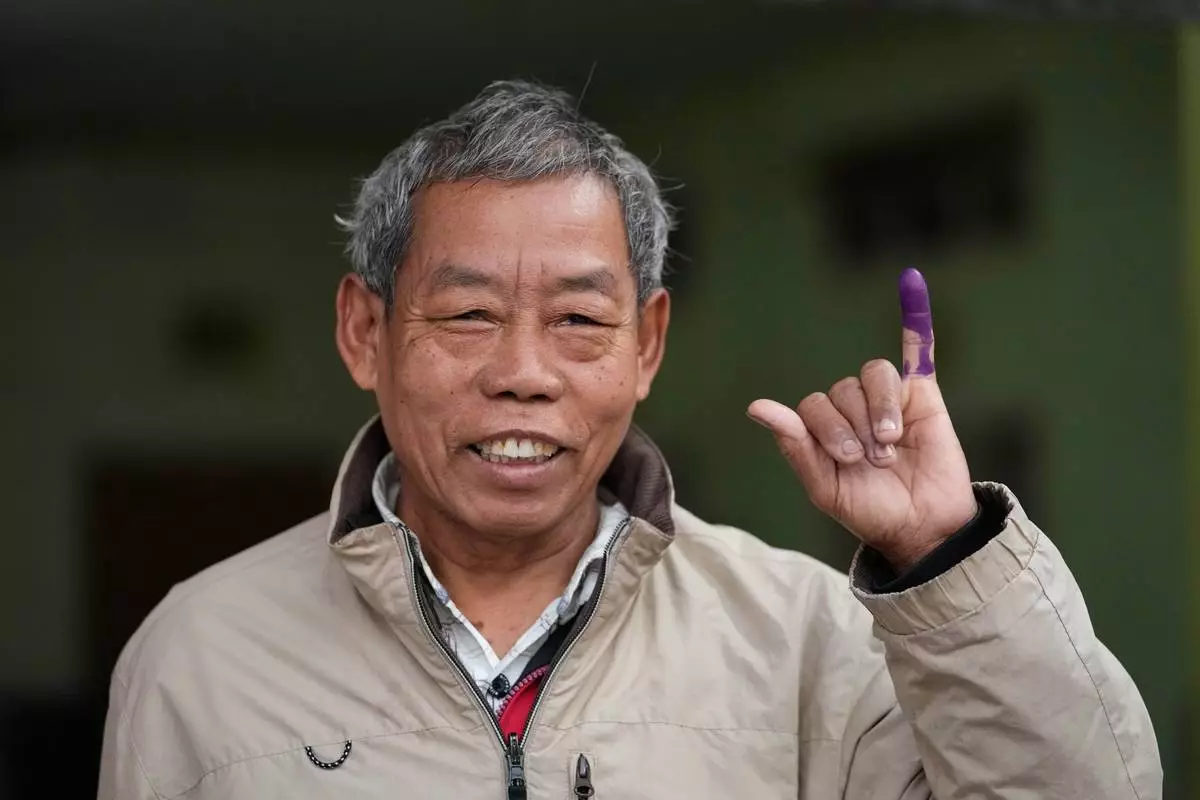
A voter shows his finger, marked with ink to indicate he voted, at a polling station during the second phase of general election in Mandalay, central Myanmar, Sunday, Jan. 11, 2026. (AP Photo/Aung Shine Oo)
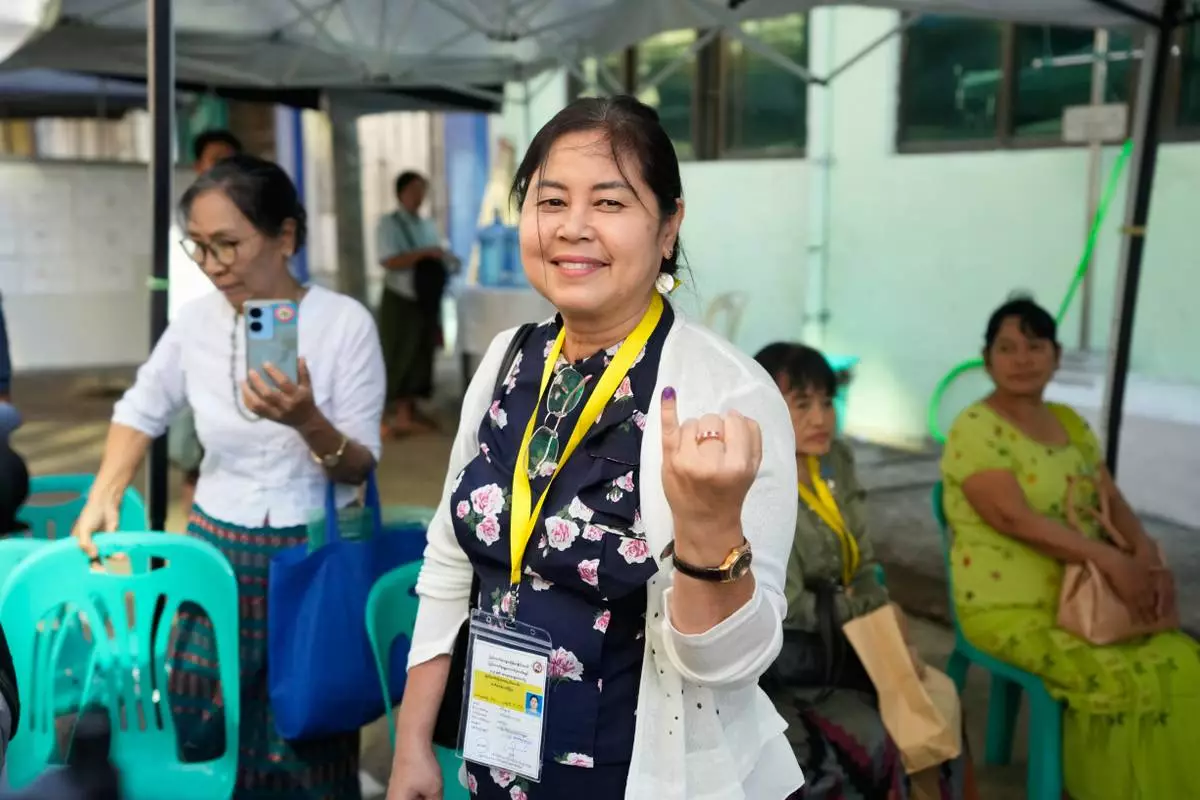
Sandar Min, an individual candidate for an election and former parliament member from ousted leader Aung San Suu Kyi's National League for Democracy (NLD) party, shows off her finger marked with ink indicating she voted at a polling station during the second phase of general election Sunday, Jan. 11, 2026, in Yangon, Myanmar. (AP Photo/Thein Zaw)
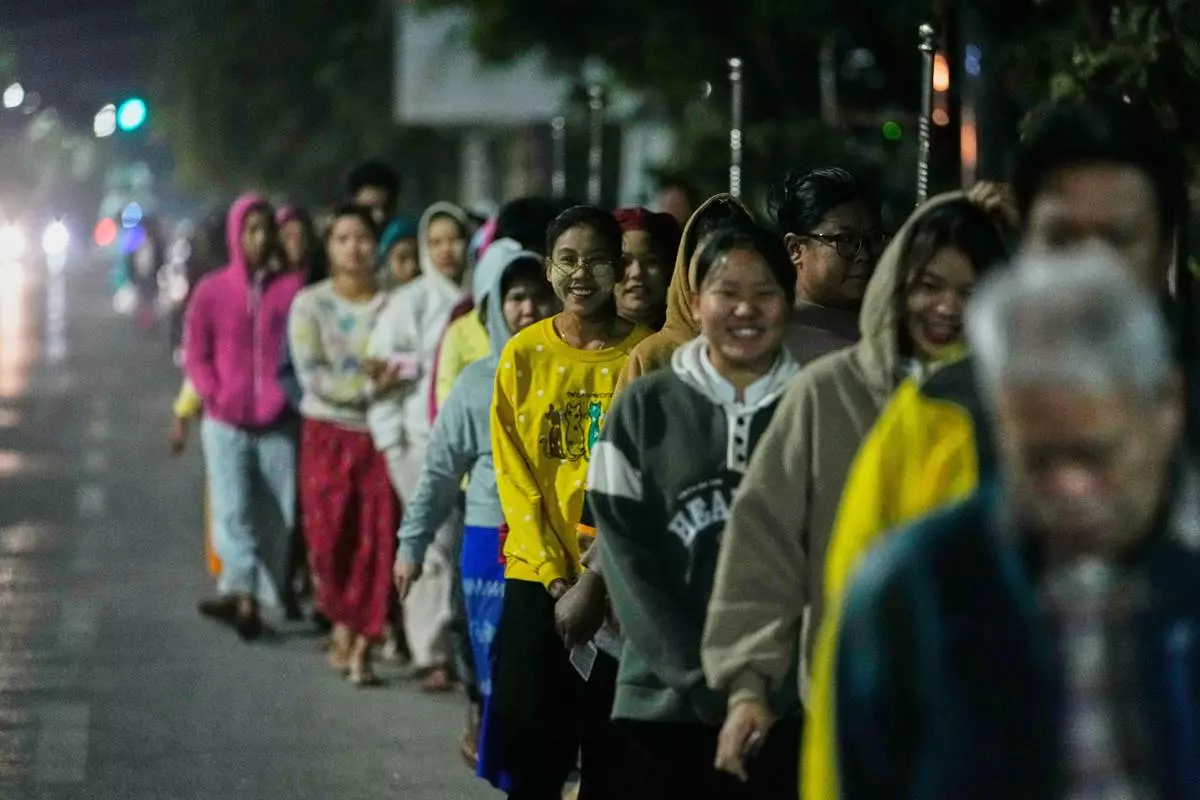
Voters wait for a polling station to open during the second phase of general election in Mandalay, central Myanmar, Sunday, Jan. 11, 2026. (AP Photo/Aung Shine Oo)
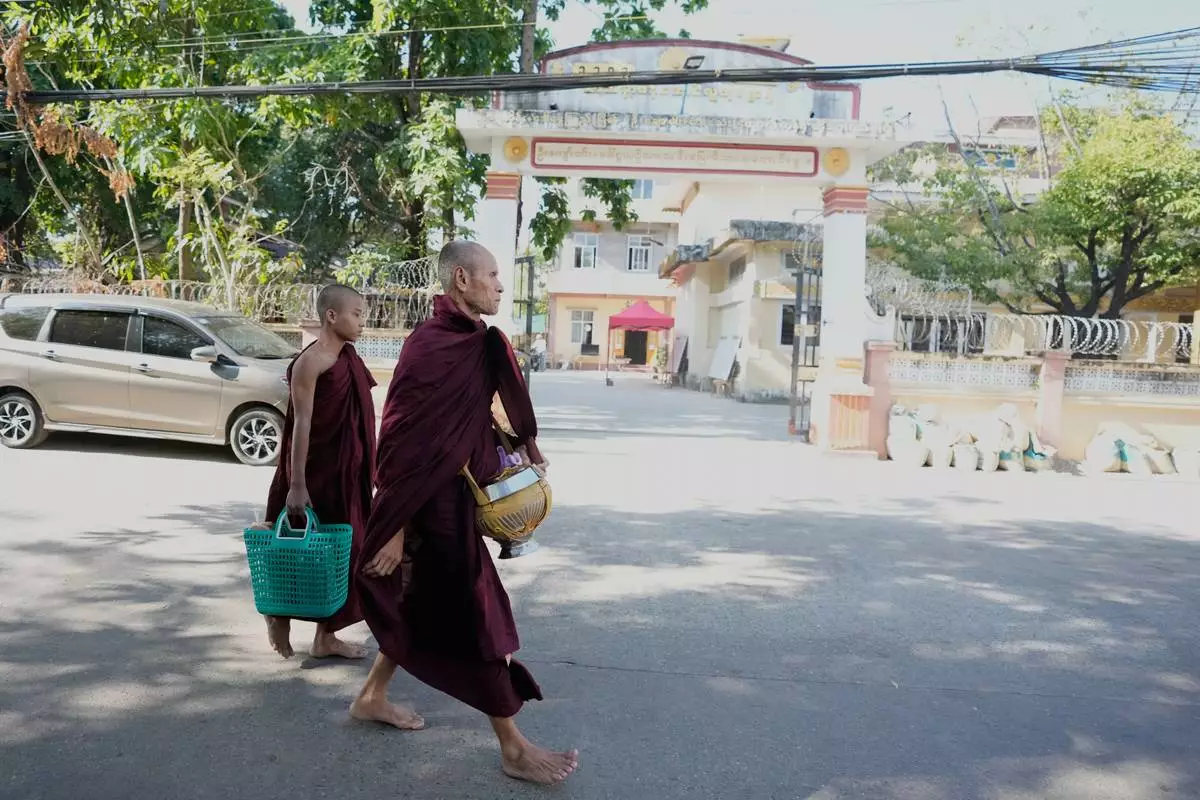
Buddhist monks walk past a polling station opened at a monastery one day before the second phase of the general election in Yangon, Myanmar, Saturday, Jan. 10, 2026. (AP Photo/Thein Zaw)
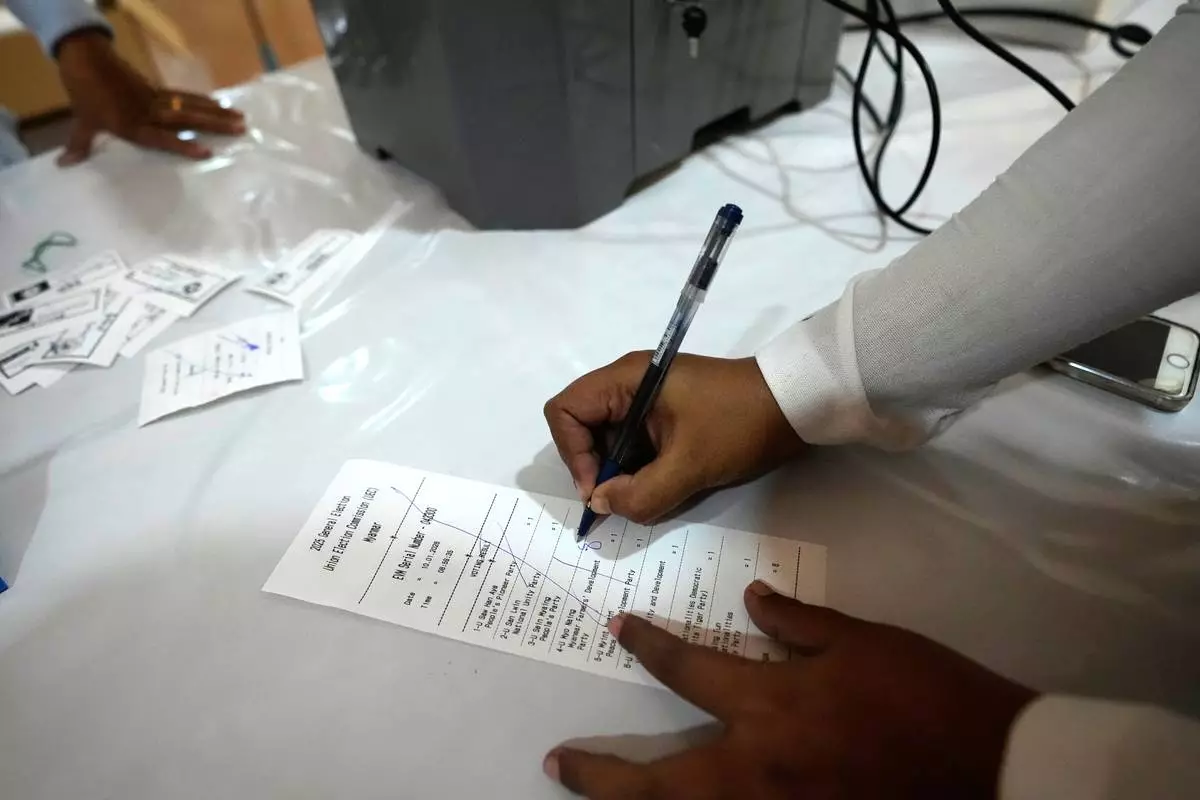
An official of the Union Election Commission checks a sample slip from an electronic voting machine as they prepare to set up a polling station opened at a monastery one day before the second phase of the general election in Yangon, Myanmar, Saturday, Jan. 10, 2026. (AP Photo/Thein Zaw)