BOSTON (AP) — Josh Kraft, the son of the New England Patriots’ owner, announced Thursday he is dropping his bid to unseat Boston Mayor Michelle Wu, days after advancing to the November ballot.
He announced the move on WCVB-TV after Kraft and Wu bested two challengers to advance during a preliminary election Tuesday.
Click to Gallery
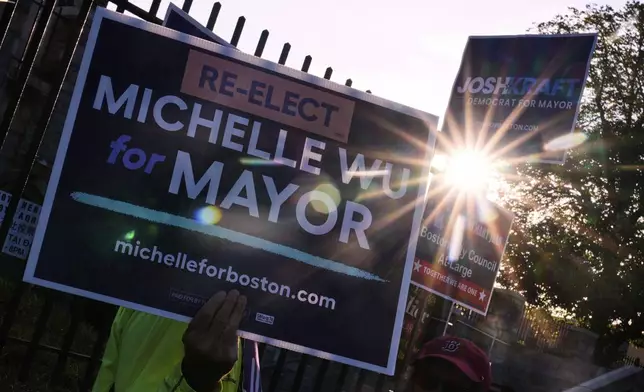
Sunrise peeks through campaign signs of Boston Mayor Michelle Wu and challenger Josh Kraft at a polling place, Tuesday, Sept. 9, 2025, in the Roslindale neighborhood of Boston. (AP Photo/Charles Krupa)
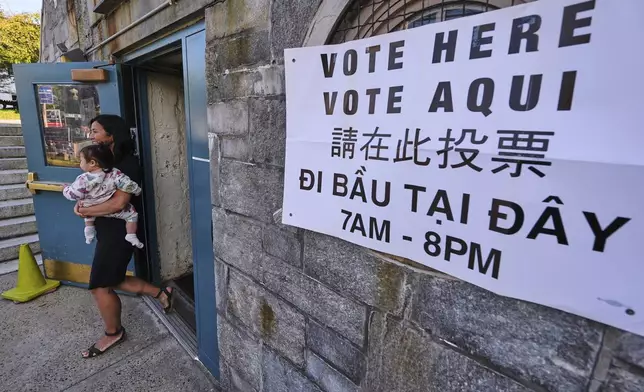
Boston Mayor Michelle Wu carries her daughter Mira after voting at a polling place, Tuesday, Sept. 9, 2025, in the Roslindale neighborhood of Boston. (AP Photo/Charles Krupa)
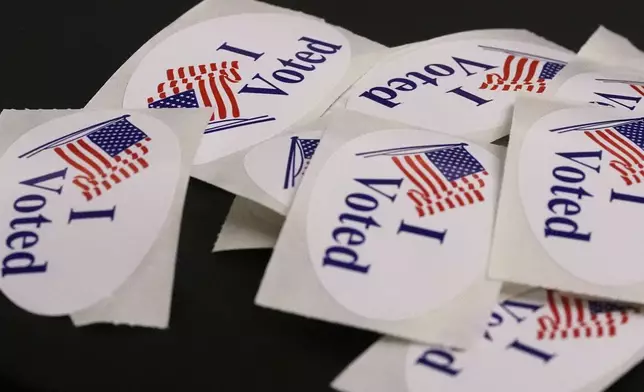
"I Voted" stickers rest on a ballot box at a polling place, Tuesday, Sept. 9, 2025, in the Roslindale neighborhood of Boston. (AP Photo/Charles Krupa)
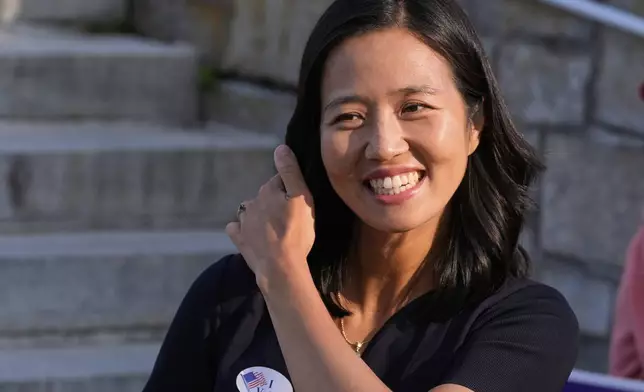
Boston Mayor Michelle Wu smiles after voting at a polling place, Tuesday, Sept. 9, 2025, in the Roslindale neighborhood of Boston. (AP Photo/Charles Krupa)
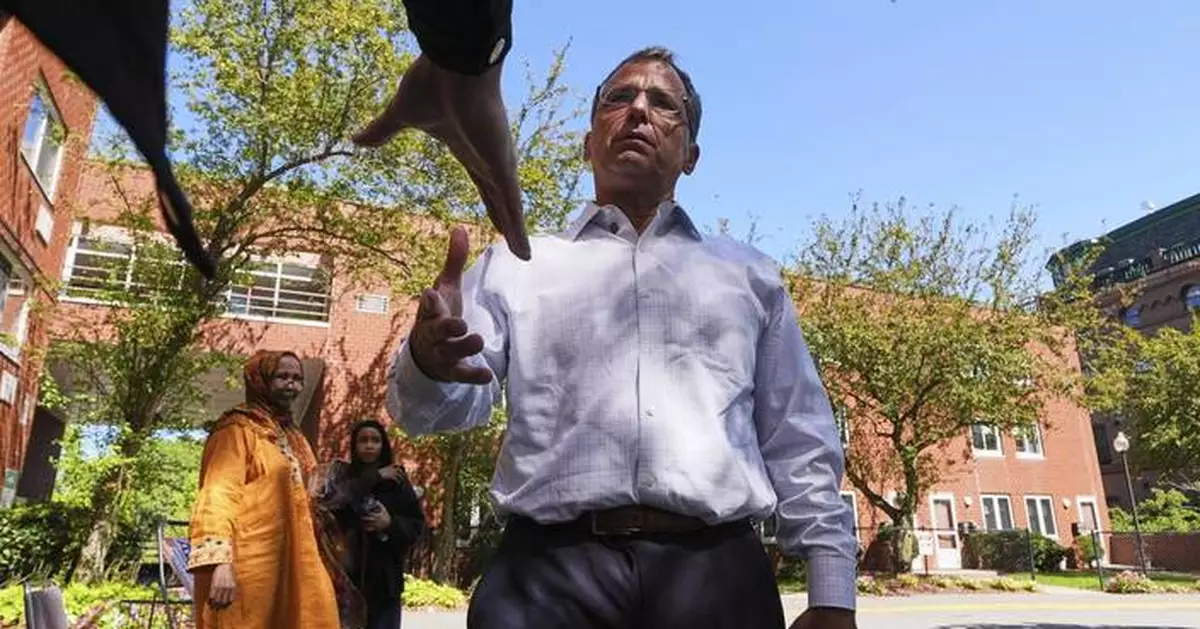
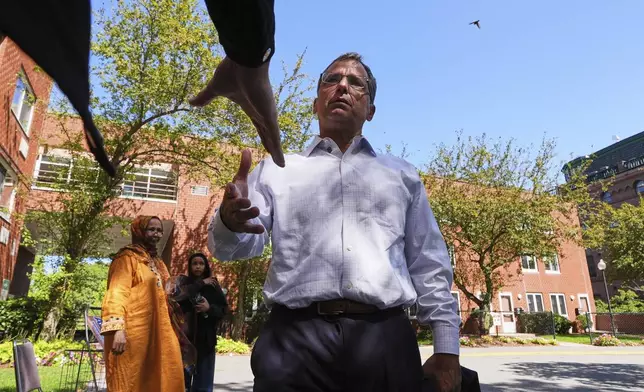
Boston mayoral candidate Josh Kraft campaigns outside a polling place, Tuesday, Sept. 9, 2025, in the Roxbury neighborhood of Boston. (AP Photo/Charles Krupa)
Despite spending millions of his own money on the race, Kraft struggled to find a message that would resonate with voters amid the popularity of Wu. She is Boston’s first female and Asian mayor and has been bolstered in part by her defense of the city against the Trump administration.
Kraft told supporters in a letter provided to The Associated Press that the election had never been about him or Wu.
“We could spend the next eight weeks politicking—with harmful rhetoric or nasty attack ads. Or we could get back to what really matters – the issues that impact Bostonians each and every day. The work I have focused on for my whole career,” Kraft wrote.
Kraft said the decision was the right move “during a time in America where we need to come closer together despite all our differences, instead of igniting divisiveness that pulls us further apart.”
He said he planned to support efforts to provide workforce training for former inmates as well as address concerns about homelessness and drug addiction in a section of the city known as Mass and Cass. He said the investment would total $3 million, a combination of funds he planned to dedicate to his campaign and additional dollars.
As of the end of August, Kraft had outspent Wu, $5.5 million to about $1.1 million, thanks in large part to more than $5 million in loans from the candidate to his campaign.
Wu won around 72% of the vote in Tuesday’s election, compared with Kraft’s 23%.
In an email statement Thursday night, Wu said she respects Kraft’s decision and thanked him “for caring about our city deeply enough to want to make it better.”
"We are going to continue over the next two months and beyond to keep engaging our community members about the critical work in front of us and how we keep making Boston a safe, welcoming home for everyone,” she said.
The week of the preliminary election, U.S. immigration began a new operation in Boston to follow a May surge that resulted in the arrest of nearly 1,500 arrests.
The Trump administration, often led by border czar Tom Homan, has been accusing Boston of not doing enough to crack down on illegal immigration. Boston is commonly known as a sanctuary city, and Wu has repeatedly said she wants it to be a welcoming place for immigrants.
Trump’s U.S. Department of Justice filed a lawsuit last week against Wu, the city of Boston and its police department over its sanctuary city policies, saying they’re interfering with immigration enforcement. In response, Wu accused Trump of “attacking cities to hide his administration’s failures.”
It was unclear whether another candidate would be eligible to replace Kraft on the Nov. 4 ballot.
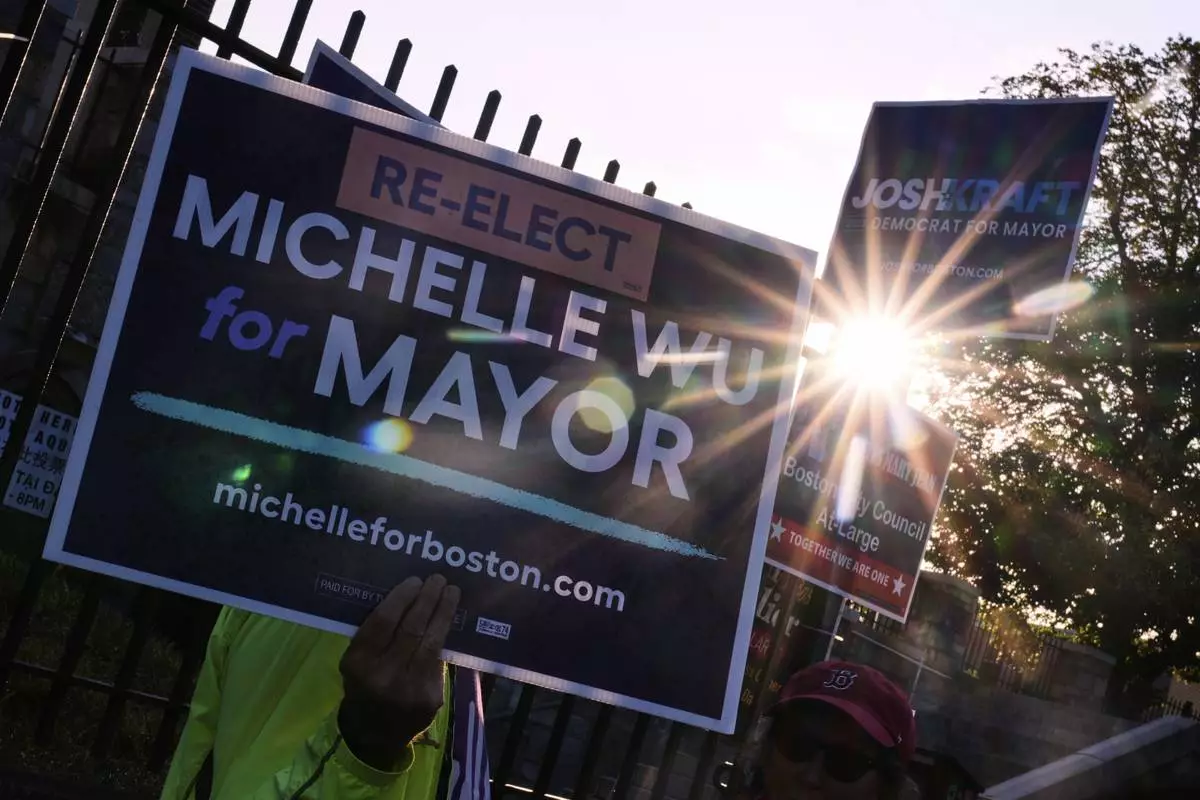
Sunrise peeks through campaign signs of Boston Mayor Michelle Wu and challenger Josh Kraft at a polling place, Tuesday, Sept. 9, 2025, in the Roslindale neighborhood of Boston. (AP Photo/Charles Krupa)
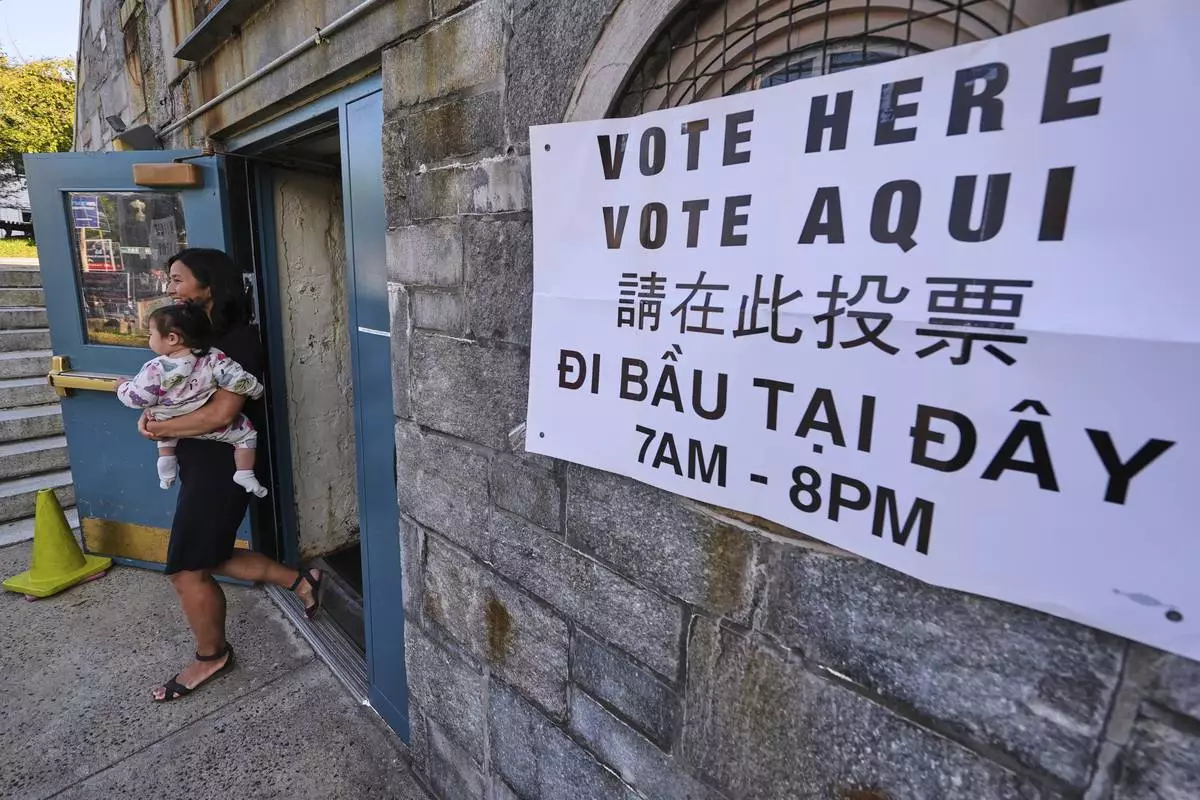
Boston Mayor Michelle Wu carries her daughter Mira after voting at a polling place, Tuesday, Sept. 9, 2025, in the Roslindale neighborhood of Boston. (AP Photo/Charles Krupa)
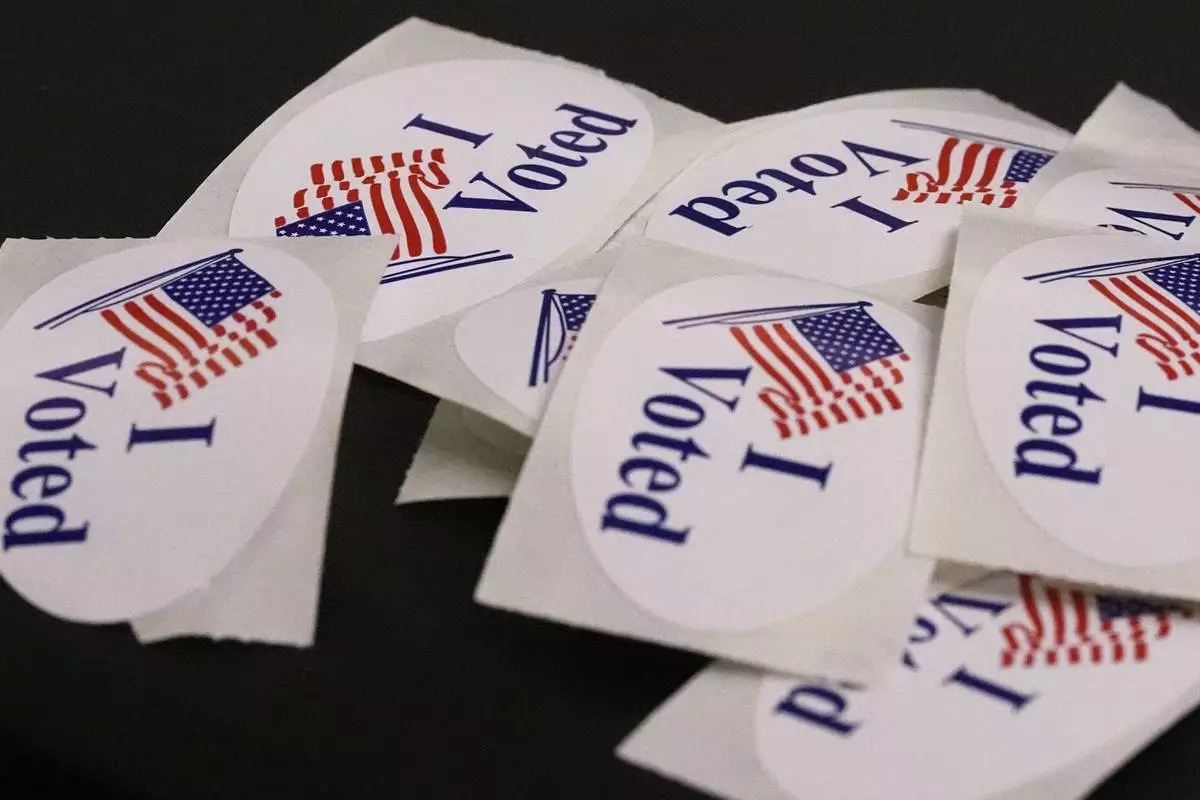
"I Voted" stickers rest on a ballot box at a polling place, Tuesday, Sept. 9, 2025, in the Roslindale neighborhood of Boston. (AP Photo/Charles Krupa)
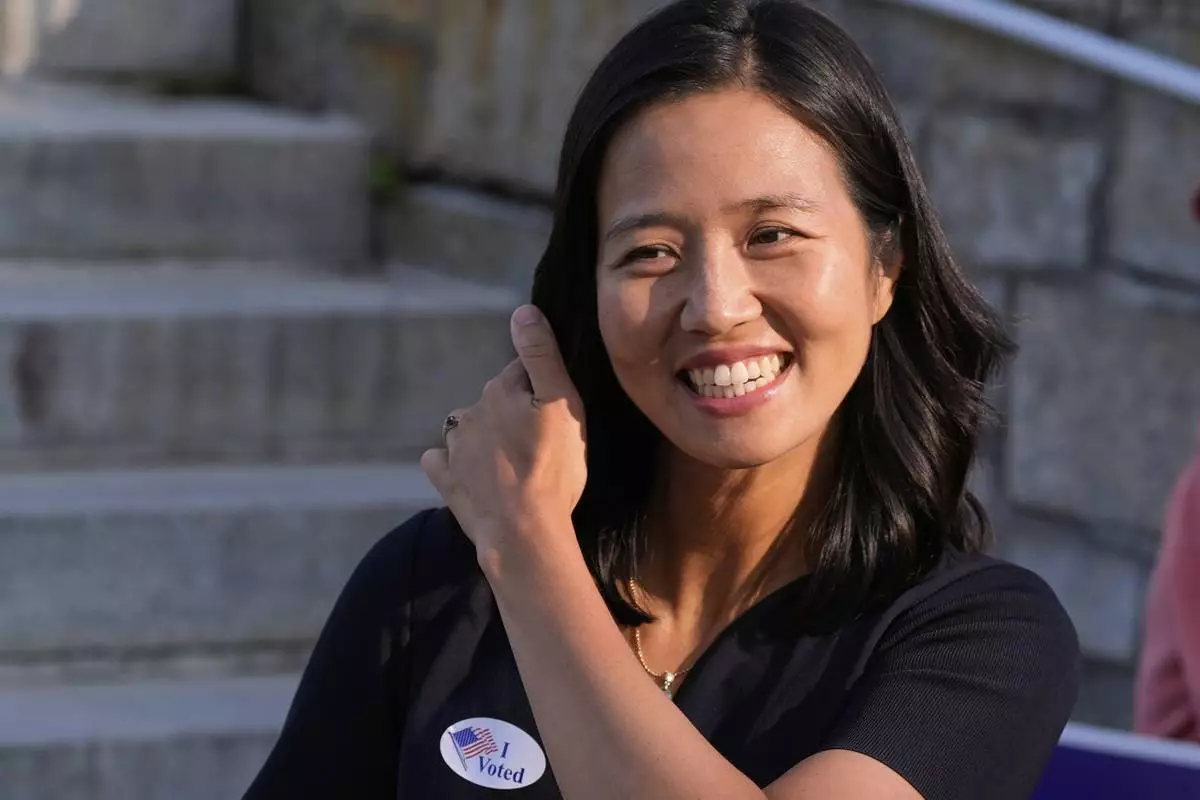
Boston Mayor Michelle Wu smiles after voting at a polling place, Tuesday, Sept. 9, 2025, in the Roslindale neighborhood of Boston. (AP Photo/Charles Krupa)
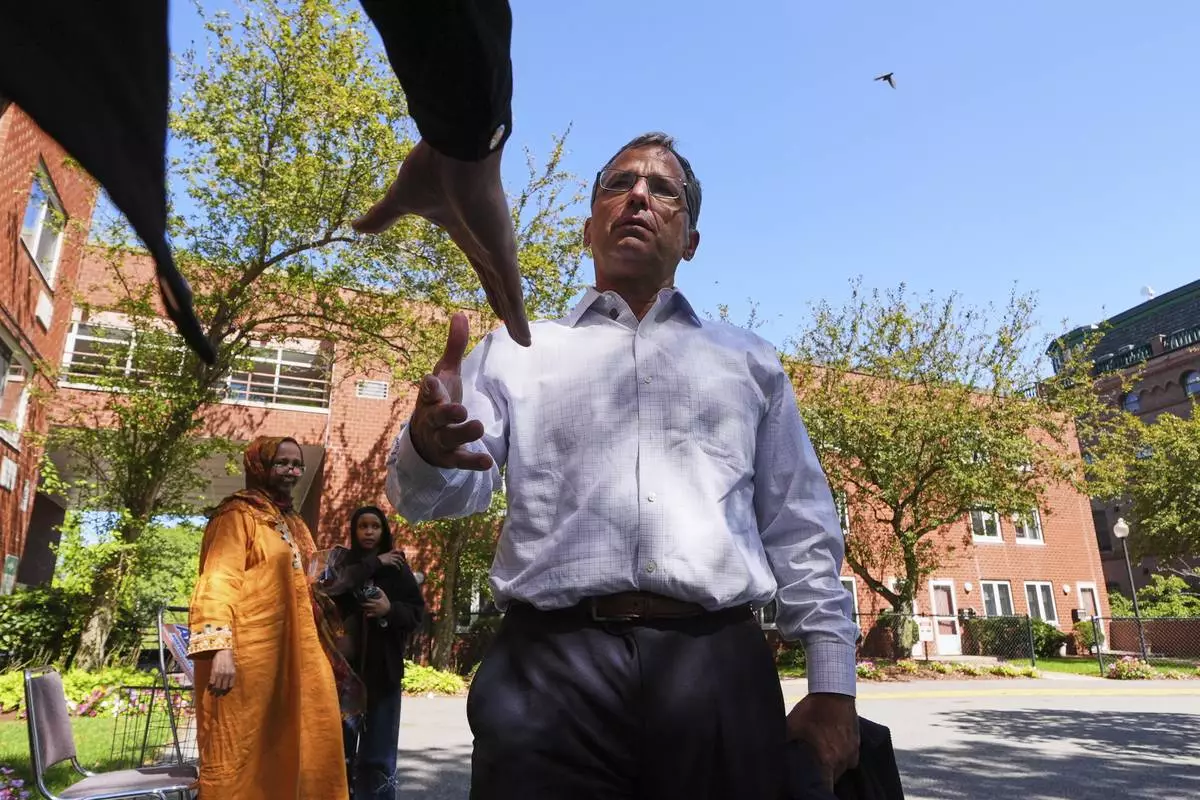
Boston mayoral candidate Josh Kraft campaigns outside a polling place, Tuesday, Sept. 9, 2025, in the Roxbury neighborhood of Boston. (AP Photo/Charles Krupa)
SEOUL, South Korea (AP) — A South Korean court sentenced former President Yoon Suk Yeol to five years in prison Friday in the first verdict from eight criminal trials over the martial law debacle that forced him out of office and other allegations.
Yoon was impeached, arrested and dismissed as president after his short-lived imposition of martial law in December 2024 triggered huge public protests calling for his ouster.
The most significant criminal charge against him alleges that his martial law enforcement amounted to a rebellion, An independent counsel has requested the death sentence over that charge, and the Seoul Central District Court will decide on that in a ruling on Feb. 19.
Yoon has maintained he didn’t intend to place the country under military rule for an extended period, saying his decree was only meant to inform the people about the danger of the liberal-controlled parliament obstructing his agenda. But investigators have viewed Yoon’s decree as an attempt to bolster and prolong his rule, charging him with rebellion, abuse of power and other criminal offenses.
In Friday’s case, the Seoul court sentenced Yoon for defying attempts to detain him and fabricating the martial law proclamation. He was also sentenced for sidestepping a legally mandated full Cabinet meeting, which deprived some Cabinet members who were not convened of their rights to deliberate on his decree.
Judge Baek Dae-hyun said in the televised ruling that imposing “a heavy punishment” was necessary because Yoon hasn’t shown remorse and has only repeated “hard-to-comprehend excuses.” The judge also said restoring legal systems damaged by Yoon’s action was necessary.
Yoon’s defense team said they will appeal the ruling, which they believe was “politicized” and reflected “the unliberal arguments by the independent counsel.” Yoon’s defense team argued the ruling “oversimplified the boundary between the exercise of the president’s constitutional powers and criminal liability.”
Park SungBae, a lawyer who specializes in criminal law, said there is little chance the court would decide Yoon should face the death penalty in the rebellion case. He said the court will likely issue a life sentence or a sentence of 30 years or more in prison.
South Korea has maintained a de facto moratorium on executions since 1997 and courts rarely hand down death sentences. Park said the court would take into account that Yoon’s decree didn’t cause casualties and didn’t last long, although Yoon hasn’t shown genuine remorse for his action.
South Korea has a history of pardoning former presidents who were jailed over diverse crimes in the name of promoting national unity. Those pardoned include strongman Chun Doo-hwan, who received the death penalty at a district court over his 1979 coup, the bloody 1980 crackdowns of pro-democracy protests that killed about 200 people, and other crimes.
Even if Yoon is spared the death penalty or life imprisonment at the rebellion trial, he may still face other prison sentences in the multiple smaller trials he faces.
Some observers say Yoon is likely retaining a defiant attitude in the ongoing trials to maintain his support base in the belief that he cannot avoid a lengthy sentence but could be pardoned in the future.
On the night of Dec. 3, 2024, Yoon abruptly declared martial law in a televised speech, saying he would eliminate “anti-state forces” and protect “the constitutional democratic order.” Yoon sent troops and police officers to encircle the National Assembly, but many apparently didn’t aggressively cordon off the area, allowing enough lawmakers to get into an assembly hall to vote down Yoon’s decree.
No major violence occurred, but Yoon's decree caused the biggest political crisis in South Korea in decades and rattled its diplomacy and financial markets. For many, his decree, the first of its kind in more than 40 years in South Korea, brought back harrowing memories of past dictatorships in the 1970s and 1980s, when military-backed leaders used martial law and emergency measures to deploy soldiers and tanks on the streets to suppress demonstrations.
After Yoon's ouster, his liberal rival Lee Jae Myung became president via a snap election last June. After taking office, Lee appointed three independent counsels to look into allegations involving Yoon, his wife and associates.
Yoon's other trials deal with charges like ordering drone flights over North Korea to deliberately inflame animosities to look for a pretext to declare martial law. Other charges accuse Yoon of manipulating the investigation into a marine’s drowning in 2023 and receiving free opinion surveys from an election broker in return for a political favor.

A supporter of former South Korean President Yoon Suk Yeol shouts slogans outside Seoul Central District Court, in Seoul, South Korea, Friday, Jan. 16, 2026. (AP Photo/Lee Jin-man)

Supporters of former South Korean President Yoon Suk Yeol hold signs and flags outside Seoul Central District Court, in Seoul, South Korea, Friday, Jan. 16, 2026. (AP Photo/Lee Jin-man)
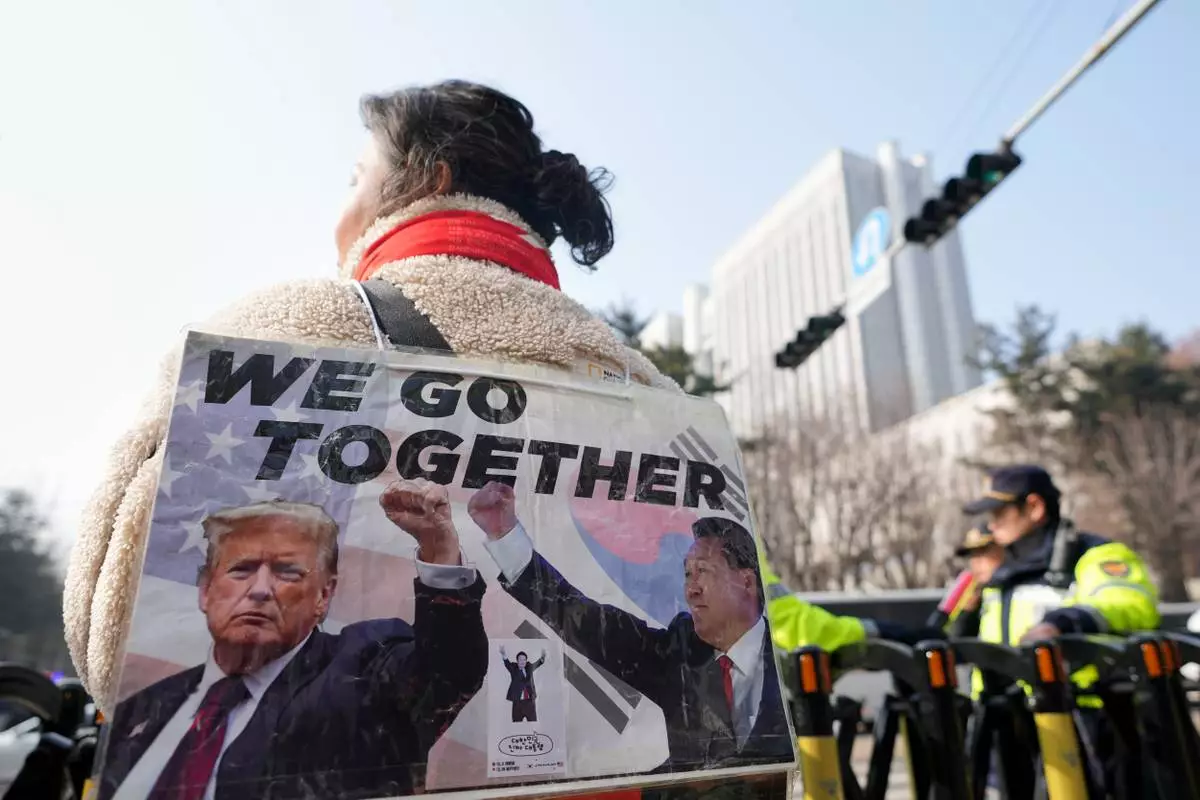
A supporter of former South Korean President Yoon Suk Yeol waits for a bus carrying former South Korean President Yoon Suk Yeol outside Seoul Central District Court, in Seoul, South Korea, Friday, Jan. 16, 2026. (AP Photo/Lee Jin-man)
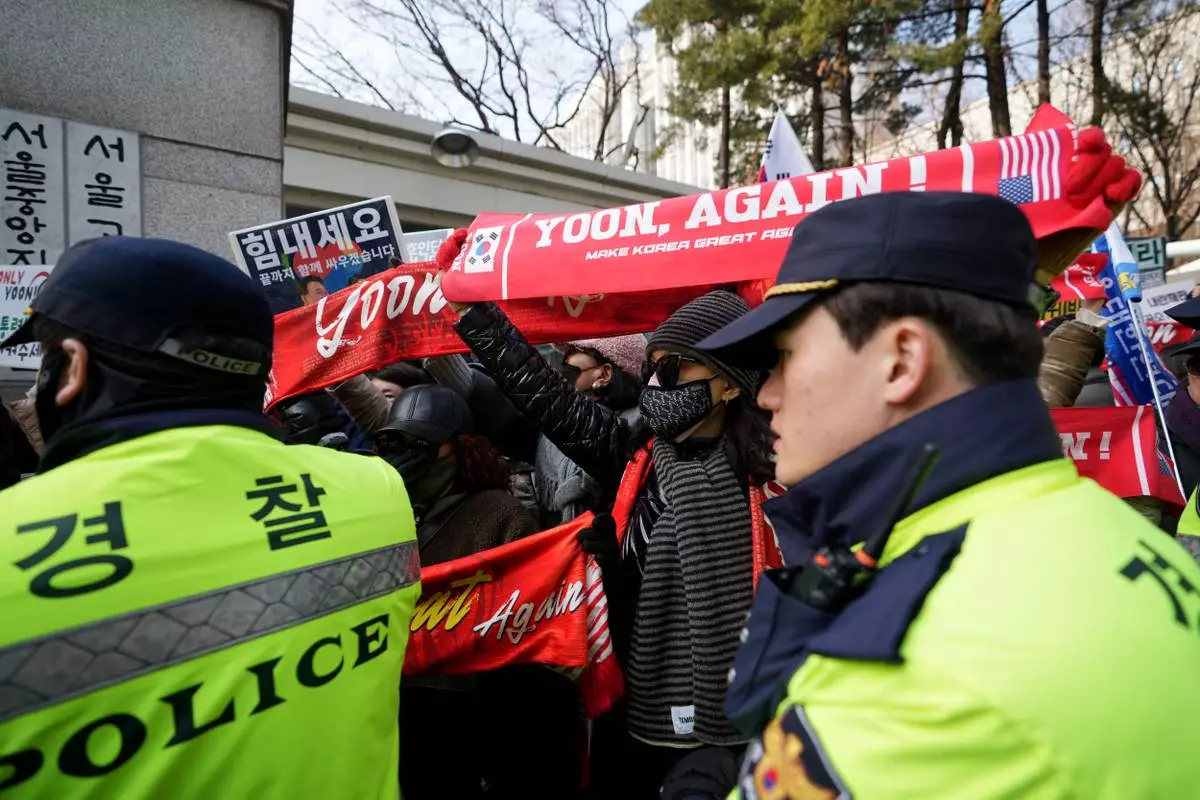
Supporters of former South Korean President Yoon Suk Yeol hold signs as police officers stand guard outside Seoul Central District Court, in Seoul, South Korea, Friday, Jan. 16, 2026. (AP Photo/Lee Jin-man)
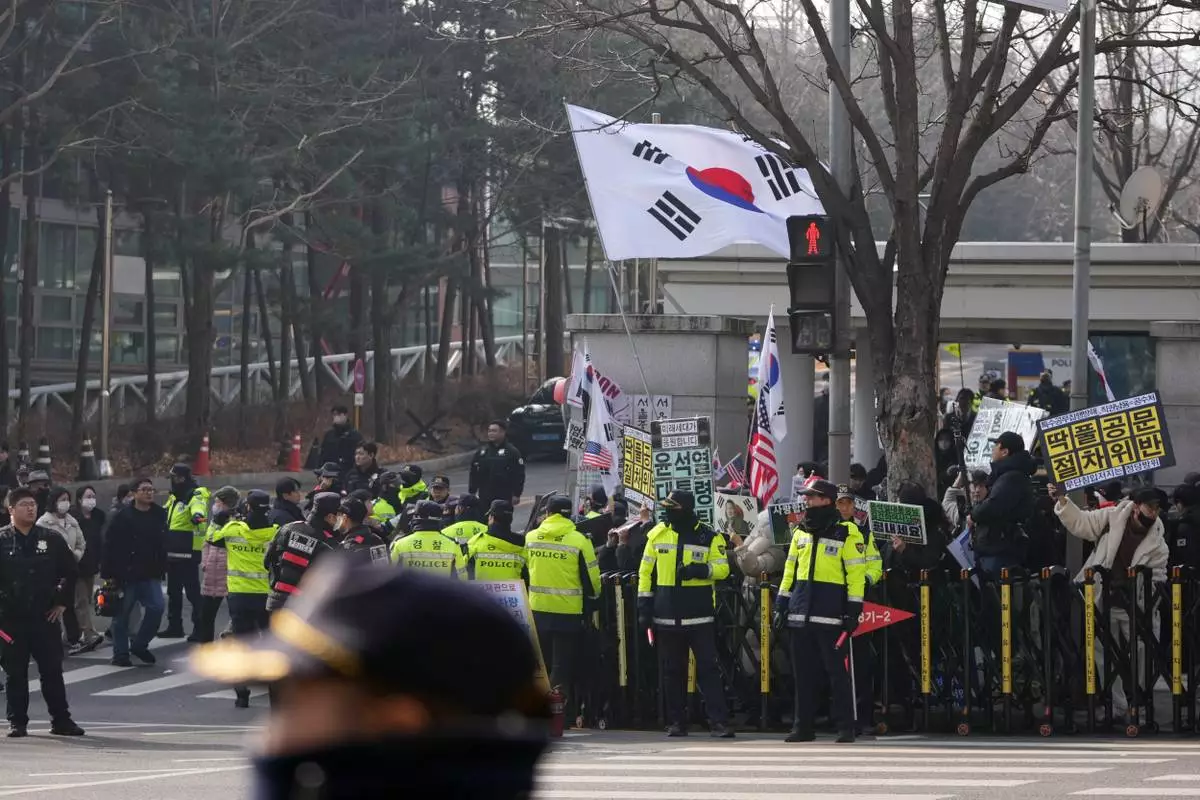
Supporters of former South Korean President Yoon Suk Yeol hold signs and flags outside Seoul Central District Court, in Seoul, South Korea, Friday, Jan. 16, 2026. (AP Photo/Lee Jin-man)
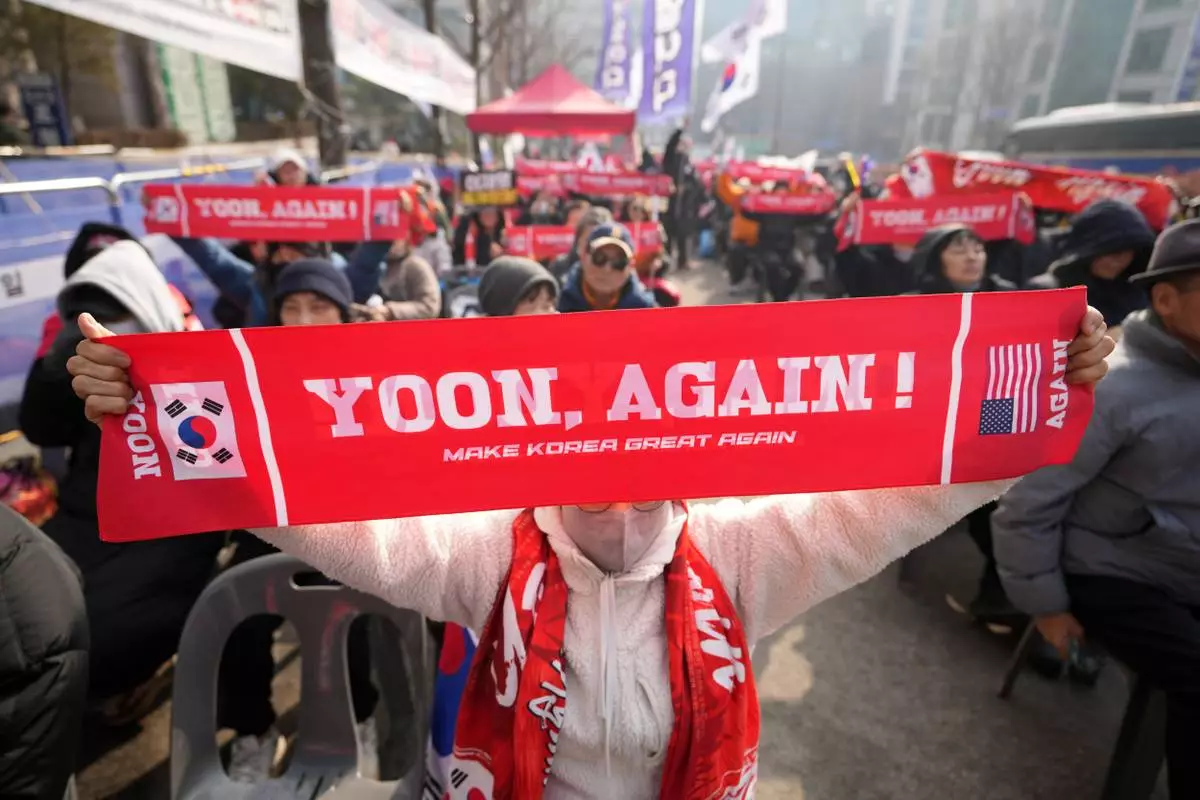
Supporters of former South Korean President Yoon Suk Yeol hold signs outside Seoul Central District Court, in Seoul, South Korea, Friday, Jan. 16, 2026. (AP Photo/Lee Jin-man)
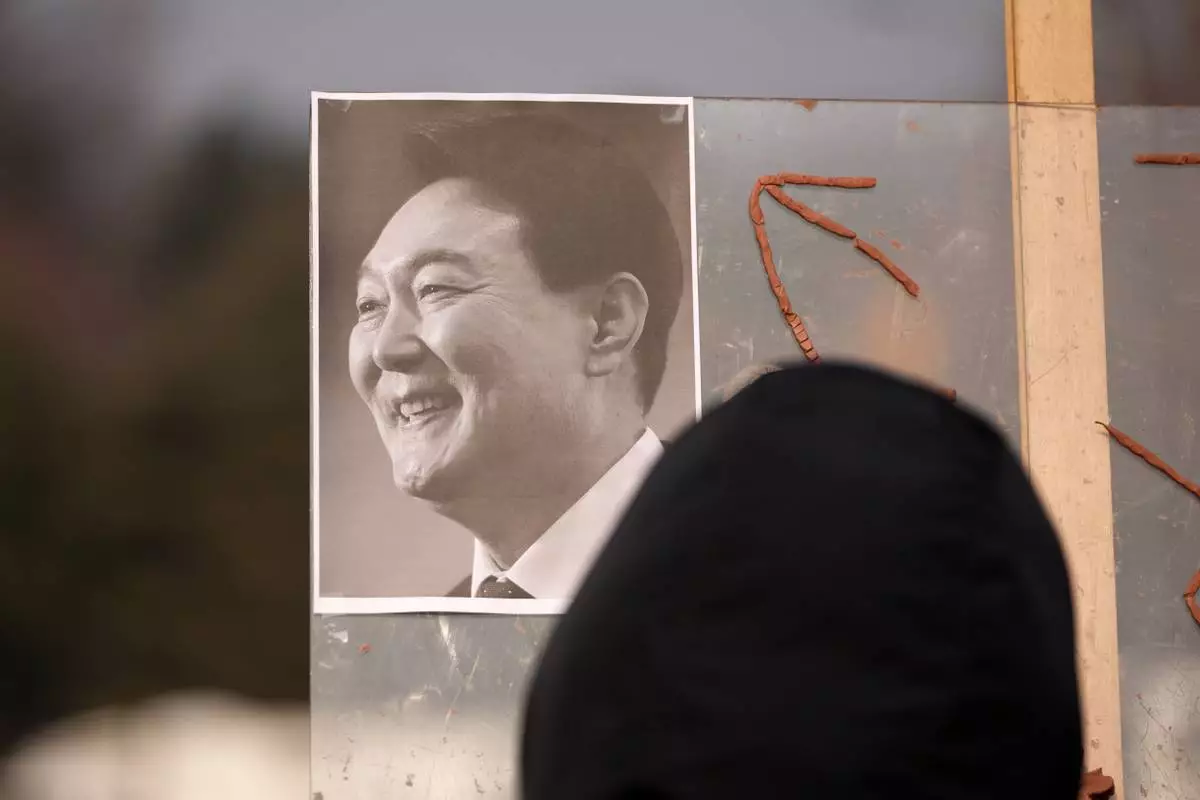
A picture of former South Korean President Yoon Suk Yeol is placed on a board as supporters gather outside Seoul Central District Court, in Seoul, South Korea, Friday, Jan. 16, 2026. (AP Photo/Lee Jin-man)