The governor of Utah struggled to find the right words to describe the question so many have been asking: What is happening in America?
The silence lasted nearly 10 seconds. He looked down. He opened and closed his mouth.
Click to Gallery
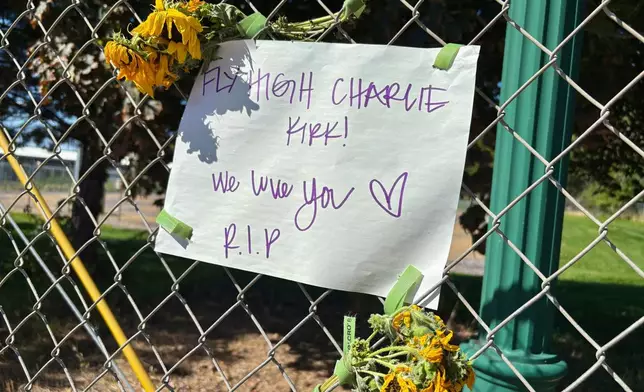
A sign reading “Fly High Charlie Kirk! We love you. R.I.P.” is seen hanging on a fence with flowers across the street from the Utah Valley University campus, in Orem, Utah, Thursday, Sept. 11, 2025. (AP Photo/Hannah Schoenbaum)
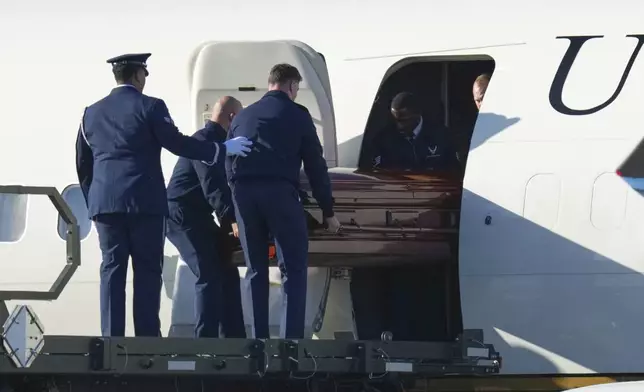
The casket containing the body of Charlie Kirk, the CEO and co-founder of Turning Point USA who was shot and killed is removed from Air Force Two at Phoenix Sky Harbor International Airport, Thursday, Sept. 11, 2025, in Phoenix. (AP Photo/Ross D. Franklin)
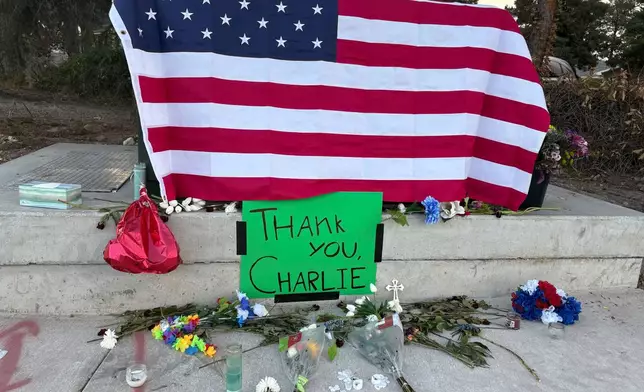
A makeshift memorial for Charlie Kirk is seen on the Utah Valley University campus in Orem, Utah, on Thursday, Sept. 11, 2025. (AP Photo/Hannah Schoenbaum)
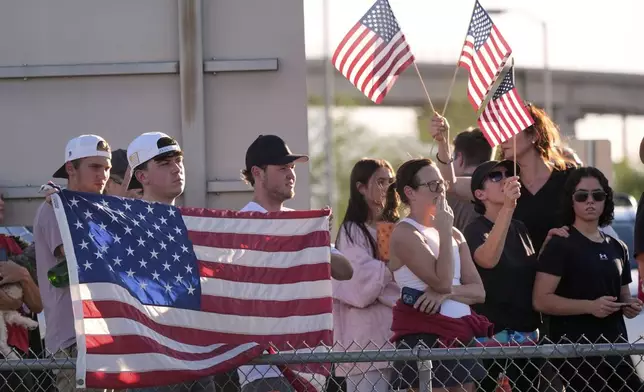
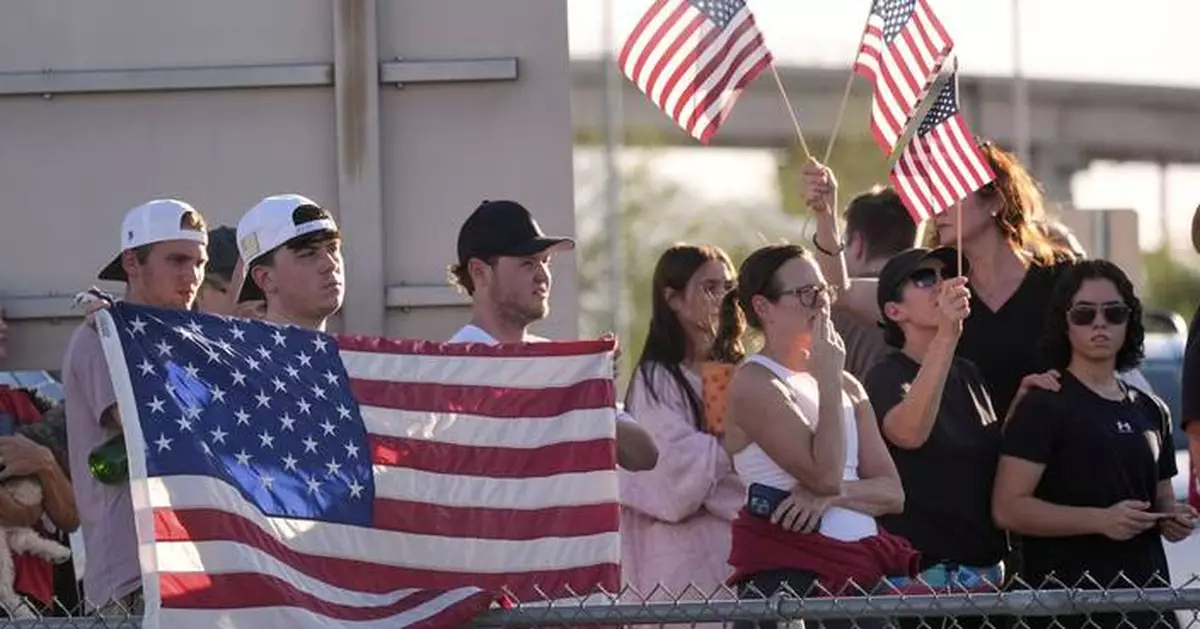
People watch a hearse containing the body of Charlie Kirk, the CEO and co-founder of Turning Point USA, who was shot and killed on Wednesday leave after the body arrived aboard Air Force Two at Phoenix Sky Harbor International Airport, Thursday, Sept. 11, 2025, in Phoenix. (AP Photo/Ross D. Franklin)
“Our nation is broken,” Spencer Cox finally said, hours after the public killing of Charlie Kirk. The governor described violent attacks on both Democrats and Republicans, including the killing of Minnesota lawmaker Melissa Hortman and her husband, two assassination attempts on President Donald Trump and the firebombing of Pennsylvania Gov. Josh Shapiro’s official residence.
His words stood out not just for the stark language about America’s troubles, but for his sober acknowledgement that the violence reaches across the political divide.
It can be hard to remember all the scenes of political violence in just the past few years: Butler, Pennsylvania, the Minneapolis suburbs, San Francisco, New York City, West Palm Beach. And more. Taken together, they are enough to make Americans wonder: Is there a way forward? What might it look like?
Two days later, Cox said it just might look like hope.
Kirk's public assassination is a watershed in American history, he said Friday after the arrest of a 22-year-old from Utah in connection with the killing, It is, Cox said, also a reminder of the political violence of the 1960s, an era that saw the shooting deaths of Martin Luther King Jr., civil rights leader Medgar Evers, President John F. Kennedy and his brother Sen. Robert F. Kennedy, and Malcolm X.
The question, Cox wondered, is what sort of watershed this moment might be. He asked: “Is this the end of a dark chapter in our history, or the beginning of a darker chapter in our history?”
Many people, of course, feel America is broken. You can hear about the country's many troubles — its ideological divides, its anger, its lack of civility — from conservatives and liberals, from socialist firebrands and evangelical preachers, from Democrats and Republicans. It is, perhaps, one of the few beliefs that unites Americans right now.
So many seem to genuinely want those divides to be mended, for the country to be knitted back together. But the question of why America is broken, and who is to blame, and how to repair it? That's where things get complicated.
Because no matter what you believe, today — in both the myriad reactions to Kirk's violent public death and in general — you can pick the America you want. You can pick the America that you believe exists.
You can see a president who is systematically removing the rights of Americans, or a president who is standing up for a forgotten middle class. You can see signs of fascism in the masked immigration agents hauling people off the streets, or an administration that is finally enforcing immigration laws for the good of all citizens.
In Kirk, you can see a polite, boy-next-door type with a captivating debating style who loved America, the church, his family, and the resurgence of conservatism across the country, especially among young people. Or you can see a political hybrid of the social media age, a powerful political operative who was willing to exploit America’s racial divide in search of support and who insisted, falsely, that voter fraud cost Trump the 2020 elections.
When Cox spoke mournfully about America's predicament, he clearly hoped Kirk's death could help bring America together. It's as likely, though, that the killing could drive the wedges deeper.
Just listen to how people reacted to his death. Choose the take you want to believe.
In the hours immediately after the shooting, officials in both parties appeared anxious to show restraint and decorum, and avoided partisan politics.
America “must never condone or excuse acts of political violence,” Arizona Republican chair Gina Swoboda said in a statement. Maine’s Democratic governor, Janet Mills, who has sparred with Trump, said she was “horrified by what has happened to Charlie Kirk.”
Soon, though, even with only the barest facts about the shooting known, the anger began to spill out. Georgia Rep. Marjorie Taylor Greene said she was praying that “this country rises up and ends this.” Then others began speaking up, with politicians warning about “leftwing Brown Shirts” and Christians under attack.
Trump quickly conferred martyr status onto Kirk, ordering flags lowered at federal buildings and blaming leftist rhetoric for Kirk’s assassination in a video statement released on social media late Wednesday. “For years, those on the radical left have compared wonderful Americans like Charlie to Nazis and the world’s worst mass murderers and criminals,” Trump said, speaking from the Oval Office and citing only attacks on Republicans.
Democratic politicians, for the most part, appeared eager to avoid any sign that they were demonizing Kirk. But it wasn't that way in some left-wing neighborhoods on social media. “Charlie Kirk isn’t a martyr,” wrote a commentator on X with 130,000 followers, echoing many others. “He’s a casualty of the violence he incited.”
That carried echoes of the praise for Luigi Mangione, the man charged with murdering the UnitedHealthcare CEO in Manhattan last year, and the explosion of social media memes celebrating the July shooting death of a prominent real-estate executive in the same borough.
Online, of course, it’s easy to remain anonymous, and it can be impossible to distinguish true praise for political violence and vigilantism with adolescent trolling. It's different for politicians, who can't stay anonymous — and who are often looked to in moments like this to help show their supporters and constituents the way.
Unlike Trump, his presidential predecessors spoke far more gently, in keeping with their particular styles. Former Presidents Joe Biden and Barack Obama said they were praying for Kirk’s family. George W. Bush called for divine guidance to move the nation to civility. Their statements sounded, unsurprisingly, like many of the things they said during their presidencies.
That kind of message took root in some places. In Connecticut, College Republicans and College Democrats issued a joint statement decrying violence. And on Wednesday, Cox — a Republican politician thrust into the limelight by tragedy, like so many public servants before him — spoke emotionally about a belief in free speech that goes back to America’s founding, and about how hatred can lead to violence.
“Is this it?” he asked. “Is this what 250 years has wrought on us?”
After the arrest, he spoke with more optimism. He called on people to listen genuinely to one another — especially the ones with whom they disagree.
“I still believe that there is more good among us than evil,” he said. “And I still believe that we can change the course of history.”
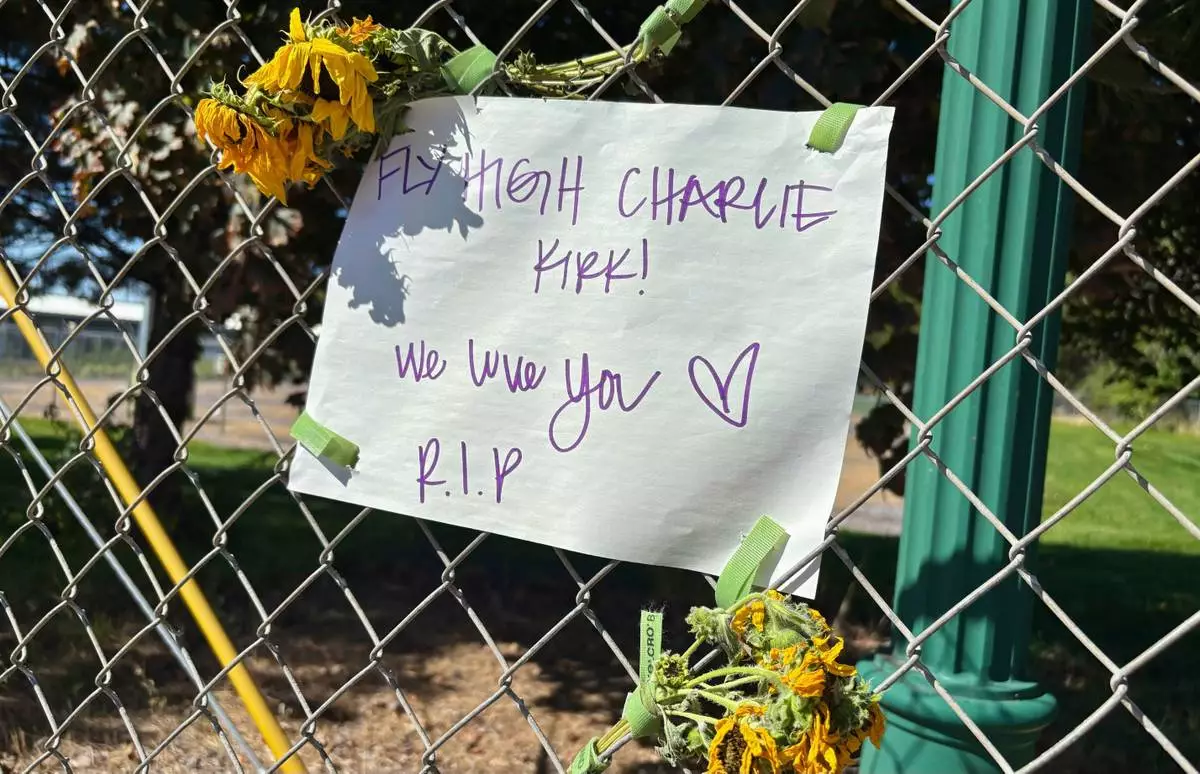
A sign reading “Fly High Charlie Kirk! We love you. R.I.P.” is seen hanging on a fence with flowers across the street from the Utah Valley University campus, in Orem, Utah, Thursday, Sept. 11, 2025. (AP Photo/Hannah Schoenbaum)
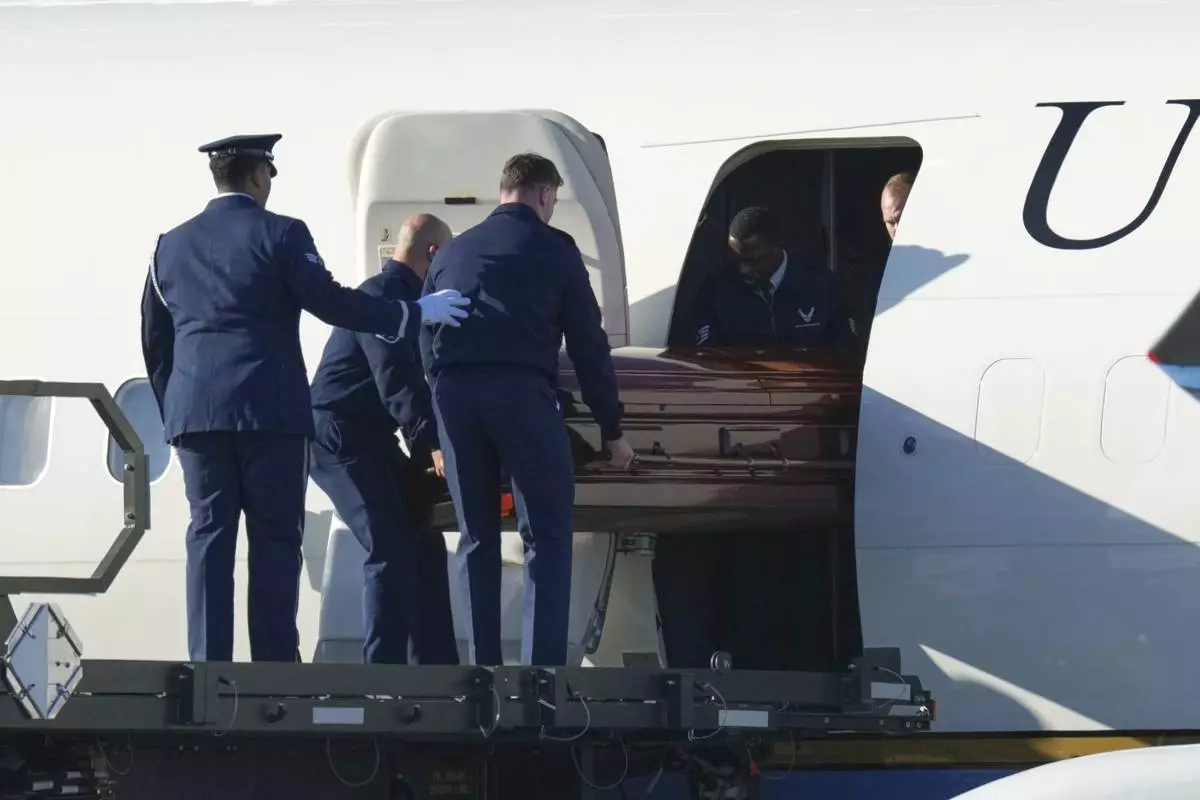
The casket containing the body of Charlie Kirk, the CEO and co-founder of Turning Point USA who was shot and killed is removed from Air Force Two at Phoenix Sky Harbor International Airport, Thursday, Sept. 11, 2025, in Phoenix. (AP Photo/Ross D. Franklin)
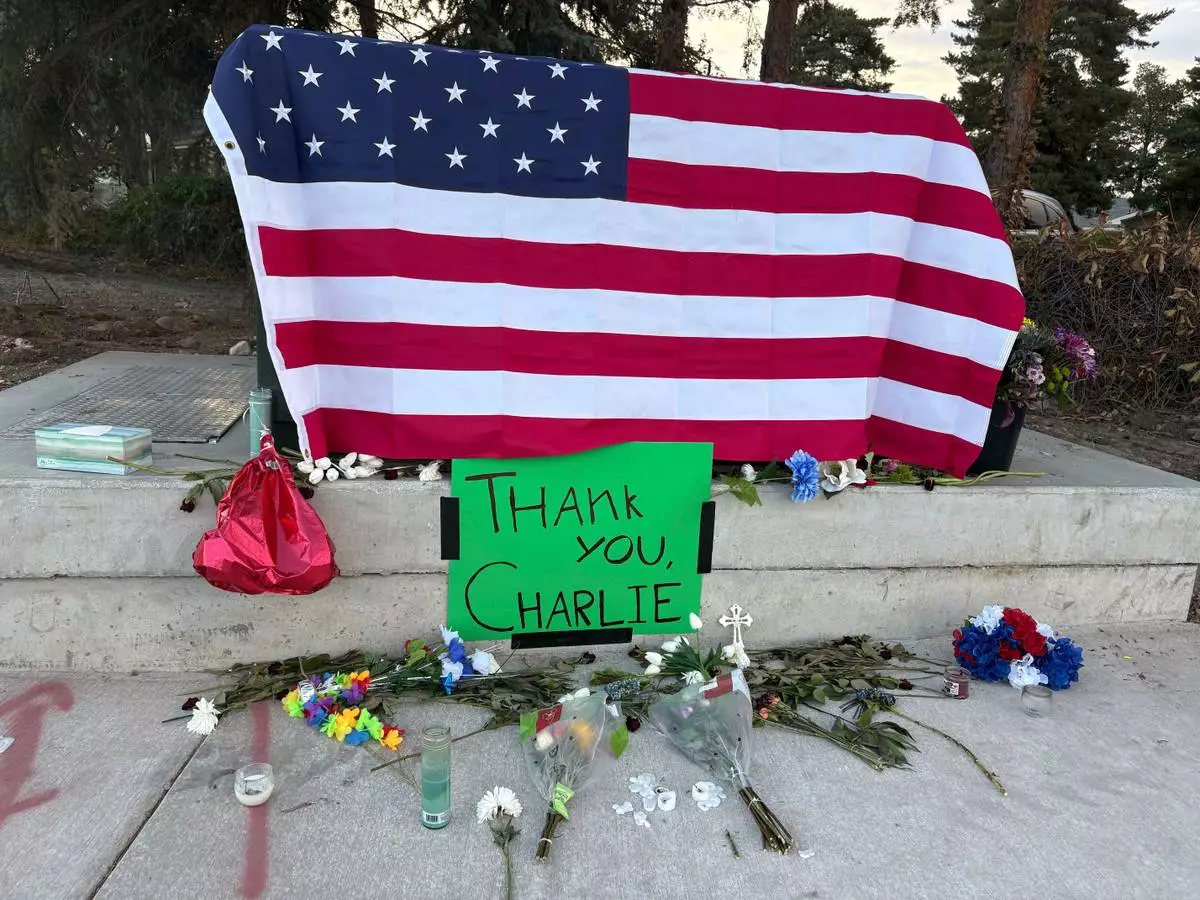
A makeshift memorial for Charlie Kirk is seen on the Utah Valley University campus in Orem, Utah, on Thursday, Sept. 11, 2025. (AP Photo/Hannah Schoenbaum)

People watch a hearse containing the body of Charlie Kirk, the CEO and co-founder of Turning Point USA, who was shot and killed on Wednesday leave after the body arrived aboard Air Force Two at Phoenix Sky Harbor International Airport, Thursday, Sept. 11, 2025, in Phoenix. (AP Photo/Ross D. Franklin)