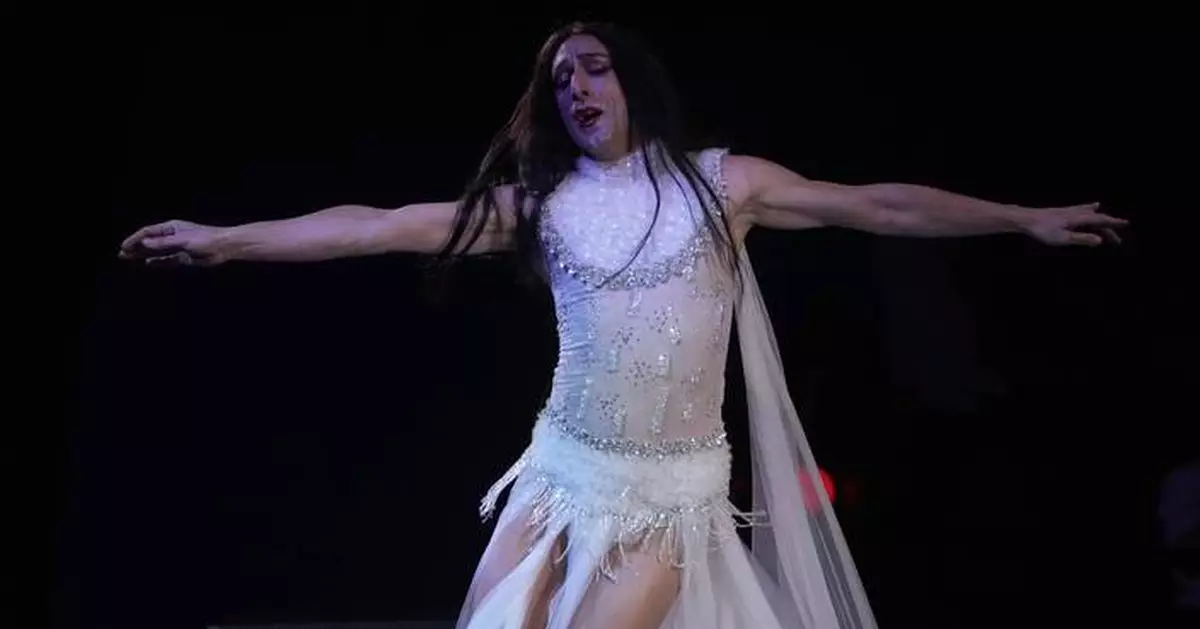
BEIRUT (AP) — Alexandre Paulikevitch put on his white dress and wig and danced his way to center stage, knowing that the extremist groups who had threatened him before his controversial recital might be waiting for him outside the theater.
The Lebanese dancer’s sold-out performance to a cheering crowd at a popular Beirut venue had angered fundamentalist movements ranging from the right-wing Christian Soldiers of God to Sunni Islamists.
Click to Gallery

Alexandre Paulikevitch performs at a theatre in Beirut, Lebanon, Thursday, Sept. 11, 2025. (AP Photo/Hussein Malla)
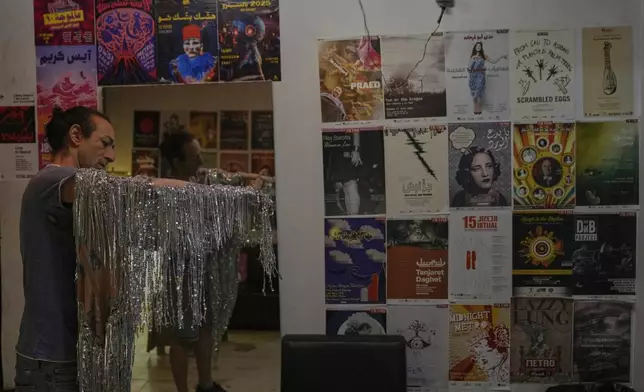
Alexandre Paulikevitch prepares his dress backstage before performing at a theatre in Beirut, Lebanon, Thursday, Sept. 11, 2025. (AP Photo/Hussein Malla)
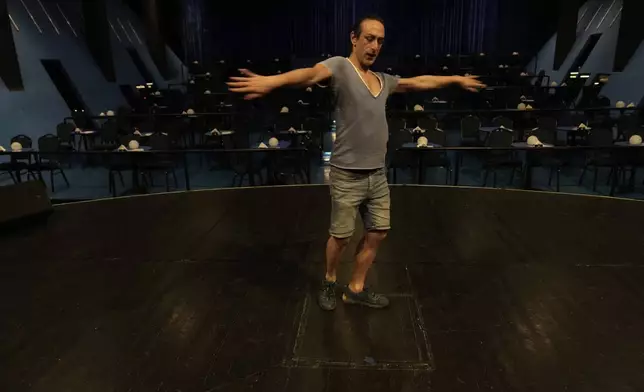
Alexandre Paulikevitch rehearses at a theatre in Beirut, Lebanon, Thursday, Sept. 11, 2025. (AP Photo/Hussein Malla)
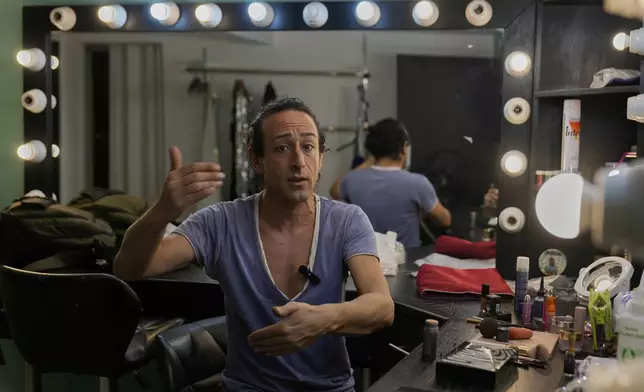
Alexandre Paulikevitch gives an interview backstage before his performace at a theatre in Beirut, Lebanon, Thursday, Sept. 11, 2025. (AP Photo/Hussein Malla)
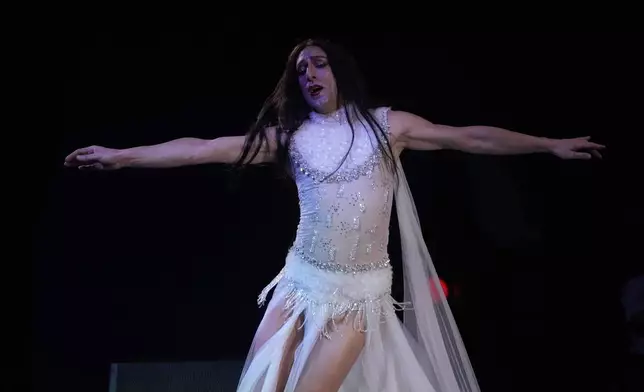
Alexandre Paulikevitch performs at a theatre in Beirut, Lebanon, Thursday, Sept. 11, 2025. (AP Photo/Hussein Malla)
The fundamentalists say Paulikevitch is “promoting homosexuality" because he wears dresses and corsets and undulates to classical Arabic music in a way which society largely sees as exclusive to women.
Paulikevitch says he’s breaking social norms and reintroducing forms of dance that were commonplace for men as recently as the early 20th century.
Lebanon is seen as a place of relative tolerance in the region when it comes to LGBTQ+ rights, following years of activism from the queer community and supporters. But the community still faces restrictions and even violence.
“I’m not promoting anything, I am just dancing. If you want to come watch me, come,” Paulikevitch said defiantly in his changing room as the audience took their seats outside. “They think if one looks a certain way, that means they have an agenda to convert society. If the society was going to convert, it would have happened hundreds of years ago.”
Male dancers in the 19th and early 20th century in countries like Egypt who moved their hips and torsos expressively were once widely appreciated but today are largely shunned. Paulikevitch says he’s paying tribute to his favorite dancers and songs with local forms that go beyond belly dancing, which he dismisses as a narrow and exoticized Western perception of Middle Eastern dancing.
The crowd gazed at Paulikevitch as he swayed and contorted his slender body to music played by his backing band of traditional percussionists and flutists. His lipstick, eyeshadow, and eyeliner glowed while he moved under the spotlight. Some in the crowd smiled and sang along, while others watched as if mesmerized. Many filmed with their cellphones. All of them applauded.
Paulikevitch, 43, was seen at protests for years, holding a megaphone for all sorts of causes, including labor rights, combating domestic violence, and in the countrywide uprisings against Lebanon's banks and political leadership in late 2019. He also faced attacks and was once imprisoned under Lebanon’s opaque laws.
“We dance because we have no other option. We dance because whatever happened and whatever is happening to us, this is our resistance,” he told the audience in his white dress after his first number.
Over 20 years ago, the first non-governmental organization for queer rights in the Middle East was founded in Lebanon. Helem, Arabic for “dream”, was even formally registered. Owners of a handful of Beirut’s nightlife venues are largely accessible to the country’s LGBTQ+ community, including Metro al-Madina, where Paulikevitch is performing. Some even host drag shows.
However, crackdowns on free speech and expression have surged in recent years, and the country’s queer community has not been spared, in some cases facing violence from extremist groups.
Security forces called the venue before the show, expressing their concern, but Paulikevitch says he refuses to “run and hide.” The venue’s management backed him and brought extra police protection. Armed officers stood outside, but nobody showed up except the audience.
Lebanon has spiraled downward since 2019, with its banks collapsing and corrupt state institutions decaying. Over half its population of about six million has been pulled into poverty after decades of mismanagement and profiteering by the political class. Israel’s widespread destruction of southern and eastern Lebanon in its monthslong war with the Hezbollah militant group last year further compounded the country’s woes.
“With everything that’s happening now, especially now — the killing, the strikes, the extermination, and the insanity that we are living through — is this the time to focus on me?” the dancer said while putting on his makeup. “Who’s paying attention to me? I don’t understand where this gravity is coming from, which is why I refused to stop my show, because something doesn’t add up.”
As Lebanon has struggled to stand on its own two feet, the queer community has been periodically targeted by conservatives and right-wing groups in ways similar to the ongoing culture wars of the United States and Europe. In Lebanon’s fractured sectarian power-sharing political system, it became a rare bridge of unity.
The summer of 2023 was notably hostile. Lebanon’s culture minister moved to ban the movie “Barbie”, saying it “promotes homosexuality and transgenders.” Right-wing groups unsuccessfully lobbied to shut down Helem and have mobilized against anything displaying rainbows, from cakes in bakery storefronts to children’s board games at schools. In some cases, their actions turned violent. Members of the Soldiers of God group entered a bar in Beirut hosting a drag show, attacking several people, and forcing other patrons to hide in a bathroom.
Paulikevitch says he isn’t interested in imposing anything on people and their personal choices, but simply wants his right to perform his art.
“I have a problem with you the same way you have a problem with me, but the difference between us is that I respect you,” he said, addressing the groups attacking him. “Even if your beard or your appearance bothers me, I respect and accept you as you are. You can’t see me as I’m not getting near you, (so) why do you have such a problem with me?”
The dancer has faced more than just threats. He said he was detained for a year under a murky law which criminalizes sexual activity “against nature”, which some interpret as including same-sex acts. In 2020, during popular protests across the country decrying corruption and the country’s politicians and bankers, Paulikevitch was among a handful of activists beaten and arrested by riot police by the Central Bank.
Still, he remains optimistic for the future of the queer community and artistic expression in Lebanon. One member of his band helped him with his wig before a quick rehearsal. His calm demeanor soon turned into nervousness, with his mind fixed on his performance and not on whatever might be taking place outside.
“Me putting this makeup and putting (on) my dresses is a political act, (whether) I want it or not,” he said. “Doing what I do is resisting, is giving the possibility for others to be inspired, to say it is possible. I’m paying a high price, but ... maybe, maybe I can inspire someone.”
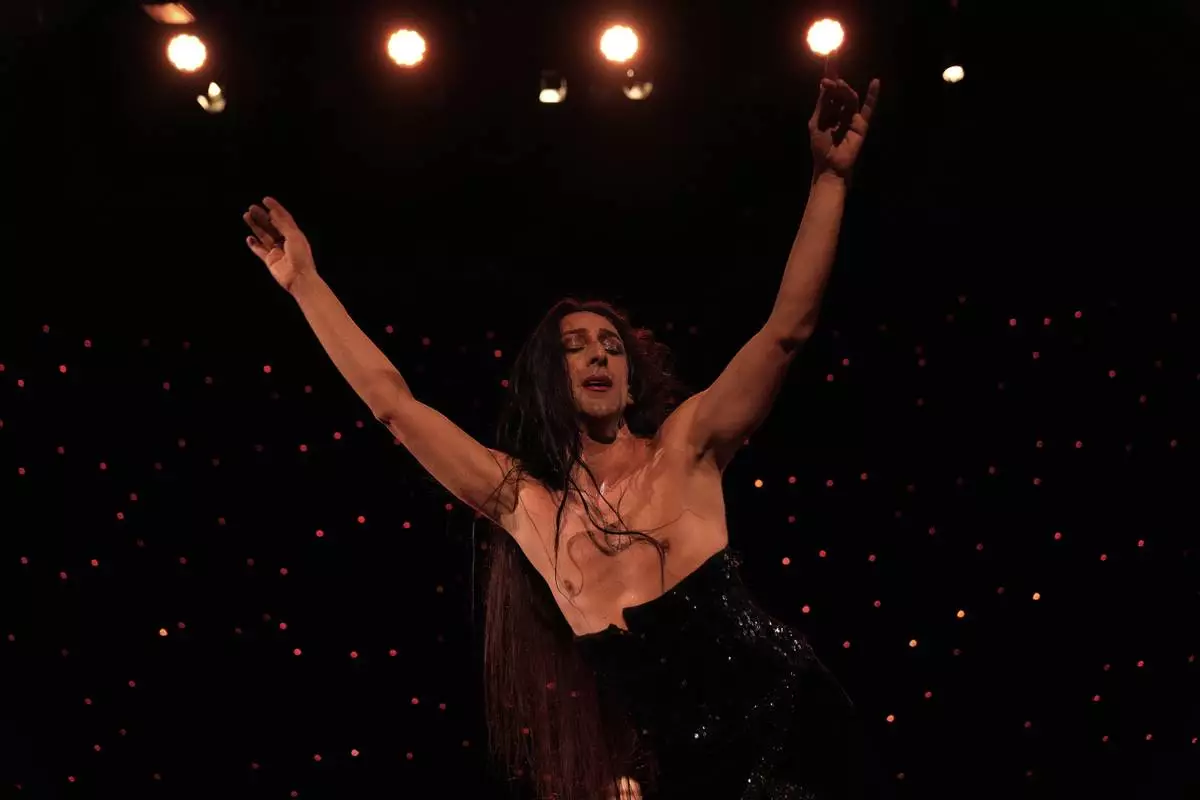
Alexandre Paulikevitch performs at a theatre in Beirut, Lebanon, Thursday, Sept. 11, 2025. (AP Photo/Hussein Malla)
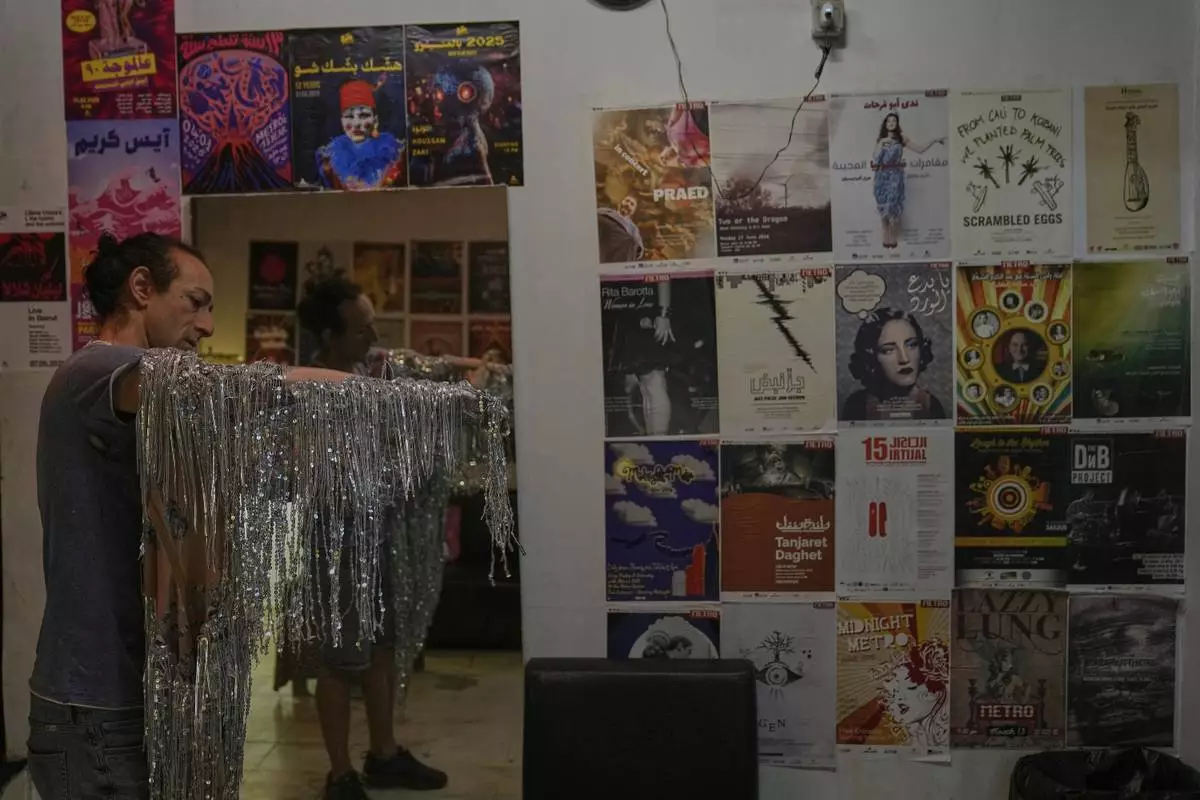
Alexandre Paulikevitch prepares his dress backstage before performing at a theatre in Beirut, Lebanon, Thursday, Sept. 11, 2025. (AP Photo/Hussein Malla)
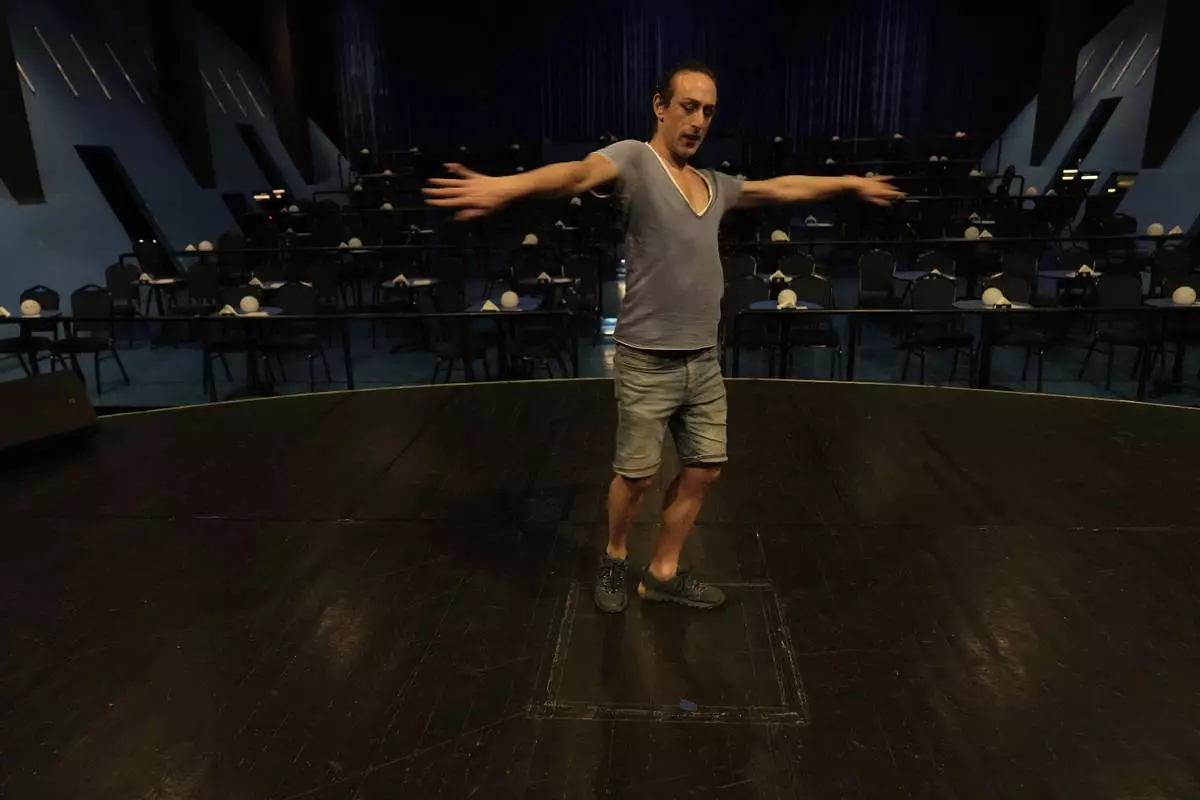
Alexandre Paulikevitch rehearses at a theatre in Beirut, Lebanon, Thursday, Sept. 11, 2025. (AP Photo/Hussein Malla)
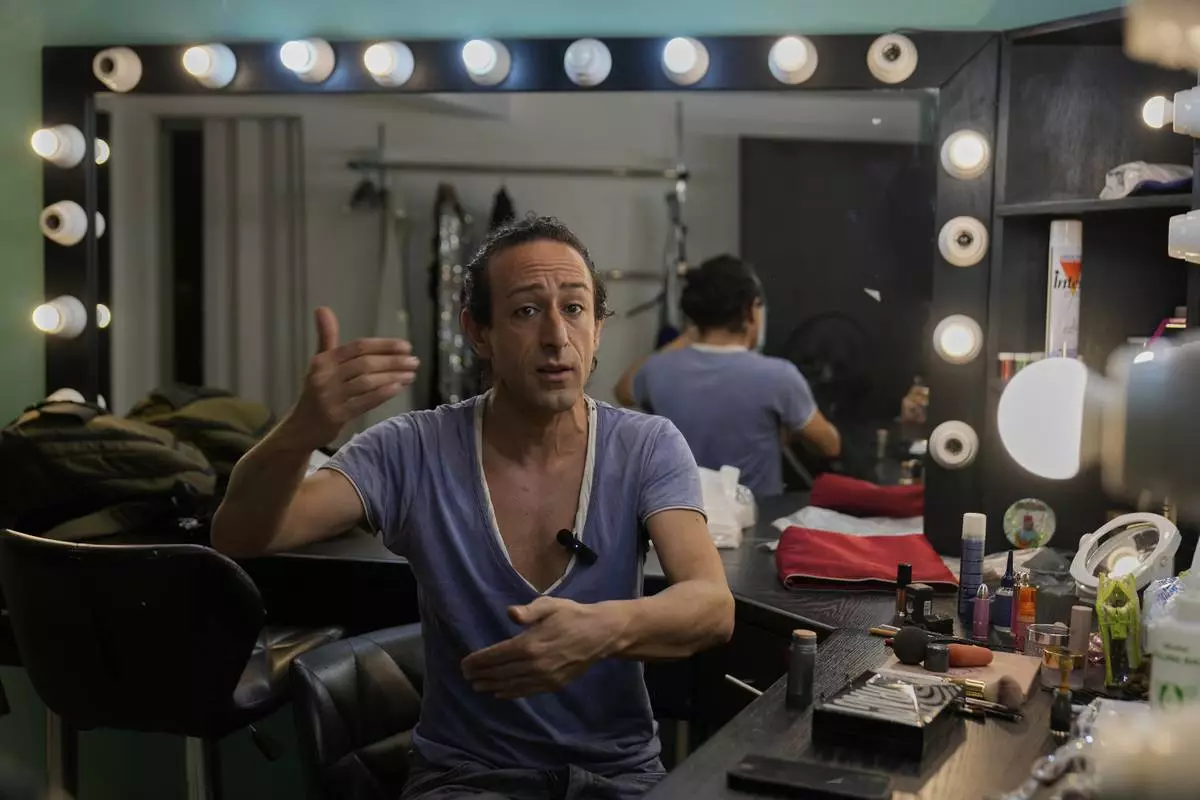
Alexandre Paulikevitch gives an interview backstage before his performace at a theatre in Beirut, Lebanon, Thursday, Sept. 11, 2025. (AP Photo/Hussein Malla)
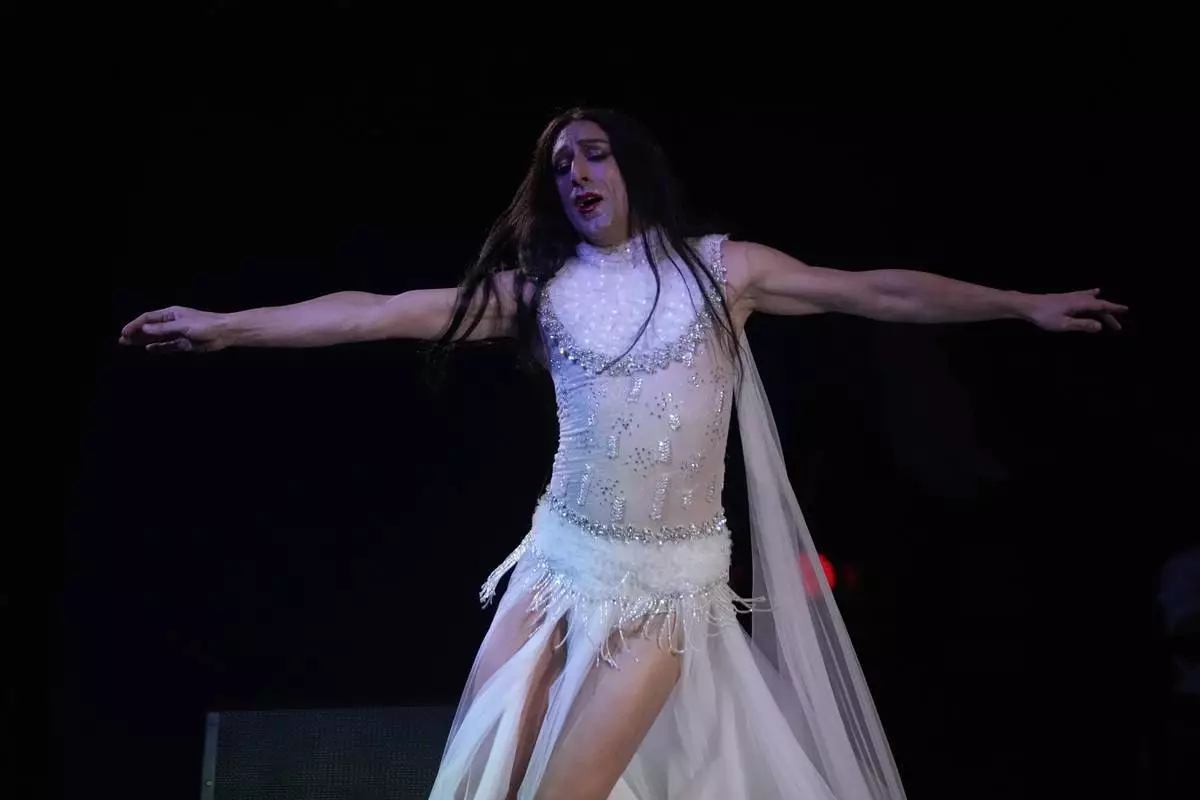
Alexandre Paulikevitch performs at a theatre in Beirut, Lebanon, Thursday, Sept. 11, 2025. (AP Photo/Hussein Malla)