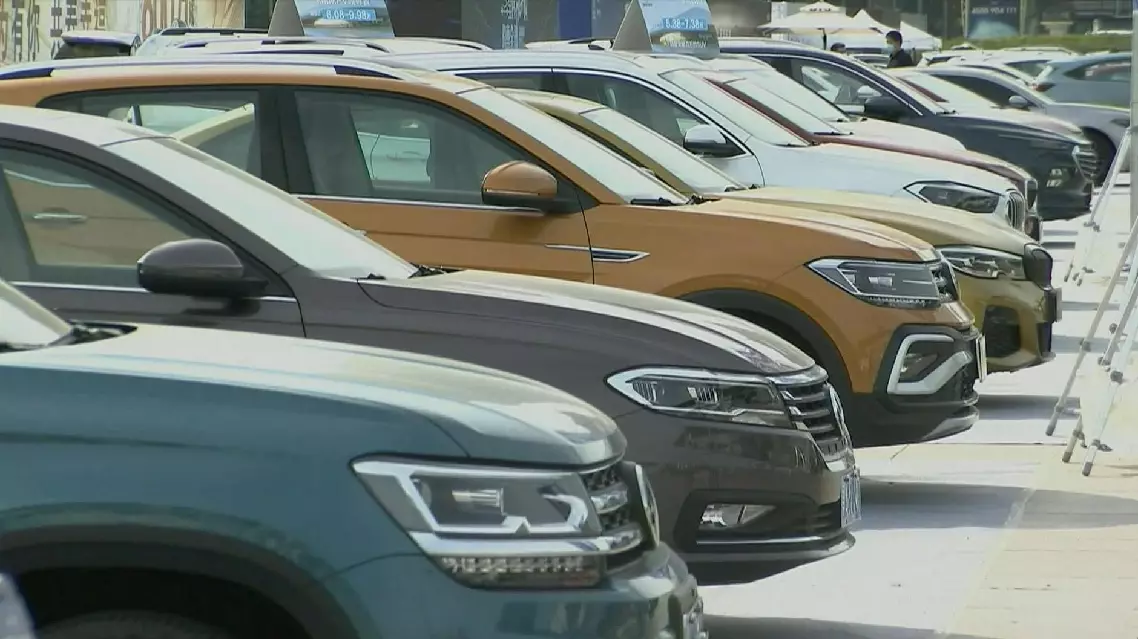
China has set a target of achieving approximately 32.3 million vehicle sales in 2025, according to a plan to stabilize growth in the automotive industry in 2025 and 2026 released by the Ministry of Industry and Information Technology and seven other departments on Saturday.
The added value of the automotive manufacturing sector will grow by around six percent year on year, according to the plan.
The plan identifies expanding domestic consumption as a core strategy, deploying multiple concrete measures.
These include designating 25 pilot cities for public sector vehicle electrification, which will add over 700,000 new energy buses and logistics vehicles.
Efforts will continue to promote new energy vehicles in rural areas and address shortfalls in county-level charging and battery swap infrastructure. Tax reductions or exemptions for new energy vehicle purchases and vehicle and vessel taxes will be implemented, alongside deepening auto insurance reforms, according to the plan.
Meanwhile, the plan will implement vehicle trade-in policies and support the renewal of new energy buses and power batteries; expand aftermarket consumption in areas such as vehicle modification and leasing; and encourage regions with vehicle purchase restrictions to optimize their policies.
"These measures directly address market bottlenecks, forming a comprehensive strategy that covers all scenarios and links urban and rural ends. From an industry perspective, these initiatives are not short-term stimulus but rather provide the most direct support for this year's sales target of 32.3 million vehicles through policy support and scenario expansion," said Chen Shihua, vice secretary-general of the China Association of Automobile Manufacturers (CAAM).
Additionally, the plan focuses on technological innovation to enhance supply quality, accelerating breakthroughs in key technologies such as automotive chips and solid-state batteries, fostering Chinese automotive brands, and dynamically ensuring supply chain stability through the industrial chain security monitoring platform.
Regarding optimizing the industrial development environment, the country will coordinate the efforts to promote full coverage of charging and battery-swapping facilities in every town, integrated stations for photovoltaic power, energy storage, charging and discharging, and vehicle-to-grid (V2G) technology, it said.
China will standardize competition of the automotive industry, crack down on false advertising and commercial defamation in accordance with the law, urge key automakers to fulfill payment term commitments, and strengthen management of vehicle scrapping and power battery recycling, according to the plan.
China plans to sell over 32 mln vehicles in 2025