The ancient art of Khoomei, or throat singing, a unique vocal tradition rooted in nomadic culture, is experiencing a vibrant revival through the efforts of Kazakh inheritors in northwest China's Xinjiang Uygur Autonomous Region.
The captivating sound of Khoomei makes people feel at one with nature. Singers imitate sounds from the natural world and can produce two or more pitches simultaneously, creating a unique and mesmerizing auditory experience.
In Kazakh culture, Khoomei is more than just a musical technique. It symbolizes respect for nature and seeks spiritual coexistence with the environment.
Kazakh Khoomei inheritor Duman Beybithan and his band have been reinterpreting ancient Kazakh lyrics, while blending traditional instruments with their enchanting performances, breathing new life into this rich intangible cultural heritage.
"Throat singing, for us nomads, throughout our nomadic life, it expresses our love and respect for nature. I was blown away when I first heard Khoomei. It has such a unique sound," he said.
Duman Beybithan is a Kazakh throat singer, an inheritor of intangible cultural heritage at the autonomous region level.
His personal journey with Khoomei began in childhood and he formally started his training after middle school, joining the vocal music program at a culture and arts specialty school in 2003.
"I have loved singing ever since I was a child. I also play the dombra. Singing and music run deep in Kazakh culture. When I was around seven or eight years old, my grandpa sang Khoomei to me for the first time. It was mesmerizing. I graduated from middle school in 2003 and joined the vocal music program at a school specializing in culture and arts. This was the place where I really started learning Khoomei. Kazakh throat singing is mostly in the bass register, but can also be performed in the soprano and alto range. Two different types of sounds could even be produced at once. In our band, I handle all the bass parts - because, well, I'm good at it! Having the right people in the right positions is important," he said.
In 2006, Duman and his friends formed a band that would become instrumental in revitalizing the tradition.
"Back in 2006, a few friends and I decided to start a band. We took traditional lyrics, and put our own spin on them, and also introduced traditional instruments. That's when I really started singing Khoomei. The first time we performed on stage, the audience was amazed. From then on, we have dedicated ourselves to the art of throat singing. We continued to perform Khoomei on a daily basis and have been refining our style ever since. I've traveled through towns and villages in the suburbs of Altay City and many other places. Wherever I went, people asked me, 'What's the difference between Mongolian throat singing and Kazakh throat singing?' Since we are all people of the steppe, our cultures are very intertwined. I don't think there's much of a difference. The singing style is almost the same, and the only real distinction lies in the language," he said.
Looking to the future, Duman has ambitious plans for preserving and developing Khoomei.
"I really hope we can establish a dedicated Kazakh Throat Singing Art Association. Through this, we can really advance the study of Khoomei, refine the techniques, and further promote the art. I really want the younger generation to continue on with the tradition of Kazakh throat singing, share it wider with the world, and help more people enjoy this amazing art form," he said.
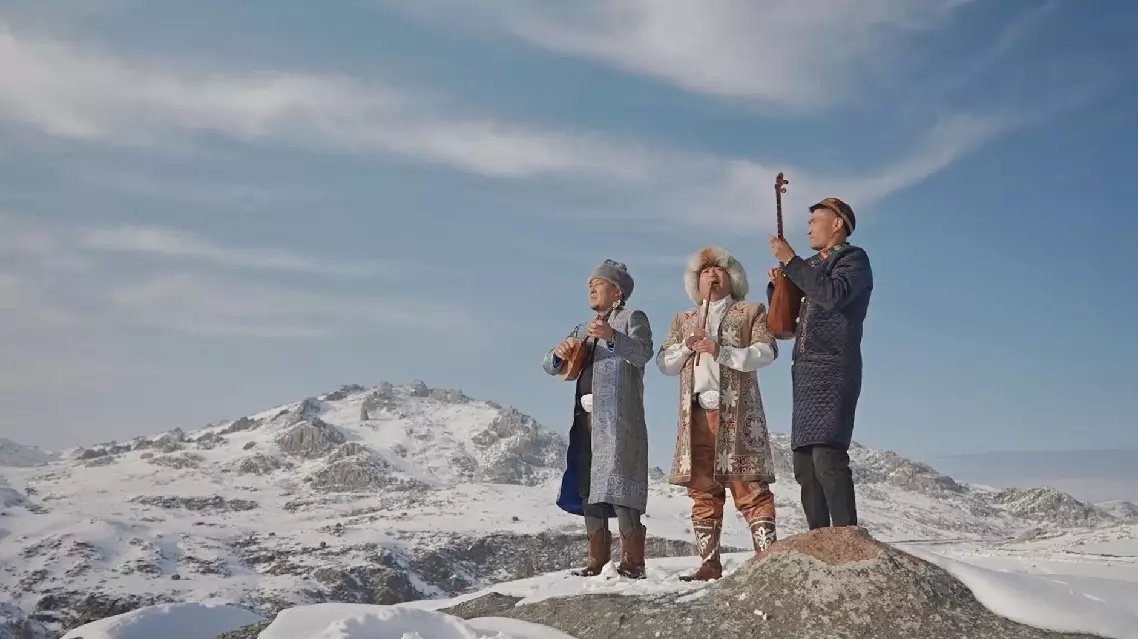
Xinjiang's Kazakh throat singing inheritor leads revival of ancient art
Xinjiang's Kazakh throat singing inheritor leads revival of ancient art