SANTIAGO DE COMPOSTELA, Spain (AP) — While some Barcelona residents sought to repel a tsunami of tourists with plastic water pistols, a neighborhood association in Santiago de Compostela opted for a friendlier approach: a guide to good manners for visitors to their town, the endpoint of the Catholic world's most famous pilgrimage.
Translated into several languages, the group posted it throughout the northwestern Spanish city and distributed it at its ever-growing number of hostels. It reminded tourists to keep noise down, respect traffic rules and use plastic protectors on hiking poles to avoid damaging the narrow cobblestone streets, among other things.
Click to Gallery
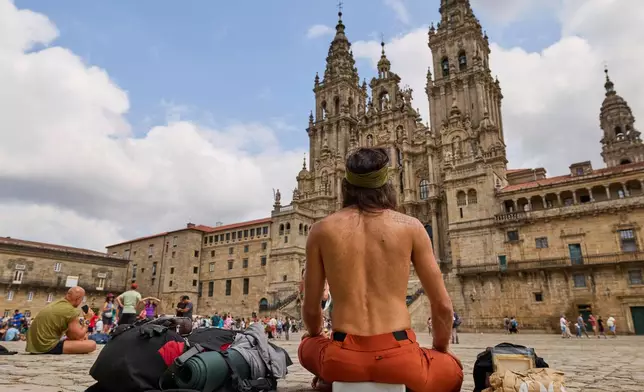
Pilgrims and tourists rest in front of the cathedral in Santiago de Compostela, northwestern Spain, Thursday, Aug. 21, 2025. (AP Photo/Lalo Villar)
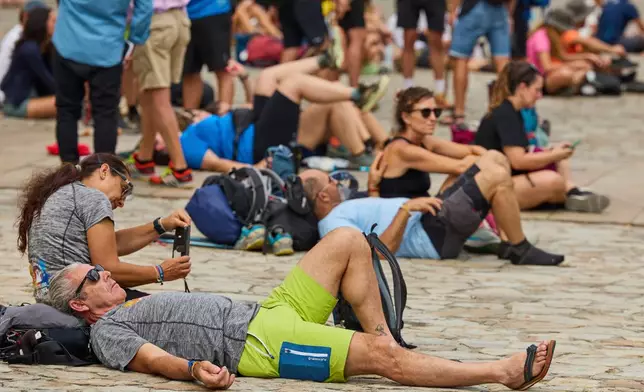
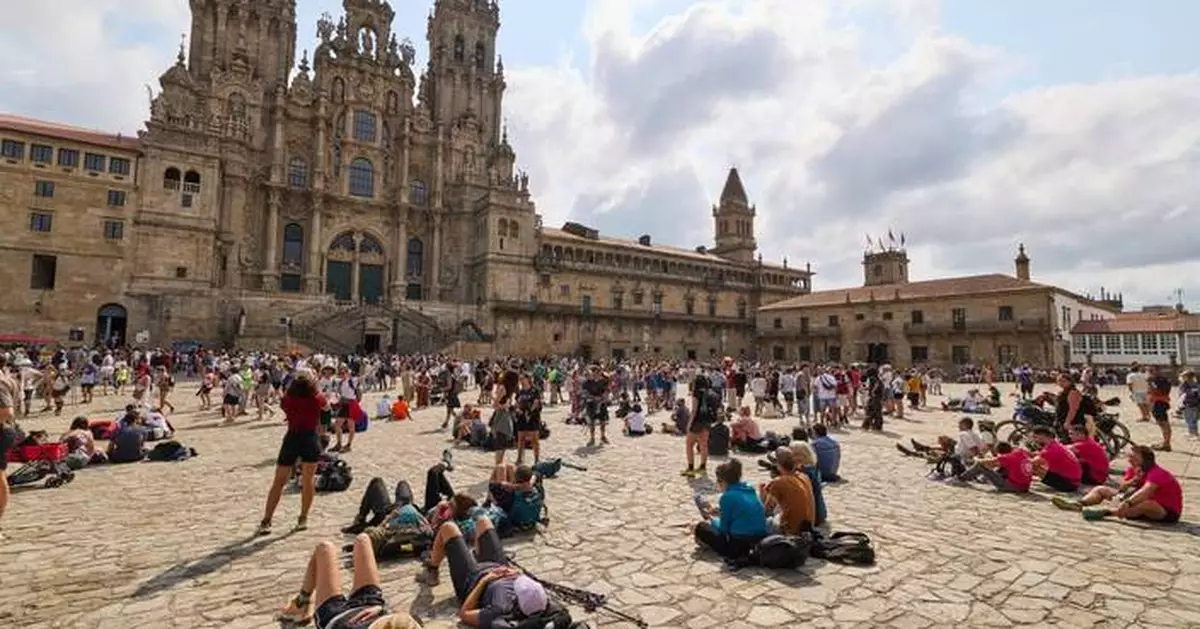
Pilgrims and tourists rest in front of the cathedral in Santiago de Compostela, northwestern Spain, Thursday, Aug. 21, 2025. (AP Photo/Lalo Villar)
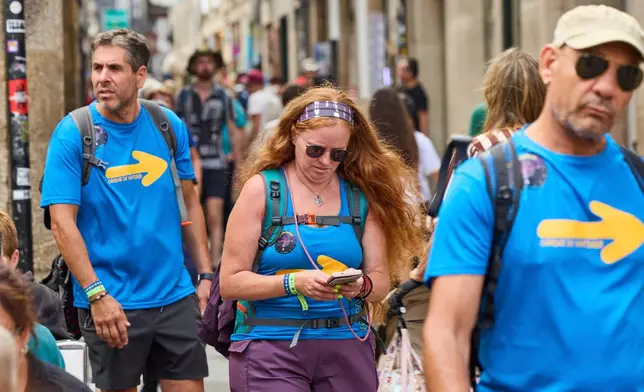
Pilgrims walk in Santiago de Compostela downtown, northwestern Spain, Thursday, Aug. 21, 2025. (AP Photo/Lalo Villar)
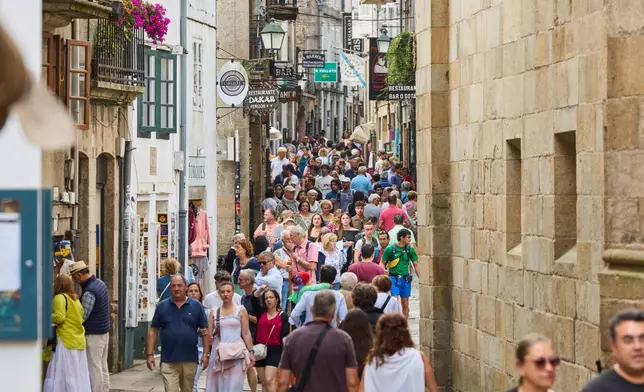
Pilgrims and tourists walk in Santiago de Compostela downtown, northwestern Spain, Thursday, Aug. 21, 2025. (AP Photo/Lalo Villar)
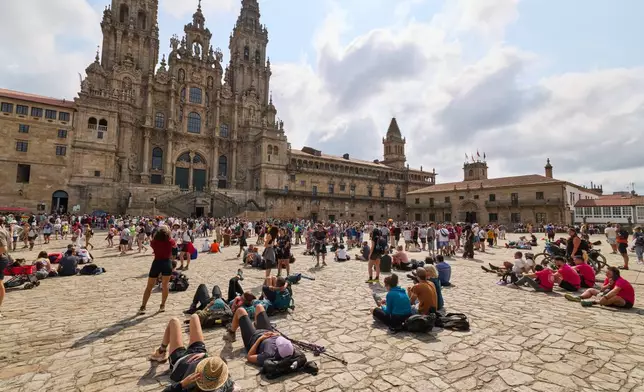
Pilgrims and tourists rest in front of the cathedral in Santiago de Compostela, northwestern Spain, Thursday, Aug. 21, 2025. (AP Photo/Lalo Villar)
To little avail, it would seem. Large groups still take over the streets singing hymns, bikes ride in the wrong direction and metal pole tips clatter against the ground. Santiago's social media is awash with photos denouncing a lack of decorum.
Tourists' greater offense, though, stems from their sheer numbers; the old town and squares surrounding the cathedral holding the reputed tomb of Saint James the Apostle — and that was the center of town life for a millennium — today are almost exclusively the domain of outsiders, whose influx has served to expel residents. This dynamic has left Santiago emerging as the latest global destination where longtime residents have grown embittered by the overtourism transforming their community.
“We do not have tourism-phobia. We have always lived in harmony with tourism, but when it gets out of hand, when the pressure goes beyond what is reasonable, that is when rejection arises,” said Roberto Almuíña, president of the neighborhood association in the old town that's a UNESCO World Heritage site.
The “Camino de Santiago,” known in English as the Way of St. James, dates back to the 9th century, with pilgrims following its converging trails for up to hundreds of kilometers on paths originating in Portugal and France. The modern popularity it gained with the 2010 film “The Way” starring Martin Sheen was turbocharged more recently by social media and experience-driven travel after the coronavirus pandemic.
Last year, a record half-million people signed up to trek one of the approved routes to the cathedral — equal to five times the city’s resident population, and marking a 725-fold increase over the last four decades. Added to those masses are ordinary tourists not arriving by trail.
The proliferation of short-term rentals drove annual rent prices up 44% from 2018 to 2023, according to a study commissioned by the city council to the Fundación Universidade da Coruña. That led municipal authorities in May to request the regional government classify the area as a high-pressure zone, like Barcelona or San Sebastian, which would help to limit rent increases.
Already, last November, Santiago's city council enacted a ban on Airbnb-style tourist accommodations in the historic center, arguing at the time in a statement that it was “a necessity arising from its significant growth, which has clear effects on the number of housing units available for residents and on their price.”
Sihara Pérez, a researcher at the University of Santiago, described finding anywhere to rent in the city as “mission impossible,” while Antonio Jeremías, 27, told The Associated Press that he's considering moving back in with his mother, because his salary working full-time at a warehouse isn’t enough to make ends meet.
Andrea Dopazo, 32, tried to move out of her parents’ house in a neighborhood located fully 5 kilometers (3 miles) from the city center. But her desire to continue living in the place where she grew up and community ties are strong proved futile, and she had to take something in a town outside Santiago.
“The only people who have been able to stay in the neighborhoods are those who have been lucky — or unlucky — enough to inherit an apartment from their grandparents, uncles or parents,” said Dopazo, who works in human resources.
Across Spain, there have been major street protests against unaffordable housing, with many linking the housing crunch to tourists gobbling up short-term rentals.
In the old town, tourists can stay in small hotels in former homes or huge hostels converted from former seminaries, which aren’t subject to the ban. But in the hustle to cash in, some short-term rentals are apparently flouting the restriction, evidenced by tenants collecting keys from lockboxes hung outside buildings.
“Some follow the rules and others don’t, but this is the model that is really limiting residential housing,” said Montse Vilar, from another neighborhood group, Xuntanza.
Santiago’s City Hall told The Associated Press in a statement that it is “doing everything in its power to enforce the regulations” and that it takes action whenever it detects a case of an illegal apartment housing tourists.
Between 2000 and 2020, the historic center lost about half its permanent population, now reduced to just 3,000 residents who “resist like the Gauls” behind buildings' thick stone facades, Almuíña said. There are no hardware stores or newsstands left, and just one bakery. A couple grocery stores coexist with cafes, ice cream parlors and souvenir shops.
“The city has emptied out. You only have to take a walk to see that all we've got are closed, abandoned buildings that are falling apart,” Almuíña added.
This year, the number of pilgrims reaching Santiago is on track to set another record. The surge is further souring Santiago's residents on their city's tourism-centric economic model; already half of them rejected it as of 2023, up from just over one-quarter a decade earlier, according to a study conducted by Rede Galabra, a research group focused on cultural studies at the University of Santiago.
Even some of the pilgrims are noting a shift, like Spaniards Álvaro Castaño and Ale Osteso who met on the route four years ago and have returned every year since.
“The Camino is becoming more and more known, many more people are coming,” Osteso said one recent morning at the end of their trek, among tour groups of pilgrims in bright, color-coordinated outfits and families snapping pictures. “Spirituality seems to have been a little lost at times.”
Associated Press religion coverage receives support through the AP’s collaboration with The Conversation US, with funding from Lilly Endowment Inc. The AP is solely responsible for this content.
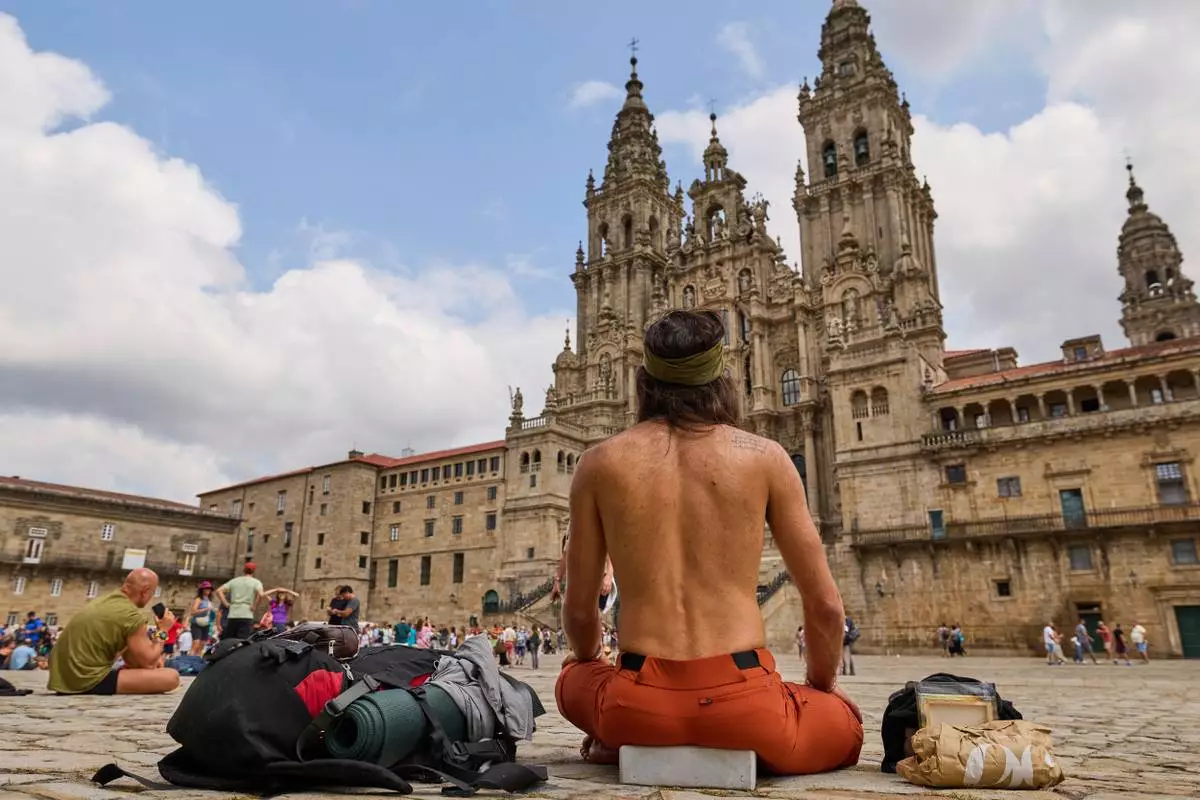
Pilgrims and tourists rest in front of the cathedral in Santiago de Compostela, northwestern Spain, Thursday, Aug. 21, 2025. (AP Photo/Lalo Villar)
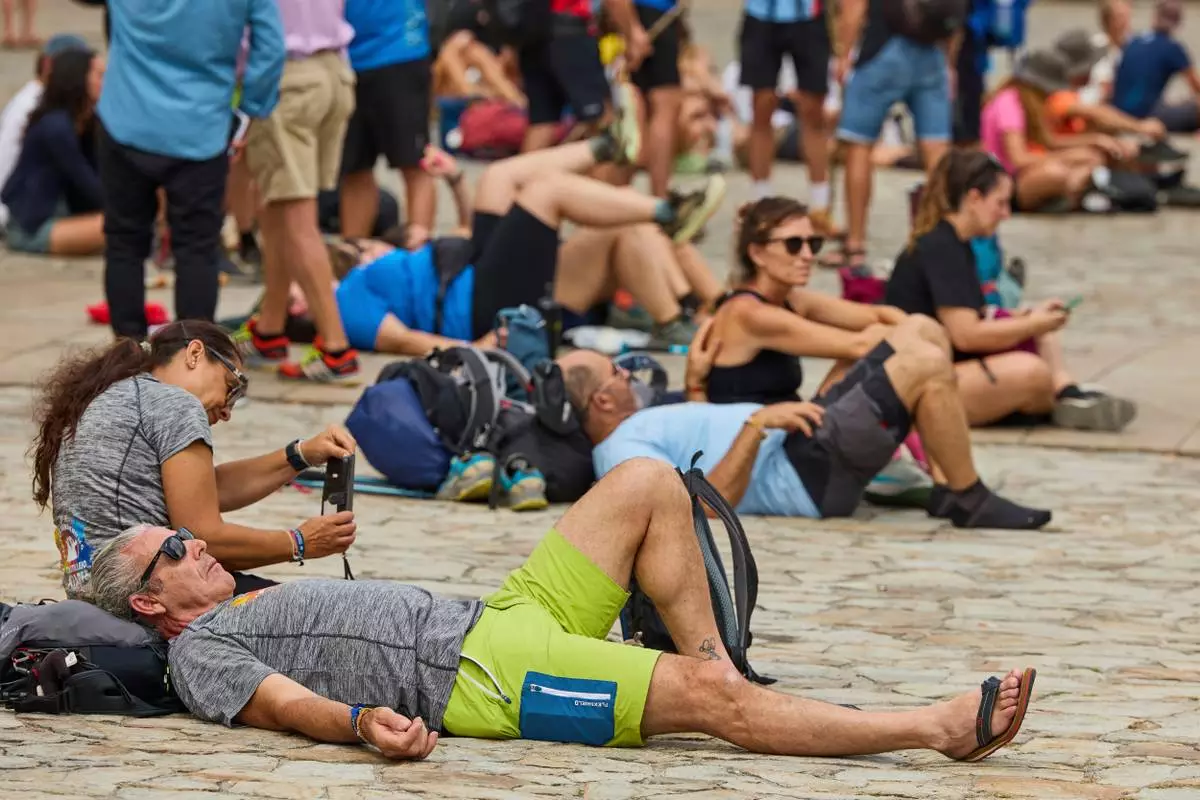
Pilgrims and tourists rest in front of the cathedral in Santiago de Compostela, northwestern Spain, Thursday, Aug. 21, 2025. (AP Photo/Lalo Villar)
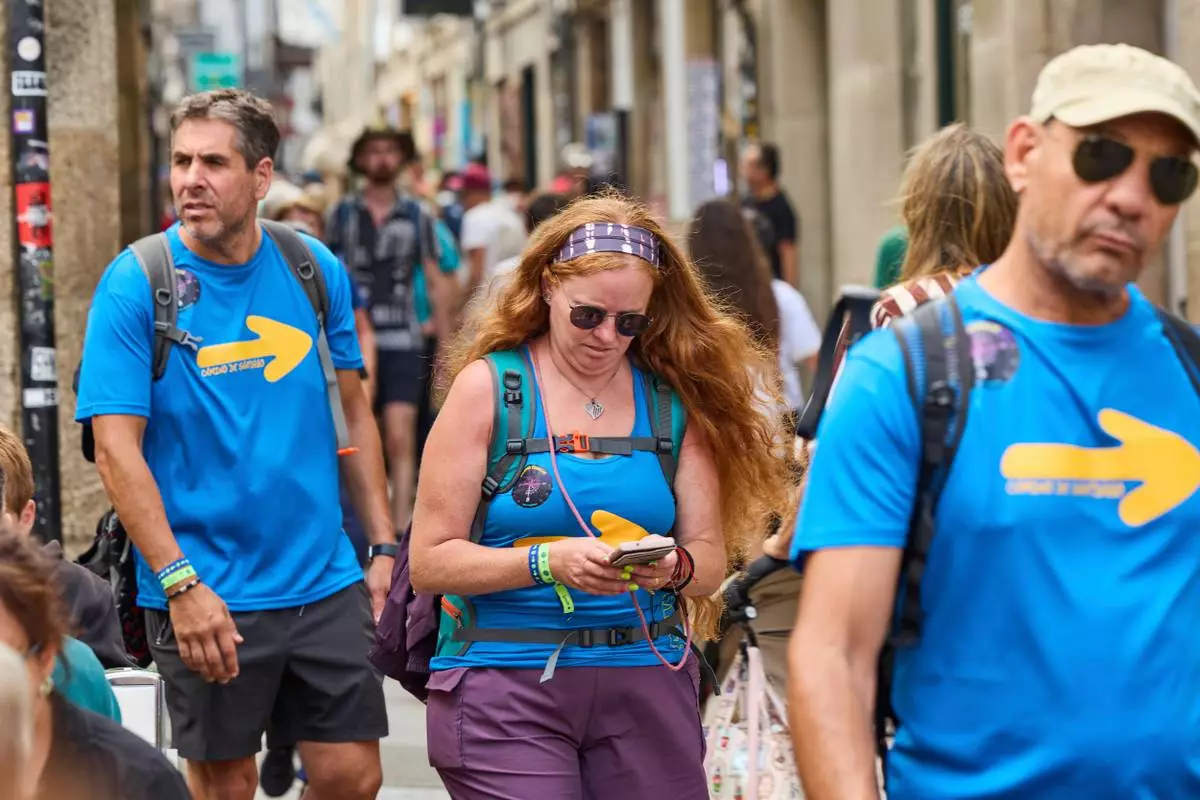
Pilgrims walk in Santiago de Compostela downtown, northwestern Spain, Thursday, Aug. 21, 2025. (AP Photo/Lalo Villar)
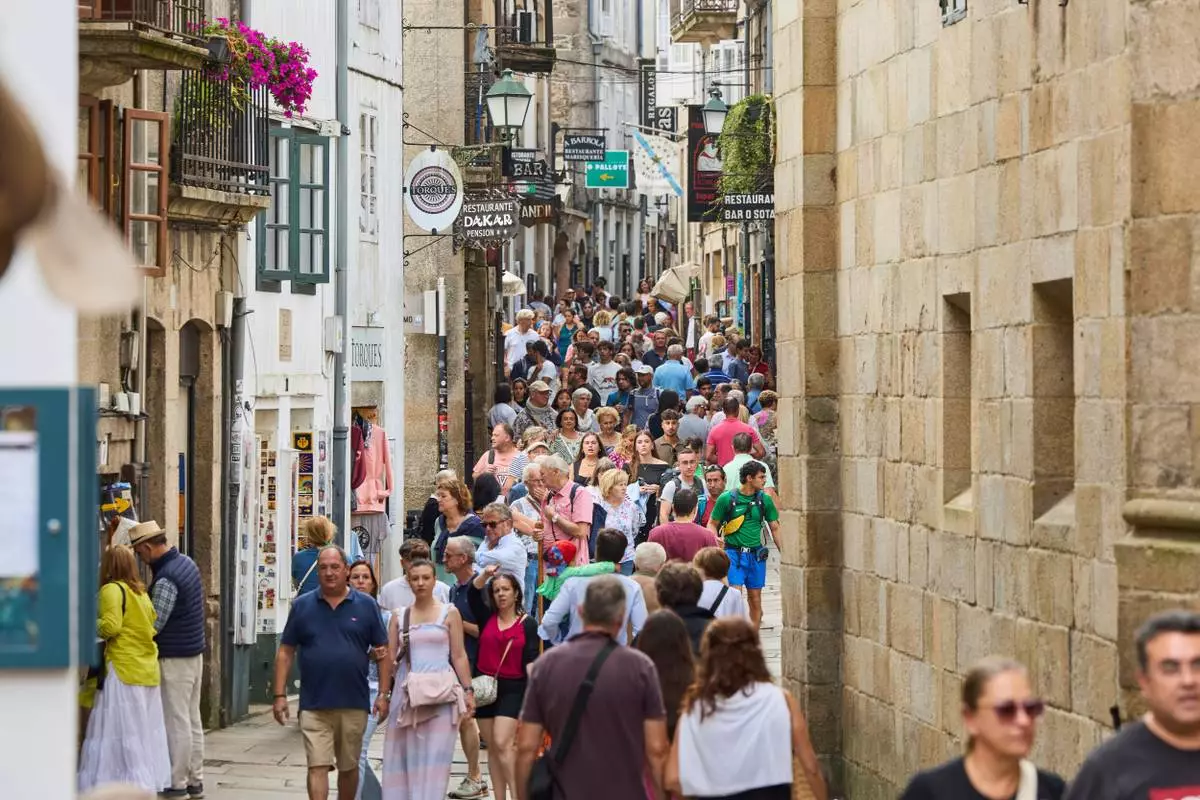
Pilgrims and tourists walk in Santiago de Compostela downtown, northwestern Spain, Thursday, Aug. 21, 2025. (AP Photo/Lalo Villar)
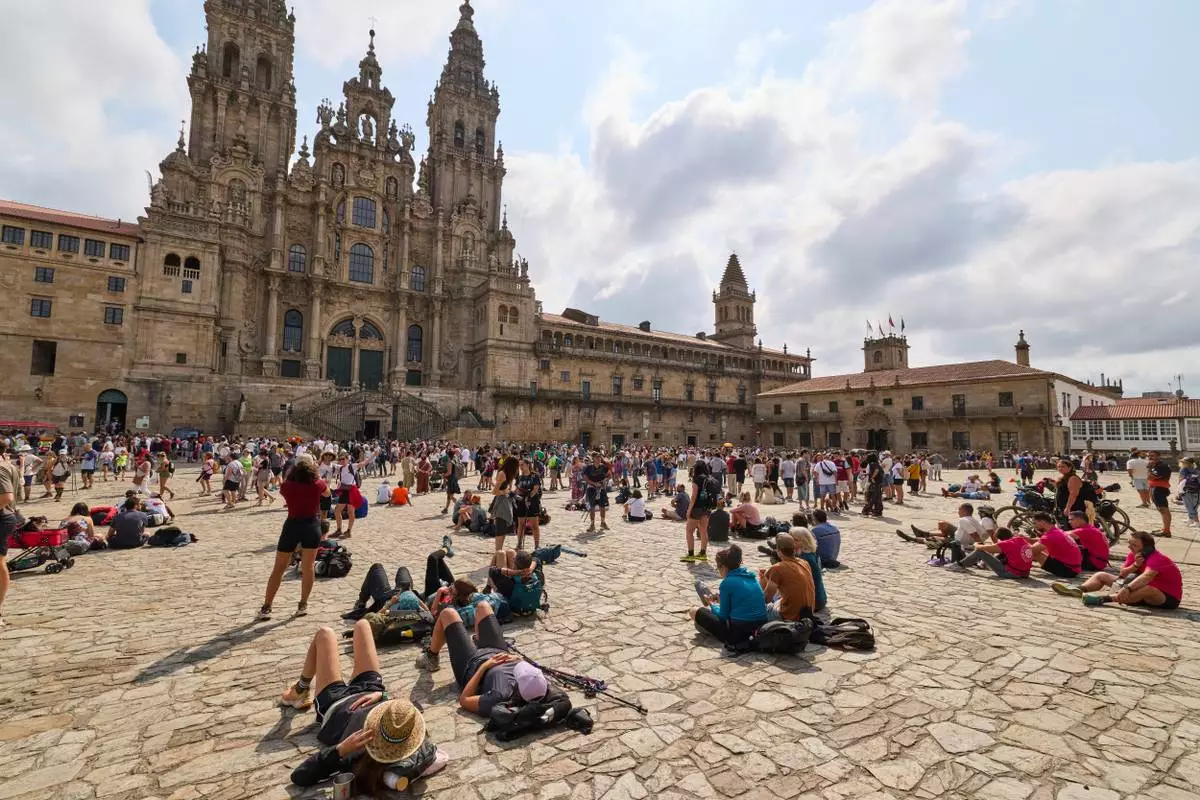
Pilgrims and tourists rest in front of the cathedral in Santiago de Compostela, northwestern Spain, Thursday, Aug. 21, 2025. (AP Photo/Lalo Villar)