The strained political relations between India and Pakistan spilled onto the cricket field when no handshakes were exchanged between players — before or after their Asia Cup game in Dubai.
The Pakistan Cricket Board said match referee Andy Pycroft of Zimbabwe requested both captains — Suryakumar Yadav of India and Salman Ali Agha of Pakistan — not to shake hands during the pre-game coin toss on Sunday.
The PCB, in a late-night statement released in Urdu to domestic media, described Pycroft’s decision as “against sportsmanship” and said team manager Naveed Akram Cheema registered a “formal protest against the match referee’s behavior" with the International Cricket Council. The ICC is yet to issue a public response.
“Utterly disappointing to witness the lack of sportsmanship,” PCB chairman Mohsin Naqvi wrote in a post on X. “Dragging politics into the game goes against the very spirit of sports. Lets hope future victories are celebrated by all teams with grace.”
Naqvi is also the current president of the Asian Cricket Council and demanded “an immediate removal” of Pycroft from further duties at the Asia Cup.
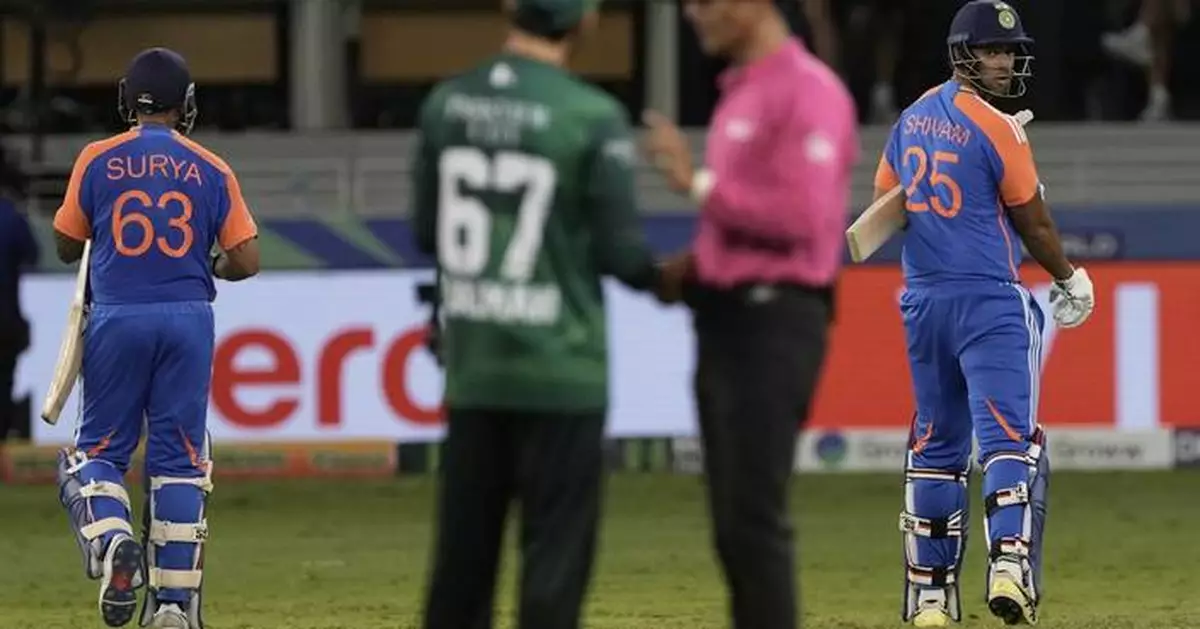
Suryakumar, who hit the winning runs for India, didn't wait for the customary handshakes with opposing players after the match before walking to the dressing room along with his teammate Shivam Dube.
Agha reacted by skipping a post-match TV interview with former India international cricketer Sanjay Manjrekar, a move which Pakistan coach Mike Hesson described as a “follow-on effect.”
“We were ready to shake hands at the end of the game, we obviously are disappointed that our opposition didn’t do that,” added Hesson, a New Zealander who was appointed to the Pakistan job in May. “We sort of went over there to shake hands and they’d already gone into the changing room.
"That was a disappointing way for the match to finish, and a match we were disappointed for the way we played but we were certainly willing to shake hands.”
Sunday’s game was the first between the top cricket teams from India and Pakistan since the Pahalgam attack in April, when gunmen opened fire on a group of tourists in Indian-controlled Kashmir.
India is the designated host of the eight-nation Asia Cup, but the Twenty20 tournament is being played in the United Arab Emirates because the India and Pakistan cricket teams don't play on each other’s territory.
There was also uncertainty over India’s participation in the Asia Cup until the government clarified that the cricketers would be allowed to compete against Pakistan in multinational tournaments.
Suryakumar said the Indian team was aligned with the Board of Control for Cricket in India and government instructions that players wouldn't shake hands with Pakistan players.
“Our government and BCCI, we were aligned today,” Suryakumar said in a post-match news conference. “We came here to just play the game. We stand with all the victims of Pahalgam terror attacks, stand with their families, and express our solidarity."
Both teams are likely to play again in the Super 4 stage later this week, if they place first and second in Group A.
AP cricket: https://apnews.com/hub/cricket
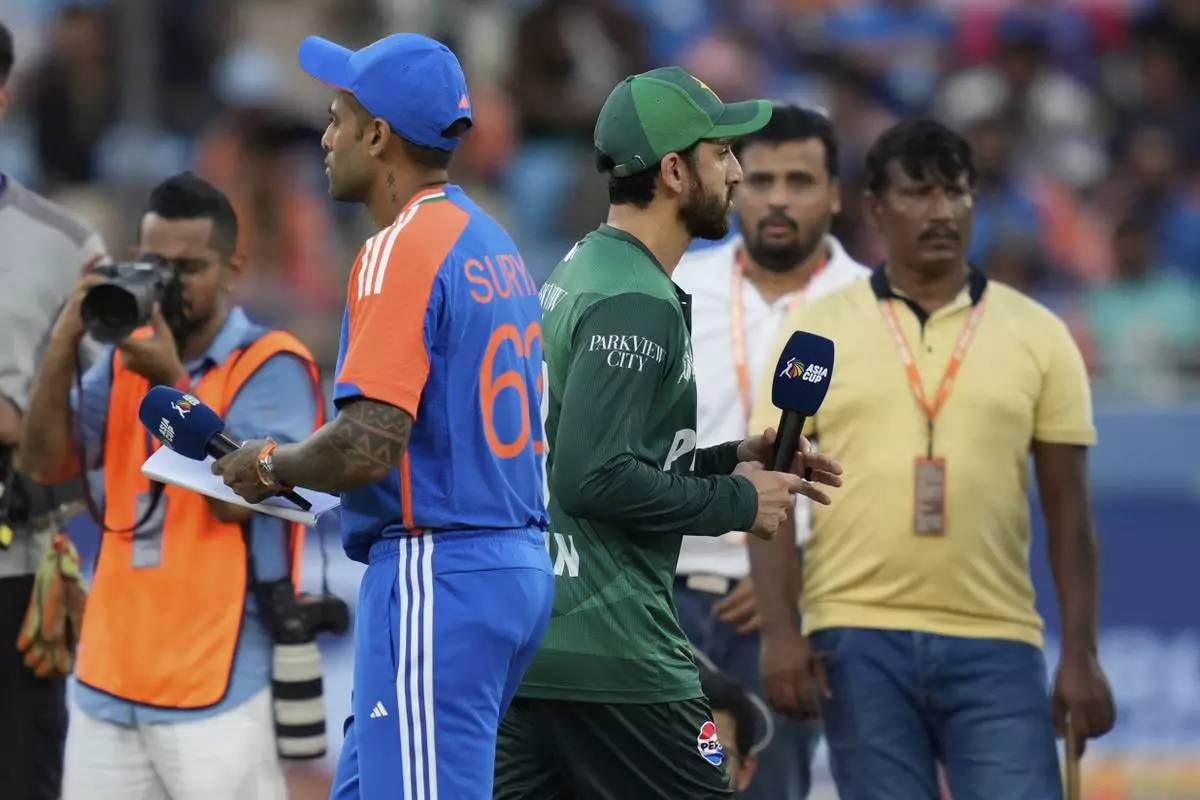
Pakistan's captain Salman Agha, right, walks past India's captain Suryakumar Yadav after the coin toss ahead of the Asia Cup cricket match between India and Pakistan at Dubai International Cricket Stadium in Dubai, United Arab Emirates, Sunday, Sept. 14, 2025. (AP Photo/Altaf Qadri)
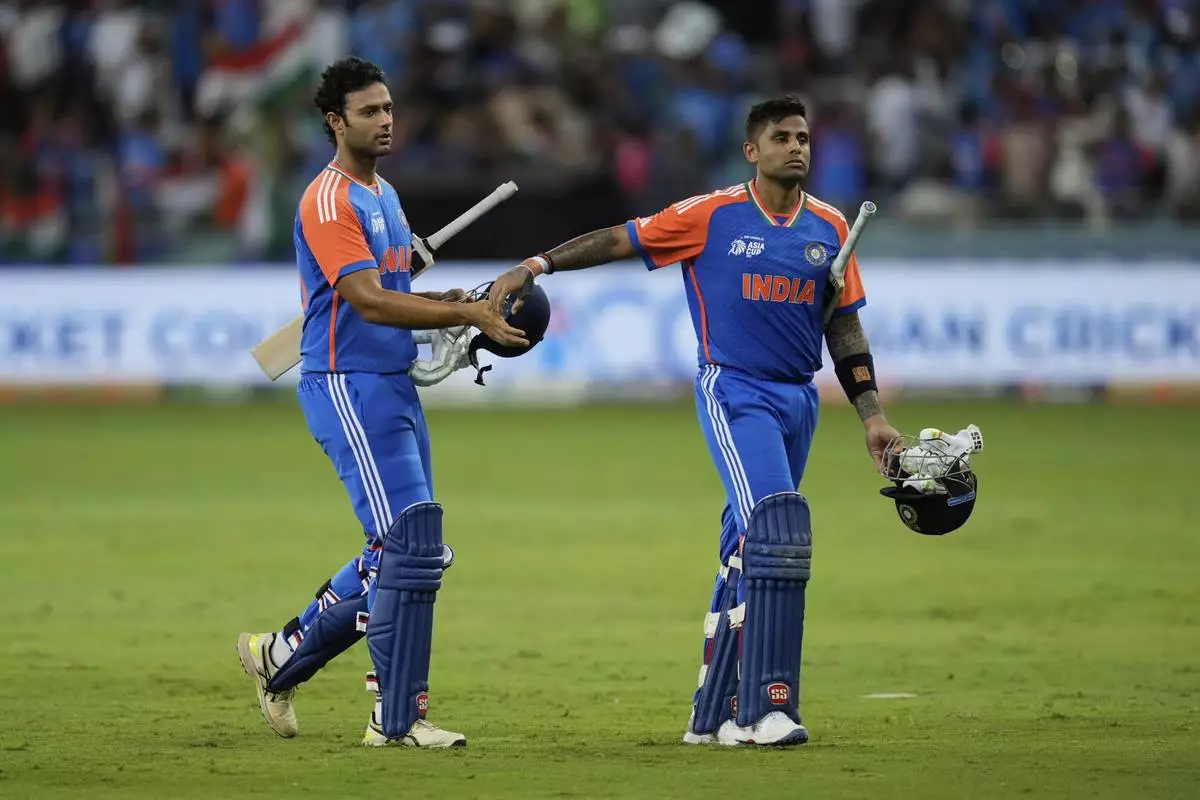
India's captain Suryakumar Yadav, right celebrates with batting partner Shivam Dube after their win in the Asia Cup cricket match against Pakistan at Dubai International Cricket Stadium in Dubai, United Arab Emirates, Sunday, Sept. 14, 2025. (AP Photo/Altaf Qadri)
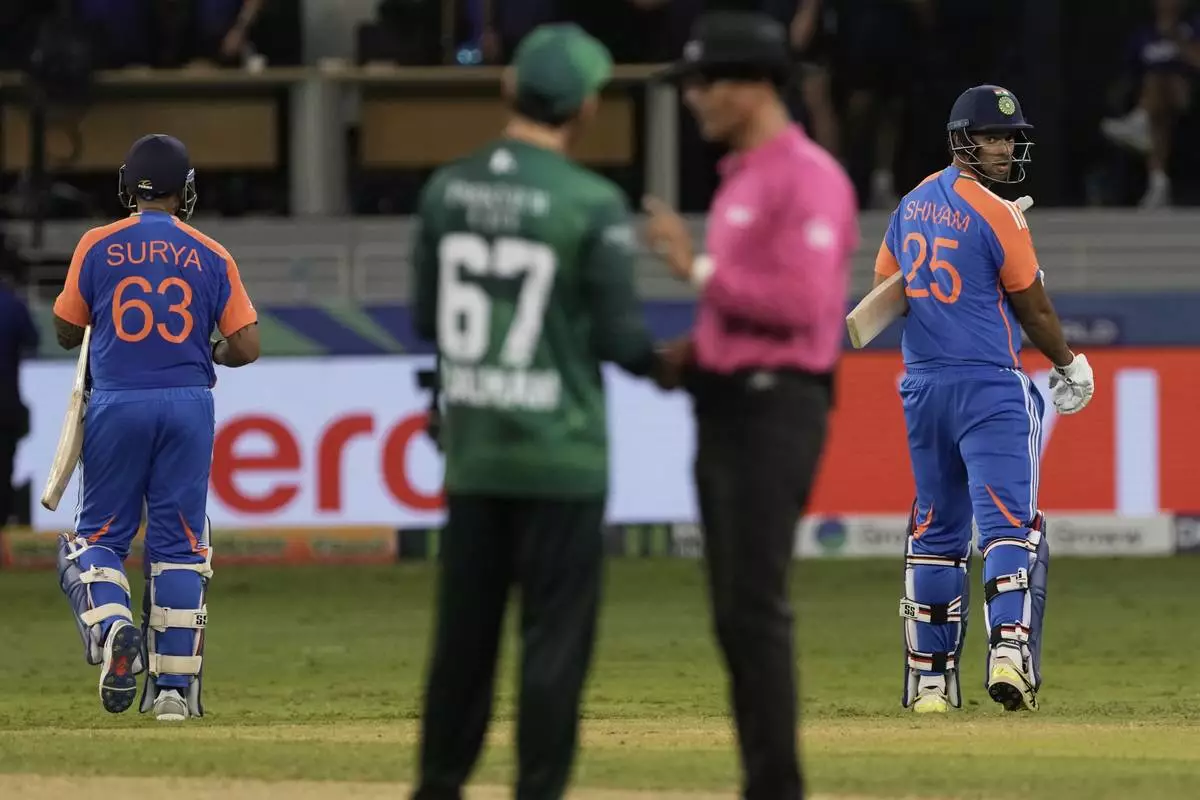
India's captain Suryakumar Yadav, left, and batting partner Shivam Dube, right, leave the field after their win in the Asia Cup cricket match against Pakistan at Dubai International Cricket Stadium in Dubai, United Arab Emirates, Sunday, Sept. 14, 2025. (AP Photo/Fatima Shbair)
MADRID (AP) — Venezuelans living in Spain are watching the events unfold back home with a mix of awe, joy and fear.
Some 600,000 Venezuelans live in Spain, home to the largest population anywhere outside the Americas. Many fled political persecution and violence but also the country’s collapsing economy.
A majority live in the capital, Madrid, working in hospitals, restaurants, cafes, nursing homes and elsewhere. While some Venezuelan migrants have established deep roots and lives in the Iberian nation, others have just arrived.
Here is what three of them had to say about the future of Venezuela since U.S. forces deposed Nicolás Maduro.
David Vallenilla woke up to text messages from a cousin on Jan. 3 informing him “that they invaded Venezuela.” The 65-year-old from Caracas lives alone in a tidy apartment in the south of Madrid with two Daschunds and a handful of birds. He was in disbelief.
“In that moment, I wanted certainty,” Vallenilla said, “certainty about what they were telling me.”
In June 2017, Vallenilla’s son, a 22-year-old nursing student in Caracas named David José, was shot point-blank by a Venezuelan soldier after taking part in a protest near a military air base in the capital. He later died from his injuries. Video footage of the incident was widely publicized, turning his son’s death into an emblematic case of the Maduro government’s repression against protesters that year.
After demanding answers for his son’s death, Vallenilla, too, started receiving threats and decided two years later to move to Spain with the help of a nongovernmental organization.
On the day of Maduro’s capture, Vallenilla said his phone was flooded with messages about his son.
“Many told me, ‘Now David will be resting in peace. David must be happy in heaven,’” he said. “But don't think it was easy: I spent the whole day crying.”
Vallenilla is watching the events in Venezuela unfold with skepticism but also hope. He fears more violence, but says he has hope the Trump administration can effect the change that Venezuelans like his son tried to obtain through elections, popular protests and international institutions.
“Nothing will bring back my son. But the fact that some justice has begun to be served for those responsible helps me see a light at the end of the tunnel. Besides, I also hope for a free Venezuela.”
Journalist Carleth Morales first came to Madrid a quarter-century ago when Hugo Chávez was reelected as Venezuela's president in 2000 under a new constitution.
The 54-year-old wanted to study and return home, taking a break of sorts in Madrid as she sensed a political and economic environment that was growing more and more challenging.
“I left with the intention of getting more qualified, of studying, and of returning because I understood that the country was going through a process of adaptation between what we had known before and, well, Chávez and his new policies," Morales said. "But I had no idea that we were going to reach the point we did.”
In 2015, Morales founded an organization of Venezuelan journalists in Spain, which today has hundreds of members.
The morning U.S. forces captured Maduro, Morales said she woke up to a barrage of missed calls from friends and family in Venezuela.
“Of course, we hope to recover a democratic country, a free country, a country where human rights are respected,” Morales said. “But it’s difficult to think that as a Venezuelan when we’ve lived through so many things and suffered so much.”
Morales sees it as unlikely that she would return home, having spent more than two decades in Spain, but she said she hopes her daughters can one day view Venezuela as a viable option.
“I once heard a colleague say, ‘I work for Venezuela so that my children will see it as a life opportunity.’ And I adopted that phrase as my own. So perhaps in a few years it won’t be me who enjoys a democratic Venezuela, but my daughters.”
For two weeks, Verónica Noya has waited for her phone to ring with the news that her husband and brother have been freed.
Noya’s husband, Venezuelan army Capt. Antonio Sequea, was imprisoned in 2020 after having taken part in a military incursion to oust Maduro. She said he remains in solitary confinement in the El Rodeo prison in Caracas. For 20 months, Noya has been unable to communicate with him or her brother, who was also arrested for taking part in the same plot.
“That’s when my nightmare began,” Noya said.
Venezuelan authorities have said hundreds of political prisoners have been released since Maduro's capture, while rights groups have said the real number is a fraction of that. Noya has waited in agony to hear anything about her four relatives, including her husband's mother, who remain imprisoned.
Meanwhile, she has struggled with what to tell her children when they ask about their father's whereabouts. They left Venezuela scrambling and decided to come to Spain because family roots in the country meant that Noya already had a Spanish passport.
Still, she hopes to return to her country.
“I’m Venezuelan above all else,” Noya said. “And I dream of seeing a newly democratic country."
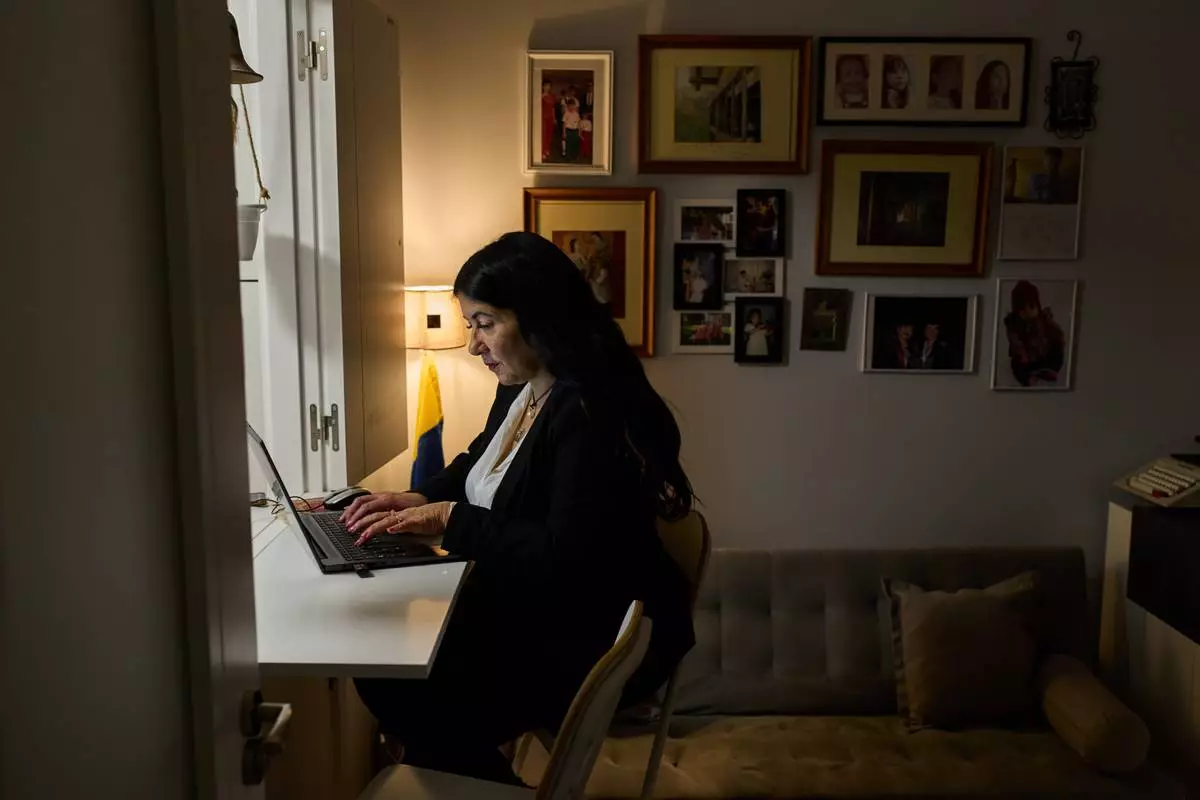
Venezuelan journalist Caleth Morales works in her apartment's kitchen in Madrid, Wednesday, Jan. 14, 2026. (AP Photo/Bernat Armangue)
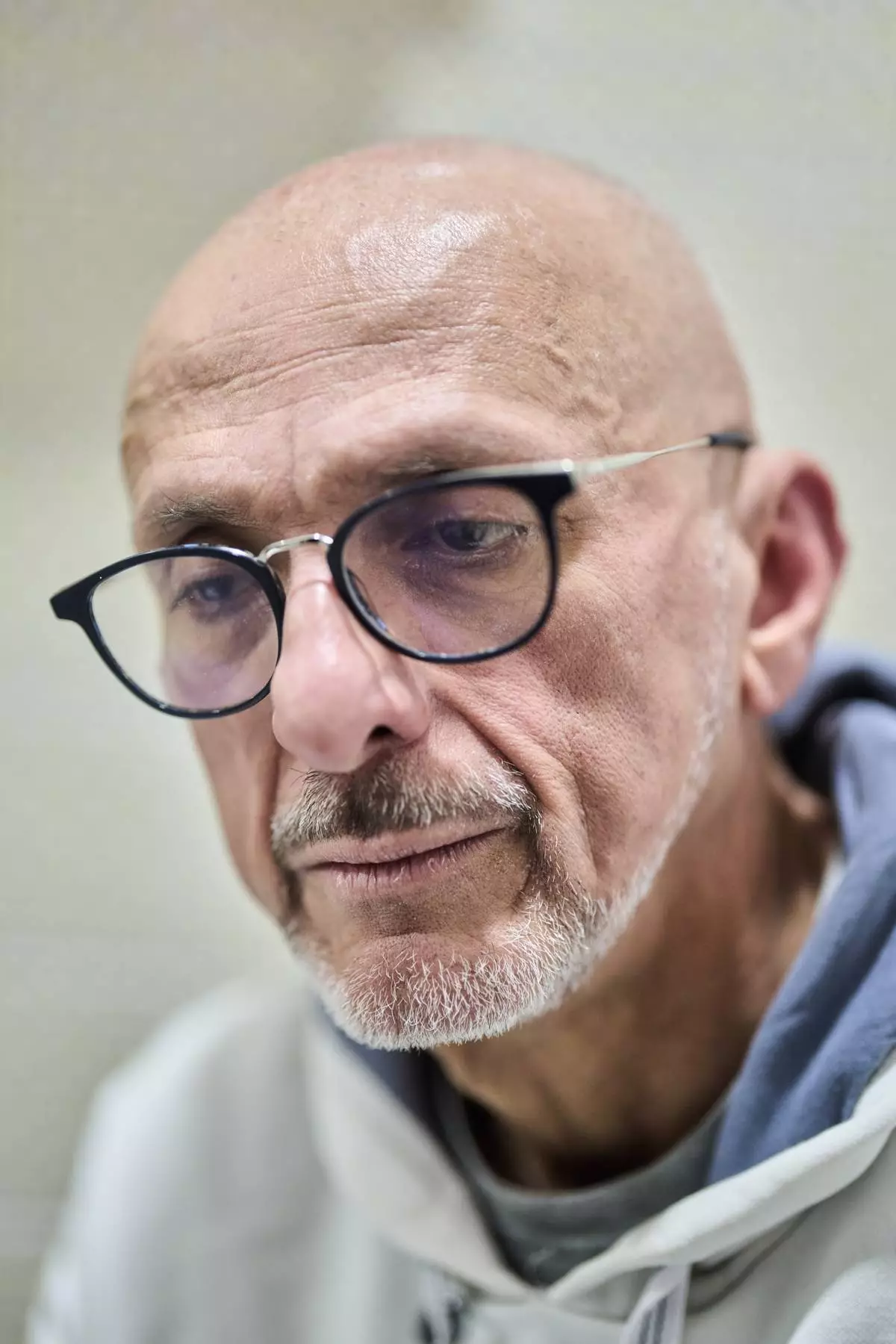
David Vallenilla, father of the late David José Vallenilla Luis, sits in his apartment's kitchen in Madrid, Tuesday, Jan. 13, 2026. (AP Photo/Bernat Armangue)
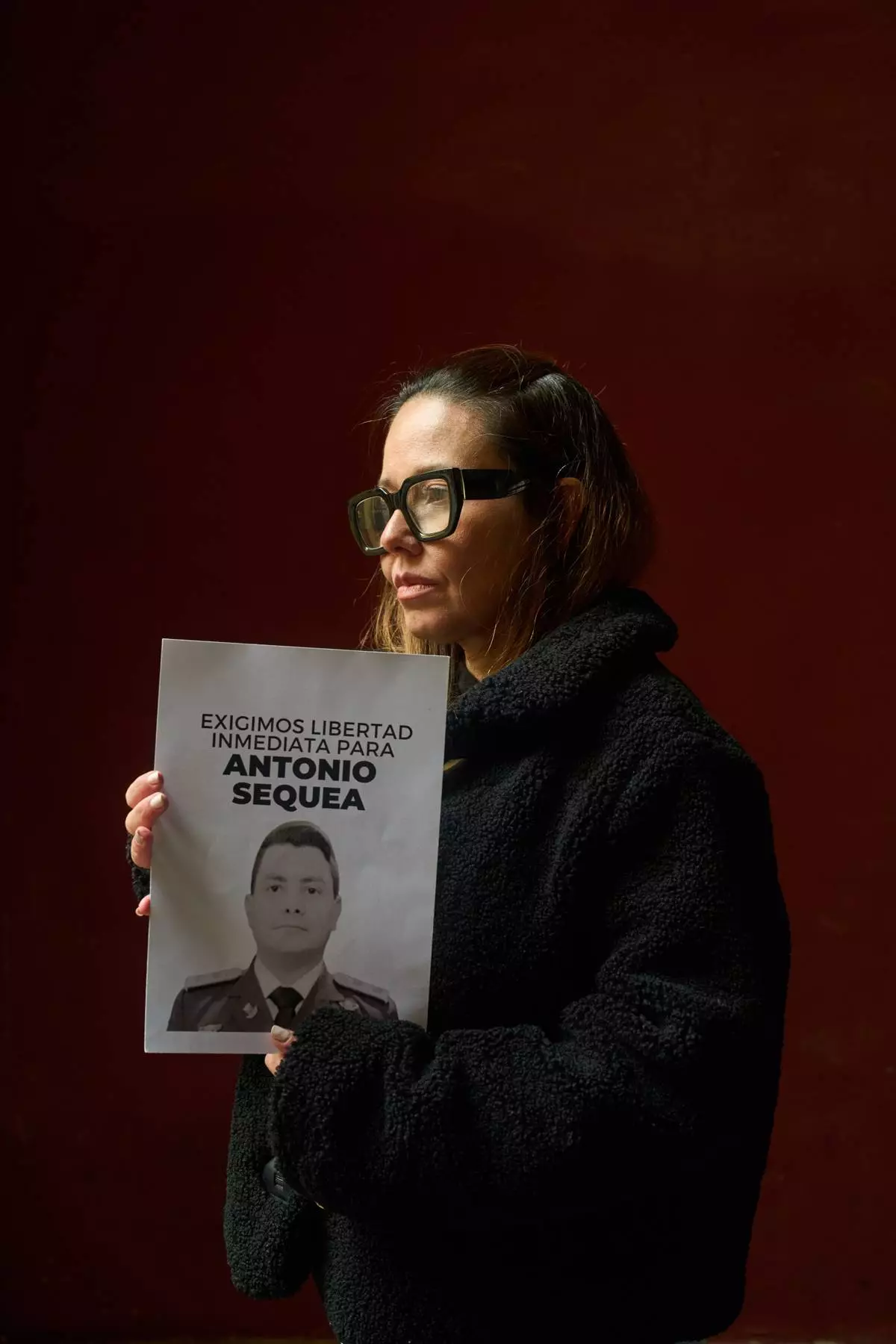
Veronica Noya holds a picture of her husband Antonio Sequea in Madrid, Thursday, Jan. 15, 2026. (AP Photo/Bernat Armangue)
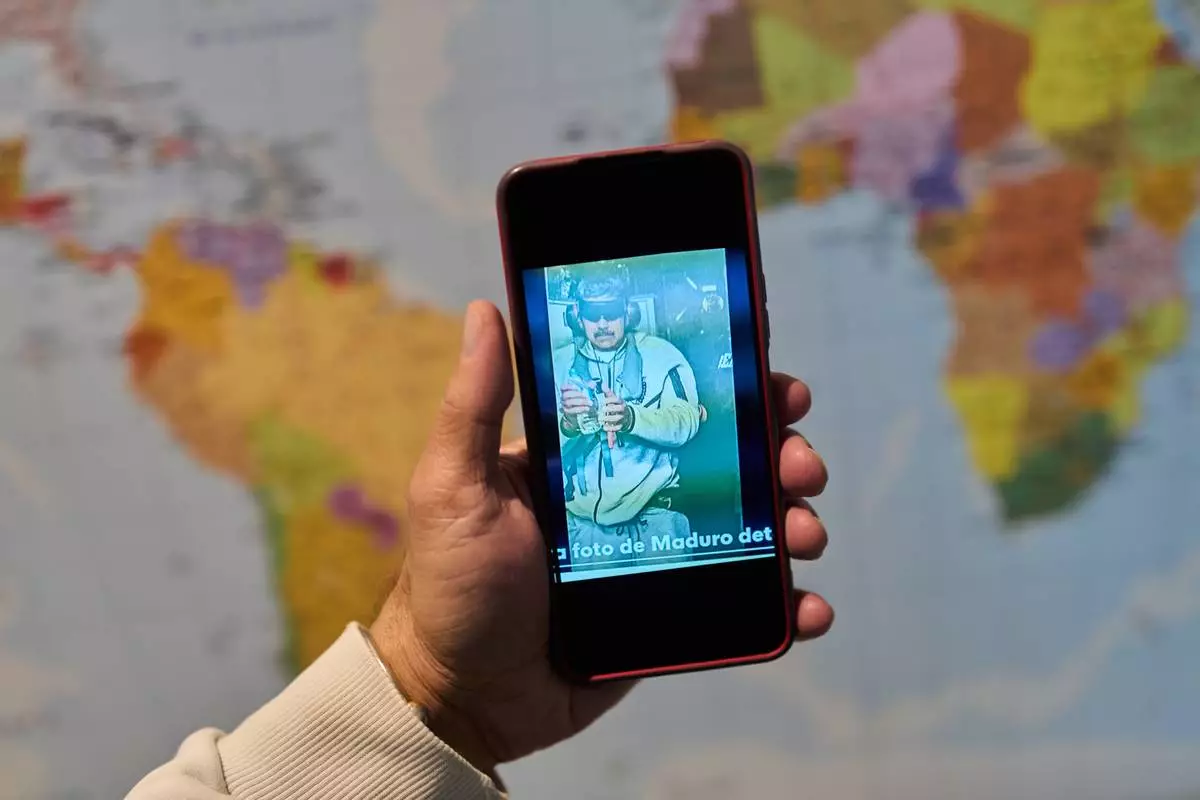
David Vallenilla holds a picture of deposed President Nicolas Maduro, blindfolded and handcuffed, during an interview with The Associated Press at his home in Madrid, Tuesday, Jan. 13, 2026. (AP Photo/Bernat Armangue)
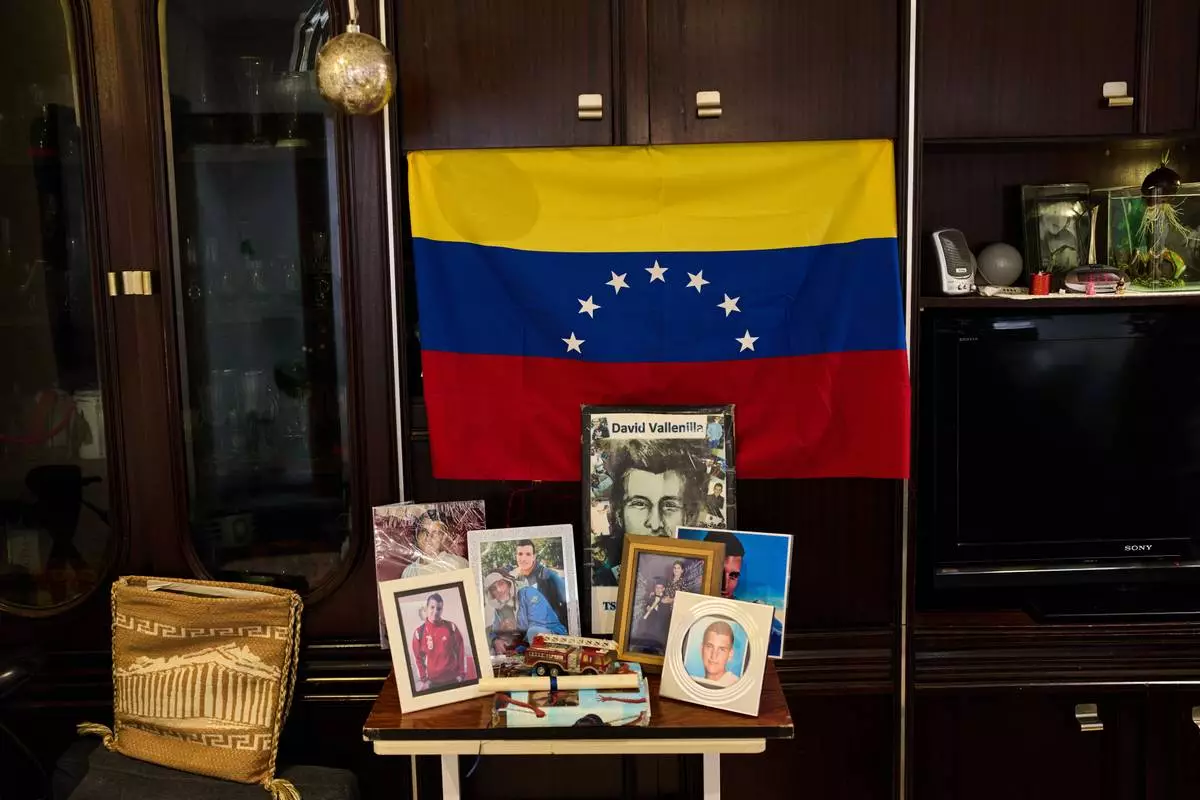
Pictures of the late David José Vallenilla Luis are placed in the living room of his father, David José Vallenilla, in Madrid, Tuesday, Jan. 13, 2026. (AP Photo/Bernat Armangue)