The Xiamen Initiative on Global Supply Chain Development and Stability was officially released on Monday, calling for efforts to uphold the multilateral trading system and build open, inclusive, resilient, and sustainable supply chains.
The initiative, jointly proposed by members of the International Federation of Purchasing and Supply Management (IFPSM), emphasizes the need to deepen multilateral cooperation to promote global supply chain connectivity.
It also calls for efforts to establish mechanisms for shared interests among diverse stakeholders, respect development differences of different countries, strengthen resilience management of the supply chain, and build the inter-connectivity for cross-border data flow.
The initiative also advocates for deeper integration of artificial intelligence, big data, and the Internet of Things across the supply chain, aiming to reshape global logistics through innovation.
It further calls for advancements in carbon reduction, emission reduction, and carbon sink technology, and the international recognition of green standards to promote low-carbon and sustainable governance throughout the supply chain.
"At the center of our initiative is convincing the world and the world players [that] we support and we guide how everybody can aspire for a greater impact of supply chain in a sustainable world. That's why we released the initiative here in Xiamen. There's no better time than that today," said Chris Oanda, IFPSM president.
The IFPSM is a non-profit, independent organization comprising procurement associations from over 40 countries and regions. The release of the initiative reflects growing international concern over supply chain stability, which will help deepen global cooperation and inject new momentum into economic growth.
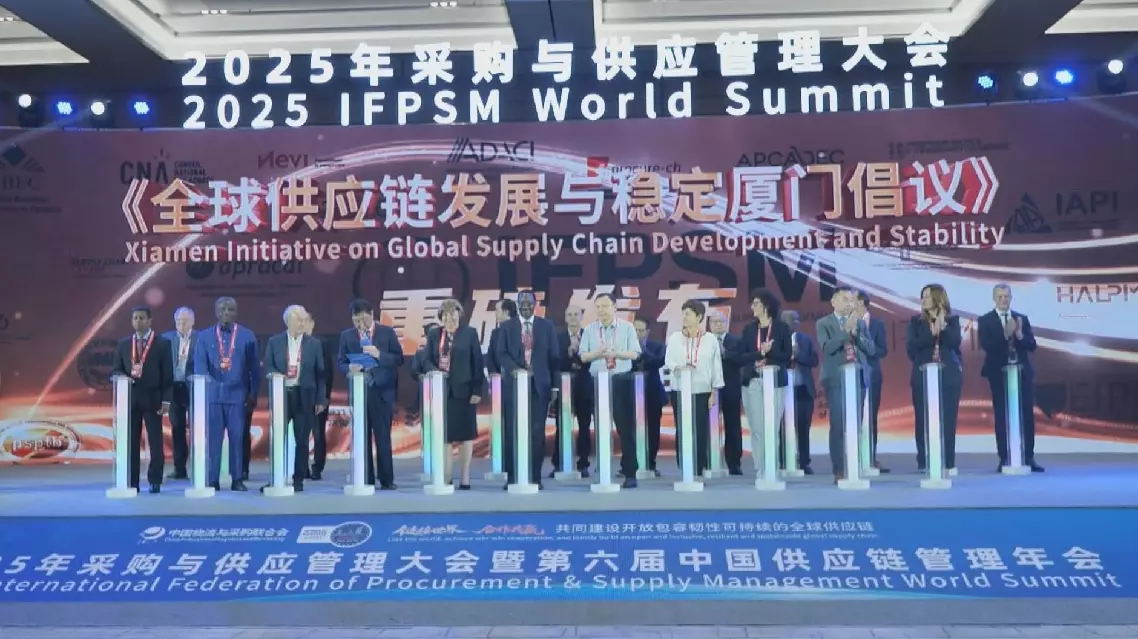
Global Supply Chain Development and Stability (Xiamen) Initiative released
The two-day 2025 Brain-Computer Interface (BCI) Conference concluded on Friday in Shanghai, where multiple globally leading "China solutions" took center stage.
Under the theme "Brain connects the world, wisdom gathers in Shanghai," the event gathered research teams from major universities, leading industry developers, and experts across the BCI sector to strengthen the connection between research, application, and policy.
As part of the event, the first BCI competition featured four categories—fatigue detection, emotion recognition, brain-controlled robotic cars, and brain-controlled robotic arms - with 40 out of nearly 100 teams from across China received prizes.
In the BCI Industry Innovation Exhibition Zone, more than a dozen frontier-tech companies presented cutting-edge technologies ranging from key components to comprehensive system-level solutions.
Exhibits spanned the entire technology chain, from underlying hardware to clinical applications, covering fields such as sleep intervention, mental illness treatment, and rehabilitation for degenerative diseases—highlighting the latest trends in BCI development.
"We completed the first domestic clinical trial this March, and next year we will launch large-scale clinical trials," said an exhibitor named Chen Yaoxu.
Shanghai has established China's first future industry cluster dedicated to BCI technologies. During the conference, several new innovation platforms—including a BCI service platform and a joint laboratory for digital neuromedicine - were inaugurated.
"We are guided by clinical needs and clinical scenarios. At the same time, we are opening high-quality EEG datasets for enterprises to support their algorithm research and guide them in developing concrete products that truly address real-world needs," said Wang Zhuoyao, BCI Project manager of Shanghai Municipal Science and Technology Commission.

Shanghai conference highlights China's cutting-edge brain-computer interface innovations