All the inbound exhibits for the upcoming 22nd China-ASEAN Expo arrived on Monday at the expo venue -- Nanning International Convention and Exhibition Center.
The event is scheduled from Sept 17 to 21 in Nanning, the capital city of south China's Guangxi Zhuang Autonomous Region, attracting over 130 exhibitors from ASEAN countries.
Themed "Digital Intelligence Empowers Development, Innovation Leads the Future -- Building a Community of Shared Future with New Opportunities from the Version 3.0 China-ASEAN Free Trade Area," the expo will have an exhibition area of nearly 160,000 square meters this year, with an AI exhibition area of 10,000 square meters set for the first time.
The event will also feature 90 trade and investment promotion activities, 13 high-level forums, and for the first time, the release of a blue book outlining new opportunities in the China-ASEAN Free Trade Area.
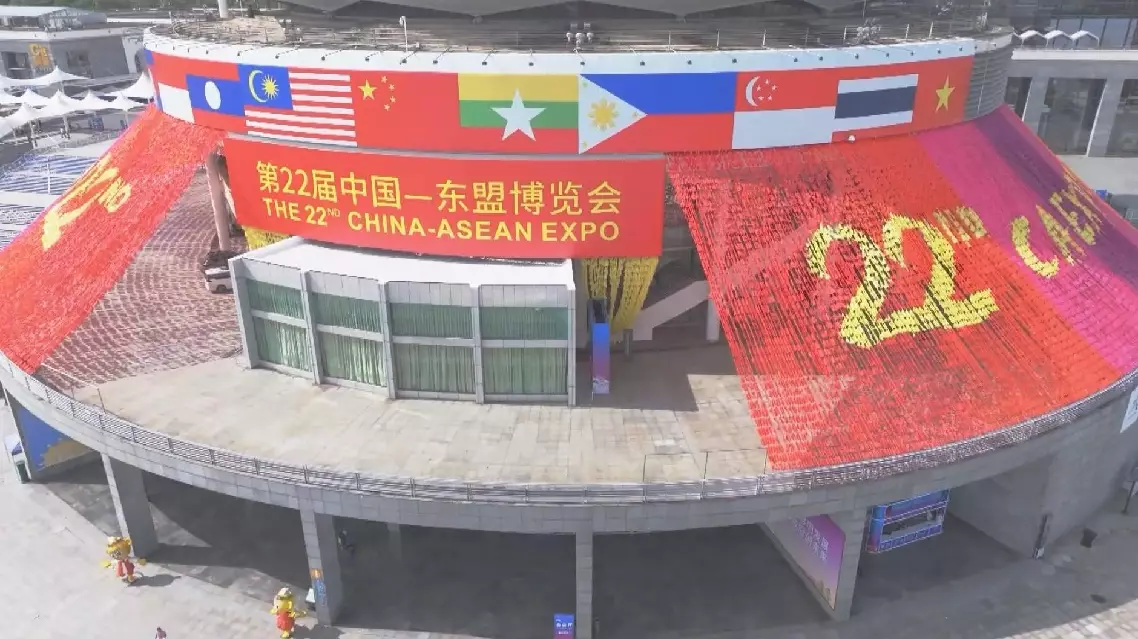
All exhibits for 22nd China-ASEAN Expo arrive in Nanning
A forum on human rights protection in the Chinese path to modernization, was held at Guangzhou University in south China's Guangdong Province on Saturday, bringing together more than 80 experts and scholars of political science and law from leading Chinese universities.
Attendees held in-depth discussions on topics such as "Building China's Independent Knowledge System of Human Rights," "Criminal Law Issues and Human Rights Challenges in the Digital Age," and "Protecting the Rights and Interests of Minors."
During the event, participating experts said that China has developed its own approach to protecting human rights as the country continues to modernize.
"China's approach to human rights protection diverges from the Western path. One of ours is comprehensive cooperation, demonstrated through initiatives like common prosperity, rural revitalization, and Chinese modernization. I believe we must encourage more young people to engage in the development of human rights in China, whether through theoretical research or practical contributions," said Liu Zhiqiang, a professor at the Institute for Human Rights at Guangzhou University. Other scholars emphasized that protecting the human rights of China's 1.4 billion people is a foundational element of the country's modernization, evoking insights from classical Chinese philosophy.
"Chinese modernization is, first, modernization on a massive population scale. Despite the vast size of China’s population, we are committed to ensuring that every individual is respected and that the human rights of all are protected. The principle of 'Benevolence is to love all people' from Chinese philosophy offers profound insight for the world in understanding human rights—emphasizing care, respect for others, and a balanced appreciation for both the rights of others and oneself," said Dong Yanbin, a research fellow at Southwest University of Political Science and Law.
The fourth plenary session of the 20th Central Committee of the Communist Party of China (CPC) in October put forward proposals to advance the development of human rights. The forum in Guangdong aimed to lay a pathway for the implementation of the proposals and contribute to the improvement of the human rights protection system in China.

Forum on Human Rights Protection in Chinese Modernization held in Guangzhou