Skip to Content Facebook Feature Image

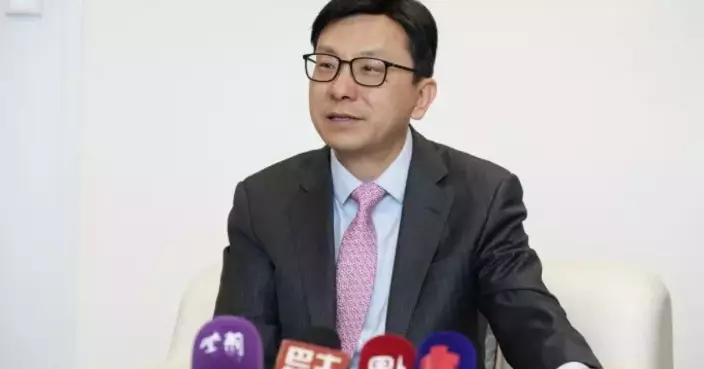
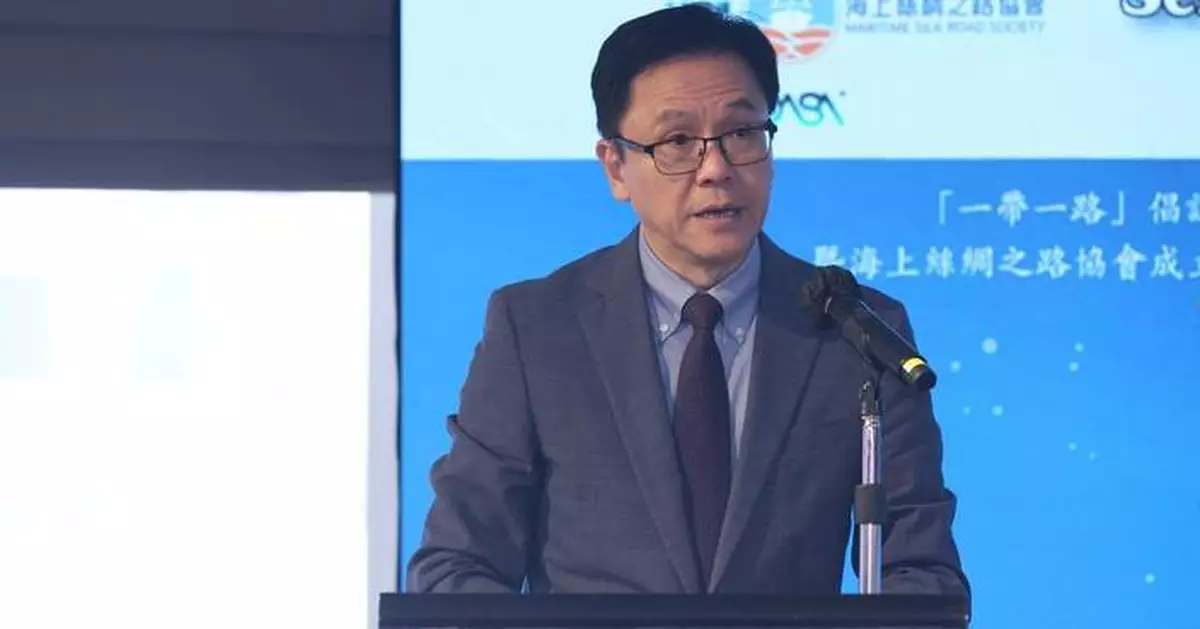
Professor Sun Dong Highlights Hong Kong's Role in Advancing China's New Space Economy

HK

Professor Sun Dong Highlights Hong Kong's Role in Advancing China's New Space Economy
HK

HK

Professor Sun Dong Highlights Hong Kong's Role in Advancing China's New Space Economy

2025-09-16 15:28 Last Updated At:15:38

Speech by SITI at Seminar on New Space Economy - Breakthroughs and Opportunities organised by Maritime Silk Road Society

Following is the speech by the Secretary for Innovation, Technology and Industry, Professor Sun Dong, at the Seminar on the New Space Economy - Breakthroughs and Opportunities organised by the Maritime Silk Road Society today (September 16):

The Honourable Mrs Regina Ip (Co-Chair of the Maritime Silk Road Society), the Honourable Mr Bernard Chan (Co-Chair of the Maritime Silk Road, Honorary Sponsor), distinguished guests, ladies and gentlemen,

Good afternoon. It is my pleasure to join you today at the Seminar on the New Space Economy, where we gather to discuss the breakthroughs and explore the opportunities on this front.

In recent years, the Chinese space programme has made remarkable accomplishments. From the BeiDou satellite navigation system, the Chang'e lunar mission, the Tianwen Mars mission, to the Tiangong space station, these achievements fully demonstrate the country's determination to accelerate the construction of a strong aerospace nation.

Last month, the country's new-generation manned launch vehicle, Long March-10 carrier rocket, has successfully completed its first static fire test. This marks a significant new milestone in China's manned lunar exploration programme, and is also a testament to the national engineering prowess.

To align with the national development direction, we are committed to leveraging our strengths to contribute to the country's needs. Hong Kong is home to five universities ranked among the world's top 100, and we have numerous internationally renowned research scholars, showcasing our robust foundation in basic research. We have consistently supported local universities and research institutions in playing to their strengths in basic research, including conducting aerospace-related studies and striving to participate in national aerospace and other technological projects.

We are delighted to see that research teams from local universities have been involved in multiple national aerospace missions, such as providing systems, instruments, and technical support for lunar and Mars missions, as well as sending research projects into national spacecraft for experiments, contributing to the country's aerospace development. A Hong Kong citizen has also been selected as a preparatory astronaut, specifically a payload specialist, under the National Manned Space Programme for the first time. Being able to participate in national aerospace projects is an immense honour for us, and it is truly encouraging for the innovation and technology (I&T) talents in Hong Kong, particularly the aerospace research community.

In addition to leveraging our research strengths, we are also dedicated to fostering global research collaboration. The Government has established the Hong Kong Space Robotics and Energy Centre (the Centre) under the InnoHK research clusters to participate in the Chang'e-8 mission, contributing to national aerospace development. The Centre, in collaboration with Mainland and overseas institutions, including the Shanghai Academy of Spaceflight Technology and South African National Space Agency, will complete an international collaboration project appointed by the China National Space Administration's Lunar Exploration and Space Engineering Center and develop a multifunctional lunar surface operation robot with precise operation and wireless charging capability, which will carry out tasks such as scientific exploration, instrument deployment and installation under extreme lunar environments.

The Government will continue to invest in the development of I&T, including aerospace technology, with a view to developing Hong Kong into an international I&T centre and contributing to the country's development into a nation with strong science and technology.

Thank you, and I hope each of you will find the seminar and discussions ahead insightful. Thank you.
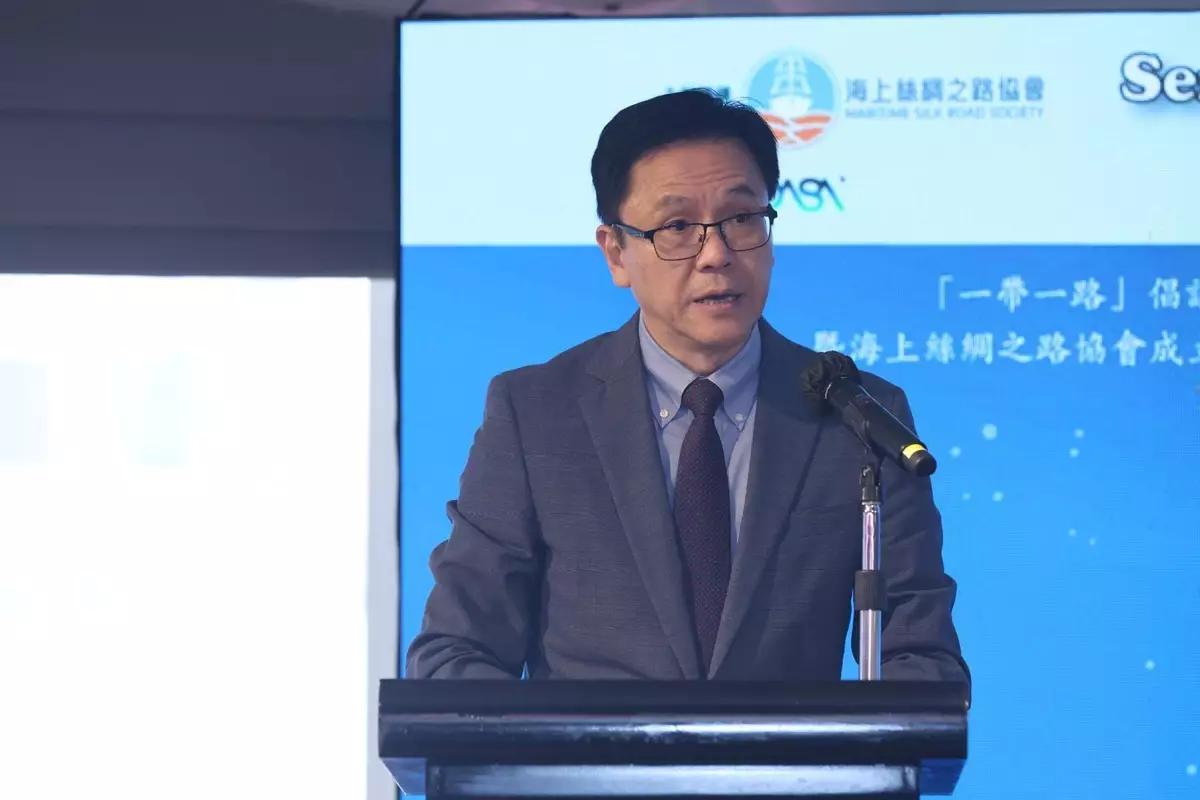
Speech by SITI at Seminar on New Space Economy - Breakthroughs and Opportunities organised by Maritime Silk Road Society  Source: HKSAR Government Press Releases

Speech by SITI at Seminar on New Space Economy - Breakthroughs and Opportunities organised by Maritime Silk Road Society Source: HKSAR Government Press Releases

Speech by SITI at 2026 WAIC UP! Global Summit

Following is the speech by the Secretary for Innovation, Technology and Industry, Professor Sun Dong, at the 2026 WAIC UP! Global Summit today (January 16):

Professor Sun Dong, Photo by Bastille Post

Professor Sun Dong, Photo by Bastille Post

Ms Qiu (Vice President of DLG Exhibitions & Events Co Ltd, Ms Qiu Haoming), Hendrick (Hong Kong Special Administrative Region's Deputy to the 14th National People's Congress, Mr Hendrick Sin), Terry (Chief Executive Officer of Hong Kong Science and Technology Parks Corporation, Mr Terry Wong), Duncan (Member of the Legislative Council, Mr Duncan Chiu), Alex (President of the Hong Kong Information Technology Federation, Dr Alex Chung), distinguished guests, ladies and gentlemen,

Good morning. I am delighted to join you at the 2026 WAIC UP! Global Summit.Today's theme, "Wake Up More!", is a call not only for any single company, city, or country but also a timely reminder for all of us to embrace a new era of intelligence, possibility, and shared responsibility.

A big thank you to the organiser for choosing Hong Kong as a destination for this remarkable Summit. This is another testament to Hong Kong's unique position as a "super connector" and a "super value-adder" that thrives on global connection and creativity. We are delighted to see that world-class academics, industry experts and leading entrepreneurs from around the world gather here today to explore the future of AI and the opportunities it brings to us.

AI has become a core engine driving global technological and economic progress, and all economies recognise its strategic importance.Under the unique advantages of "one country, two systems", Hong Kong is also seizing this AI moment.With a focus on "strengthening infrastructure and promoting the application-oriented approach", Hong Kong is steadily advancing a series of AI initiatives.

In terms of R&D (research and development), the Hong Kong Special Administrative Region (SAR) Government is working to establish the Hong Kong AI Research and Development Institute within this year, which is a new engine for discovery, translation, and real-world impact.Through our AIR@InnoHK research cluster, we have funded the establishment of 16 R&D laboratories focusing on AI and robotics technologies.Notably, the "HKChat" AI chatbot developed by the Hong Kong Generative AI Research and Development Center has already launched its public version.

Hong Kong's total computing power has now reached 5 000 PFLOPS, with the Cyberport AI Supercomputing Centre contributing 3 000 PFLOPS. This centre is a critical hub that supports Hong Kong's AI development, and its capacity will continue to expand to meet growing demand. The upcoming data facility cluster at Sandy Ridge in North District will further provide advanced computing power facilities, promoting the development of data and AI-related industries in Hong Kong.

And at the heart of all progress is talent. We recognise that people, not algorithms, will shape the future of AI. Our strategy is simple yet powerful: "Promote technology with talent, lead industries with technology, and attract talent with industries". To this end, we have included in the Talent List a number of professions in the I&T (innovation and technology) segment, including experienced AI Specialists, to facilitate global experts, like all of you here, in developing your careers in Hong Kong.

Looking ahead, the Hong Kong SAR Government will continue to foster strong collaboration among the Government and the industry, academia, research and investment sectors. The future of AI cannot be built by anyone or any place alone. It requires a global community that is awake, aware, and aligned.I am confident that this Summit will spark new ideas and inspire us to wake up more for high-quality AI development.

I wish the Summit great success. Thank you.

The 2026 WAIC UP! Global Summit, Photo by Bastille Post

The 2026 WAIC UP! Global Summit, Photo by Bastille Post

Recommended Articles