HONG KONG, Sept. 17, 2025 /PRNewswire/ -- The Hong Kong Applied Science and Technology Research Institute (ASTRI) has expressed its full support for the Chief Executive's Policy Address. Key measures include accelerating the development of Northern Metropolis and the Hetao Shenzhen-Hong Kong Science and Technology Innovation Co-operation Zone (the Loop), alongside increased investment in technology adoption and emerging industries, reinforcing Hong Kong's status as a leading international innovation and technology (I&T) hub.
The Policy Address outlines an ambitious vision to attract global businesses to Hong Kong by "removing barriers and easing restrictions", and prioritising high-tech industries and advanced manufacturing. It highlights a strong focus on emerging technologies such as artificial intelligence (AI) and low-altitude economy, advancing their developments and applications.
Strengthening Academia-Industry-Research Collaboration
Ir Sunny Lee, Chairman of ASTRI, welcomed the HKSAR Government's forward-thinking approach, describing it as a significant boost to Hong Kong's I&T ecosystem. He emphasised that these measures enable industries to enhance their competitiveness through innovative technology, create employment opportunities, and deliver tangible economic benefits to society.
"ASTRI remains committed to developing 'people-oriented' technologies, leveraging vast opportunities presented by the Greater Bay Area and Belt and Road initiatives. We aim to drive global adoption of Hong Kong's research and development (R&D) achievements, contributing to our country's development of New Quality Productive Forces and supporting the city's economic transformation," said Ir Lee.
He also applauded the introduction of the Innovation and Technology Talents Exchange Scheme for Industry and Academic Sectors, which encourages university professors to engage in corporate R&D activities, enabling a deeper understanding of industry needs. In addition, senior executives from technology enterprises and technical experts will contribute to curriculum development and teaching, strengthening collaboration among industry, academic and research sectors.
"This initiative is a pivotal step in bridging the academia-industry gap," he added. "Through bidirectional exchange, we can accelerate the transition of R&D innovations from lab to market while nurturing tech talent equipped for future challenges."
Driving AI Application Across Industries
Ir Dr Ted Suen, Chief Executive Officer of ASTRI, welcomed the establishment of the AI Efficacy Enhancement Team and the measures aimed at promoting large-scale AI adoption across industries to improve overall efficiency and productivity.
"ASTRI has developed a wide range of AI technologies, integrating them with other patented technologies such as application specific integrated circuits, Internet of Things (IoT), sensing and communication technologies, to create innovative solutions. This aligns perfectly with the Government's vision of fostering 'industries for AI' and 'AI for industries'," he said.
Ir Dr Suen stressed the critical importance of I&T in maintaining Hong Kong's competitive edge, and that accelerating the development of Northern Metropolis and the Loop will enhance the city's I&T capabilities. "ASTRI is fully aligned with the priorities outlined in the Policy Address and will continue to collaborate with stakeholders across the I&T ecosystem. Our goal is to drive commercialisation of R&D outcomes through enabling wide technology adoption across industries, improving their operational challenges and enhancing efficiency," he added.
Photo Download: http://bit.ly/3HWYHkE
About ASTRI
Hong Kong Applied Science and Technology Research Institute (ASTRI) was founded by the Government of the Hong Kong Special Administrative Region in 2000 with the mission of enhancing Hong Kong's competitiveness through applied research. ASTRI's core R&D competence in various areas is grouped under five Technology Divisions: Advanced Electronic Components and Systems; Artificial Intelligence and Trust Technologies; Communications Technologies; Intelligent Perception and Control Technologies, and IoT Sensing and AI Technologies. It is applied across six core areas which are Smart City, Financial Technologies, New Industrialisation and Intelligent Manufacturing, Digital Health, Application Specific Integrated Circuits and Metaverse.
Over the years, ASTRI has nurtured a pool of research, I&T talents and received numerous international awards for its pioneering innovations as well as outstanding business and community contributions. ASTRI has transferred close to 1,600 technologies to the industry and has been granted about 1,200 patents in the Mainland, the United States, and other countries. For further information, please visit https://www.astri.org.
** The press release content is from PR Newswire. Bastille Post is not involved in its creation. **

ASTRI Expresses Full Support for Policy Address Investing in I&T to Boost Hong Kong's Competitiveness

ASTRI Expresses Full Support for Policy Address Investing in I&T to Boost Hong Kong's Competitiveness
|
- Resumes services to Fukuoka, Japan from September 2026 after nearly two decades
- Expands China footprint with new direct services to Shenzhen and Changsha, commencing July 2026
- "MAG Arena" showcases Asia's Largest Airline Pavilion at MATTA Fair 2026, featuring the region's premier sports partnership activation by an airline
- Increases frequencies across ASEAN, South Asia, Australia and New Zealand and Europe to further strengthen global connectivity
SINGAPORE, April 5, 2026 /PRNewswire/ -- Malaysia Airlines is significantly expanding its East Asia footprint with the return of direct flights to Fukuoka, Japan, and the launch of new services to Shenzhen and Changsha, China. Commencing between July and September 2026, these additions bring the airline's China network to nine key gateways and reinforce its commitment to providing greater travel flexibility across the region.
As part of this expansion, the airline will introduce new services between Kuala Lumpur and Shenzhen (SZX) and Changsha (CSX) in China, alongside the resumption of services to Fukuoka (FUK) in Japan, which the airline last operated in September 2006. With the launch of these destinations, Malaysia Airlines consolidates its presence across a total of nine strategic destinations in China, including Beijing (PKX), Shanghai (PVG), Guangzhou (CAN), Xiamen (XMN), Hong Kong (HKG), Taipei (TPE), and Chengdu Tianfu (TFU). Ticket sales for the new services commence today, supporting the growing travel demand and strengthening connectivity between Malaysia and these high-growth regional hubs.
Captain Nasaruddin A. Bakar, President and Group Chief Executive Officer of Malaysia Aviation Group (MAG), said, "This expansion reflects our strategic focus on scaling our presence in key growth markets across East Asia while cementing Kuala Lumpur's position as a key strategic gateway. Both Shenzhen and Changsha align perfectly with our network strategy, driven by robust demand across both business and leisure segments. The return to Fukuoka further enhances our network depth. As the only carrier operating direct flights on this route, we are proud to offer passengers a seamless non-stop experience that eliminates the need for transit. These developments demonstrate our ongoing commitment to optimising our network and delivering a more integrated travel experience for our customers."
Beyond the East Asia expansion, Malaysia Airlines is increasing flight frequencies across key routes namely Brisbane, Australia; Manila, Philippines and Colombo, Sri Lanka to meet rising demand while supporting growing tourism and trade links. In addition, the airline will operate ad-hoc Kuala Lumpur–London flights on 18 and 22 April 2026 to accommodate passengers affected by recent Middle Eastern carrier disruptions.
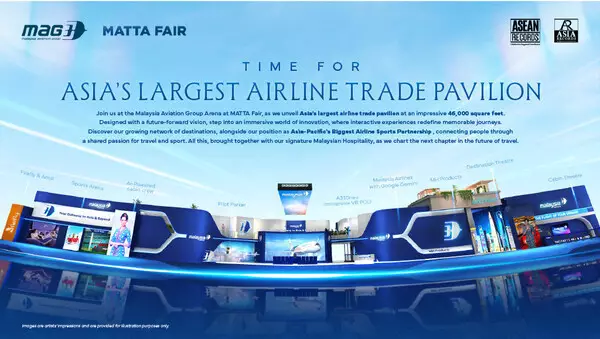
As the returning Official Airline Partner and Premier Sponsor of MATTA Fair 2026, MAG unveiled its most ambitious presence yet with the launch of the MAG Arena, recognised by both the Asia Records and ASEAN Records as Asia's Largest Airline Trade Pavilion at a consumer travel fair.
Spanning approximately 46,000 square feet, nearly three times the scale of its participation in September last year, the expanded pavilion transforms the MATTA Fair experience into a fully immersive destination showcasing curated experiences and next-generation travel technology that brings journeys to life before travellers even board the aircraft. Visitors will be able to explore destinations, discover travel innovations and experience the warmth of Malaysian Hospitality through interactive engagements designed to inspire their next journey.
In addition, the pavilion will host Asia's largest sports partnership activation by an airline, celebrating Malaysia Airlines' collaborations with global clubs like Manchester United and national sporting icons Datuk Azizulhasni Awang and others. The dedicated sports experience zone will allow football fans and travellers to engage with legends and their favourite sports personalities — reinforcing how sport and travel connect people across borders and generations.
Through the expansion of its network and increased flight frequencies, the airline continues to strengthen Kuala Lumpur's position as a key gateway to Asia and beyond, while supporting Malaysia's tourism ambitions under Visit Malaysia 2026 and advancing its journey towards becoming one of the world's Top 10 global airlines by 2030.
-ENDS-
New Routes
| Airline | Route | Frequency | Date Open for Sale | Inaugural Flight |
| Malaysia Airlines | Kuala Lumpur – Shenzhen (SZX) | 7x weekly (Mon-Sun) | 3 April 2026 | 1 July 2026 |
| Kuala Lumpur – Changsha (CSX) | 7x weekly (Mon-Sun) | 3 April 2026 | 8 July 2026 |
| Kuala Lumpur -Fukuoka (FUK) | 5x weekly (Mon, Wed, Fri, Sat, Sun) | 3 April 2026 | 2 Sept 2026 |
Malaysia Airlines' Additional Frequencies
| Region | Route | Frequency (Before Increase) | Frequency
(After Increase) | Effective Date |
| Europe | KUL/London (LHR) | 14x weekly | 16x weekly | 18 & 22 Apr 2026 |
| Australia and New Zealand | KUL/Brisbane (BNE) vv | 5x weekly | 6x weekly 7x weekly | 16 Aug 2026 25 Oct 2026 |
| ASEAN | KUL/Manila (MNL) vv | 21x weekly | 28x weekly | 1 Jul 2026 |
| South Asia | KUL/Colombo (CMB) vv | 7x weekly | 8x weekly 9x weekly 10x weekly | 3 Apr 2026 3 May 2026 20 May 2026 |
About Malaysia Aviation Group
Malaysia Aviation Group (MAG) is a global aviation organisation comprising three core business portfolios: Airline Business, Loyalty & Travel Services, and Aviation Services.
The Airline Business portfolio serves global, domestic, and segmented markets through Malaysia Airlines – the national carrier; Firefly – the regional airline focused on connecting communities across Malaysia and ASEAN; and Amal by Malaysia Airlines – the leading one-stop pilgrimage travel solutions centre.
The Aviation Services portfolio offers a full suite of capabilities, comprising MAB Engineering, the maintenance, repair and overhaul services provider; MASkargo, the cargo and logistics solutions provider; AeroDarat Services, the ground handling services provider; MAG Culinary Solutions, overseeing all F&B-related strategies, operations and services across MAG; and MAB Academy, the centre of excellence for aviation and hospitality training.
The Loyalty & Travel Services portfolio delivers end-to-end travel solutions and loyalty programmes, strengthening MAG's core expertise in airline and aviation services. It includes Journify – an integrated digital platform offering travel and lifestyle experiences; Enrich – Malaysia Airlines' award-winning travel and lifestyle loyalty programme; and MHholidays – the Group's dedicated flight and hotel package platform.
With its clear business portfolios, MAG is committed to realising its vision of becoming Asia's Leading Travel and Aviation Services Group by delivering exceptional customer experiences, nurturing a culture that empowers its people, and ensuring sustainable, profitable growth.
For more information, visit www.malaysiaaviationgroup.com.my
Issued by Group Communications, Malaysia Aviation Group.
- Resumes services to Fukuoka, Japan from September 2026 after nearly two decades
- Expands China footprint with new direct services to Shenzhen and Changsha, commencing July 2026
- "MAG Arena" showcases Asia's Largest Airline Pavilion at MATTA Fair 2026, featuring the region's premier sports partnership activation by an airline
- Increases frequencies across ASEAN, South Asia, Australia and New Zealand and Europe to further strengthen global connectivity
SINGAPORE, April 5, 2026 /PRNewswire/ -- Malaysia Airlines is significantly expanding its East Asia footprint with the return of direct flights to Fukuoka, Japan, and the launch of new services to Shenzhen and Changsha, China. Commencing between July and September 2026, these additions bring the airline's China network to nine key gateways and reinforce its commitment to providing greater travel flexibility across the region.
As part of this expansion, the airline will introduce new services between Kuala Lumpur and Shenzhen (SZX) and Changsha (CSX) in China, alongside the resumption of services to Fukuoka (FUK) in Japan, which the airline last operated in September 2006. With the launch of these destinations, Malaysia Airlines consolidates its presence across a total of nine strategic destinations in China, including Beijing (PKX), Shanghai (PVG), Guangzhou (CAN), Xiamen (XMN), Hong Kong (HKG), Taipei (TPE), and Chengdu Tianfu (TFU). Ticket sales for the new services commence today, supporting the growing travel demand and strengthening connectivity between Malaysia and these high-growth regional hubs.
Captain Nasaruddin A. Bakar, President and Group Chief Executive Officer of Malaysia Aviation Group (MAG), said, "This expansion reflects our strategic focus on scaling our presence in key growth markets across East Asia while cementing Kuala Lumpur's position as a key strategic gateway. Both Shenzhen and Changsha align perfectly with our network strategy, driven by robust demand across both business and leisure segments. The return to Fukuoka further enhances our network depth. As the only carrier operating direct flights on this route, we are proud to offer passengers a seamless non-stop experience that eliminates the need for transit. These developments demonstrate our ongoing commitment to optimising our network and delivering a more integrated travel experience for our customers."
Beyond the East Asia expansion, Malaysia Airlines is increasing flight frequencies across key routes namely Brisbane, Australia; Manila, Philippines and Colombo, Sri Lanka to meet rising demand while supporting growing tourism and trade links. In addition, the airline will operate ad-hoc Kuala Lumpur–London flights on 18 and 22 April 2026 to accommodate passengers affected by recent Middle Eastern carrier disruptions.
As the returning Official Airline Partner and Premier Sponsor of MATTA Fair 2026, MAG unveiled its most ambitious presence yet with the launch of the MAG Arena, recognised by both the Asia Records and ASEAN Records as Asia's Largest Airline Trade Pavilion at a consumer travel fair.
Spanning approximately 46,000 square feet, nearly three times the scale of its participation in September last year, the expanded pavilion transforms the MATTA Fair experience into a fully immersive destination showcasing curated experiences and next-generation travel technology that brings journeys to life before travellers even board the aircraft. Visitors will be able to explore destinations, discover travel innovations and experience the warmth of Malaysian Hospitality through interactive engagements designed to inspire their next journey.
In addition, the pavilion will host Asia's largest sports partnership activation by an airline, celebrating Malaysia Airlines' collaborations with global clubs like Manchester United and national sporting icons Datuk Azizulhasni Awang and others. The dedicated sports experience zone will allow football fans and travellers to engage with legends and their favourite sports personalities — reinforcing how sport and travel connect people across borders and generations.
Through the expansion of its network and increased flight frequencies, the airline continues to strengthen Kuala Lumpur's position as a key gateway to Asia and beyond, while supporting Malaysia's tourism ambitions under Visit Malaysia 2026 and advancing its journey towards becoming one of the world's Top 10 global airlines by 2030.
-ENDS-
New Routes
Airline
Route
Frequency
Date Open for Sale
Inaugural Flight
Malaysia Airlines
Kuala Lumpur –
Shenzhen (SZX)
7x weekly
(Mon-Sun)
3 April 2026
1 July 2026
Kuala Lumpur –
Changsha (CSX)
7x weekly
(Mon-Sun)
3 April 2026
8 July 2026
Kuala Lumpur -Fukuoka (FUK)
5x weekly
(Mon, Wed, Fri, Sat, Sun)
3 April 2026
2 Sept 2026
Malaysia Airlines' Additional Frequencies
| Region | Route | Frequency (Before Increase) | Frequency
(After Increase) | Effective Date |
| Europe | KUL/London (LHR) | 14x weekly | 16x weekly | 18 & 22 Apr 2026 |
| Australia and New Zealand | KUL/Brisbane (BNE) vv | 5x weekly | 6x weekly 7x weekly | 16 Aug 2026 25 Oct 2026 |
| ASEAN | KUL/Manila (MNL) vv | 21x weekly | 28x weekly | 1 Jul 2026 |
| South Asia | KUL/Colombo (CMB) vv | 7x weekly | 8x weekly 9x weekly 10x weekly | 3 Apr 2026 3 May 2026 20 May 2026 |
Region
Route
Frequency
(Before Increase)
Frequency
(After Increase)
Effective Date
Europe
KUL/London (LHR)
14x weekly
16x weekly
18 & 22 Apr 2026
Australia and New Zealand
KUL/Brisbane (BNE) vv
5x weekly
6x weekly 7x weekly
16 Aug 2026
25 Oct 2026
ASEAN
KUL/Manila
(MNL) vv
21x weekly
28x weekly
1 Jul 2026
South Asia
KUL/Colombo (CMB) vv
7x weekly
8x weekly
9x weekly 10x weekly
3 Apr 2026
3 May 2026
20 May 2026
About Malaysia Aviation Group
Malaysia Aviation Group (MAG) is a global aviation organisation comprising three core business portfolios: Airline Business, Loyalty & Travel Services, and Aviation Services.
The Airline Business portfolio serves global, domestic, and segmented markets through Malaysia Airlines – the national carrier; Firefly – the regional airline focused on connecting communities across Malaysia and ASEAN; and Amal by Malaysia Airlines – the leading one-stop pilgrimage travel solutions centre.
The Aviation Services portfolio offers a full suite of capabilities, comprising MAB Engineering, the maintenance, repair and overhaul services provider; MASkargo, the cargo and logistics solutions provider; AeroDarat Services, the ground handling services provider; MAG Culinary Solutions, overseeing all F&B-related strategies, operations and services across MAG; and MAB Academy, the centre of excellence for aviation and hospitality training.
The Loyalty & Travel Services portfolio delivers end-to-end travel solutions and loyalty programmes, strengthening MAG's core expertise in airline and aviation services. It includes Journify – an integrated digital platform offering travel and lifestyle experiences; Enrich – Malaysia Airlines' award-winning travel and lifestyle loyalty programme; and MHholidays – the Group's dedicated flight and hotel package platform.
With its clear business portfolios, MAG is committed to realising its vision of becoming Asia's Leading Travel and Aviation Services Group by delivering exceptional customer experiences, nurturing a culture that empowers its people, and ensuring sustainable, profitable growth.
For more information, visit www.malaysiaaviationgroup.com.my
Issued by Group Communications, Malaysia Aviation Group.
** This press release is distributed by PR Newswire through automated distribution system, for which the client assumes full responsibility. **
Malaysia Airlines Strengthens East Asia Network with Return to Fukuoka, Launch of New Routes and Increased Frequencies Across Key Markets