NEW YORK (AP) — Open Society Foundations, the family philanthropy of hedge fund billionaire George Soros, has consistently been one of the largest funders of human rights organizations around the world. But what that means has changed in recent years, with a new focus on addressing inequality.
“It’s about paying attention to how inequality is a deep, deep corrosive instrument to democracy,” Leonard Benardo, senior vice president at OSF, told The Associated Press at the foundations' offices in New York.
The transformation follows four years of internal upheaval, more than a year of new program selection and a generational leadership change. In some ways, the new emphasis reflects the foundations' commitment to rethinking and reimagining its work, based on Soros' own view that in open societies, no person or institution has a monopoly on the truth.
Leaders at the foundations said they remain committed to supporting key parts of the human rights ecosystem. They now provide long term, unrestricted funding to human rights organizations as part of what they call “network grants.” One new program focuses on protecting human rights defenders, especially those that advocate against environmental destruction.
Another constant, Benardo said, is the foundations’ commitment to acting as a “political philanthropy.”
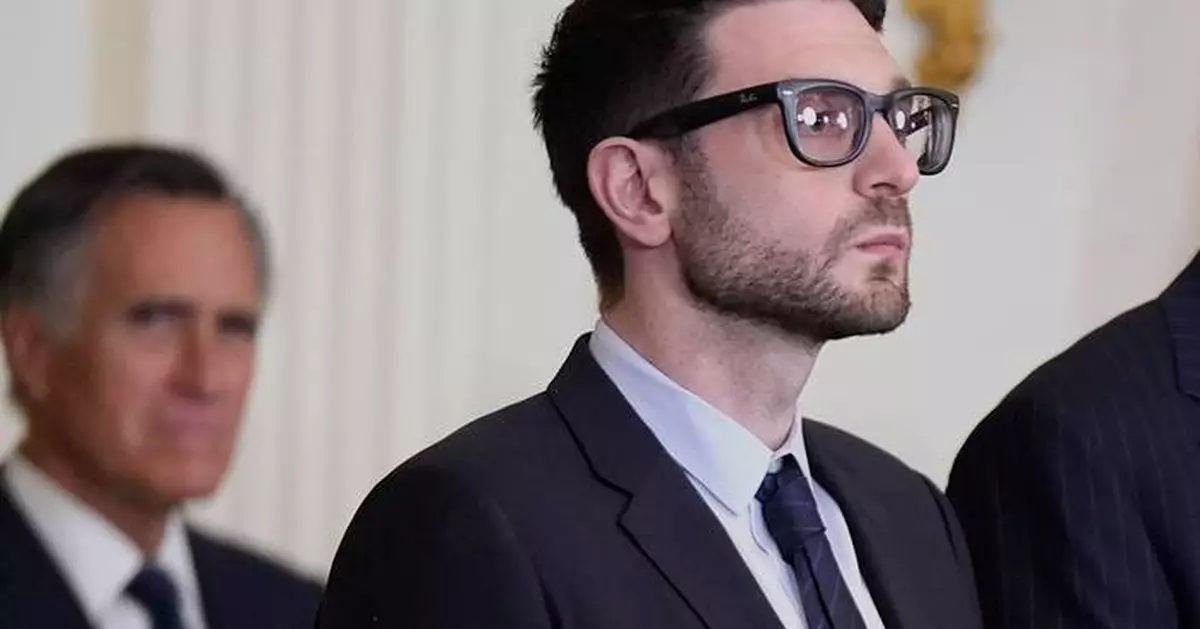
“George Soros and Alex Soros see this place as a political philanthropy and that means a more active participation in questions over power,” said Benardo. Alex Soros, one of George's sons, took over leading OSF in late 2022.
The foundations, along with its founder, have long drawn the ire of powerful leaders and right-wing movements and recently have been targeted again by President Donald Trump and his administration.
For decades, it seemed that OSF’s movement for more open societies was proceeding well, Benardo said, as newly independent former Soviet states turned toward some form of democracy. Now, that tide has reversed course, with the rise of authoritarianism.
“It’s forced us to grapple with the limits of what we can achieve and the ways in which we go about it,” Benardo said.
OSF also says it’s increased its support to African countries and the Global South in general, but did not provide specific figures. In 2023, the most recent year funding data appears on its website, OSF said it granted out $125.5 million through its Africa programs.
The foundations have not determined what programming will continue in Europe, but insist that they have not abandoned the continent. Emily Tamkin, author of the book “The Influence of Soros,” said this wouldn't be the first time OSF has moved away from Europe, if that is what they are doing. After a large group of Central European countries joined the European Union in 2004, the foundations also signaled that they would turn their focus elsewhere.
“It would be new in that they’re pulling away from Europe at a time when the values that they have sought to promote in Europe are on pretty clearly shaky ground,” Tamkin said.
George Soros has long had a reputation for influencing events around the world, through his financial investments, his political donations and his philanthropy. But right-wing leaders have also found it very convenient to blame Soros for things he didn't do, Tamkin said.
In August, Trump accused the Soroses of funding violent protest in the U.S. and said they should face racketeering charges.
“We’re not going to allow these lunatics to rip apart America any more,” Trump wrote on TruthSocial. He renewed that call after the assassination of Charlie Kirk last week.
OSF said the accusations were “outrageous and false,” and that its mission “is to advance human rights, justice, and democratic principles at home and around the world.”
Author and publisher Anna Porter, who interviewed Soros for her book, “Buying a Better World: George Soros and Billionaire Philanthropy,” said it's useful for people in power to have a boogeyman to blame. But it's not actually true that the Soros is secretly fomenting social chaos.
“There’s no nefarious hidden agenda because Soros has always been very open about putting his money where his ideas are (that) he’s openly supporting,” Porter said.
Many recipients of OSF's funding highly valued the support, which was often more flexible than grants from other funders. The foundations staff, which has shrunk to 500 from a high of 1,700 before 2021, provided expertise, connections and coaching for recipients.
Altogether, the foundations’ internal reorganization meant the human rights field was already on unstable footing when the second Trump administration slashed foreign aid funding this year. The U.S. had long been among the largest funders of human rights.
Brian Kagoro, the managing director for the Open Society Foundations, said the foundations do not plan to try to fill the gap. Instead, the foundations are trying to orient their programs to "ensure that we start actually building out alternatives that are more rooted in the local as well as regional economies, especially for Africa,” Kagoro said.
In this transition, OSF has spent significant time developing new programs and since November, they have published a new digital magazine, The Ideas Letter. Led by Benardo, it commissions essays mostly on topics of political economy. Benardo said fostering critique and unorthodox ideas is one of the foundations' response to polarization.
“If all you’re focusing on is a one ideological band or a way of reasoning or approach to the world, I think that you’re contributing to a society that has been riven by polarization,” Benardo said.
This search for new ideas continued through the redefinition of their programs, which OSF now calls “opportunities.” For over a year, Kagoro, who is based in Johannesburg, said his team commissioned research, convened experts and consulted polls to determine how they should redesign their work.
The foundations' staff developed pitches for different opportunities, which were ultimately approved or rejected by the board. Three were approved for Africa, including a five-year program focused on critical minerals and a peace-building program. The foundations also said it will work on democratic futures for eight years in Kenya, Nigeria and Senegal.
Kagoro said they’ve shifted their focus away from electoral cycles in recognition of the potential of recent large movements led by young people, who are not participating in political parties in large numbers.
“It was clear to us that the classical idea of democracy is not what people were fighting for, but they still believed in societies that were more open, inclusive, participatory, in states that were more accountable,” Kagoro said.
They have already launched calls for proposals for the three new African program areas, Kagoro said, and more than half the applications have come from organizations that would be new to OSF.
Associated Press coverage of philanthropy and nonprofits receives support through the AP’s collaboration with The Conversation US, with funding from Lilly Endowment Inc. The AP is solely responsible for this content. For all of AP’s philanthropy coverage, visit https://apnews.com/hub/philanthropy.
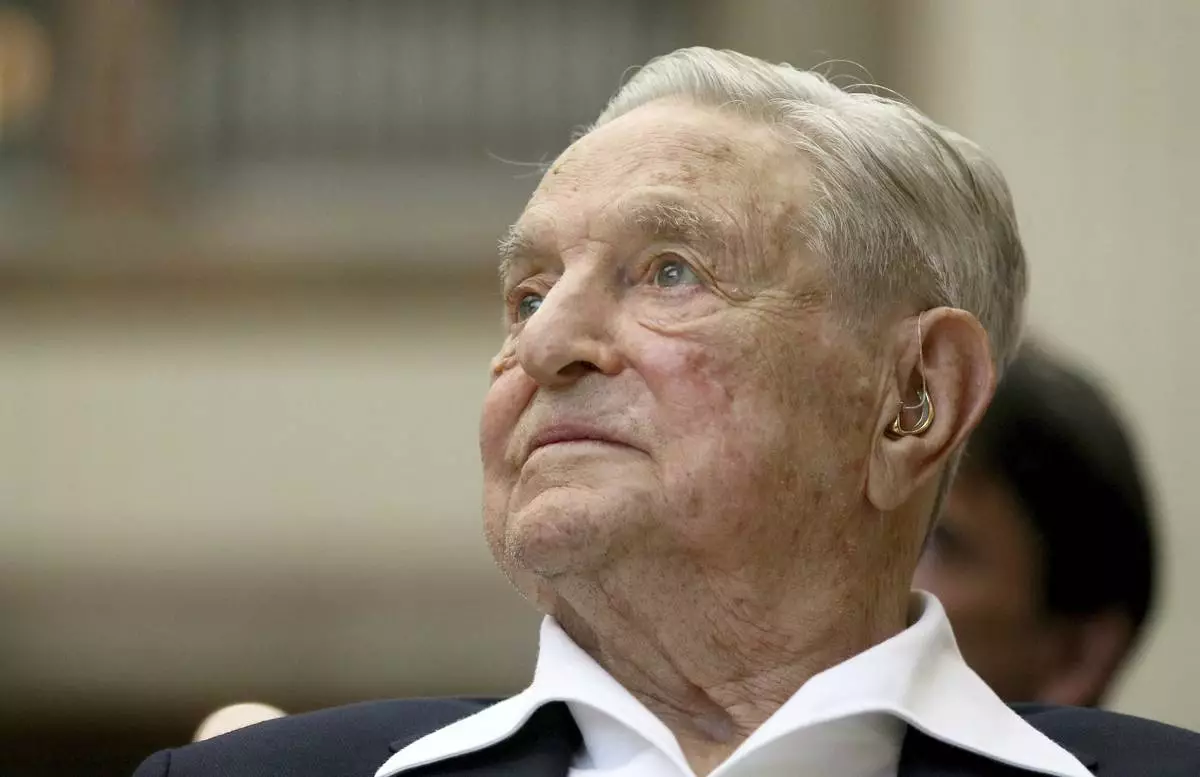
FILE - George Soros, founder and chairman of the Open Society Foundations, attends the Joseph A. Schumpeter award ceremony in Vienna, Austria, June 21, 2019. (AP Photo/Ronald Zak, File)
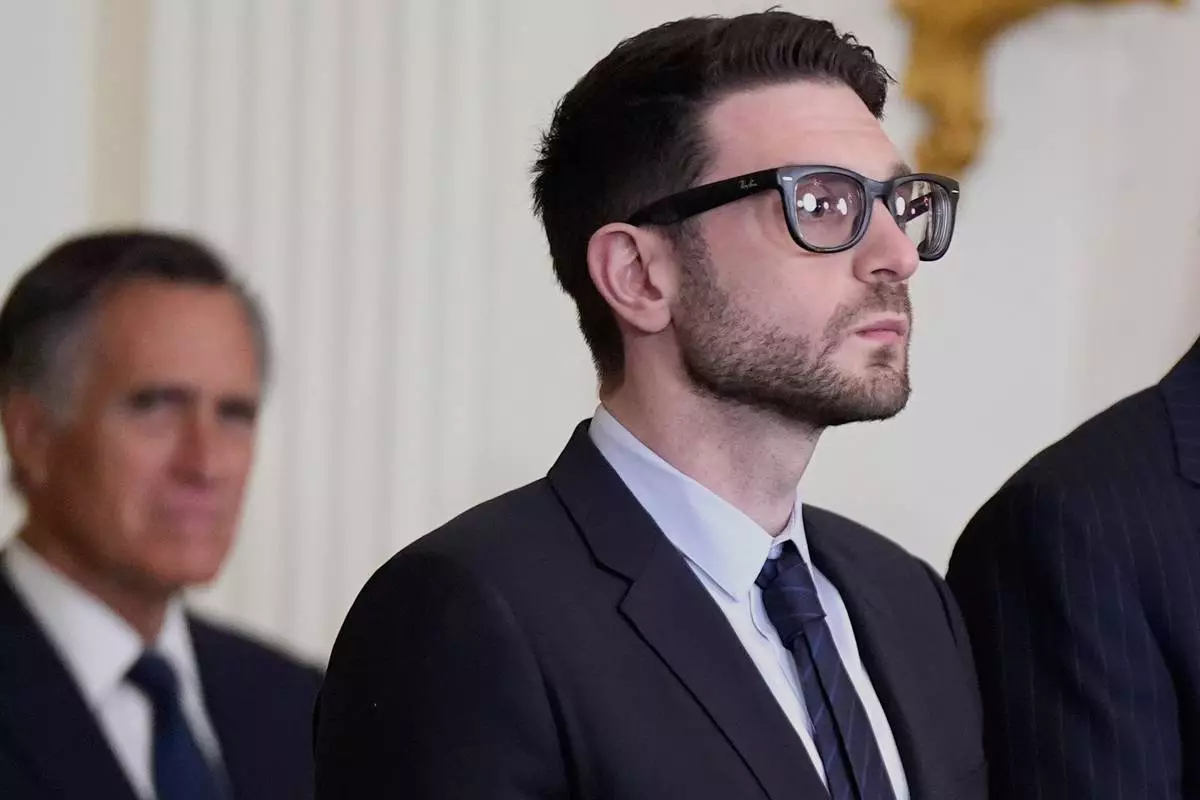
FILE - Alex Soros, left, on behalf of his father George Soros, in the East Room of the White House, Saturday, Jan. 4, 2025, in Washington. (AP Photo/Manuel Balce Ceneta, File)