WASHINGTON (AP) — A federal judge on Thursday blocked President Donald Trump's administration from immediately deporting Guatemalan migrant children who came to the U.S. alone back to their home country, the latest step in a court struggle over one of the most sensitive issues in Trump’s hard-line immigration agenda.
The decision by U.S. District Judge Timothy J. Kelly comes after the Republican administration’s Labor Day weekend attempt to remove Guatemalan migrant children who were living in government shelters and foster care.
Click to Gallery
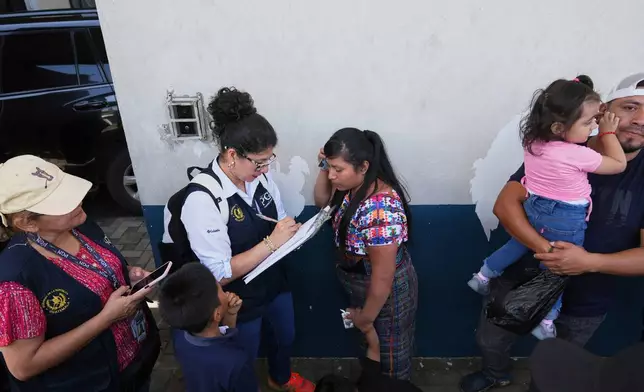
FILE - Relatives of unaccompanied minors deported from the United States await updates outside La Aurora International Airport, in Guatemala City, Aug. 31, 2025. (AP Photo/Moises Castillo, File)
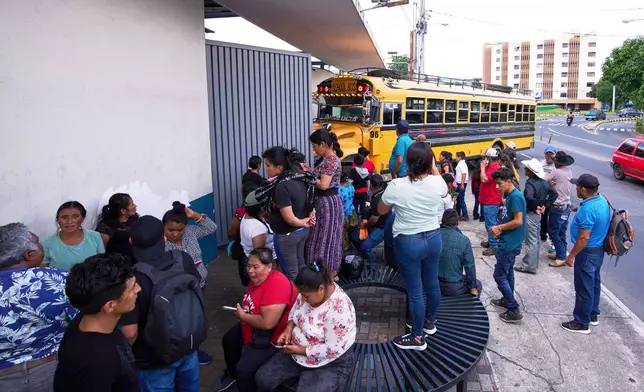
FILE - People wait for loved ones from Guatemala deported from the United States outside La Aurora International Airport, in Guatemala City, Aug. 31, 2025. (AP Photo/Moises Castillo, File)
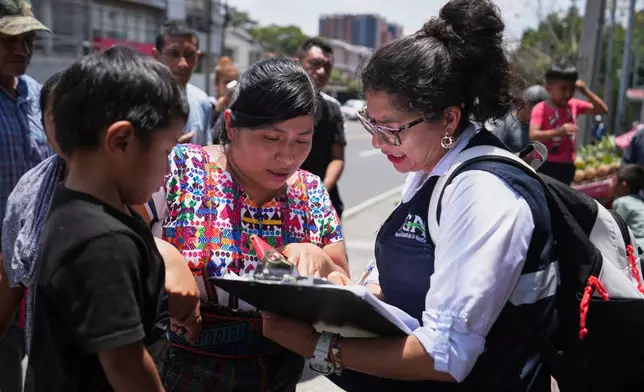
FILE - A relative of an unaccompanied minor deported from the United States reviews the list of those deported outside La Aurora International Airport, in Guatemala City, Aug. 31, 2025. (AP Photo/Moises Castillo, File)

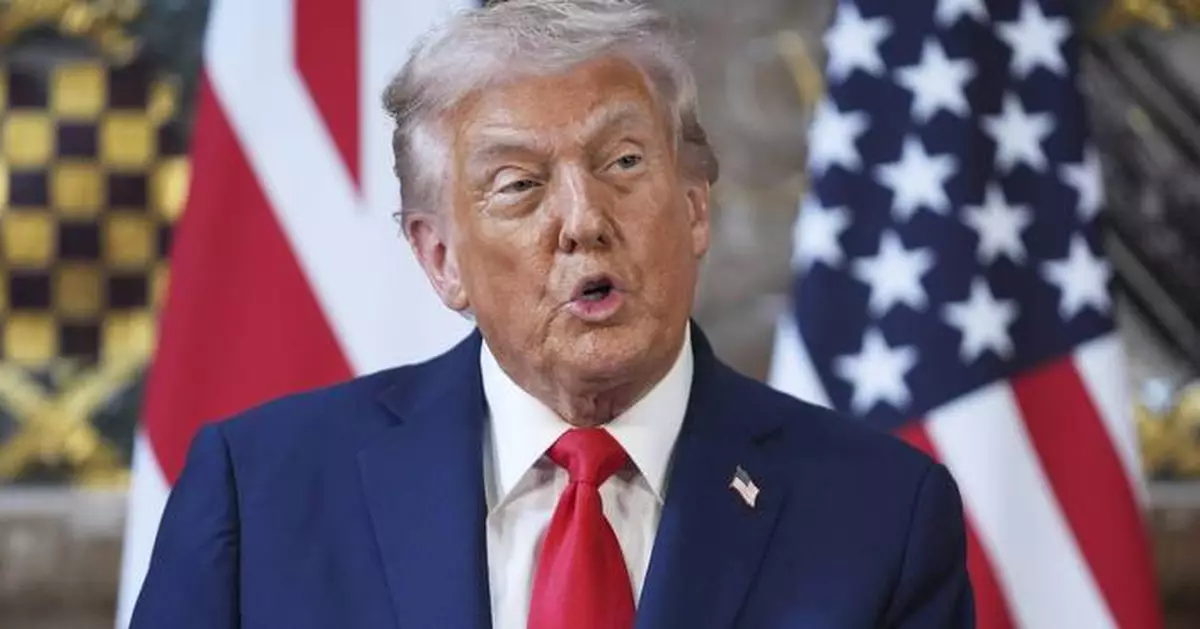
President Donald Trump speaks during a joint press conference with Britain's Prime Minister Keir Starmer at Chequers near Aylesbury, England, Thursday, Sept. 18, 2025. (AP Photo/Evan Vucci)
Trump administration officials said they were seeking to reunify children with parents who wanted them returned home. “But that explanation crumbled like a house of cards about a week later," Kelly, who was nominated by Trump, wrote. “There is no evidence before the Court that the parents of these children sought their return.”
Homeland Security Assistant Secretary Tricia McLaughlin in a statement insisted on the administration's initial claims that parents requested being reunited with their children. “This judge is blocking efforts to REUNIFY CHILDREN with their families. Now these children will have to go to shelters," McLaughlin said. "All just to ‘get Trump.’ This is disgraceful and immoral.”
White House spokesperson Abigail Jackson in a statement said that “The lower court wrongly interjected itself into this effort" of reuniting families.
Advocates for the children also submitted a whistleblower account to the court that suggests many of the children who were found eligible for deportation had likely been victims of child abuse, like death threats, gang violence, and human trafficking, Kelly noted in his order.
“The court saw through the government’s repeated misrepresentations of critical facts to try to justify the indefensible targeting of vulnerable children who would have faced danger if forcibly sent to other countries," Efrén C. Olivares, vice president of litigation & legal strategy at the National Immigration Law Center, said in a statement.
There was already a temporary order in place preventing the removal of Guatemalan children. But that was set to expire Tuesday. Kelly granted a preliminary injunction extends that temporary protection indefinitely, although the government can appeal.
Kelly did rebuff advocates' push to block the removal of children from additional countries, though he said any attempt to remove those children in a similar way would likely be unlawful. Legal advocates working with Kids in Need of Defense visited Honduras last week and found government officials and nongovernmental organizations working “furiously” to receive as many as 400 children back from the United States.
There are also temporary restraining orders in separate cases in Arizona and Illinois, but those cases are much more narrow in the scope of children they cover, underlining the importance of the Washington case.
In a late-night operation Aug. 30, the administration notified shelters where migrant children traveling alone initially live after they cross the U.S.-Mexico border that they would be returning the children to Guatemala and that they needed to have the kids ready to leave in a matter of hours.
“Our clients were terrified—many had tear-soaked faces and some were visibly shaking with fear,” Mishan Wroe, directing attorney at the National Center for Youth Law, one of the plaintiff attorneys, said in a statement.
Contractors for Immigration and Customs Enforcement picked up the Guatemalan children from shelters and foster care and transported them to the airport. The government has said in court filings that it identified 457 children for possible removal to Guatemala although that list was eventually whittled down to 327. In the end, 76 got as far as boarding planes in El Paso and Harlingen, Texas, on Aug. 31 and were set to depart to Guatemala in what the government described as a first phase.
Bertilda López’s 17-year-old son was among those slated to be sent to Guatemala. Over Labor Day weekend, he called his family late at night to tell them he was being sent home and she drove through the night to get to the capital.
She expressed mixed feelings about the judge’s decision Thursday.
“As a mother I want him to be well, whether that’s sending him (home) or him being locked up there,” López said. “Maybe it’s better that they send him back because he’s really sad. The way things are there (in the U.S.), it bothers me that my son is locked up.”
Elisabeth Toca, who is sponsoring the boy and hopeful he will be allowed to stay, said she’s still hoping she will be able to get him out of U.S. custody and “give him a better life.”
Guatemala’s government declined to comment, saying only that it was an internal U.S. justice process.
Immigration and children’s advocates, who had been alerted of possible efforts to remove Guatemalan minors, immediately sued the Trump administration to prevent the children’s removal. The advocates argued that many of these children were fleeing abuse or violence in their home countries and that the government was bypassing longstanding legal procedures meant to protect young migrants from being returned to potentially abusive or violent places.
"This was a tragedy in the making that was barely averted thanks to the tireless efforts of advocates across the country who saw that children were being endangered and raised the alarm," Shaina Aber, executive director of the Acacia Center for Justice, said in a statement.
Another federal judge in Washington granted advocates a temporary restraining order largely preventing the Trump administration from removing Guatemalan migrant children in its care except in limited circumstances where an immigration judge had already ordered their removal after reviewing their cases. That initial 14-day order was set to expire on Sunday, and then Kelly extended it through Tuesday to give him extra time to examine the case.
The government has argued that it has the right to return children in its care and it was acting at the behest of the Guatemalan government. But the government walked back an initial claim alleging the parents requested their children be sent back.
The Guatemalan government has said that it was concerned over minors in U.S. custody who were going to turn 18 and would then be at risk of being turned over to adult detention facilities.
Children who cross the southern border alone are generally transferred to the Office of Refugee Resettlement, which falls under the Department of Health and Human Services. The children usually live in a network of shelters across the country that are overseen by the resettlement office until they are eventually released to a sponsor, usually a relative.
After advocates got the temporary restraining order approved for Guatemalan children, they also asked the court to extend protections from deportation to children of other nationalities after hearing reports that the government was intending to remove Honduran children as well.
Associated Press writer Sonia Pérez D. in Guatemala City contributed to this report.
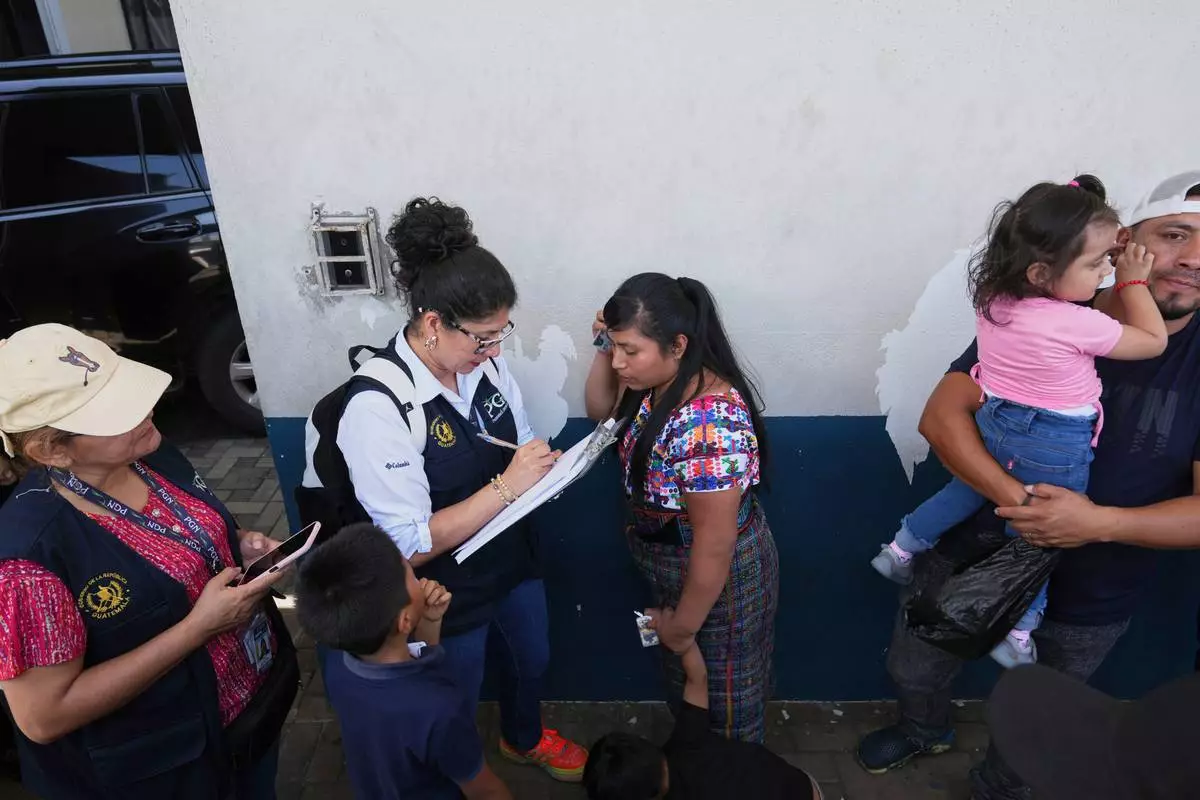
FILE - Relatives of unaccompanied minors deported from the United States await updates outside La Aurora International Airport, in Guatemala City, Aug. 31, 2025. (AP Photo/Moises Castillo, File)

FILE - People wait for loved ones from Guatemala deported from the United States outside La Aurora International Airport, in Guatemala City, Aug. 31, 2025. (AP Photo/Moises Castillo, File)
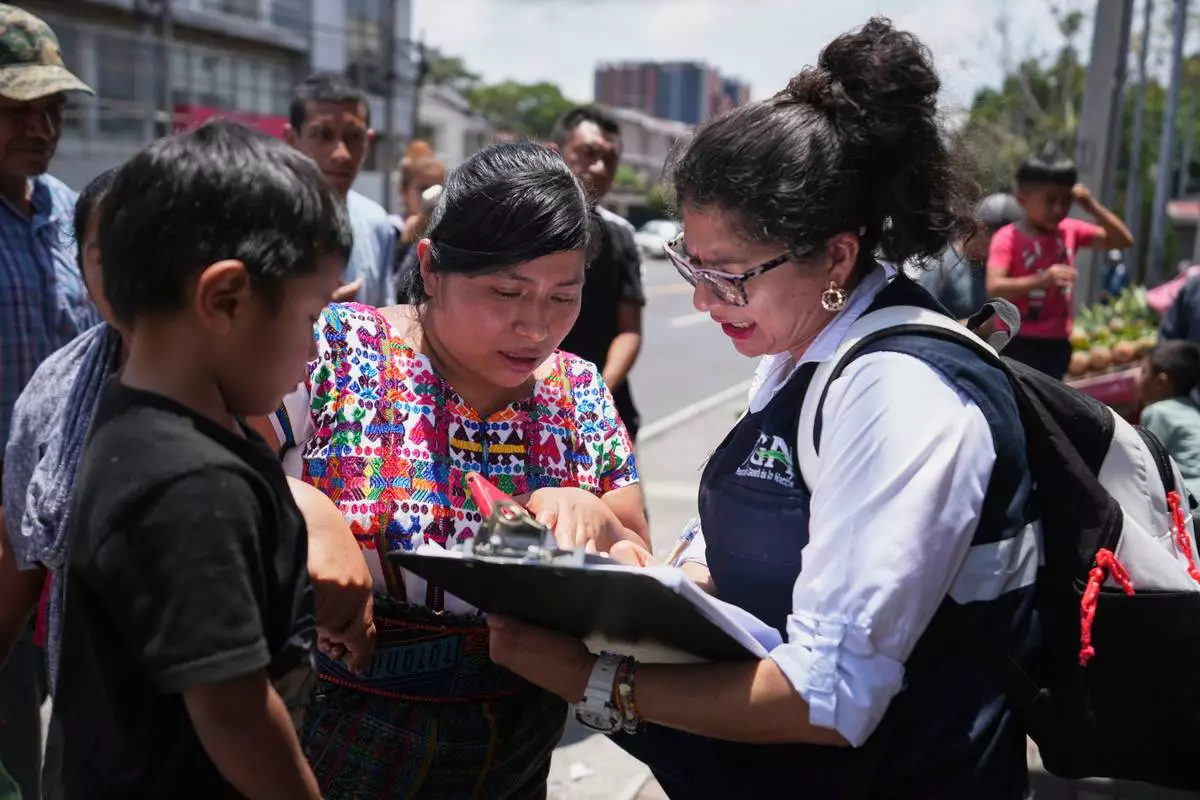
FILE - A relative of an unaccompanied minor deported from the United States reviews the list of those deported outside La Aurora International Airport, in Guatemala City, Aug. 31, 2025. (AP Photo/Moises Castillo, File)
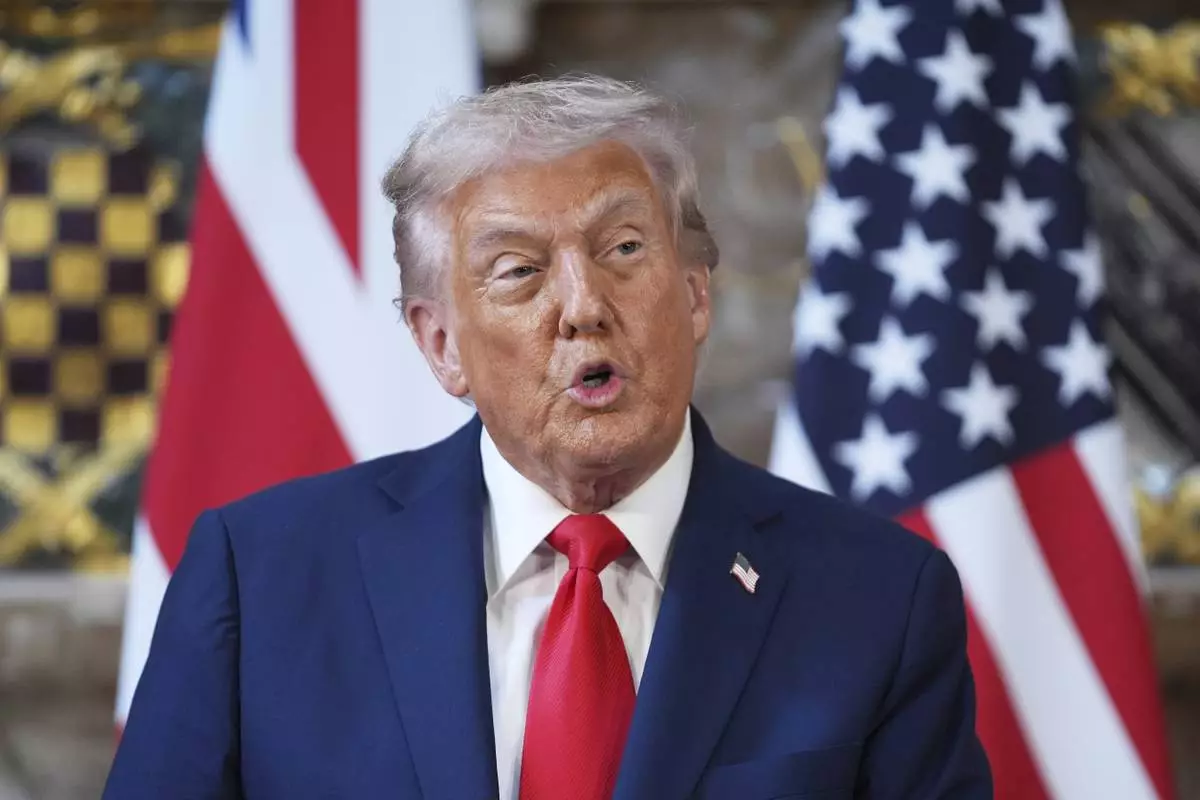
President Donald Trump speaks during a joint press conference with Britain's Prime Minister Keir Starmer at Chequers near Aylesbury, England, Thursday, Sept. 18, 2025. (AP Photo/Evan Vucci)