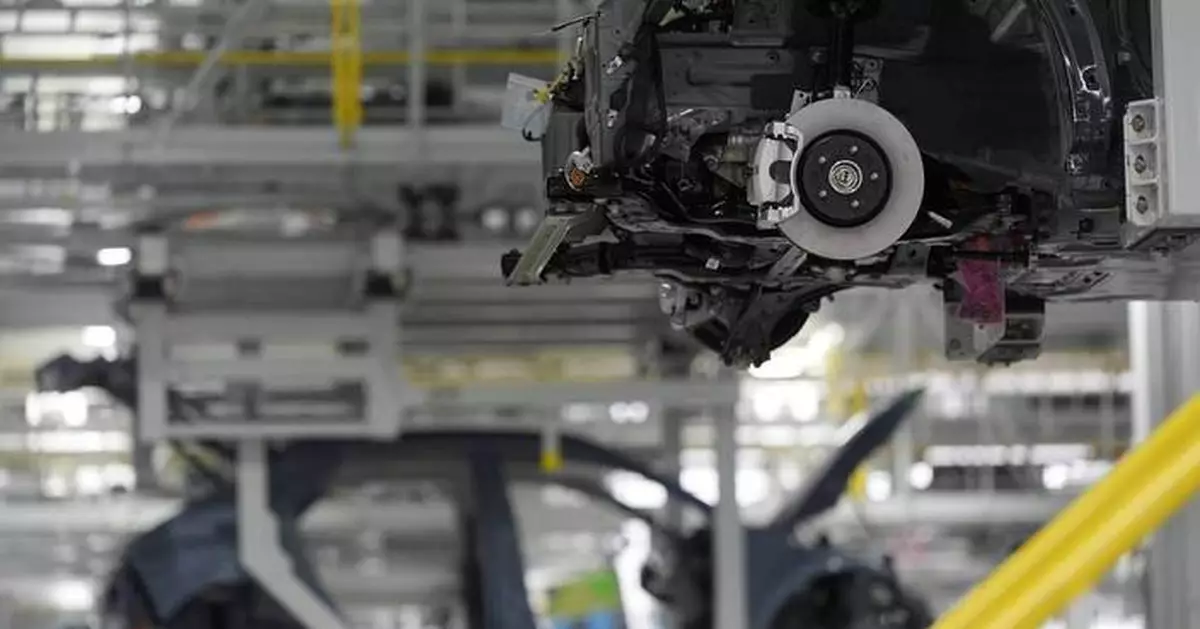
ATLANTA (AP) — Hyundai Motor Group on Thursday confirmed it is going forward with previously announced plans to expand its Georgia plant, just weeks after an immigration raid delayed the startup of an electric vehicle battery plant at the site.
As part of a broader investment strategy, Hyundai said it would spend $2.7 billion to increase production capacity at the Ellabell site by 200,000 over the next three years, to a total of 500,000 vehicles a year.
The company first announced the expansion in March at the grand opening of the plant west of Savannah, and had said in August that it would invest an additional $5 billion in United States overall. But the raid, which included arrests of more than 300 South Korean citizens, led to questions about the wisdom of the Asian nation investing in the U.S..
The company said it now plans to produce 10 models of electric and hybrid gas-electric vehicles in Georgia, up from the current two the plant has been assembling as it ramps up production. Hyundai says it's still on track to expand production worldwide to 5.6 million vehicles a year by 2030. The automaker pledged that 60% of those vehicles will be electric or hybrid powered, targeting sales in South Korea, North America and Europe.
Hyundai said that it plans to make more than 80% of vehicles sold in the United States domestically by 2030, with total domestic content increasing from 60% to 80%. For the first time, the vehicles would include a mid-sized pickup truck, a key vehicle class in the U.S. market. The company already makes the Santa Cruz model, a four-door compact pickup, that it started selling in 2021.
Hyundai CEO José Muñoz has said the immigration raid will delay opening the battery plant by at least two to three months. Spokesperson Michael Stewart said Thursday that the facility will open in the first half of 2026.
Both Hyundai executives and Georgia officials have been trying to calm the situation since the raid, which mushroomed into a diplomatic dispute between South Korea and the United States.
Republican Gov. Brian Kemp told reporters Tuesday at a ceremony marking the groundbreaking of a Rivian Automotive electric vehicle plant that he remains confident Georgia's business advantages would “win out” in terms of foreign investment. The raid may even wind up smoothing the way for South Korean employees to more easily obtain legal permission to help build and operate facilities in the United States, he said.
“I’ve had good conversations with companies that are here doing business in Georgia, companies that are looking to do business here,” Kemp said. “And I’ve had good conversations with people in the White House about the visa issue.”
Brent Stubbs, the chief administrative officer of the Ellabell site, wrote in an opinion piece published Wednesday in The Atlanta Journal-Constitution that the company is still committed to Georgia.
“This situation doesn’t change our plans to continue expanding and localizing in the United States," Stubbs wrote. “Our investments in America are part of a long-term strategic plan.”
The $2.7 billion investment confirmed Thursday will go to expanding capacity at the plant and group affiliates, Stewart said. That would bring total investment in the auto plant to $10.3 billion, not counting the $4.3 billion that Hyundai and its joint-venture partner, LG Energy Solution, are putting into the battery plant.
Hyundai and its onsite affiliates currently have 3,129 employees in Ellabell, Stewart said. Hyundai pledges to hire at least 8,500 workers by the end of 2031. State and local governments have promised $2.1 billion in tax breaks and other incentives.
The boost at the Ellabell site is the biggest part Hyundai's plan to raise production by 1.2 million vehicles a year worldwide. That includes another 250,000 vehicles out of Pune, India; and 200,000 more at Hyundai's electric vehicle plant in Ulsan, South Korea. The automaker said it would also deliver parts for assembly into an additional 250,000 vehicles at plants in Saudi Arabia, Vietnam and North Africa.
Hyundai underlined a previous announcement to deepen its investment in robotics and said that by 2027 it would launch extended-range electric vehicles with gasoline motors to extend the range of its electric batteries to more than 600 miles (960 kilometers).
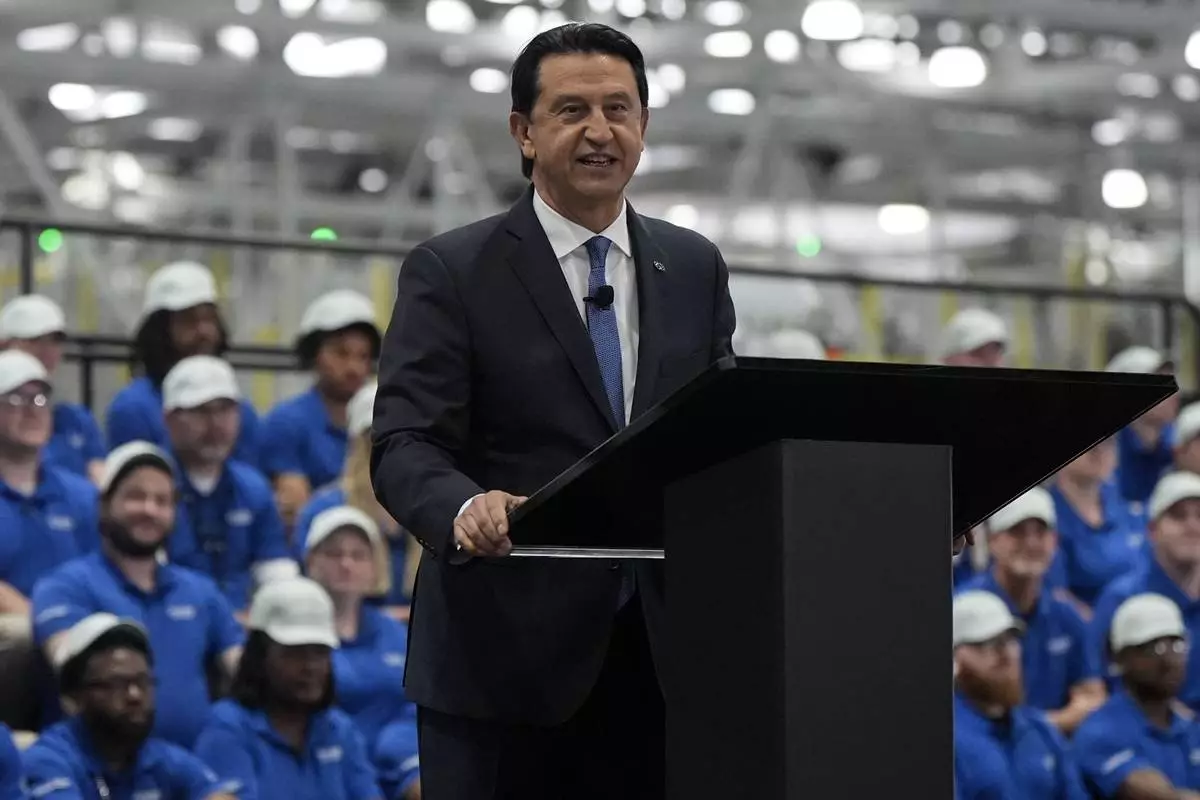
FILE - Jose Munoz, president and CEO, Hyundai Motor Company, speaks during a media tour and grand opening at the Hyundai Motor Group Metaplant America, March 26, 2025, in Ellabell, Ga. (AP Photo/Mike Stewart, File)
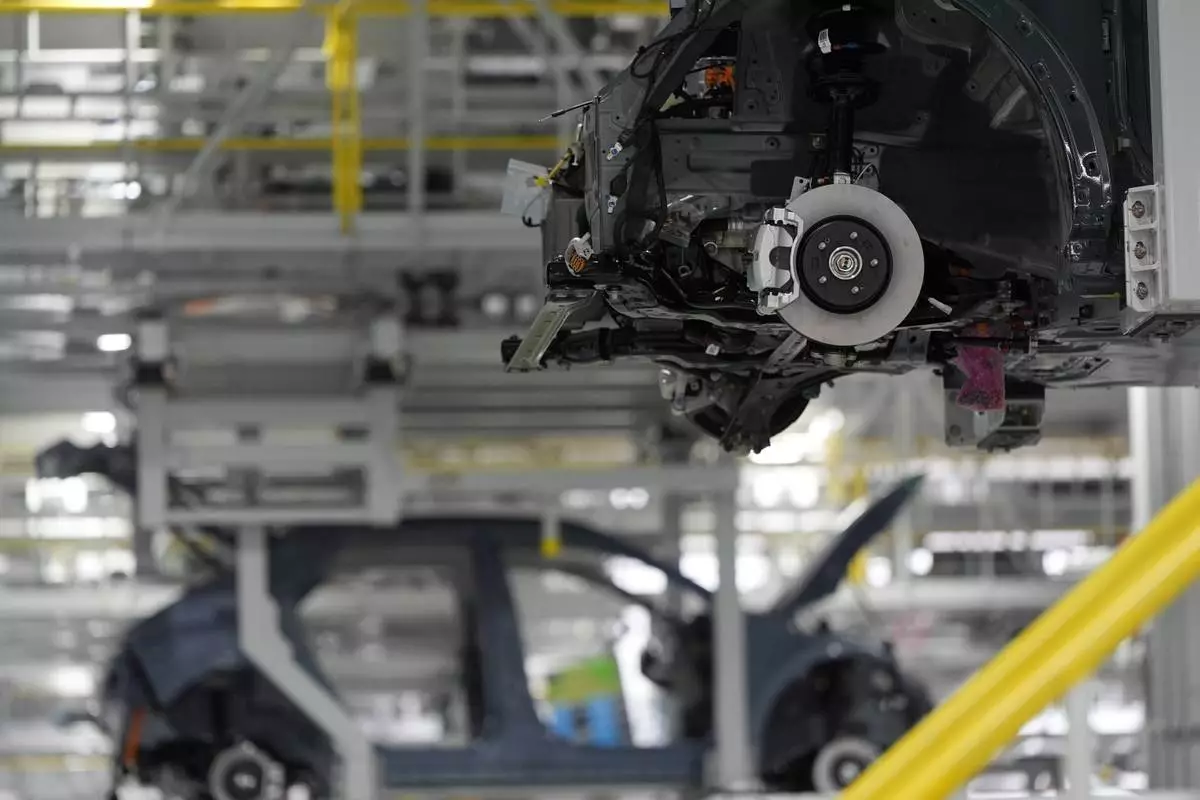
FILE - Vehicles move on the line at the Hyundai Motor Group Metaplant America, March 26, 2025, in Ellabell, Ga. (AP Photo/Mike Stewart, File)
HAVANA (AP) — Trumpets and drums played solemnly at Havana's airport Thursday as white-gloved Cuban soldiers marched out of a plane carrying urns with remains of the 32 Cuban officers killed during a stunning U.S. attack on Venezuela.
Nearby, thousands of Cubans lined one of Havana’s most iconic streets to await the bodies as the island remained under threat by the administration of U.S. President Donald Trump.
The soldiers' shoes clacked as they marched stiff-legged into the headquarters of the Ministry of the Armed Forces and placed the urns on a long table next to the pictures of those killed. Tens of thousands of people paid their respects, saluting the urns or holding their hand over their heart, many of them drenched from standing outside in a heavy downpour.
Thursday’s mass funeral was only one of a handful that the Cuban government has organized over the past half-century.
The soldiers were part of the security detail of Venezuelan President Nicolás Maduro during the Jan. 3 raid on his residence to seize the former leader and bring him to the U.S. to face drug trafficking charges.
State television also showed images of what it said were more than a dozen wounded combatants from the raid, accompanied by Cuban Foreign Minister Bruno Rodríguez after arriving Wednesday night from Venezuela. A man identified in state media as Col. Pedro Domínguez attended Thursday's ceremony in a wheelchair.
He said it was a “disproportionate attack” that killed 11 colleagues around him as they slept. Domínguez said he was committed to doing “whatever it takes to defend this people and to remain united in the face of threats from the United States.”
Tensions between Cuba and the U.S. have spiked, with Trump recently demanding that the Caribbean country make a deal with him before it is “too late.” He did not explain what kind of deal.
Trump also has said that Cuba will no longer live off Venezuela's money and oil. Experts warn that the abrupt end of oil shipments could be catastrophic for Cuba, which is already struggling with serious blackouts and a crumbling power grid.
Officials unfurled a massive flag at Havana's airport as President Miguel Díaz-Canel, clad in military garb, stood silent next to former President Raúl Castro, with what appeared to be the relatives of those killed looking on nearby.
Cuban Interior Minister Lázaro Alberto Álvarez Casas called the slain soldiers “heroes” of an anti-imperialist struggle spanning both Cuba and Venezuela. In an apparent reference to the U.S., he said the “enemy” speaks of “high-precision operations, of troops, of elites, of supremacy.
“We, on the other hand, speak of faces, of families who have lost a father, a son, a husband, a brother,” Álvarez said.
The events demonstrate that “imperialism may possess more sophisticated weapons; it may have immense material wealth; it may buy the minds of the wavering; but there is one thing it will never be able to buy: the dignity of the Cuban people,” he said.
Carmen Gómez, a 58-year-old industrial designer, was among the thousands of Cubans who lined a street where motorcycles and military vehicles thundered by with the remains of those killed.
“They are people willing to defend their principles and values, and we must pay tribute to them,” Gómez said. “It’s because of the sense of patriotism that Cubans have, and that will always unite us.”
The 32 military personnel ranged in age from 26 to 60 and were part of protection agreements between the two countries.
Officials in Cuba have said they expect a massive demonstration Friday across from the U.S. Embassy to protest the deaths.
“People are upset and hurt ... many do believe that the dead are martyrs” of a historic struggle against the United States, analyst and former diplomat Carlos Alzugaray told The Associated Press.
In October 1976, then-President Fidel Castro led a massive demonstration to bid farewell to the 73 people killed in the bombing of a civilian flight financed by anti-revolutionary leaders in the U.S. Most of the victims were Cuban athletes.
In December 1989, officials organized a ceremony to honor the more than 2,000 Cuban combatants who died in Angola during Cuba’s participation in a war that defeated the South African army.
In October 1997, memorial services were held following the arrival of the remains of guerrilla commander Ernesto “Che” Guevara and six of his comrades, who died in 1967.
The latest mass burial is critical to honor those slain, said José Luis Piñeiro, a 60-year-old doctor who lived for four years in Venezuela.
“I don’t think Trump is crazy enough to come and enter a country like this, ours, and if he does, he’s going to have to take an aspirin or some painkiller to avoid the headache he’s going to get,” Piñeiro said. “These were 32 heroes who fought him. Can you imagine an entire nation? He’s going to lose.”
The remains arrived a day after the U.S. announced $3 million in additional aid to help the island recover from the catastrophic Hurricane Melissa. The first flight took off on Wednesday, and a second flight was scheduled for Friday. A commercial vessel also will deliver food and other supplies.
Cuba had said on Wednesday that any contributions will be channeled through the government.
But U.S. State Department foreign assistance official Jeremy Lewin said Thursday that the U.S. was working with Cuba’s Catholic Church to distribute aid, as part of Washington's efforts to give assistance directly to the Cuban people.
“There’s nothing political about cans of tuna and rice and beans and pasta,” he said Thursday, warning that the Cuban government should not intervene or divert supplies. “We will be watching, and we will hold them accountable.”
Lewin said the Cuban government has a choice to: “Step down or better provide towards people.” Lewin added that “if there was no regime,” the U.S. would provide “billions and billions of dollars” in assistance, as well as investment and development: “That’s what lies on the other side of the regime for the Cuban people.”
Rodríguez, the Cuban foreign minister, said the U.S. government was “exploiting what appears to be a humanitarian gesture for opportunistic and politically manipulative purposes.”
Coto contributed from San Juan, Puerto Rico.
Follow AP’s coverage of Latin America and the Caribbean at https://apnews.com/hub/latin-america
People line up outside the Ministry of the Revolutionary Armed Forces where the remains are on display of the Cuban officers who were killed during the U.S. operation in Venezuela that captured President Nicolas Maduro, as it sprinkles rain in Havana, Cuba, Thursday, Jan. 15, 2026. (AP Photo/Ramon Espinosa)
Military members line up outside the Ministry of the Revolutionary Armed Forces where the urns containing the remains of Cuban officers, killed during the U.S. operation in Venezuela that captured President Nicolas Maduro, are on display in Havana, Cuba, Thursday, Jan. 15, 2026. (AP Photo/Ramon Espinosa)
Military members pay their last respects to Cuban officers who were killed during the U.S. operation in Venezuela that captured Venezuelan President Nicolas Maduro, at the Ministry of the Revolutionary Armed Forces where the urns containing the remains are displayed during a ceremony in Havana, Cuba, Thursday, Jan. 15, 2026. (AP Photo/Ramon Espinosa)
A motorcade transports urns containing the remains of Cuban officers, who were killed during the U.S. operation in Venezuela that captured Venezuelan President Nicolas Maduro, through Havana, Cuba, Thursday, Jan. 15, 2026. (AP Photo/Ramon Espinosa)
Soldiers carry urns containing the remains of Cuban officers, who were killed during the U.S. operation in Venezuela that captured Venezuelan President Nicolas Maduro, at the Ministry of the Revolutionary Armed Forces in Havana, Cuba, Thursday, Jan. 15, 2026. (Adalberto Roque /Pool Photo via AP)
A motorcade transports urns containing the remains of Cuban officers, who were killed during the U.S. operation in Venezuela that captured Venezuelan President Nicolas Maduro, through Havana, Cuba, Thursday, Jan. 15, 2026. (AP Photo/Ramon Espinosa)
People line the streets of Havana, Cuba, Thursday, Jan. 15, 2026, to watch the motorcade carrying urns containing the remains of Cuban officers killed during the U.S. operation in Venezuela that captured Venezuelan President Nicolas Maduro. (AP Photo/Ramon Espinosa)
Workers fly the Cuban flag at half-staff at the Anti-Imperialist Tribune near the U.S. Embassy in Havana, Cuba, Monday, Jan. 5, 2026, in memory of Cubans who died two days before in Caracas, Venezuela during the capture of Venezuelan President Nicolas Maduro by U.S. forces. (AP Photo/Ramon Espinosa)