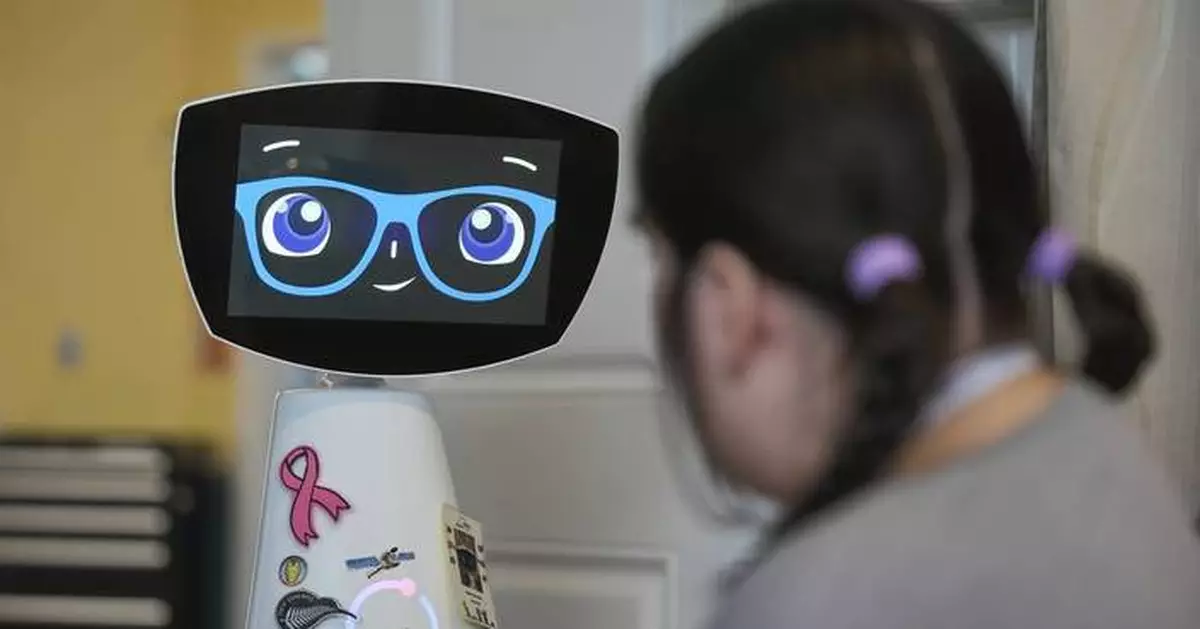
Days after Meagan Brazil-Sheehan’s 6-year-old son was diagnosed with leukemia, they were walking down the halls of UMass Memorial Children’s Medical Center when they ran into Robin the Robot.
“Luca, how are you?” it asked in a high-pitched voice programmed to sound like a 7-year-old girl. "It’s been awhile.”
Click to Gallery
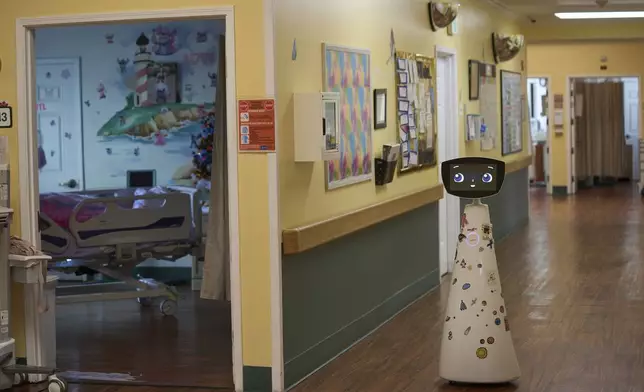
Robin the Robot, developed by Expper Technologies, visits patients' rooms at the HealthBridge Orange Specialty Pediatric Hospital in Orange, Calif., on Friday, Sept. 12, 2025. (AP Photo/Damian Dovarganes)
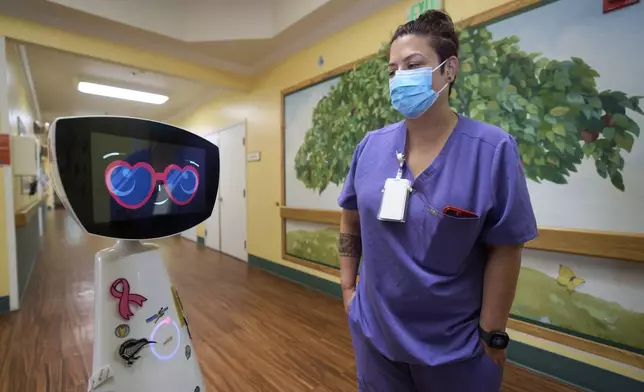
Activities Coordinator Melissa Delaney interacts with Robin the Robot as it visits patients' rooms at the HealthBridge Orange Specialty Pediatric Hospital in Orange, Calif., on Friday, Sept. 12, 2025. (AP Photo/Damian Dovarganes)
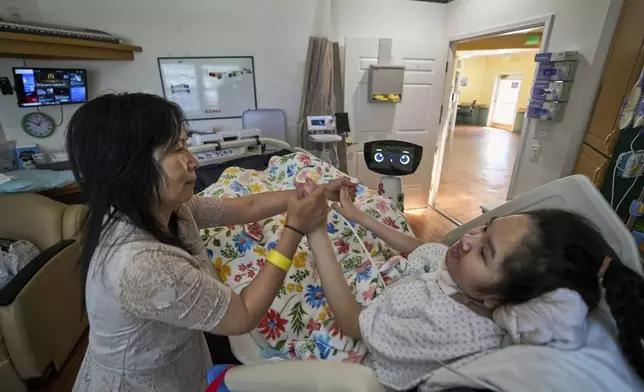
Cara Nguyen with her daughter, Kathy, 18, are visited by Robin the Robot at the HealthBridge Orange Specialty Pediatric Hospital in Orange, Calif., on Friday, Sept. 12, 2025.(AP Photo/Damian Dovarganes)
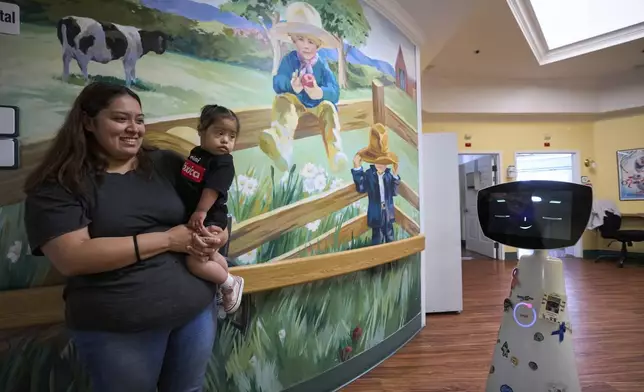
Robin the Robot, developed by Expper Technologies, interacts with Erica Ruiz and her daughter, Valentina, at the HealthBridge Orange Specialty Pediatric Hospital in Orange, Calif., on Friday, Sept. 12, 2025. (AP Photo/Damian Dovarganes)
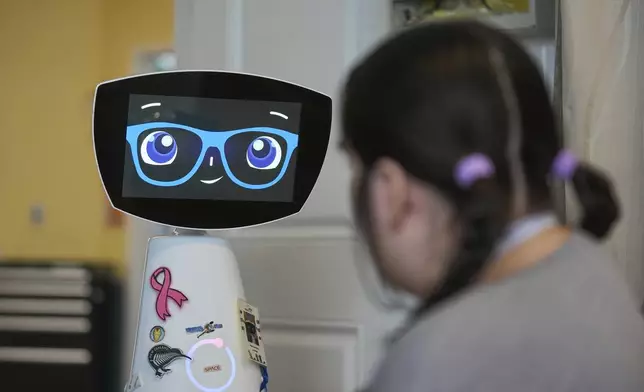
Robin the Robot visits with a patient at the HealthBridge Orange Specialty Pediatric Hospital in Orange, Calif., on Friday, Sept. 12, 2025. (AP Photo/Damian Dovarganes)
Brazil-Sheehan said they had only met the 4-foot-tall (1.2-meter-tall) robot with a large screen displaying cartoonlike features once before after they were admitted several days earlier.
“His face lit up," she said about the interaction in June in Worcester, Massachusetts. "It was so special because she remembered him.”
Robin is an artificial intelligence -powered therapeutic robot programed to act like a little girl as it provides emotional support at nursing homes and hospital pediatric units while helping combat staffing shortages. Five years after launching in the U.S., it has become a familiar face in 30 health care facilities in California, Massachusetts, New York and Indiana.
“Nurses and medical staff are really overworked, under a lot of pressure, and unfortunately, a lot of times they don’t have capacity to provide engagement and connection to patients,” said Karen Khachikyan, CEO of Expper Technologies, which developed the robot. “Robin helps to alleviate that part from them.”
As AI increasingly becomes a part of daily life, it's found a foothold in medical care — providing everything from note-taking during exams to electronic nurses. While heralded by some for the efficiency it brings, others worry about its impact on patient care.
Robin is about 30% autonomous, while a team of operators working remotely controls the rest under the watchful eyes of clinical staff. Khachikyan said that with each interaction, they’re able to collect more data — while still complying with the Health Insurance Portability and Accountability Act, or HIPAA — and get closer to it being able to function independently.
“Imagine a pure emotional intelligence like WALL-E. We’re trying to create that,” he said, referencing the 2008 animated film.
On a recent Friday, a staff member at HealthBridge Children’s Hospital in Orange County, California, read off a list of patients she needed Robin to visit, along with the amount of time to spend with each one.
The robot with a sleek white triangle-shaped frame that Khachikyan said was designed for hugging, rolled into a room with a teenager injured in a car accident. The robot played what it described as his favorite song — “No Fear” by DeJ Loaf — and he danced along. In the hallway, Robin cracked up a young child held by her mother when it put on a series of silly glasses and a big red nose. In another room, the robot played a simplified version of tic-tac-toe with a patient.
Samantha da Silva, speech language pathologist at the hospital, said patients light up when Robin comes into their room and not only remembers their names but their favorite music.
“She brings joy to everyone,” da Silva said. “She walks down the halls, everyone loves to chat with her, say hello.”
Robin mirrors the emotions of the person it is talking with, explained Khachikyan. If the patient is laughing then the robot laughs along, but if they're sharing something difficult, its face reflects sadness and empathy.
In nursing homes, Robin plays memory games with people suffering from dementia, takes them through breathing exercises on difficult days and offers them a form of companionship that resembles a grandchild with a grandparent.
Khachikyan recalled a moment last year at a facility in Los Angeles where a woman was having a panic attack and asked specifically for the robot. Robin played songs by her favorite musician and videos of her favorite animal — Elvis Presley and puppies — until she had calmed down.
But with the Association of American Medical Colleges projecting that the U.S. will face a shortage of up to 86,000 physicians in the next 11 years, Khachikyan’s vision for Robin goes far beyond this type of support.
He said they’re working to make the robot able to measure patients’ vitals and check to see how they’re doing and then send that information to their medical team. Longer term plans include designing Robin to help elderly patients change their clothes and go to the bathroom.
“Our goal is to design the next evolution of Robin; that Robin will take more and more responsibilities and become even more essential part of care delivery,” Khachikyan said.
He clarified that it’s not about replacing health care workers but about filling in the gaps in the workforce.
At UMass Memorial Children’s, the robot is very much a part of a team of support for patients. When Luca needed an IV after not getting one in a while, Micaela Cotas, a certified child life specialist came in with the robot and showed him an IV and what was about to happen, and then Robin played a cartoon of it getting an IV put in.
“It just kind of helps show that Robin has gone through those procedures as well, just like a peer," Cotas said.
Robin was developed by Khachikyan while he was getting his Ph.D. He said growing up in a single-parent household in Armenia had been lonely, so years later he wanted to build a type of robot that could act as a person’s friend.
Developers tested it in a variety of industries before an investor suggested that pediatric hospitals would be a good fit because of the stress and loneliness children often feel.
“That was kind of an aha moment,” he said. “We decided, OK let’s try it.”
They had success introducing it at a pediatric hospital in Armenia and by 2020 launched a pilot program at UCLA Mattel Children’s Hospital.
Since Robin was created, its personality and character have changed significantly based on the responses from people it interacts with.
Khachikyan gave the example of Robin’s answer to the question: “What is your favorite animal.” Initially they tried having the robot respond with dog. They also tried cat. But when they tried chicken, the children cracked up. So they stuck with it.
“We created Robin’s personality by really taking users into the equation,” he said. “So we often say that Robin was designed by users.”
Associated Press journalist Damian Dovarganes contributed to this report.
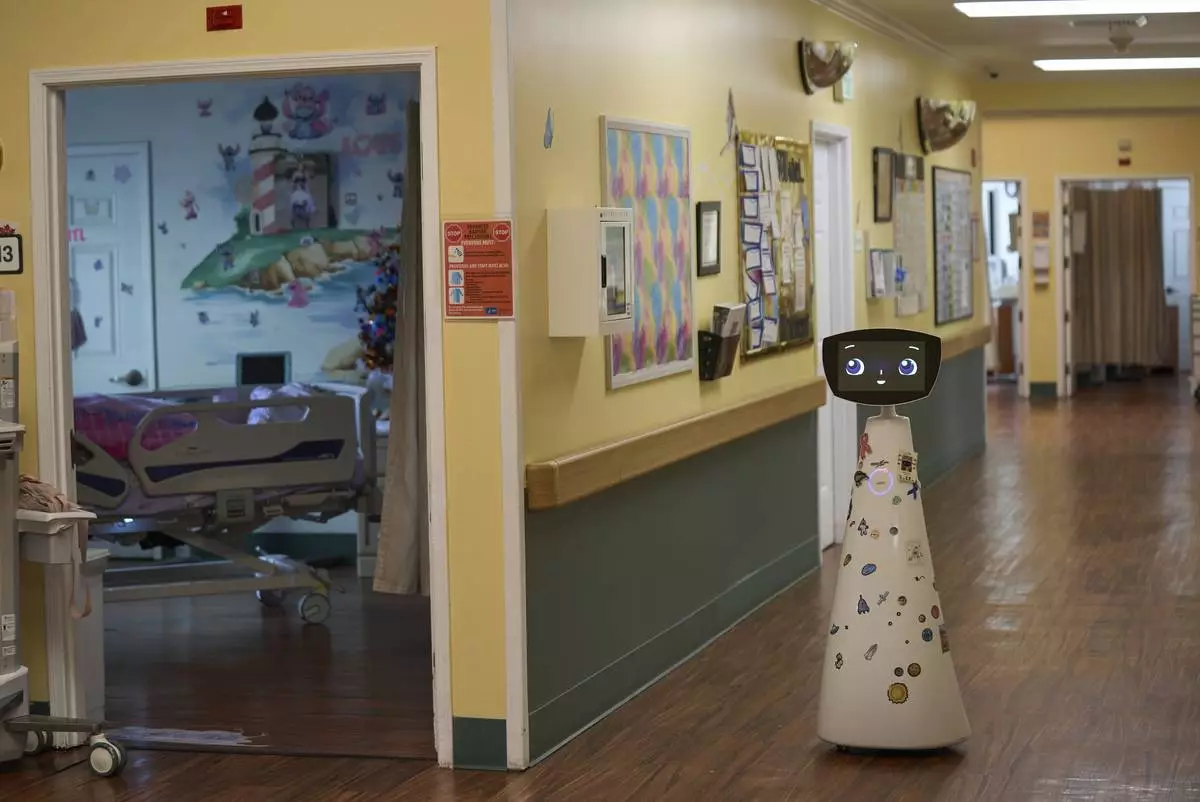
Robin the Robot, developed by Expper Technologies, visits patients' rooms at the HealthBridge Orange Specialty Pediatric Hospital in Orange, Calif., on Friday, Sept. 12, 2025. (AP Photo/Damian Dovarganes)
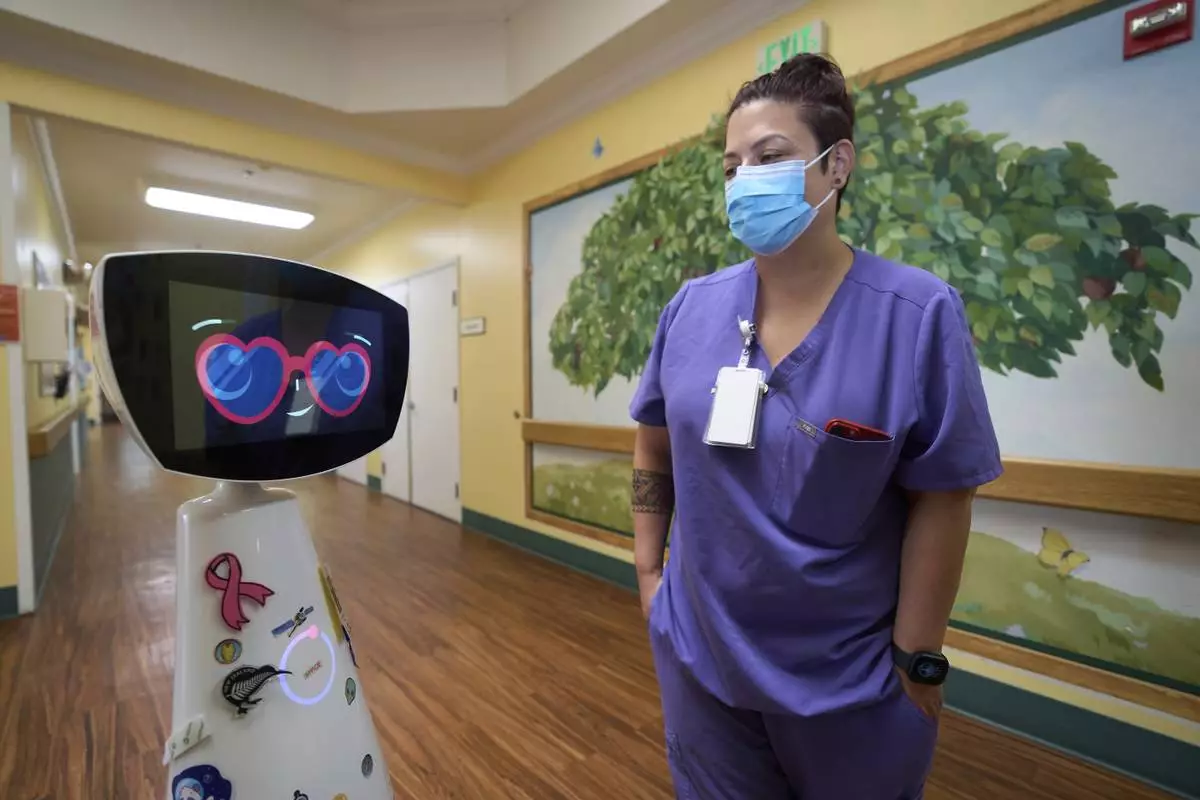
Activities Coordinator Melissa Delaney interacts with Robin the Robot as it visits patients' rooms at the HealthBridge Orange Specialty Pediatric Hospital in Orange, Calif., on Friday, Sept. 12, 2025. (AP Photo/Damian Dovarganes)
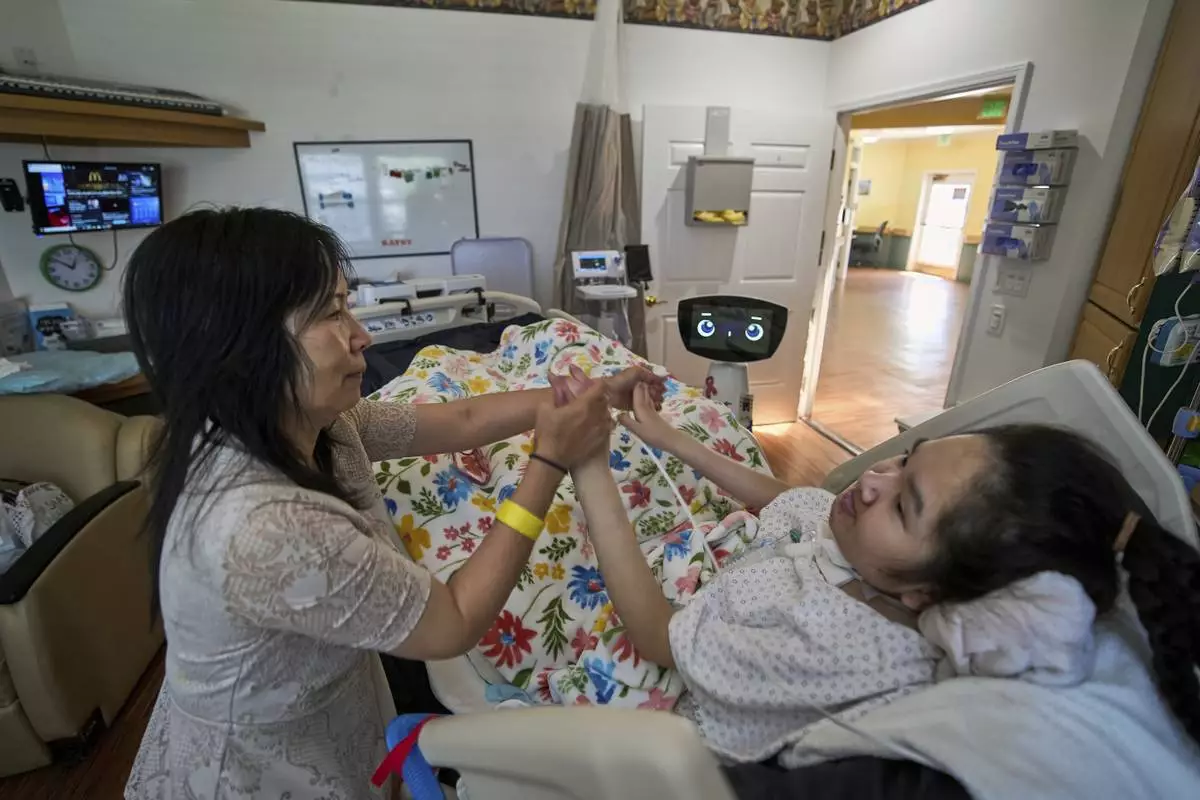
Cara Nguyen with her daughter, Kathy, 18, are visited by Robin the Robot at the HealthBridge Orange Specialty Pediatric Hospital in Orange, Calif., on Friday, Sept. 12, 2025.(AP Photo/Damian Dovarganes)
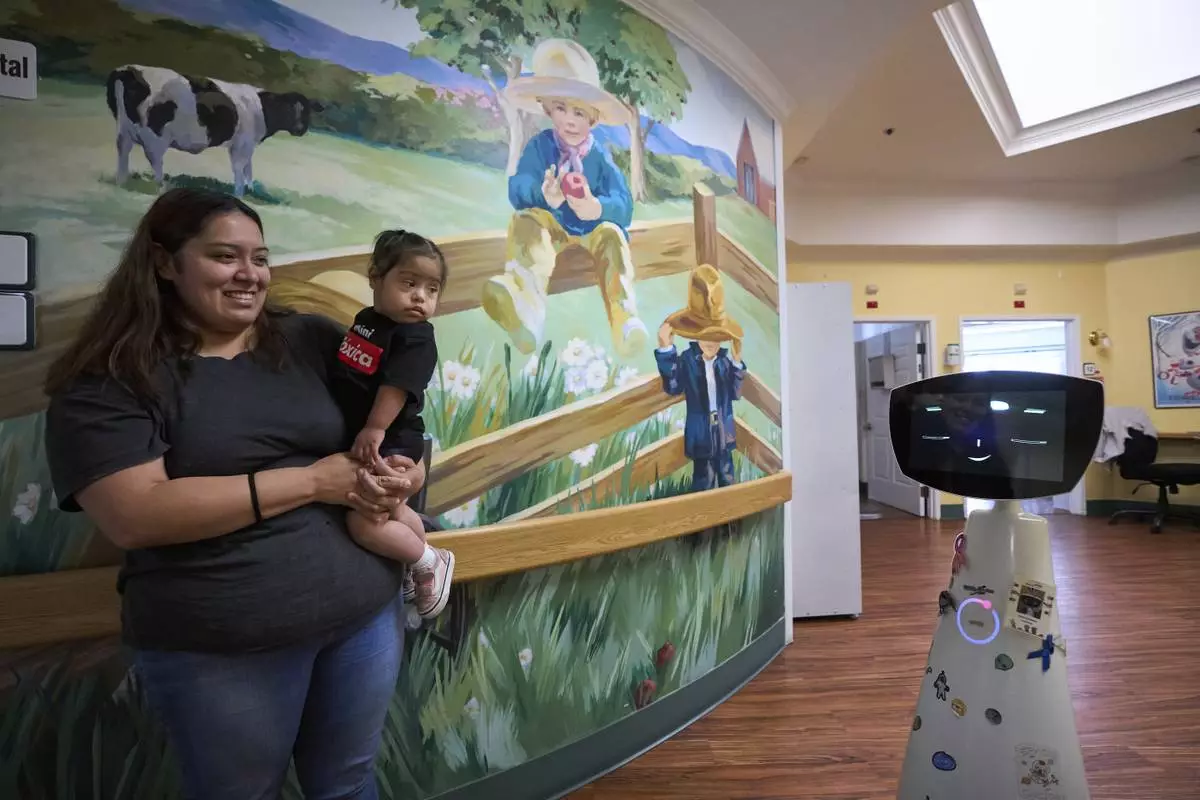
Robin the Robot, developed by Expper Technologies, interacts with Erica Ruiz and her daughter, Valentina, at the HealthBridge Orange Specialty Pediatric Hospital in Orange, Calif., on Friday, Sept. 12, 2025. (AP Photo/Damian Dovarganes)
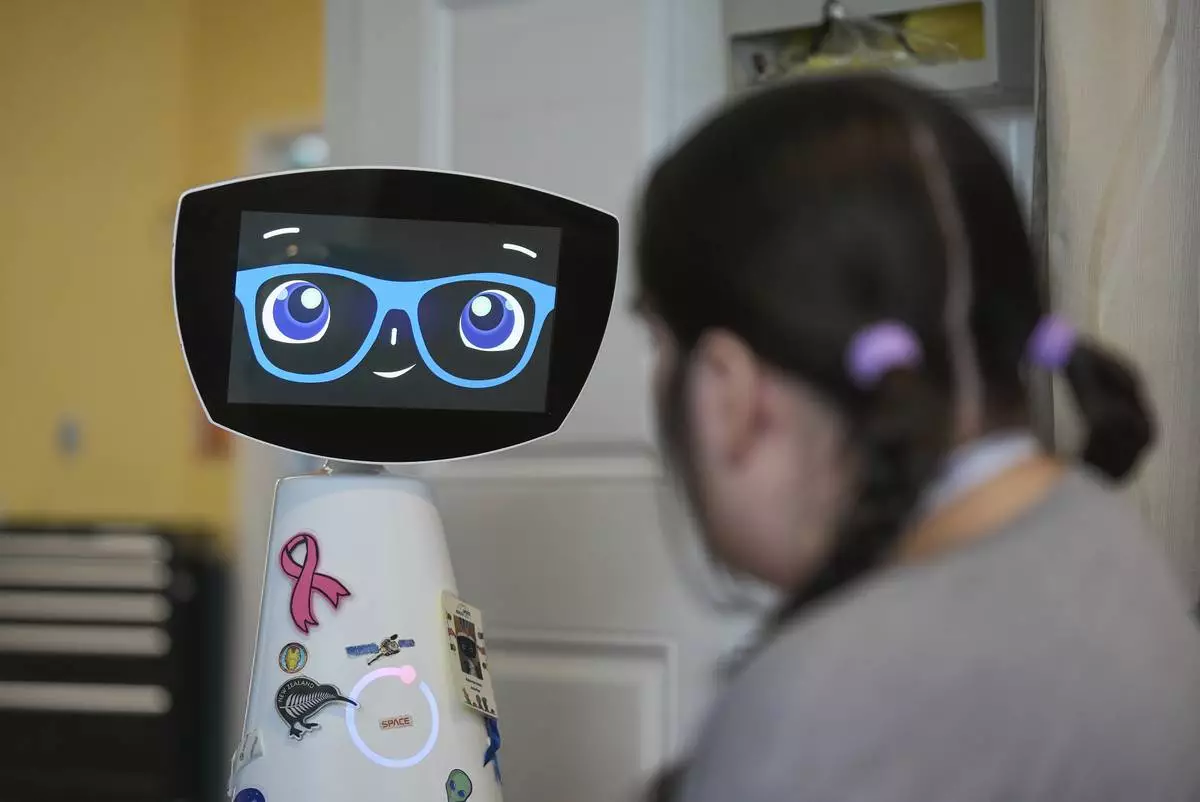
Robin the Robot visits with a patient at the HealthBridge Orange Specialty Pediatric Hospital in Orange, Calif., on Friday, Sept. 12, 2025. (AP Photo/Damian Dovarganes)