VATICAN CITY (AP) — In the last two years, defense lawyers have acquired 3,225 pages of WhatsApp messages between two women who were tangential to the Vatican's “trial of the century,” but were actually intimately aware of the investigation and in some ways involved.
Their four years of conversations, from 2020-2024, provide a parallel, behind-the-scenes version of one of the most tumultuous periods in Vatican history, when Pope Francis authorized a trial of 10 people, including a cardinal, into alleged financial misconduct.
The chats, written in Italian and translated here by The Associated Press, suggest that these two women helped persuade one of the original prime suspects in the case, Monsignor Alberto Perlasca, to change his story and turn on his former boss, Cardinal Angelo Becciu. Perlasca was spared indictment; Becciu was convicted.
According to the chats, first reported on by Domani newspaper and published by other Italian media, public relations specialist Francesca Chaouqui implied to Perlasca family friend Genevieve Ciferri that she enjoyed close contact with Vatican investigators and Francis, and wanted to help Perlasca. She assured Ciferri that everyone from the pope on down knew and approved of their maneuvering to help Perlasca feel supported so he would implicate Becciu.
Ciferri feared that Chaouqui was just boasting and on May 19, 2024, she demanded Chaouqui reassure her that police, Prosecutor Alessandro Diddi and Francis all “knew and agreed on your collaboration with the investigations, and in particular had direct knowledge of the collaboration you established with me.”
Chaouqui assures her they were in agreement but warned: “If it gets out that we all agreed, it’s the end.”
Ciferri: “Please be clear, you understand how important it is for me to be fully convinced. Because you know the doubts and skepticism to which, due to my weakness and insecurity, I have always been subject during our relationship, which has now turned into affection. Are you confirming that all the people I mentioned, including the Holy Father, were in agreement and aware of everything? And are you confirming that you have never lied to me about anything? And do you also make me understand how serious it could be for the trial if both you and Prof. Diddi are found to have lied shamelessly during the proceedings? Because then I too would agree that for the good of the church, it would be better to put a tombstone on it!”
Chaouqui: “You have to distinguish between two levels.”
Ciferri: “I don’t understand …”
Chaouqui: “The level of truth where everyone from the pope down knew what we were doing. And the other level, which is the trial level. Where we have to claim that no one knew, because if we all knew, the trial is null and void and it’s a conspiracy. Understand?”
Ciferri: “Okay, now I understand. I will act accordingly, nothing to fear. Thank you, Francesca, that’s all.”
In a text message to The Associated Press, Diddi declined to comment on the chats. “The trial is the venue where the adversarial process must take place,” he wrote. Chaouqui declined to comment.
In a statement to AP, Ciferri said the chats were of no importance to the appeals trial itself. She said they were instead a “collateral” affair that is being investigated separately, after she filed complaints with Vatican prosecutors against Chaouqui for what she called “psychological manipulation and suffering.”
“Continuing to exaggerate the importance of the chat messages makes no sense and is only a useless pretext, while the appeal will be based on the actual crimes and the individual responsibilities of each person for each count,” Ciferri wrote.
In April, Italy's Domani newspaper produced an audio file purportedly of the Vatican’s police commissioner, Stefano De Santis, giving instructions to Chaouqui about what Perlasca should say in his revised round of questioning, in August 2020. At the time, Perlasca was still a suspect and had submitted to a first round of questioning in which he defended Becciu.
After he turned on Becciu, he became a key prosecution witness.
In the audio, De Santis suggests Perlasca discuss two other defendants who were eventually convicted: money manager Enrico Crasso and Perlasca’s deputy, Fabrizio Tirabassi.
“Francesca, given that he is in possession of the interrogation report, because he had a copy of it, he should read it and underline all the points where, in light of recent events, in light of recent facts, in light of the introspective work he has done within himself, he needs to clarify, just to qualify facts and acts that do not concern him, but concern others; just to say, once and for all, how the system of Crasso and Tirabassi in the years when he was head of the office developed in a way that he certainly found, having arrived after Crasso and after Tirabassi, but which he cannot fail to know about. In other words, he should take inspiration from that interrogation, from those questions, and clarify all those points and all the ‘I don’t knows’ he said at that time.”
The Vatican hasn’t disputed the authenticity of the audio or commented on its contents.
Associated Press religion coverage receives support through the AP’s collaboration with The Conversation US, with funding from Lilly Endowment Inc. The AP is solely responsible for this content.
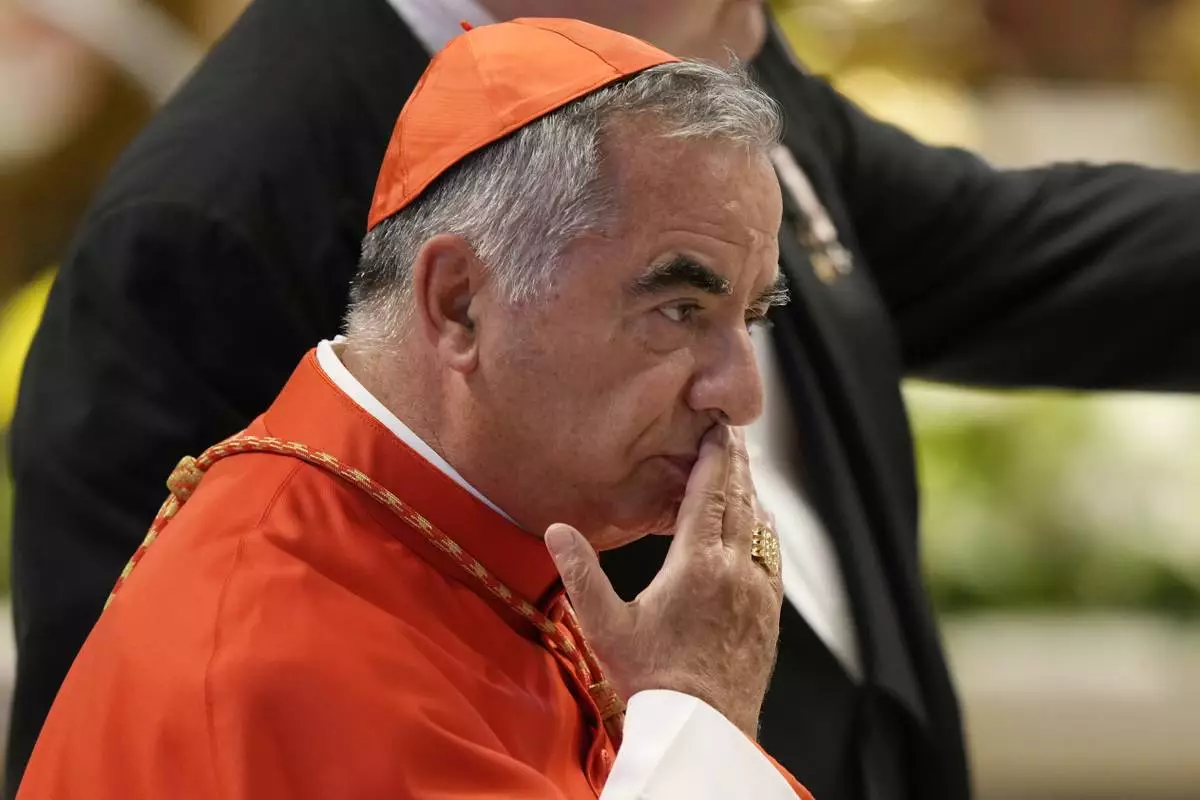
FILE - Cardinal Angelo Becciu attends the consistory inside St. Peter's Basilica at the Vatican, Aug. 27, 2022. (AP Photo/Andrew Medichini, File)
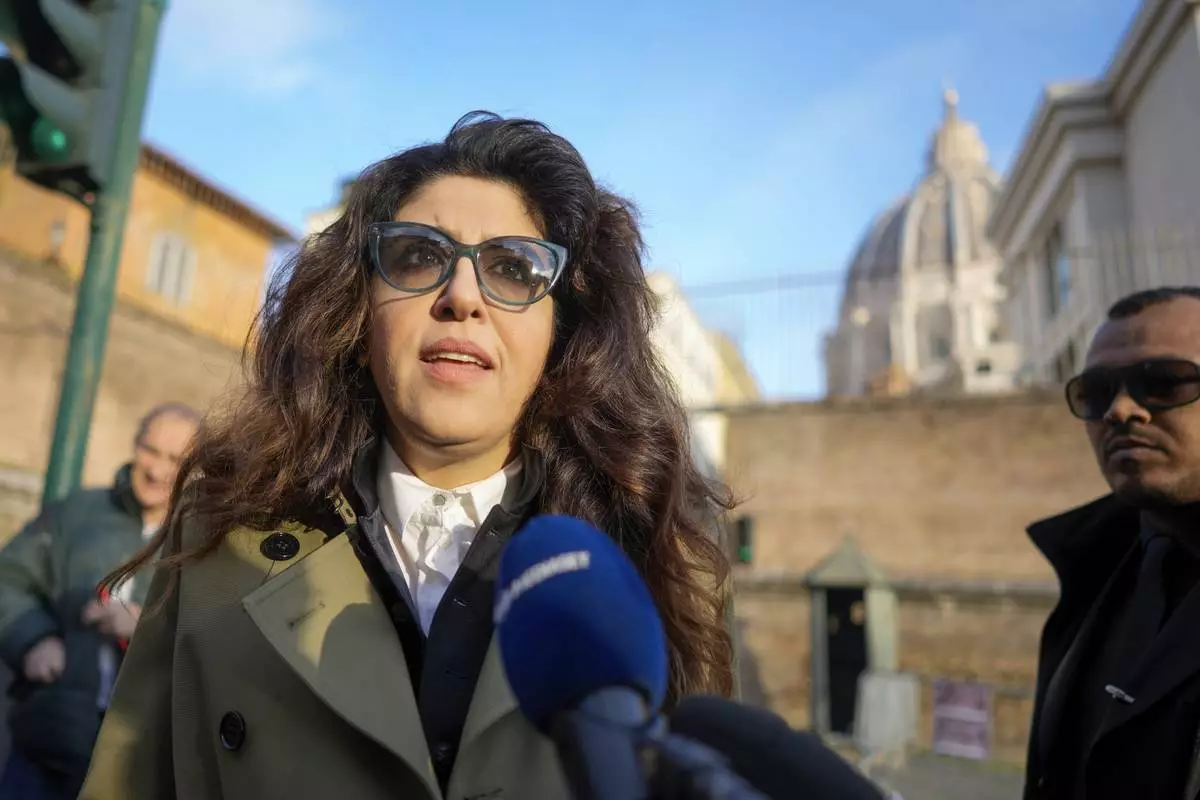
FILE - Public relations specialist Francesca Chaouqui talks to reporters as she arrives to testify in a trial at the Vatican, Jan. 13, 2023. (AP Photo/Andrew Medichini, File)

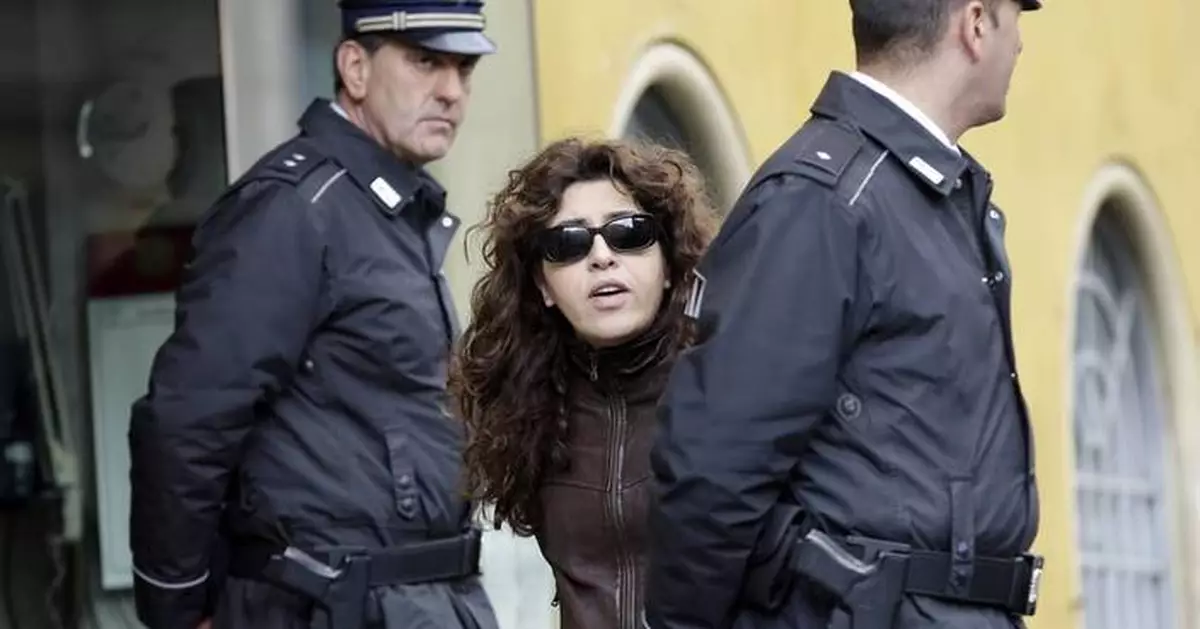
FILE - Public relations expert Francesca Chaouqui walks past two Vatican Gendarmi as she leaves the Vatican during a pause of her trial, March 15, 2016. (AP Photo/Andrew Medichini, File)
MINNEAPOLIS (AP) — A federal officer shot a man in the leg in Minneapolis after being attacked with a shovel and broom handle, further heightening the sense of fear and anger radiating across the city a week after an immigration agent fatally shot a woman in the head.
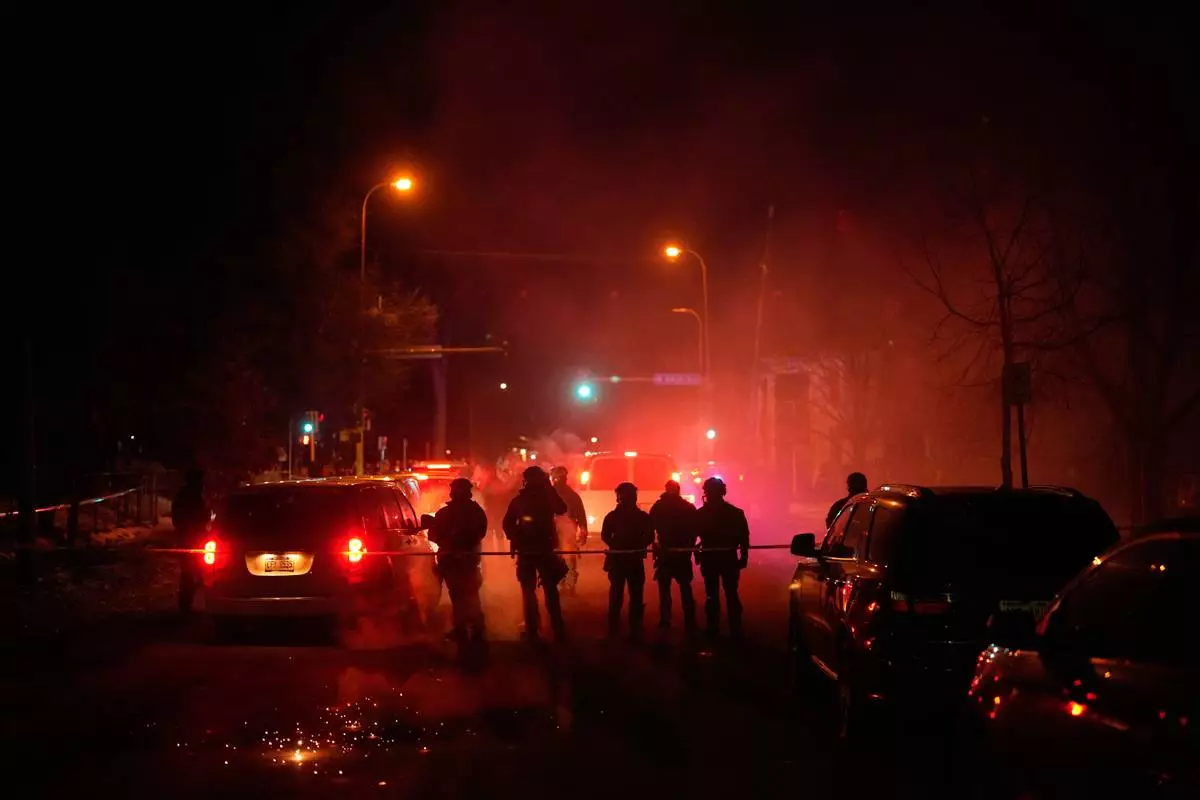
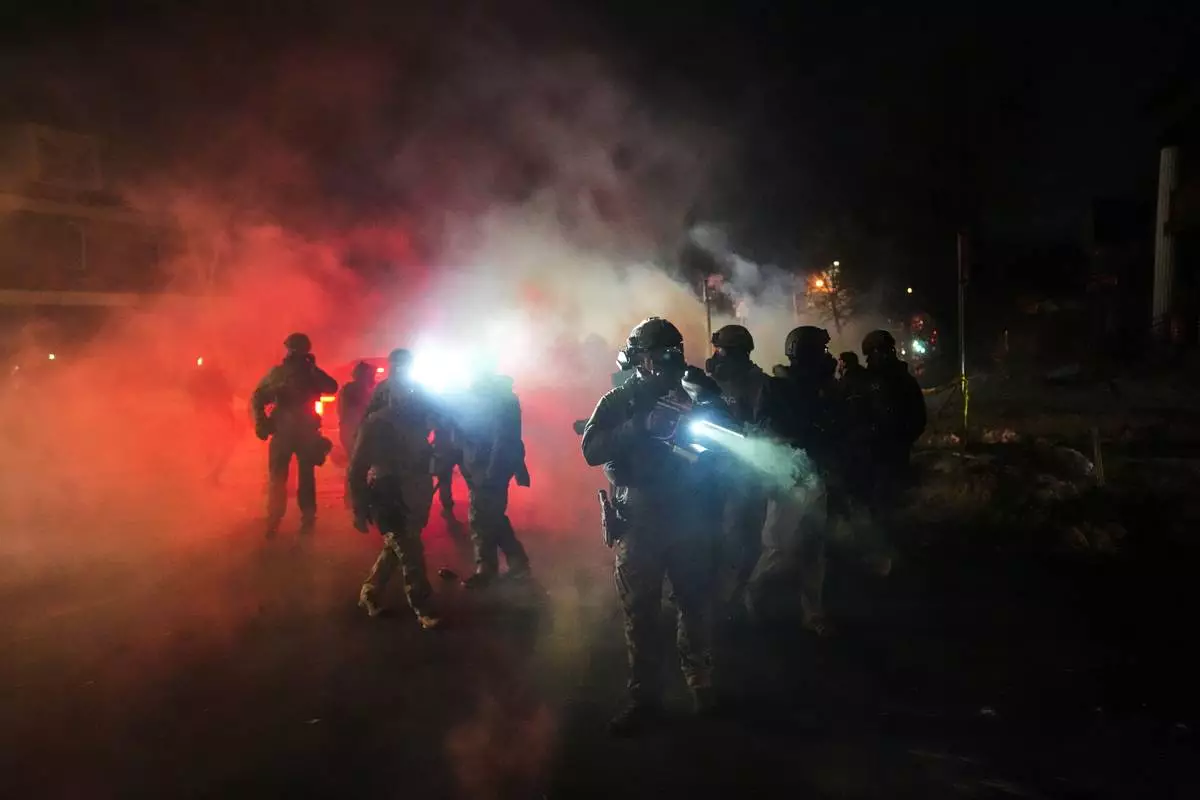
Smoke filled the street Wednesday night near the site of the latest shooting as federal officers wearing gas masks and helmets fired tear gas into a small crowd while protesters threw rocks and shot fireworks. Minneapolis Police Chief Brian O’Hara said during a news conference that the gathering was an unlawful assembly and “people need to leave.”
Things later began to quiet down at the scene, and by early Thursday fewer demonstrators and law enforcement officers were there.
Such protest scenes have become common on the streets of Minneapolis since a federal agent fatally shot Renee Good on Jan. 7 amid a massive immigration crackdown that has seen thousands of officers sent into the Twin Cities. Agents have yanked people from cars and homes and been confronted by angry bystanders who are demanding that officers pack up and leave.
Minneapolis Mayor Jacob Frey described the situation as not “sustainable.”
“This is an impossible situation that our city is presently being put in and at the same time we are trying to find a way forward to keep people safe, to protect our neighbors, to maintain order,” he said.
Frey described a federal force that is five times as big as the city’s 600-officer police force and has “invaded” the city, scaring and angering residents, some of whom want the officers to “fight ICE agents.” At the same time, the police force is still responsible for their day-to-day work to keep the public safe.
The Department of Homeland Security says it has made more than 2,000 arrests in the state since early December and is vowing to not back down.
In a statement describing the events that led to Wednesday's shooting, Homeland Security said federal law enforcement officers stopped a person from Venezuela who was in the U.S. illegally. The person drove away and crashed into a parked car before taking off on foot, DHS said.
After officers reached the person, two other people arrived from a nearby apartment and all three started attacking the officer, according to DHS.
“Fearing for his life and safety as he was being ambushed by three individuals, the officer fired a defensive shot to defend his life,” DHS said.
The two people who came out of the apartment are in custody, it said.
O’Hara said the man shot was in the hospital with a non-life-threatening injury.
The shooting took place about 4.5 miles (7.2 kilometers) north of where Good was killed. O’Hara's account of what happened largely echoed that of Homeland Security.
Earlier Wednesday, a judge gave the Trump administration time to respond to a request to suspend its immigration crackdown in Minnesota, while the Pentagon looked for military lawyers to join what has become a chaotic law enforcement effort in the state.
“What we need most of all right now is a pause. The temperature needs to be lowered," state Assistant Attorney General Brian Carter said during the first hearing in a lawsuit filed by Minnesota and the cities of Minneapolis and St. Paul.
Local leaders say the government is violating free speech and other constitutional rights with the surge of law enforcement. U.S. District Judge Katherine Menendez gave the U.S. Justice Department until Monday to file a response to a request for a restraining order.
Justice Department attorney Andrew Warden suggested the approach set by Menendez was appropriate.
The judge is also handling a separate lawsuit challenging the tactics used by Immigration and Customs Enforcement and other federal officers when they encounter protesters and observers. A decision could be released this week.
During a televised speech before Wednesday's shooting, Gov. Tim Walz described Minnesota as being in chaos, saying what's happening in the state “defies belief.”
“Let’s be very, very clear, this long ago stopped being a matter of immigration enforcement,” he said. “Instead, it’s a campaign of organized brutality against the people of Minnesota by our own federal government.”
CNN, citing an email circulating in the military, says Defense Secretary Pete Hegseth is asking the military branches to identify 40 lawyers known as judge advocate general officers or JAGs, and 25 of them will serve as special assistant U.S. attorneys in Minneapolis.
Pentagon spokesperson Kingsley Wilson appeared to confirm the CNN report by posting it on X with a comment that the military “is proud to support” the Justice Department.
The Pentagon did not immediately respond to emails from The Associated Press seeking more details.
It’s the latest step by the Trump administration to dispatch military and civilian attorneys to areas where federal immigration operations are taking place. The Pentagon last week sent 20 lawyers to Memphis, U.S. Attorney D. Michael Dunavant said.
Mark Nevitt, an associate professor at Emory University School of Law and a former Navy JAG, said there's concern that the assignments are taking lawyers away from the military justice system.
“There are not many JAGs but there are over one million members of the military, and they all need legal support,” he said.
Jonathan Ross, the Immigration and Customs Enforcement officer who killed Good, suffered internal bleeding to his torso during the encounter, a Homeland Security official told The Associated Press.
The official spoke to AP on condition of anonymity in order to discuss Ross’ medical condition. The official did not provide details about the severity of the injuries, and the agency did not respond to questions about the extent of the bleeding, exactly how he suffered the injury, when it was diagnosed or his medical treatment.
There are many causes of internal bleeding, and they vary in severity from bruising to significant blood loss. Video from the scene showed Ross and other officers walking without obvious difficulty after Good was shot and her Honda Pilot crashed into other vehicles.
She was killed after three ICE officers surrounded her SUV on a snowy street a few blocks from her home.
Bystander video shows one officer ordering Good to open the door and grabbing the handle. As the vehicle begins to move forward, Ross, standing in front, raises his weapon and fires at least three shots at close range. He steps back as the SUV advances and turns.
Homeland Security Secretary Kristi Noem has said Ross was struck by the vehicle and that Good was using her SUV as a weapon — a self-defense claim that has been deeply criticized by Minnesota officials.
Chris Madel, an attorney for Ross, declined to comment on any injuries.
Good’s family, meanwhile, has hired a law firm, Romanucci & Blandin, that represented George Floyd’s family in a $27 million settlement with Minneapolis. Floyd, who was Black, died after a white police officer pinned his neck to the ground in the street in May 2020.
The firm said it would conduct its own investigation and publicly share what it learns.
Associated Press reporters Julie Watson in San Diego, Rebecca Santana in Washington, Ed White in Detroit, Giovanna Dell’Orto in Minneapolis and Graham Lee Brewer in Oklahoma City contributed.
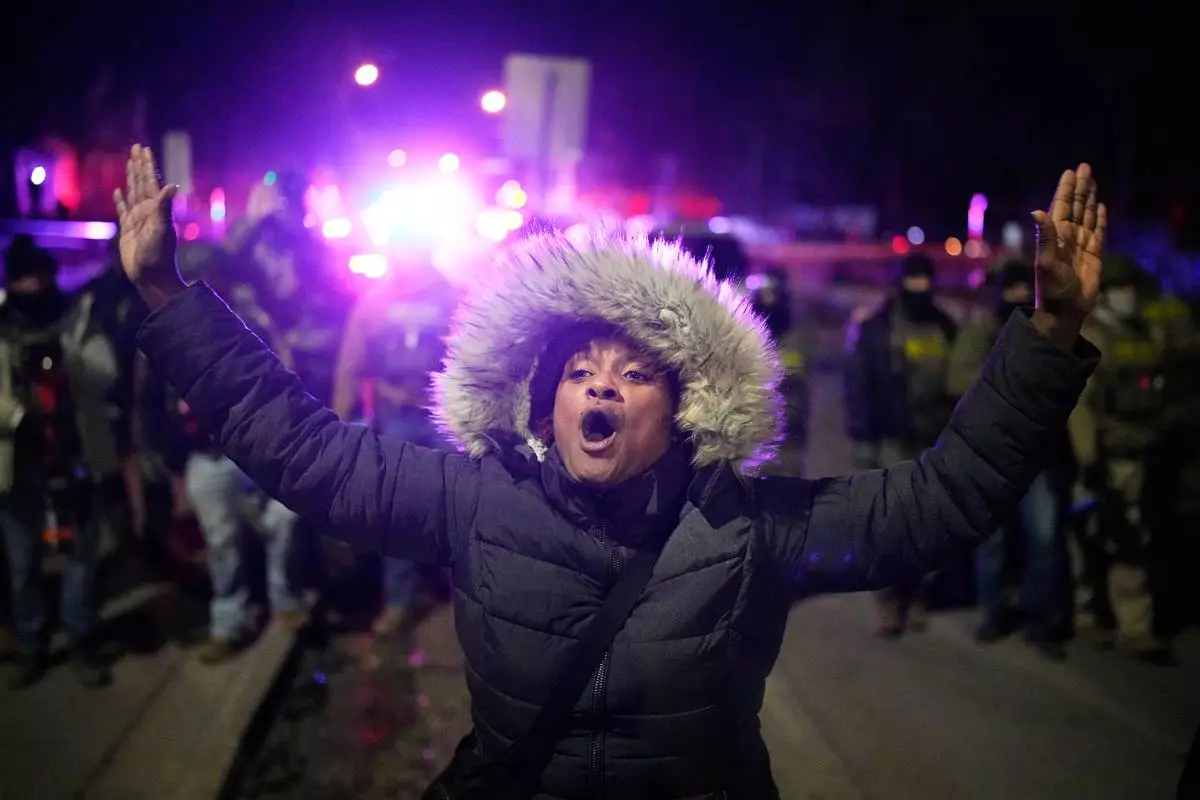
A protester yells in front of law enforcement after a shooting on Wednesday, Jan. 14, 2026, in Minneapolis. (AP Photo/John Locher)
Tear gas surrounds federal law enforcement officers as they leave a scene after a shooting on Wednesday, Jan. 14, 2026, in Minneapolis. (AP Photo/John Locher)
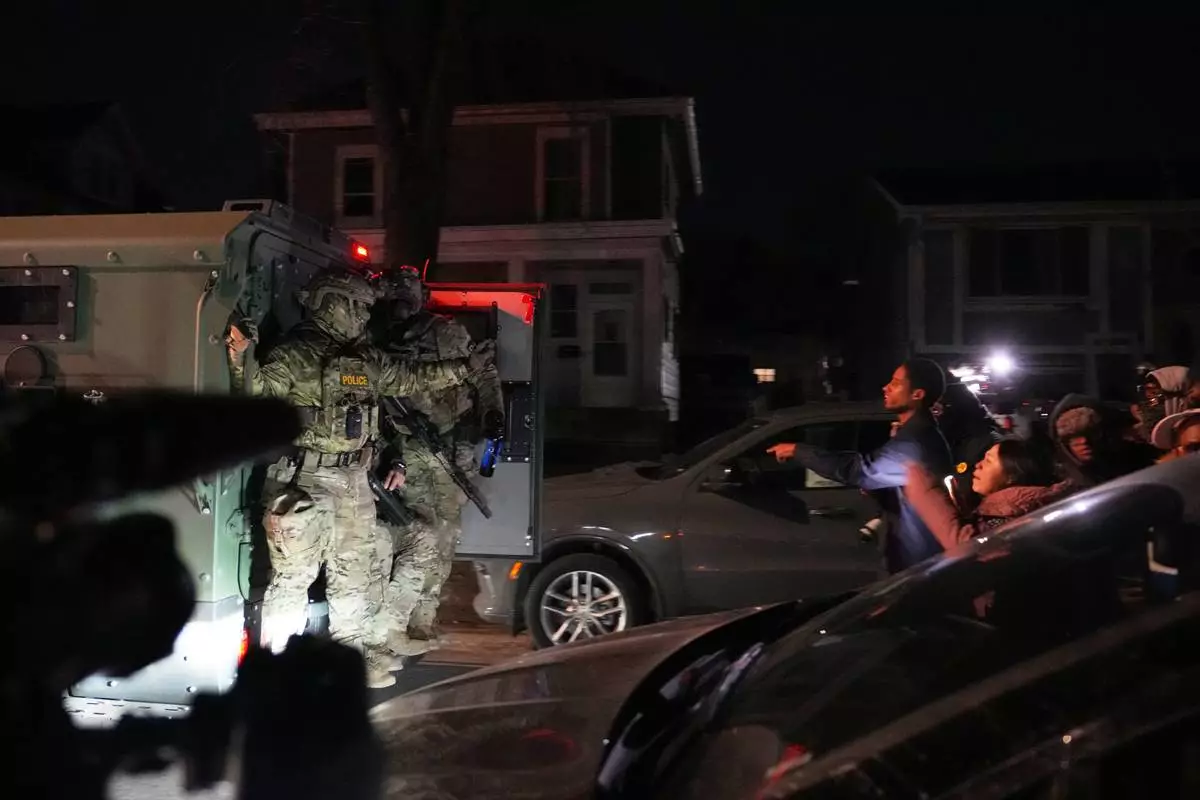
Protesters shout at law enforcement officers after a shooting on Wednesday, Jan. 14, 2026, in Minneapolis. (AP Photo/Abbie Parr)
Law enforcement officers stand amid tear gas at the scene of a reported shooting Wednesday, Jan. 14, 2026, in Minneapolis. (AP Photo/Adam Gray)