France and Saudi Arabia hope to use this year's gathering of world leaders at the United Nations General Assembly and the increasingly horrific war in the Gaza Strip to inject new urgency into the quest for a two-state solution to the Israeli-Palestinian conflict.
Those efforts include a new road map for eventual Palestinian statehood in territories Israel seized in the 1967 Mideast war, and moves by several Western countries to join a global majority in recognizing such a state before it has been established.
Click to Gallery
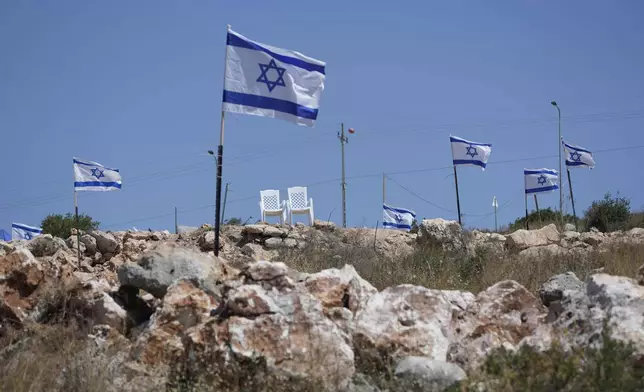
FILE - Israeli flags flutter on top of a hill that is adjacent to Palestinian properties that were under attack by Israeli settlers overnight, leaving several burnt vehicles and damaged homes, residents said, in the West Bank village of Bruqin, near Salfit, Friday, May 23, 2025. (AP Photo/Nasser Nasser, File)
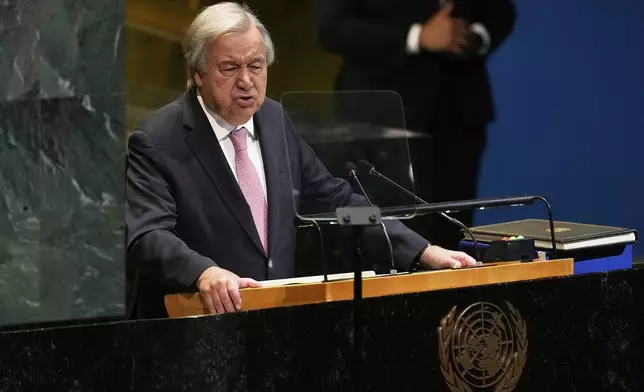
FILE - United Nations Secretary-General Antonio Guterres speaks at United Nations headquarters, Tuesday, Sept. 9, 2025. (AP Photo/Seth Wenig, File)
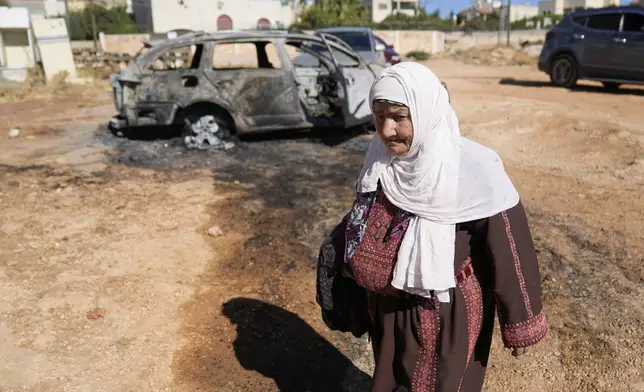
FILE - A woman walks past a vehicle that was burnt overnight by Israeli settlers in an attack that left three Palestinians killed and burnt several vehicles and damaged homes, according to residents in the West Bank village of Kafr Malik, east of Ramallah, Thursday, June 26, 2025. (AP Photo/Nasser Nasser, File)
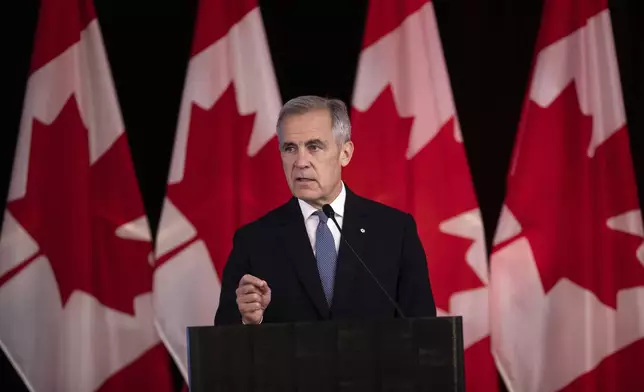
FILE - Canada Prime Minister Mark Carney delivers opening remarks at the Liberal caucus in Edmonton, Alberta, Canada on Wednesday, Sept. 10, 2025. (Amber Bracken/The Canadian Press via AP, File)
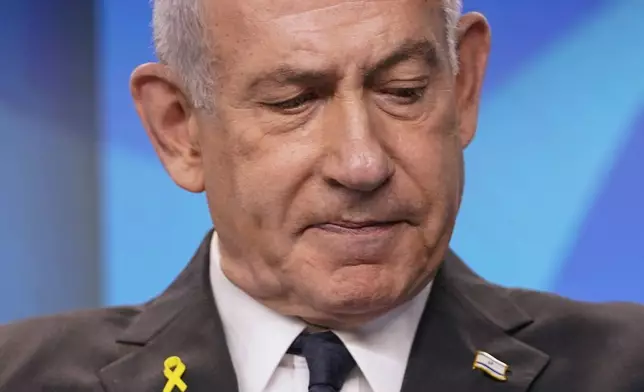
FILE - Israeli Prime Minister Benjamin Netanyahu and U.S. Secretary of State Marco Rubio (not shown) hold a joint press conference at the Prime Minister's Office, during Rubio's visit, in Jerusalem, Monday, Sept. 15, 2025. (Nathan Howard/Pool Photo via AP, File)
Britain, Canada and Australia formally recognized a Palestinian state on Sunday, joining nearly 150 countries that have already done so, and France is expected to follow suit at this week's General Assembly.
But the efforts to push a two-state solution face major obstacles, beginning with vehement opposition from the United States and Israel. The U.S. has blocked Palestinian officials from even attending the General Assembly. And Prime Minister Benjamin Netanyahu, who is opposed to Palestinian statehood, has threatened to take unilateral action in response — possibly including the annexation of parts of the West Bank.
That would put the Palestinians' dream of independence even further out of reach.
The creation of a Palestinian state in east Jerusalem, the West Bank and Gaza has long been seen internationally as the only way to resolve the conflict, which began more than a century before Hamas' Oct. 7, 2023, attack sparked the ongoing war in Gaza.
Proponents say this would allow Israel to exist as a democracy with a Jewish majority. The alternative, they say, is the status quo in which Jewish Israelis have full rights and Palestinians live under varying degrees of Israeli control, something major rights groups say amounts to apartheid.
"Israel must understand that the one state solution, with the subjugation of the Palestinian people without rights -- that is absolutely intolerable,” U.N. Secretary-General António Guterres said last week. “Without a two-state solution, there will be no peace in the Middle East."
Peace talks launched in the early 1990s repeatedly faltered amid violence and the expansion of Israeli settlements aimed at preventing a Palestinian state. No substantive negotiations have been held since Netanyahu returned to office in 2009.
Israel annexed east Jerusalem, considers it part of its capital, and has long encouraged the growth of Jewish settlements in and around Palestinian neighborhoods.
The occupied West Bank is home to over 500,000 settlers with Israeli citizenship and some 3 million Palestinians who live under Israeli military rule, with the Palestinian Authority exercising limited autonomy in scattered enclaves.
In Gaza, Israel's retaliatory offensive has killed tens of thousands of Palestinians, displaced some 90% of the population of 2 million, left much of the territory uninhabitable and pushed some areas into famine. A new offensive threatens to empty and flatten the largest Palestinian city.
Netanyahu's government and most of Israel's political class were opposed to Palestinian statehood even before the war. The Trump administration has shown no interest in reviving peace talks, instead calling for the relocation of much of Gaza's population to other countries, a plan Israel has eagerly adopted even as critics say it would amount to ethnic cleansing.
Perhaps hoping this is a darkest-before-dawn moment, France and Saudi Arabia have advanced a phased plan to end the conflict by establishing a demilitarized state governed by the Palestinian Authority with international assistance.
The plan calls for an immediate end to the war in Gaza, the return of all hostages and a complete Israeli withdrawal. Hamas would hand power to a politically independent committee under the auspices of the Palestinian Authority — something it has already agreed to — and lay down its arms, which it has not.
The international community would help the Palestinian Authority rebuild Gaza and govern the territories, possibly with the help of foreign peacekeepers. Regional peace and integration, likely including Saudi normalization of ties with Israel, would follow.
The 193-member world body approved a nonbinding resolution endorsing the so-called “New York Declaration" earlier this month.
The United States and Israel say the international push for a Palestinian state rewards Hamas and makes it harder to reach a deal to halt the war and return the remaining hostages.
The Gaza ceasefire talks broke down again when Israel carried out a Sept. 9 strike targeting Hamas' negotiators in Qatar, one of the main mediators. The U.S. had walked away from the talks in July, blaming Hamas, and Israel unilaterally ended an earlier ceasefire in March.
Israel also says that creating a Palestinian state would allow Hamas to carry out another Oct. 7-style attack on an even wider scale. Hamas leaders have at times indicated they would accept a state on the 1967 lines, but the group remains formally committed to Israel's destruction.
Netanyahu portrays international recognition of Palestinian statehood as an attack on Israel. During a meeting with Secretary of State Marco Rubio last week, Netanyahu said “it is clear that if unilateral actions are taken against us, it simply invites unilateral actions on our part.”
Netanyahu and his far-right coalition partners have long wanted to annex large parts of the West Bank, which would make it virtually impossible to establish a viable Palestinian state.
The U.S. has not taken a public position on the issue, but in an interview with Fox News, Rubio linked “this conversation about annexation" to the issue of statehood recognition.
The United Arab Emirates has called annexation a “red line,” without saying what effect it might have on the 2020 Abraham Accords, in which the country normalized ties with Israel.
The French-Saudi plan sidesteps the most divisive issues in the conflict: final borders, the fate of the settlements, the return of Palestinian refugees from past wars, security arrangements, the status of Jerusalem and recognition of Israel as a Jewish state.
It also relies heavily on the Palestinian Authority, the current leadership of which is despised by many Palestinians who view them as corrupt and autocratic. Israel says they are not fully committed to peace and accuses the Palestinian Authority of incitement despite recent reforms.
The plan calls for Palestinian elections to be held within a year, but President Mahmoud Abbas has delayed previous votes when it looked like his party would lose, blaming Israeli restrictions. Hamas, which won the last national elections in 2006, would be excluded unless it gives up its weapons and recognizes Israel.
All of which means the plan is likely to end up on the mound of past Mideast accords, parameters and road maps, leaving Israel in full control of the land from the Jordan River to the Mediterranean Sea, ruling millions of Palestinians who are denied basic rights.
Follow AP’s war coverage at https://apnews.com/hub/israel-hamas-war
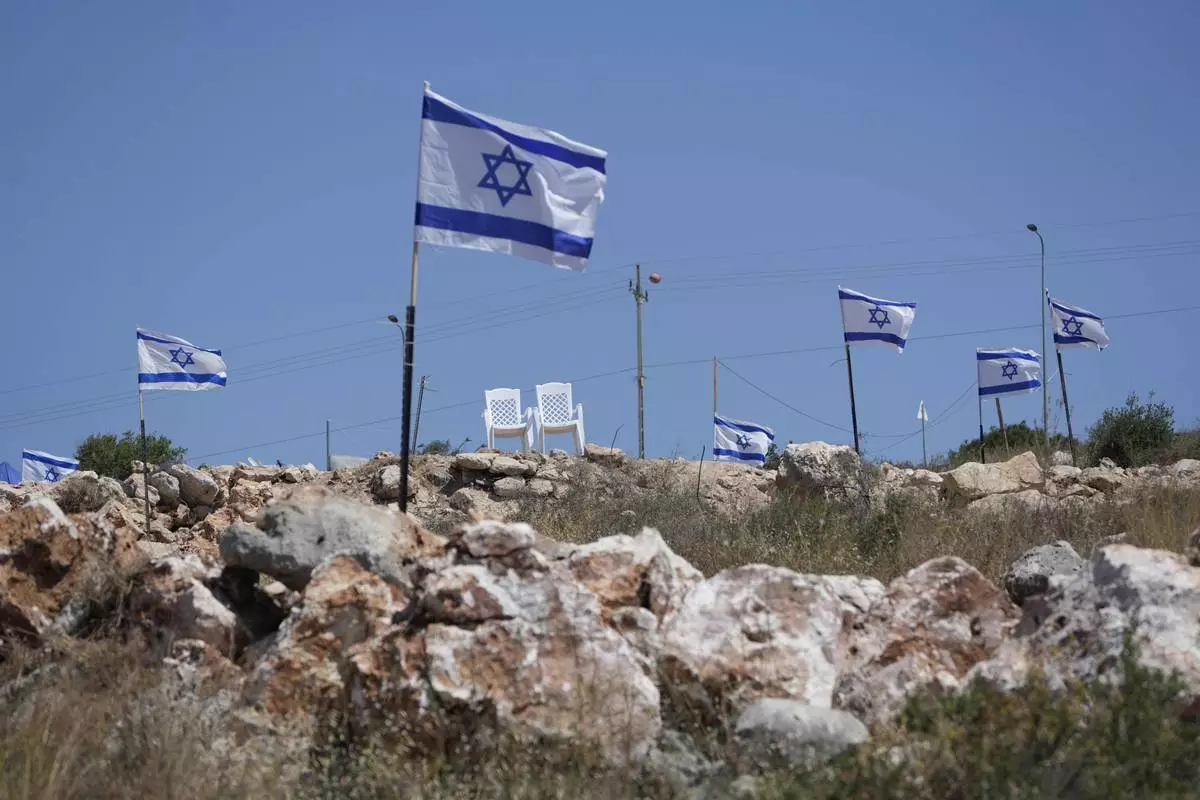
FILE - Israeli flags flutter on top of a hill that is adjacent to Palestinian properties that were under attack by Israeli settlers overnight, leaving several burnt vehicles and damaged homes, residents said, in the West Bank village of Bruqin, near Salfit, Friday, May 23, 2025. (AP Photo/Nasser Nasser, File)
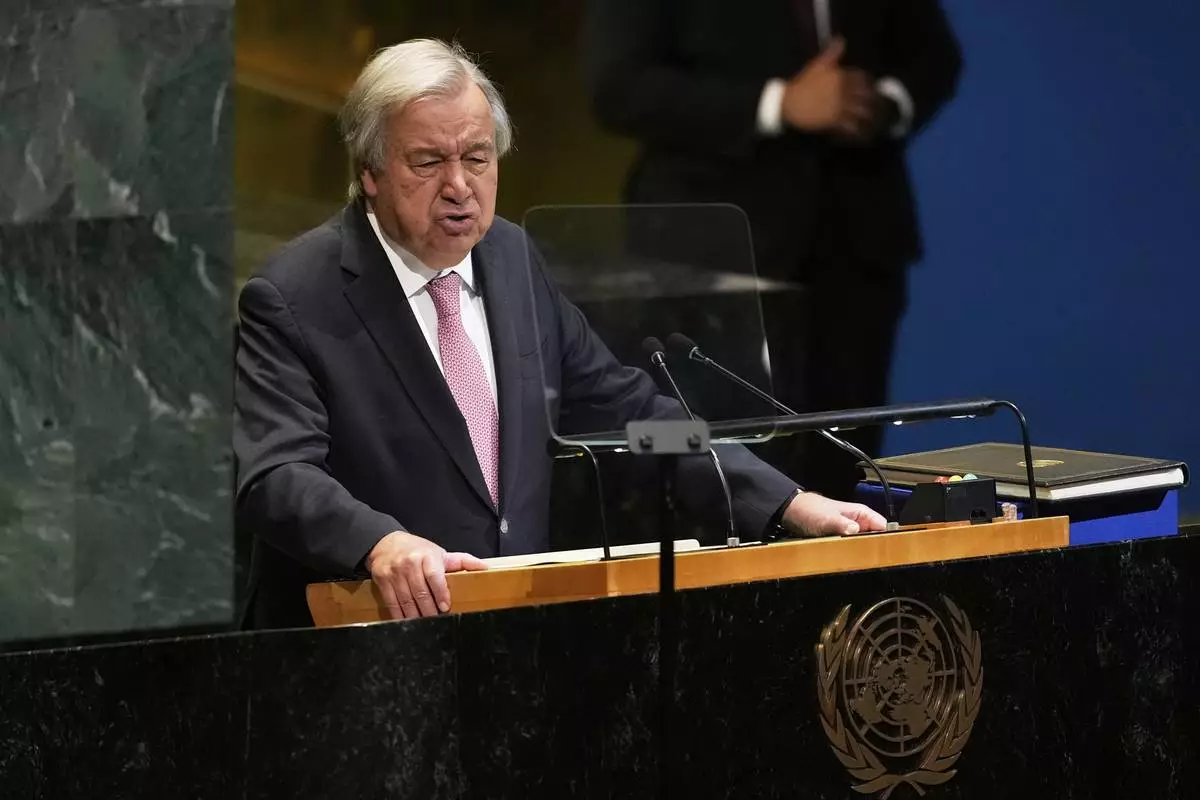
FILE - United Nations Secretary-General Antonio Guterres speaks at United Nations headquarters, Tuesday, Sept. 9, 2025. (AP Photo/Seth Wenig, File)
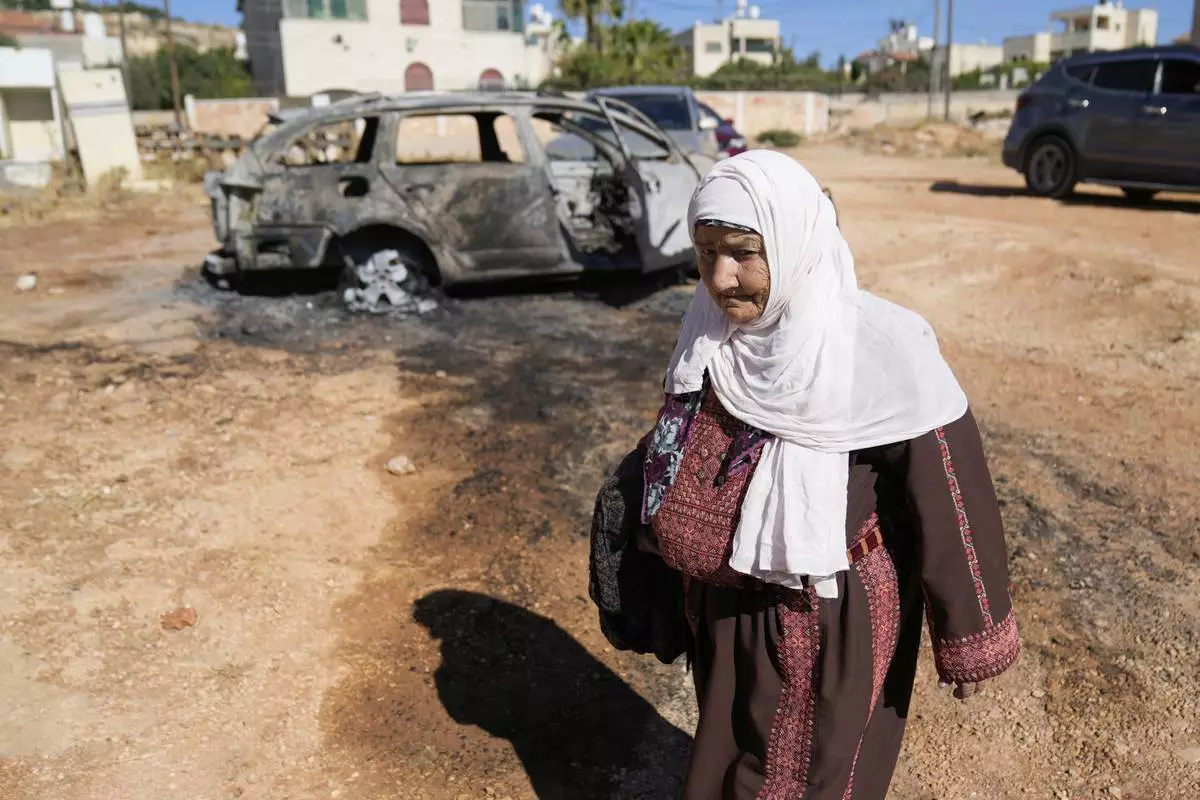
FILE - A woman walks past a vehicle that was burnt overnight by Israeli settlers in an attack that left three Palestinians killed and burnt several vehicles and damaged homes, according to residents in the West Bank village of Kafr Malik, east of Ramallah, Thursday, June 26, 2025. (AP Photo/Nasser Nasser, File)
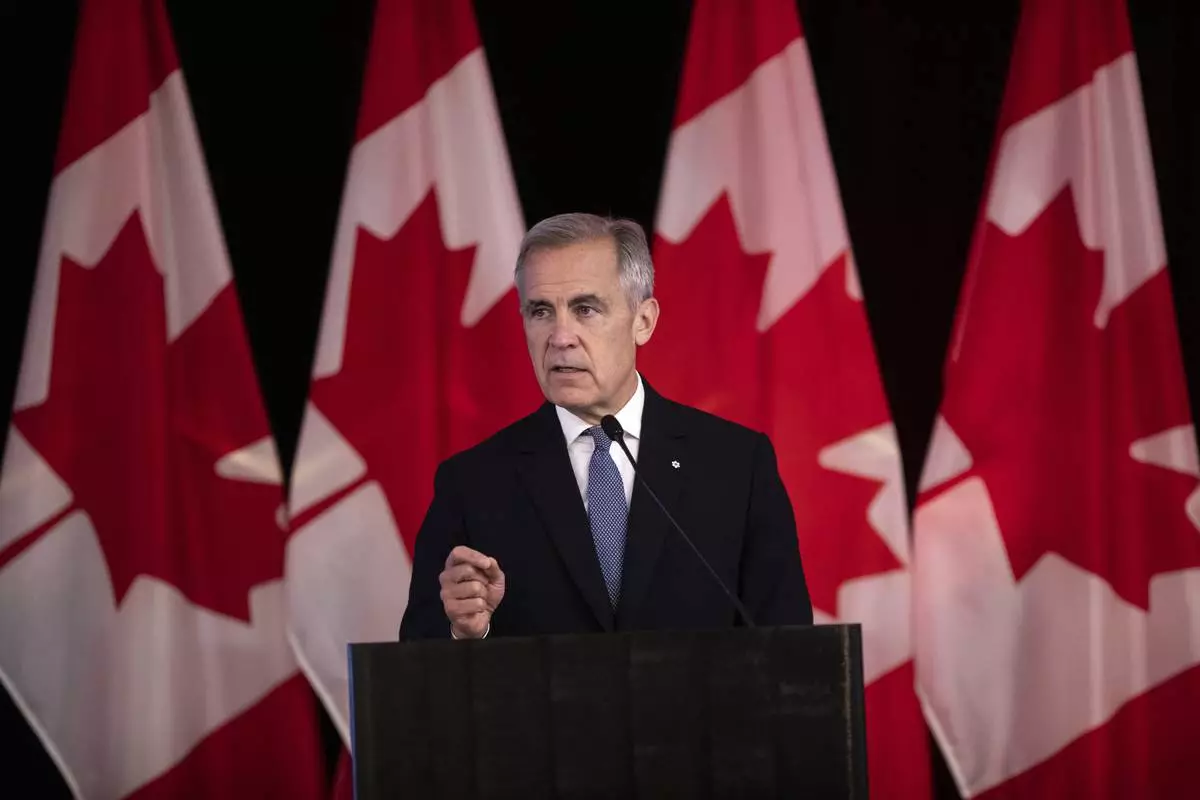
FILE - Canada Prime Minister Mark Carney delivers opening remarks at the Liberal caucus in Edmonton, Alberta, Canada on Wednesday, Sept. 10, 2025. (Amber Bracken/The Canadian Press via AP, File)
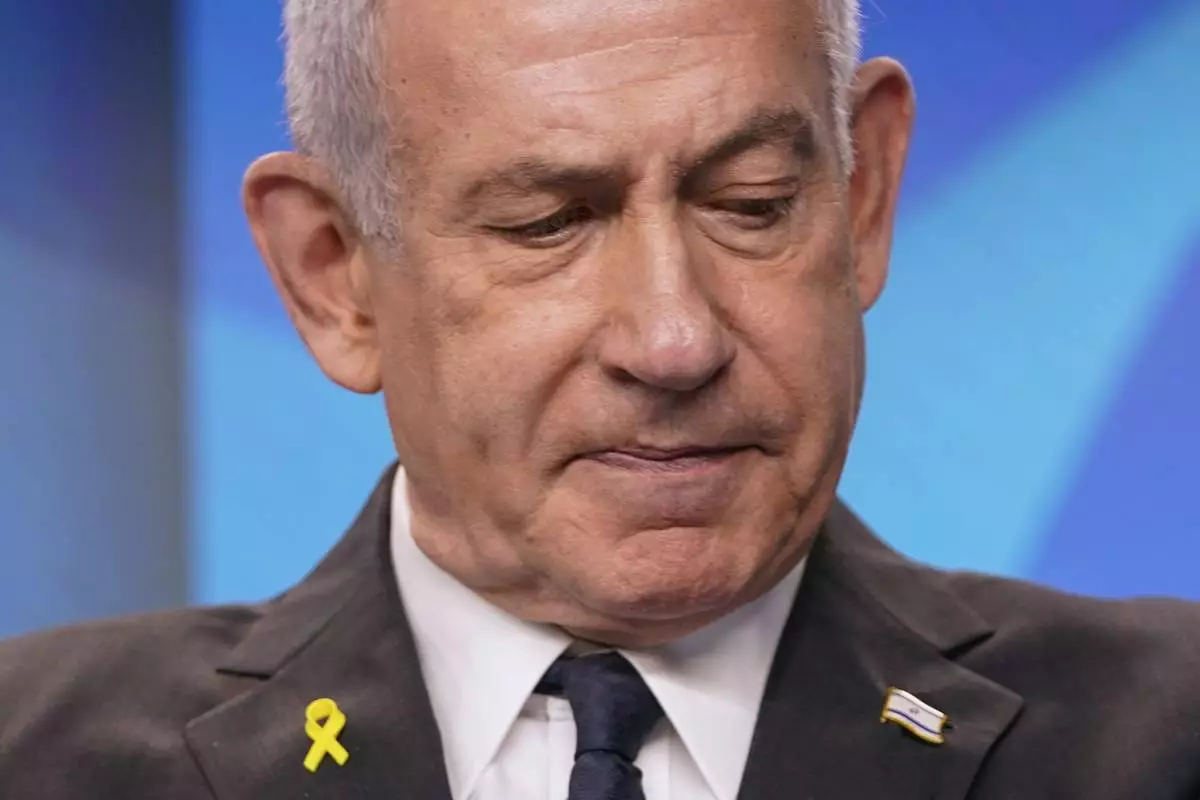
FILE - Israeli Prime Minister Benjamin Netanyahu and U.S. Secretary of State Marco Rubio (not shown) hold a joint press conference at the Prime Minister's Office, during Rubio's visit, in Jerusalem, Monday, Sept. 15, 2025. (Nathan Howard/Pool Photo via AP, File)