LONDON (AP) — When novelists look to the future, the view is often grim. There are a lot more fictional dystopias than utopias.
Ian McEwan has good news and bad news about what lies ahead in “ What We Can Know,” a book he calls “science fiction without the science.”
The British author’s 19th novel, published Tuesday in the U.S. by Knopf, is set in 2119 and follows a professor of literature researching a famed 21st-century poet and his circle.
So far, so cozy. But it’s a world in which nuclear war, pandemics, economic collapse and climate change — a period known as The Derangement — have halved the global population. The United States is a lawless land of feuding warlords. Nigeria is the global superpower. Inundated England has been reduced to a string of small island republics.
McEwan, 77, said that his working assumption is that humanity will “just scrape through” the next century of crises and catastrophes. The novel seeks “to look at the present through the rather envious eyes of someone in the future.”
Those eyes belong to Tom Metcalfe, an English academic studying the famous (fictional) poet Francis Blundy, and a legendary lost poem that he read aloud at a dinner party in 2014.
As dystopias go, it’s a gentle one. Tom sifts through reams of 21st-century social media detritus for nuggets of information gold that may lead to the missing poem. He later undertakes an adventurous journey with touches of “Treasure Island.”
To Tom, our era is a barely imaginable time of abundance, natural diversity and human folly.
“What brilliant invention and boneheaded greed,” he says.
Readers may hear the author’s voice in the sentiment.
“There is something very reminiscent to me of the ninth century about contemporary life: passionately superstitious, even as we have extraordinary discoveries in biomedicine and in cosmology,” McEwan told The Associated Press. “At one point I describe the process of social media as if some medieval horde had run onto the wrong stage.”
Partway through the book, McEwan delivers a twist that dramatically shifts the reader’s perspective. It's something he has done before, notably in 2001's “Atonement” – his bestselling novel, which many consider his best.
The book's second half delivers surprise, violence, betrayal and — another McEwan trademark — evidence of the “terrible things that perfectly ordinary people can do.”
McEwan said that he wants readers “to be, not disoriented, but just to pass through a different mirror turning the page from part one to part two.
“I hope to bring the reader back to the title.”
McEwan says he’s not an “issues novelist,” although his books often touch on social problems and world affairs: the 2003 invasion of Iraq in “Saturday,” climate change in “Solar,” artificial intelligence in “Machines Like Me.”
In “What We Can Know,” humanity has wreaked havoc on nature. But McEwan says “this isn’t really a novel about climate change.
“The only way to write about climate change is not to,” McEwan said, as the weather outside his London home changed in an instant from sunshine to downpour. “To actually put at the center properly conceived characters and other issues and let the climate change matter simply be there as a given.
“It’s already a given. The last thing I want to do is warn people about it. No one needs any warning about it,” he said. “All that matters is your response to it.”
McEwan made his name in the 1970s and ‘80s with unsettling works like “The Cement Garden” and “The Comfort of Strangers.” Today, he’s one of the United Kingdom’s most commercially and critically successful novelists, a five-time Booker Prize finalist who won the prestigious award in 1998 for “Amsterdam.” The Financial Times called him “the centrist dad of English fiction.”
He's part of a garlanded generation of British writers that includes Martin Amis, Julian Barnes and Salman Rushdie.
“Those writers I met in the early 70s, '80s … became lifelong friends," he said. “That’s been a delight. And sadness as we all drop off the twig.” His friend Christopher Hitchens died in 2011, Amis in 2023.
McEwan says that he’ll keep writing “till the cogs start falling off,” and claims not to think about his legacy.
“It’s out of my hands,” he said. He recalled decades ago standing in his publisher’s office, lined with shelves of dusty novels from the 1920s and '30s.
“And I scanned the shelves for a name I could recognize,” he said. “There were the usual dust jacket quotes: ‘Absolutely brilliant.’ ‘A novelist for our times.’ But forgotten. Just gone.”
Then there’s AI, which he thinks might write “novels of no great originality, but possibly colossal commercial success.”
And yet, he’s optimistic about the future of the novel. The reason comes back to the book’s title.
“We can’t really know the minds of people in the past,” he said. “We can’t even begin to know the minds of people in the future. We barely know the minds properly of people we’re very close to. And that’s at the heart of the paradox of why the novel is not dead: because it gives readers the illusion that they could know.
“Only in the novel can you do it.”
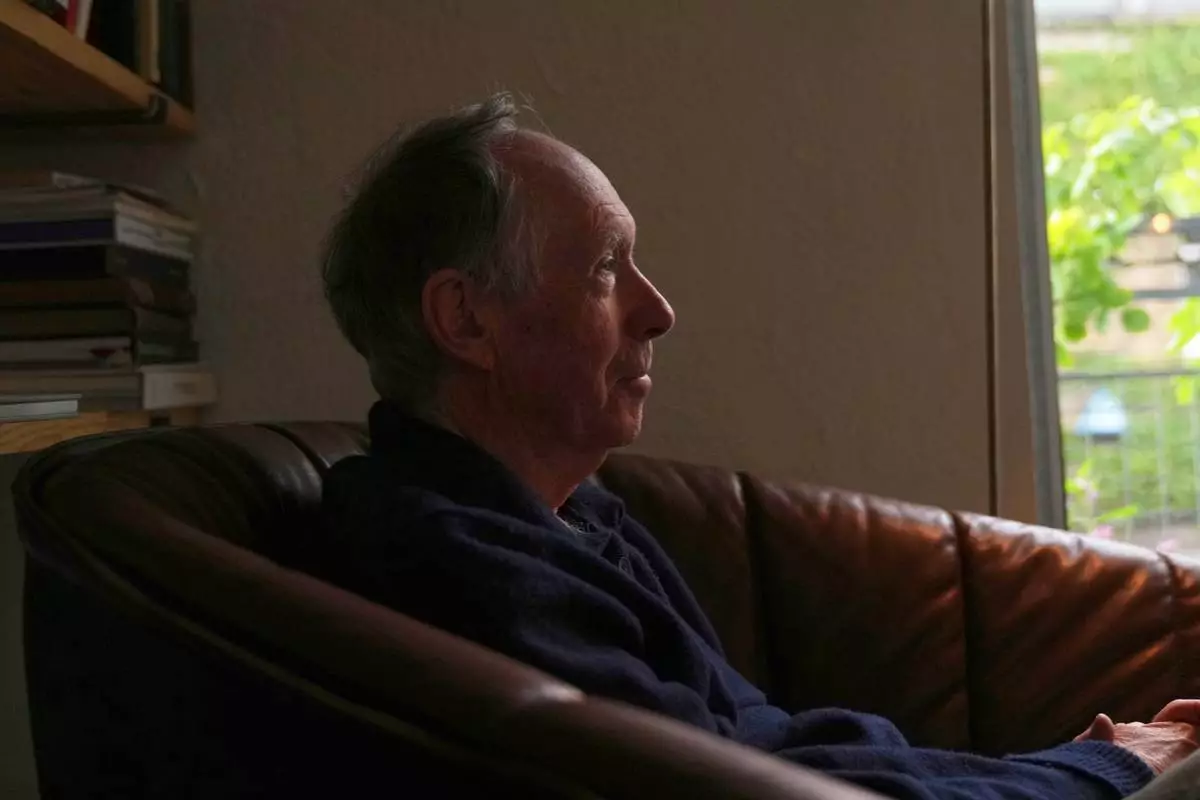
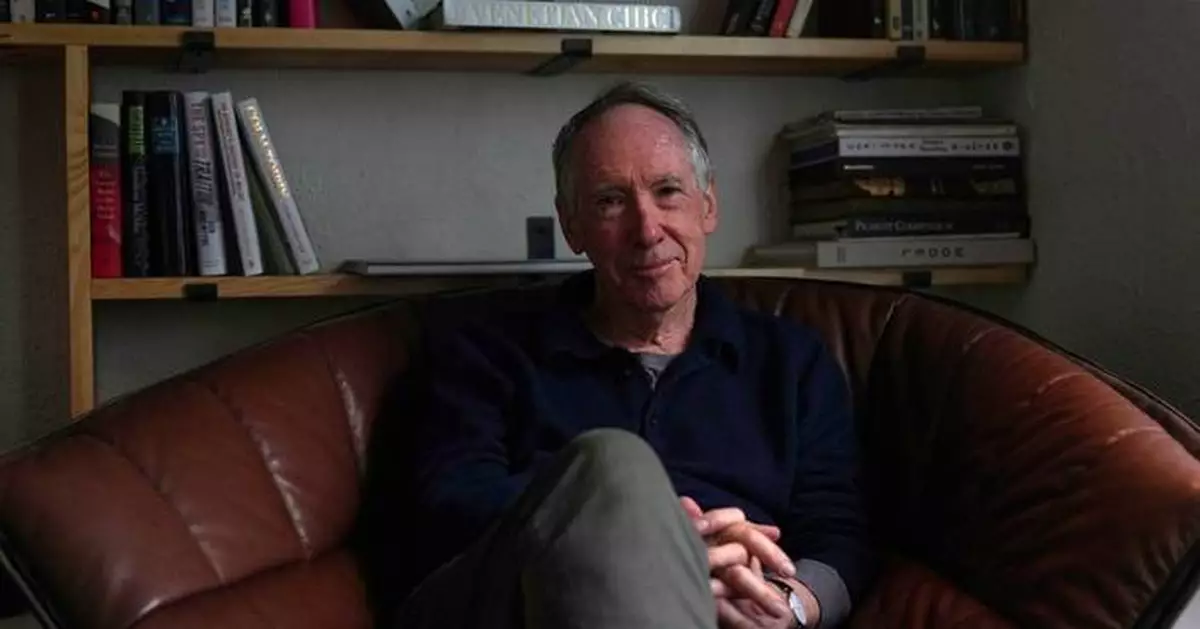
Ian McEwan, British novelist and screenwriter, gestures as he speaks to press during an interview in London, Friday, Sept. 12, 2025. (AP Photo/Joanna Chan)
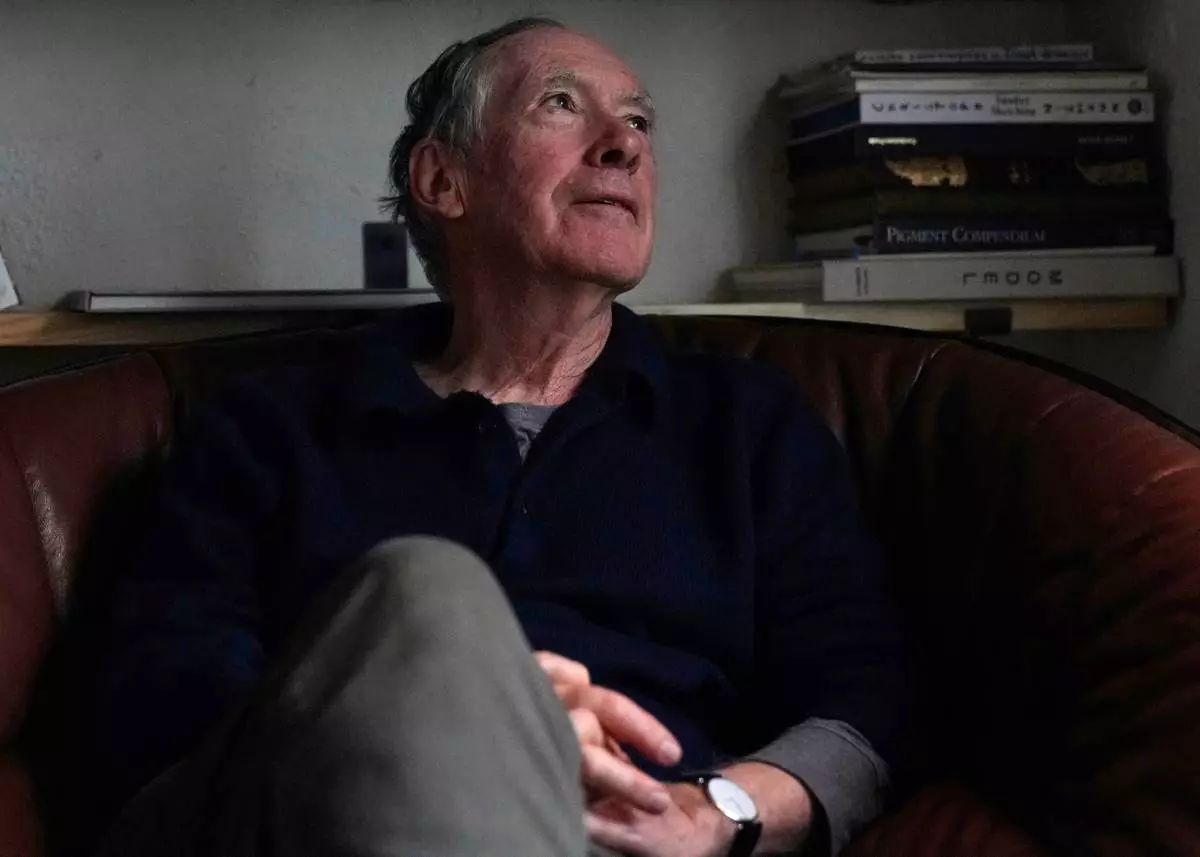
Ian McEwan, British novelist and screenwriter, gestures as he speaks to press during an interview in London, Friday, Sept. 12, 2025. (AP Photo/Joanna Chan)
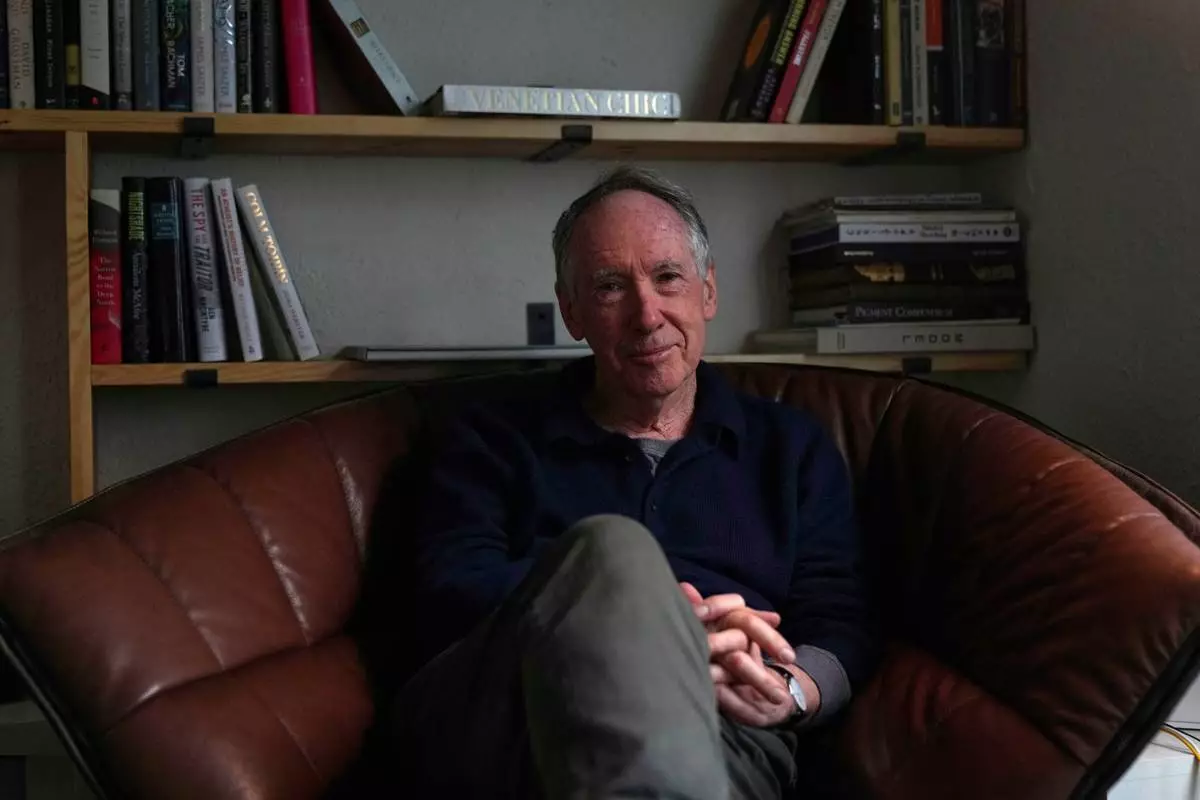
Ian McEwan, British novelist and screenwriter, gestures as he speaks to press during an interview in London, Friday, Sept. 12, 2025. (AP Photo/Joanna Chan)
A U.S. delegation led by Vice President JD Vance arrived in Pakistan for talks with Iranian officials aimed at shoring up a shaky ceasefire and paving the way for a permanent end to the fighting. It marks the first such meeting since the war began more than a month ago.
The ceasefire brokered by Pakistan still faces hurdles in the talks beginning Saturday, as Israel and Hezbollah militants have been trading fire along the border of southern Lebanon and Iran has set conditions before negotiations can begin.
The Iranian delegation arrived early Saturday in Islamabad, led by Parliament Speaker Mohammad Bagher Qalibaf, who said on X that discussions will only take place if there is an Israeli ceasefire in Lebanon the release of blocked Iranian assets.
Hours earlier, President Donald Trump wished Vance good luck. “We’ll find out what’s going on. They’re militarily defeated.”
In Islamabad, the streets of a normally bustling capital were deserted Saturday as security forces sealed roads ahead of the talks.
Here is the latest:
The Al-Aqsa Martyrs Hospital which received the casualties said the Israeli airstrike hit a security point in the urban refugee camp of Bureij around in the predawn hours Saturday.
The deaths were the latest among Palestinians in the territory since a ceasefire deal last October that aimed to halt a more than two-year war between Israel and Hamas in Gaza.
While the heaviest fighting has subsided, Israeli forces have carried out repeated airstrikes and frequently fire on Palestinians near military-held zones, killing more than 730 Palestinians, according to Gaza health officials.
The health ministry, which is part of the Hamas-led government, maintains detailed casualty records that are seen as generally reliable by U.N. agencies and independent experts. But it does not give a breakdown of civilians and militants.
Militants have carried out shooting attacks on troops, and Israel says its strikes are in response to that and other violations. Four Israeli soldiers have been killed since the ceasefire.
Pakistan’s Ministry of Foreign Affairs said Foreign Minister Ishaq Dar, Army Chief Field Marshal Asim Munir and Interior Minister Mohsin Naqvi on Saturday received the U.S. delegation lead by U.S. Vice President JD Vance.
The ministry said in a statement that Dar commended the U.S. commitment to achieving lasting regional and global peace and stability.
He expressed hope that the parties would engage constructively and reiterated Pakistan’s desire to continue facilitating efforts toward a lasting and durable resolution to the conflict.
The Lebanese National News Agency reported multiple Israeli strikes early Saturday in southern Lebanon, killing at least three people.
The three were killed when an airstrike hit and destroyed a residential building in Maifadoun town in the southern province of Nabatiyeh, according to the agency.
Hezbollah, meanwhile, said it fired a barrage of rockets that targeted a military facility in northern Israel.
Vance arrived in Islamabad at the head of a delegation that includes President Donald Trump’s special envoy Steve Witkoff and his son-in-law Jared Kushner.
The Iranian delegation, led by Parliament Speaker Mohammad Bagher Qalibaf, was already in Islamabad.
Before departing for Pakistan, Vance warned Iran not to “play” the U.S. Hours later, Qalibaf said discussions would only take place if there is an Israeli ceasefire in Lebanon and the release of blocked Iranian assets.
The Iranian delegation is scheduled to meet with Pakistani Prime Minister Shehbaz Sharif at noon Saturday, according to the Tasnim news agency, which is close to the powerful Revolutionary Guard.
Iran’s negotiating team, chaired by Parliament Speaker Mohammad Bagher Qalibaf and includes Foreign Minister Abbas Arghchi, met late Friday with Pakistan’s army chief, Field Marshal Asim Munir.
The meetings come ahead of high-stakes talks between Iran and the U.S. in Islamabad which aim at reaching a permanent end of the war in the Middle East.
Pakistan’s government has set up a state-of-the-art media center to facilitate Pakistani and foreign journalists covering the talks between the United States and Iran, Information Minister Attaullah Tarar said.
Tarar told reporters the facility at the Jinnah Convention Center offers high-speed internet and a range of free services to support media coverage. Shuttle services have been arranged to transport journalists between the media center and a hotel in the city’s main shopping mall.
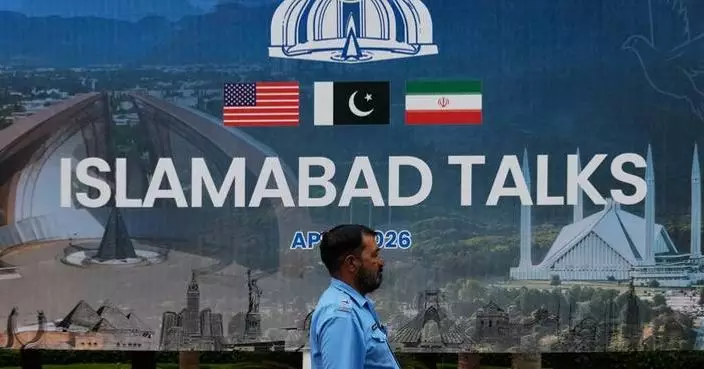
Pakistan has announced visa-on-arrival for journalists and official delegations traveling from the United States and Iran for the talks, which have been dubbed the “Islamabad talks.”
Inside the media center, rows of workstations equipped with laptops and charging points allow reporters to file stories. Large screens broadcast major domestic and international television channels. The facility also has designated areas for live stand-ups, press briefings and interviews.
The streets of Pakistan’s normally bustling capital were deserted Saturday as security forces sealed roads ahead of talks between high-level officials from Iran and the U.S. to end their nearly six-week war. Pakistani authorities urged Islamabad residents to stay inside, leading the city to look like it was under curfew.
U.S. Vice President JD Vance is leading the American delegation, which was expected to arrive before noon.
Iranian negotiators, headed by Parliament Speaker Mohammad Bagher Qalibaf, arrived late Friday.
Pakistan Prime Minister Shehbaz Sharif the conflict was entering a “difficult phase” as the sides try to shift from a temporary pause in fighting to a more lasting settlement. He said they were at a “make-or-break” moment.
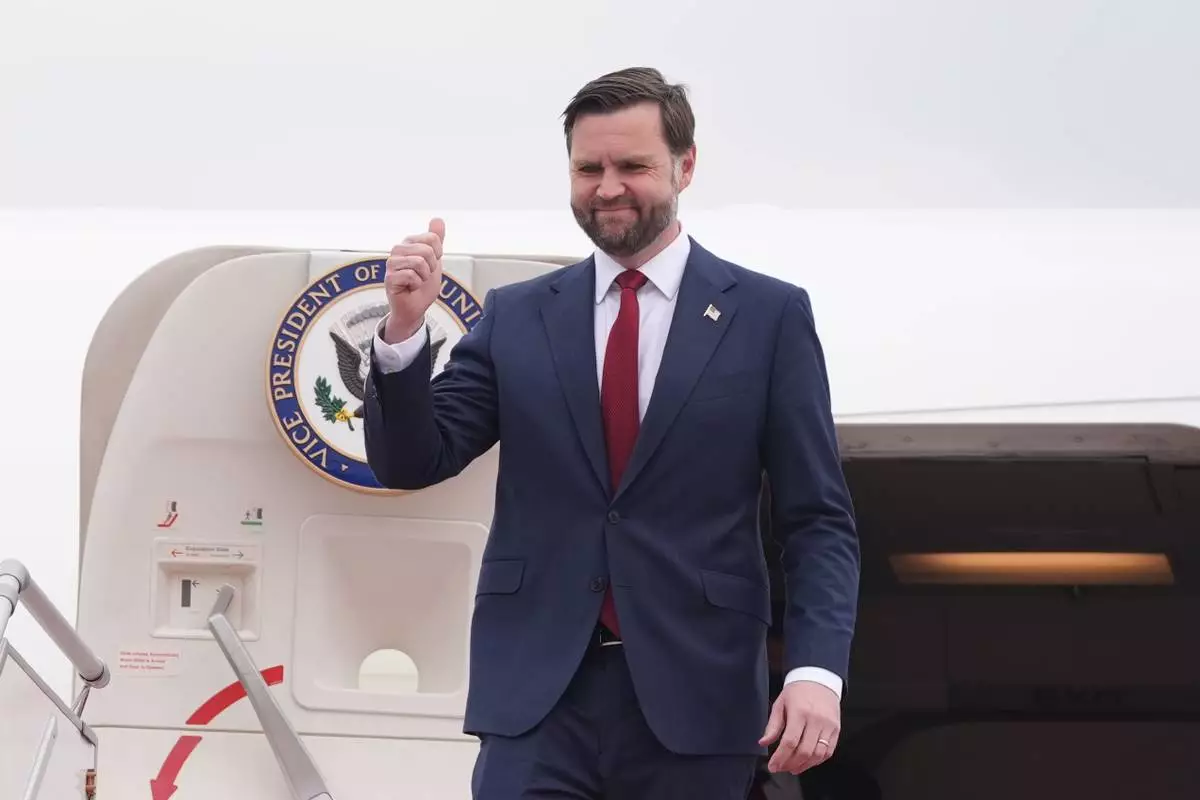
U.S. Vice President JD Vance disembarks from Air Force Two after arriving for talks with Iranian officials in Islamabad, Pakistan, Saturday, April 11, 2026. (AP Photo/Jacquelyn Martin, Pool)
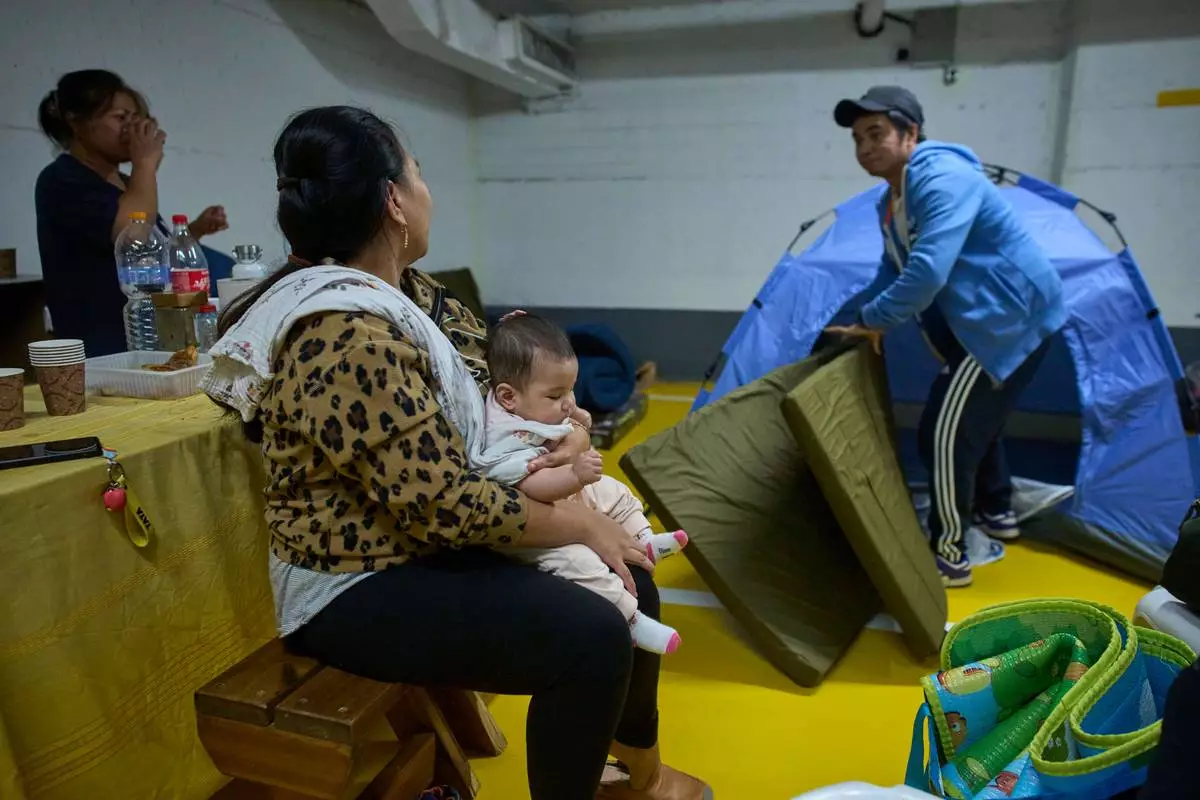
People residing in an underground shelter pack up their belongings as they prepare to leave after the announcement of a two-week ceasefire agreement between Iran and the US, in Tel Aviv, Israel, Thursday, April 9, 2026. (AP Photo/Ohad Zwigenberg)
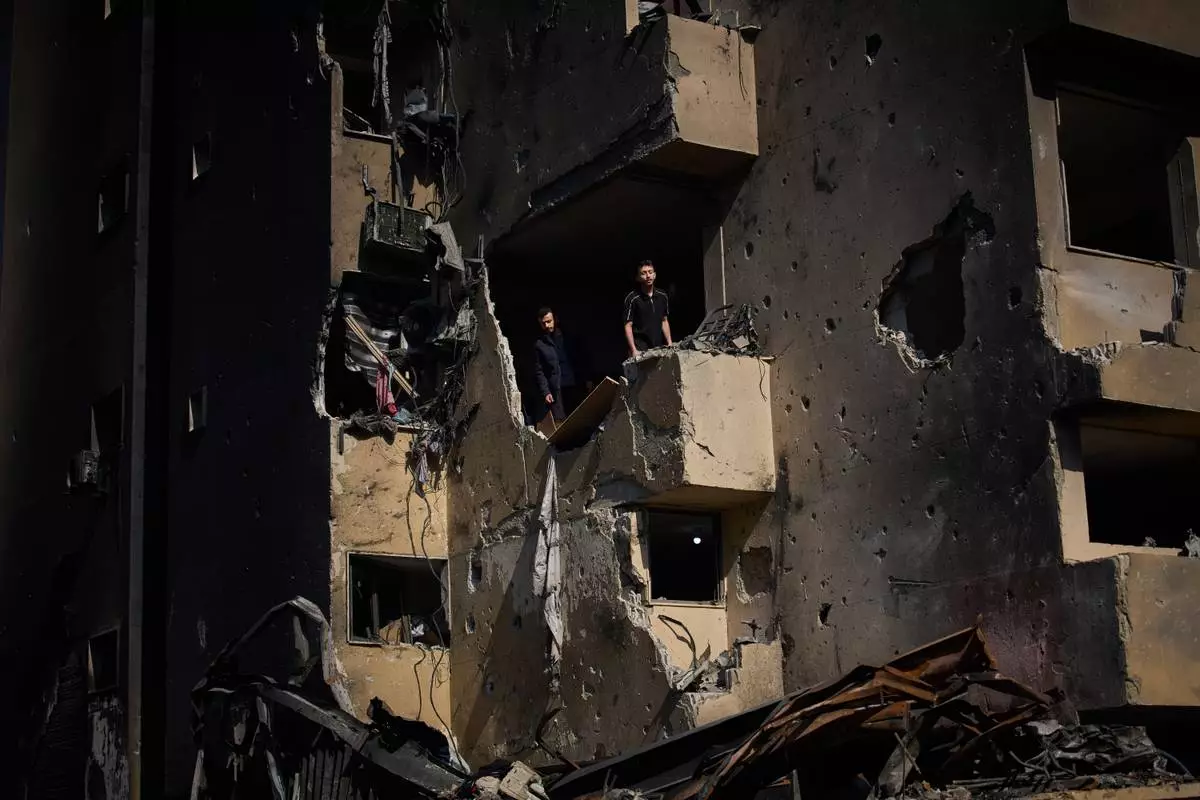
Men inspect the damage to their home destroyed in an Israeli airstrike a day earlier in Beirut, Lebanon, Thursday, April 9, 2026. (AP Photo/Emilio Morenatti)
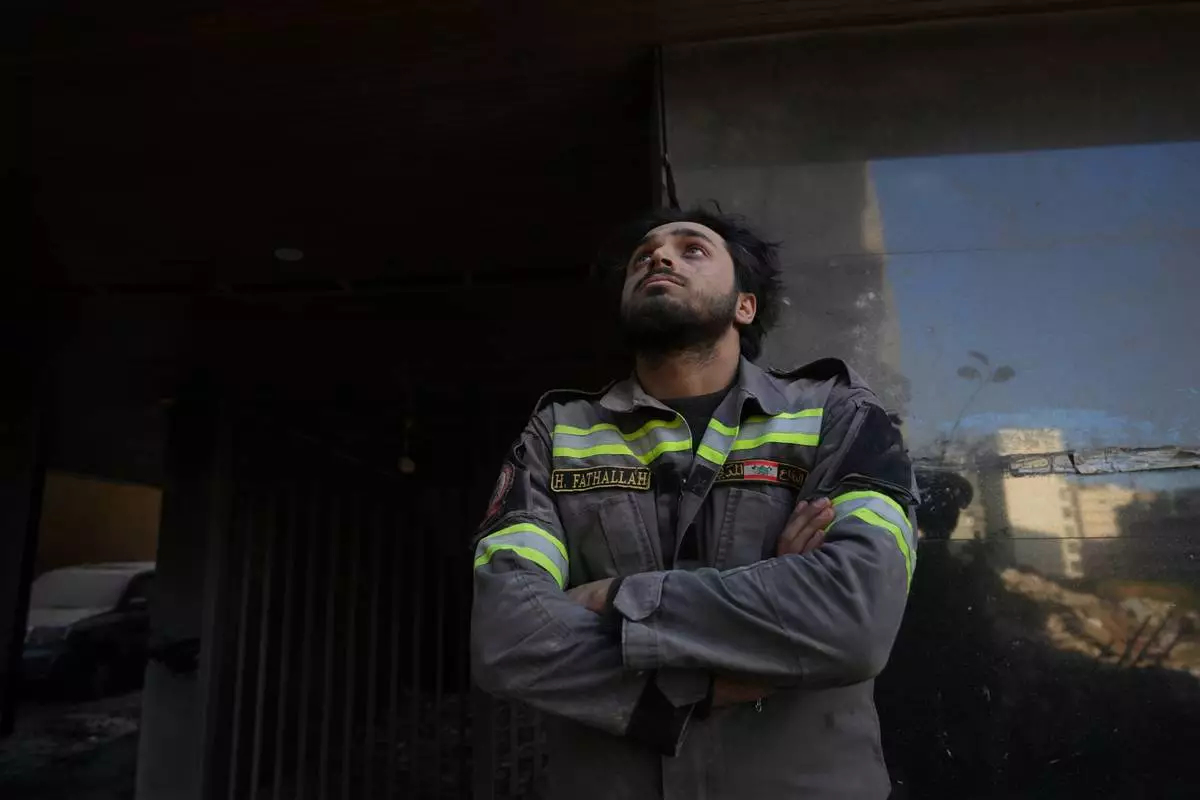
A Lebanese civil defense worker looks upward near the site of a building destroyed in an Israeli airstrike a day earlier in central Beirut, Lebanon, Thursday, April 9, 2026. (AP Photo/Hassan Ammar)
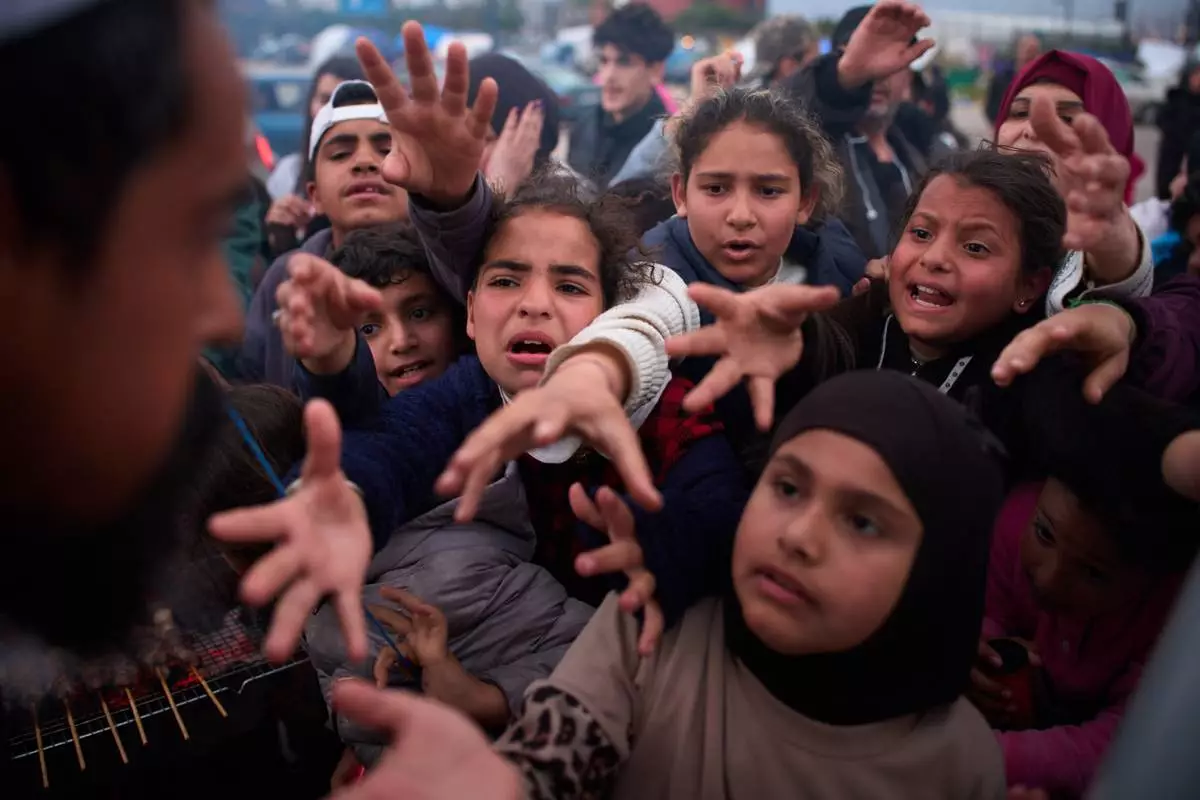
Displaced families extend their hands while waiting for donated food beside the tents they use as shelters after fleeing Israeli bombardment in southern Lebanon, in Beirut, Lebanon, Thursday, April 9, 2026. (AP Photo/Emilio Morenatti)
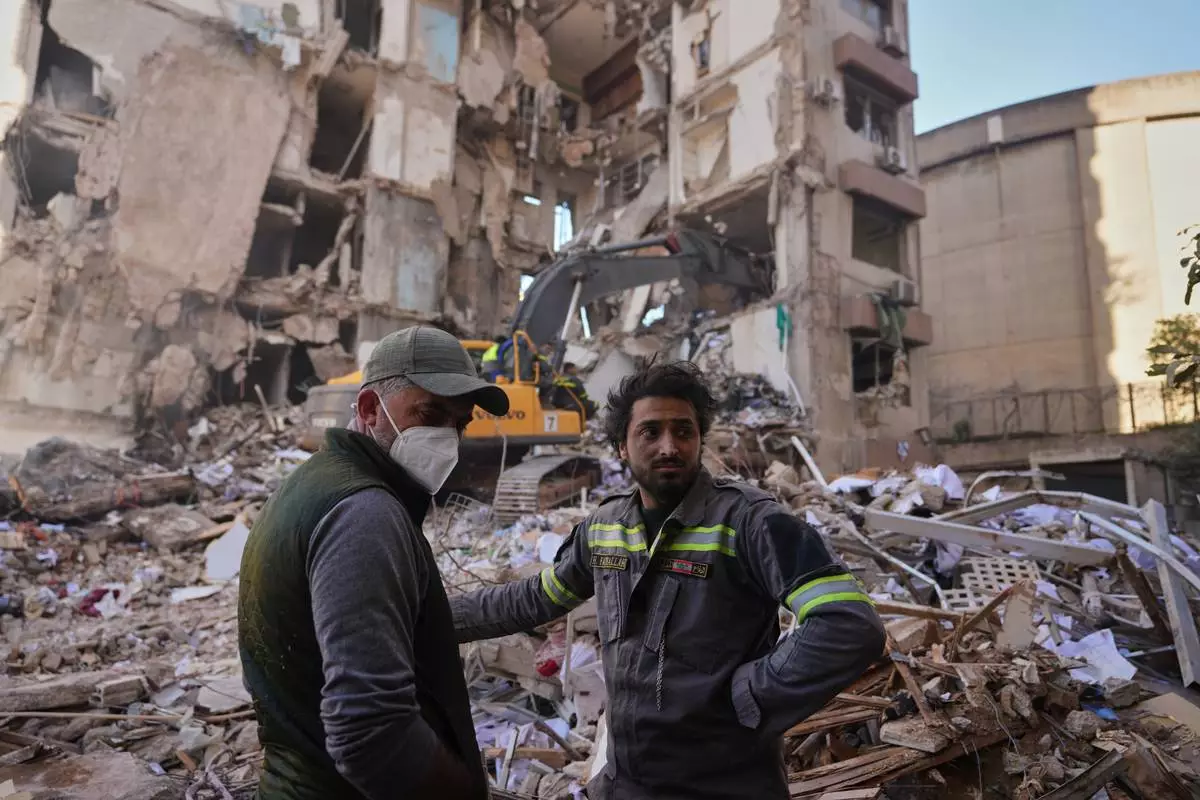
A Lebanese civil defense worker, right, stands with a resident at the site of a building destroyed in an Israeli airstrike a day earlier in central Beirut, Lebanon, Thursday, April 9, 2026. (AP Photo/Hassan Ammar)