BOSTON (AP) — Boston Mayor Michelle Wu will run unopposed for in her reelection bid after a challenger didn’t garner enough votes to advance to the general election, the city's election department announced Monday.
Wu, the city’s first Asian and female leader and a frequent target of the Trump administration, is seeking a second four-year term. She was expected to face Josh Kraft, a nonprofit leader and son of Patriots owner Robert Kraft, but he dropped out after losing badly to her in the preliminary election earlier this month.
Click to Gallery
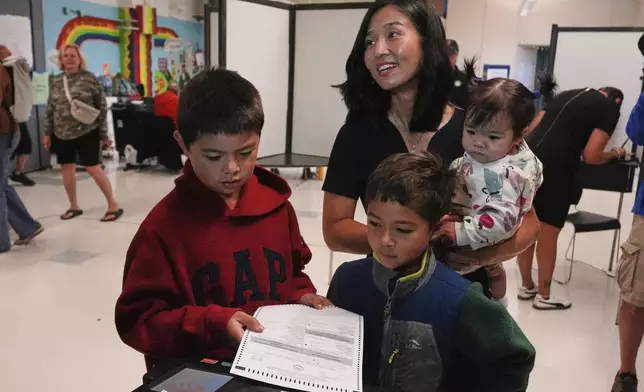
Boston Mayor Michelle Wu votes with her children Blaise, Cass and Mira, from left, at a polling place, Tuesday, Sept. 9, 2025, in the Roslindale neighborhood of Boston. (AP Photo/Charles Krupa)
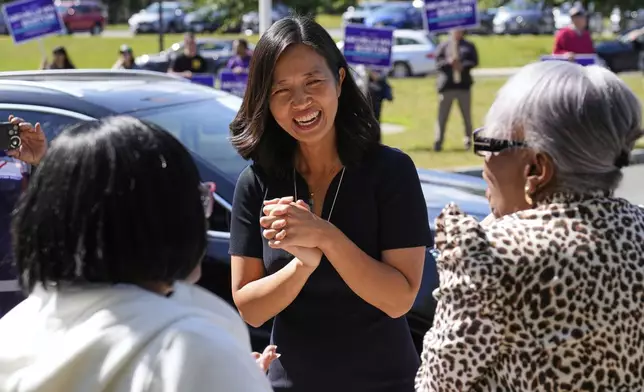
Boston Mayor Michelle Wu chats with voters at a polling place, Tuesday, Sept. 9, 2025, in the Dorchester neighborhood of Boston. (AP Photo/Charles Krupa)
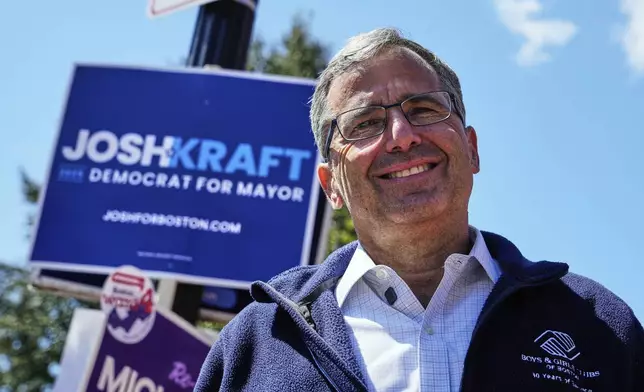
Boston mayoral candidate Josh Kraft campaigns outside a polling place, Tuesday, Sept. 9, 2025, in the South End neighborhood of Boston. (AP Photo/Charles Krupa)
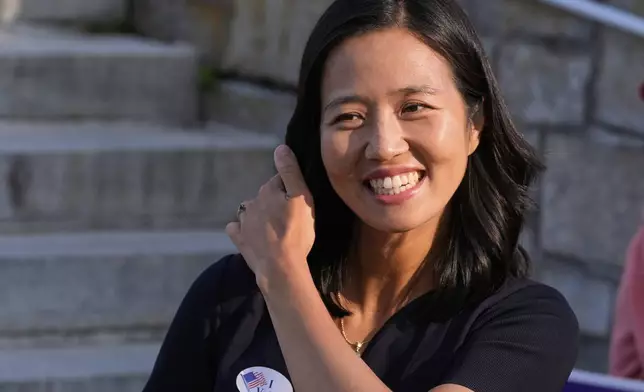
Boston Mayor Michelle Wu smiles after voting at a polling place, Tuesday, Sept. 9, 2025, in the Roslindale neighborhood of Boston. (AP Photo/Charles Krupa)
Since the top two vote-getters advance, attention turned to third-place finisher Domingos DaRosa. But after a recount of several wards by the city’s election board was completed Monday, DaRosa, a community activist who was born in the Cape Verde Islands, did not garner the 3,000 votes needed to qualify to be on the ballot in November.
The last time a mayor ran unopposed in Boston was Mayor Thomas Menino in 1997.
Wu thanked everyone who voted for her and said in a statement that her focus in the coming weeks would be getting people to come out to vote for her and City Council candidates.
“I’m humbled by the overwhelming support across every neighborhood and every ward to keep going in our work to make Boston a home for everyone," said Wu, who spent much of the year jousting with the federal government over immigration.
DaRosa acknowledged he came up short but blamed the lack of visibility and money for the outcome.
“It's going to teach people what happens in local politics," DaRosa said regarding the fact that voters will have only one choice in November. “Our conversation about how to make the city better always gravitates to who has the most money. It's not about who is doing the actual leg work, which I have actually been doing.”
Erin O’Brien, a UMass Boston political science professor, acknowledged that uncontested races “don’t feel good for democracy," but she said Wu was overwhelmingly chosen by city voters in the preliminary election — a dominant showing that suggests she “could be mayor as long as she wants.”
Members of the Trump administration, often led by the president's border czar Tom Homan, have accused Boston of not doing enough to crack down on illegal immigration and threatened a surge in arrests. Boston is commonly known as a sanctuary city, and Wu has repeatedly said she wants it to be a welcoming place for immigrants.
The U.S. Department of Justice filed a lawsuit against Wu, the city of Boston and its police department over its sanctuary city policies, claiming they’re interfering with immigration enforcement. In response, Wu accused President Donald Trump of “attacking cities to hide his administration’s failures.”
On the day of the preliminary election, the Department of Homeland Security put out a statement announcing the arrests of seven people as part of a crackdown in Massachusetts.
Kraft, a fellow Democrat and a nonprofit leader, injected millions of his own personal money into his campaign and set records for spending in a Boston mayoral preliminary election. He had also been critical of Trump’s attacks and pushed Wu particularly hard on housing, saying she hadn’t done enough to increase options and affordability in Boston.
During his campaign, DaRosa advocated for affordable housing solutions, improved public safety and youth empowerment.
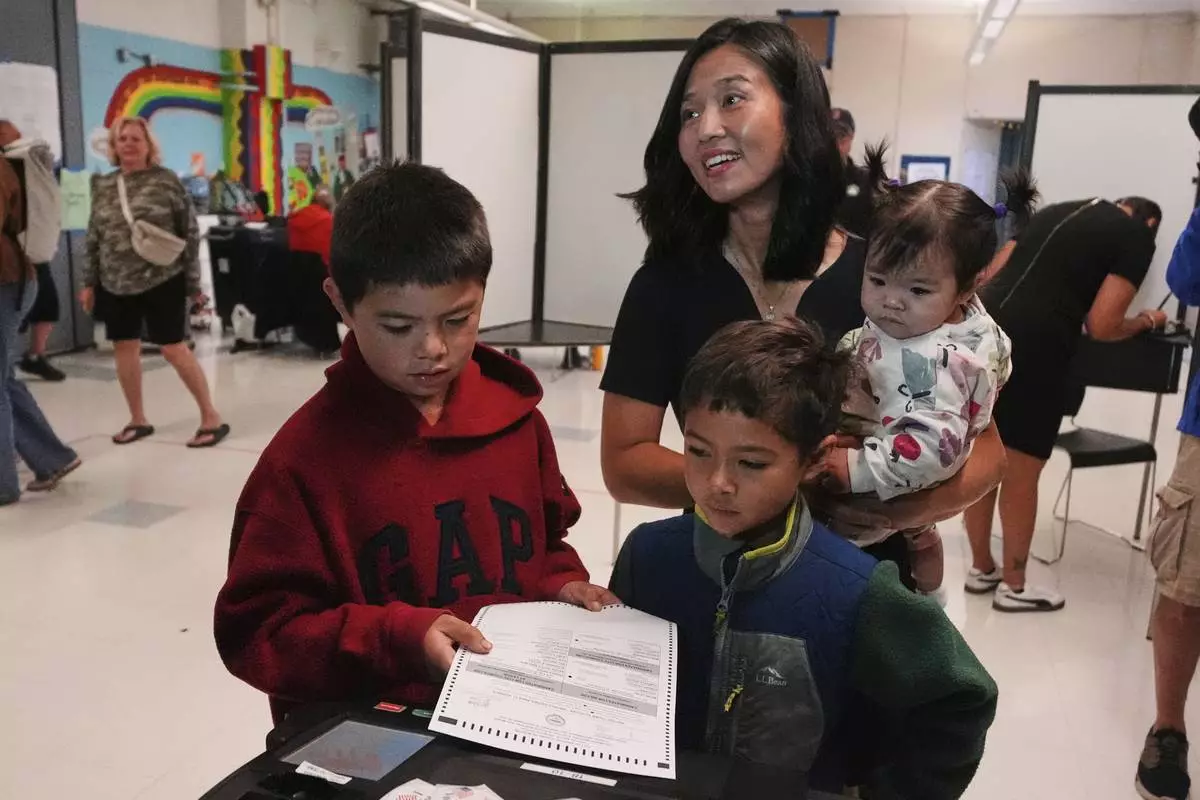
Boston Mayor Michelle Wu votes with her children Blaise, Cass and Mira, from left, at a polling place, Tuesday, Sept. 9, 2025, in the Roslindale neighborhood of Boston. (AP Photo/Charles Krupa)
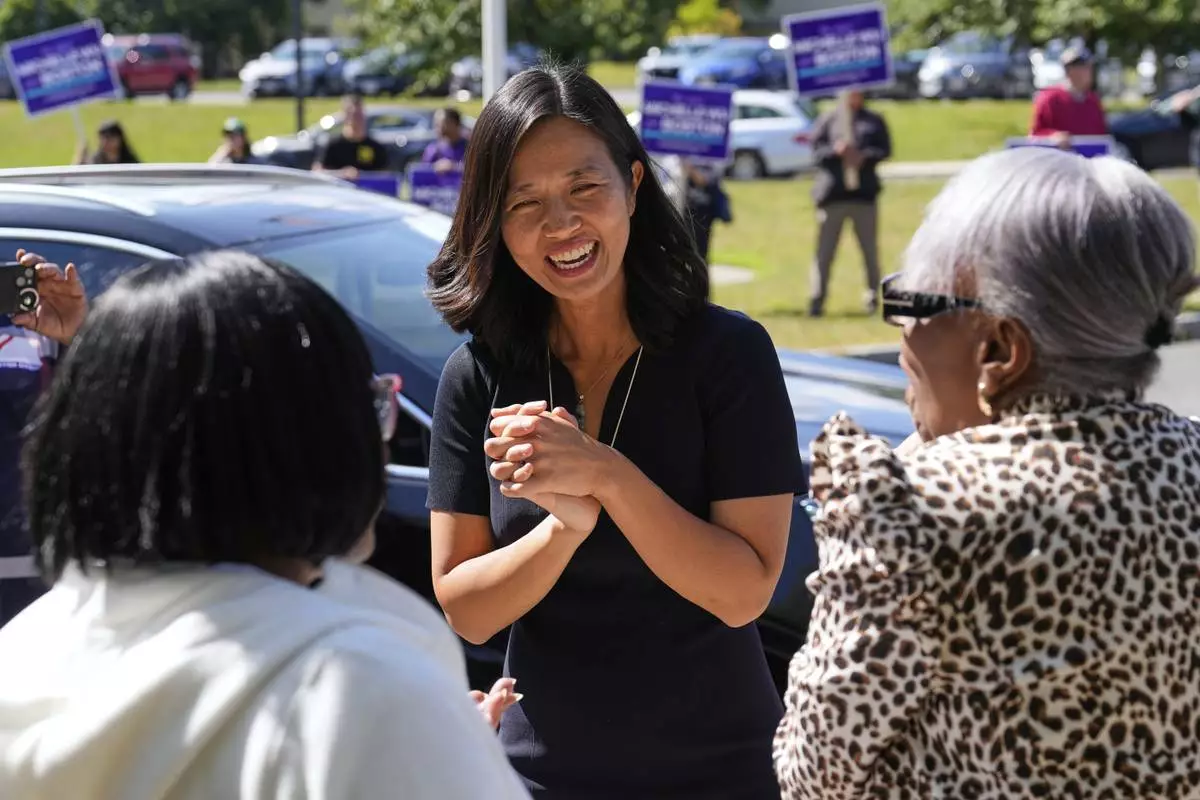
Boston Mayor Michelle Wu chats with voters at a polling place, Tuesday, Sept. 9, 2025, in the Dorchester neighborhood of Boston. (AP Photo/Charles Krupa)
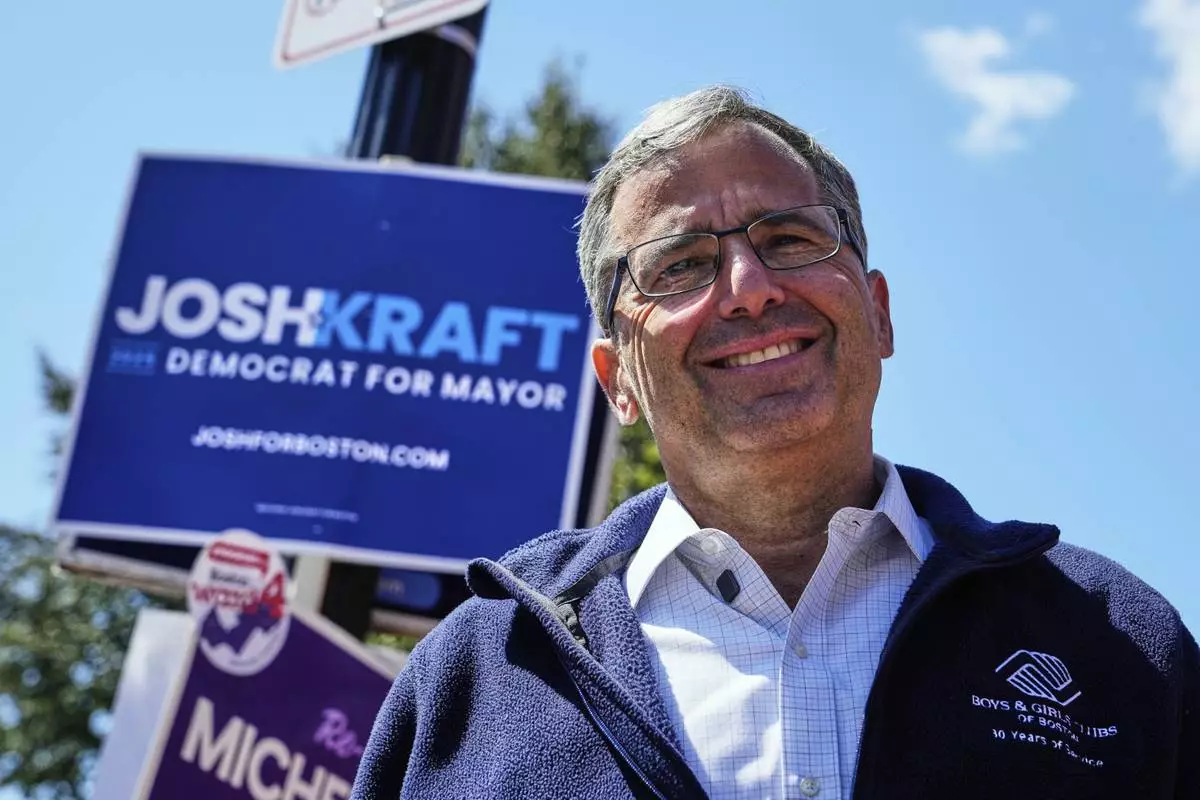
Boston mayoral candidate Josh Kraft campaigns outside a polling place, Tuesday, Sept. 9, 2025, in the South End neighborhood of Boston. (AP Photo/Charles Krupa)
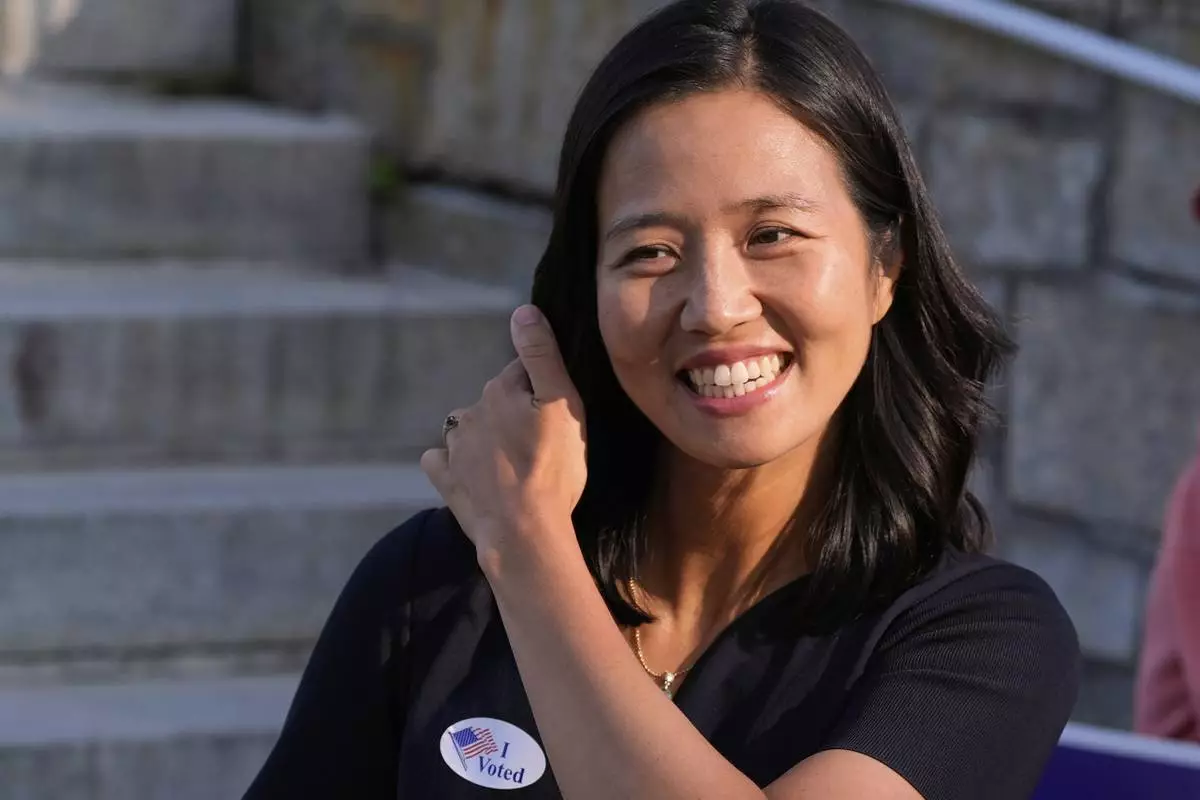
Boston Mayor Michelle Wu smiles after voting at a polling place, Tuesday, Sept. 9, 2025, in the Roslindale neighborhood of Boston. (AP Photo/Charles Krupa)
DUBAI, United Arab Emirates (AP) — Iran stopped communicating with mediators about extending a ceasefire in the war with the U.S. and Israel, two semiofficial Iranian news agencies reported Tuesday, as tensions flared in Israel's separate but related fight against the Iranian-backed militia Hezbollah in Lebanon.
The halt in communication was likely meant to increase pressure on U.S. President Donald Trump over negotiations on the Iran war ceasefire and loosening the Islamic Republic's chokehold on the Strait of Hormuz and the oil, gas and other commodities that normally pass through it. Trump then could potentially push Israeli Prime Minister Benjamin Netanyahu to halt or slow the advance of his forces, which have moved deeper into Lebanon than at any time in over a quarter of a century.
U.S. Secretary of State Marco Rubio did not address the reported cutoff in communications as he testified at a congressional hearing in Washington. Instead, he sounded an optimistic note about the nuclear dimension of the negotiations, while cautioning that there's no guarantee of reaching "a deal that’s acceptable.”
The reports by the Fars and Tasnim news agencies, both believed to be close to Iran’s paramilitary Revolutionary Guard, come as the conflicts in Iran and Lebanon have increasingly become conjoined. Iran insists that any potential truce in the war there must also quell the fighting in Lebanon, where Hezbollah remains one of Iran's chief allies in its self-described “axis of resistance” against Israel.
A regional official involved in the mediation, speaking on condition of anonymity to discuss the talks, told The Associated Press that Iran had not communicated at all on Tuesday after saying that a ceasefire needed to be enforced in Lebanon for negotiations to continue.
Israel and the U.S. maintain the fighting in Lebanon is separate from the Iran war talks.
Meanwhile, year-on-year inflation in Iran reached a level in May unseen since World War II, underlining the economic pain average Iranians are facing. While the U.S. is eager to ease the Islamic Republic's grip on the strait — through which a fifth of all traded oil and natural gas passed in peacetime — Iran faces economic challenges as its oil-backed economy remains under a U.S. naval blockade.
Economic pressure touched off nationwide protests in Iran in 2017 into 2018, when rising food prices sparked demonstrations that killed over 20 people and saw hundreds arrested. The next year, an increase in government-subsidized gasoline prices caused protests that saw over 300 people reportedly killed.
Then came the protests over the collapsing value of Iran's currency, the rial, at the start of this year. They were the most intense demonstrations to shake the Islamic Republic since its 1979 revolution and the chaotic years that followed. Iran's theocracy met January's protests with a crackdown on demonstrators in January that killed over 7,000 people, according to activists' estimates.
Now, even as hard-liners hold gun-handling workshops and organize marriages under the shadow of a ballistic missile to bolster spirits, experts note there could be new demonstrations if people find themselves priced out of feeding their families.
“I have no doubt that if Trump leaves (Iran without a formal peace deal) ... most probably, we will see something like January by the end of summer because of the economic and social situations," analyst Mohsen Jalilvand said in a video published by Iran's Fararu news website.
Iran's Central Bank said the consumer price index, which measures a basket of goods and services, reached 77.2% in May compared with the year before. The rate is 8.5% higher than in April, the bank added. Inflation in daily and general needs — like medicine, taxi fares, tobacco and communication fees — rose 113.8% from the year before.
A private economic think tank in Iran, the Bamdad Institute of Economic Studies, described the current figures as “an unprecedented rate since World War II.” Iran’s Central Bank did not acknowledge the significance of the figures.
The previous record came in 1942. During the war, the British and Soviets invaded Iran and took over its railway, disrupting food supplies. The lack of food, worsened by a poor harvest, sparked hyperinflation and a famine. Hunger and a typhus outbreak killed many.
Airstrikes this year have greatly damaged Iran's businesses and its oil industry, Meanwhile, the U.S. blockade has been targeting Iranian crude oil shipments trying to reach the international market, a key source of hard revenue. Tax revenues have been depressed by businesses struggling even after the fighting paused.
The rial, which traded at 32,000 to $1 in 2015, now trades at over 1.7 million to $1.
“We will definitely have higher prices," Iranian President Masoud Pezeshkian warned in May. "We are fighting, and we must accept this hardship.”
Tehran-based economist Saeed Leilaz, speaking to the AP, warned that annual inflation in Iran could reach 80%.
"Iran’s society cannot tolerate above 25%” annual inflation, he said.
Karimi reported from Tehran, Iran. Magdy reported from Cairo. Associated Press writer Jennifer Peltz contributed from New York.
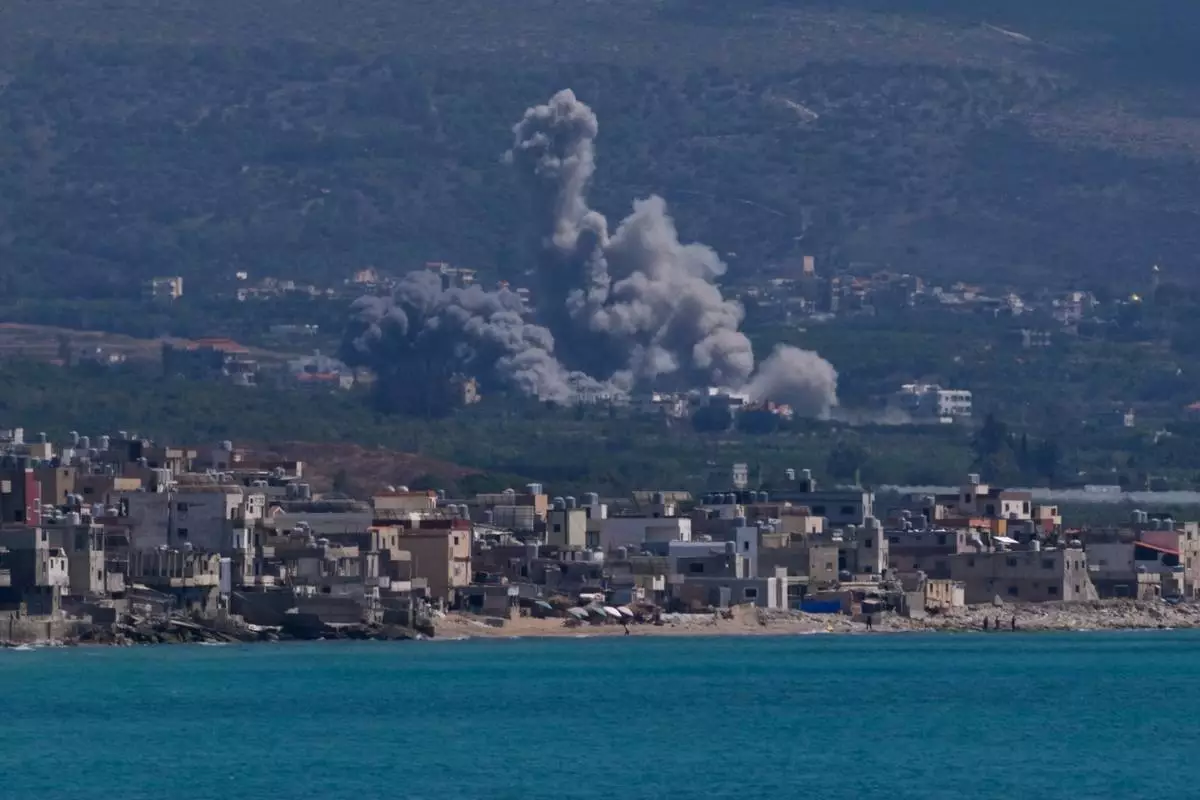
Smoke rises from an Israeli airstrike that hit Qlaileh village, as it seen from the southern port city of Tyre, Lebanon, Tuesday, June 2, 2026. (AP Photo/Mohammed Zaatari)
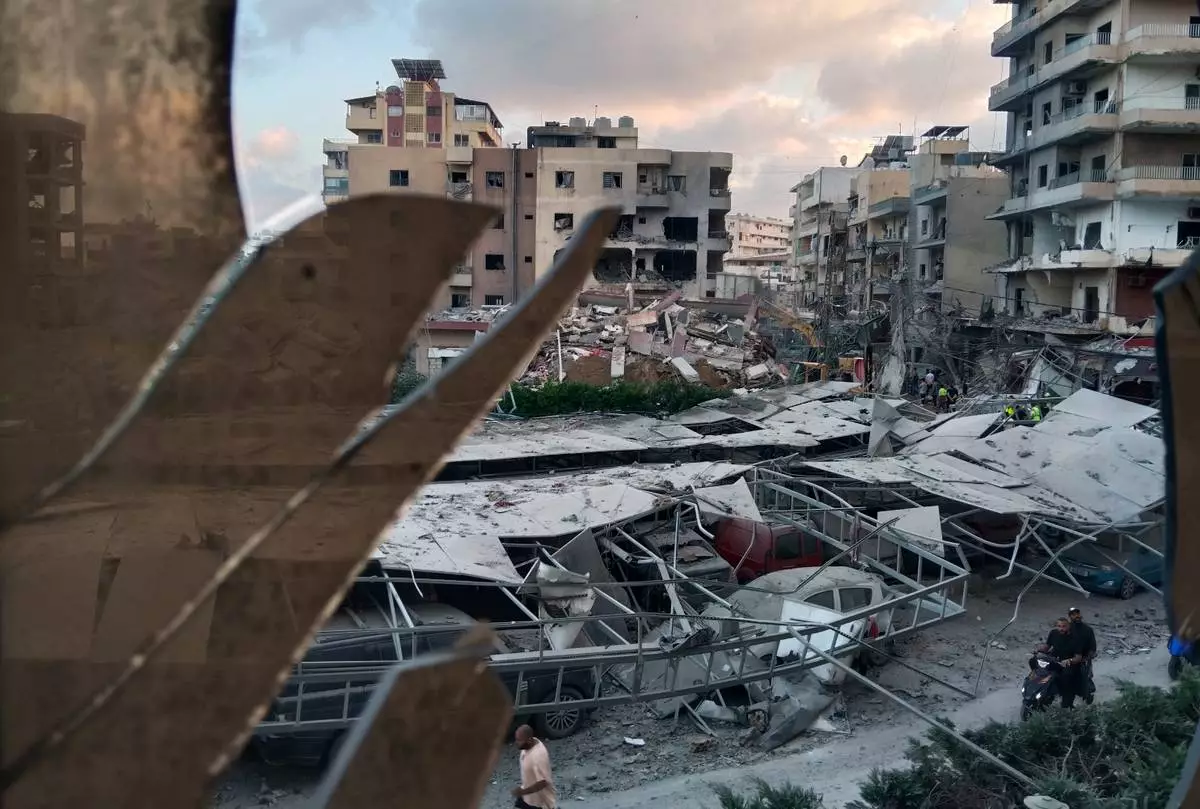
A destroyed building that was hit in an Israeli airstrike is seen through a shattered window of the Jabal Amel Hospital, in the southern port city of Tyre, Lebanon, Monday, June 1, 2026. (AP Photo)
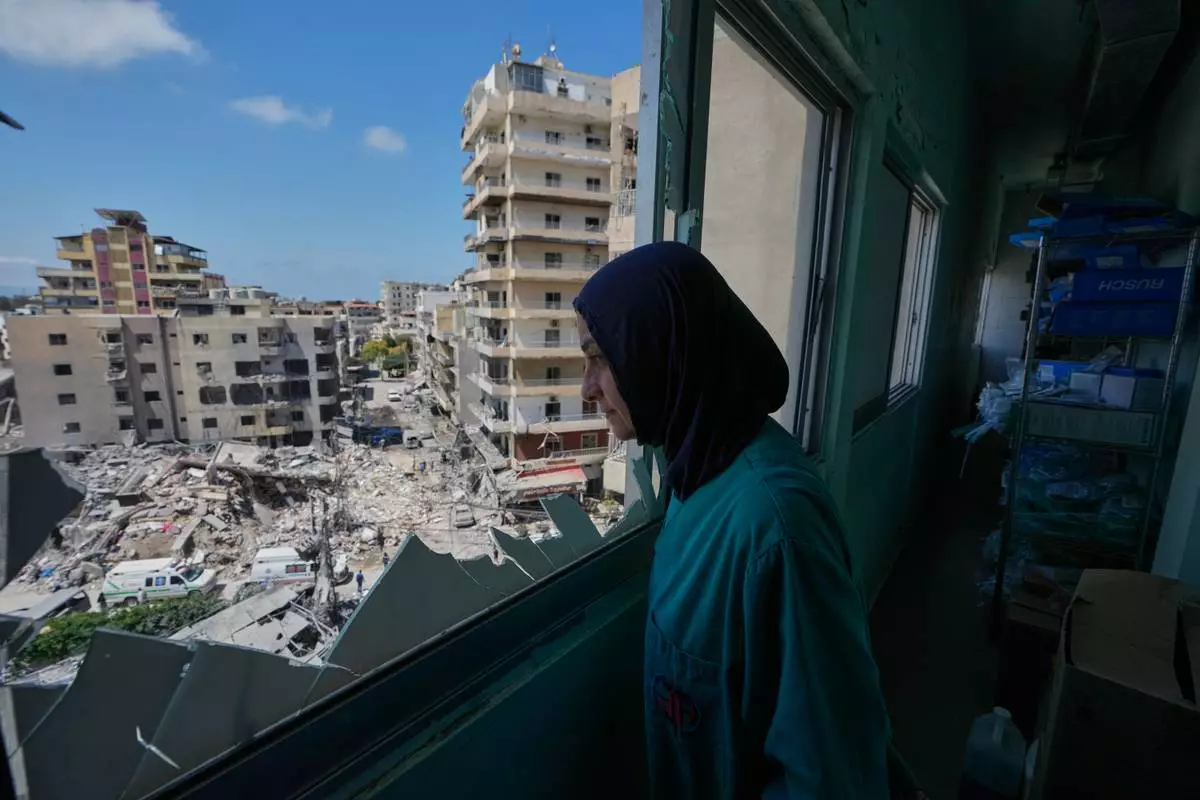
A nurse looks through a shattered window of the Jabal Amel Hospital into a destroyed building that was hit Monday in an Israeli airstrike, in the southern port city of Tyre, Lebanon, Tuesday, June 2, 2026. (AP Photo/Mohammed Zaatari)
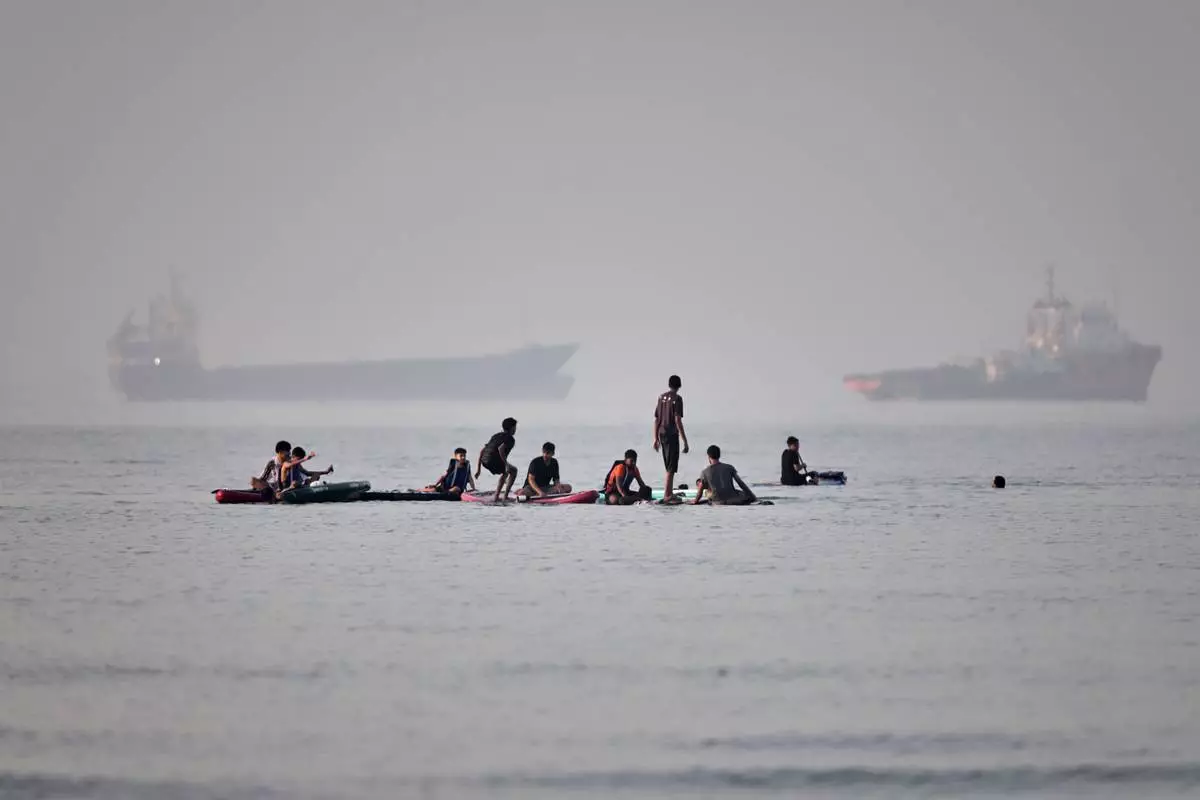
People gather on paddleboards in shallow water as cargo and service vessels are anchored in the Strait of Hormuz off Bandar Abbas, Iran, Monday, June 1, 2026. (Amirhosein Khorgooi/ISNA via AP)
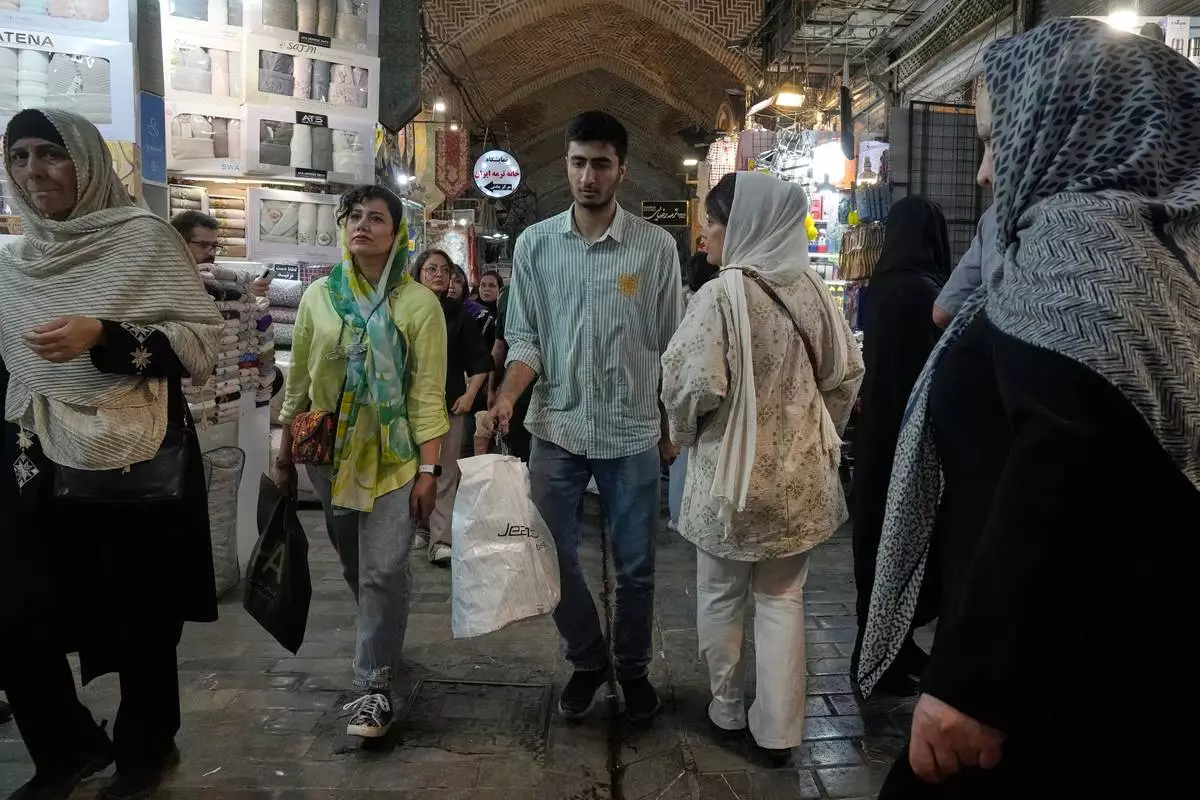
People walk at Tehran's historic Grand Bazaar, Iran, Monday, June 1, 2026. (AP Photo/Vahid Salemi)
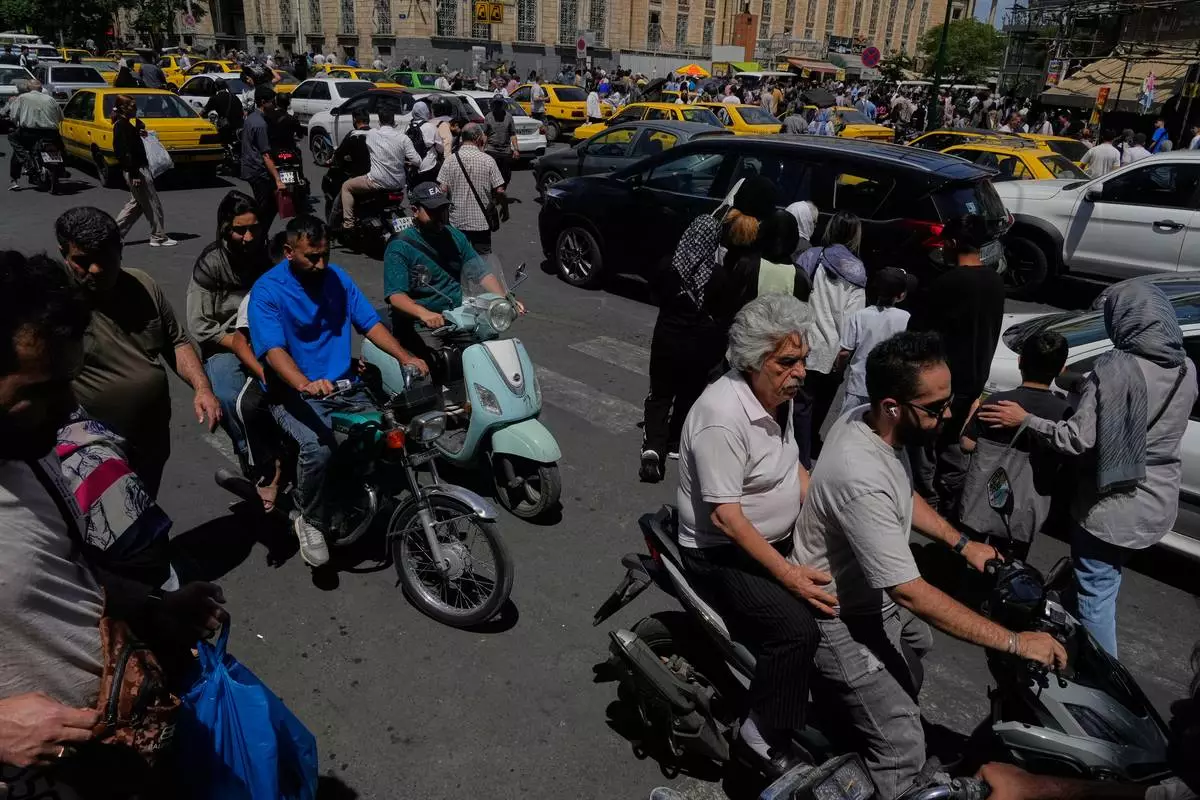
Pedestrians and vehicles cross an intersection around Tehran's historic Grand Bazaar, Iran, Monday, June 1, 2026. (AP Photo/Vahid Salemi)
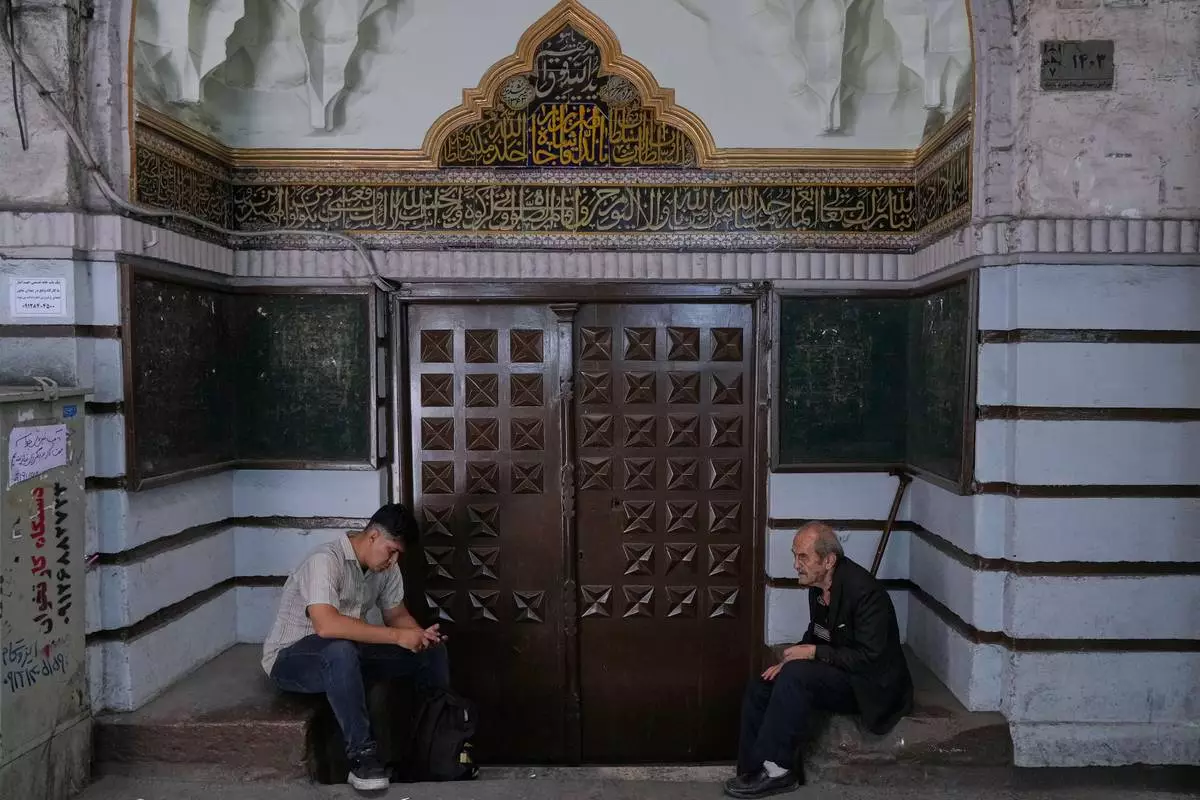
Men sit at the gate of a mosque at Tehran's historic Grand Bazaar, Iran, Monday, June 1, 2026. (AP Photo/Vahid Salemi)
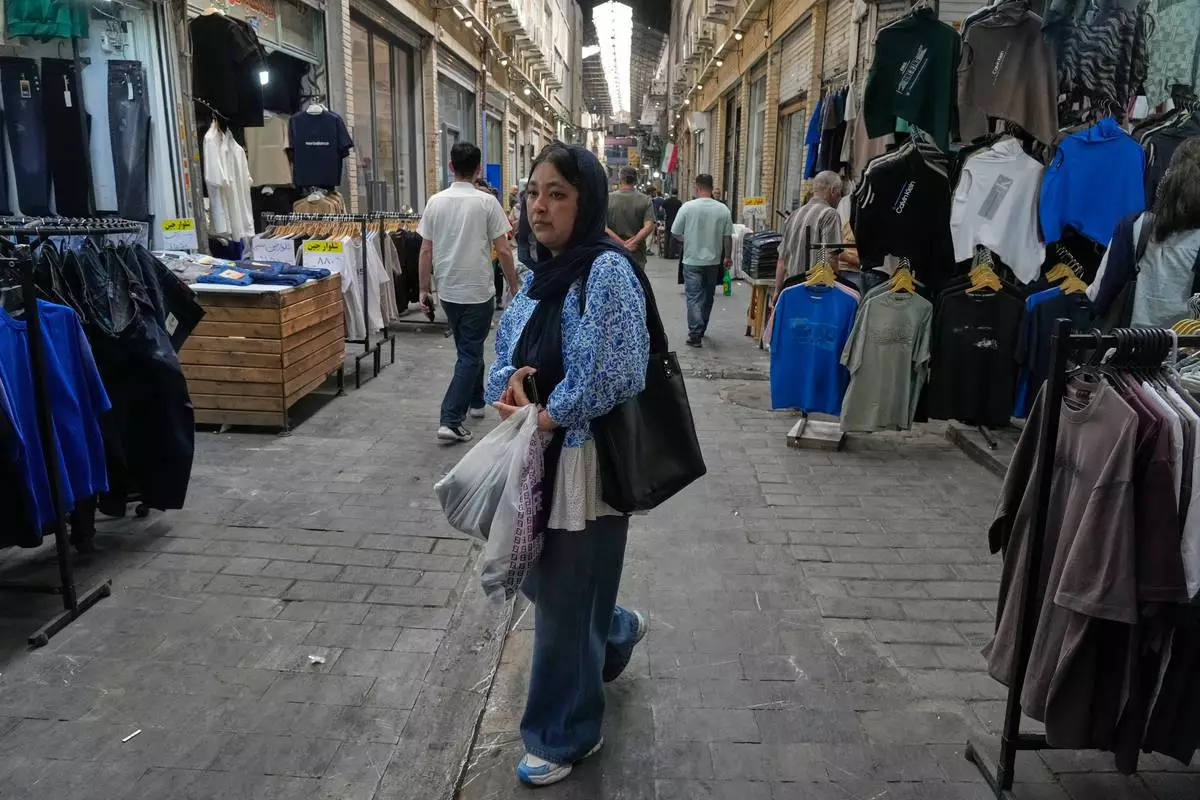
A woman walks at Tehran's historic Grand Bazaar, Iran, Monday, June 1, 2026. (AP Photo/Vahid Salemi)
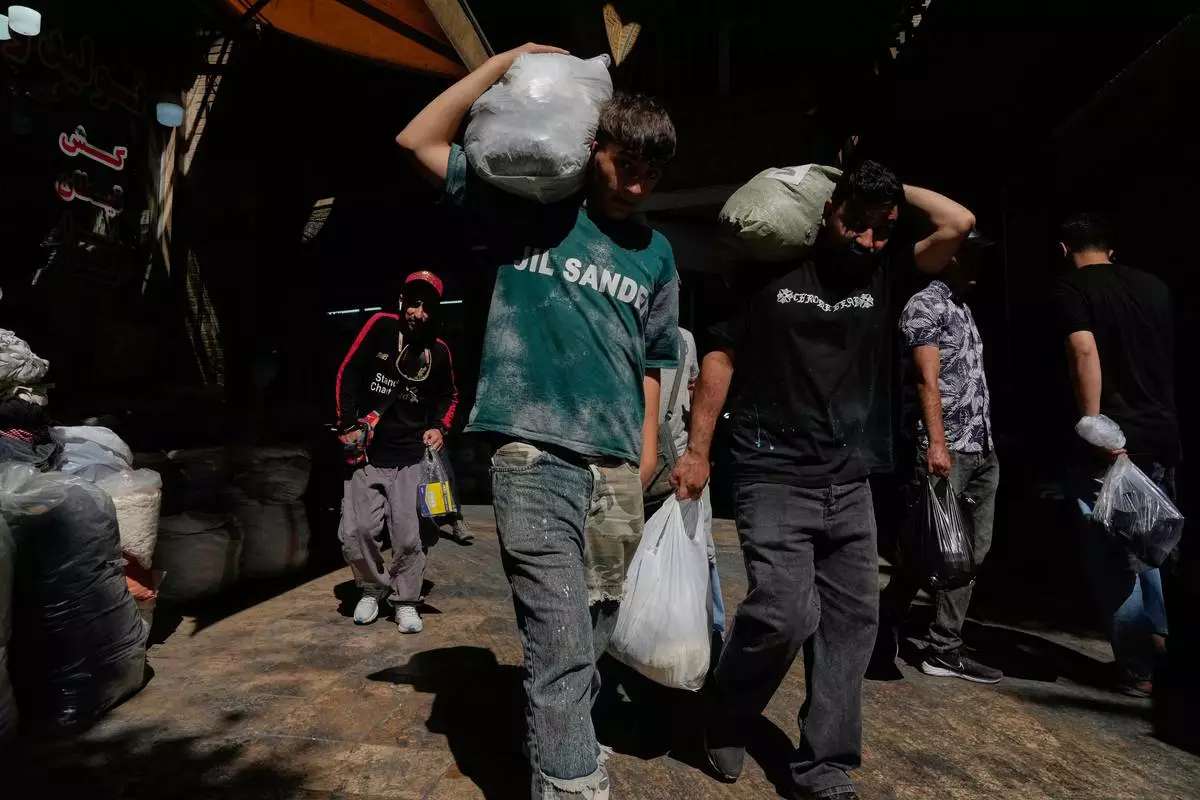
People carry packages at Tehran's historic Grand Bazaar, Iran, Monday, June 1, 2026. (AP Photo/Vahid Salemi)