How Charlie Kirk is being memorialized — with many conservatives and white Christians, particularly evangelicals, emphasizing his faith and labeling him a martyr — has sparked debate among Black clergy, who are trying to square a heroic view of the 31-year-old with insulting statements about people of color that were key to his political activism.
“How you die does not redeem how you lived,” the Rev. Howard-John Wesley, of Alexandria, Virginia, said in a sermon in the aftermath of Kirk's killing that has amassed tens of thousands of views online.
Click to Gallery
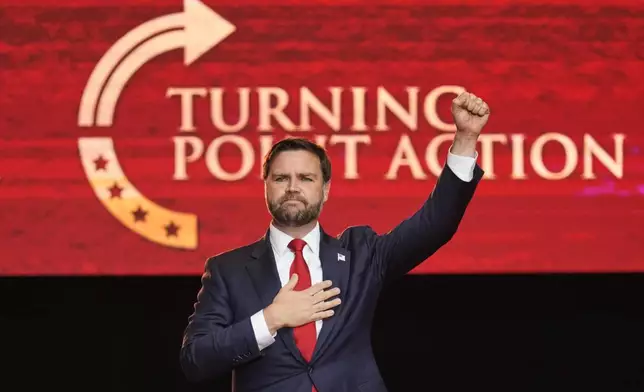
Vice President JD Vance holds his fist up as he leaves the stage after speaking at a memorial for conservative activist Charlie Kirk, Sunday, Sept. 21, 2025, at State Farm Stadium in Glendale, Ariz. (AP Photo/John Locher)
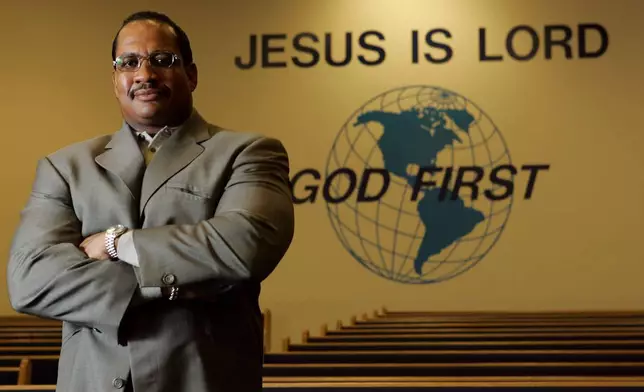
FILE - Pastor Patrick Wooden Sr. is seen in the sanctuary of the Upper Room Church of God in Christ on Dec. 9, 2004, in Raleigh, N.C. (AP Photo/Gerry Broome, File)
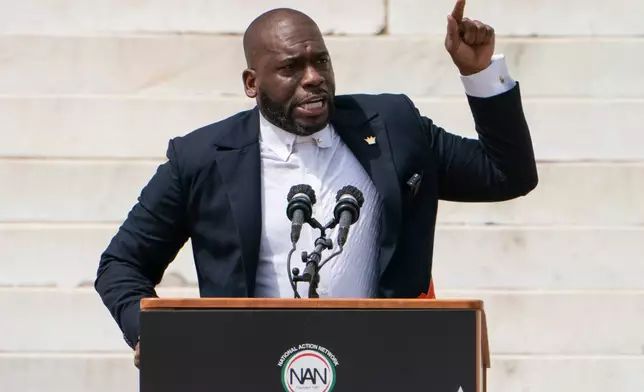
FILE - Jamal Bryant, senior pastor of New Birth Missionary Baptist Church, speaks during the March on Washington, Aug. 28, 2020, on the 57th anniversary of the Rev. Martin Luther King Jr.'s "I Have A Dream" speech, at the Lincoln Memorial in Washington. (AP Photo/Jacquelyn Martin, Pool, File)
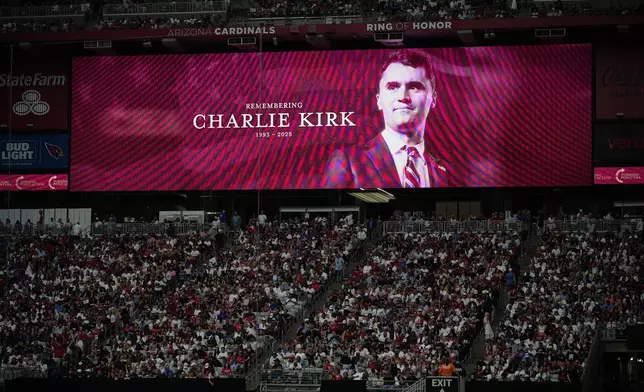
A photo of the conservative activist Charlie Kirk is seen on a large screen during a memorial for Kirk, Sunday, Sept. 21, 2025, at State Farm Stadium in Glendale, Ariz. (AP Photo/John Locher)
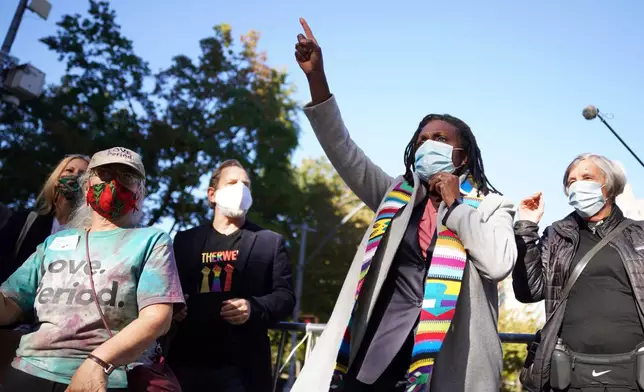
FILE - The Rev. Jacqui Lewis, senior pastor at Middle Collegiate Church, speaks during an interfaith gathering outside of the Judson Memorial Church near Washington Square Park in New York, Nov. 4, 2020. (AP Photo/Emily Leshner, File)
The reactions to Kirk’s death marked a notable split-screen moment in America’s racial divide, playing out at the same time on Sunday across the country.
From the pulpits of Black churches, pastors used their sermons to denounce what they called hateful rhetoric from Kirk that runs counter to the teachings of Jesus Christ and the Gospel. In a packed football stadium in Arizona, tens of thousands of people celebrated Kirk in a religious-themed memorial as a martyr and inspirational and principled conservative hero.
Kirk’s killing on a college campus in Utah captured in a graphic video that went viral, as well as the aftermath of his death have become the latest fault line in politics and race in America under President Donald Trump.
Many Black pastors in the largest African American Christian denominations linked the veneration of Kirk — who used his platform to discuss matters of race in America, including statements that denigrated Black people, immigrants, women, Muslims and LGBTQ+ people — to the history of weaponizing faith to justify colonialism, enslavement and bigotry.
“Christianity told itself that Black people were inferior and therefore enslaved us,” said the Rev. Jacqui Lewis, pastor of Middle Collegiate Church in New York City, adding that powerful voices have long controlled the microphone and used it to reshape Christianity to serve power, exclusion and hate.
“We can call it Christian-esque, but it’s white nationalism wrapped in talk of Jesus," Lewis said in an interview this week. "And it’s not Christian. It’s just not.”
Now, Lewis and others said, Black pastors must speak boldly, looking to their tradition of speaking out against those who promote racism.
“We’re criticizing the way the world is because that’s our job,” she said.
The presence of tens of thousands of followers who nearly filled a professional football stadium in Arizona for a memorial service Sunday attended by Trump, Vice President JD Vance and MAGA movement supporters is a testament to the massive influence that Kirk accumulated in conservative America.
“It was part memorial service, but another part of it was more like a political rally," said the Rev. Joel Bowman, pastor of Temple of Faith Baptist Church in Louisville, Kentucky. "The conflation of Christian symbolism and right-wing conservativism has really been a hallmark of the brand of Christian nationalism we have seen in the last eight, nine, 10 years” since Trump has defined Republican politics.
Many spoke of Kirk as a family man whose strong Christian faith, belief in the unfettered expression of ideas and ultraconservative values were part of his appeal.
“My friends, for Charlie, we must remember that he is a hero to the United States of America. And he is a martyr for the Christian faith,” Vance said.
The Rev. F. Bruce Williams, pastor of Bates Memorial Baptist Church in Louisville, Kentucky, had rejected the martyrdom assertion well before Vance addressed Kirk’s mourners in Arizona.
While emphasizing that Kirk's “life was tragically taken by violence,” Williams said in a sermon shared more than 40,000 times on Facebook, “what is also tragic is they’re trying to make him a martyr of the faith.”
“Now, he did violently die, but he did not die for the faith. Not the faith that I know. Not for the Jesus I know.”
“Charlie Kirk did not deserve to be assassinated,” agreed Wesley, pastor of Alfred Street Baptist Church, in his online sermon. “But I am overwhelmed seeing the flags of the United States of America at half-staff, calling this nation to honor and venerate a man who was an unapologetic racist and spent all of his life sowing seeds of division and hate into this land.”
Kirk's racist statements included saying without evidence during a discussion on race and crime on “The Charlie Kirk Show” podcast, that “prowling Blacks go around for fun to go target white people.” That year, he also claimed affirmative action policies were the only reason prominent Black women like Supreme Court Justice Ketanji Brown Jackson had advanced in their careers.
“You had to go steal a white person’s slot to go be taken somewhat seriously,” Kirk said on his podcast.
Kirk also once called the landmark civil rights law granting equal rights to people of color “a mistake,” and described civil rights icon the Rev. Martin Luther King Jr. as “awful," leading many Black church leaders to reject comparisons between Kirk’s killing and King’s 1968 assassination.
“How dare you compare him to Martin Luther King,” the Rev. Jamal Bryant, pastor of New Birth Missionary Baptist Church in Seacrest, Georgia, said in a sermon posted to his Instagram account.
“The only thing they got in common is both of ‘em was killed by a white man. After that, they got nothin’ else in common.”
The Rev. Freddy Haynes III, pastor of Friendship West Baptist Church in Dallas, echoed Bryant in cautioning the Kirk-King comparison.
“Let me hasten to say, I’m anti-political violence. Kirk should still be alive."
But, he added in a sermon posted to Instagram: "I don’t agree with anything Kirk said. What Kirk said was dangerous. What he said was racist. Rooted in white supremacy. Nasty and hate-filled. But he should still be alive.”
Kirk’s conservatism does resonate with some Black pastors because they are themselves conservatives who subscribe to the evangelical political ideology that has been on the rise in the Trump era.
Patrick L. Wooden Sr., a pastor in Raleigh, North Carolina, celebrated Kirk for his promotion of conservative Christian values. He believes that liberal policies promoting diversity, equity and inclusion have left behind working class Black Americans in favor of other groups. He also agreed with Kirk's statements against transgender individuals and others in the LGBTQ+ community.
“I pray that our country has not degenerated to the point that if you cannot overcome someone's point of view, someone's stated position ... I hope the response isn't that you shoot them with a gun,” said Wooden, who pastors the Upper Room Church of God in Christ and is an ordained bishop in the predominantly African American Pentecostal denomination.
AP writers Luis Andres Henao in New York and Peter Smith in Pittsburgh, Pennsylvania, contributed.
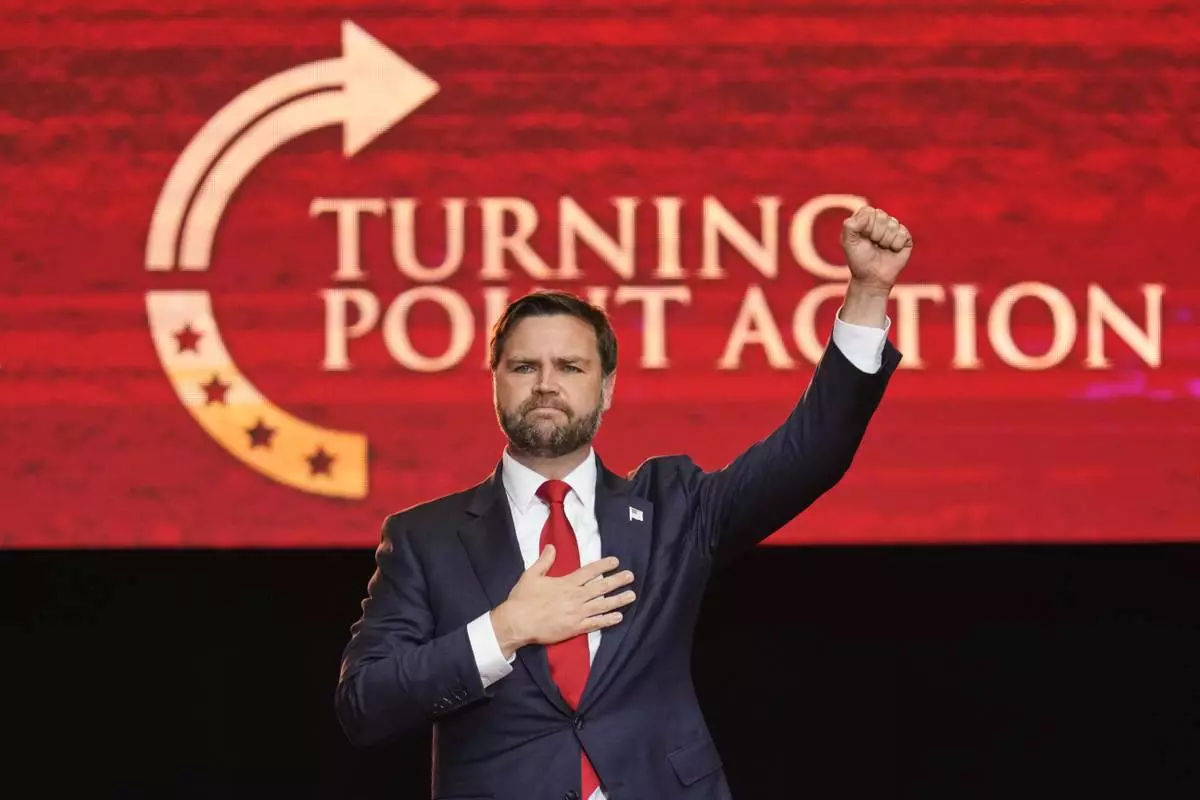
Vice President JD Vance holds his fist up as he leaves the stage after speaking at a memorial for conservative activist Charlie Kirk, Sunday, Sept. 21, 2025, at State Farm Stadium in Glendale, Ariz. (AP Photo/John Locher)
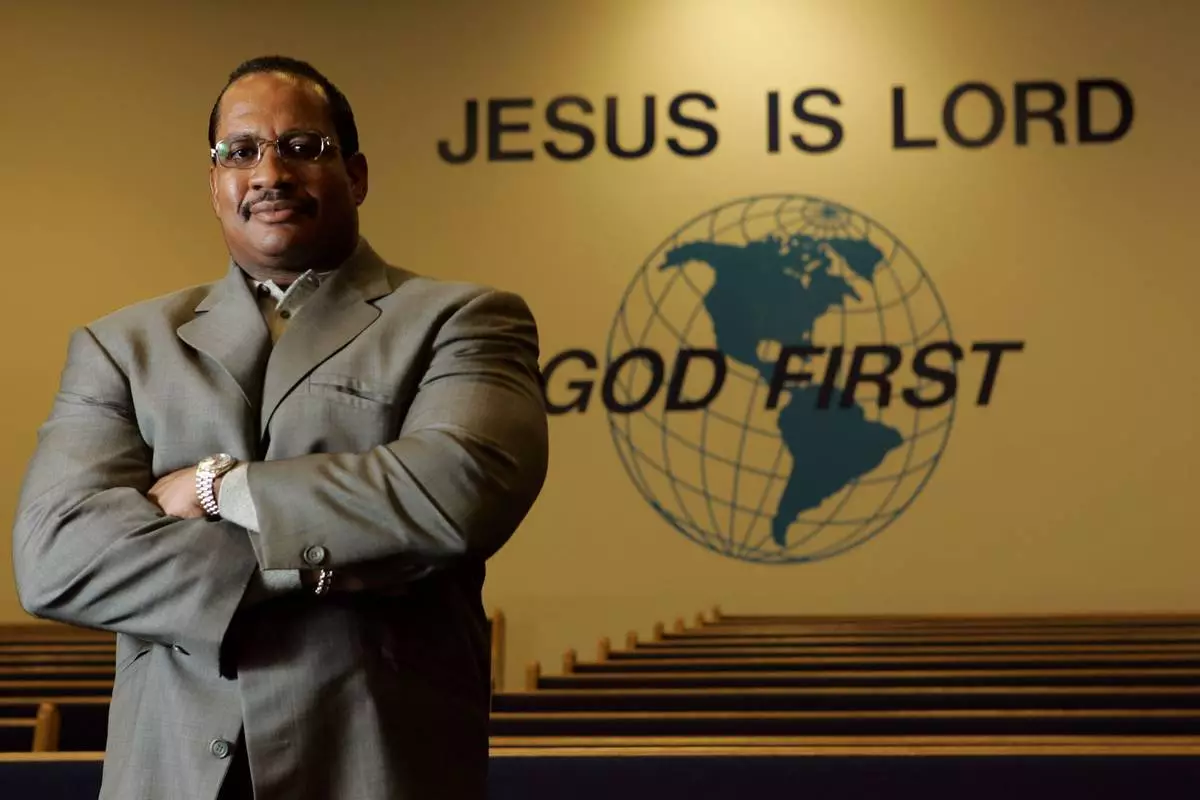
FILE - Pastor Patrick Wooden Sr. is seen in the sanctuary of the Upper Room Church of God in Christ on Dec. 9, 2004, in Raleigh, N.C. (AP Photo/Gerry Broome, File)
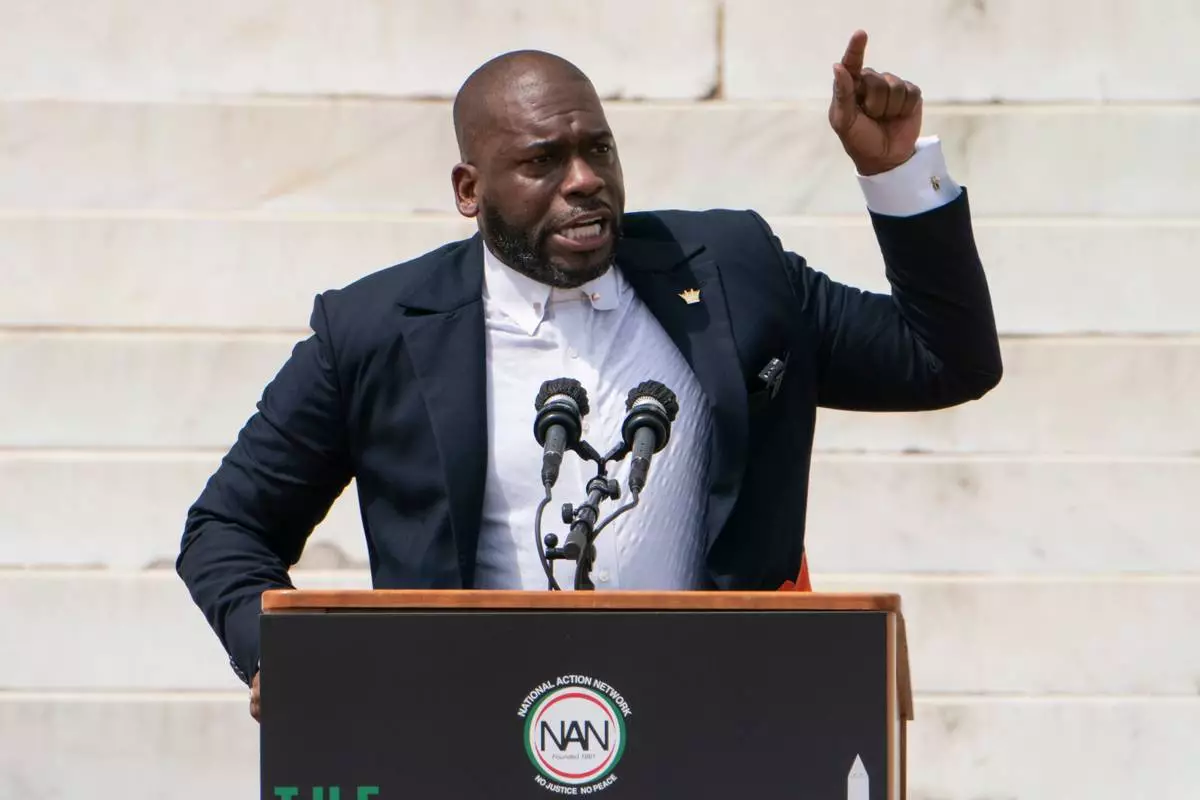
FILE - Jamal Bryant, senior pastor of New Birth Missionary Baptist Church, speaks during the March on Washington, Aug. 28, 2020, on the 57th anniversary of the Rev. Martin Luther King Jr.'s "I Have A Dream" speech, at the Lincoln Memorial in Washington. (AP Photo/Jacquelyn Martin, Pool, File)
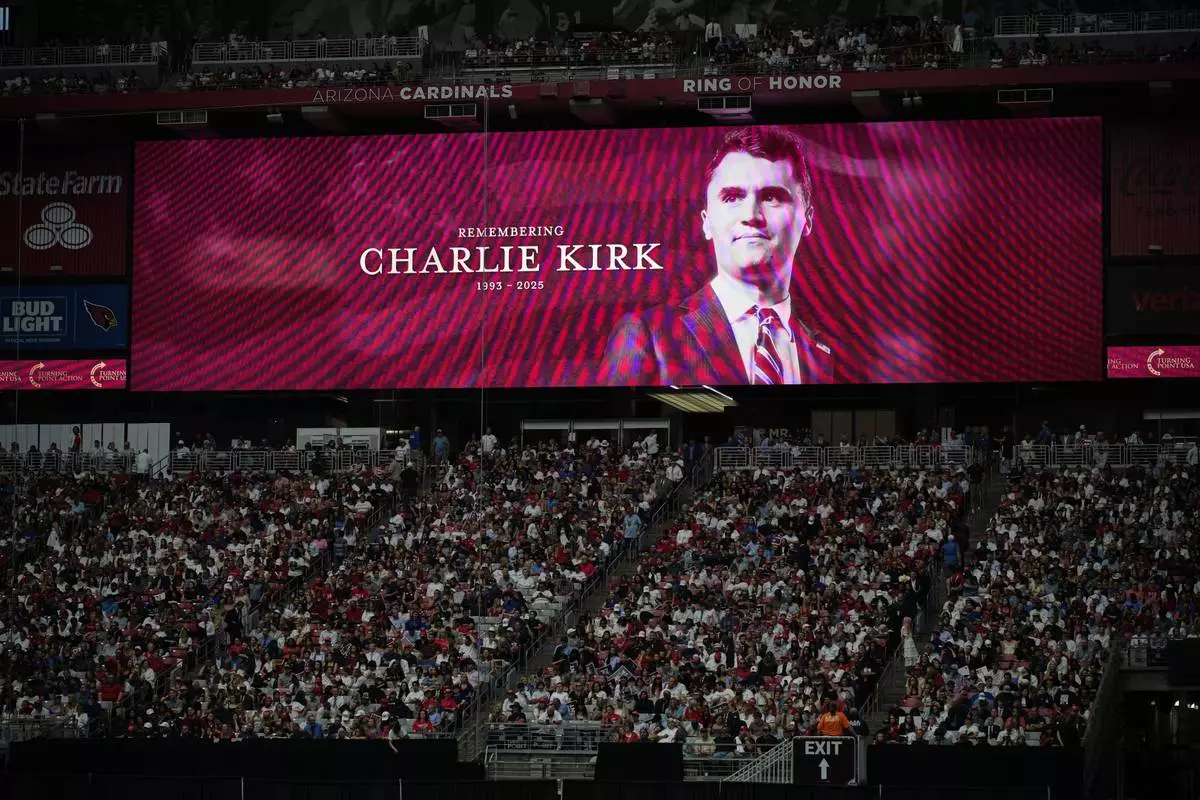
A photo of the conservative activist Charlie Kirk is seen on a large screen during a memorial for Kirk, Sunday, Sept. 21, 2025, at State Farm Stadium in Glendale, Ariz. (AP Photo/John Locher)
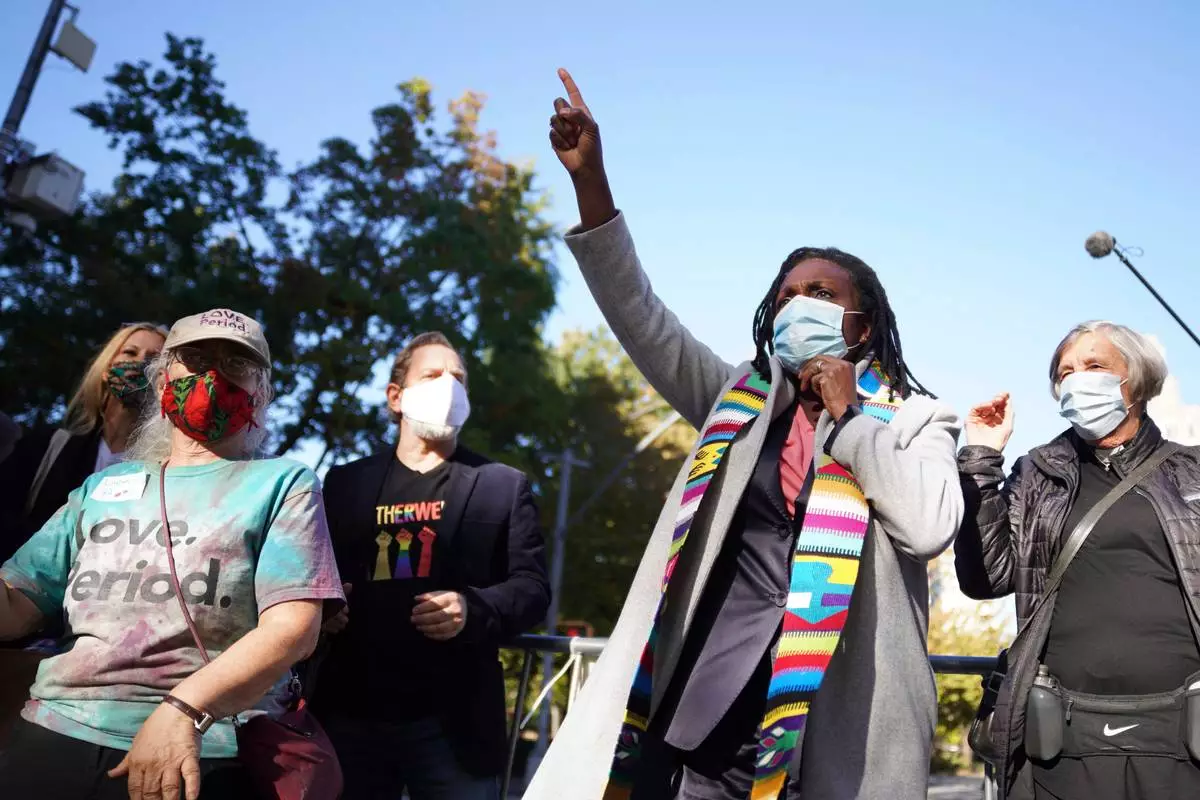
FILE - The Rev. Jacqui Lewis, senior pastor at Middle Collegiate Church, speaks during an interfaith gathering outside of the Judson Memorial Church near Washington Square Park in New York, Nov. 4, 2020. (AP Photo/Emily Leshner, File)