|
REDWOOD CITY, Calif., Sept. 25, 2025 /PRNewswire/ -- MiroMind, the open-source initiative founded by entrepreneur and philanthropist Tianqiao Chen, has achieved the top ranking on the FutureX benchmark, the world's first real-time test of AI's ability to predict unfolding events. MiroMind's agent framework, Miroflow, rose from sixth place in August to first in September, surpassing leading international competitors.
FutureX, developed by a global consortium including Stanford, Princeton, and Fudan, measures how well AI agents anticipate real-world outcomes—from stock market shifts to election results to technology trends. Unlike static benchmarks, FutureX evaluates reasoning and adaptability in dynamic environments.
"The first paradigm of AI was about general knowledge and subject-less reasoning. The new paradigm requires subjects—agents with memory, identity, and goals," said Chen. "MiroMind is building large models around long-term memory, so AI can make better predictions and ultimately better decisions. We want an AI that reflects people, not replaces them."
While LLMs generate content from general knowledge, MiroMind integrates subject data—individualized, contextual, multimodal, long-term memory—to reason, predict, and converge on the best decisions for each subject.
Chen created the Tianqiao and Chrissy Chen Institute nearly ten years ago and has built out a strategic ecosystem which aims to advance the use of technology such as AI to advance our understanding of the human brain and aspects of human intelligence that can lead to better artificial intelligence. The Institute partners with universities and other organizations around the world. Together, these efforts form a human-centered, AI-powered intelligence platform built on the principles of memory, prediction, and reflection.
About MiroMind
MiroMind is an open-source AI initiative dedicated to building Predictive Large Model as the basis for safe, evolving, and community driven artificial intelligence. Its mission is to create agentic systems that can reason, predict, and collaborate with humans in complex environments. Follow us on X at @miromind_ai. Learn more at https://miromind.ai/. On Github at https://github.com/MiroMindAI or on Hugging Face at https://huggingface.co/miromind-ai.
REDWOOD CITY, Calif., Sept. 25, 2025 /PRNewswire/ -- MiroMind, the open-source initiative founded by entrepreneur and philanthropist Tianqiao Chen, has achieved the top ranking on the FutureX benchmark, the world's first real-time test of AI's ability to predict unfolding events. MiroMind's agent framework, Miroflow, rose from sixth place in August to first in September, surpassing leading international competitors.
FutureX, developed by a global consortium including Stanford, Princeton, and Fudan, measures how well AI agents anticipate real-world outcomes—from stock market shifts to election results to technology trends. Unlike static benchmarks, FutureX evaluates reasoning and adaptability in dynamic environments.
"The first paradigm of AI was about general knowledge and subject-less reasoning. The new paradigm requires subjects—agents with memory, identity, and goals," said Chen. "MiroMind is building large models around long-term memory, so AI can make better predictions and ultimately better decisions. We want an AI that reflects people, not replaces them."
While LLMs generate content from general knowledge, MiroMind integrates subject data—individualized, contextual, multimodal, long-term memory—to reason, predict, and converge on the best decisions for each subject.
Chen created the Tianqiao and Chrissy Chen Institute nearly ten years ago and has built out a strategic ecosystem which aims to advance the use of technology such as AI to advance our understanding of the human brain and aspects of human intelligence that can lead to better artificial intelligence. The Institute partners with universities and other organizations around the world. Together, these efforts form a human-centered, AI-powered intelligence platform built on the principles of memory, prediction, and reflection.
About MiroMind
MiroMind is an open-source AI initiative dedicated to building Predictive Large Model as the basis for safe, evolving, and community driven artificial intelligence. Its mission is to create agentic systems that can reason, predict, and collaborate with humans in complex environments. Follow us on X at @miromind_ai. Learn more at https://miromind.ai/. On Github at https://github.com/MiroMindAI or on Hugging Face at https://huggingface.co/miromind-ai.
** The press release content is from PR Newswire. Bastille Post is not involved in its creation. **

MiroMind's Open Deep Research Framework Tops FutureX Benchmark, Heralds a New Paradigm in AI
SHENZHEN, China, June 11, 2026 /PRNewswire/ -- INFiLED will participate in InfoComm Asia 2026, one of Asia's leading professional audiovisual exhibitions, taking place from 15-17 July 2026 in Bangkok, Thailand.
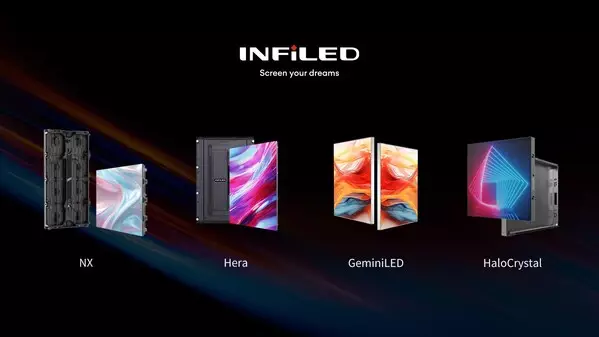
This year, INFiLED will deliver an immersive visual experience, showcasing a versatile lineup of innovative LED display solutions designed for commercial, retail, corporate, transportation, and creative display applications.
NX Series: When Creative Forms Need Stable Execution
Among the booth highlights is the newly introduced NX Series, INFiLED's multi-form LED solution for rental applications.
Stage concepts now shift from flat backdrops to curves, corners, offset layouts and scenic structures setups. For production teams, creative freedom only becomes valuable when every form can be installed with confidence and repeated under show pressure.
With precise mechanics, lightweight magnesium-alloy cabinets, and a multi-form ecosystem, NX turns changing creative layouts into stable, controllable LED surfaces. Designers gain freedom in form; crews gain control in execution.
HERA Series: When Indoor Displays Need Cleaner Systems
Making its APAC debut, HERA introduces a more streamlined system architecture for indoor commercial LED projects.
The audience sees the image; integrators work with the system behind it. In retail, corporate and commercial environments, wiring logic, service access, and daily operation often decide whether a display remains efficient long after installation.
HERA's integrated 3-in-1 HUB brings power, signal, and control into one cleaner architecture, while front-side service makes maintenance more direct. The result is a display that looks refined from the front and stays practical from the back.
GeminiLED: When Public Spaces Need Two-Way Visibility
Visitors will also be able to explore GeminiLED, INFiLED's dual-sided, ultra-slim display solution for high-traffic public environments.
In airports, rail stations, retail concourses and open public areas, people pass, cross, pause, and move through the space from different directions. Communication needs to move with them.
With a 25.5 mm profile and 7.7 kg cabinet, GeminiLED supports suspended installation up to 8 m with fewer hanging points. One overhead screen delivers content in both directions, improving visibility and space efficiency in busy public venues.
HaloCrystal: When Transparency Needs Outdoor Strength
HaloCrystal will also be showcased as INFiLED's outdoor rental transparent LED solution for projects that demand open visuals, clean structure, and reliable outdoor performance.
Transparent LED creates a light, see-through effect. Outdoor rental adds height, wind, repeated setup, bright content, flexible layouts and fast service into the equation.
With hidden PDU and accessories, HaloCrystal keeps the transparent frame open and clean. Its 70% transparency preserves the see-through effect, while optional light-blocking panels allow the same screen to shift toward a stronger solid-look presentation. Supported by high-strength profiles, wind bracing, up to 22 m stacking or hanging, HaloCrystal gives transparent LED the strength and practicality needed for outdoor rental use.
Stepping into the Future of Visual Communication
Designed with an open and interactive booth concept, the INFiLED showcase will allow visitors to experience live product demonstrations, explore different display applications, and speak directly with the team about project requirements and solutions.
With a growing presence across the APAC region, INFiLED APAC remains focused on delivering reliable LED display solutions backed by localized support, technical expertise and long-term collaboration. Visit us at InfoComm Asia 2026 to explore our latest solutions and exchange ideas with industry professionals across the region.
Website: www.infiled.com
Contact: info@infiled.com
** This press release is distributed by PR Newswire through automated distribution system, for which the client assumes full responsibility. **
INFiLED APAC to Showcase Latest LED Display Innovations at InfoComm Asia 2026

INFiLED APAC to Showcase Latest LED Display Innovations at InfoComm Asia 2026