Some U.S. Immigration and Customs Enforcement facilities are heavily secured, closed off behind metal fences, hardened doors and armed guards. Many are in federal buildings built with a focus on security. Detainees are often moved in and out of buildings through underground parking garages.
And in other cases, the outer perimeter is little more than a chain-link fence topped with a few strands of barbed wire.
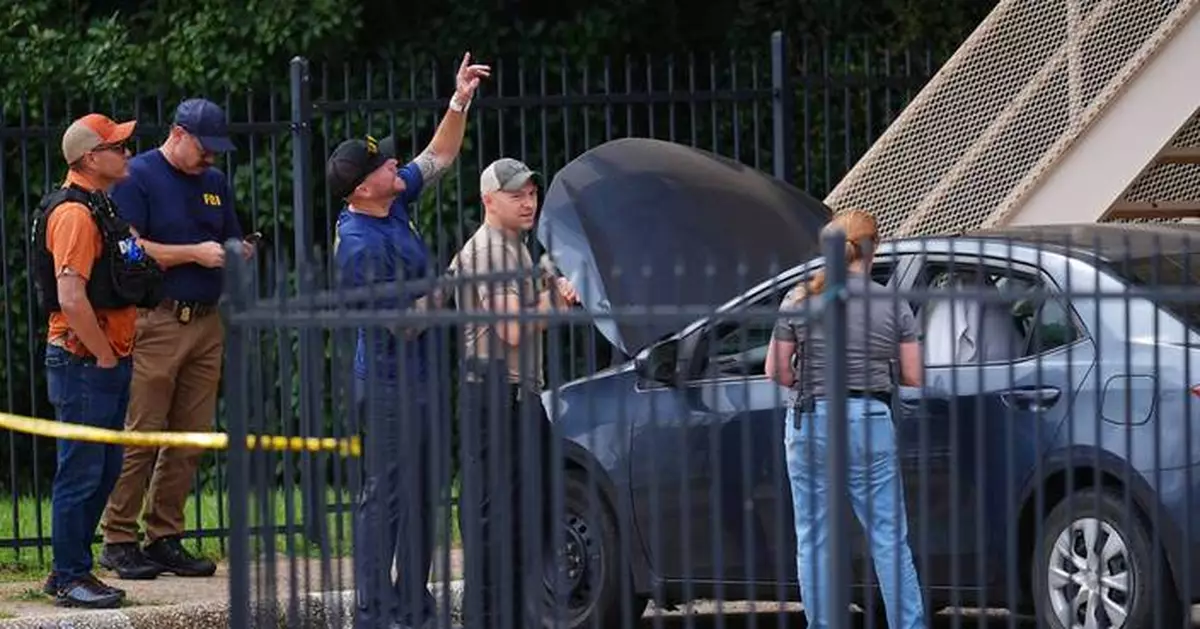
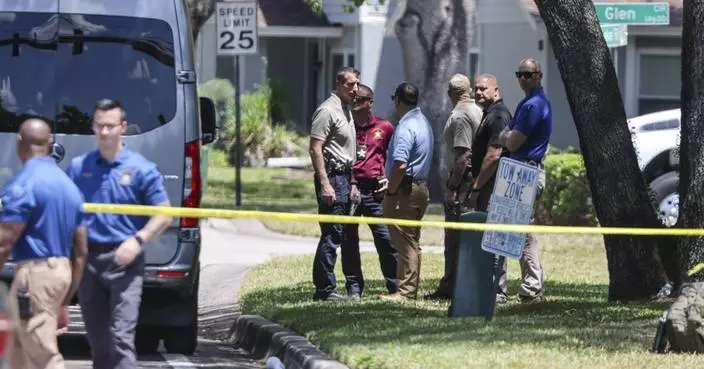
That’s the situation in Dallas, where authorities say a gunman opened fire Wednesday on an ICE office from a nearby rooftop, spraying bullets into a transport van, killing one detainee and critically injuring two more.
The gunman then took his own life, authorities said.
John Torres, a former acting director of the agency and former head of what is now called its Enforcement and Removals Division, said ICE field offices — and the security around them — vary widely.
Torres noted that some facilities, like the one in Dallas, have exposed loading areas for detainee buses, which pose risks for escape and attack. Other potential vulnerabilities range from vantage points for snipers and long outdoor lines that are allowed to form without protection.
“I would assure you that ICE, after today, is going to be taking a hard look at physical security assessments for all of their facilities,” said Torres, now the head of security and technology consulting at Guidepost Solutions.
The range of offices can be startling: In San Diego, for example, ICE’s field office is on the second floor of a heavily secured federal building, with detainee buses loaded in a basement garage. In San Antonio, ICE shares a building with a bank.
Immigration facilities have seen a series of attacks in recent months, from a July 4 assault by attackers in body armor on a detention center southwest of Dallas to a man who fired dozens of rounds with an assault rifle at federal agents leaving a U.S. Border Patrol facility in south Texas.
At least 11 people have been charged in connection with the July 4 attack, which left a police officer injured. Authorities in south Texas say that attacker was shot and killed after injuring a police officer.
Shortly after the Wednesday shooting, Vice President JD Vance posted on the social platform X that “the obsessive attack on law enforcement, particularly ICE, must stop.”
Later Wednesday, Homeland Security Secretary Kristi Noem ordered security tightened at ICE facilities across the U.S., according to a post from the Department of Homeland Security on X.
Security at immigration facilities tends to increase when threats become clearer.
In suburban Chicago, for example, federal authorities erected a fence around an immigration processing center after tensions flared with protesters in recent days. President Donald Trump's administration has stepped up immigration enforcement in the Chicago area for weeks, resulting in hundreds of arrests. The center, about 12 miles (19 kilometers) from Chicago, has long been the site of peaceful protests. The brick facility, used to temporarily hold immigrants before they’re detained or deported, is being used as the “primary processing location” for the recent crackdown, according to village officials.
Ahead of the latest immigration operation, federal officials boarded up some of the center’s windows.
Federal agents’ response to activists has also become increasingly aggressive, using a chemical agent and physical force against people trying to block vehicles. Armed agents patrol the rooftop.
Sixteen people have been arrested outside the center, according to federal authorities who have characterized the activists as “rioters.”
Observers note that no matter the security level, it’s impossible to foresee every potential problem.
“This is absolutely horrible and it’s also the kind of thing that it’s really hard to protect against,” Deborah Fleischaker, an ICE chief of staff during former President Joe Biden's administration, said of the Dallas attack.
“This is not the kind of threat that they have historically dealt with, and not a sort of bread-and-butter law enforcement security issue,” she said.
Associated Press reporters Elliot Spagat in San Diego; Sophia Tareen in Chicago; and Jamie Stengle in Dallas contributed to this story.
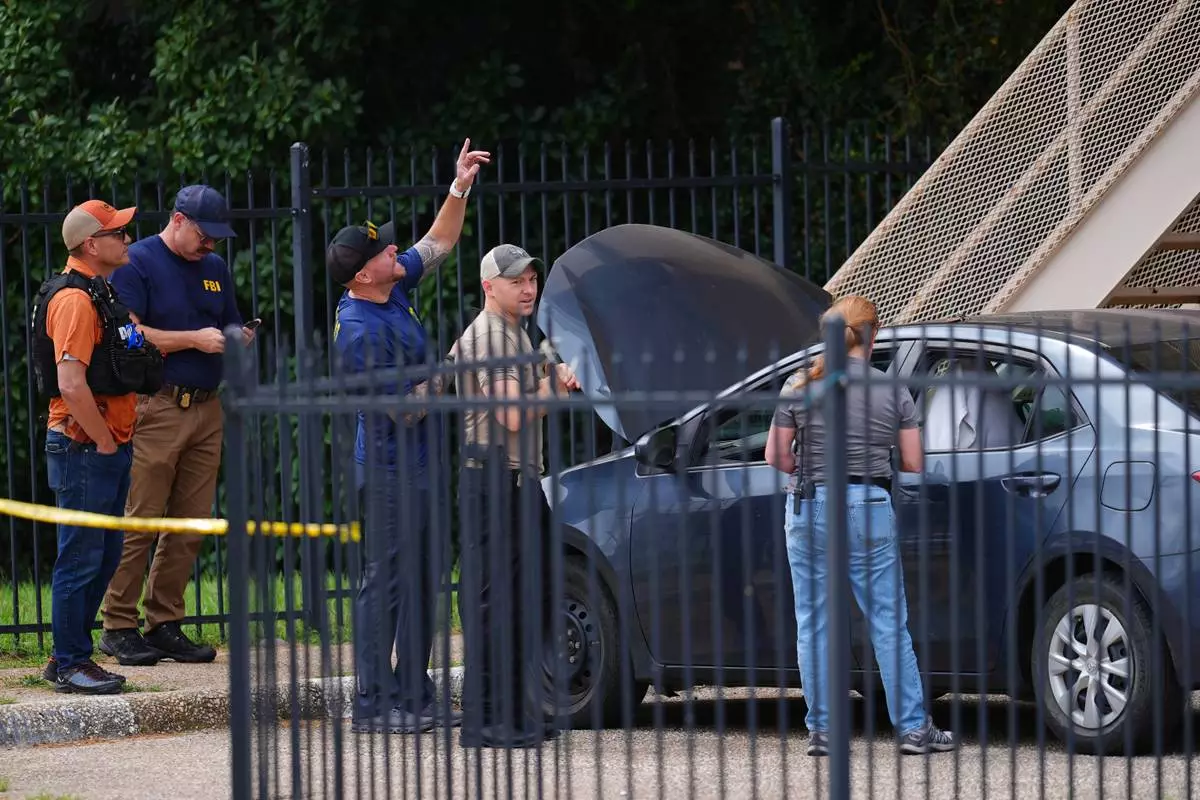
A law enforcement agents search a vehicle near the scene of a shooting at a U.S. Immigration and Customs Enforcement office in Dallas on Wednesday, Sept. 24, 2025. (AP Photo/Julio Cortez)
PARIS (AP) — Activists worldwide held May Day rallies and street protests Friday, calling for peace, higher wages and better working conditions as many workers grapple with rising energy costs and shrinking purchasing power tied to the Iran war.
May 1 is a public holiday in many countries to mark International Workers’ Day, or Labor Day, when workers’ unions traditionally rally around wages, pensions, inequality and broader political issues. Demonstrations were held from Seoul, Sydney and Jakarta to many European capitals. In the U.S., activists opposing President Donald Trump’s policies also held marches and boycotts.
“Working people refuse to pay the price for Donald Trump’s war in the Middle East,” the European Trade Union Confederation, which represents 93 trade union organizations in 41 European countries, said. “Today’s rallies show working people will not stand by and see their jobs and living standards destroyed.”
What to know about May Day:
Rising living costs linked to the conflict in the Middle East emerged as a key theme in Friday’s rallies.
In the Philippine capital, Manila, large crowds denounced the U.S. role in the Iran war. Protesters clashed with police blocking the way near the U.S. Embassy.
On a main avenue in Casablanca, Morocco’s largest city, taxi drivers honked their horns and bus drivers parked their vehicles to protest rising fuel costs.
“All my expenses have gone up, but my wages haven’t budged,” Akherraz Lhachimi of the Moroccan Labor Union said.
Turkish authorities in Istanbul detained hundreds of demonstrators for attempting to march in areas declared off-limits on security grounds, most notably central Taksim Square, the epicenter of 2013 protests. May Day rallies in Turkey are frequently marred by clashes with authorities.
Tens of thousands of people crowded into a public square across from the U.S. Embassy in Havana, celebrating Cuba's workers and decrying U.S. sanctions. Many held banners that read, “Down with Imperialism” and “U.S. hands off Cuba.” President Miguel Díaz-Canel and former President Raúl Castro attended.
A demonstration in Santiago, Chile, ended with vandalism and clashes between protesters and police, who used water cannons and tear gas to disperse the crowd.
Other demonstrations in the South American nation were peaceful as thousands of workers took to the streets to demand better working conditions.
Several thousand people gathered across Portugal as unions rallied together to protest proposed changes to labor laws that would make worker dismissals easier, limit how long breastfeeding women can claim a flexible work schedule and reduce miscarriage bereavement leave, among other things.
“It’s the only voice we have. If it may or not have power over those that decide? That’s another issue, but we need to tell them we are not happy with what we have,” public sector worker Paulo Domingues said.
Several rallies were staged in South Africa, where the head of the Congress of South African Trade Unions, Zingiswa Losi, said workers were “suffocating” under rising costs of food, electricity, transportation and healthcare.
May Day carries special meaning this year in France, after a heated debate about whether employees should be allowed to work on the country’s most protected public holiday — the only day when most employees have a mandatory paid day off.
Tens of thousands of people joined marches across the country, including in Paris, where brief scuffles with police broke out.
Almost all businesses, shops and malls are closed, and only essential sectors such as hospitals, transport and hotels are exempt.
A recent parliamentary proposal to expand work on the day prompted major outcry from unions and left-wing politicians. Faced with the dispute, the government this week introduced a bill that would allow bakeries and florists to open. It is customary in France to give lily of the valley flowers on May Day as a symbol of good luck.
“May 1 is not just any day,” Small and Medium-sized Businesses Minister Serge Papin said. “It symbolizes social gains stemming from a century of building social rules that have led to the labor code we know in France.”
In the United States, where May Day is not a federal holiday, May Day Strong, a coalition of activist groups and labor unions, urged people to protest under the banner of “workers over billionaires” and called for an economic blackout through “no school, no work, no shopping.”
Protesters voiced opposition to Trump's policies, including his immigration crackdown.
“We’re seeing tons and tons of attacks on working people and on oppressed communities from the Trump administration, both at home and abroad,” said Kathryn Stender, an activist with the Party for Socialism and Liberation who was among thousands at a rally in a Chicago park.
The atmosphere was festive, with Native American dancers, mariachi bands and monarch butterfly signs, which have become a symbol of the immigrant rights movement.
While labor and immigrant rights are historically intertwined, the focus of May Day rallies in the U.S. shifted to immigration in 2006. That’s when roughly 1 million people, including nearly half a million in Chicago alone, took to the streets to protest federal legislation that would have made living in the U.S. without legal permission a felony.
May Day, or International Workers’ Day, traces back more than a century to a pivotal period in U.S. labor history.
In the 1880s, unions pushed for an eight-hour workday. A Chicago rally in May 1886 turned deadly when a bomb exploded and police responded with gunfire. Several labor activists — most of them immigrants — were convicted of conspiracy and other charges; four were executed.
Unions later designated May 1 to honor workers. A monument in Chicago’s Haymarket Square commemorates them with the inscription: “Dedicated to all workers of the world.”
Associated Press journalists from around the world contributed to this report.
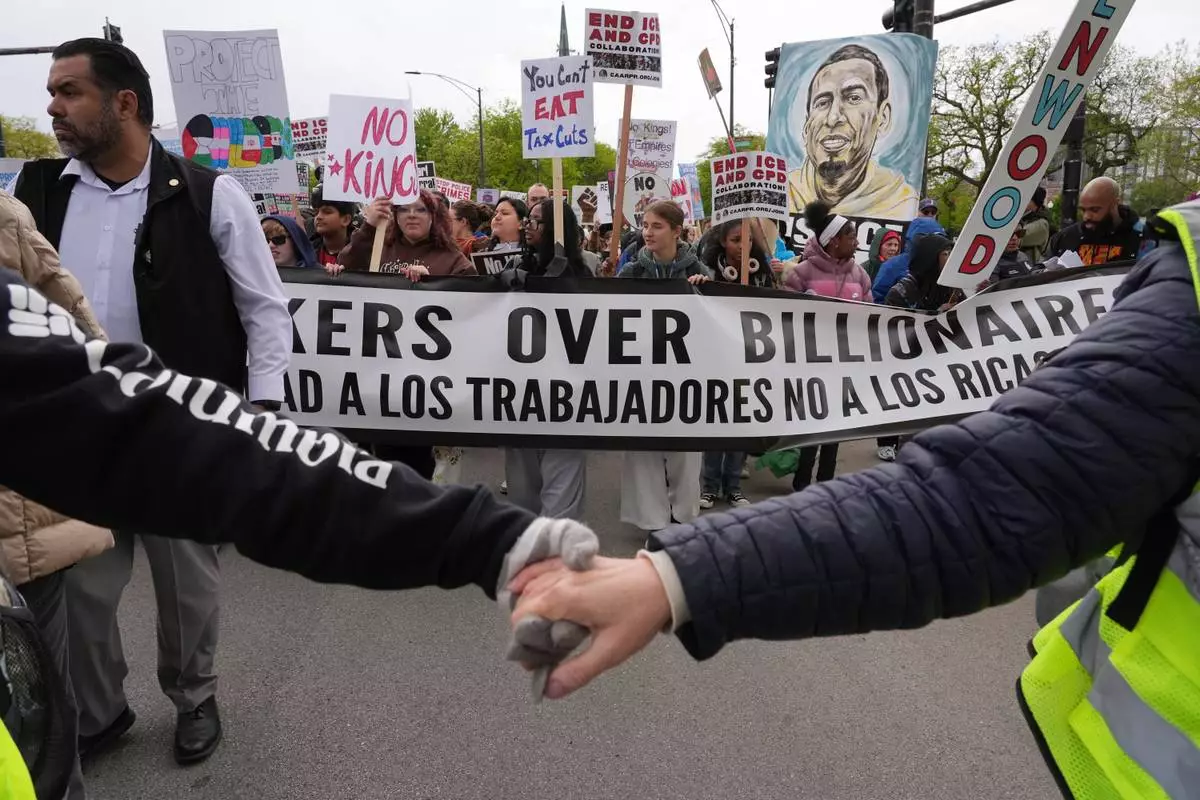
People hold hands at Union park for a May Day rally in Chicago, Friday, May 1, 2026. (AP Photo/Nam Y. Huh)
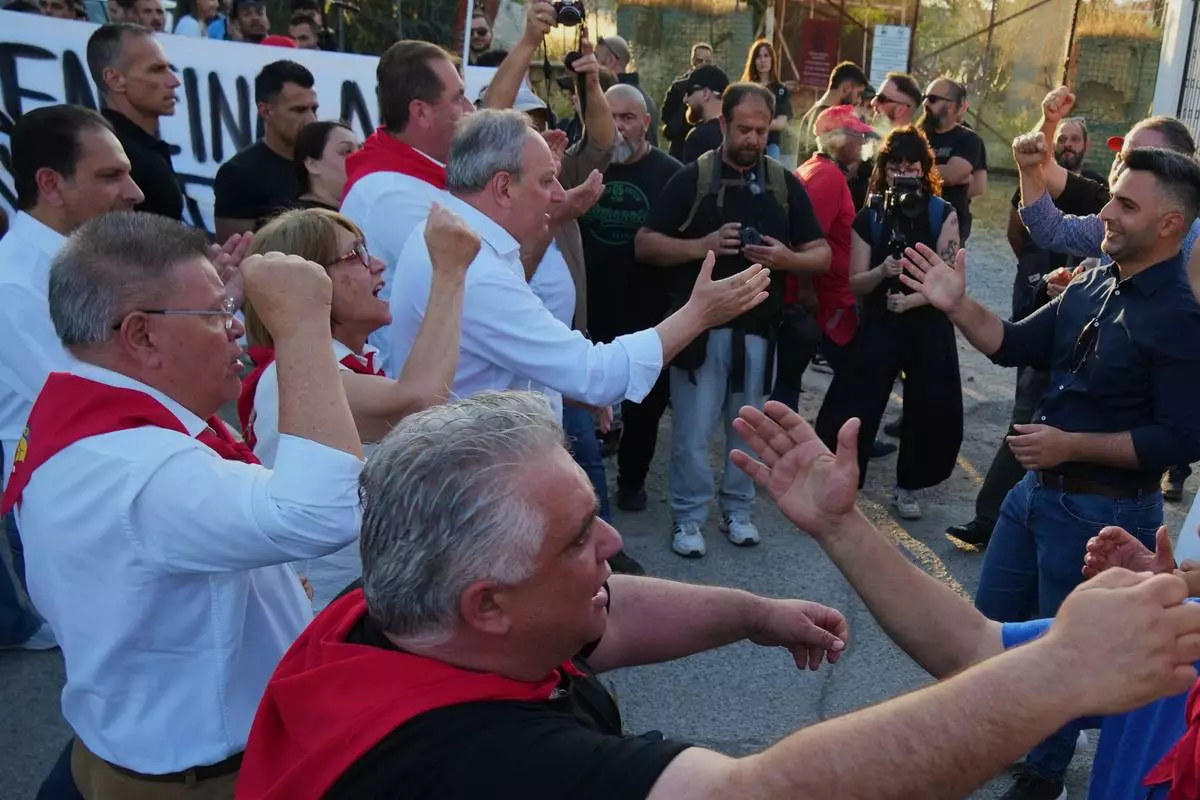
Turkish, right, and Greek Cypriots gathering s they marking May Day inside the U.N. buffer zone at Ledra Palace hotel in the divided capital of Nicosia, Friday, May 1, 2026. (AP Photo/Petros Karadjias)
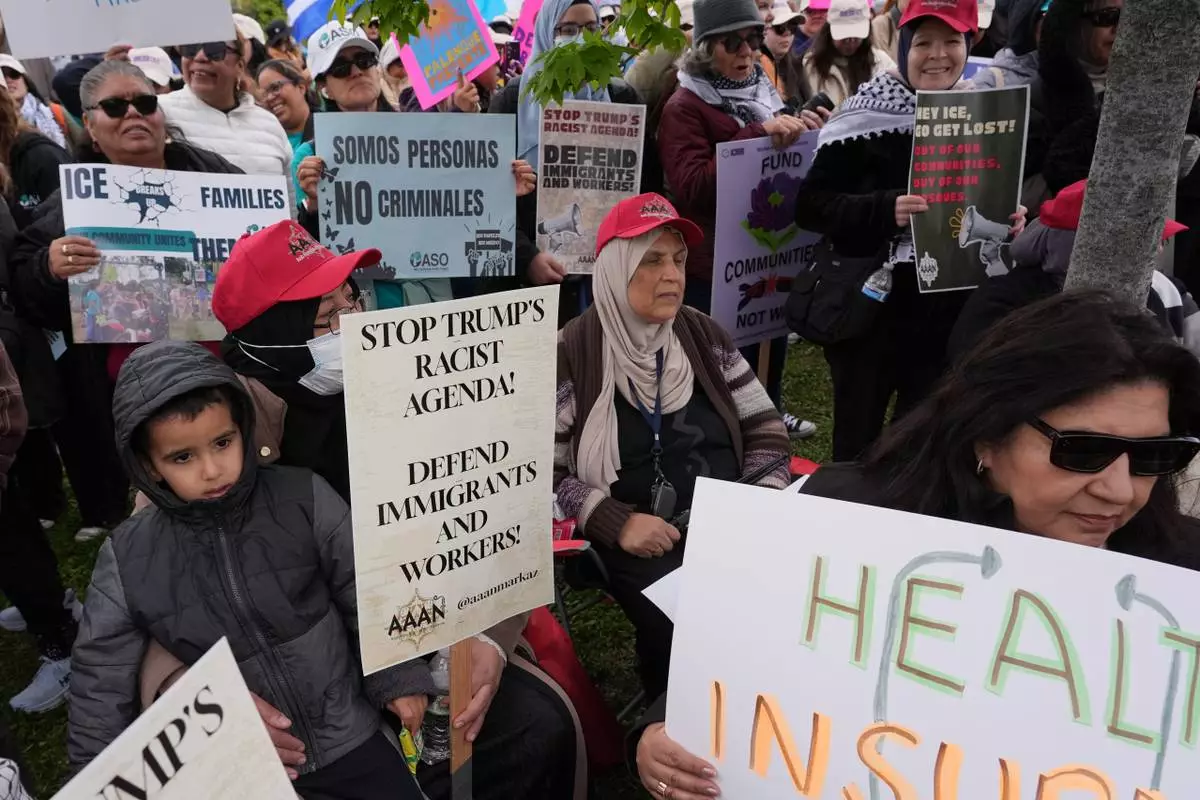
People gather before a May Day rally in Chicago, Friday, May 1, 2026. (AP Photo/Nam Y. Huh)
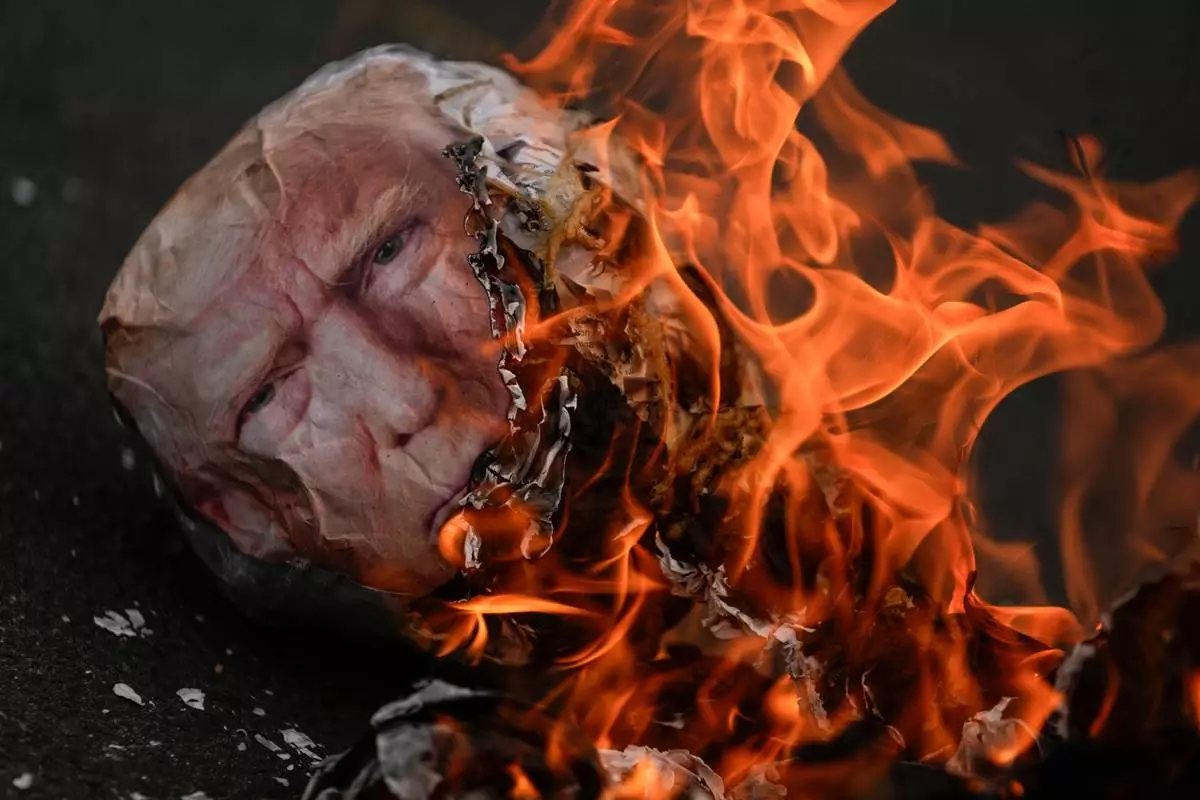
An effigy of U.S. President Donald Trump burns during an International Workers' Day march marking May Day in Panama City, Friday, May 1, 2026. (AP Photo/Matias Delacroix)
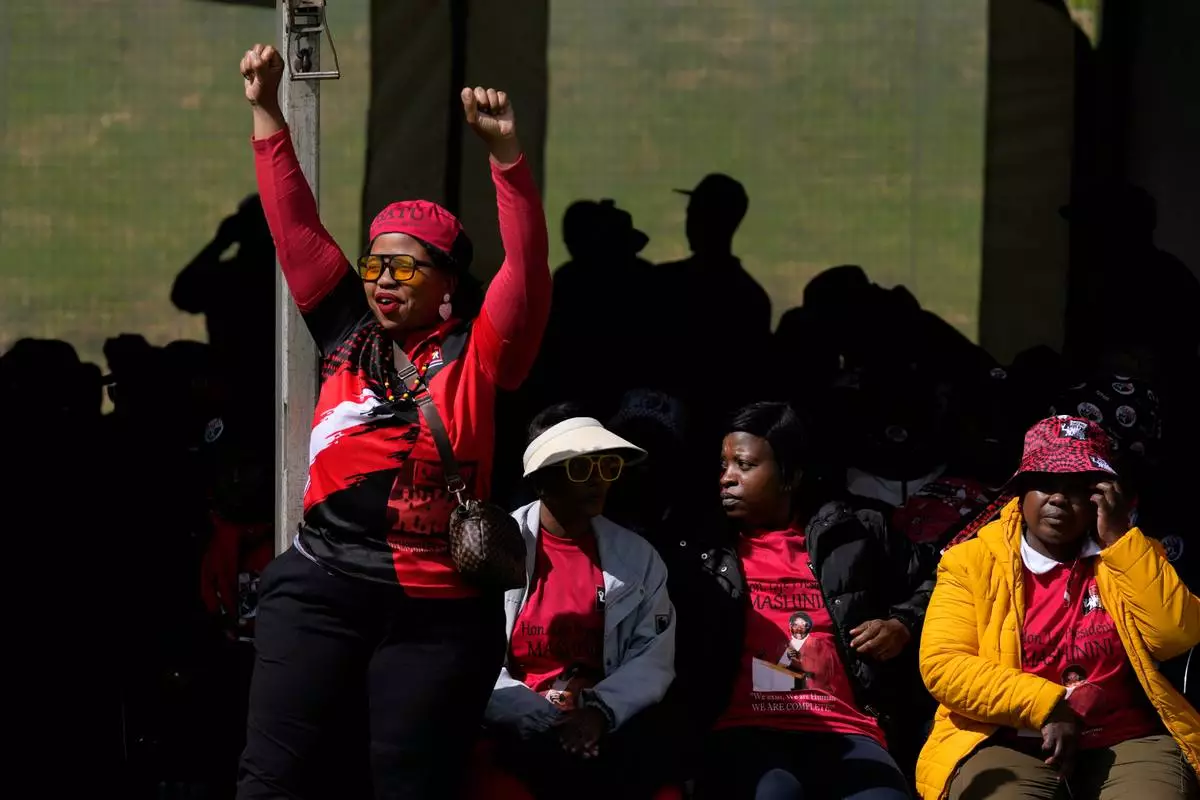
Members of trade unions take part in a May Day rally in Tsakane, east of Johannesburg, South Africa, Friday, May 1, 2026. (AP Photo/Themba Hadebe)
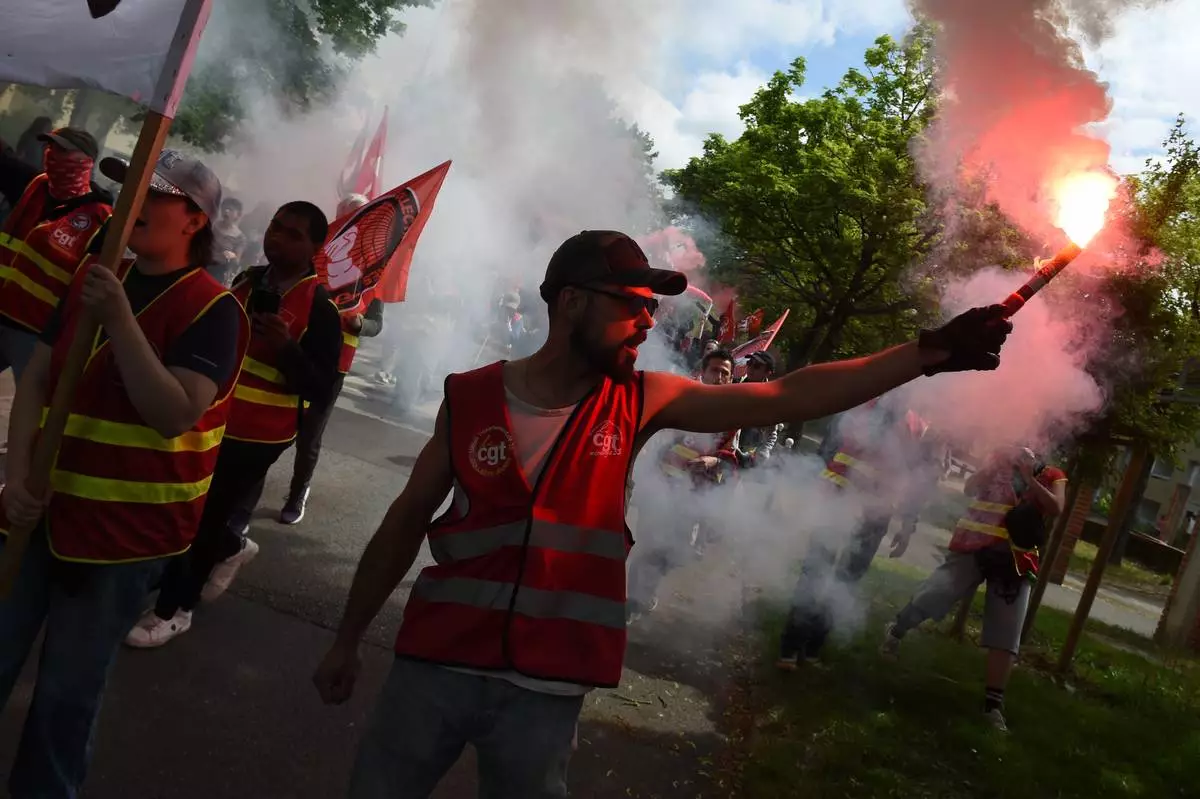
Protesters march during the May Day demonstration in Rennes, western France, Friday, May 1, 2026. (AP Photo)
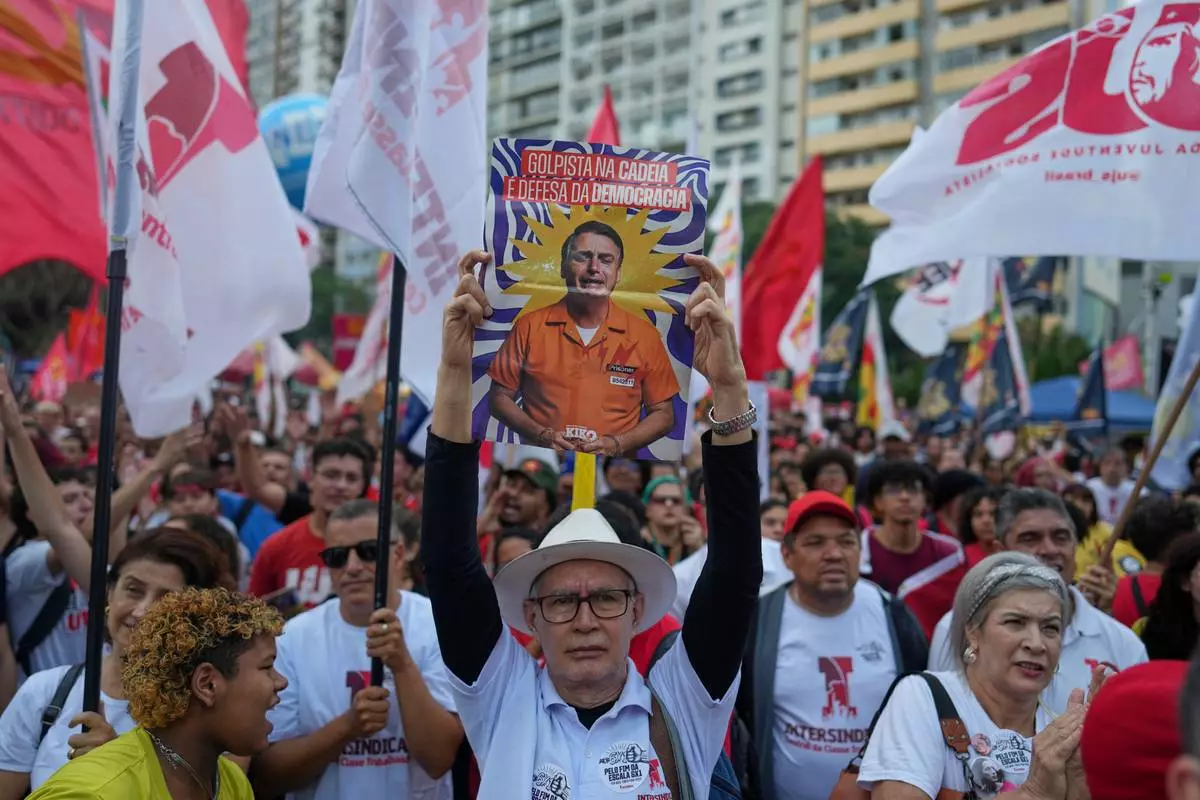
A man holds a picture or former Brazilian President Jair Bolsonaro wearing a prison uniform during a May Day rally demanding greater labor rights in Sao Paulo, Brazil, Friday, May 1, 2026. (AP Photo/Andre Penner)
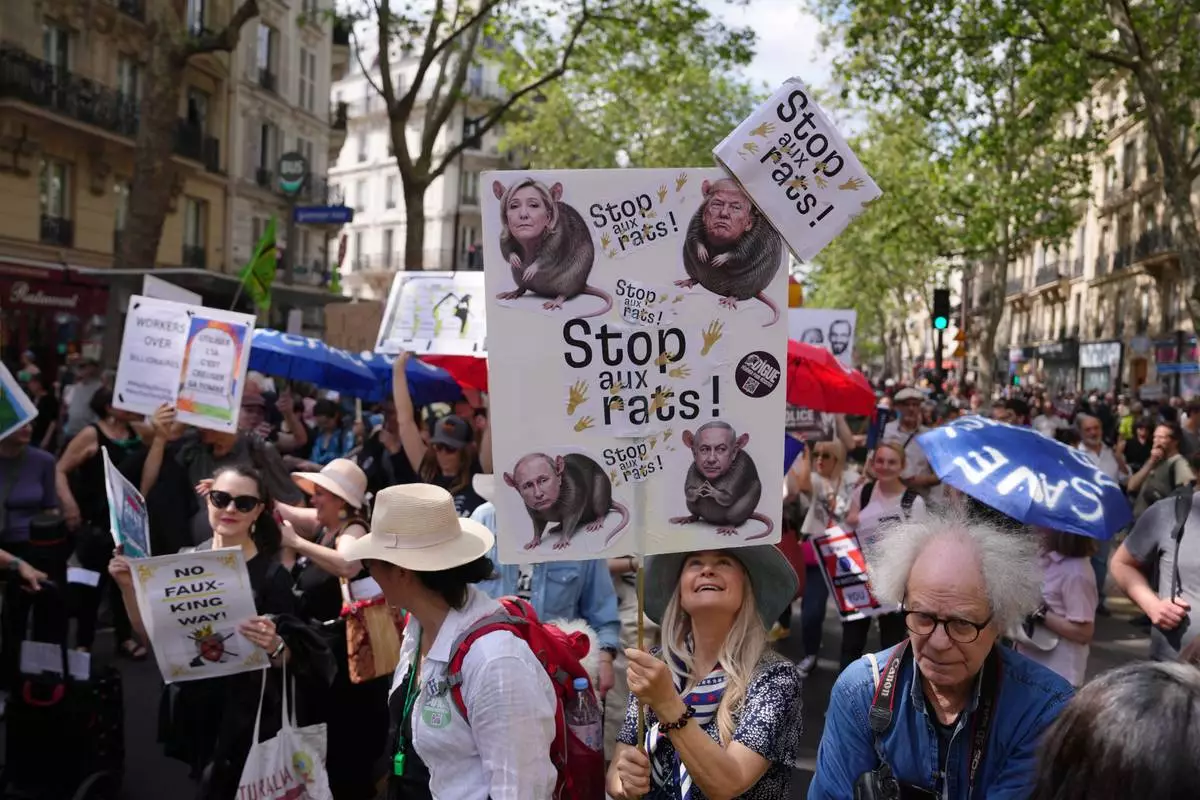
Protesters march during the May Day demonstration in Paris, Friday, May 1, 2026. (AP Photo/Aurelien Morissard)
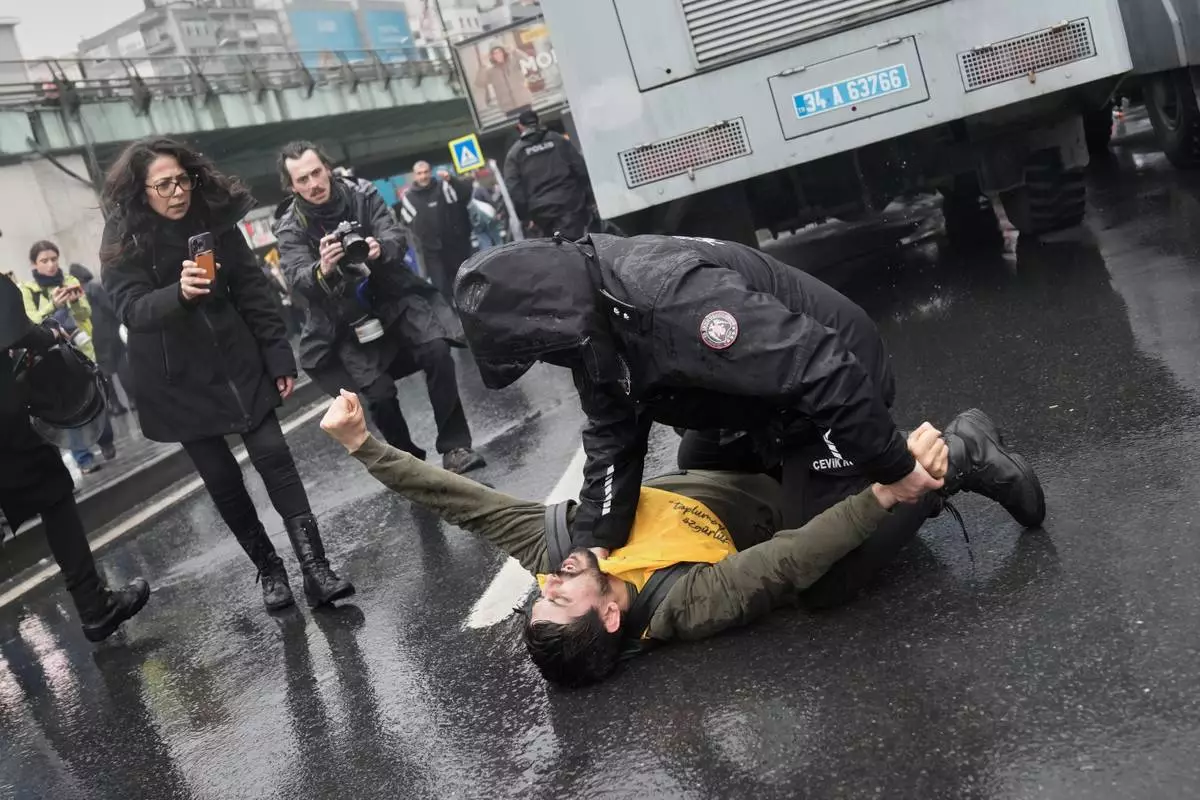
An union member is detained by a Turkish police officer as people try to march towards Taksim square in Istanbul, Turkey, Friday, May 1, 2026, during Labor Day celebrations. (AP Photo/Khalil Hamra)
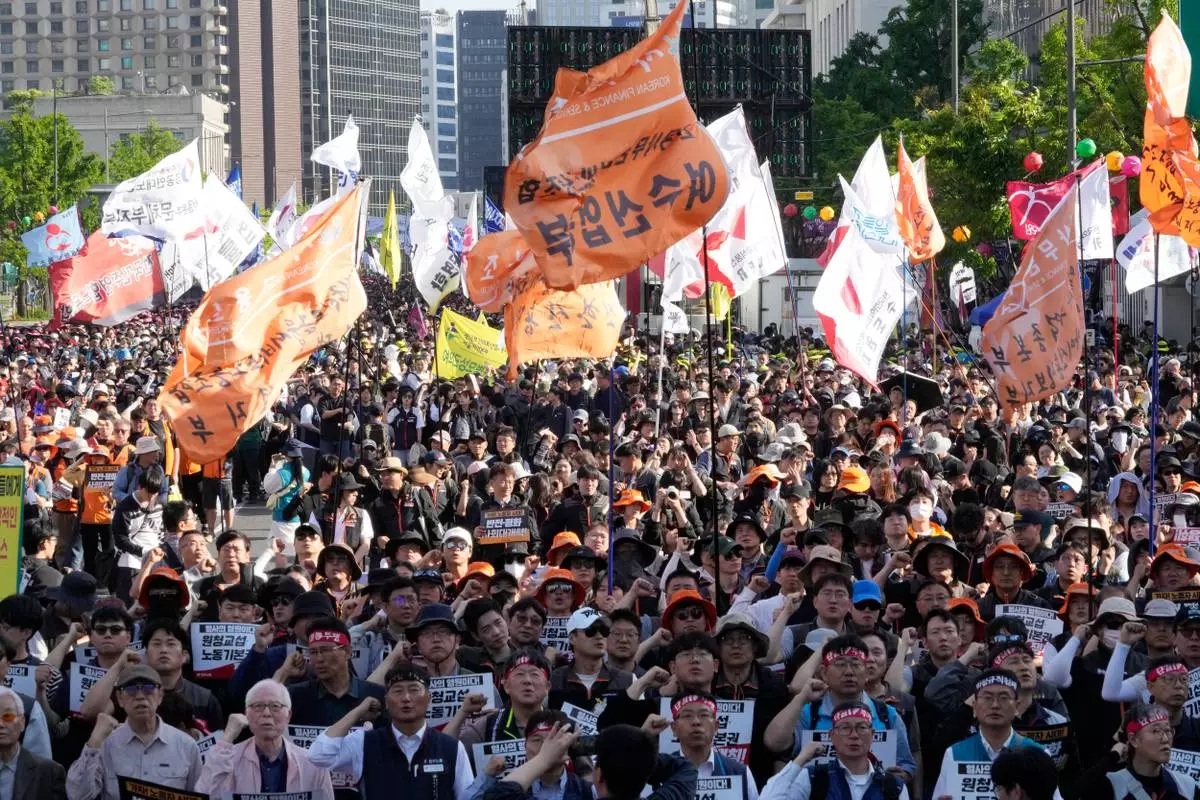
Members of the Korean Confederation of Trade Unions stage a rally on May Day in Seoul, South Korea, Friday, May 1, 2026. (AP Photo/Ahn Young-joon)
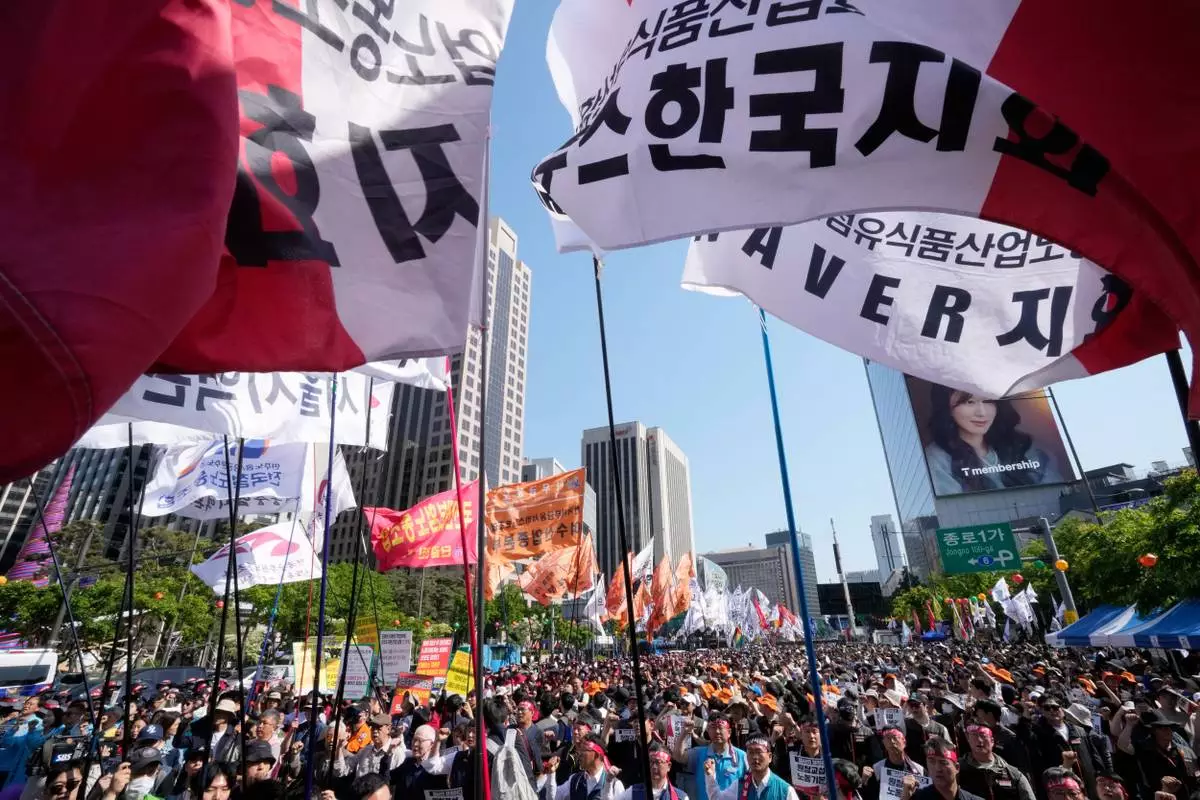
Members of the Korean Confederation of Trade Unions stage a rally on May Day in Seoul, South Korea, Friday, May 1, 2026. (AP Photo/Ahn Young-joon)
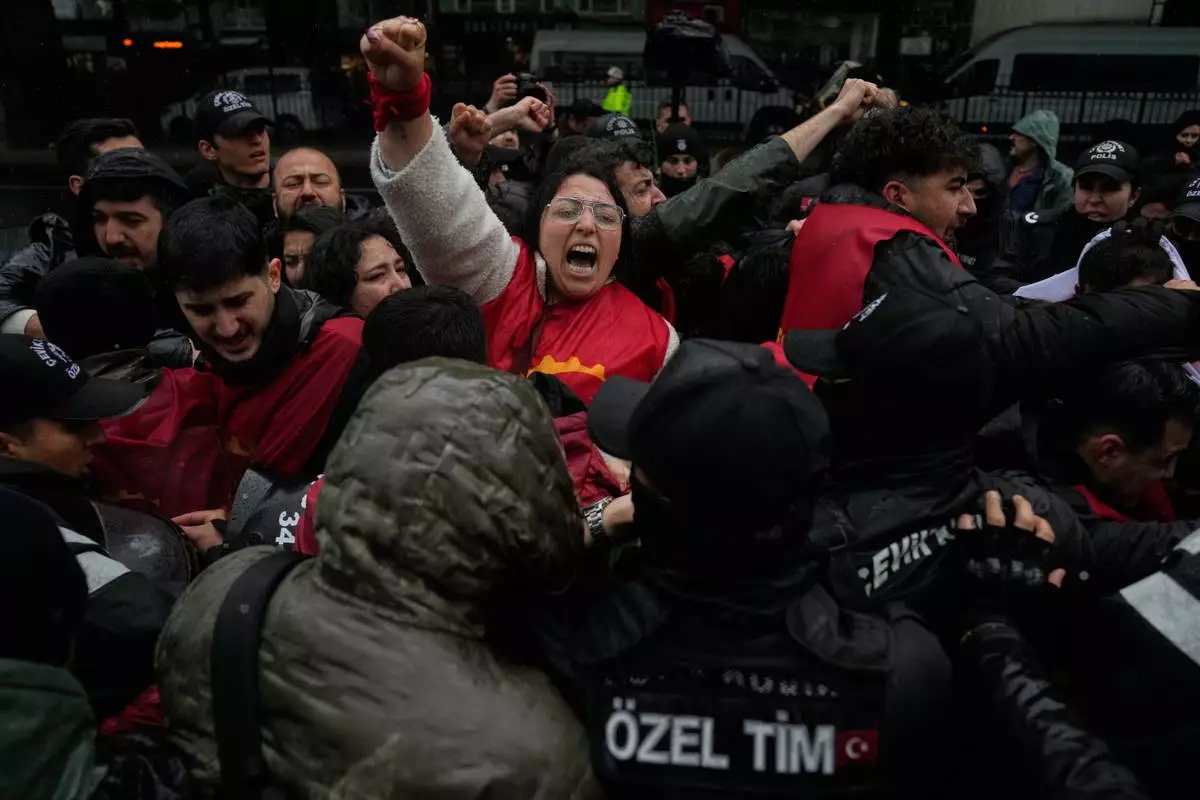
Union members scuffle with Turkish police officers as they try to march towards Taksim square in Istanbul, Turkey, Friday, May 1, 2026, during Labor Day celebrations. (AP Photo/Khalil Hamra)
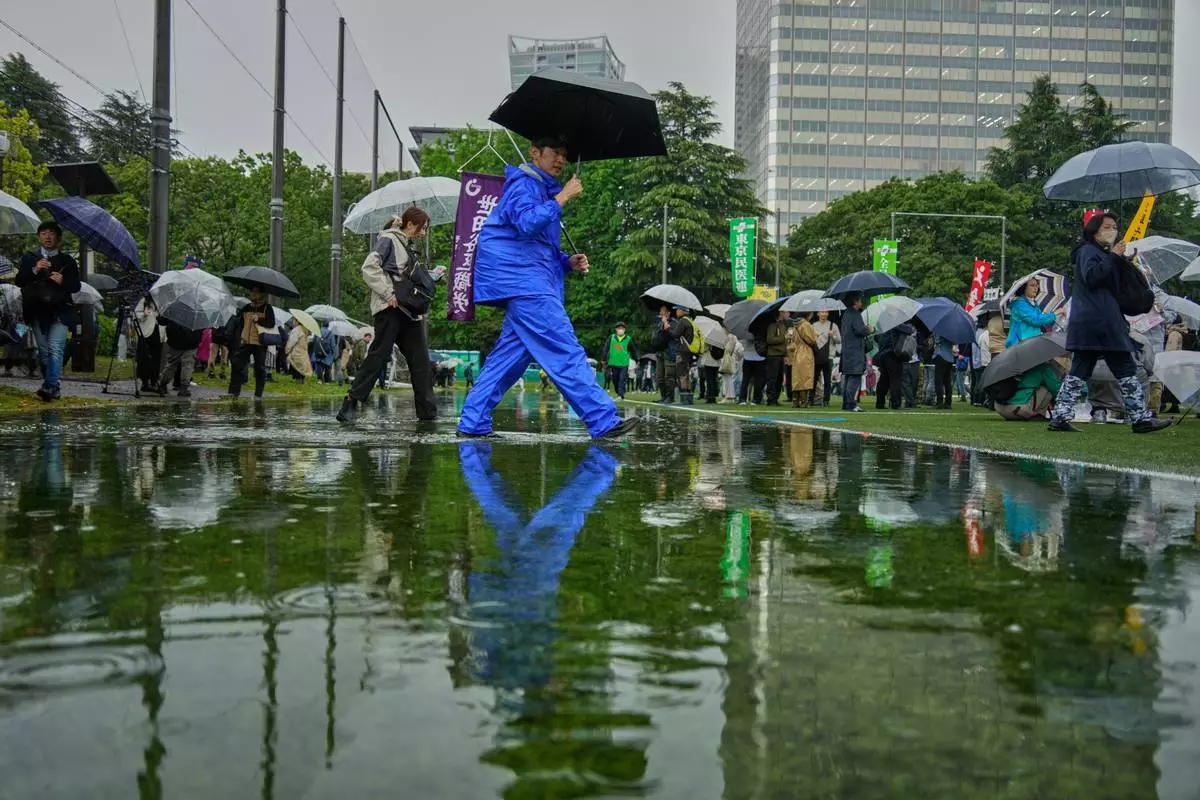
Union members carefully step through rain-formed puddles to participate in a May Day rally in the rain Friday, May 1, 2026, in Tokyo. (AP Photo/Eugene Hoshiko)
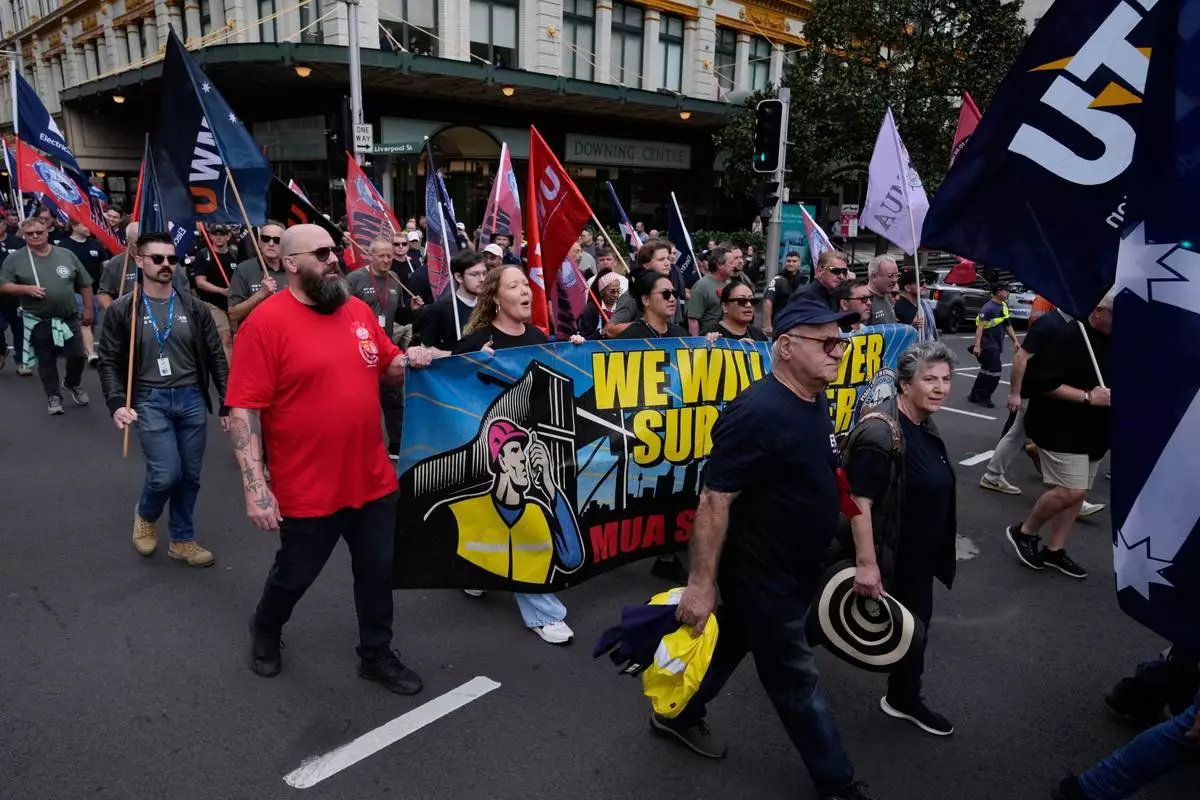
People march to mark International Workers' Day, also known as May Day, in Sydney, Friday, May 1, 2026. (AP Photo/Rick Rycroft)
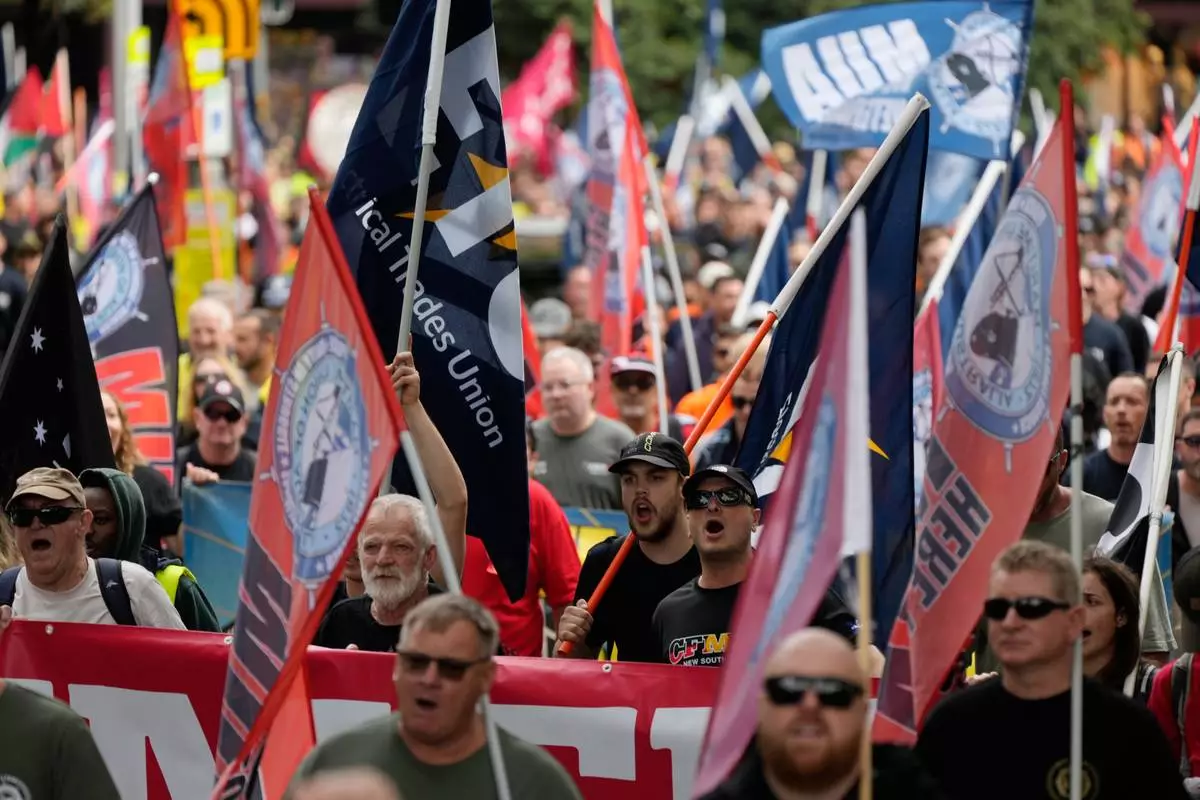
People march to mark International Workers' Day, also known as May Day, in Sydney, Friday, May 1, 2026. (AP Photo/Rick Rycroft)
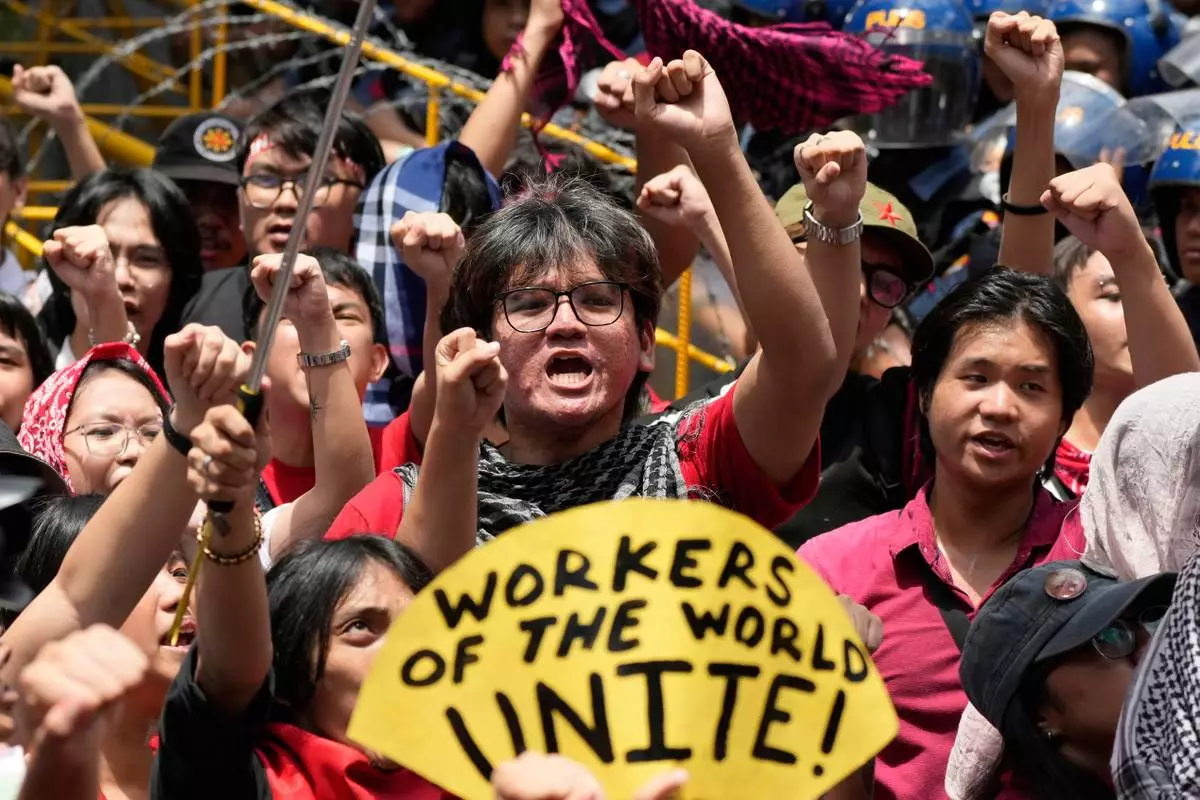
FILE - Activist and workers raise their clenched fists during a May Day rally in Manila, Philippines, May 1, 2025. (AP Photo/Aaron Favila, File)
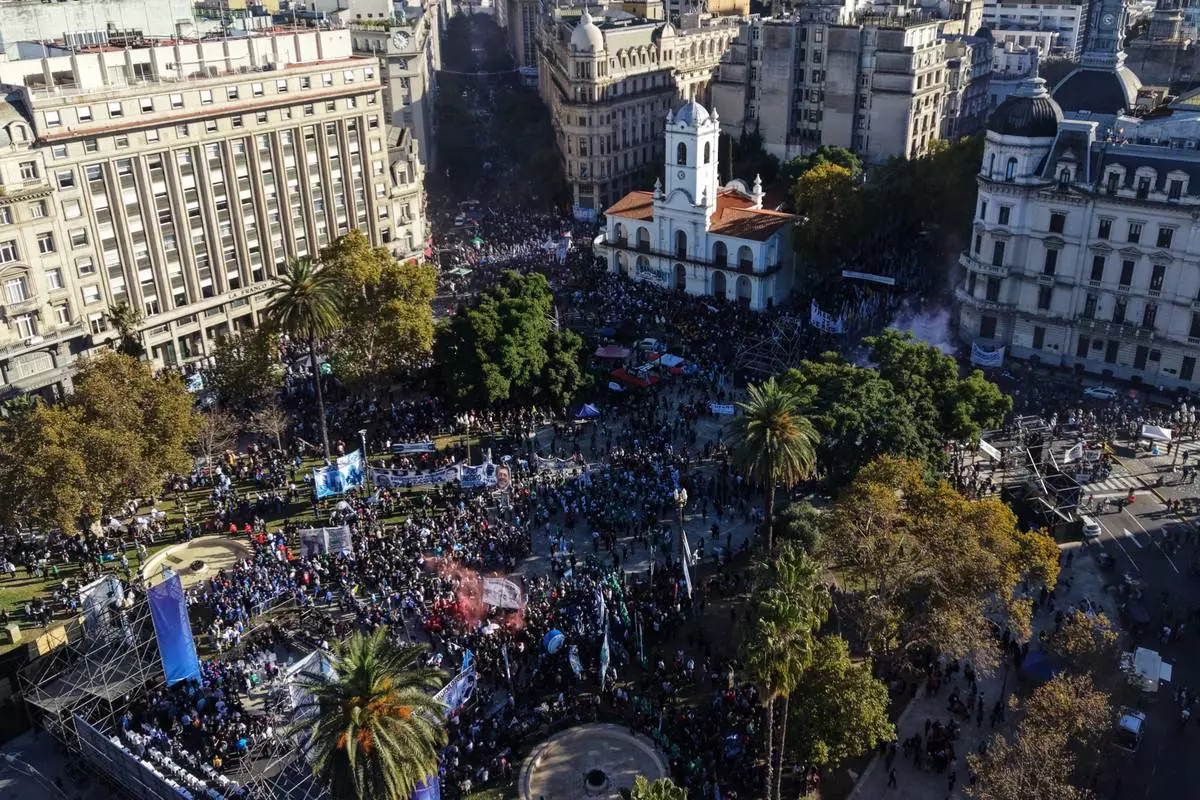
Laborers protest during a May Day demonstration in Buenos Aires, Argentina, Thursday, April 30, 2026. (AP Photo/Rodrigo Abd)
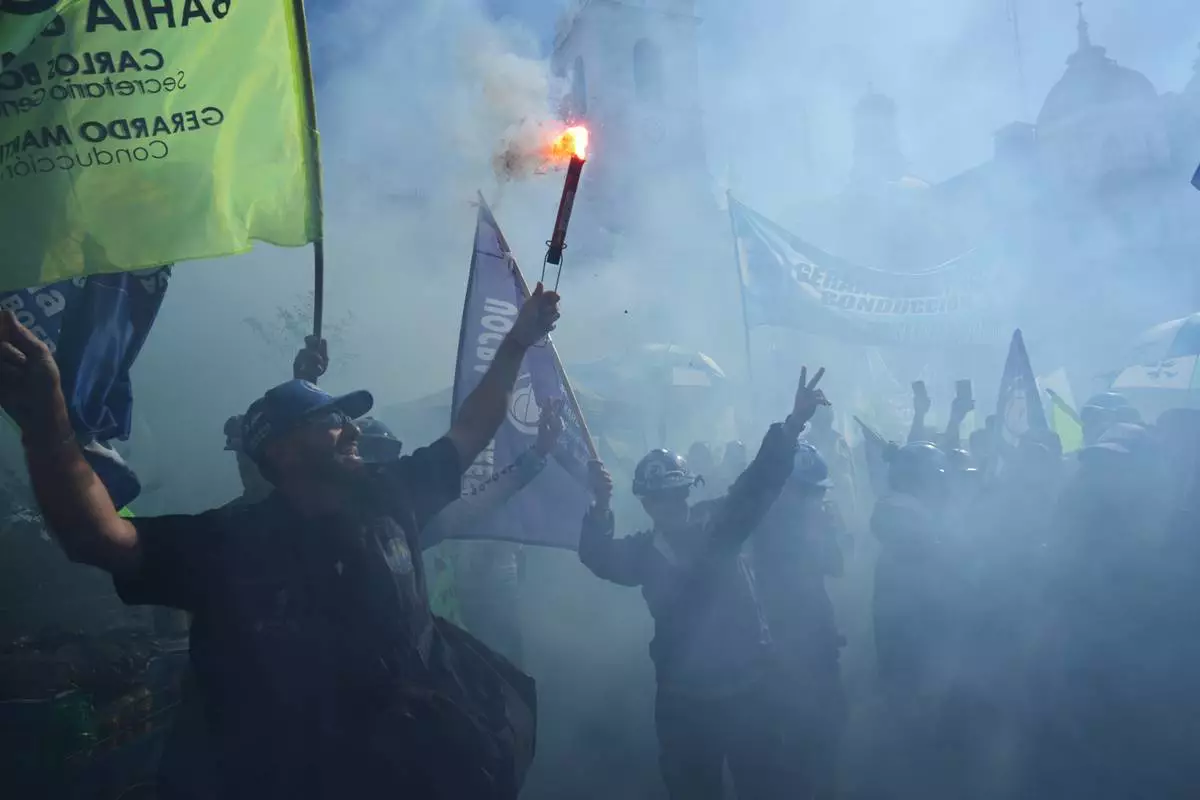
Laborers hold flares during a May Day demonstration in Buenos Aires, Argentina, Thursday, April 30, 2026. (AP Photo/Rodrigo Abd)
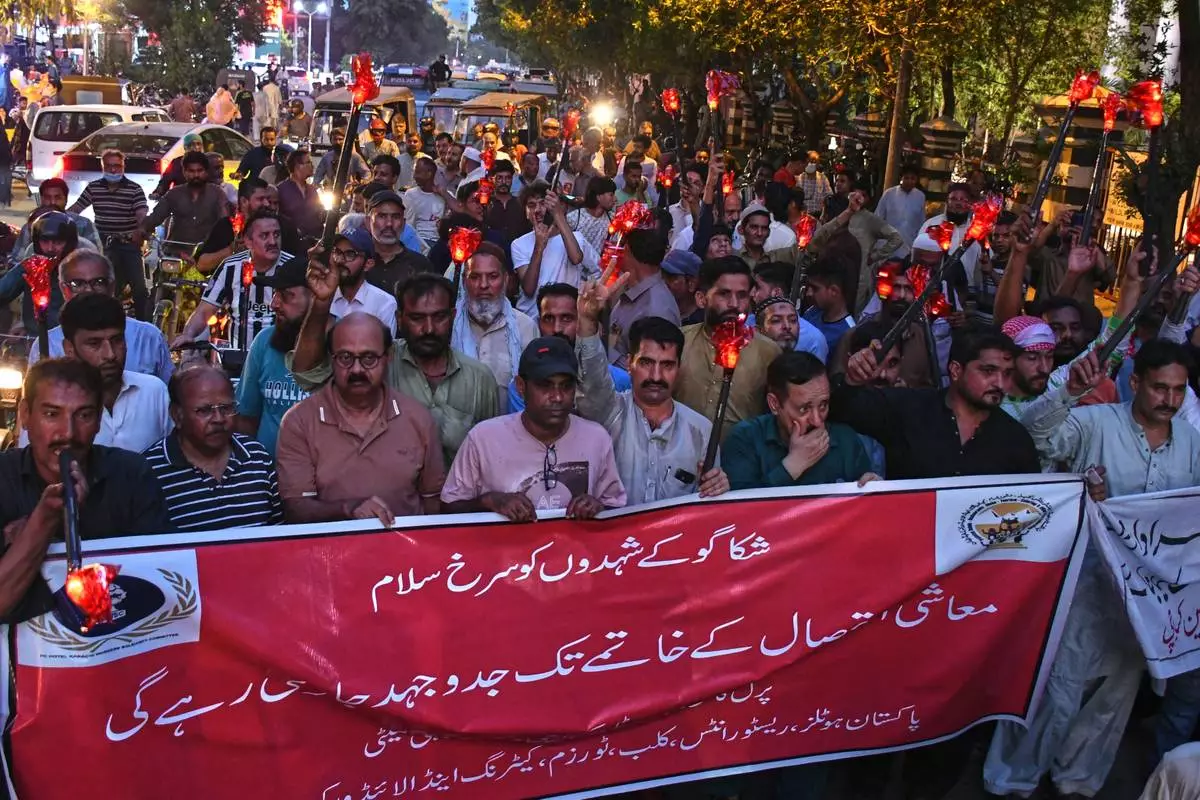
Members of trade unions take part in a rally a day ahead of the International Labor Day, in Karachi, Pakistan, Thursday, April 30, 2026. The banner in center reading as 'red salute to the martyrs of Chicago and the struggle will continue until economic exploitation is ended' (AP Photo/Ali Raza)
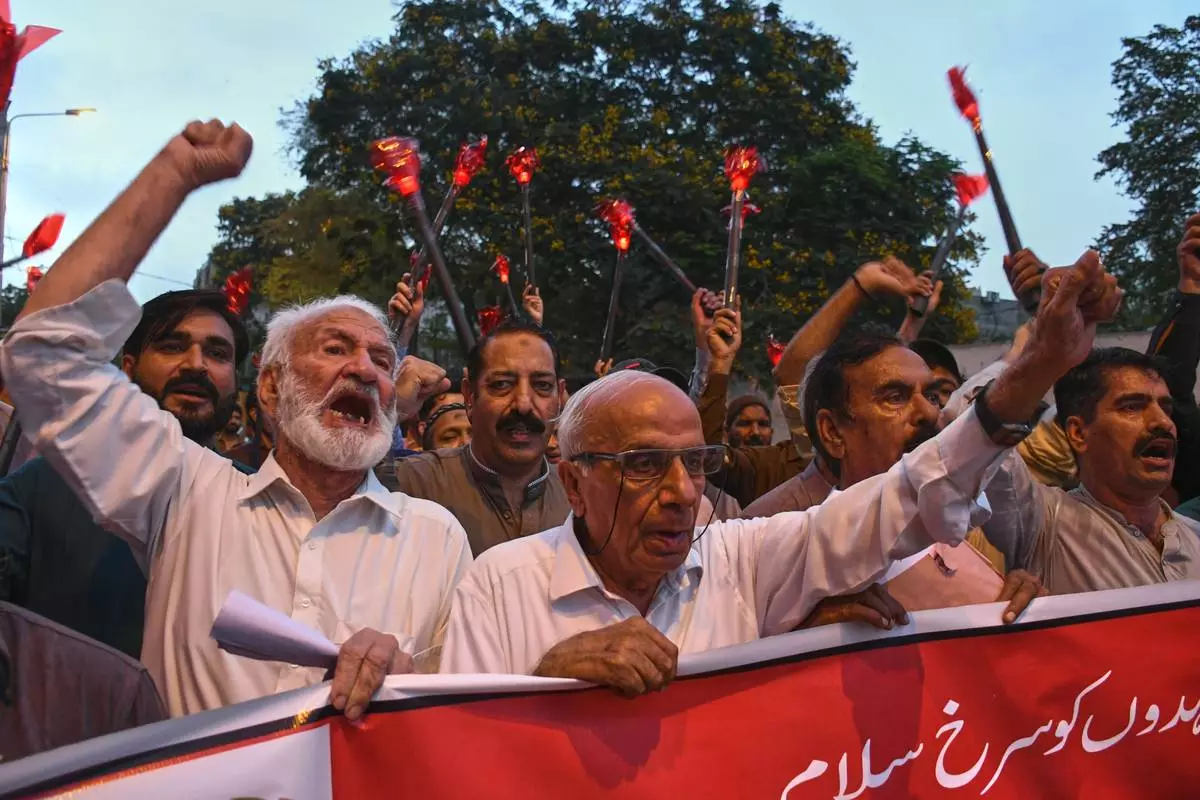
Members of trade unions take part in a rally a day ahead of the International Labor Day, in Karachi, Pakistan, Thursday, April 30, 2026. (AP Photo/Ali Raza)