The Huiyuan ancient city in northwest China's Xinjiang Uygur Autonomous Region witnessed profound changes in China's Qing Dynasty (1644-1911), transforming from a regional outpost into a vibrant hub of commerce and culture.
The ancient city is located in what is now Huocheng County in the Ili Kazak Autonomous Prefecture of Xinjiang.
During the Qing Dynasty, to enhance the governance of Xinjiang, Emperor Qianlong (1711-1799) created the position of the Ili General as the highest-ranking military and administrative officer of the region, and built Huiyuan City which became the key military, administrative and commercial center in Xinjiang.
"The Ili Commandery was once the official residence of the highest-ranking military and administrative officer appointed by the Qing Dynasty's central government to govern Xinjiang. The city that surrounds this mansion is known as Huiyuan City. Historically, Huiyuan consisted of two parts: the old city and the new city," said An Yingxin, a researcher at the Ili Kazak Autonomous Prefecture Museum in Xinjiang.
"During the reign of Emperor Qianlong in the Qing Dynasty, Emperor Qianlong recognized Ili as the strategic center of Xinjiang based on the unique conditions of the region, which needs a general to govern it. As a result, in 1762, the governor-general of Ili, namely the Ili General, was officially appointed. This position represented the highest military and administrative officialdom in Xinjiang at the time. Construction of the old Huiyuan city began in 1763," An continued.
The old city was built along the Ili River, on its northern bank.
As the site of the old town was too close to the river, the river waters gradually eroded the land of the town over time.
In just 40 years, the riverbank stretched more than 700 meters, and half of the old Huiyuan City was gone. So, the old city was largely abandoned.
Today, due to the river's erosion, only the eastern and northern walls of the old Huiyuan City remain. The southern and western walls have mostly been swallowed by the Ili River.
In 1882, Ili General Jin Shun submitted a report to the royal court, requesting the construction of a new city.
The chosen location was 7.5 kilometers northwest of the old Huiyuan City.
"In 1893, the mansion of the Ili General was moved to the new Huiyuan City. So, commerce and culture thrived there, with goods from Beijing and Tianjin flooding into Xinjiang. This bustling trade earned the city the nickname "Mini Beijing." Both the old and new Huiyuan Cities had various administrative bodies at the time. But today we can only see the Ili Commandery, the Bell and Drum Tower in the city center, and the west government office on North Street. Construction of the new Huiyuan City began in 1883 and completed in 1893," An said.
Today, the Ili Commandery and Huiyuan Ancient City stand as tangible reminders of the central government's administration of the northwestern border regions.
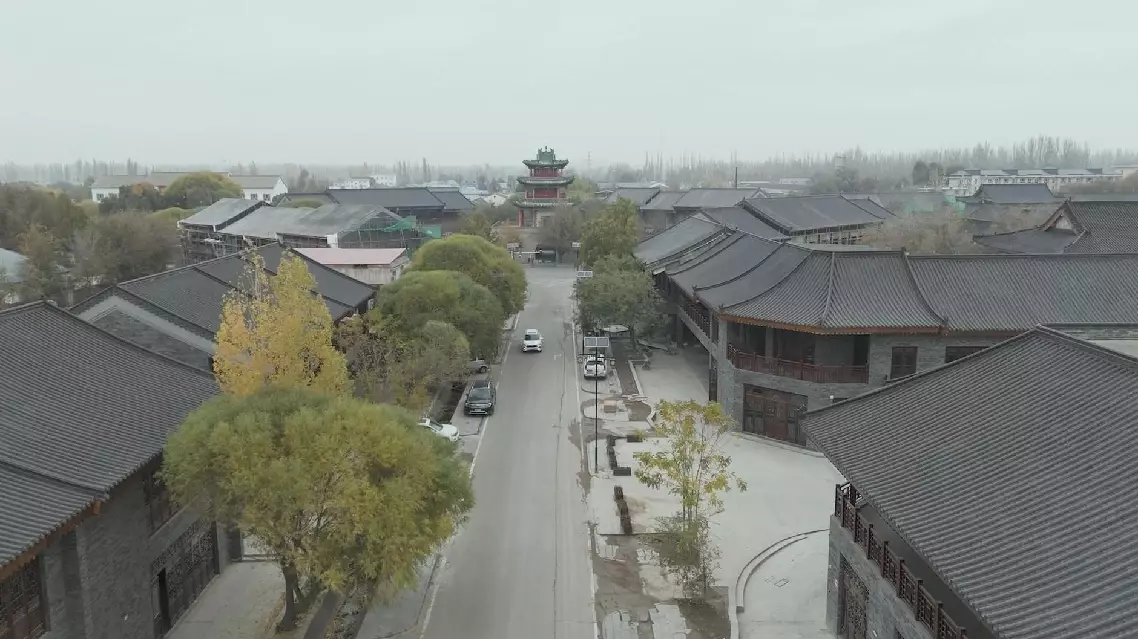
Ancient city reminiscent of turbulent history, glorious past of northwest China's Xinjiang