WASHINGTON (AP) — President Donald Trump has dispatched a fleet of American warships into the waters off Venezuela, bragged about fatal strikes on alleged drug boats and claimed Venezuela will pay an “incalculable” price if it won't accept more people deported from the U.S.
The unusual naval buildup off South America has stoked fears of invasion in Venezuela and speculation that Trump could try to topple its authoritarian president, Nicolás Maduro, who has lost support in his own country and faces charges of narcoterrorism in the U.S.
Click to Gallery
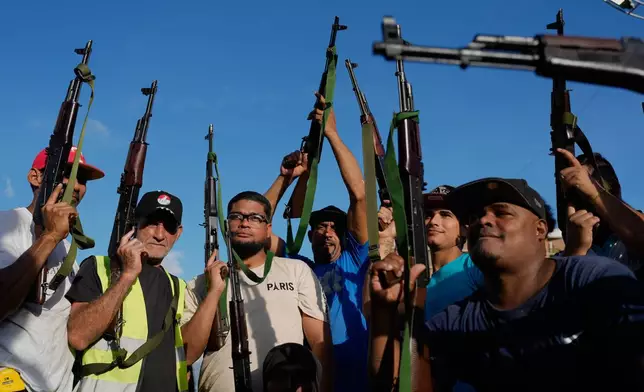
Armed demonstrators march in support of President Nicolas Maduro in Caracas, Venezuela, Tuesday, Sept. 23, 2025. (AP Photo/Ariana Cubillos)
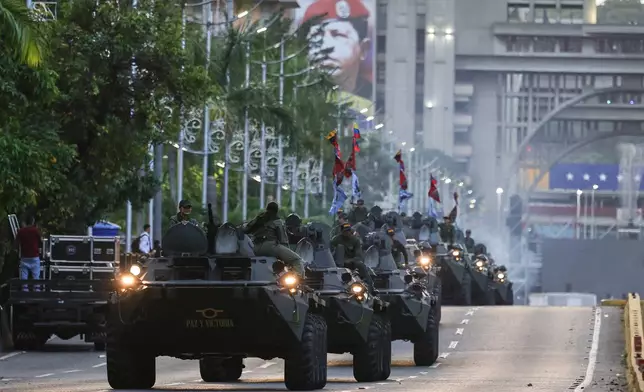
Armored vehicles drive through a street during a government-organized march in support of President Nicolas Maduro in Caracas, Venezuela, Tuesday, Sept. 23, 2025. (AP Photo/Jesus Vargas)
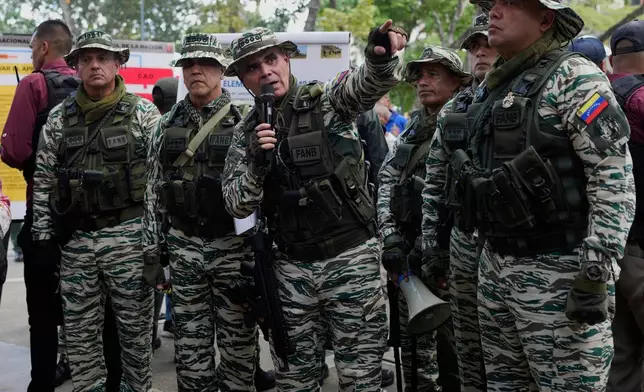
FILE - Venezuelan Defense Minister Vladimir Padrino Lopez speaks during military exercises in Caracas, Venezuela, Sept. 20, 2025. (AP Photo/Ariana Cubillos, File)
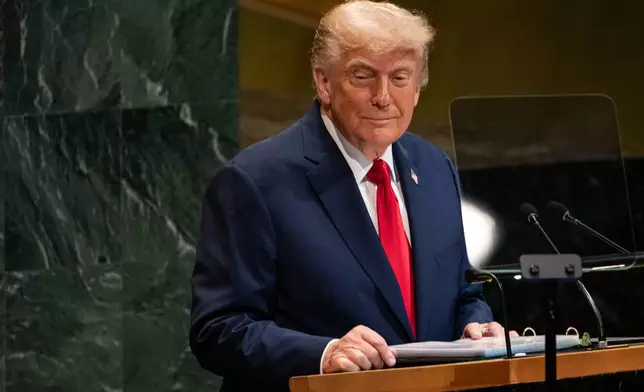
President Donald Trump addresses the 80th session of the United Nations General Assembly, Tuesday, Sept. 23, 2025, at U.N. headquarters. (AP Photo/Angelina Katsanis)
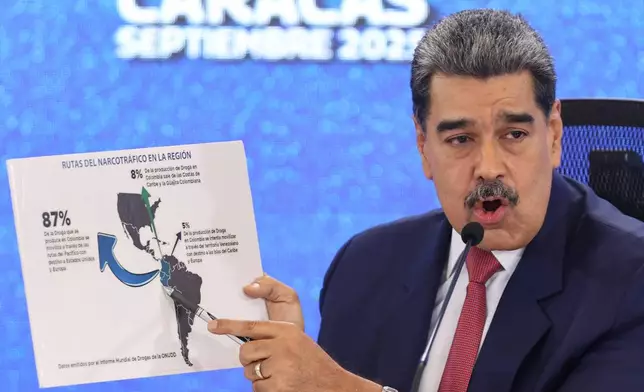
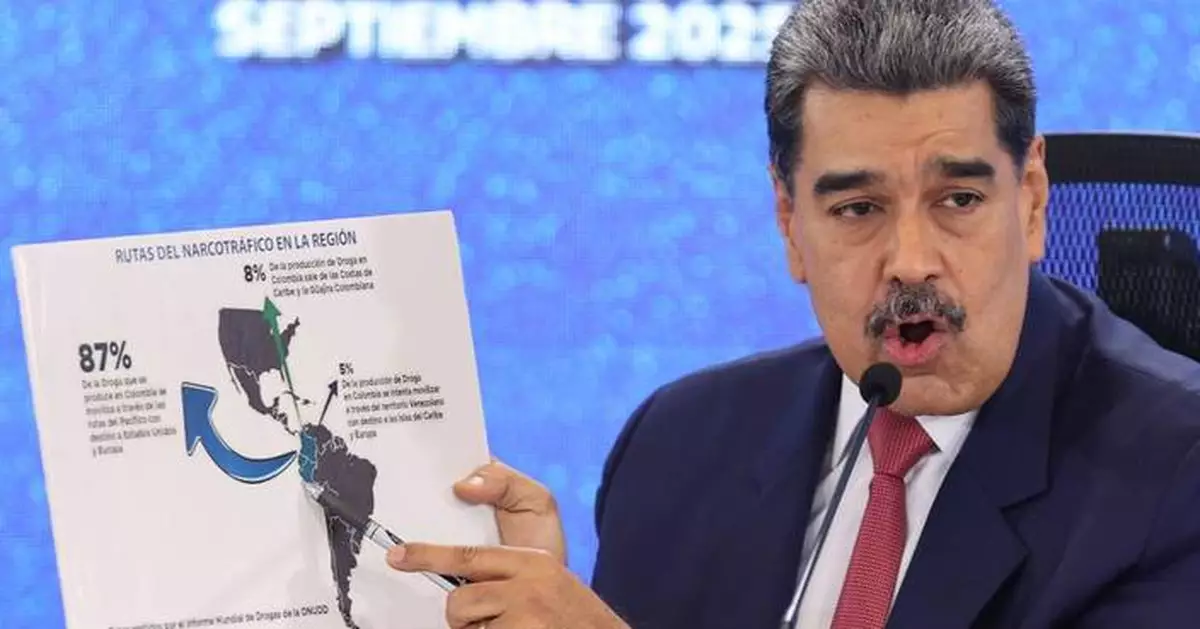
FILE - Venezuelan President Nicolas Maduro points at a map of the Americas during a new conference in Caracas, Venezuela, Sept 15, 2025. (AP Photo/Jesus Vargas), File
At the same time, experts say the flotilla isn't big enough for a land offensive against a country twice the size of California. It all raises questions about U.S. intentions.
“Although the armada in the Caribbean is significant, it’s not what you would need to actually invade,” said Brian Finucane, a senior adviser with the International Crisis Group and a former State Department lawyer. He didn't see Trump having “the stomach” for that big of a step, saying the president “likes performative military action, particularly strikes on supposed terrorists."
The deadly boat strikes and naval buildup have raised questions in Congress and some countries about Trump’s goals in the region and whether they stretch beyond what he says is stemming the flow of illicit drugs into the U.S. Some lawmakers and rights groups have questioned the legality of using deadly military attacks against alleged drug traffickers, while voicing concerns over how much force Trump may choose to deploy without congressional approval.
“We’ve recently begun using the supreme power of the United States military to destroy Venezuelan terrorists and trafficking networks led by Nicolás Maduro,” Trump said at the U.N. this week. “To every terrorist thug smuggling poisonous drugs into the United States of America, please be warned that we will blow you out of existence.”
If Trump decided to order missile strikes into Venezuela or small raids, which experts say would likely target drug cartels instead of the Maduro government itself, that would still be a major provocation.
“A quick strike against the Venezuelan Ministry of Defense or something just doesn’t really help you very much,” said Mark Cancian, a senior adviser with the Center for Strategic and International Studies and a retired Marine colonel. “It's not going to overturn the regime. It’s not going to energize the opposition. And it just stirs up the hornet's nest.”
Senators from both parties view the strikes as potential presidential overreach, while Democrats in the House and Senate have introduced War Powers Resolutions that would require a halt to military actions without further approvals.
Rep. Greg Casar, a Texas Democrat, said Trump “cannot be allowed to drag the United States into another endless war with his reckless actions.”
The Trump administration has claimed self-defense as a justification, with Secretary of State Marco Rubio arguing the drug cartels “pose an immediate threat” to the nation.
The administration has declared several drug cartels as foreign terrorist organizations, while congressional authorization for military force remains in effect for the so-called Global War on Terror. The administration could try to rely on that authorization, but it would most certainly face objections in Congress.
“Sinking the odd boat is a big deal, but it’s fairly consistent with the types of actions we’ve taken against terrorists without too much controversy,” said Bradley Martin, a senior policy researcher at RAND and a retired Navy captain.
“Start attacking camps, and pretty soon we’re at a level of force where there’s no legal underpinning for it," Martin said. “Even with a large-scale raid, we’re starting to get past the point of self-defense.”
The U.S. Navy has eight warships with over 5,000 sailors and Marines in the region: three destroyers, three amphibious assault ships, a cruiser and a smaller ship designed for combat in shallow waters, U.S. defense officials said. They spoke on condition of anonymity to describe the ongoing situation in greater detail.
Destroyers and cruisers typically deploy with Tomahawk cruise missiles, which can strike targets hundreds of miles away. A U.S. Navy submarine, the USS Newport News, also is operating in the broader area of South America and is capable of launching the cruise missile, the officials said.
The amphibious assault ships are carrying nearly 2,000 Marines and a variety of Marine helicopters, Osprey tilt rotor aircraft and Harrier jets. The military planned to send 10 advanced F-35 stealth fighter jets to Puerto Rico, with some arriving last week, officials said.
The White House has so far announced three fatal strikes against vessels it says were smuggling drugs bound for American communities. It claimed two came from Venezuela.
After posting a video of the latest strike last week, Trump shifted the conversation to the removal of Venezuelan nationals from the U.S.
Deportation flights to Venezuela have continued despite the American warships. Facing pressure from the White House, Maduro did away this year with his longstanding policy of not accepting deportees from the U.S.
Still, Trump told the Venezuelan government in a post Sunday to immediately accept prisoners and “people from mental institutions.”
"GET THEM THE HELL OUT OF OUR COUNTRY, RIGHT NOW, OR THE PRICE YOU PAY WILL BE INCALCULABLE!" he wrote.
Asked by a reporter what he meant, Trump said, “You’re gonna have to figure that out.”
Some administration officials likely hope the U.S. military's presence will cause Maduro to step aside or embolden his opponents, but it “isn’t likely to play out that way,” said Finucane of the International Crisis Group.
But Rep. Mario Diaz-Balart, a Florida Republican, insisted that Maduro is down to three options:
“Get out, rot in jail for the rest of his life like Noriega, or end up like Soleimani (in ashes and in a plastic bag),” the lawmaker, an outspoken supporter of Venezuela's political opposition, said in an interview he posted on social media.
Manuel Noriega was a Panamanian dictator ousted by the U.S. military in a 1989 invasion who spent in the following decades in prisons before his death. Qassem Soleimani was an Iranian general killed in a 2020 drone strike in Iraq ordered by Trump.
Maduro and other government officials have rejected claims that Venezuela is a crucial link in the drug trade. They also said the U.S. military's operation is an attack on their sovereignty and part of an overthrow attempt.
A key component of Venezuela's defense is a civilian militia, with Maduro claiming 6 million of its members have been “activated.”
That figure could not be verified, but public support for the government has plummeted further after credible evidence showed Maduro lost last year’s presidential election.
The nation's military gathered with Venezuelans in plazas, streets, ports and beaches recently as part of an effort that Defense Minister Vladimir Padrino López said was meant to train the militia.
In the state of La Guaira, which includes the country’s main airport, Gov. José Alejandro Terán said exercises included training on an anti-aircraft defense system.
“We have identified all the approach routes and built a roadblock defense system backed by a heavy artillery system,” he told state television.
Finley reported from Norfolk, Virginia, and Garcia Cano from Caracas, Venezuela. Associated Press writer Lisa Mascaro in Washington contributed to this report.
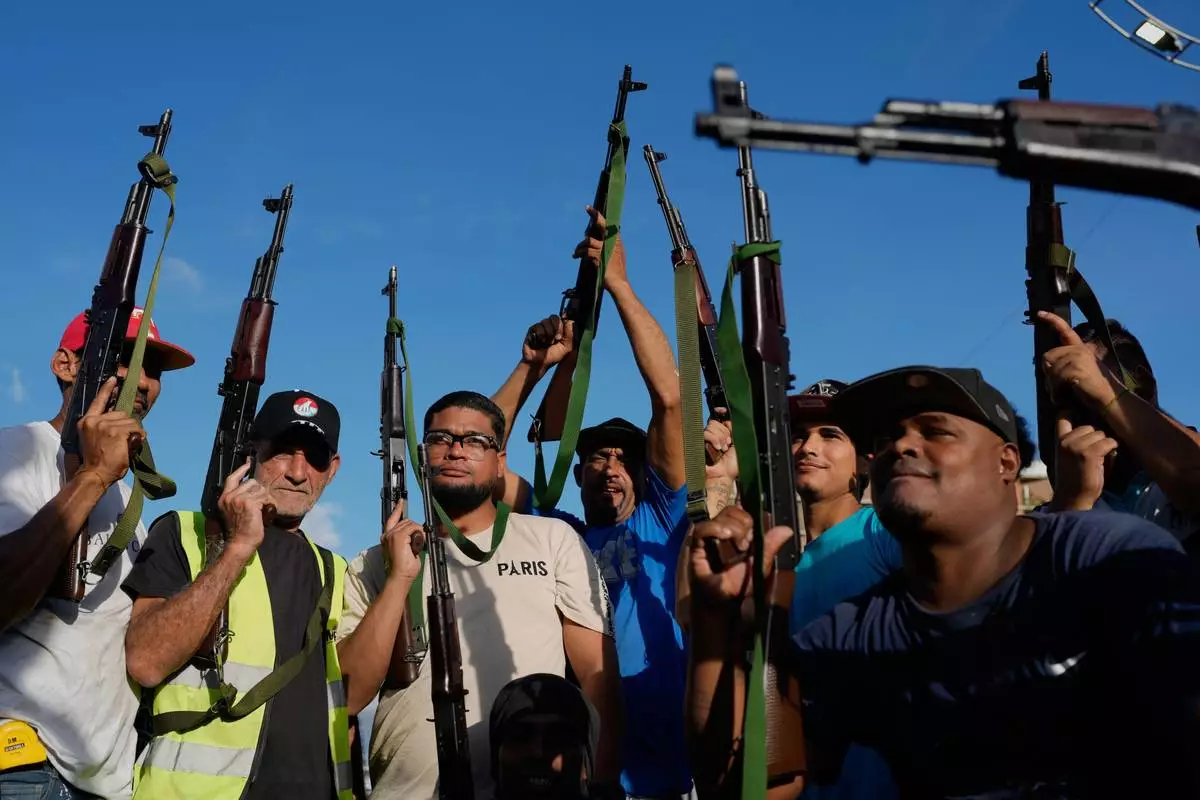
Armed demonstrators march in support of President Nicolas Maduro in Caracas, Venezuela, Tuesday, Sept. 23, 2025. (AP Photo/Ariana Cubillos)
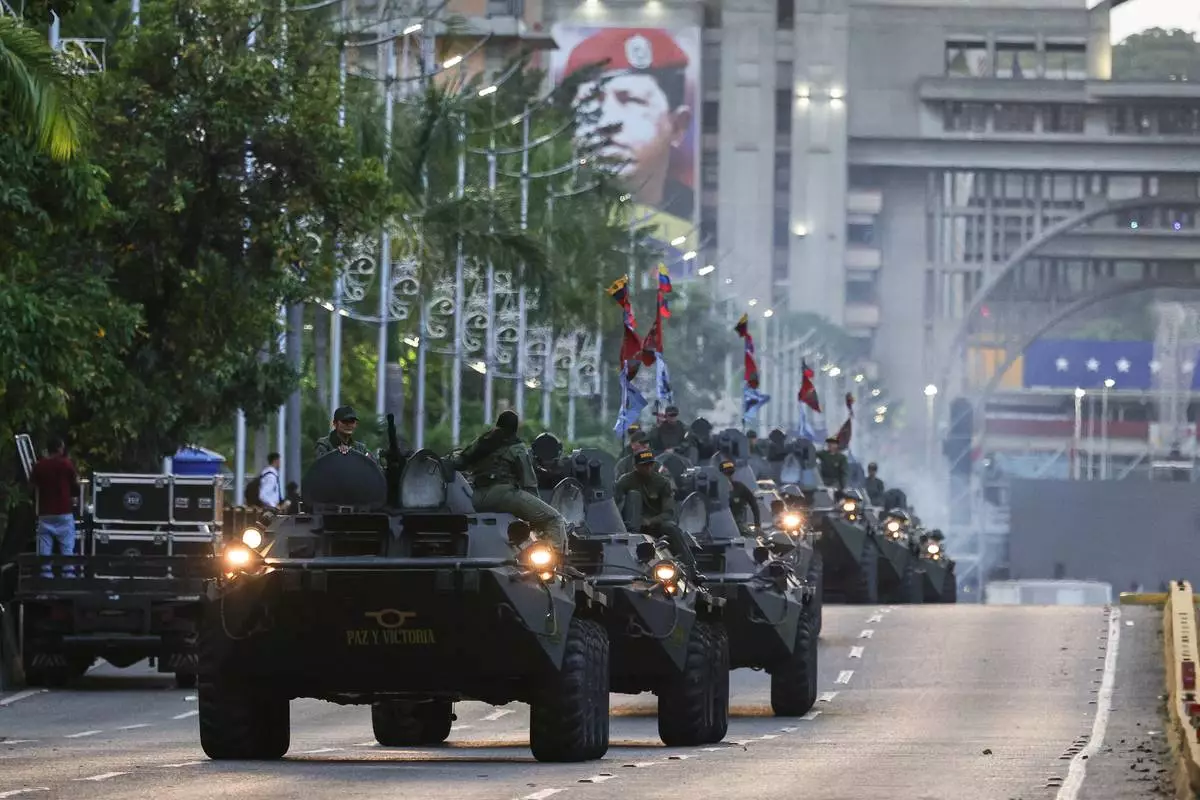
Armored vehicles drive through a street during a government-organized march in support of President Nicolas Maduro in Caracas, Venezuela, Tuesday, Sept. 23, 2025. (AP Photo/Jesus Vargas)
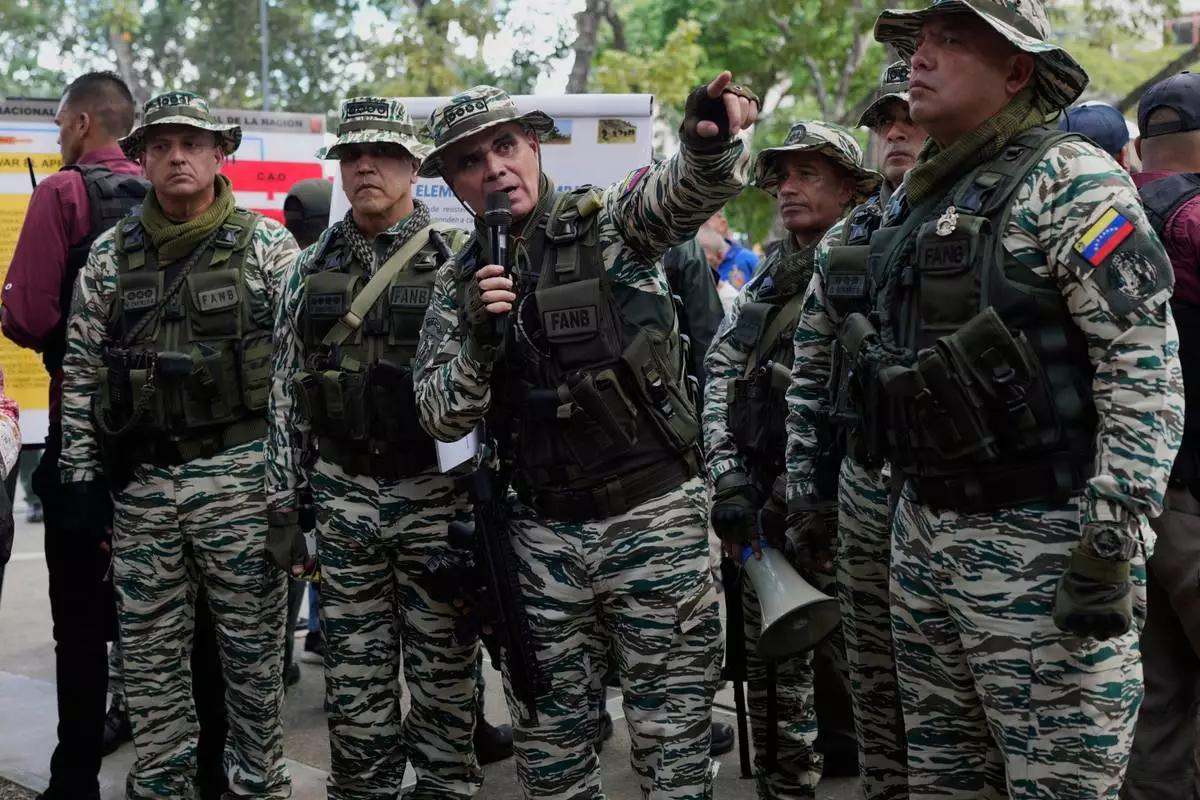
FILE - Venezuelan Defense Minister Vladimir Padrino Lopez speaks during military exercises in Caracas, Venezuela, Sept. 20, 2025. (AP Photo/Ariana Cubillos, File)
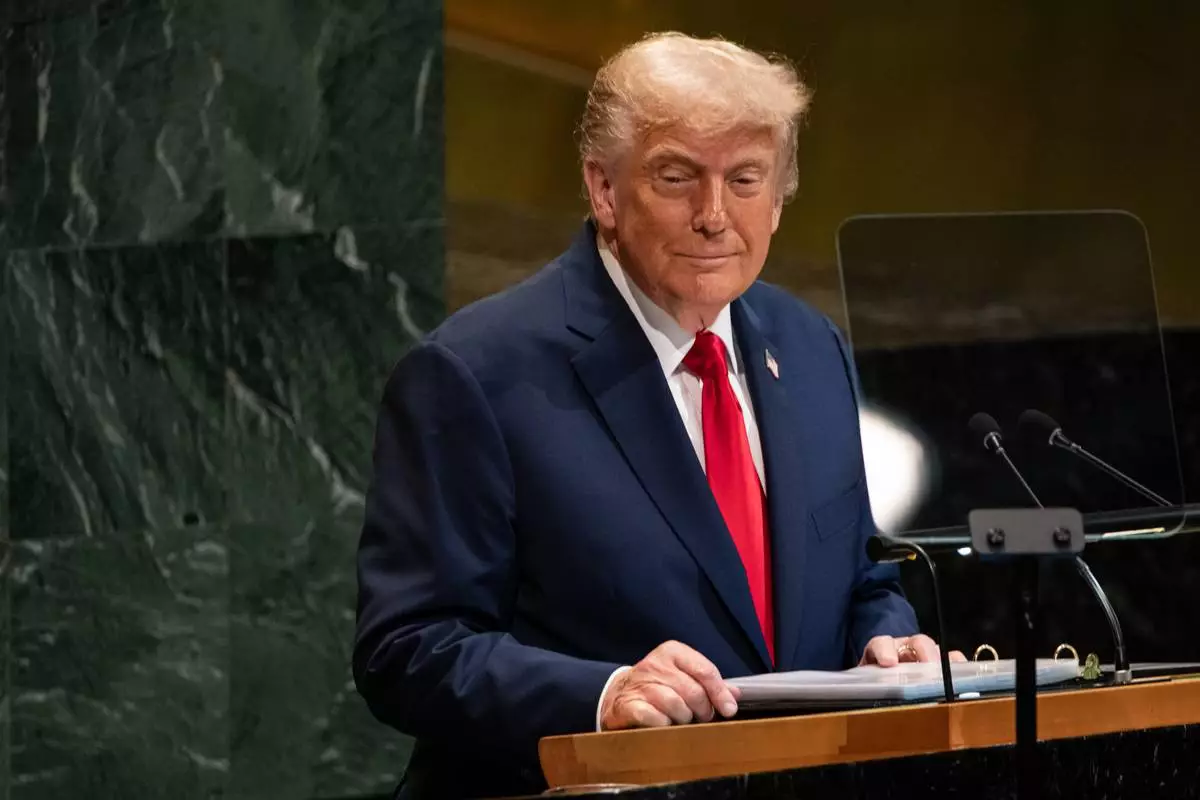
President Donald Trump addresses the 80th session of the United Nations General Assembly, Tuesday, Sept. 23, 2025, at U.N. headquarters. (AP Photo/Angelina Katsanis)
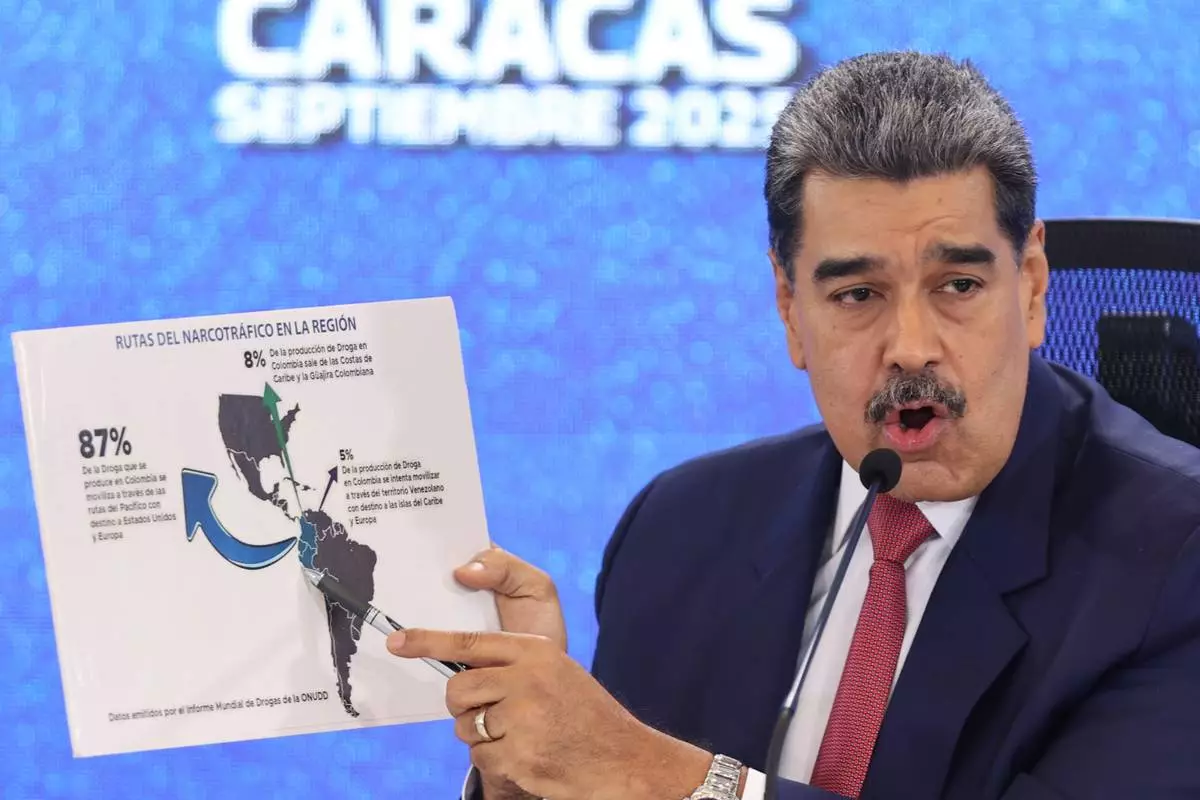
FILE - Venezuelan President Nicolas Maduro points at a map of the Americas during a new conference in Caracas, Venezuela, Sept 15, 2025. (AP Photo/Jesus Vargas), File